Listen, the days of needing a gritty, sweat-stained commercial gym to become a savage are over. If you’re a combat athlete: whether you’re stepping into the octagon, grappling on the mats, or conquering ninja warrior obstacles: your home is your primary training ground. But here’s the cold, hard truth: most "home workouts" are designed for people who want to lose five pounds before beach season. They aren’t designed for warriors.
To succeed as a combat athlete, you need a full body workout at home that builds explosive power, relentless endurance, and the kind of functional strength that doesn’t just look good in a mirror but carries over into a fight. At Bold Body Fitness, we don’t do "easy." We do effective.
In this guide, we’re breaking down the science, the gear, and the movements you need to turn your living space into a high-performance laboratory.
Why Combat Athletes Must Train Differently
Most people walk into a gym and think in "parts." Chest day. Back day. Leg day. That’s great if you want to be a bodybuilder, but for a fighter, it’s a recipe for failure. In a fight, your body works as a single, unified unit. A knockout punch doesn’t start in the shoulder; it starts in the feet, travels through the legs, rotates through the core, and explodes through the fist.
Bodyweight training at home is the foundation of this unified strength. When you master your own body weight, you develop superior spatial awareness and "active" mobility. However, to truly reach elite levels, you need to add resistance. This is where most home setups fail. They lack the versatility to handle the high-intensity output of a CrossFit athlete or a professional MMA fighter.

The Problem with Traditional Home Gym Equipment
If you’ve ever tried to do a high-intensity set of pull-ups on one of those door-frame bars, you know the fear of the whole thing collapsing. For serious athletes, standard home gym equipment is often too flimsy, too restrictive, or requires you to drill massive holes into your walls: which is a nightmare if you’re renting or just don't want to ruin your house.
Combat athletes need a no wall damage workout system that can actually handle the torque of a 200-pound human moving with explosive force. You need something that bridges the gap between a basic pull-up bar and a full-scale commercial rack.
Enter the Floor to Ceiling Gym
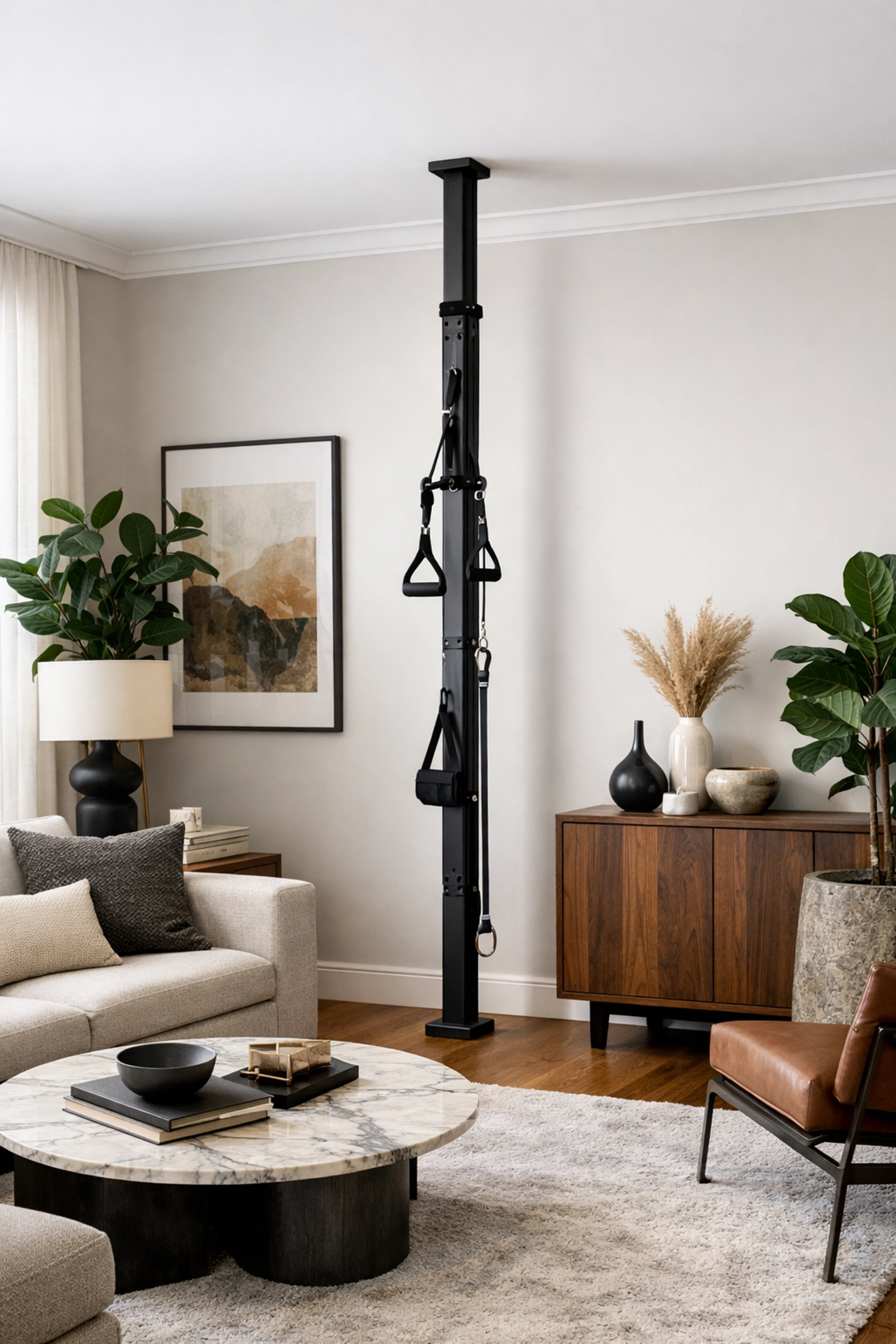
This is where the Resistance Rail changes the game. It’s a floor to ceiling gym designed for people who train hard. By utilizing a vertical rail system that secures firmly without permanent wall damage, it provides a stable anchor point for resistance training and bodyweight movements. It’s the ultimate pull up bar alternative because it doesn’t just give you a place to hang; it gives you a platform to perform.
The 4 Pillars of the Combat Home Workout
To build a complete fighter, your home program must address these four pillars:
1. Explosive Pushing Power
Striking is all about speed and force. To improve your "pop," you need movements that target the chest, shoulders, and triceps with explosive intent.
- Plyometric Push-ups: Don’t just push; launch yourself off the floor.
- Resistance-Banded Strikes: Attach bands to your versatile home gym setup and shadowbox. This builds the fast-twitch muscle fibers needed for lightning-fast hands.
2. Clinical Pulling Strength
Whether you’re clinching in Muay Thai or finishing a rear-naked choke in BJJ, pulling strength is non-negotiable.
- Pull-up Variations: Wide grip, narrow grip, and neutral grip. If you’re looking for a pull up bar alternative that allows for more natural hand positions, the Resistance Rail is your best friend.
- Bodyweight Rows: Essential for back health and posture.
3. Rotational Core Torque
The core is the bridge between your upper and lower body. For a fighter, "abs" aren't for show: they’re for generating torque and absorbing impact.
- Rotational Band Woodchops: Using your crossfit home gym setup, simulate the rotational movement of a hook or a takedown.
- Hanging Leg Raises: Build that rock-solid midsection that can take a knee to the gut and keep moving.
4. Lower Body Explosiveness and Stability
Your legs are the engine. Without them, you have no power and no defense.
- Jump Squats: Maximize vertical power.
- Single-Leg Romanian Deadlifts: Build the balance and posterior chain strength needed for wrestling and high kicks.

The Ultimate "No-Excuses" Home Circuit
If you’re ready to put this into practice, here is a high-intensity circuit designed to be performed using the Bold Body Fitness Shop gear. Perform this circuit 4 times, resting 90 seconds between rounds.
- Explosive Pull-ups (or Rows): 10 reps (Focus on a fast ascent).
- Banded Sprawls: 15 reps (Attach a resistance band to the low point of your rail to add tension to your hip drive).
- Archer Push-ups: 10 reps per side (Great for unilateral chest strength).
- Banded Rotational Punches: 30 seconds per side (Focus on the pivot of the back foot).
- Box Jumps (or Tuck Jumps): 12 reps.
Calisthenics: The Ninja Warrior’s Secret Weapon
For those focused on Ninja Warrior or gymnastics, calisthenics equipment for home needs to be more than just a bar. You need points of attachment at various heights to simulate the unpredictable nature of an obstacle course.
The beauty of a floor to ceiling gym like the Resistance Rail is the ability to adjust your anchor points in seconds. You can move from high-bar pull-ups to mid-height dips and low-height push-up grips without stopping the flow of your workout. This "flow state" is where real progress happens. It forces your cardiovascular system to keep up with your muscular demands, mimicking the final 30 seconds of a grueling round.

The "No Wall Damage" Revolution
Let’s talk about the logistics. Most of us don't have a dedicated 2,000-square-foot garage to turn into a dungeon. We’re working in apartments, spare bedrooms, or shared spaces. The traditional answer was to buy a massive, heavy power rack that stays in one spot forever.
But the modern athlete is mobile. You need a no wall damage workout system that can be moved if you decide to rearrange your room or move to a new city. By using tension-based floor-to-ceiling technology, you get the stability of a bolted-in rack without the permanent commitment. It’s the smartest way to build a crossfit home gym in a limited space.
Programming for Success: The Weekly Split
To maximize your full body workout at home, you should aim for 3-4 high-intensity sessions per week, leaving the other days for technical skills (shadowboxing, flow rolling, or mobility work).
- Monday: High-Intensity Full Body (Strength Focus).
- Tuesday: Technical Skill Work + Active Recovery (Mobility).
- Wednesday: Power and Speed (Plyometric Focus).
- Thursday: Rest or Light Cardio.
- Friday: Metabolic Conditioning (The "Gas Tank" Session).
- Saturday: Full Body (Endurance/High Rep Focus).
- Sunday: Full Rest.
Nutrition and Recovery for the Home Athlete
You can have the most versatile home gym in the world, but if you aren't fueling the engine, you’re just spinning your wheels. Combat athletes require higher protein intake to repair muscle tissue torn during resistance training and enough complex carbohydrates to sustain explosive output.
Don't ignore recovery. Use your home space for more than just training. Spend 15 minutes after every session on a foam roller or performing static stretches. Your future self (and your joints) will thank you.
Conclusion: Stop Making Excuses, Start Building Your Legacy
The difference between an amateur and a pro isn't the facility they train in: it’s the intensity they bring to the sessions. With a full body workout at home and the right home gym equipment, you have everything you need to become a powerhouse.
The Resistance Rail was built for the bold. It was built for the athletes who refuse to let a lack of space or a fear of wall damage hold them back.
It’s time to stop looking for a gym and start building one. Check out our full range of gear at the Bold Body Fitness Shop and take the first step toward becoming the athlete you were meant to be.
Stay bold. Train hard. Win everywhere.