
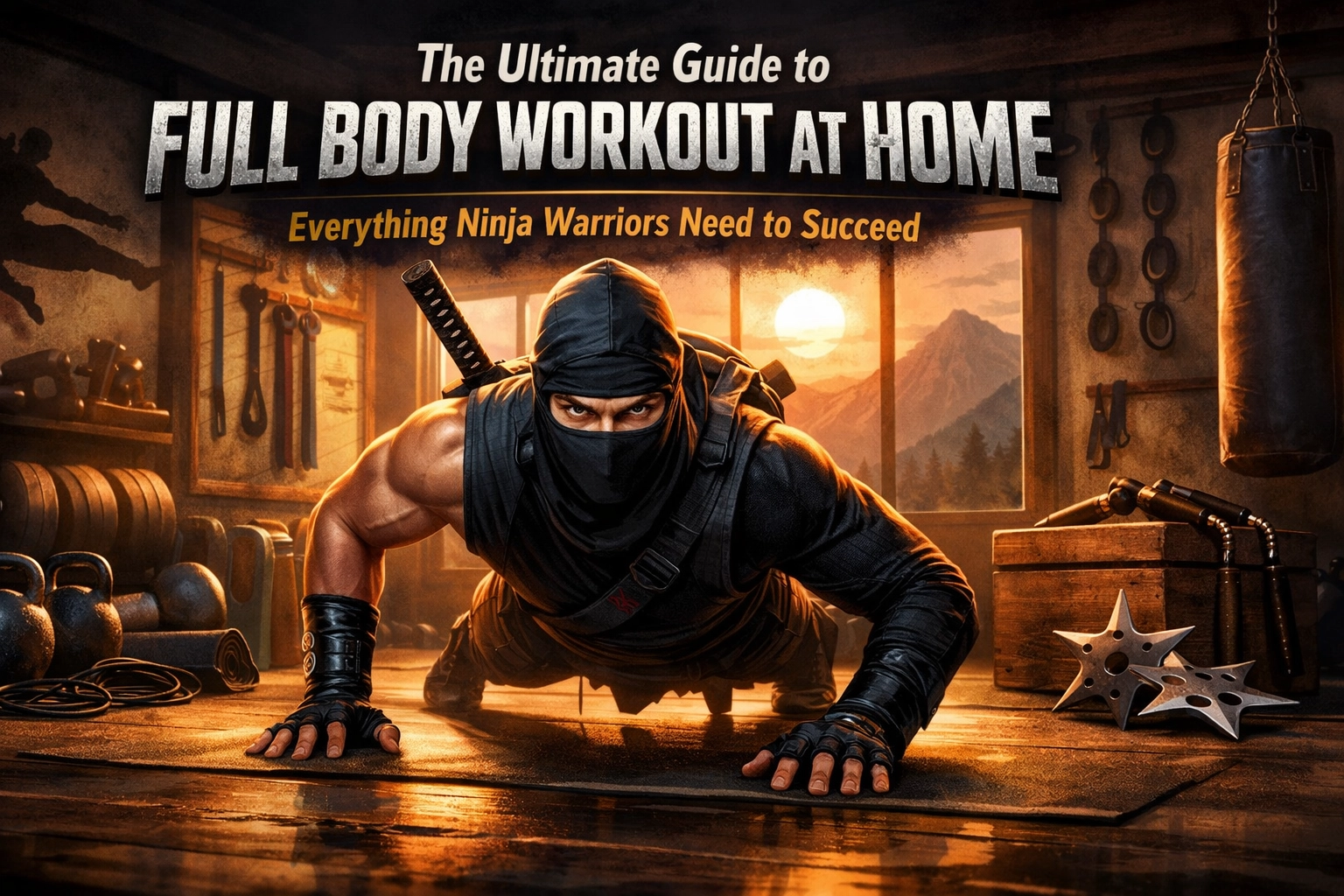
If you've ever watched American Ninja Warrior and thought "I could do that," you're not alone. But here's the reality check: those athletes crushing the Warped Wall and conquering the Salmon Ladder aren't just lucky: they're the product of relentless full-body training that builds grip strength, explosive power, and bulletproof core stability.
The good news? You don't need a warehouse-sized gym to train like a ninja warrior. Your home can become your ultimate training ground with the right approach, exercises, and equipment setup. Let's break down everything you need to build functional strength that translates to real-world performance.
Why Ninja Warriors Need Full Body Functional Strength
Forget isolated bicep curls and leg extensions. Ninja warrior training demands compound movements that engage multiple muscle groups simultaneously. When you're hanging from a bar, transitioning between obstacles, or exploding through a jump, your body doesn't work in isolation: it functions as one integrated unit.
Full body workouts at home mirror this reality. They build the kind of strength that matters: pulling power, pushing strength, core control, and lower body explosiveness all working together. This approach torches calories while building lean, functional muscle that actually performs when you need it.
The beauty of bodyweight training is its simplicity and effectiveness. You can progressively overload movements, manipulate time under tension, and push toward failure: all the principles you need for muscle growth and strength gains: without a single piece of traditional gym equipment.

The Five Essential Movement Patterns for Home Training
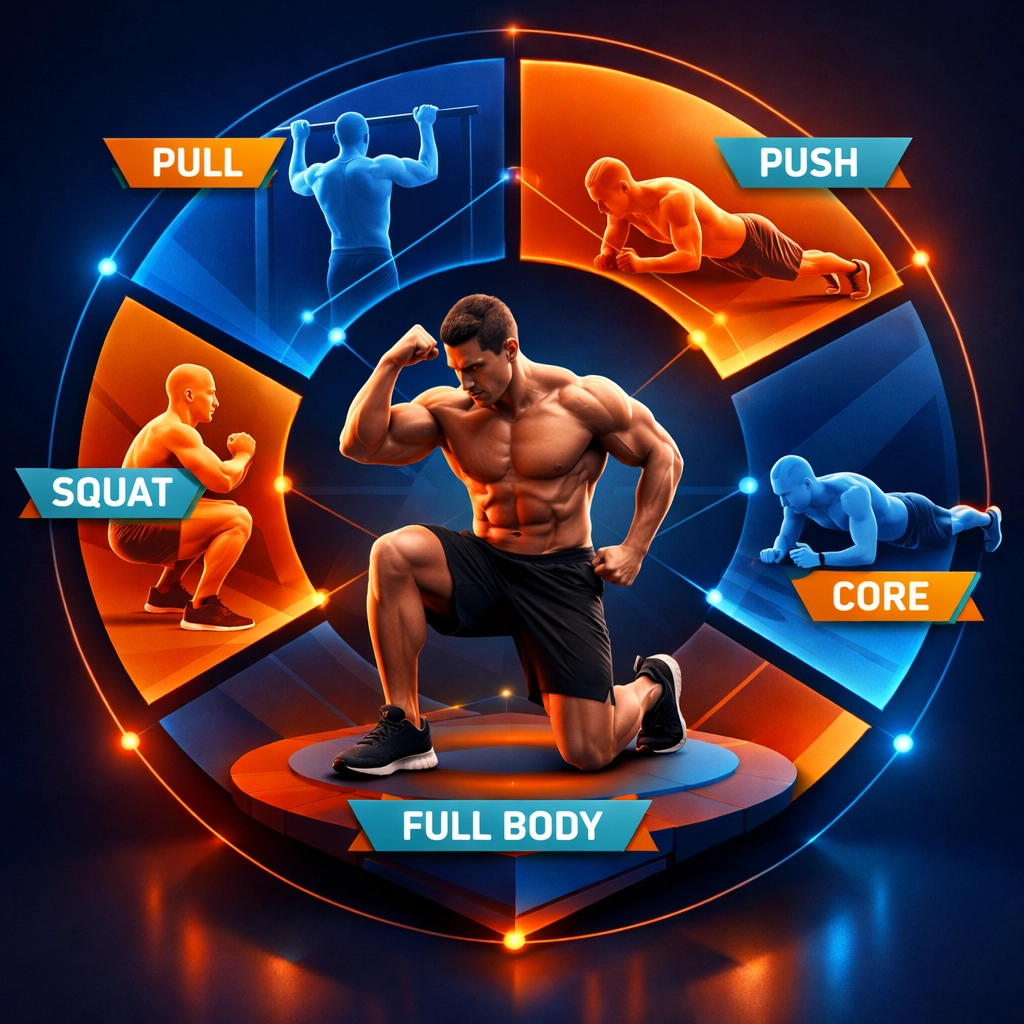
Every ninja warrior workout should incorporate these fundamental patterns:
Pull Movements: These develop the grip strength and lat power essential for obstacle courses. Think pull-ups, inverted rows, and hanging progressions. Your pulling strength might be the difference between completing the course and taking an early swim.
Push Movements: From elevated pike push-ups to handstand holds, pushing exercises build shoulder stability and pressing power. These movements translate directly to obstacles requiring you to press your bodyweight overhead or maintain control in awkward positions.
Lower Body Explosiveness: Jump lunges, box jumps, and frog squats develop the power you need to launch yourself between platforms or stick difficult landings. Single-leg work builds the stability that prevents injury when you land on one foot.
Core Anti-Rotation: Dead bugs, bicycle crunches, and plank variations teach your core to resist unwanted movement. This stability is crucial when you're hanging from one hand or transitioning between obstacles at speed.
Full-Body Integration: Movements like burpees, mountain climbers, and bear crawls connect everything together, building the work capacity and conditioning that separate those who finish courses from those who gas out halfway through.
Building Progressive Overload Without Weights
The biggest misconception about bodyweight training? That you'll eventually plateau without adding external resistance. Dead wrong.
Progressive overload with bodyweight exercises comes through manipulation of leverage, tempo, and volume. Start with standard push-ups, then progress to decline push-ups, then diamond push-ups, then one-arm variations. Each progression increases the challenge without adding a single pound of weight.
Time under tension is your secret weapon. Slow down the eccentric (lowering) portion of exercises to 3-5 seconds. This increased tension drives muscle growth and builds the kind of control ninja warriors need when lowering themselves between obstacles or maintaining positions under fatigue.
Training close to failure matters too. Your last few reps should feel genuinely difficult. If you can crank out 30 push-ups easily, modify the movement or slow it down until those final reps challenge you. This is where growth happens.
The Home Gym Setup That Changes Everything
Here's where most home training programs fall short: lack of pulling options. You can push, squat, and plank all day, but without a solid pull-up solution, you're missing half the equation for full body workout at home success.
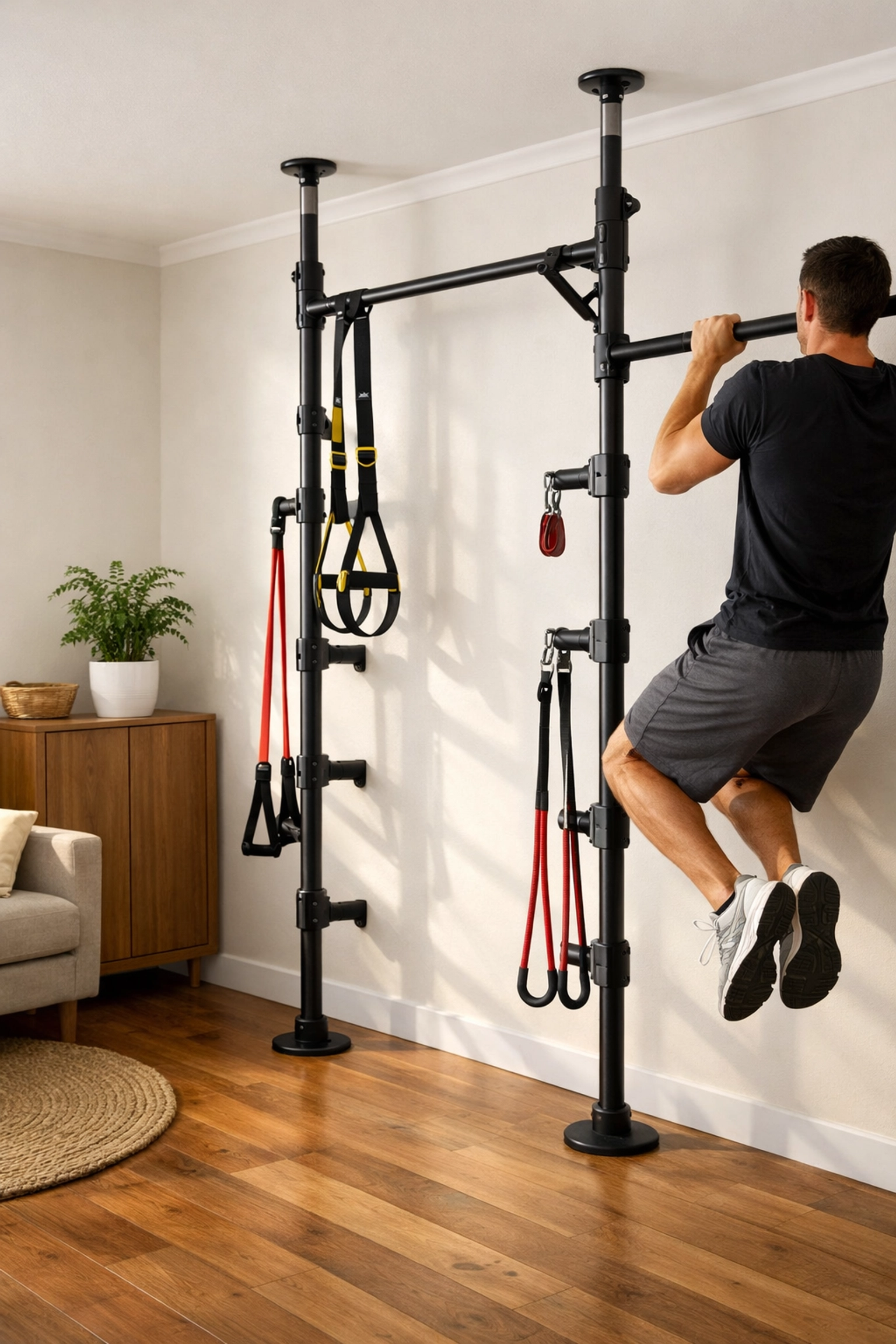
Traditional pull-up bars require drilling into walls or door frames: a non-starter for renters or anyone who doesn't want to damage their space. This is exactly why Bold Body Fitness developed the Resistance Rail, a floor-to-ceiling tension system that provides a legitimate pull-up bar alternative without a single hole in your wall.
The genius of versatile home gym equipment like this is adaptability. Beyond standard pull-ups, you can set up TRX-style suspension training, attach resistance bands at multiple heights, and create hanging obstacles that mimic actual ninja warrior courses. It's calisthenics equipment for home that grows with your abilities.
For ninja warrior training specifically, having multiple attachment points at different heights is crucial. You need to practice transitions, work on lache movements, and develop grip strength in various positions: exactly what a proper resistance training setup at home should provide.
Your 30-Minute Ninja Warrior Circuit
Ready to put this into practice? This circuit-style workout hits every essential movement pattern. Complete three rounds, working for 40 seconds per exercise with 20-second transitions.
Circuit One:
- Pull-ups or inverted rows (focus on controlled descent)
- Jump lunges (explosive power)
- Superman holds (posterior chain strength)
- Dead bugs (core stability)
Circuit Two:
- Dolphin push-ups (shoulder strength and pike position)
- Single-leg bridge with leg extensions (glute activation and balance)
- Hanging knee raises (grip and core)
- Bear crawls forward and backward (full-body coordination)
Circuit Three:
- Tricep dips using a chair (pushing power)
- Frog squats (lower body explosiveness and ankle mobility)
- Bicycle crunches (rotational core strength)
- Burpees (metabolic conditioning and full-body integration)
Follow this with static stretches focusing on shoulders, hips, and hamstrings. Recovery is part of training, not separate from it.
Advanced Progressions for Serious Athletes
Once you've mastered the basics, it's time to level up. Handstand wall walks develop the shoulder strength and body awareness crucial for inverted obstacles. Start with your feet at knee height against the wall, then progressively walk them higher as you walk your hands closer.
Standing long jumps build explosive power that translates directly to gap jumps and precision landings. Focus on sticking the landing in a controlled quarter-squat position: this teaches your body to absorb force safely.
L-sits and tuck L-sits on parallel surfaces (or using your home gym equipment setup) develop the compression strength needed for many advanced obstacles. Start with bent knees and progress toward straight legs as your hip flexor strength improves.
For grip strength specifically, incorporate dead hangs with varying grip widths, towel pull-ups for thickness training, and finger-specific training on ledges or ninja warrior-style holds if you have access to them.
The Mental Game: Training Consistency Over Intensity
Here's what separates athletes who achieve their ninja warrior goals from those who burn out: consistency trumps intensity every single time.
You don't need two-hour daily grind sessions. You need focused, progressive training 4-5 times per week that builds on previous sessions. Track your numbers: reps completed, time under tension, rest periods: and aim to improve slightly each week.
Some days you'll feel unstoppable. Other days, basic movements will feel harder than they should. This is normal. Show up anyway, do the work, and trust the process. The athletes dominating obstacle courses didn't get there through sporadic heroic efforts: they built their abilities through relentless, unglamorous consistency.
Equipment Investment That Actually Pays Off
If you're serious about training at home, invest in quality over quantity. You don't need a garage full of equipment. You need a few versatile pieces that enable progressive training without destroying your living space.
The Resistance Rail Standard exemplifies this philosophy: it's a complete pull-up station, suspension training anchor point, and resistance band attachment system that installs without wall damage. For ninja warriors, gymnasts, and CrossFit athletes training at home, this kind of versatility is non-negotiable.
Supplement with quality resistance bands, gymnastic rings, and parallettes if your budget allows. These tools expand your exercise library exponentially while maintaining a minimal footprint.
Your Next Steps to Ninja Warrior Readiness
Start where you are, not where you wish you were. Can't do a pull-up yet? Begin with inverted rows and negative pull-ups. Can't hold a handstand? Start with wall-supported pike positions. Every expert was once a beginner who refused to quit.
Film your workouts occasionally to check form and track progress. You'll be amazed at the improvements you can't feel but can clearly see when comparing footage from weeks or months apart.
Connect with the ninja warrior community online. Share your progress, ask questions, and learn from athletes further along the path. Training is more sustainable when you're part of a community pushing each other forward.
Your home is your training ground. Your body is your primary tool. The obstacles between you and your goals are mental, not physical. Build your strength, develop your skills, and prove to yourself what's possible when you commit to the process.
The course is waiting. Time to get to work.
