

You're done waiting for squat racks. Done paying monthly fees for equipment you barely use. Done compromising your training schedule because the gym closes at 9 PM. It's time to build your own CrossFit home gym: and dominate every single workout on your terms.
Whether you're a seasoned CrossFit athlete, an MMA fighter sharpening your conditioning, or a calisthenics practitioner chasing that first muscle-up, this guide breaks down exactly what you need. No fluff. No unnecessary gadgets. Just the home gym equipment that'll transform your garage, basement, or spare room into a legitimate training facility.
Let's get after it.
Why Build a CrossFit Home Gym?
CrossFit demands versatility. You need to lift heavy, move fast, and master bodyweight movements: sometimes all in the same workout. Commercial gyms can work, but they come with limitations: crowded classes, limited equipment availability, and zero customization.
A versatile home gym puts you in complete control. You choose when to train. You choose the equipment. And you never have to wait for some guy doing bicep curls in the squat rack.
The investment pays for itself faster than you think. Within a year or two, you've recouped your gym membership fees: and you've built something permanent.
Essential Foundation Equipment
Start here. These pieces handle 80% of your CrossFit programming and form the backbone of any serious setup.
Barbell and Bumper Plates
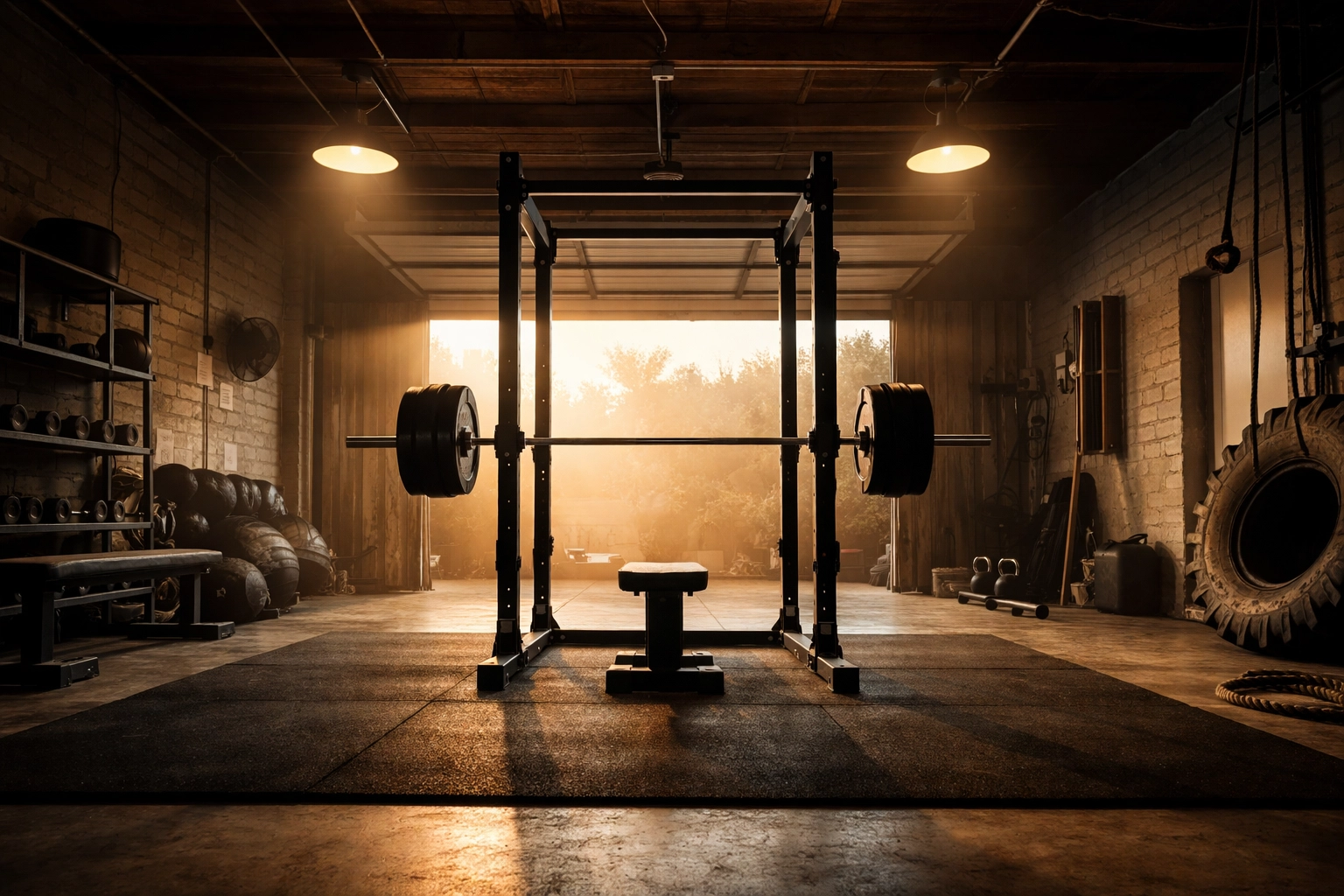
No barbell, no CrossFit gym. Period. A quality Olympic barbell handles deadlifts, squats, cleans, snatches, and presses. Look for a bar with solid knurling and appropriate whip for Olympic lifting.
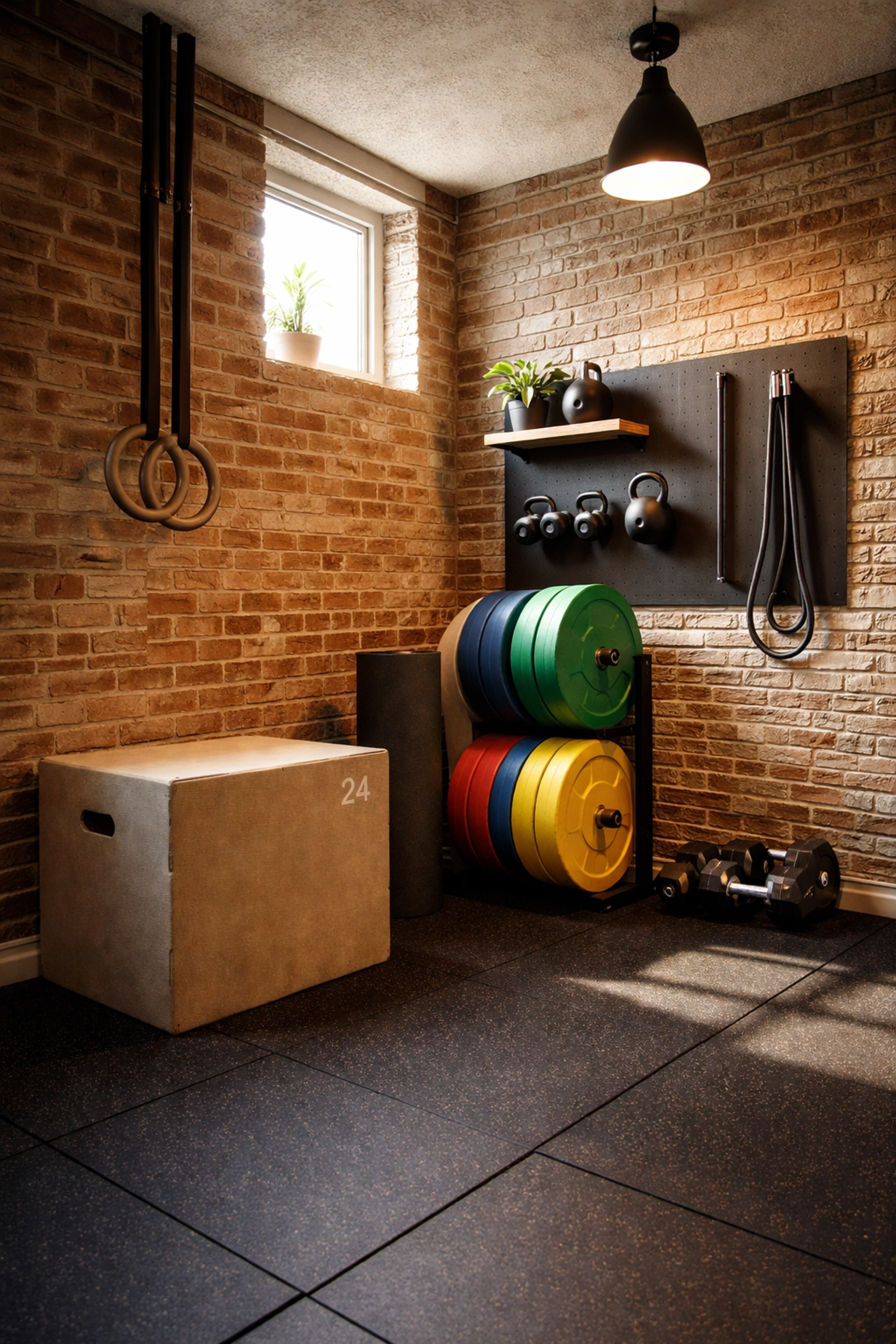
Pair it with bumper plates: these rubber-coated plates are designed for drops and protect both your floor and the bar. Start with a set that covers 135-225 lbs, then expand from there.
Squat Rack or Squat Stand
You need something to rack that barbell. A simple squat stand with an integrated pull-up bar works for most athletes and takes up minimal space. If you have room and budget, a full power cage offers more versatility with safety spotter arms.
The key? Make sure it's sturdy. You're going to be lifting heavy and moving fast.
Pull-Up Solution
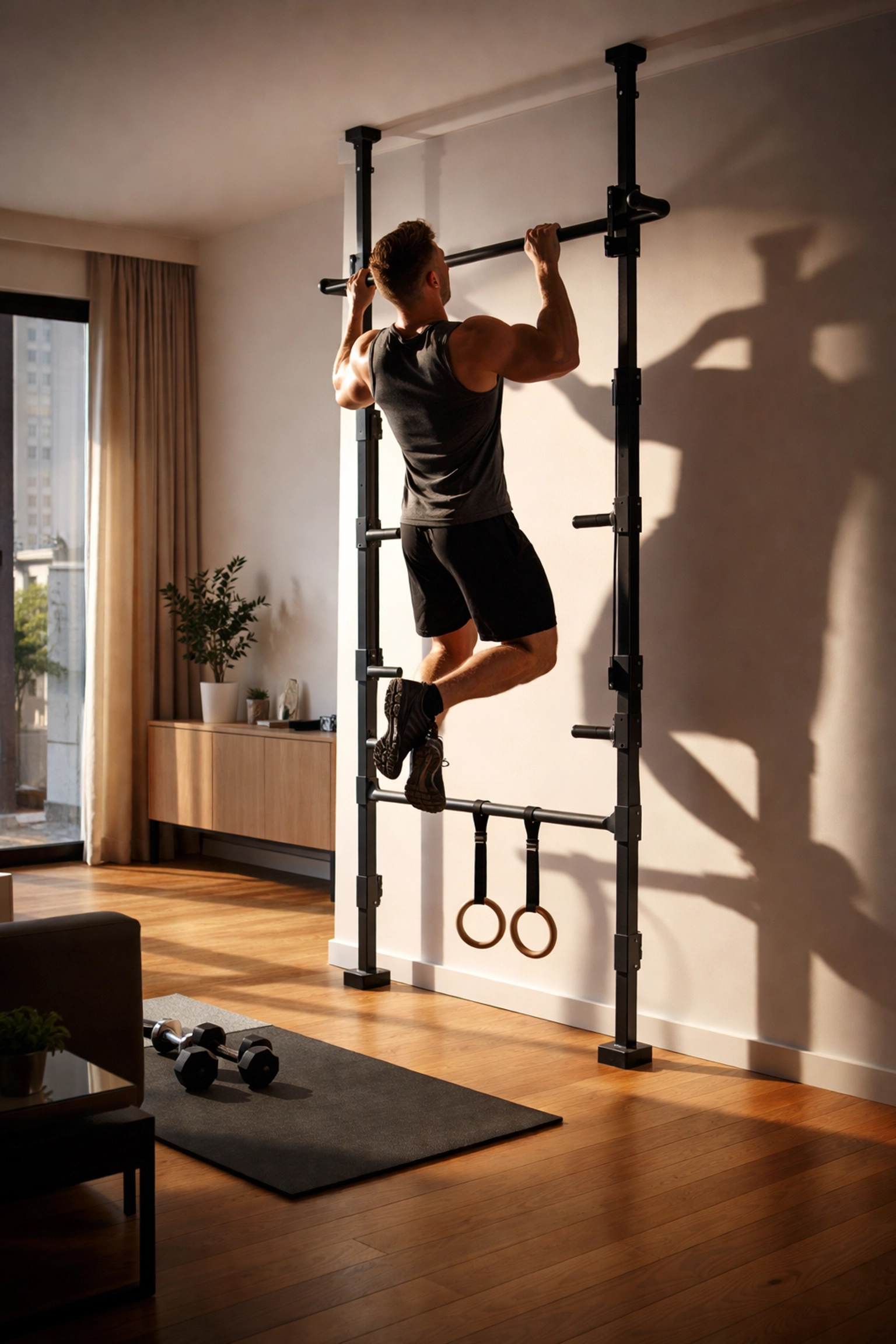
Here's where things get interesting. Traditional wall-mounted pull-up bars work great: if you own your home and don't mind drilling into studs. But what if you're renting? What if you want a no wall damage workout system?
This is exactly why Bold Body Fitness developed the Resistance Rail. It's the ultimate pull up bar alternative that doesn't require permanent installation. This floor to ceiling gym setup gives you a solid anchor point for pull-ups, muscle-ups, and resistance band training: without destroying your walls or ceiling.
For CrossFit athletes, ninja warriors, and calisthenics practitioners who need a full body workout at home, it's a game-changer.
Strength and Power Equipment
Once your foundation is set, expand your arsenal with these targeted tools.
Kettlebells
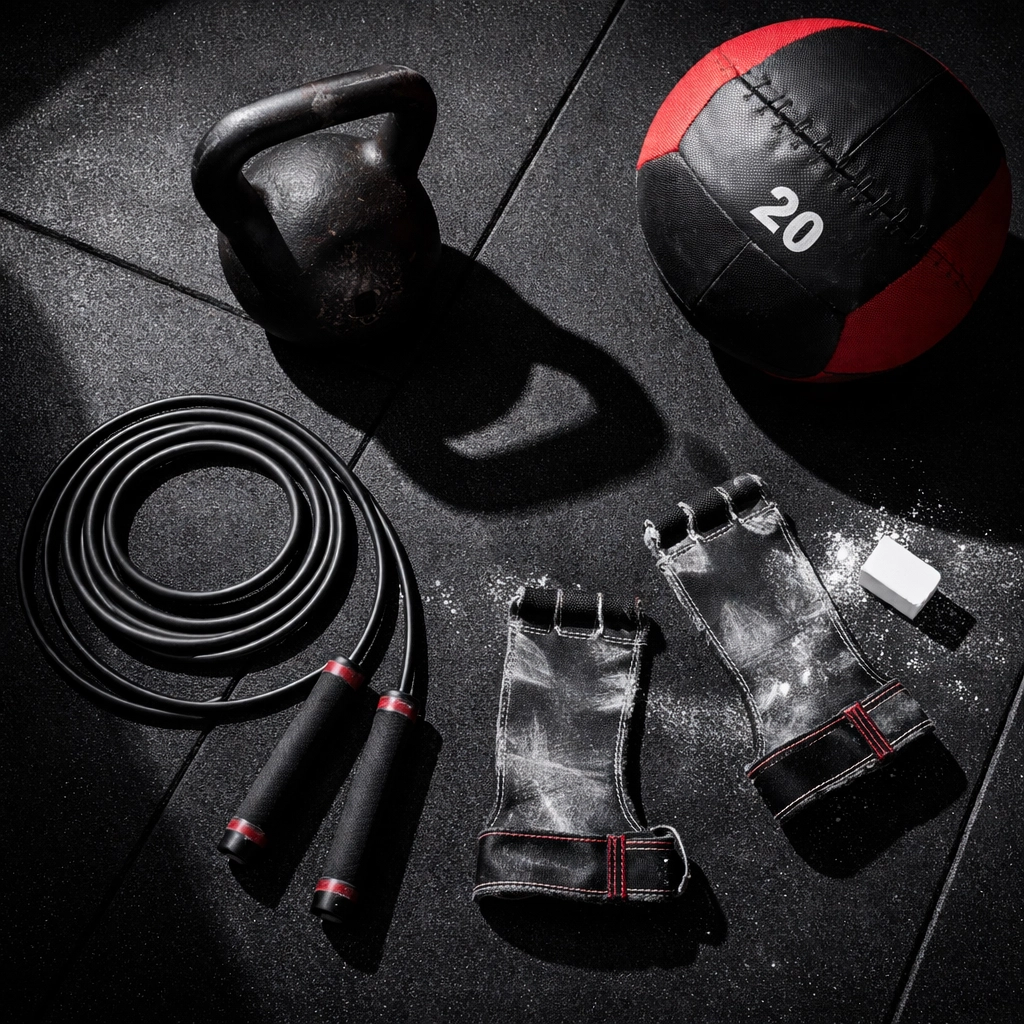
Kettlebells are non-negotiable for CrossFit. Swings, goblet squats, Turkish get-ups, snatches: these movements build explosive hip power and bulletproof conditioning. Start with a moderate weight (35-53 lbs for most athletes) and add heavier bells as you progress.
Dumbbells
Dumbbell work fills gaps that barbells can't reach. Unilateral training, accessory movements, and certain WODs require dumbbells. Adjustable dumbbells save space, but a simple set of fixed-weight dumbbells (35s, 50s) handles most programming.
Flat Bench
A sturdy flat bench supports bench presses, step-ups, box jumps (in a pinch), and countless accessory movements. Look for something rated for at least 600 lbs to handle barbell work safely.
Conditioning and Cardio Equipment
CrossFit conditioning is brutal. These machines help you build the engine to survive: and thrive.
Air Bike
Nothing humbles you faster than an air bike. The Rogue Echo Bike and Assault AirBike are gold standards for CrossFit conditioning. They're perfect for HIIT intervals, recovery days, and those nasty bike-to-burpee workouts that make you question your life choices.
Rowing Machine
The Concept2 Rower remains the industry standard. It delivers a full-body workout, builds cardiovascular capacity, and appears constantly in CrossFit programming. If budget is tight, prioritize this over the air bike: it's more versatile.
Jump Rope
Don't overlook this simple tool. A quality speed rope is essential for double-unders and general conditioning. It's cheap, takes up zero space, and will expose your coordination weaknesses immediately.
Bodyweight and Calisthenics Equipment
Here's where athletes serious about bodyweight training at home separate themselves from casual gym-goers.
Gymnastics Rings
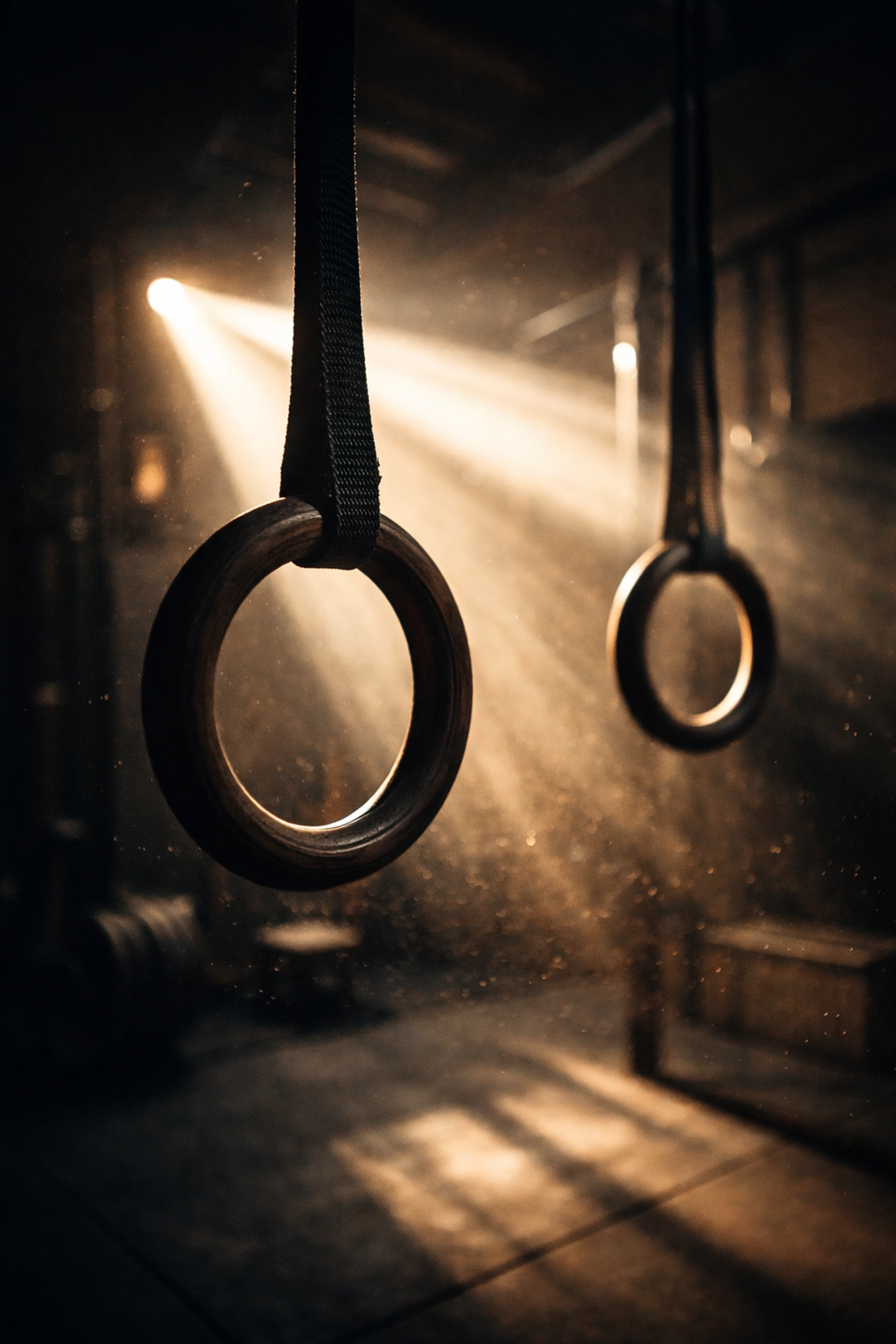
Rings unlock an entirely new dimension of training. Ring dips, ring rows, muscle-ups, and support holds build stability and strength that transfer directly to CrossFit performance. Hang them from your squat rack, ceiling, or a dedicated mount.
Plyo Box
Box jumps, step-ups, and box-over-burpees require a solid plyo box. Choose a 3-in-1 foam or wooden box that offers multiple height options (20", 24", 30"). Foam boxes reduce injury risk during high-rep workouts.
Resistance Rail: The Complete Calisthenics Solution
For athletes prioritizing calisthenics equipment for home, the Resistance Rail Deluxe from Bold Body Fitness deserves serious attention.
This isn't just a pull-up bar. It's a complete resistance training station that accommodates pull-ups, dips, resistance band exercises, and more: all without drilling holes or damaging your rental. Gymnasts, ninja warriors, and MMA fighters appreciate the rock-solid construction and versatility.
The floor-to-ceiling design means you're getting a versatile home gym that adapts to your training, not the other way around.
Recovery and Accessory Equipment
Training hard means recovering harder. Don't skip these.
GHD Machine
The Glute-Ham Developer builds posterior chain strength like nothing else. GHD raises, sit-ups, and hip extensions are staples in CrossFit programming. Budget options from Titan Fitness work well for home gyms.
Foam Roller and Massage Tools
Self-myofascial release keeps you moving well and recovering faster. A basic foam roller, lacrosse ball, and massage gun cover your bases. Use them before and after training.
AbMat
This simple wedge supports your lower back during sit-ups and allows full range of motion for GHD-style sit-ups on the floor.
Setting Up Your Space
You don't need a massive garage to build a functional CrossFit home gym. Here's how to maximize what you have:
Minimum footprint: 10' x 10' handles a squat rack, barbell work, and basic conditioning. Add flooring: horse stall mats are affordable and durable.
Ceiling height: 8' minimum for most movements. Higher ceilings accommodate rope climbs and overhead barbell work without restrictions.
Flooring: Protect your foundation with rubber flooring. It dampens noise, protects equipment, and saves your knees during burpees.
Ventilation: You're going to sweat. A lot. Fans, open garage doors, or proper HVAC make summer training survivable.
Building Your CrossFit Home Gym: The Smart Approach
Don't buy everything at once. Start with foundation equipment and train for 3-6 months. You'll discover what you actually need versus what looks cool on Instagram.
Phase 1: Barbell, bumper plates, squat stand, pull-up solution (like the Resistance Rail)
Phase 2: Kettlebells, rower or air bike, gymnastics rings
Phase 3: Dumbbells, plyo box, GHD, specialty equipment
This approach keeps you training immediately while spreading costs over time.
Final Thoughts
Building a CrossFit home gym is one of the best investments you'll make in your fitness journey. You're creating a space designed for your goals, your schedule, and your progression.
Start with the essentials. Add equipment strategically. And if you're looking for calisthenics equipment for home that won't destroy your walls, check out the full lineup at Bold Body Fitness.
Now stop reading and start building. Your PRs are waiting.
