
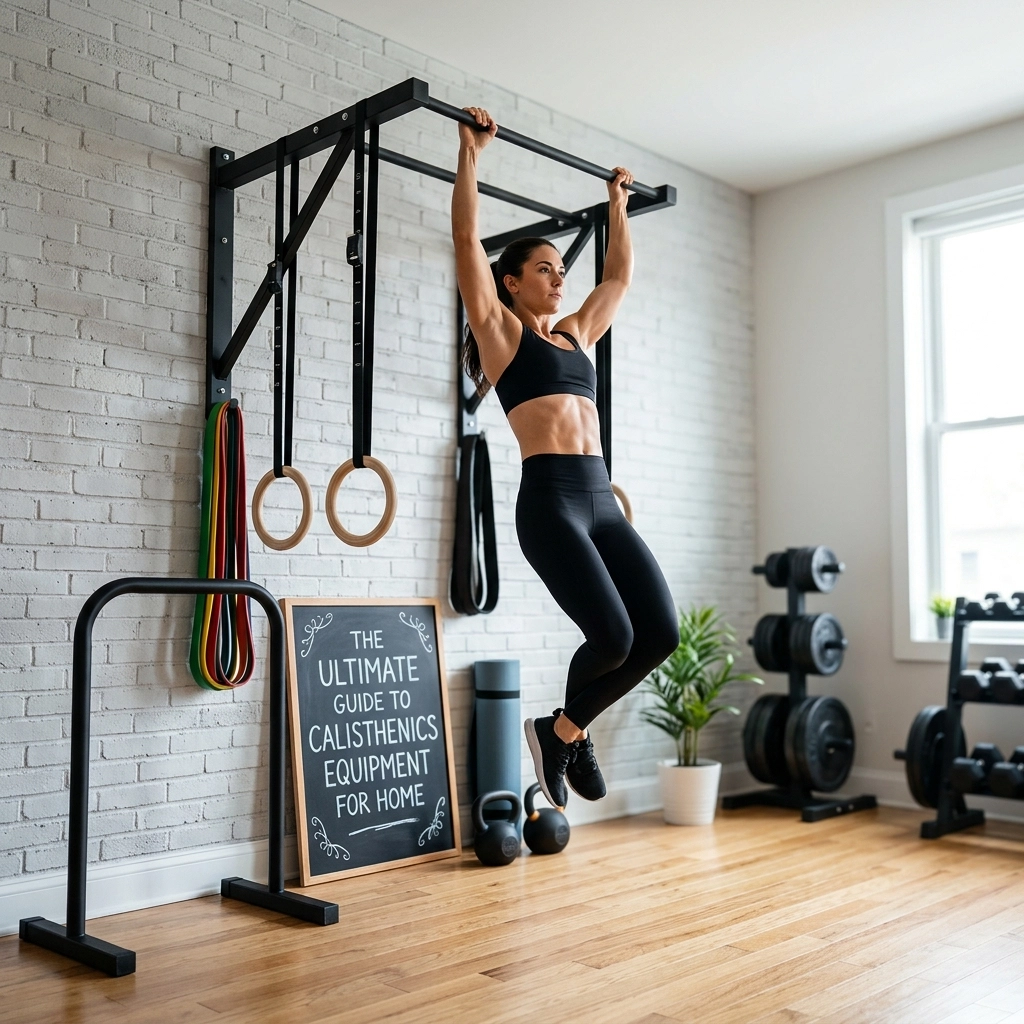
Listen, if you’re reading this, you aren't looking for a "New Year, New Me" starter pack or a dusty treadmill that’s going to end up as a laundry rack. You’re here because you want to master your own body. You want to push, pull, and hold yourself in positions that make gravity look like a suggestion rather than a law.
I’m Brian Kerr, founder of Bold Body Fitness, and I’ve seen it all. I’ve seen people try to build a crossfit home gym in a cramped apartment only to destroy their drywall within a week. I’ve seen "ninja warriors" snap cheap doorway pull-up bars and end up on a YouTube fail compilation.
If you’re serious about bodyweight training at home, you need gear that matches your intensity. You need a setup that doesn't just sit there but empowers you to hit every muscle group with precision. This is the ultimate guide to calisthenics equipment for home, and I’m not going to sugarcoat it: if your gear is weak, your progress will be too.
The Foundation: Why Most Home Gyms Fail Calisthenics Athletes
Most home gym equipment is designed for the average person who wants to move a little bit. But for a calisthenics practitioner, an MMA fighter, or a gymnast, "moving a little bit" doesn't cut it. You need stability. You need versatility. And if you’re renting or you just value your house, you need a no wall damage workout system.
The biggest hurdle for home calisthenics has always been the pull-up. It’s the king of upper-body movements. But typical pull-up bars are either flimsy doorway versions that ruin your trim or massive power towers that take up half the living room.
That’s exactly why we developed the Resistance Rail. We wanted a pull up bar alternative that offered the stability of a bolted-in rig without actually having to drill into your studs. When you’re training for high-level skills like the front lever or muscle-ups, you cannot afford to have your equipment shifting under you.
1. The Core: The Pull-Up Bar Alternative
If you don't have a place to hang, you don't have a calisthenics gym. Period. Pull-ups, chin-ups, hanging leg raises, and skin-the-cats are the bread and butter of resistance training.
The Problem with Traditional Bars
Standard doorway bars limit your range of motion. You’re constantly worried about your head hitting the frame or the bar slipping. Wall-mounted rigs are great, but not everyone wants to bore giant holes into their home's infrastructure.
The Bold Solution: The Resistance Rail
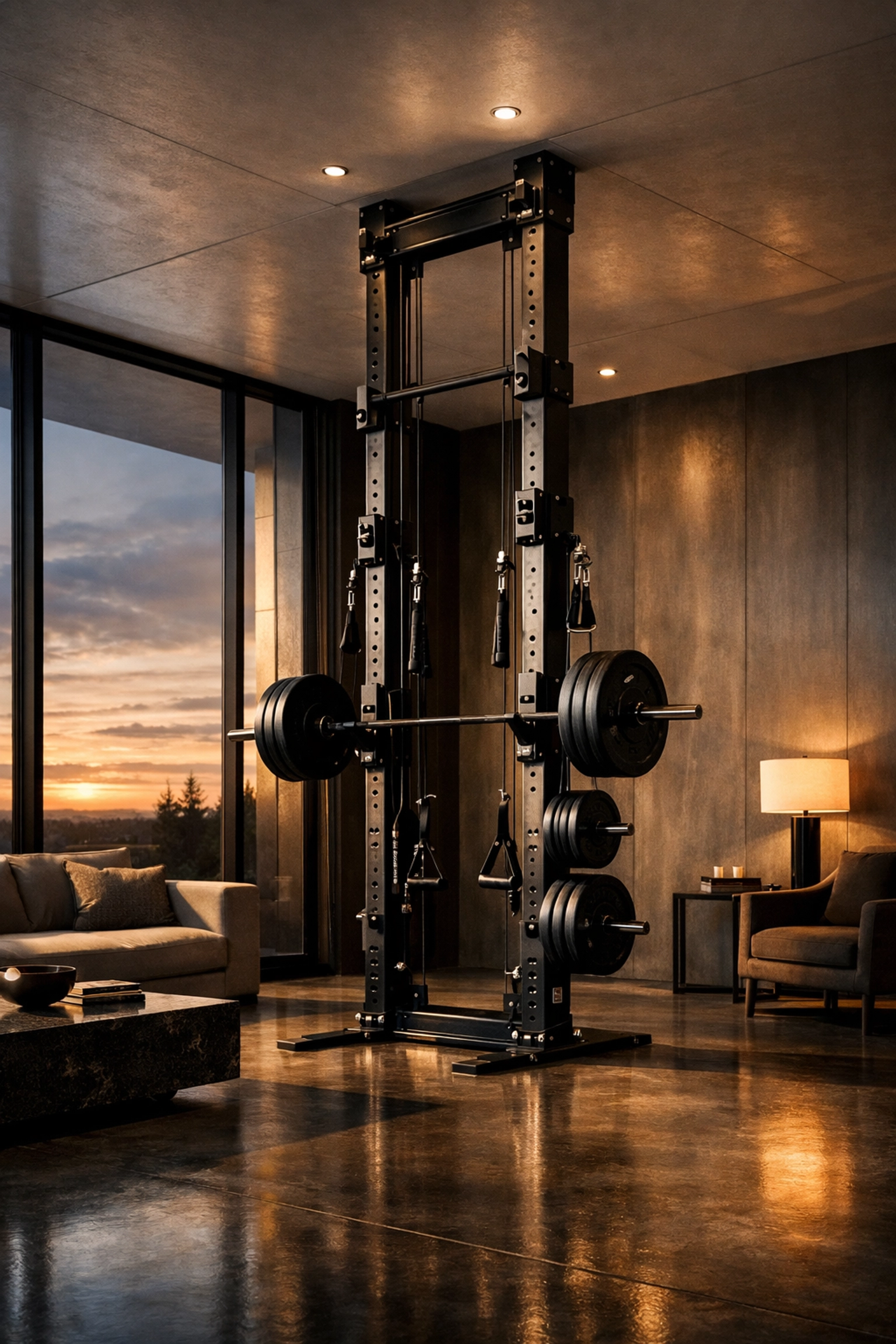
Our Resistance Rail is a floor to ceiling gym solution. It uses high-tension engineering to lock into place, providing a rock-solid anchor point for pull-ups and more. This is the ultimate versatile home gym component because it doesn't just give you a bar; it gives you a vertical mounting system for everything else.
For those looking for a no wall damage workout system, this is the gold standard. You get the rigidity of a professional gym rig with the flexibility of a portable setup. Whether you're a CrossFit athlete working on butterfly pull-ups or a ninja warrior practicing your grip, you need that absolute confidence in your anchor point.
2. Gymnastic Rings: The Ultimate Humbler
If you think you’re strong, get on a pair of rings. Gymnastic rings are the most effective tool for developing a "bold" physique and elite-level stabilizer strength. Because they move independently, your muscles have to work twice as hard to keep you steady.
When choosing rings for your calisthenics equipment for home, go for wood. Plastic is slippery, and metal is overkill for indoors. Wood provides the best grip, especially when things get sweaty.
At Bold Body Fitness, we recommend hanging your rings from a stable overhead point: like our Resistance Rail: to perform:
- Ring Dips: Far superior to stationary bar dips for chest and tricep development.
- Muscle-Ups: The transition from pull to push is much more natural on rings.
- Ring Rows: Perfect for building that "V-taper" back.
Rings turn any space into a full body workout at home station. They are portable, adjustable, and they will expose every weakness you have. Embrace it.
3. Parallettes: Protecting the Wrists, Boosting the Gains
If you’re doing all your push-ups and handstands flat on the floor, you’re eventually going to run into wrist issues. Parallettes (push-up bars) are essential for two reasons: range of motion and joint health.
By using parallettes, you can drop your chest lower than your hands, giving your pectorals a deeper stretch and more growth potential. For advanced moves like the L-sit, planche, or handstand push-ups, parallettes provide a neutral wrist position that allows you to train longer and harder.
When building your versatile home gym, look for low-profile parallettes for stability and higher ones if you want to practice dips and swing-throughs. They are the perfect companion for anyone serious about bodyweight training at home.
4. Resistance Bands: The Progression Secret
Too many people think resistance