
Let’s be real for a second. Most home gyms are graveyard for overpriced coat racks. People spend thousands on massive, clunky machines that do one thing and do it poorly. If you’re here, you’re not that person. You’re a serious athlete: a ninja warrior, a crossfitter, a gymnast, or an MMA fighter: and you know that the ultimate machine is the human body.
Bodyweight training at home isn't just about doing push-ups in your living room. It’s about building a high-performance environment that allows you to master your own physics. Whether you’re chasing a perfect planche, a one-arm pull-up, or just trying to stay explosive for your next fight, the right calisthenics equipment for home is the difference between plateaus and progress.
At Bold Body Fitness, we believe in gear that works as hard as you do. We don’t do "average." We do bold. We do versatile. And we definitely don’t do wall damage.
In this guide, we’re breaking down exactly what you need to build a world-class home gym that turns your living space into a high-performance lab.
Why Calisthenics? The Power of Resistance Training
Before we dive into the gear, let’s talk about the why. Calisthenics is the purest form of resistance training. Instead of pushing iron, you’re pushing, pulling, and holding your own mass against gravity.
For the modern athlete, this translates to:
- Functional Strength: You’re training movements, not just muscles.
- Joint Longevity: Bodyweight movements often place less shearing force on joints compared to heavy external loads.
- Core Mastery: Every calisthenics move is a core move. Period.
- Portability: You are the gym.
But to reach the elite levels of calisthenics, you need more than just a floor. You need height, you need stability, and you need variety.

The Foundation: Essential Home Gym Equipment
If you’re starting from scratch, you need to cover the three pillars of movement: Pushing, Pulling, and Core.
1. The Pull-Up Bar (And Why Most Suck)
A pull-up bar is the absolute cornerstone of any bodyweight training at home. But let’s be honest: those cheap door-frame bars are a disaster waiting to happen. They damage your trim, they limit your range of motion, and they feel about as stable as a house of cards.
If you’re a ninja warrior or a gymnast, you need to be able to explode. You can’t do that on a bar that might fly off the door frame if you sneeze. You need a pull up bar alternative that actually holds your weight and allows for dynamic movements.
2. Parallettes (Push-Up Bars)
Parallettes are non-negotiable for handstand work, L-sits, and deep push-ups. They save your wrists by allowing a neutral grip and give you the height needed for advanced skill progressions like the planche. Look for heavy-duty steel or high-quality wood: anything else is just a toy.
3. Dip Bars
Dips are the "squat" of the upper body. Independent dip bars are great because you can adjust the width to fit your frame. They’re also versatile enough to use for Australian pull-ups (inverted rows) if you’re still building your pulling strength.
The Revolution: The Floor to Ceiling Gym
This is where things get interesting. Most people think they have to choose between a bulky power rack that takes up the whole garage or a flimsy door bar that limits them to basic pull-ups.
We decided that choice was garbage.
Enter the floor to ceiling gym concept. This is the ultimate versatile home gym solution for people who take their training seriously but don't want to turn their home into a construction zone.
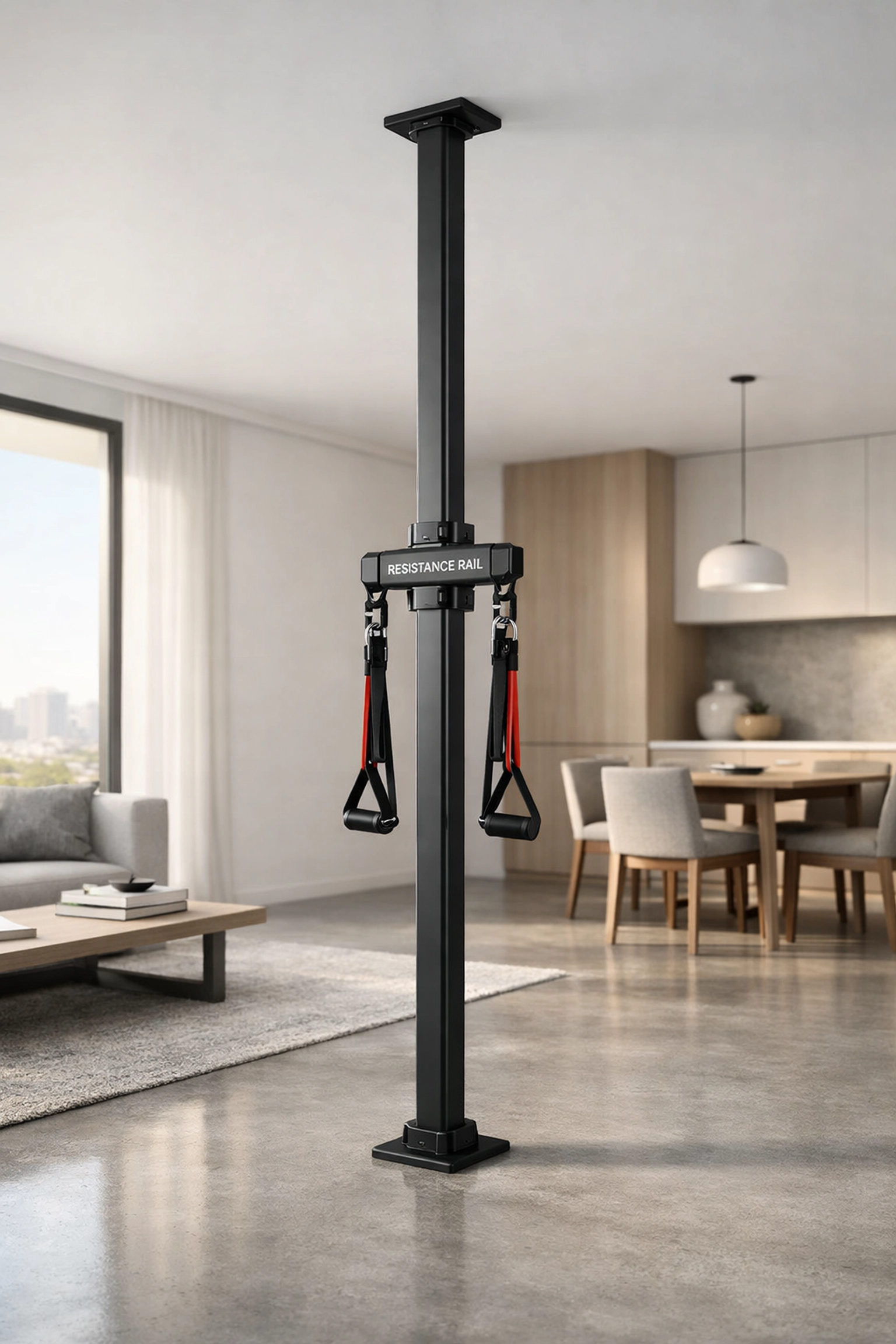
Our flagship product, the Resistance Rail, is the peak of this evolution. It’s a no wall damage workout system that uses tension to stay secure. No drilling into studs. No permanent holes. Just a rock-solid, professional-grade station that supports everything from heavy resistance band work to advanced calisthenics.
Why the Resistance Rail is a Game-Changer
If you're looking for a full body workout at home, the Resistance Rail is the answer. It’s not just a bar; it’s a vertical anchor system.
- MMA Fighters: Attach your resistance bands for explosive striking drills.
- CrossFit Athletes: Use it for high-intensity metcons without needing a $2,000 rig.
- Calisthenics Practitioners: It provides a stable, adjustable height anchor for all your accessory work.
Designing Your CrossFit Home Gym
Crossfitters are a different breed. You need gear that can handle high volume, high intensity, and a lot of sweat. When building a crossfit home gym, you need to prioritize equipment that allows for fast transitions.
A typical home WOD might involve pull-ups, push-ups, and band-resisted sprints. If you’re constantly adjusting clamps or moving heavy benches, your heart rate drops and your stimulus is gone.
The beauty of a versatile home gym setup like the ones we advocate for at Bold Body Fitness is the ability to switch from a pulling movement to a pushing movement in seconds. By using the Resistance Rail as your central hub, you can have your bands pre-set at different heights, allowing you to move through your circuit without missing a beat.
Leveling Up: Advanced Gear for Elite Athletes
Once you’ve got the basics, it’s time to add the "extras" that make the difference between a beginner and a master.
Gymnastic Rings
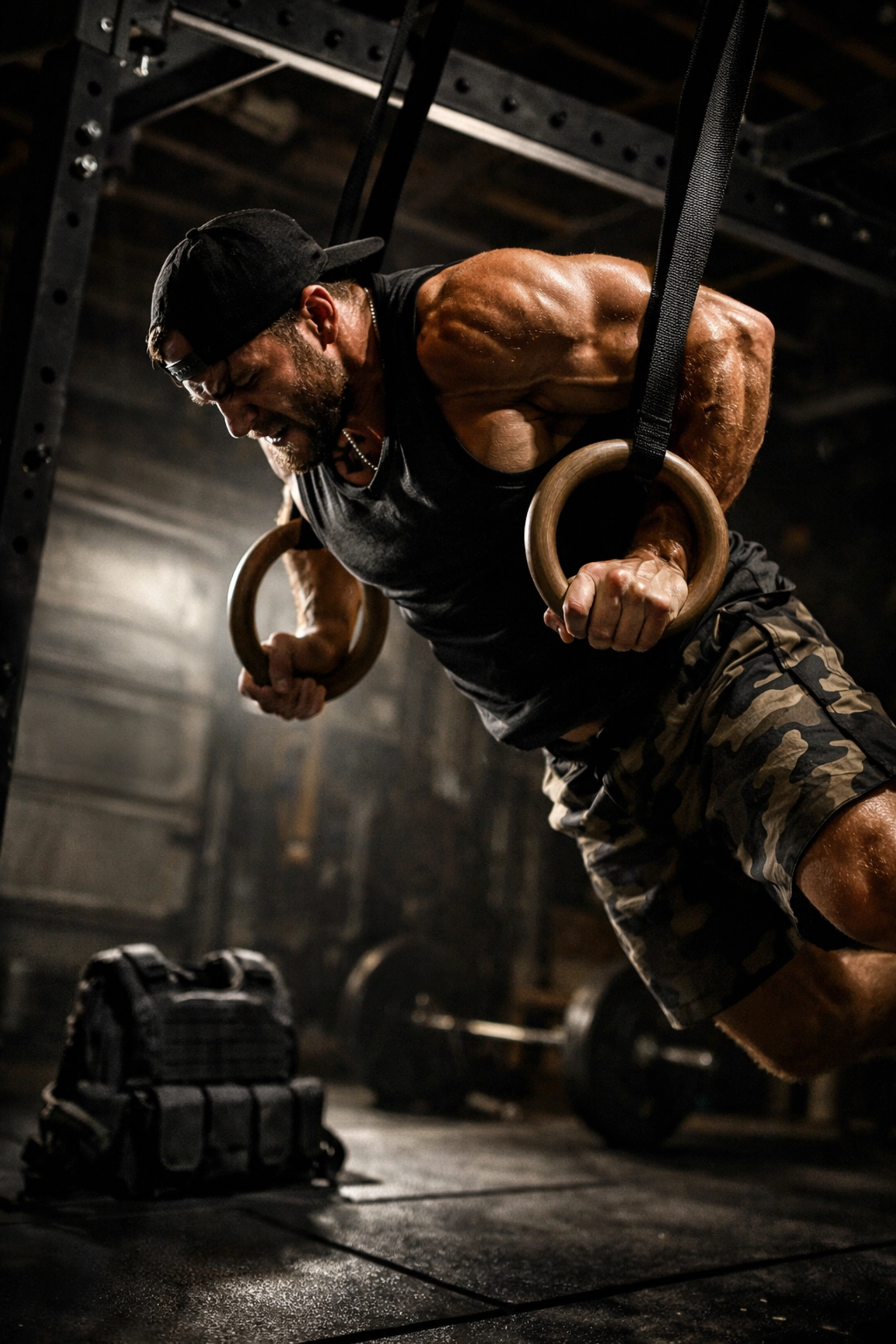
If you aren't training on rings, you're missing out on the most effective tool for upper body development. The instability of the rings forces every stabilizing muscle in your shoulders and core to fire like crazy. You can hang rings from your Resistance Rail or any high-capacity anchor point to take your dips and pull-ups to a terrifyingly effective level.
Resistance Bands
Resistance bands are the unsung heroes of resistance training. They aren't just for warm-ups. For calisthenics, they are the "assistants" that help you master movements like the muscle-up or the front lever. They also provide "accommodating resistance," which means the movement gets harder as you reach the peak of the contraction.
Weight Vests
Eventually, your body weight isn't enough. When you can smash out 20 perfect pull-ups, it’s time to add load. A 20kg weight vest is the standard for serious calisthenics athletes. It keeps the weight close to your center of gravity, maintaining the "feel" of bodyweight training while forcing your muscles to adapt to a higher stimulus.
The "No Wall Damage" Requirement
Let’s talk about the elephant in the room: Renting. Or, even if you own your home, not wanting to destroy your walls for a pull-up bar.
Most high-end home gym equipment requires you to bolt it into the floor or the wall. If you’re a tenant, that’s an immediate "no" from the landlord. If you’re a homeowner, you might not want to ruin the aesthetics of your spare room or garage.
This is why the no wall damage workout system is so critical. The Resistance Rail uses a clever floor-to-ceiling tension mechanism. It’s as solid as a bolted-in rig but leaves zero footprint when you decide to move it. This makes it the premier calisthenics equipment for home for anyone who values their security deposit or their drywall.
Training for Your Specific Sport
Your equipment should reflect your goals. Here’s how different athletes should utilize a Bold Body Fitness setup:
For Ninja Warriors
You need grip strength and explosive pulling power. Use the Resistance Rail to hang various grip implements like cannonball grips or nunchucks. Because the system is vertical and stable, you can practice your reaches and transfers with confidence.
For MMA Fighters and Grapplers
Isometric strength is king in the cage. Use resistance bands anchored to your rail to simulate clinch work or take-down resistance. The ability to anchor bands at ground level, waist level, and overhead level allows you to train your sport-specific movements with actual resistance.
For Gymnasts
You need height and stability for holds. The floor-to-ceiling gym setup provides the vertical space needed for high-bar work and ring holds. It’s the closest thing to a "podium" setup you can get in a standard-sized room.

How to Get Started with Your Bold Home Gym
Building the ultimate setup doesn't have to happen overnight. Here is the Bold Body Fitness recommended progression:
- Phase 1: The Anchor. Get your Resistance Rail. This gives you the framework for everything else. It’s the most important piece of home gym equipment you’ll buy because it enables all other movements.
- Phase 2: The Accessories. Add a set of high-quality resistance bands and parallettes. Now you have a full body workout at home capability.
- Phase 3: The Load. Buy a weight vest and a set of gymnastic rings. Now you’re in the elite tier.
Ready to see the full range? Check out our Shop to see how we’re redefining home fitness gear.
Maintenance and Safety
Even the best gear needs a little love. If you’re using a floor to ceiling gym, check your tension once a month to ensure everything is still rock-solid. If you’re using resistance bands, inspect them for tiny tears or "nicks": a band snapping mid-workout is a rite of passage you want to avoid.
Safety isn't just about the gear; it's about the space. Ensure you have a clear landing zone around your equipment. Even though calisthenics has a lower risk of "dropping a barbell on your neck," you can still take a tumble during a complicated skill progression.
The Bottom Line
The era of the "junk" home gym is over. You don't need a basement full of rusting iron to get into the best shape of your life. You need a smart, versatile home gym that respects your space and challenges your limits.
Whether you're looking for a pull up bar alternative or a complete no wall damage workout system, Bold Body Fitness is here to provide the tools for your transformation. Stop making excuses about space, damage, or equipment quality.
The gym is where you are. Make it Bold.
Ready to upgrade your training?
For more technical specs and layout ideas, you can also explore our post sitemap or check out our product directory.
You’ve got the drive. Now get the gear to match. Succeeding in calisthenics isn't just about the reps; it's about the environment you create for yourself. Build it right, and the results will follow.
Now, go get after it.
