
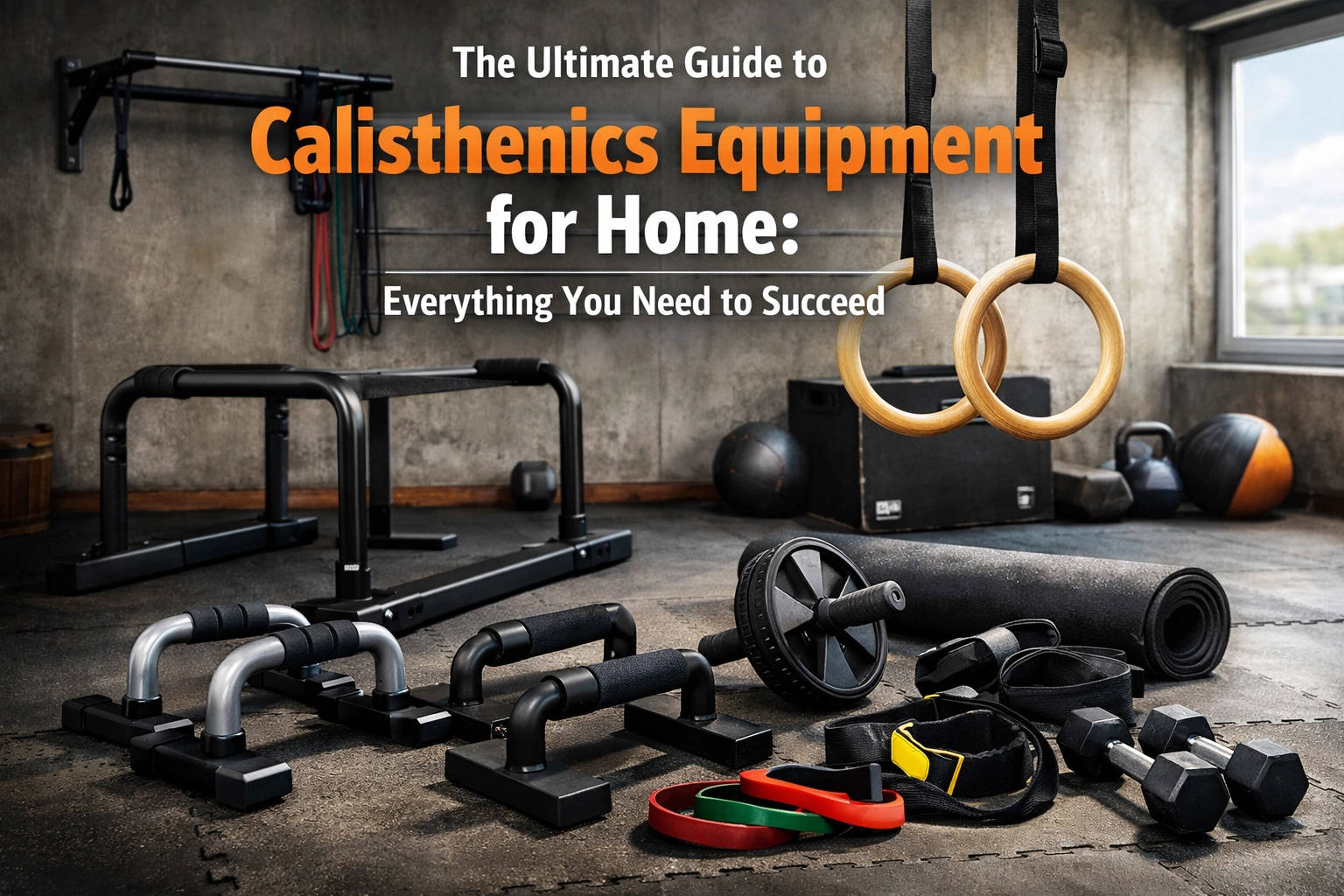
Listen up. If you’re serious about your fitness, you know that your body is the ultimate machine. But even the most finely-tuned machine needs the right tools to reach peak performance. We’re talking about bodyweight training at home: not the casual "ten pushups before breakfast" kind, but the high-intensity, gravity-defying, muscle-shredding kind that turns ordinary people into elite athletes.
Whether you are an aspiring Ninja Warrior, a seasoned gymnast, a CrossFit fanatic, or an MMA fighter looking to build explosive functional strength, your home setup is your sanctuary. At Bold Body Fitness, we don’t do "average." We do bold. We do equipment that survives the grind.
In this guide, we’re breaking down everything you need for the ultimate calisthenics equipment for home setup. We’re moving past the cheap plastic door-frame bars and diving into a versatile home gym that actually produces results without destroying your house.
Why Calisthenics? The Power of Mastery
Before we talk gear, let’s talk philosophy. Why are you here? You’re here because you want total control. Calisthenics isn't just about moving weight; it’s about moving your weight through space with precision and power.
Resistance training using your own body weight builds a level of functional strength that traditional bodybuilding simply can’t touch. It improves your proprioception, strengthens your joints, and creates a physique that is as capable as it is aesthetic. But to get there, you need a setup that allows for full-body engagement. You need a full body workout at home that doesn't feel like a compromise.
The Essential Toolkit: Leveling Up Your Space
If you’re starting from scratch, the options can be overwhelming. Let’s cut through the noise. Here is the core equipment you need to dominate your training.
1. The Foundation: Pulling Power
The biggest hurdle in home calisthenics is finding a place to pull. You can push against the floor, but you can’t pull against it. Research shows that a pull-up bar is the single most critical piece of equipment for any bodyweight athlete.
But let’s be real: door-frame bars are a liability. They slip, they damage the trim, and they limit your range of motion. For the serious athlete, you need a pull up bar alternative that offers stability. This is where the floor to ceiling gym concept changes the game. Systems that anchor between your floor and ceiling provide the rigidity of a commercial power rack without the need to bolt anything into your studs.
2. Pushing the Limits: Dip Bars and Parallettes
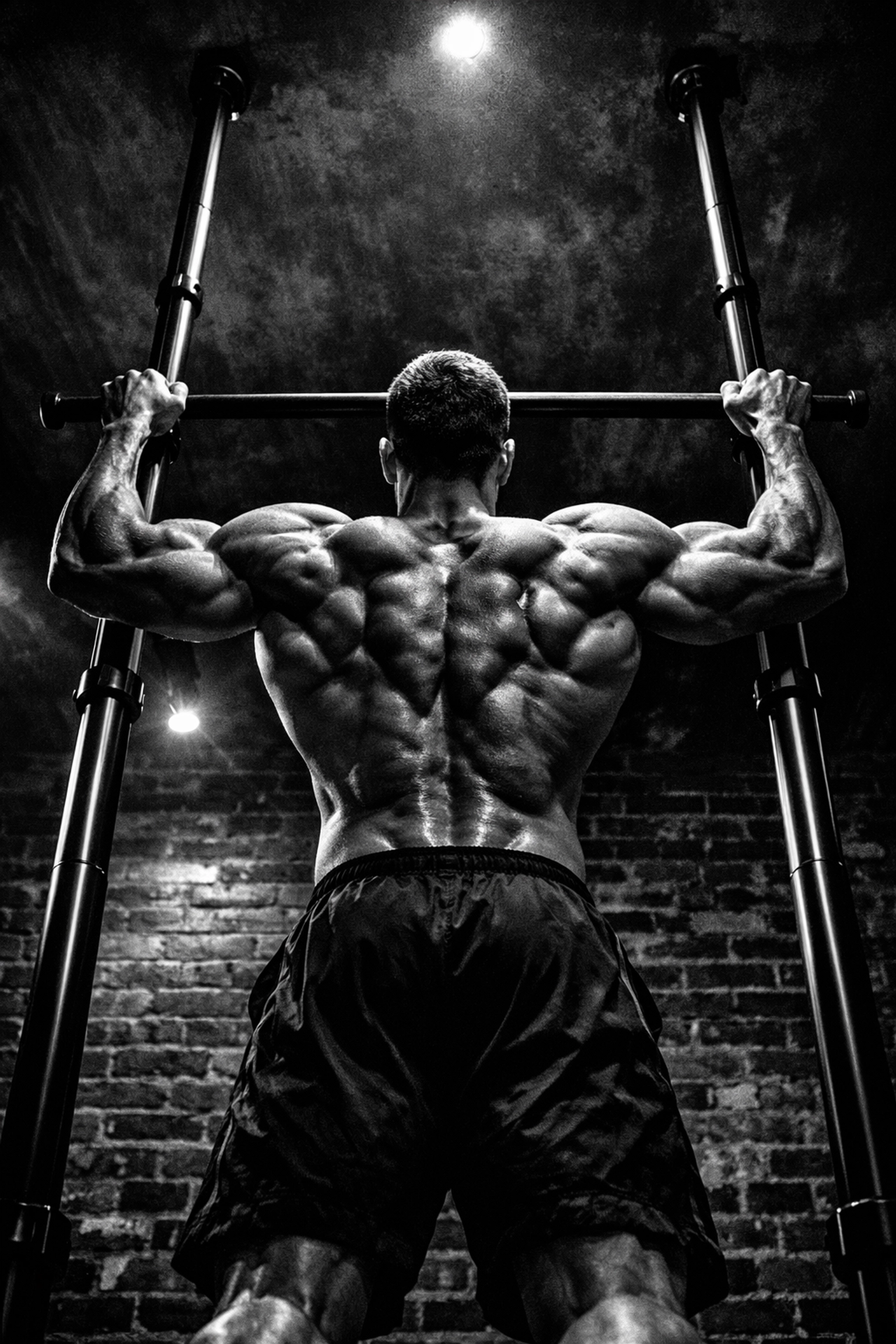
Dips are the "squat" of the upper body. They hit your chest, triceps, and shoulders with a level of intensity that pushups can’t match.
- Parallettes (Mini P-Bars): Essential for gymnasts and anyone working on L-sits, planches, or handstand pushups. They save your wrists and allow for a deeper range of motion.
- Dip Stations: If you have the space, a dedicated dip station allows for weighted dips: the ultimate mass builder for the upper body.
3. The Ultimate Versatility: Gymnastic Rings
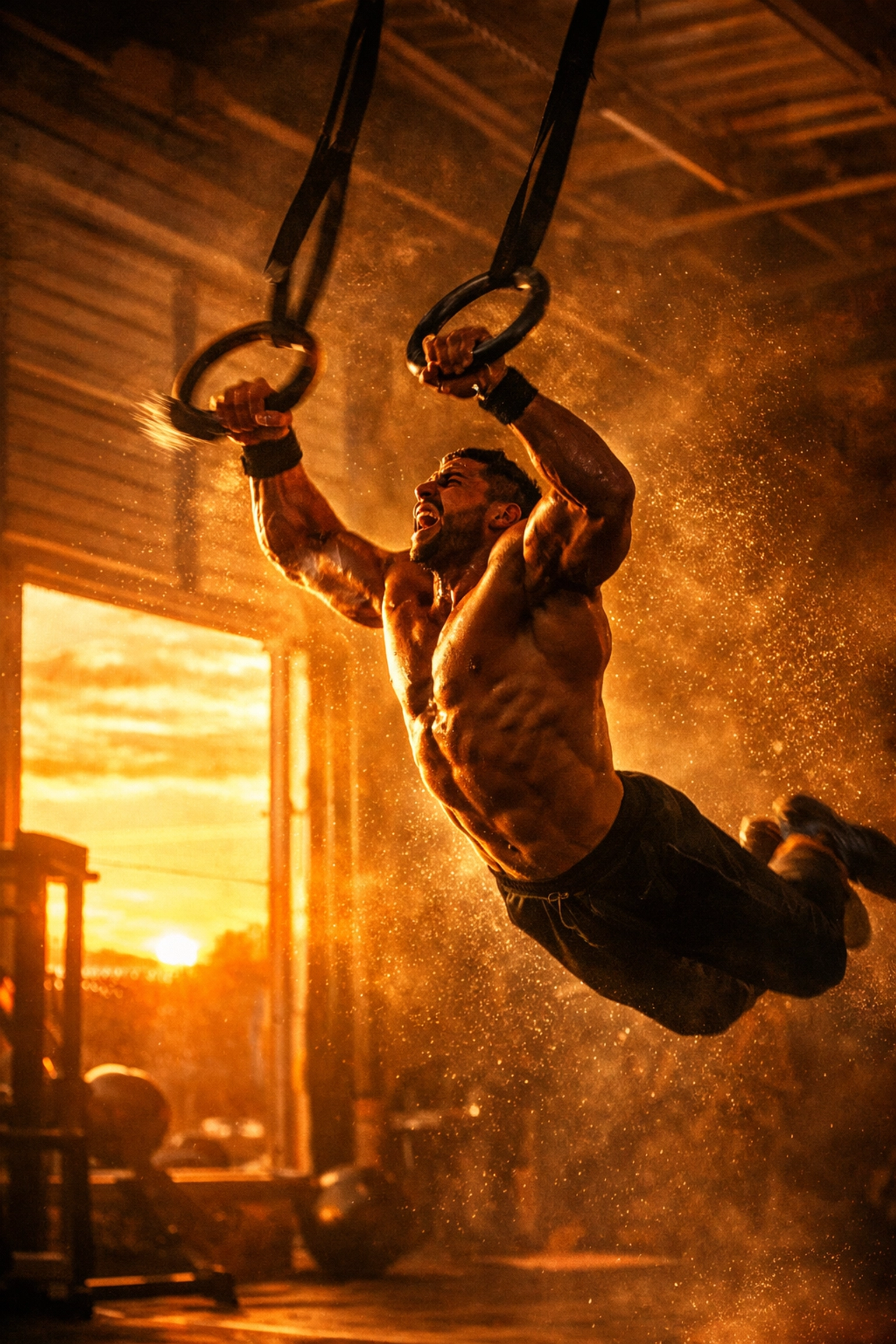
If you could only own one piece of equipment, it should be gymnastic rings. They are the gold standard for calisthenics equipment for home. Why? Because they are inherently unstable. Every pull-up, dip, or muscle-up on rings forces your stabilizer muscles to fire at 100% capacity. This is how you develop that "dense" look and the functional strength required for MMA and Ninja Warrior obstacles.
Introducing the Game Changer: The Resistance Rail
Most people think they have to choose between a bulky power rack that takes up half the garage or a flimsy setup that falls apart after a month. We thought that was BS.
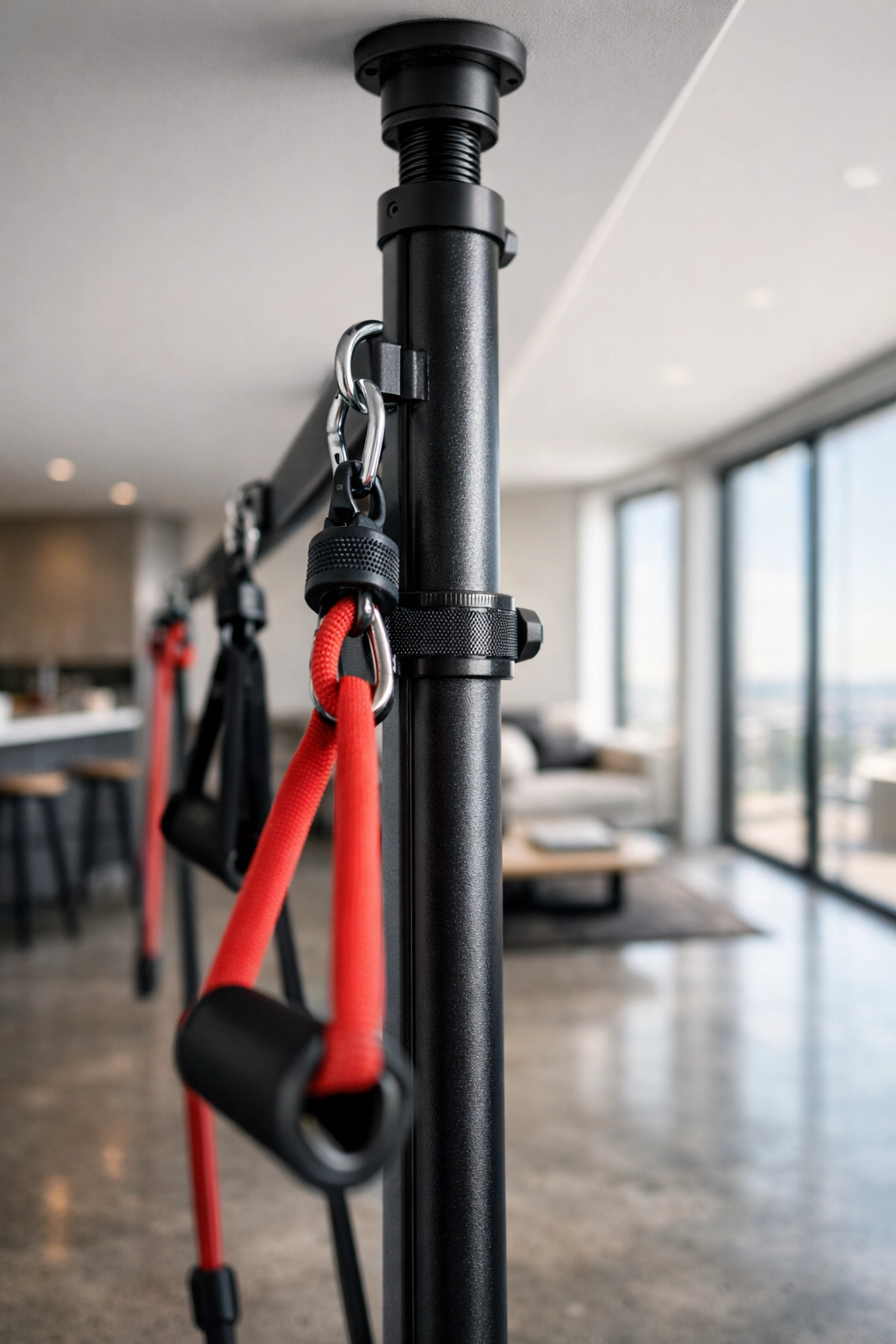
At Bold Body Fitness, we developed the Resistance Rail. It is a no wall damage workout system designed for people who live in apartments, rentals, or simply don't want to destroy their drywall.
The Resistance Rail is the heart of a versatile home gym. It functions as a heavy-duty anchor point for resistance bands, rings, and even suspension trainers. Because it utilizes a floor-to-ceiling tension design, it provides the rock-solid stability you need for explosive movements without a single drill bit touching your walls.
Whether you’re doing high-tension resistance training or practicing your transitions for a Spartan race, this is the anchor you can trust. Check it out at our Shop.
Training for Your Discipline
A crossfit home gym looks different than a gymnast’s studio. Let’s break down how to tailor your equipment to your specific goals.
For the Ninja Warrior & Obstacle Racer
You need grip strength and explosive pulling power. Your setup must include:
- Pull-up variations: Use the Resistance Rail to hang different grips (cannonballs, nunchucks).
- Plyometric space: A high-quality mat for box jumps and burpees.
- Suspension trainers: To mimic the unstable nature of hanging obstacles.
For the MMA Fighter & Combat Athlete
Your focus is on "brute" bodyweight strength and conditioning.
- Resistance Bands: Essential for mimicking the resistance of a clinch or a takedown shot.
- Heavy Dips: To build the triceps power needed for striking and pushing off opponents.
- Core Stability: Using rings for "roll-outs" to build an iron midsection that can take a hit.
For the Gymnast & Calisthenics Purist
You are chasing the "Big Moves": the Planche, the Front Lever, and the Iron Cross.
- Low Parallettes: To master the planche and handstand.
- Weighted Vests: To add load to your pull-ups once you can easily smash out 15+ reps.
- Resistance Rail Anchors: To use bands as "assistance" for learning the mechanics of the front lever.
The "No Wall Damage" Revolution: Why It Matters
Let’s talk about the elephant in the room: home damage. If you’re a renter or you’ve just spent thousands on a home renovation, the last thing you want is a pull-up bar tearing your door frame out or a squat rack scratching your floors.
A no wall damage workout system isn't just a convenience; it’s a necessity for the modern athlete. The move toward floor to ceiling gym equipment allows you to maximize your vertical space without any permanent alterations. This means you can train in your living room, your bedroom, or your home office and take your entire gym with you when you move.
Designing Your Floor Plan: Maximize Your Gain
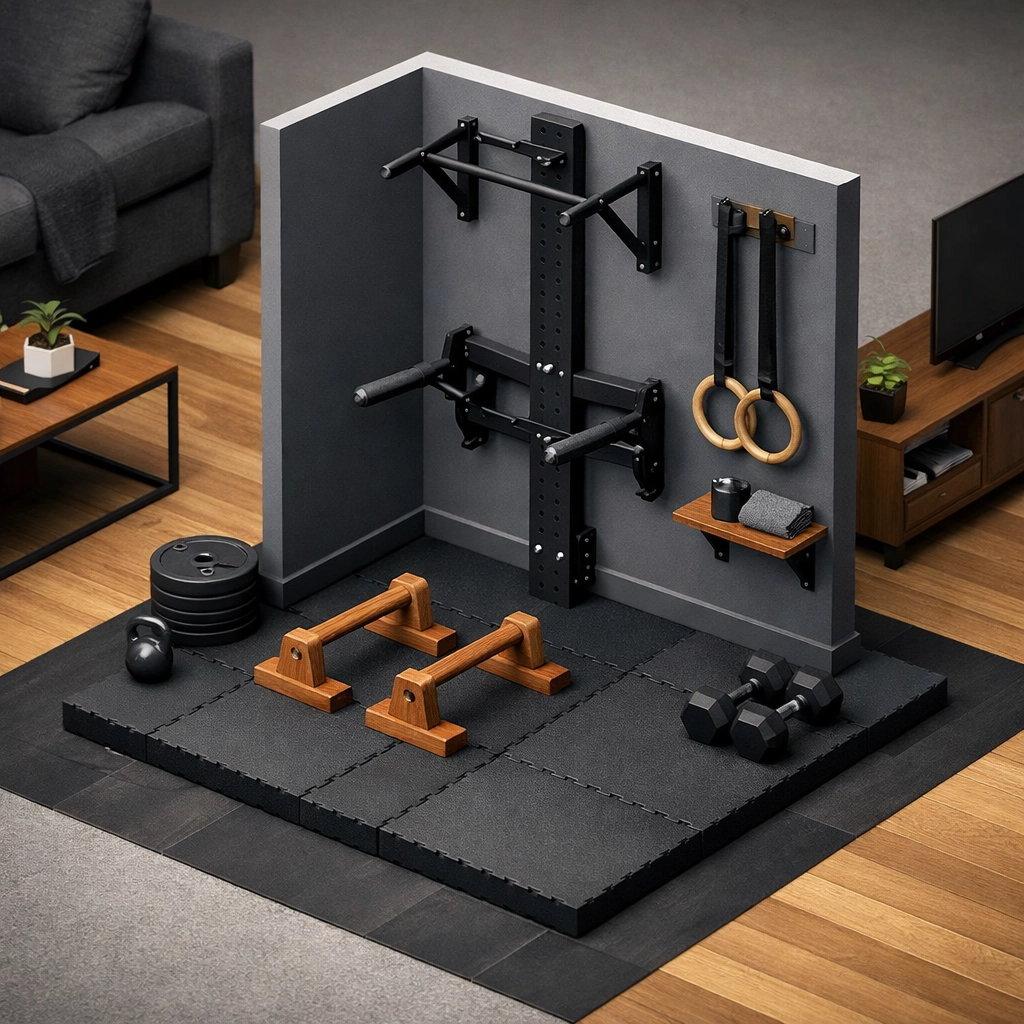
You don't need a 2,000-square-foot facility. You can dominate your goals in a 6x6 space if you're smart about it.
- The Vertical Anchor: Use the Resistance Rail as your centerpiece. It takes up zero floor space but provides the anchor for 80% of your exercises.
- The Flooring: Don't skimp here. Get high-density rubber mats. They protect your joints during high-impact landings and protect your floor from dropped weights or equipment.
- The Mirror: If you’re working on form (especially handstands or planches), a mirror is a vital feedback tool.
- The Community: Don't train in a vacuum. Connect with other athletes in our Forums to share tips on home gym layouts and workout routines.
Advanced Progressions: Beyond the Basics
Once you have your calisthenics equipment for home set up, it’s time to push. You shouldn't just be doing the same reps every week. Progressive overload is the law of the land.
Using Resistance Bands
Bands are the most underrated tool in resistance training. Use them to:
- Assist: Loop a band over your pull-up bar or Resistance Rail to help you get through those last few reps of a muscle-up.
- Resist: Add a band to your pushups or dips to increase the tension at the top of the movement.
The Power of Isometrics
Static holds are where the real "superhuman" strength is built. Holding a tuck planche or a hanging leg raise for 30 seconds builds a different kind of fiber than just pumping out reps. Your equipment needs to be stable enough to handle these high-tension holds without wobbling.
Maintaining Your Gear
Bold Body Fitness equipment is built to take a beating, but even the best gear needs a little love.
- Check Your Anchors: Once a month, ensure your floor-to-ceiling tension is still tight.
- Clean Your Rings: If you use wooden rings, keep them dry. If you use plastic or metal, wipe them down to remove sweat and chalk buildup.
- Inspect Your Bands: Look for small nicks or tears. A band snapping mid-rep is a one-way ticket to an injury you don't want.
Summary: Build the Body, Build the Life
Building a full body workout at home setup is an investment in yourself. It removes the excuses. No commute to the gym. No waiting for the squat rack. No "membership fees" that go to waste.
When you choose Bold Body Fitness, you’re choosing equipment that matches your intensity. From the versatility of the Resistance Rail to the community support in our Members area, we are here to ensure you succeed.
Stop settling for mediocre workouts. Stop worrying about your walls. It’s time to get bold.
Quick Reference Guide: Calisthenics Must-Haves
| Equipment | Target Goal | Why You Need It |
|---|---|---|
| Pull-Up Bar / Rail | Back, Biceps, Grip | Foundational pulling movement; essential for all levels. |
| Gymnastic Rings | Stability, Core, Chest | The ultimate tool for functional, unstable strength. |
| Parallettes | Wrists, Shoulders, L-Sits | Essential for gymnastic movements and wrist health. |
| Resistance Bands | Progression, Mobility | Perfect for assisting difficult moves or adding resistance. |
| Resistance Rail | Versatility, No Damage | The best anchor for a no wall damage workout system. |
Ready to transform your space? Head over to the Bold Body Fitness Shop and get the gear that works as hard as you do.
Join the Conversation
Got a killer home gym setup? We want to see it. Check out our Gallery for inspiration from other athletes or jump into the Group Forums to discuss the latest training techniques with the Bold Body tribe.
Your journey to total body mastery starts now. Don't wait for Monday. Don't wait for "next month." The only thing standing between you and your goals is the equipment you haven't bought yet and the work you haven't started. Get after it.
