
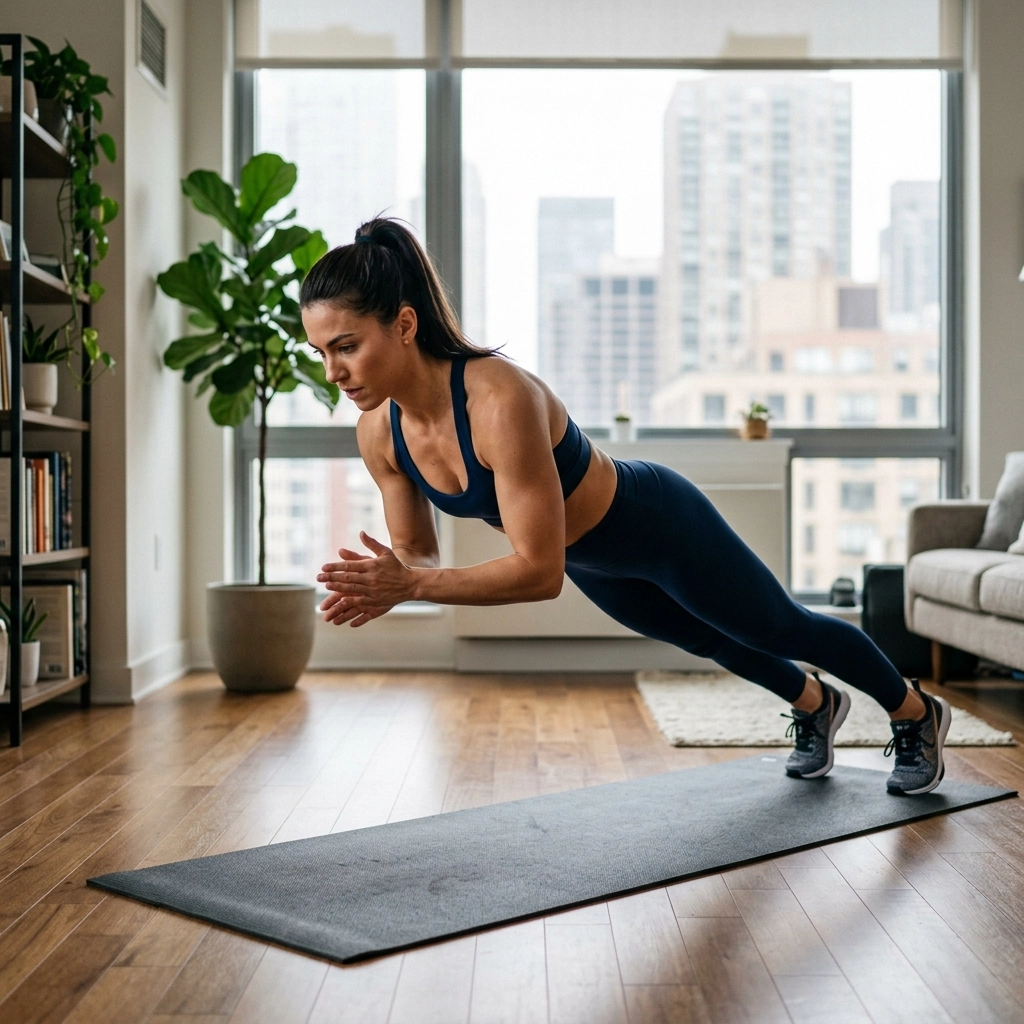
Stop making excuses. If you think you need a 5,000-square-foot commercial facility and ten thousand dollars worth of iron to get elite-level results, you’re living in the past. Look, I’m Brian Kerr, the founder of Bold Body Fitness, and I’ve seen athletes from every discipline: CrossFit, MMA, gymnastics, and Ninja Warriors: transform their physiques and their performance in spaces no bigger than a walk-in closet.
The truth is, bodyweight training at home is the ultimate test of functional strength. But most people do it wrong. They settle for a few half-hearted push-ups on a carpeted floor and wonder why they aren’t seeing gains. If you want to dominate, you need a strategy. You need a versatile home gym setup that doesn’t compromise on intensity just because you’re short on square footage.
In this guide, I’m breaking down exactly how to build a world-class training environment in a small space, the essential movements that build real power, and why the "traditional" home gym equipment you see in big-box stores is holding you back.
The Small Space Reality: No Room for Weakness
Most home gym equipment is bulky, heavy, and frankly, ugly. If you’re a renter or living in a modern apartment, the last thing you want is a massive power rack that ruins your floors and eats up your entire living room. You need a no wall damage workout system that actually works.
To succeed in a small space, you have to think vertically. When you stop looking at the floor and start looking at the space between your floor and ceiling, the possibilities for a full body workout at home explode. You aren't just limited to the four feet of floor space in front of your TV; you have an entire "column" of potential.
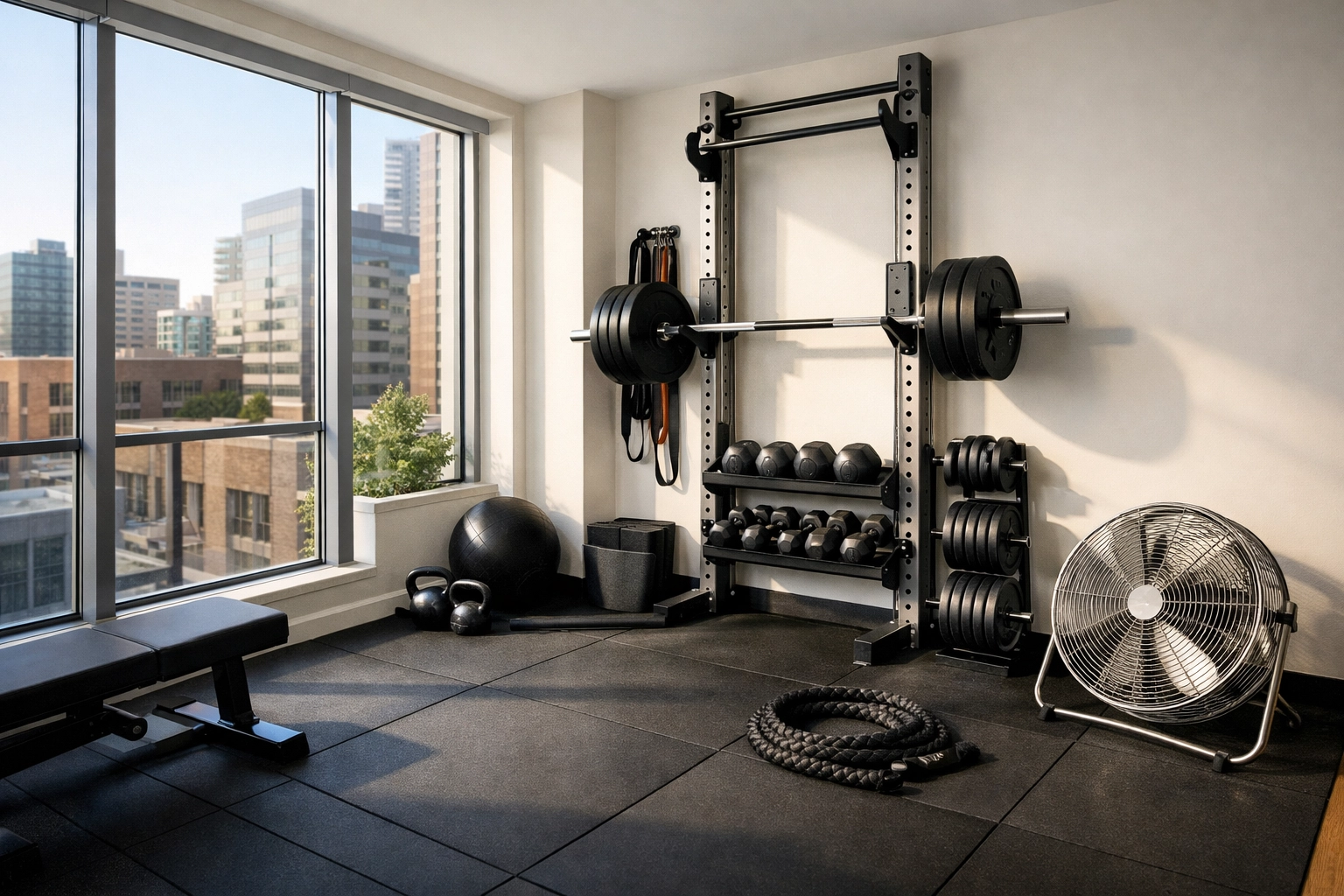
1. Optimize Your Environment
Before you even think about breaking a sweat, you need to prep the area.
- The Floor: Invest in high-density mats. If you’re doing burpees, mountain climbers, or landing from explosive jumps, your joints (and your downstairs neighbors) will thank you.
- The Air: Airflow is everything. Small spaces get hot fast. Get a high-velocity fan. If the air is stagnant, your intensity will drop.
- The Gear: You don't need twenty pairs of dumbbells. You need a few high-quality, high-utility pieces of calisthenics equipment for home use that can be tucked away or integrated into the architecture of the room.
The Problem with Traditional Pull-Up Bars
If you’ve ever tried to build a crossfit home gym in an apartment, you know the struggle of the doorway pull-up bar. They’re unstable, they damage the trim, and they limit your range of motion. For a serious athlete: someone working on muscle-ups, L-sits, or high-volume pull-ups: they are borderline useless.
That’s where we at Bold Body Fitness decided to change the game. We knew that serious calisthenics practitioners and gymnasts needed something better. They needed a pull up bar alternative that offered the stability of a professional gym without the permanent construction.
Enter the Resistance Rail.
Why the Resistance Rail is the Game Changer
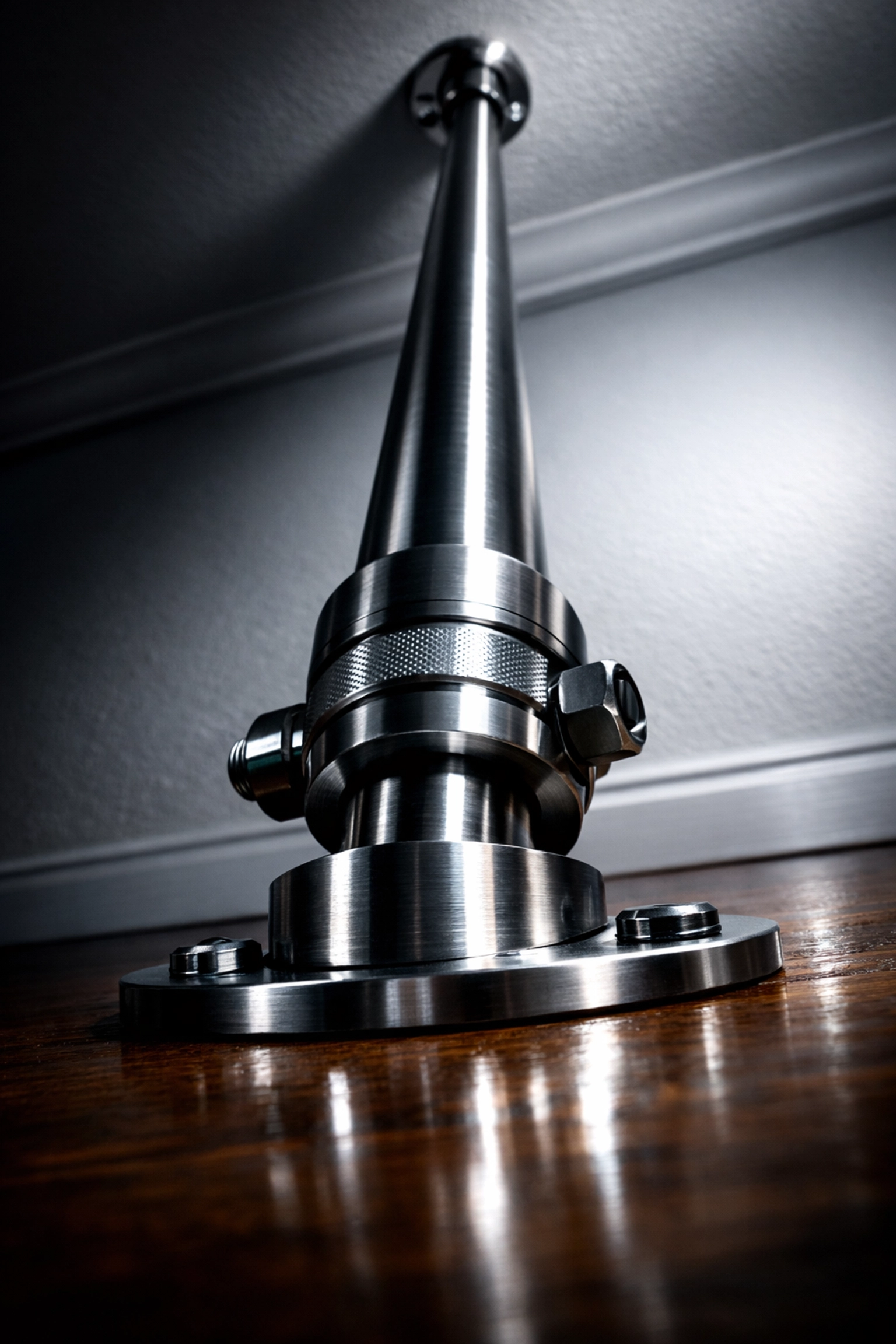
The Resistance Rail is a floor to ceiling gym solution that requires zero drilling. It’s a tension-mounted system that provides a rock-solid anchor point for pull-ups, rows, and resistance training. Because it scales from the floor to the ceiling, it allows you to adjust your workout height in seconds. This is the foundation of a truly versatile home gym.
Essential Elite Bodyweight Movements
If you want to look like a gymnast or fight like an MMA pro, you have to train like one. Forget the high-rep, low-effort fluff. We’re talking about movements that require total body tension and explosive power.
The Push: Beyond the Basic Push-Up
Standard push-ups are great for beginners, but if you want to build a "Bold" chest and shoulders, you need to increase the leverage.
- Archer Push-ups: Shift your weight to one side to build unilateral strength.
- Decline Push-ups: Use your Resistance Rail to anchor your feet higher, shifting the load to your upper pecs and delts.
- Handstand Push-ups: The ultimate test of overhead pressing power.
The Pull: The Foundation of Power
You can’t build a legendary back without pulling. Since you aren't using a massive lat pulldown machine, you need to master the vertical and horizontal pull.
- Explosive Pull-ups: Don't just chin the bar. Pull to your chest. Pull to your waist.
- Incline Rows: Use the Resistance Rail at chest height to perform rows. These are essential for Ninja Warriors who need that "lock-off" strength for obstacles.
- Skin the Cat: For the gymnasts out there, using rings attached to a solid anchor point is the best way to build bulletproof shoulders.
The Legs: Pistol Squats and Plio
Bodyweight leg training is often overlooked. Big mistake.
- Pistol Squats: The gold standard of lower body mobility and strength.
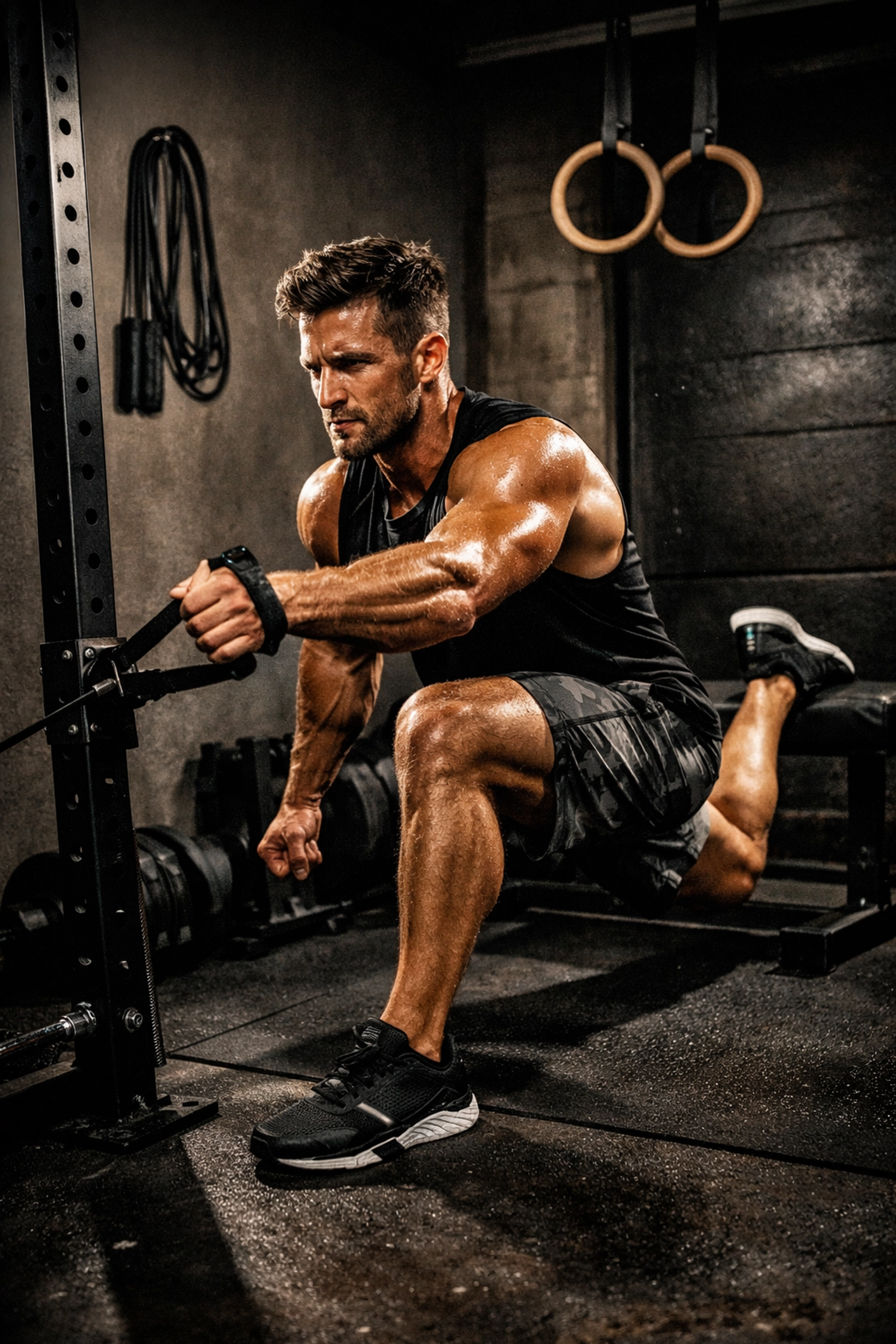
- Bulgarian Split Squats: Use a low anchor point on your rail to hook your back foot.
- Box Jumps (or Tuck Jumps): Explosive power is the difference between an athlete and someone who just "works out."

Integrating Resistance Training
Bodyweight training is incredible, but to reach your absolute peak, you need to understand progressive overload. This is where most calisthenics enthusiasts hit a plateau. You can only do so many reps before you're just training endurance.
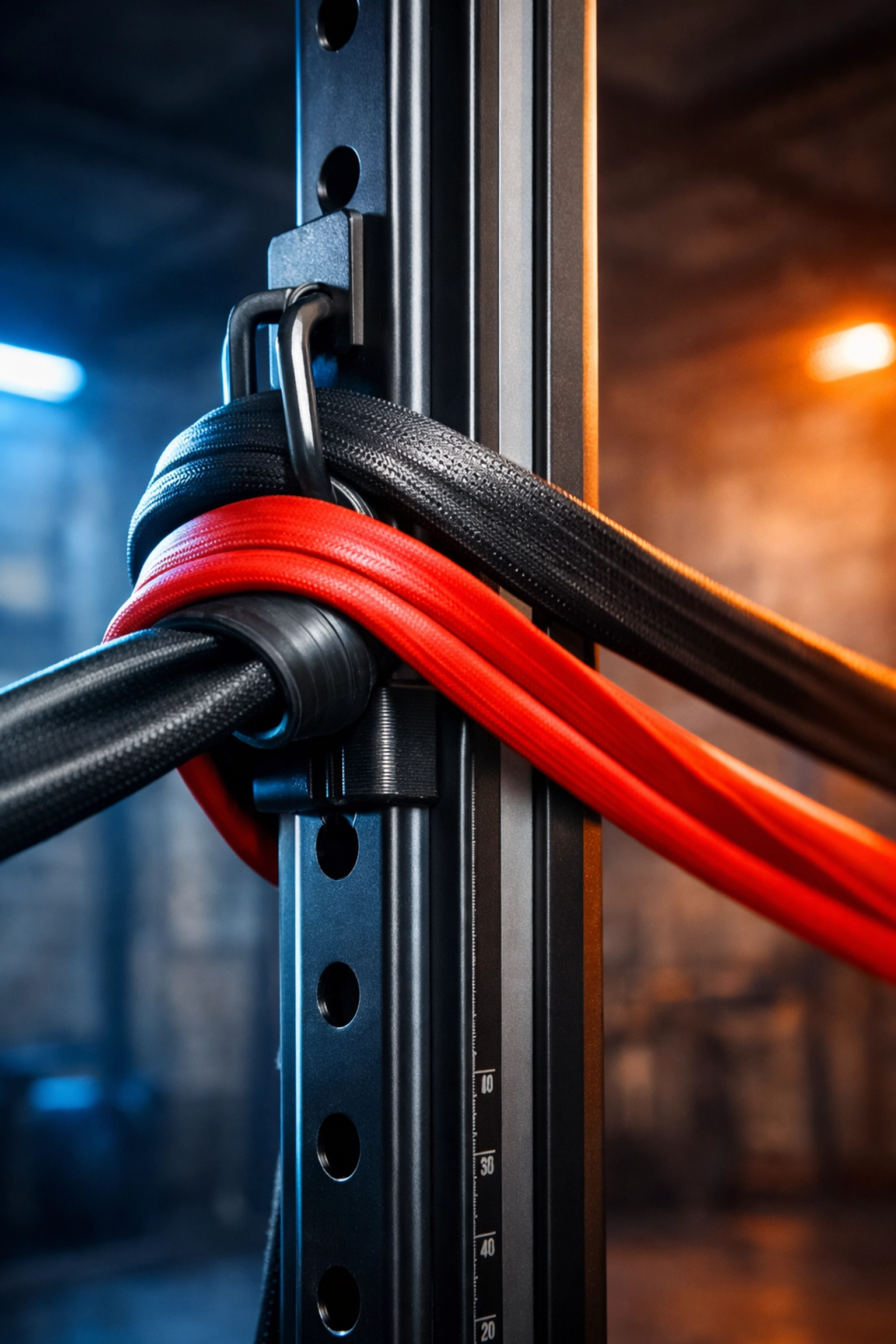
By incorporating heavy resistance bands into your Resistance Rail setup, you can add "weight" to any movement.
- Resisted Push-ups: Wrap a band across your back and anchor it to the floor. Now, that push-up feels like a 225lb bench press.
- Assisted Progressions: If you’re working toward your first muscle-up or one-arm pull-up, bands provide the perfect amount of lift to help you master the mechanics.
Creating Your CrossFit Home Gym (Without the Noise)
You want the intensity of a CrossFit WOD but you don't have the space to drop a loaded barbell. No problem. A full body workout at home can be just as grueling if you program it correctly.
Try this "Bold Body" Circuit:
- Pull-ups: 10 reps (Vertical Pull)
- Pistol Squats: 10 reps per leg (Lower Body Strength)
- Resistance Band Chest Press: 15 reps (Horizontal Push)
- Mountain Climbers: 40 reps (Core/Cardio)
- Resistance Rail Incline Rows: 12 reps (Horizontal Pull)
Rest 60 seconds. Repeat 5 times. If you do this with enough intensity, you’ll realize that the "gym" is wherever you decide to put in the work.
Why the "Bold" Approach Matters
At Bold Body Fitness, we don’t believe in "fitness-lite." We believe that your home should be a sanctuary for self-improvement. Whether you are prepping for a Spartan Race, a Jiu-Jitsu tournament, or just want to be the strongest version of yourself, your equipment should never be the bottleneck.
Most home gym equipment is designed to be sold, not used. It’s flimsy. It’s complicated. The Resistance Rail was born out of a necessity for something tougher. We wanted a no wall damage workout system that could withstand the force of a 250lb athlete doing kipping pull-ups.
The Versatility of the Floor to Ceiling Gym
The magic of the floor-to-ceiling design is that it adapts to you. Most systems are static. The Resistance Rail moves with your workout. Want to do low-anchor bicep curls? Slide the attachment down. Want to do high-anchor tricep extensions or pull-ups? Slide it up. It is the definition of a versatile home gym.
Final Thoughts: Take Action
You have the knowledge. You know that bodyweight training at home is a viable path to elite fitness. You know that a small space isn't a cage: it's a workshop. Now, you just need the tools to execute.
Don't settle for a mediocre workout in a mediocre space. Check out our full line of gear at the Bold Body Fitness Shop and see how the Resistance Rail can transform your home.
It’s time to stop making excuses and start making progress. Be bold. Train hard. And remember: your only limit is the one you set for yourself.
Ready to upgrade your home setup?
- Explore our Gallery for inspiration on small-space setups.
- Join the Bold Body Members community for exclusive training tips.
- Grab your own Resistance Rail and start building your floor-to-ceiling gym today.
