
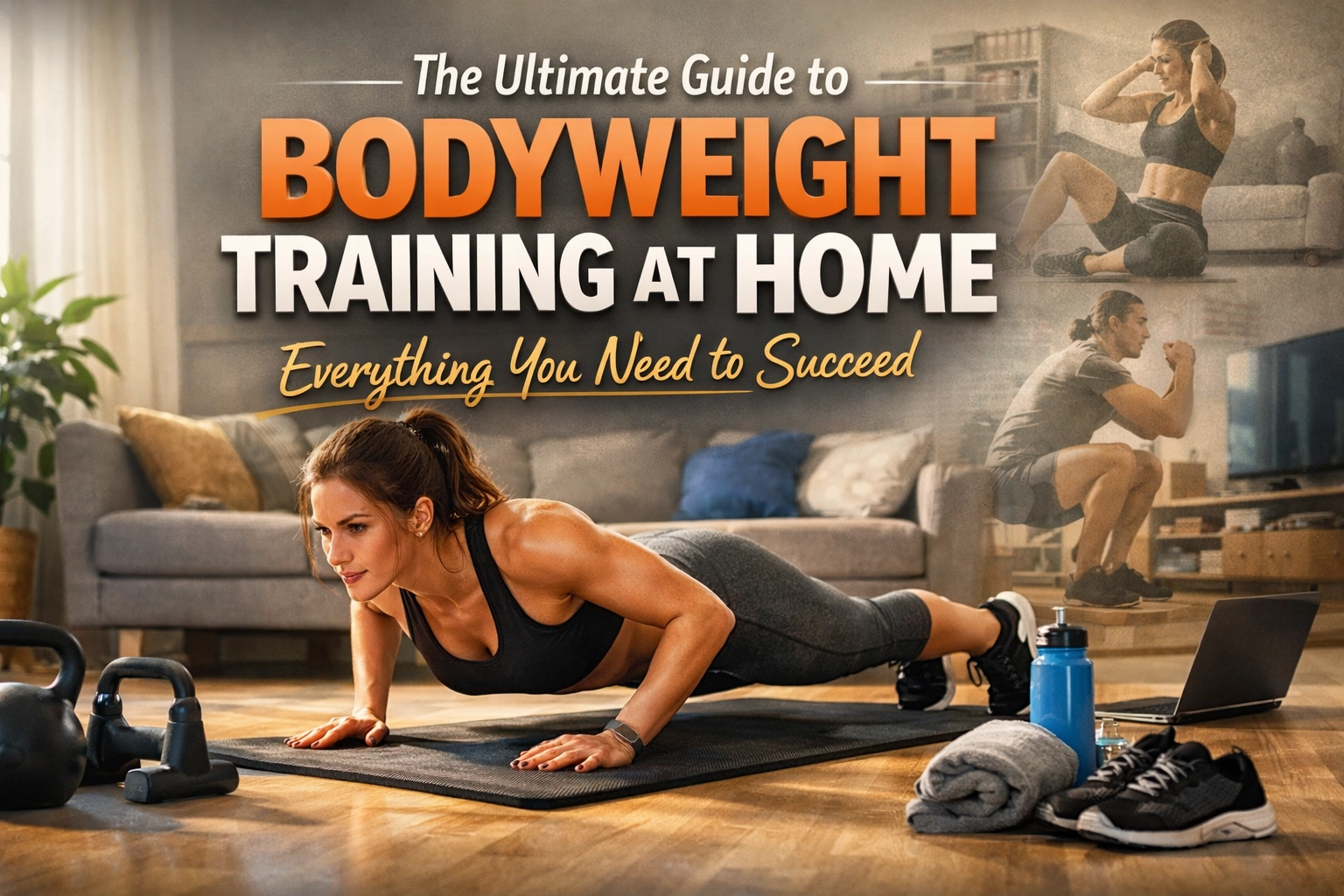
Listen up: you don't need a warehouse full of equipment to build serious strength and muscle. Bodyweight training has forged some of the most impressive physiques on the planet: from elite gymnasts to MMA fighters to calisthenics masters. If you're ready to transform your body using the most accessible piece of equipment you own (your own body), you're in the right place.
This isn't some fluffy fitness content. We're diving deep into what actually works for bodyweight training at home, backed by proven principles and real-world results. Whether you're a CrossFit athlete setting up a home gym, a ninja warrior in training, or someone who just wants to build legitimate strength without the gym membership, this guide will show you exactly how to succeed.
Why Bodyweight Training Actually Works
Here's the truth: your muscles don't know the difference between a barbell and your body. They respond to tension, progressive overload, and consistent stimulus. Bodyweight training delivers all three.
The beauty of bodyweight exercises lies in their functional nature. Every movement requires stabilization, coordination, and full-body engagement. When you're doing a proper push-up, you're not just working your chest: you're building core stability, shoulder strength, and learning to move as a unified system.
Plus, bodyweight training is infinitely scalable. Can't do a pull-up yet? Start with inverted rows. Crushing 30 push-ups? Time to progress to archer push-ups or one-arm variations. The progression never ends, which means the gains never stop.
The Four Foundational Movements You Must Master
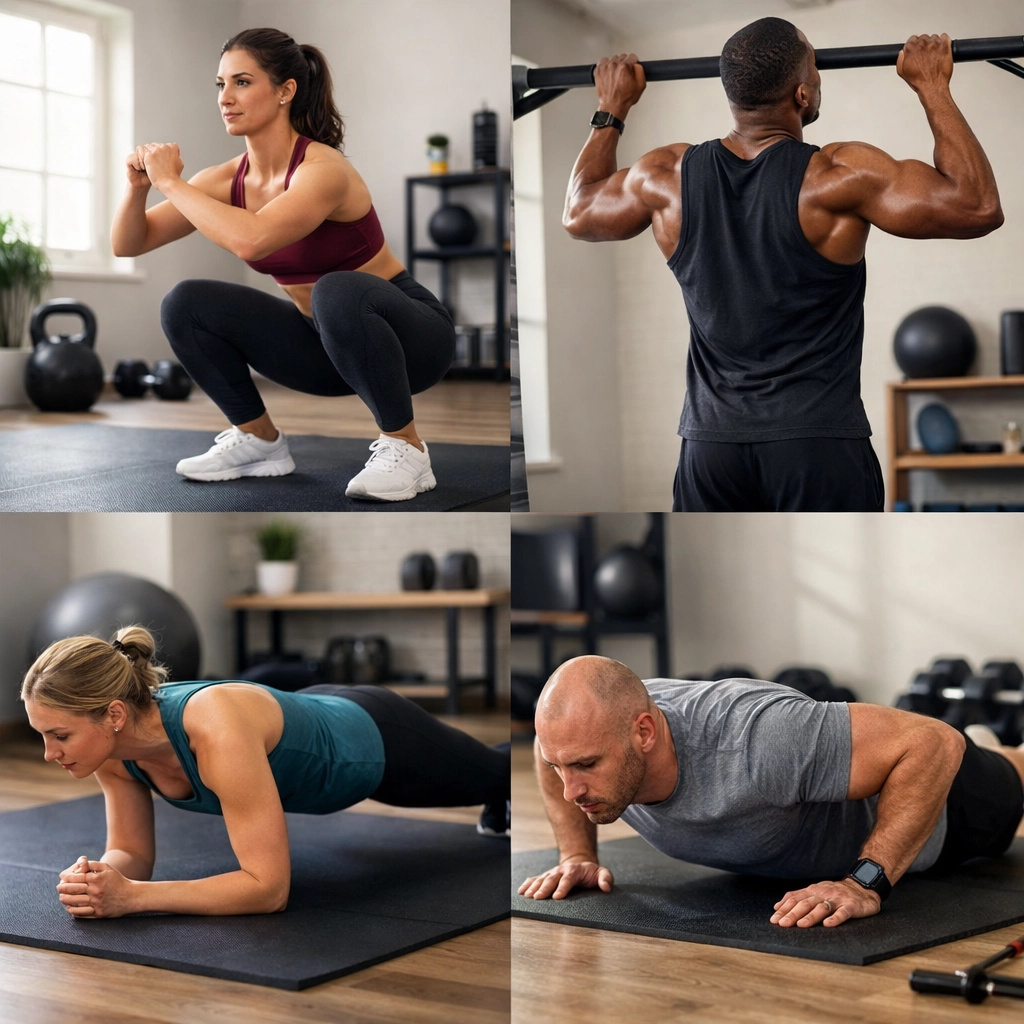
Forget complex routines with 47 different exercises. Build your foundation on these four pillars, and everything else will follow:
1. Push-Ups: The Ultimate Upper Body Builder
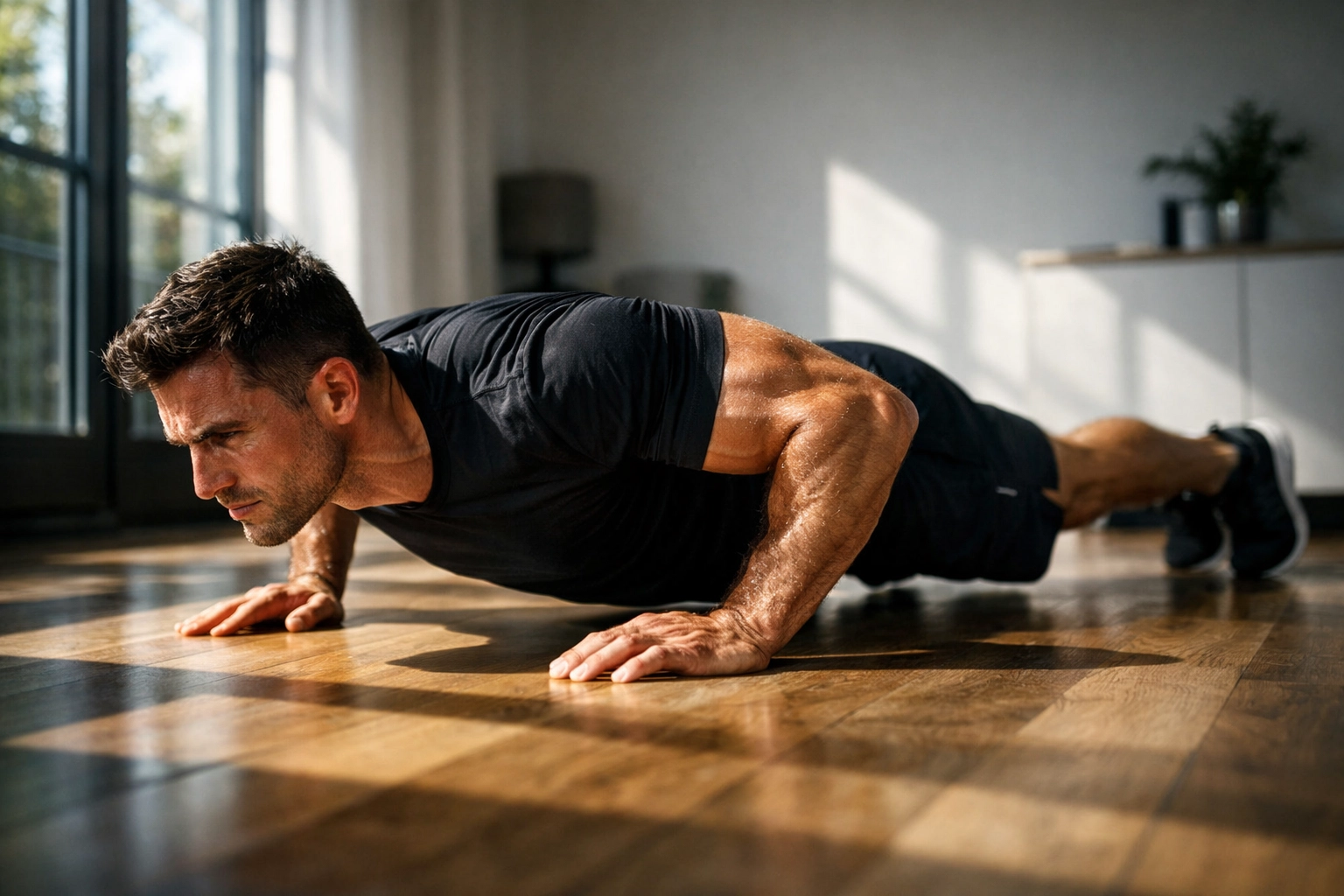
Push-ups train your chest, shoulders, triceps, and abs simultaneously. They're the backbone of any solid bodyweight program. Start with elevated push-ups if needed (hands on a table or couch), work toward standard push-ups, then progress to deficit push-ups (hands on blocks for increased range of motion).
Advanced variations include diamond push-ups, archer push-ups, pseudo planche push-ups, and eventually one-arm push-ups. The progression path is clear, and the results are undeniable.
2. Squats: Building Lower Body Power
Your legs contain the largest muscles in your body, and bodyweight squats are how you develop them. Begin with air squats, focusing on depth and control. Once you hit 20+ reps with perfect form, progress to split squats (one leg elevated behind you).
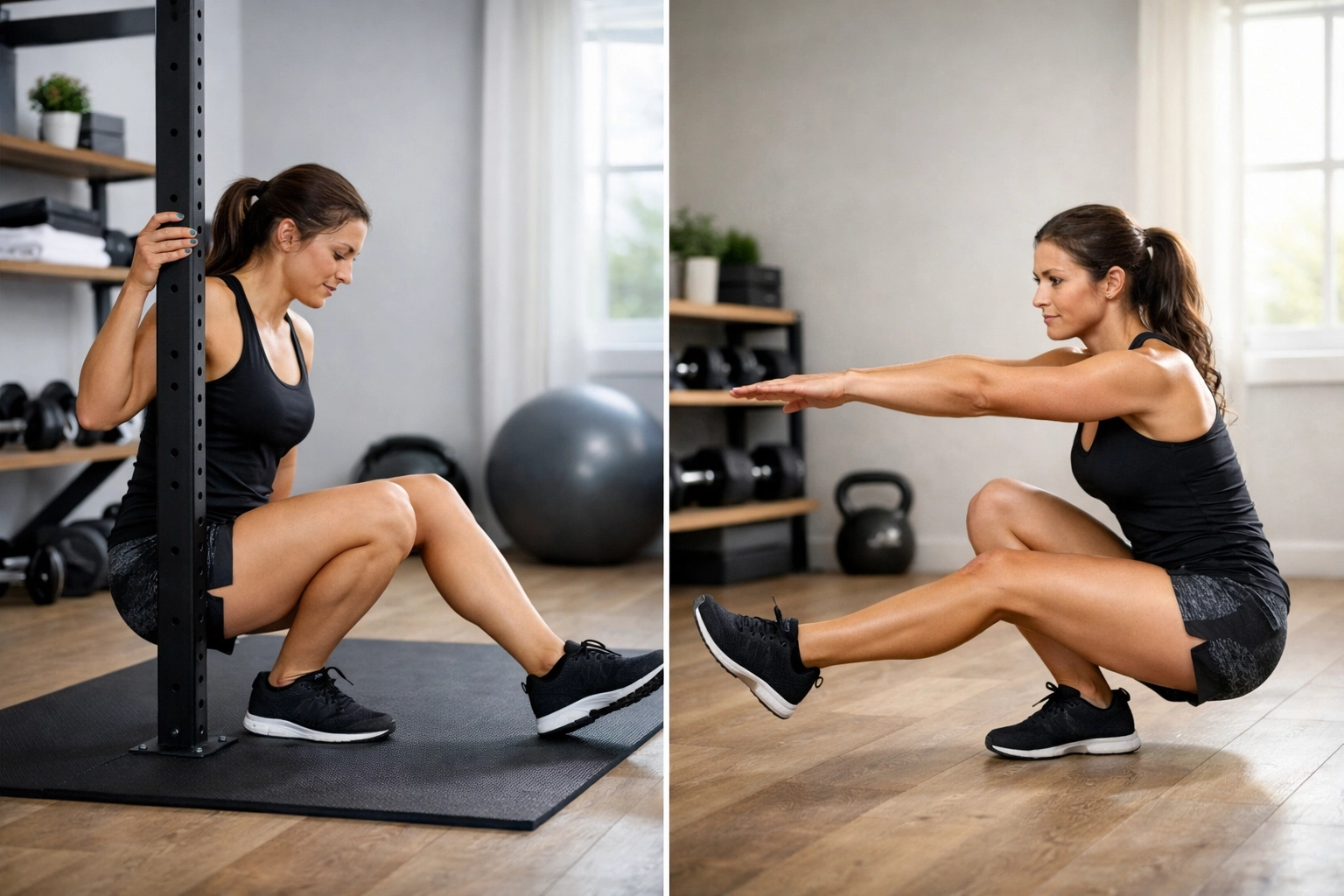
The ultimate goal? Pistol squats: single-leg squats that demand strength, balance, and mobility. These will build legs that look and perform like they're meant for athletic performance.
3. Pull-Ups/Chin-Ups: Back and Bicep Development
This is where most people hit a wall: and where strategic equipment makes all the difference. Pull-ups train your entire upper back, lats, and biceps like nothing else. If you can't do a full pull-up yet, start with negative pull-ups (jump to the top position and lower yourself slowly) or inverted rows using a sturdy table or bar.
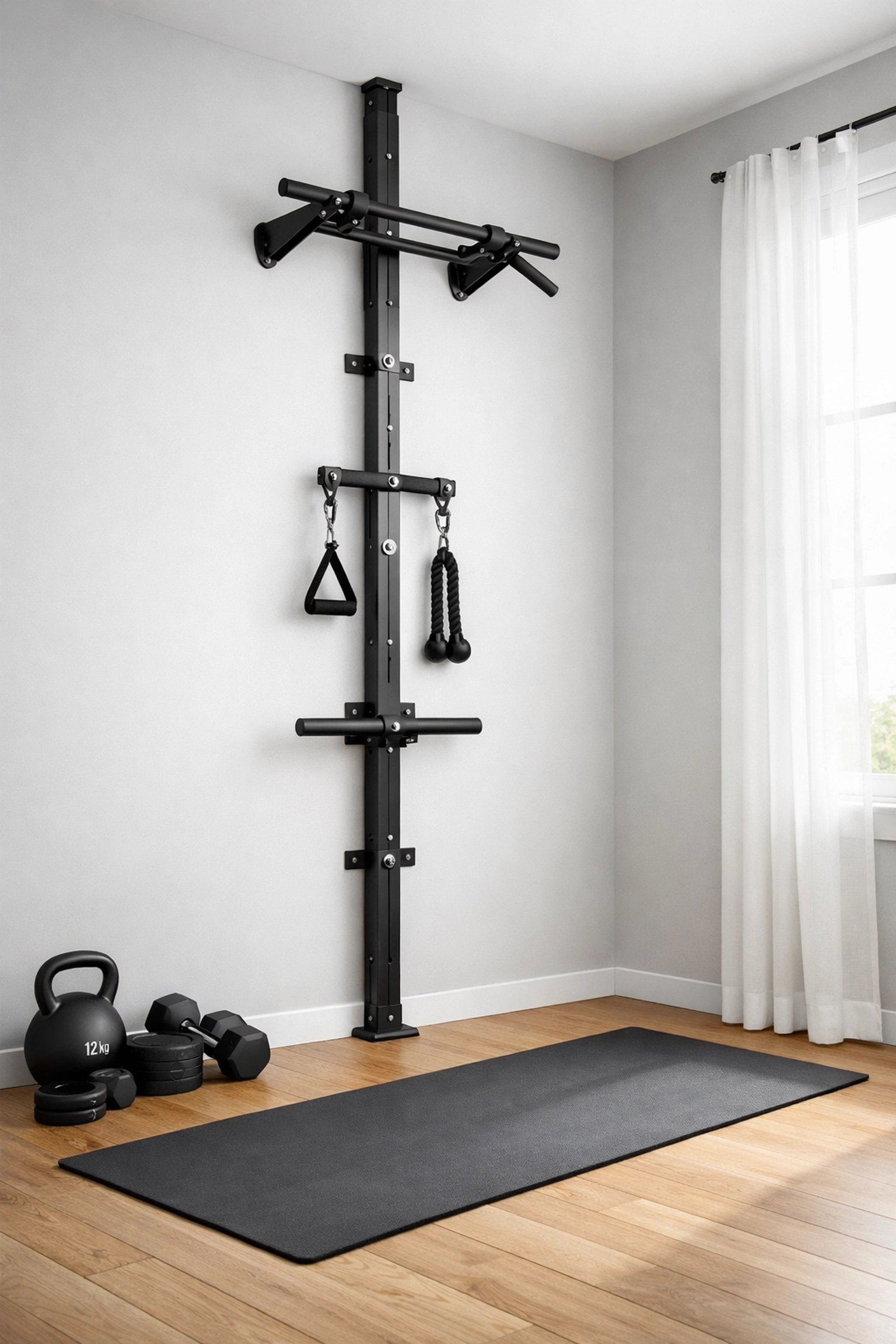
Can't install a traditional pull-up bar because you're in a rental? This is exactly why systems like the Resistance Rail exist: providing a no-wall-damage solution for serious bodyweight training at home.
4. Hip Hinges: Posterior Chain Power
Your posterior chain (glutes, hamstrings, lower back) needs attention. While traditional deadlifts require weights, you can develop these muscles through glute bridges, single-leg hip thrusts, and Nordic curls. These movements build the foundation for explosive power and injury prevention.
Progressive Overload: The Non-Negotiable Principle
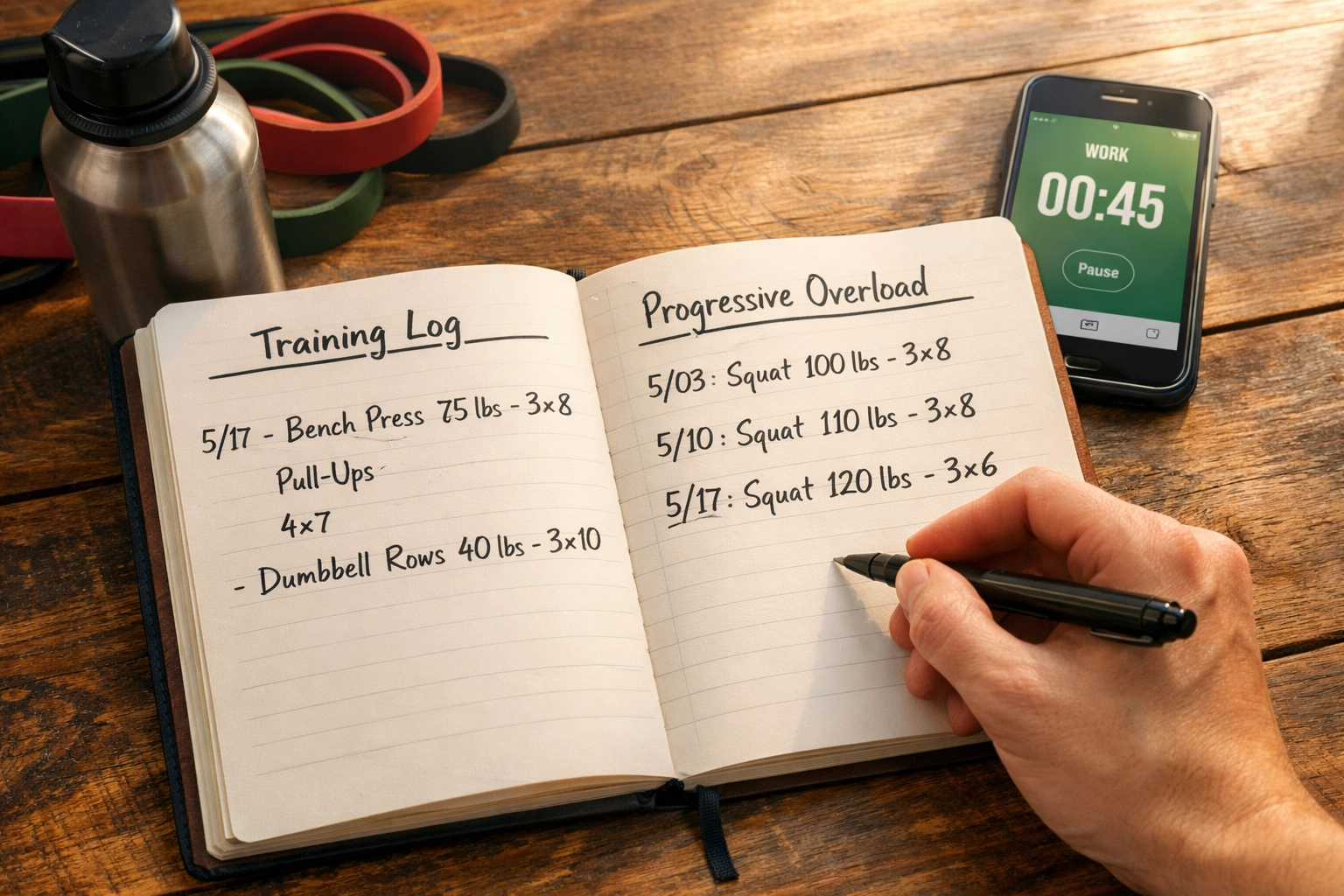
Here's where most people fail with bodyweight training: they do the same workout forever and wonder why they stop seeing results. Your body adapts to stimulus. To keep growing stronger, you must progressively increase the challenge.
You have five primary methods for progressive overload in bodyweight training:
1. Exercise Progression: Move to harder variations (standard push-ups to decline push-ups to one-arm push-ups)
2. Increased Reps: If you're doing 3 sets of 10 push-ups, work toward 3 sets of 15
3. Additional Sets: Add another set each week until you reach your volume sweet spot
4. Tempo Manipulation: Slow down your reps (5-second negatives build serious strength)
5. Reduced Rest: Shorter rest periods increase training density and cardiovascular demand
The key is choosing ONE variable to progress each week. Don't try to do harder exercises, more reps, AND more sets simultaneously. Pick one progression method and execute it consistently.
Building Your Bodyweight Training Program
Let's get practical. Here's how to structure your training for maximum results:
Week One: Conservative Start
Start with 2 sets of each foundational movement, performed three times per week. This conservative approach prevents excessive soreness and allows your nervous system to adapt to new movement patterns.
Example workout:
- 2 sets of push-ups (to technical failure)
- 2 sets of squats (15-20 reps)
- 2 sets of rows or pull-up negatives (maximum reps)
- 2 sets of glute bridges (15-20 reps)
Rest 2-3 minutes between sets. Focus on form, not ego.
Week Two: Volume Increase
Bump up to 3 sets of each movement while maintaining the same exercise difficulty. Your body is adapting, and it's ready for more volume.
Week Three and Beyond: Strategic Progression
Now you have options. You can add a fourth set to your favorite exercises, progress to harder variations, or introduce tempo work. Listen to your body: which exercises leave you feeling worked but not destroyed? Which muscles are responding with soreness and growth? Double down on what works.
Sample Exercise Progressions That Build Real Strength
Let's map out specific progressions so you know exactly where you're headed:
Push-Up Progression
- Wall push-ups (complete beginner)
- Elevated push-ups (hands on table)
- Standard push-ups
- Decline push-ups (feet elevated)
- Diamond push-ups
- Archer push-ups
- One-arm push-ups
Squat Progression
- Assisted squats (holding a pole for balance)
- Air squats (bodyweight only)
- Jump squats (adding power)
- Bulgarian split squats (rear foot elevated)
- Assisted pistol squats (holding support)
- Full pistol squats
Pull-Up Progression
- Inverted rows (body at 45 degrees)
- Negative pull-ups (5-10 second descent)
- Band-assisted pull-ups
- Strict pull-ups
- Weighted pull-ups
- Muscle-ups
Each progression can take weeks or months. There's no rush. The goal is consistent improvement over time.
Training Split Options: Full Body vs. Upper/Lower
You have two primary options for organizing your training:
Option A: Full-Body Training (3x per week)
Monday, Wednesday, Friday: hit all major movement patterns each session. This works brilliantly for beginners and provides plenty of recovery time.
Option B: Upper/Lower Split (4-6x per week)
Monday/Thursday: Upper body (push-ups, pull-ups, dips)
Tuesday/Friday: Lower body (squats, lunges, glute bridges)
Optional: Wednesday/Saturday for additional sessions
The split approach allows higher volume per muscle group and works well for intermediate to advanced trainees. At Bold Body Fitness, we've seen both approaches produce excellent results: choose what fits your schedule and recovery capacity.
Equipment That Elevates Your Bodyweight Training
Pure bodyweight training is powerful, but strategic equipment unlocks new levels. You don't need a full garage gym: just versatile tools that expand your exercise library.
A quality pull-up system is the single most valuable addition to any bodyweight training setup. The problem? Most apartments and rentals won't allow you to drill into walls or ceilings. Traditional pull-up bars require permanent installation, and doorway bars are unstable and damage door frames.
This is where floor-to-ceiling systems like the Resistance Rail shine. You get a stable, professional-grade training station without drilling holes or damaging property. It's the pull-up bar alternative that serious athletes have been waiting for: perfect for pull-ups, dips, muscle-ups, hanging ab work, and even suspension training.
Parallettes or push-up bars add another dimension to your training, increasing range of motion and reducing wrist strain. Resistance bands provide assistance for pull-ups and add resistance to squats and push-ups. Gymnastics rings offer the ultimate versatility for advanced bodyweight athletes.
The key is choosing equipment that multiplies your exercise options without cluttering your space. Visit the Bold Body Fitness shop to explore versatile home gym solutions designed for serious training in compact spaces.
Common Mistakes That Sabotage Progress
Avoid these pitfalls and you'll progress faster than 90% of people attempting bodyweight training:
Mistake #1: Ego Training
Form breaks down when you chase numbers. A sloppy push-up doesn't count. Quality reps build quality muscle.
Mistake #2: No Progressive Overload
Doing the same workout for months produces the same body. You must increase difficulty over time.
Mistake #3: Neglecting Lower Body
Your legs are half your body. Don't skip them because push-ups are more fun.
Mistake #4: Inadequate Recovery
You grow during rest, not during training. Sleep 7-9 hours, eat enough protein, and take rest days seriously.
Mistake #5: Comparing Your Chapter 1 to Someone's Chapter 20
Instagram is full of people doing one-arm pull-ups and planche push-ups. They've been training for years. Focus on your own progression.
Advanced Training Techniques for Continued Growth
Once you've built a solid foundation (3-6 months of consistent training), introduce these techniques to push past plateaus:
Tempo Training: Perform a 5-second negative on every rep. This builds serious strength and muscle.
Drop Sets: Start with your hardest variation, do as many reps as possible, then immediately drop to an easier variation and continue.
Circuit Training: Perform exercises back-to-back with minimal rest (push-ups → squats → rows → plank → repeat). This builds work capacity and conditioning.
Isometric Holds: Hold the hardest position of an exercise (bottom of a push-up, top of a pull-up) for time. This develops strength in weak ranges.
Your Path Forward
Bodyweight training at home isn't a compromise: it's a legitimate path to building strength, muscle, and athletic performance. The principles are simple: master foundational movements, apply progressive overload, train consistently, and recover intelligently.
Start with the basic program outlined in this guide. Train three times per week, focusing on push-ups, squats, pull-ups (or progressions), and hip hinges. Add one progression variable each week. Track your workouts in a notebook or app.
Within three months, you'll be stronger, more muscular, and more capable than when you started. Within a year, you'll have transformed your body using nothing but intelligent programming and consistent effort.
The equipment is optional, but the commitment isn't. Whether you're training in a studio apartment or building a complete home gym setup, the principles remain the same. Your body is the ultimate training tool: learn to use it effectively, and there's no limit to what you can achieve.
Now stop reading and start training. Your first workout begins today.
