
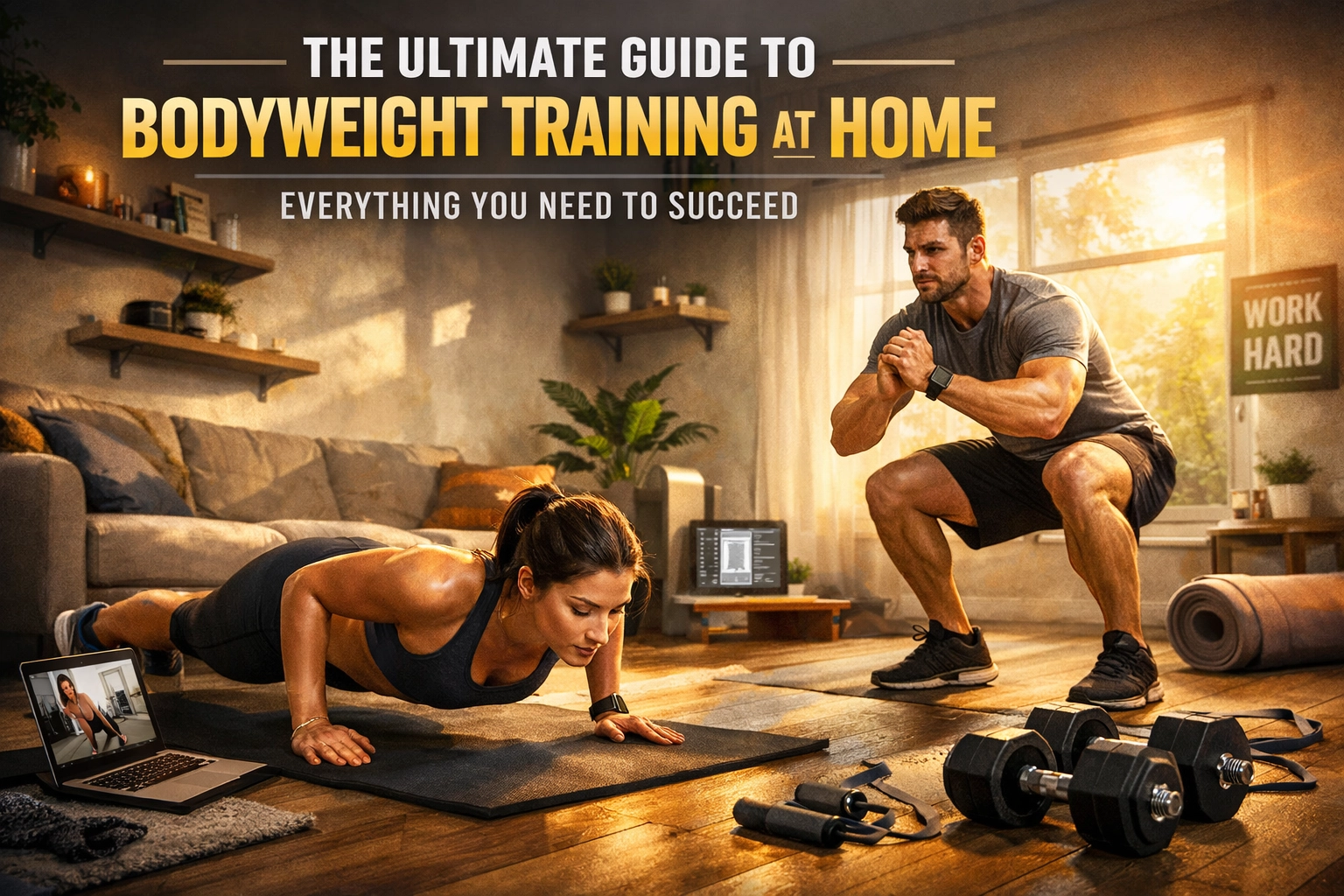
Let's cut through the noise: bodyweight training at home isn't just for beginners or people who can't afford a gym membership. It's the foundation that elite athletes: ninja warriors, gymnasts, CrossFit competitors, and MMA fighters: use to build functional strength, explosive power, and bulletproof movement patterns. Your body is the most versatile piece of equipment you'll ever own, and when you master it, you unlock performance levels that machines and weights alone can't touch.
The truth is, most people never reach their physical potential because they're chasing the wrong goals in the wrong places. They're loading barbells before they can control their own bodyweight, or they're doing isolation exercises when they haven't mastered fundamental movement patterns. This guide isn't about getting you "gym-ready": it's about making you an absolute weapon using nothing but intelligent programming and the right approach to bodyweight training at home.
Why Serious Athletes Build Their Foundation With Bodyweight Work
Elite performers understand something recreational gym-goers miss: relative strength (your strength-to-bodyweight ratio) is the ultimate performance metric. A gymnast who can execute a perfect planche has more functional strength than most powerlifters. A ninja warrior who can grip and climb for minutes straight has grip strength that crushes. An MMA fighter who can explode through hundreds of burpees in training has conditioning that most athletes can only dream about.
Bodyweight training forces you to develop kinesthetic awareness: the ability to control your body in space. This translates directly to every athletic pursuit. When you're learning a new technique in martial arts, executing a complex gymnastics skill, or navigating an obstacle course, your success depends entirely on body control. No amount of bench pressing or leg pressing builds that.
Plus, a full body workout at home saves you time, money, and the hassle of commuting. You can train on your schedule, without waiting for equipment or dealing with crowded gyms. That's not convenience: that's competitive advantage.
The Four Pillars: Foundation Movements That Build Everything
Every effective bodyweight program is built on four fundamental movement patterns. Master these, and you have the foundation for limitless progression.
1. The Push (Horizontal & Vertical)
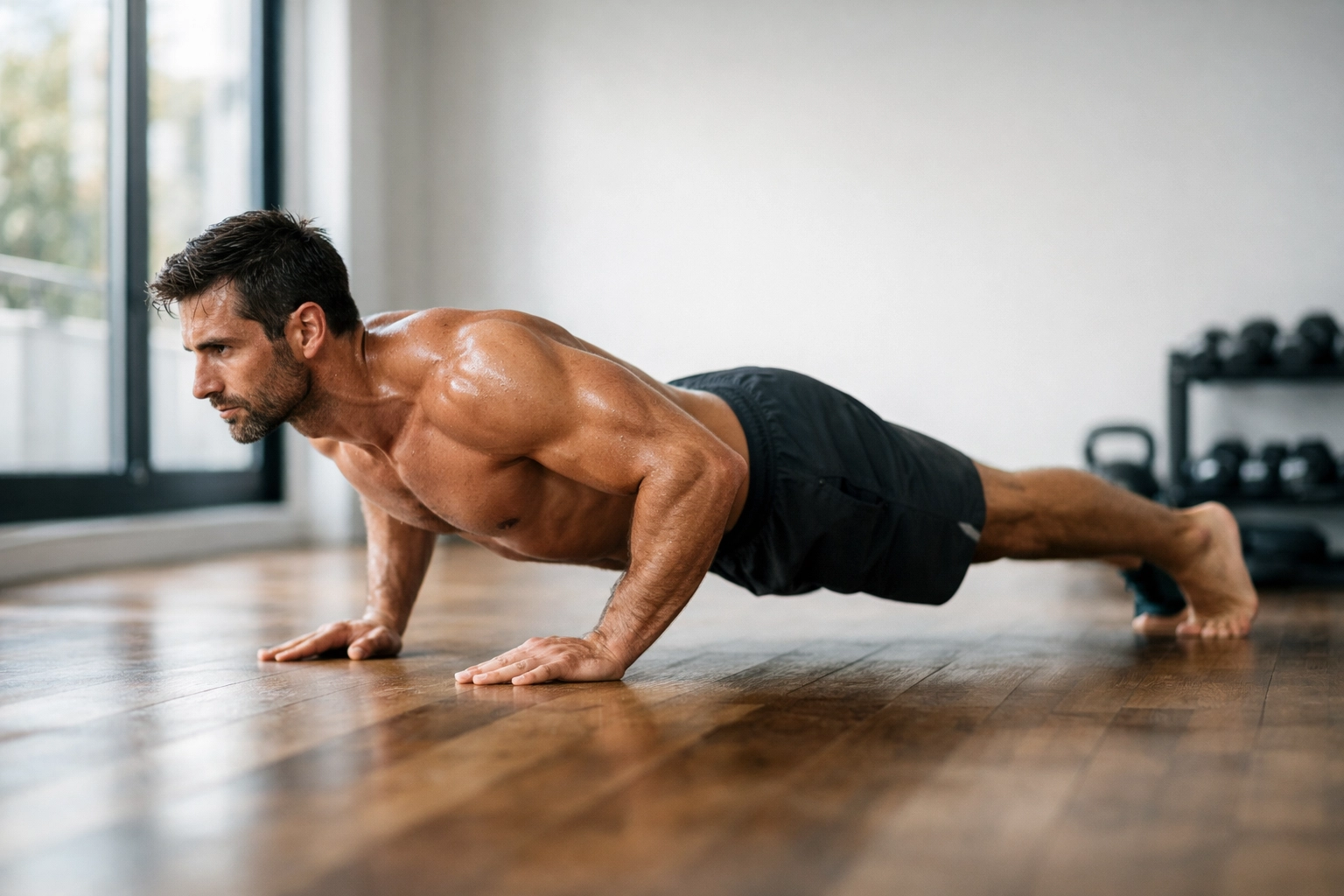
Push-ups are the horizontal pushing foundation. They train your chest, shoulders, triceps, and core simultaneously while teaching you to maintain a rigid plank position under load. Most people think they know how to do push-ups: they're wrong. A proper push-up requires full shoulder blade protraction at the top, elbows tracking at roughly 45 degrees, and a completely neutral spine from head to heels.
Start wherever your current level demands. Elevated push-ups on a countertop or bench are the entry point. Standard push-ups from the floor are the baseline. From there, you progress to diamond push-ups, archer push-ups, pseudo-planche push-ups, and eventually one-arm variations. Each progression demands more stability, more strength, and more control.
Dips handle vertical pushing. Whether you're using parallel bars, rings, or even the edge of a sturdy chair, dips build serious pressing strength while hammering your triceps. The key is achieving full range of motion: shoulders dropping below elbows at the bottom: without compromising shoulder health.
2. The Pull (Horizontal & Vertical)
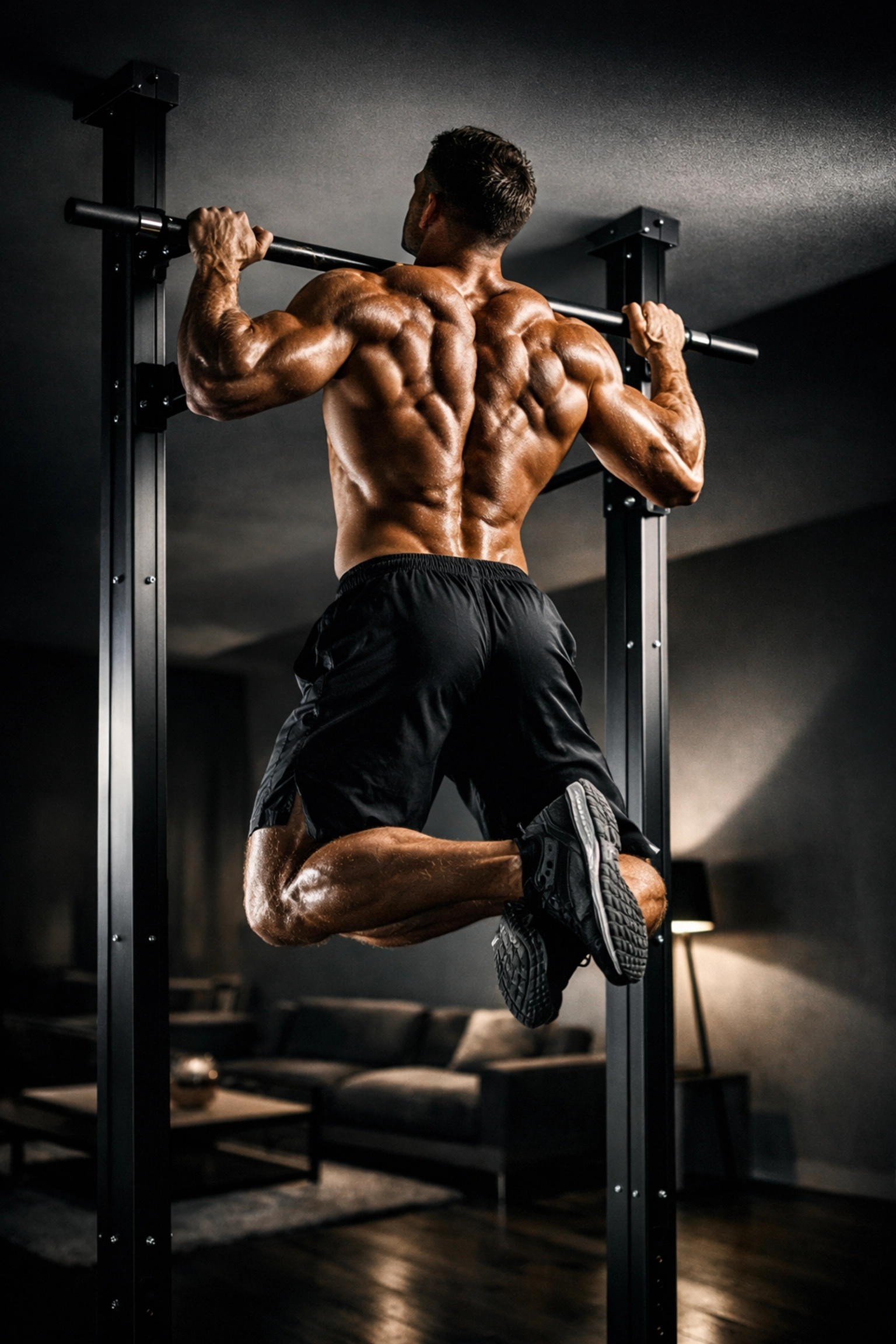
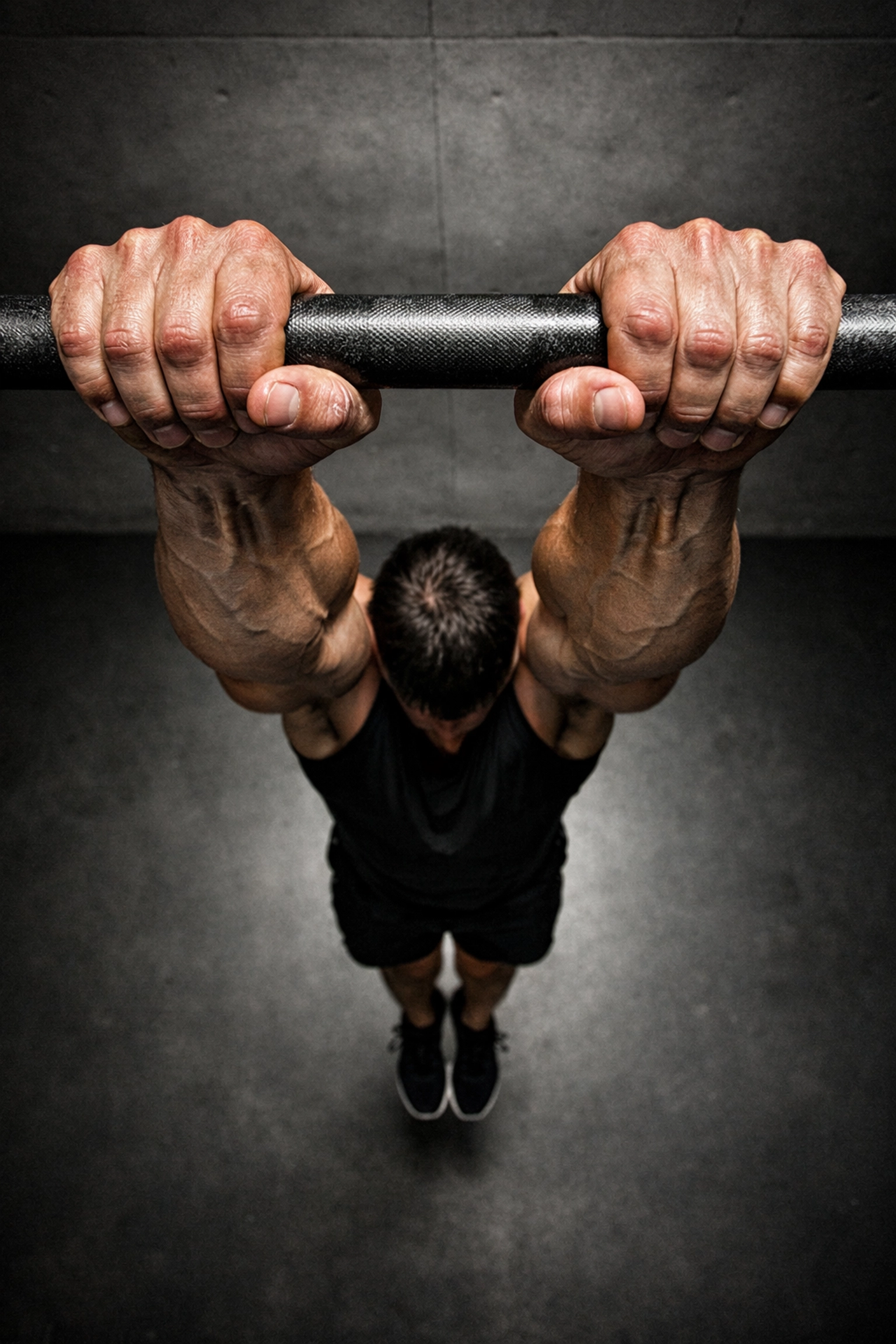
This is where most home training setups fail. Pull-ups and chin-ups are non-negotiable for developing your back, biceps, and grip strength. Your lats, the massive muscles that give athletes that V-taper, only properly develop through pulling movements. Your grip strength: critical for everything from deadlifts to obstacle courses to grappling: requires regular hanging and pulling work.
Traditional pull-up bars damage doorframes, can't handle dynamic movements, and limit exercise variety. This is exactly why Bold Body Fitness created the Resistance Rail: a no wall damage workout system that handles everything from strict pull-ups to explosive muscle-ups to suspension training. It's the ultimate pull up bar alternative because it doesn't just replace a bar; it expands what's possible in your space.
Inverted rows complement vertical pulling with horizontal work. Using suspension straps or even a sturdy table, you train the same back muscles from a different angle while building serious core stability. Progress these by lowering the angle until you're nearly horizontal.
3. The Squat
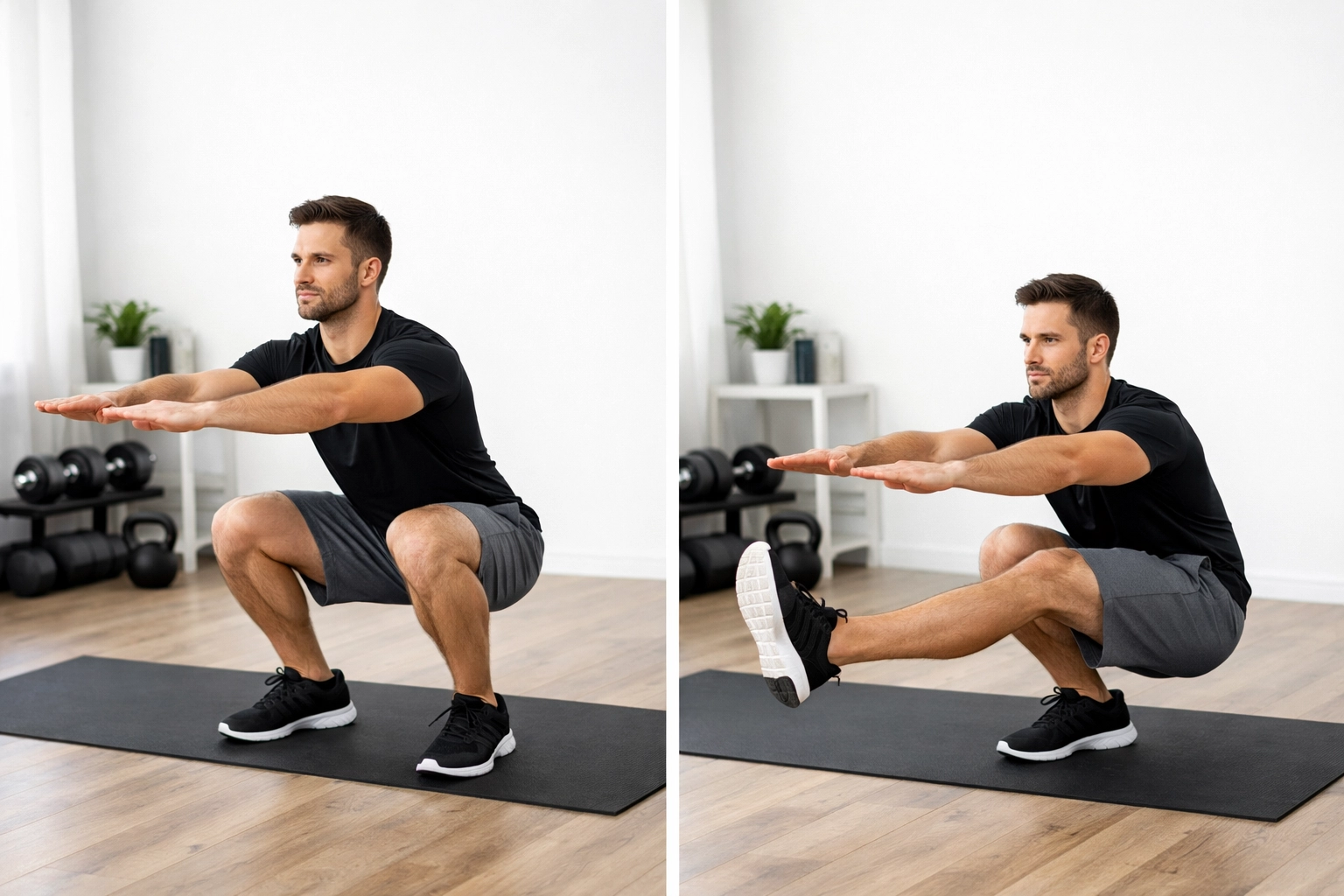
Bodyweight squats build your quads, glutes, and overall leg strength while teaching proper movement mechanics. Most people squat terribly: knees caving in, weight on toes, incomplete depth. Learn to sit back, drive through your entire foot, keep your chest up, and achieve full depth (hip crease below knee level).
Once standard squats become easy, you have endless progressions: jump squats for explosive power, pistol squats for single-leg strength and balance, shrimp squats for quad dominance, or Bulgarian split squats for unilateral development. Each variation targets slightly different qualities while maintaining the fundamental squat pattern.
4. The Hinge
Your posterior chain: hamstrings, glutes, and lower back: drives explosive power and athletic performance. While traditional deadlifts require external loading, you can build serious posterior strength through single-leg Romanian deadlifts, Nordic curls (if you can anchor your feet), and hip thrusts.
Single-leg RDLs teach balance while hammering your hamstrings and glutes. Stand on one leg, hinge forward at the hip while extending the other leg behind you, reach toward the ground, then drive back up through your planted heel. These build functional strength and bullet-proof your knees.
Progressive Overload: The Only Way to Guarantee Results
Here's the hard truth: if you're not progressively overloading your training, you're not building anything. Your body adapts to stress, then stops adapting unless you increase that stress. With bodyweight training, you have several levers to pull:
Increase repetitions. If you can do 10 push-ups today, aim for 11 next week. Simple, effective, and measurable.
Add sets. Three sets become four. Four become five. More volume equals more stimulus.
Slow down the tempo. A 3-second descent on every push-up makes 10 reps feel like 20. Time under tension matters.
Decrease rest periods. Cutting your rest from 90 seconds to 60 seconds increases work density and builds conditioning.
Progress exercise difficulty. Standard push-ups become archer push-ups become one-arm push-ups. This is the most powerful lever because it continually presents novel challenges.
Add external resistance. A weighted vest turns bodyweight basics into strength builders. Even a loaded backpack works. When you can crush 20 perfect pull-ups, add weight and chase 10 weighted reps instead.
The Resistance Rail from Bold Body Fitness excels here because it enables progressive overload through exercise variation. Strict pull-ups become L-sit pull-ups become explosive pull-ups become muscle-ups. Straight-arm hangs become front lever progressions. The versatility of a properly designed versatile home gym system means you never plateau.
Building Your Program: Structure That Delivers
Random workouts produce random results. Structure produces progress. Here's how to program intelligent bodyweight training at home:
Training Frequency
For maximum strength and muscle development, train each movement pattern 2-3 times per week. This provides adequate stimulus while allowing recovery. Your program might look like:
Monday: Push + Core
Wednesday: Pull + Legs
Friday: Full Body
Or for higher frequency:
Monday: Upper Push
Tuesday: Lower + Core
Wednesday: Rest or Active Recovery
Thursday: Upper Pull
Friday: Lower + Core
Saturday: Full Body or Skill Work
Sunday: Rest
Set and Rep Schemes
Strength (1-6 reps): Use harder progressions with longer rest periods (3-5 minutes). Think one-arm push-up progressions, weighted pull-ups, or pistol squats.
Hypertrophy (8-15 reps): Moderate difficulty with moderate rest (60-90 seconds). This rep range builds muscle effectively.
Endurance (15+ reps): Easier variations with shorter rest periods (30-60 seconds). Great for conditioning and mental toughness.
Mix these throughout your week based on your goals. Strength athletes prioritize the low-rep work. CrossFit athletes and fighters need more endurance emphasis. Most people benefit from a hybrid approach.
Weekly Volume Progression
Week 1: 2 sets per exercise
Week 2: 3 sets per exercise
Week 3: 3-4 sets per exercise
Week 4: Deload (reduce volume by 40-50%)
This wavelike progression allows your body to adapt without burning out. The deload week isn't weakness: it's strategic recovery that enables long-term progress.
Advanced Techniques for Different Athletes
For Ninja Warriors and Obstacle Course Athletes
Your training must emphasize grip strength, dynamic pulling movements, and explosive power. Train:
- Dead hangs progressing to one-arm hangs
- Explosive pull-ups and muscle-ups
- Lateral movements and coordination drills
- High-volume grip work (finger hangs, towel pull-ups)
A calisthenics equipment for home setup that includes suspension training and pull-up capability is non-negotiable. The Resistance Rail system handles all these demands while supporting your bodyweight during dynamic movements that would destroy traditional doorway bars.
For Gymnasts
Strict form, straight-arm strength, and body-line control define gymnastic strength. Focus on:
- L-sits and V-sits for compression strength
- Front lever and back lever progressions
- Handstand training and variations
- Ring work for stability and control
Gymnasts need equipment that won't shift or flex during skills. The floor-to-ceiling tension system provides rock-solid stability without permanent installation.
For CrossFit Athletes
You need the conditioning capacity to handle high-volume work, the strength for heavy days, and the movement quality to prevent injury during complex combinations. Train:
- High-rep bodyweight circuits
- EMOM (every minute on the minute) formats
- Complex movements like burpee pull-ups
- Tabata intervals with multiple movements
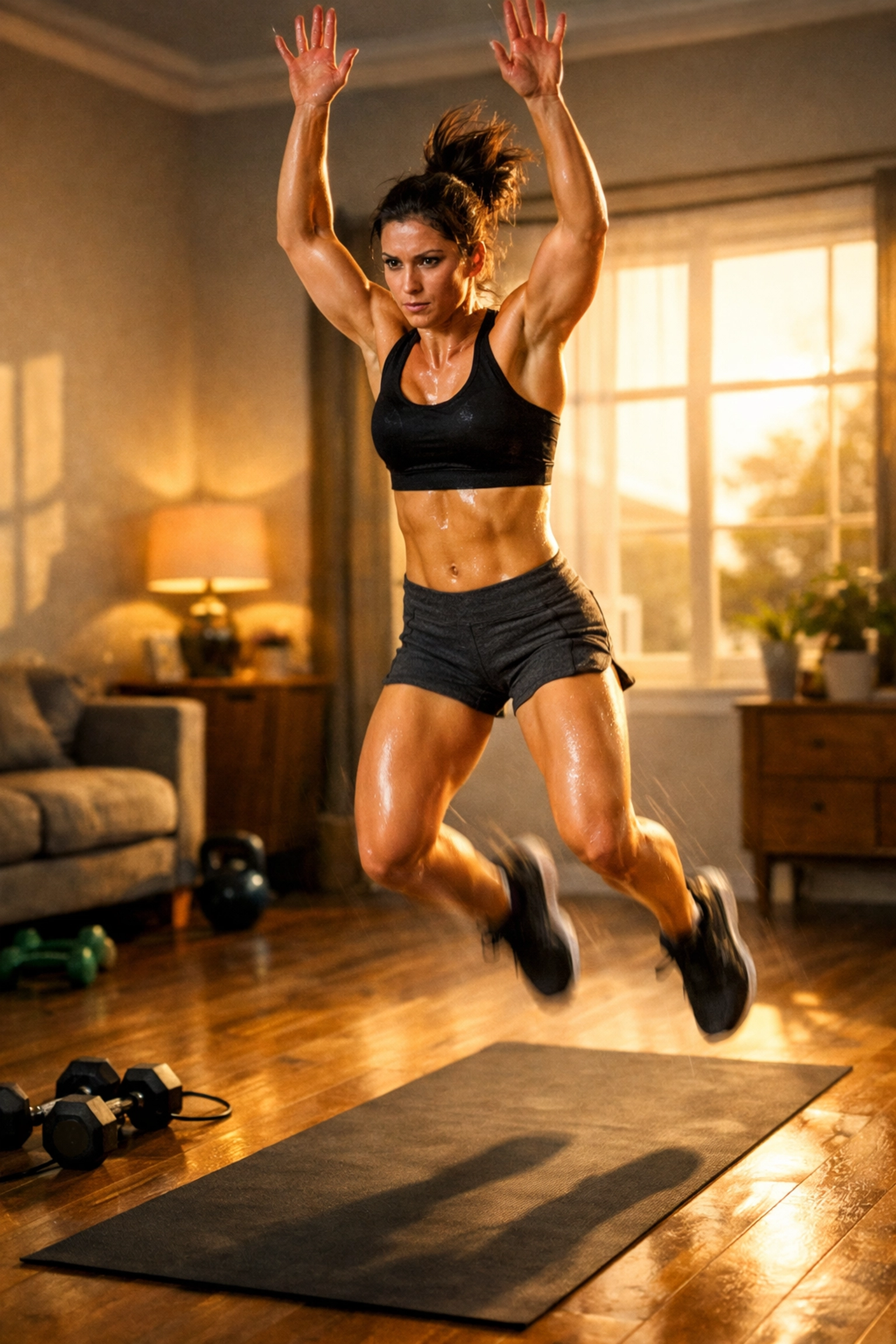
A crossfit home gym focused on bodyweight work complements your barbell training perfectly. The ability to superset pull-ups with push-ups, or cycle through multiple movements without equipment changes, makes home training more efficient than most commercial gym setups.
For MMA Fighters and Martial Artists
Fighting demands strength endurance, explosive power, and the ability to move efficiently under fatigue. Build your conditioning with:
- High-volume circuits (30-40 minutes)
- Explosive plyometric variations
- Core anti-rotation work
- Grip and pulling endurance
Your training should hurt. If it's comfortable, you're not preparing for the demands of competition.
Critical Mistakes That Kill Progress
Skipping progressions. Trying to jump straight to one-arm push-ups before you can crush 30 clean standard push-ups is ego, not training. Earn your progressions.
Ignoring the pull. Most people love pushing exercises and neglect pulling work. This creates muscle imbalances, shoulder problems, and the dreaded "gym bro" posture. For every push you do, match it with a pull.
Training without a plan. Random workouts based on how you feel produce random results. Follow a structured program.
Sacrificing form for numbers. Twenty sloppy push-ups build nothing except bad movement patterns. Ten perfect reps beat twenty terrible ones every time.
Neglecting recovery. Your muscles grow during rest, not during training. Sleep 7-9 hours, eat enough protein (0.8-1 gram per pound of bodyweight), and respect the deload week.
Limiting your exercise selection. Bodyweight training offers hundreds of variations. Don't do the same five exercises forever. The shop at Bold Body Fitness offers resources and equipment that expand your exercise library exponentially.
Sample Workouts to Get Started
Beginner Full Body (3x per week)
A1. Push-ups: 3 sets x 8-12 reps
A2. Inverted Rows: 3 sets x 8-12 reps
B1. Bodyweight Squats: 3 sets x 15-20 reps
B2. Single-Leg RDL: 3 sets x 8-10 reps per leg
C1. Plank: 3 sets x 30-45 seconds
C2. Dead Hang: 3 sets x 20-30 seconds
Rest 60-90 seconds between sets. Progress by adding reps, then adding sets, then progressing exercise difficulty.
Intermediate Upper/Lower Split
Upper Day:
Pull-ups: 4 sets x 6-10 reps
Dips: 4 sets x 8-12 reps
Archer Push-ups: 3 sets x 6-8 reps per side
Chin-up Hold (top position): 3 sets x 15-20 seconds
Core Circuit: 3 rounds
Lower Day:
Jump Squats: 4 sets x 10 reps
Bulgarian Split Squats: 3 sets x 10 reps per leg
Single-Leg RDL: 3 sets x 10 reps per leg
Hip Thrusts: 4 sets x 15-20 reps
Wall Sit: 3 sets x 45-60 seconds
Advanced Circuit (for conditioning)
Complete 4-5 rounds with minimal rest:
- Pull-ups x 10
- Push-ups x 20
- Jump Squats x 15
- Hanging Leg Raises x 12
- Burpees x 10
- Mountain Climbers x 30 seconds
This format builds serious work capacity while maintaining strength demands. Adjust numbers based on your current capacity.
Your Body Is the Ultimate Tool
Every piece of equipment in every gym exists to make you stronger, faster, and more capable. But your body: properly trained: is the most adaptable, most portable, and most functional piece of equipment you'll ever use. You can't leave it at home, it doesn't require a membership, and it improves every aspect of athletic performance when you train it intelligently.
The key is approaching bodyweight training at home with the same seriousness you'd bring to any strength program. Progressive overload, intelligent programming, proper nutrition, and adequate recovery aren't optional: they're required. Add in the right equipment like the Resistance Rail that expands your capabilities without cluttering your space or damaging your walls, and you have everything needed to build elite-level fitness.
Start with the foundations. Progress systematically. Train with purpose. Your body will reward you with strength, control, and performance that translates to every physical pursuit you tackle. That's not motivation: that's just how physiology works when you respect the process.
Now stop reading and start training.
