
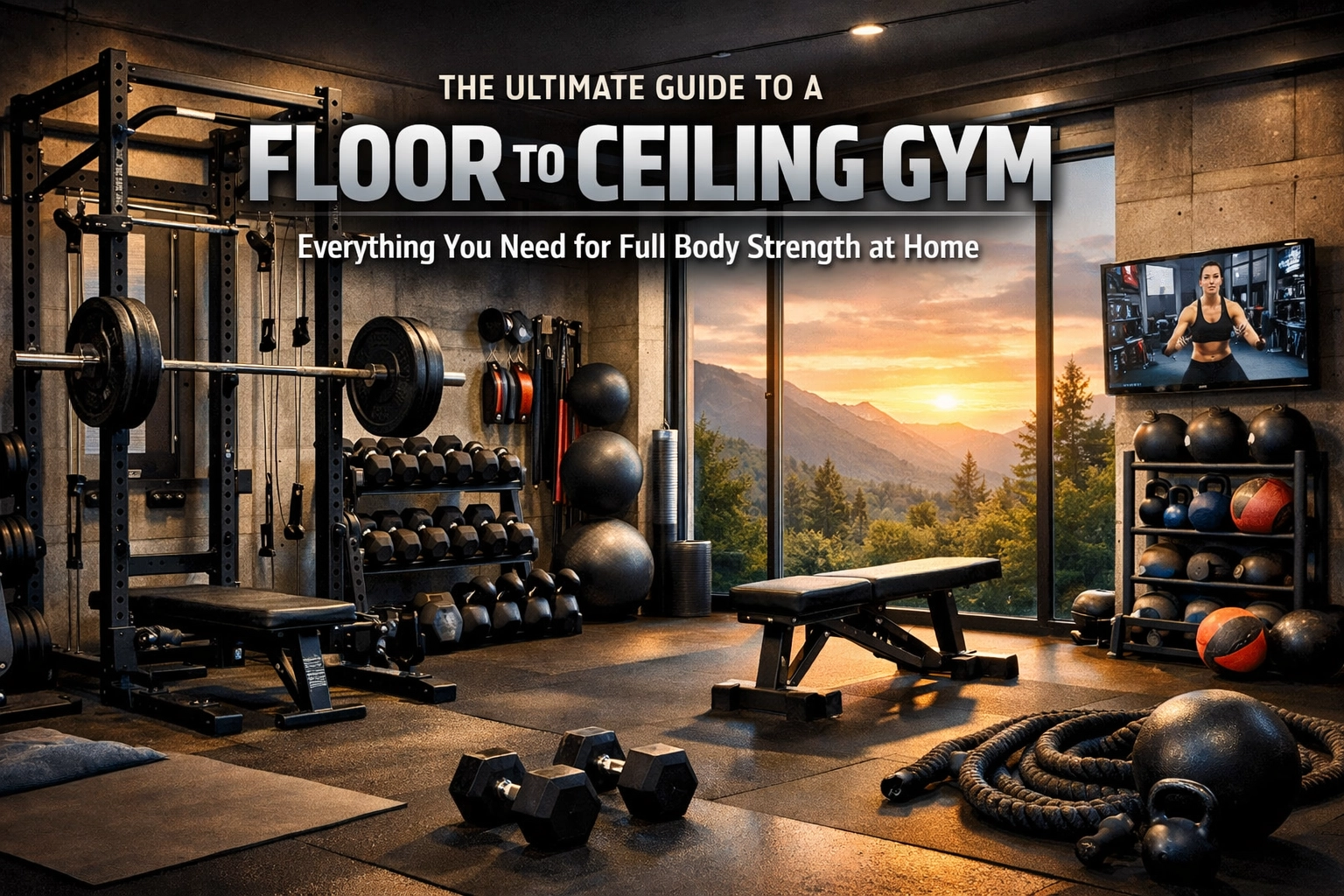
Let’s be real: most home gyms suck. They either take up the entire garage, leaving your car out in the elements, or they consist of a dusty set of dumbbells and a doorway pull-up bar that’s one rep away from ripping the trim off your wall. If you’re a serious athlete: a Ninja Warrior, a CrossFit addict, or a calisthenics pro: you need more than "good enough." You need elite-level equipment that matches your intensity without requiring a structural engineer to install.
Enter the floor to ceiling gym.
At Bold Body Fitness, we’ve seen every setup imaginable. We know that the biggest barrier to a full body workout at home isn't motivation: it's space and equipment versatility. You want to train hard, you want to train heavy, and you want to do it without turning your living room into a permanent construction zone.
This is the ultimate guide to mastering the floor-to-ceiling setup, featuring our flagship Resistance Rail. Get ready to rebuild your home training environment from the ground up.
Why a Floor to Ceiling Gym is a Game Changer
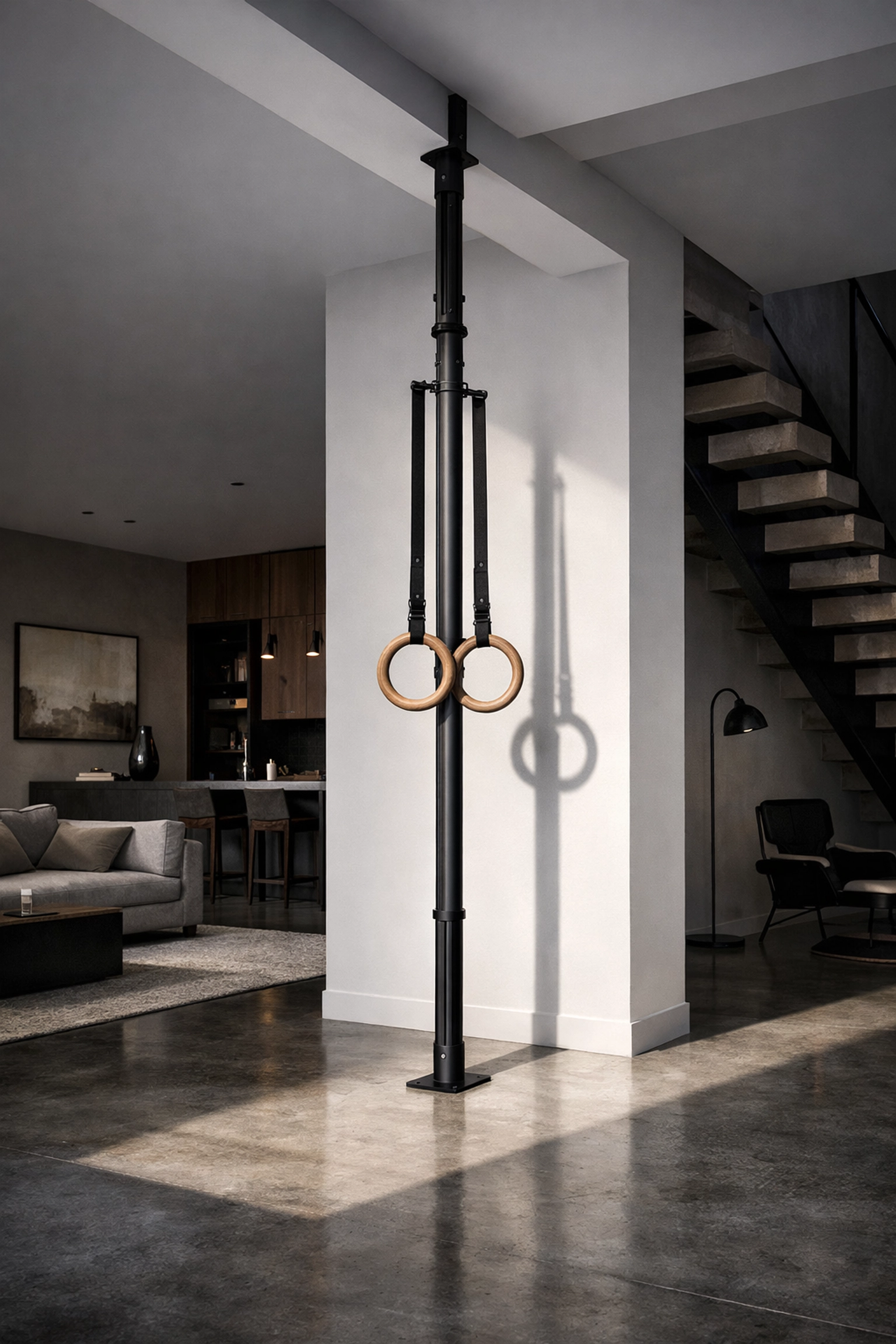
Traditional home gym equipment usually falls into two categories: bulky power racks or flimsy portable gear. A floor-to-ceiling system, like a tension-mounted rail or pole, occupies a middle ground that is frankly superior for the modern athlete.
1. No Wall Damage Workout System
If you’re renting an apartment or you simply don’t want to drill massive bolts into your wall studs, a floor-to-ceiling system is your best friend. By using vertical tension, these systems provide a rock-solid anchor point for resistance training and bodyweight exercises without leaving a single mark. It’s the ultimate no wall damage workout system.
2. Maximum Versatility in Minimum Space
A versatile home gym should allow you to transition from heavy resistance bands to pull-ups to suspension training in seconds. Because these systems utilize vertical space (the most underused real estate in your home), you get a 360-degree training zone that takes up less than two square feet of floor space.
3. Precision Anchor Points
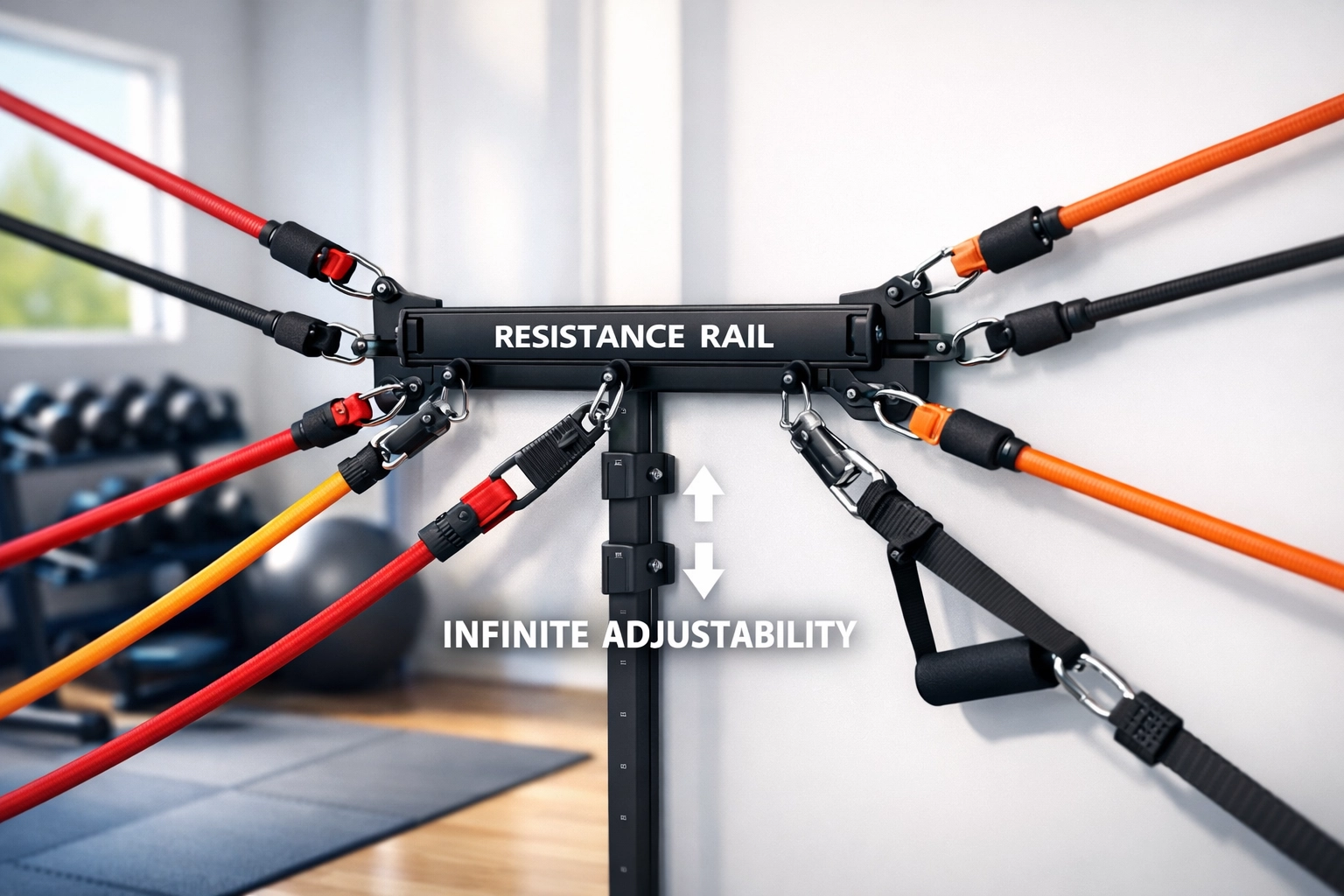
Unlike a standard wall-mounted rack, a floor-to-ceiling rail allows for infinite adjustment. Whether you’re doing high-anchor face pulls or low-anchor cable-style deadlifts, you can slide your attachment to the exact millimeter you need for perfect biomechanics.
Targeting the Elite: Who is this for?
This isn't for the person looking to "tone up" while watching Netflix. This is for the savages.
For the Ninja Warriors & Gymnasts
You need grip strength and explosive pull power. A floor-to-ceiling setup serves as a perfect pull up bar alternative, allowing you to hang rings or grip trainers at various heights. It’s the essential calisthenics equipment for home that lets you practice levers, muscle-ups (if your ceiling height allows), and static holds.
For the CrossFit Athletes
Missing the box? A floor-to-ceiling system can handle the high-intensity demands of a crossfit home gym. Use it to anchor heavy resistance bands for assisted movements or as a stable base for gymnastic ring dips and rows. It’s the missing link for your accessory work.
For MMA Fighters & Grapplers
Isometric strength and rotational power are everything. Using the Resistance Rail, you can mimic the resistance of an opponent, working on explosive shots or rotational strikes with bands anchored at chest height.
The Foundation: Setting Up Your Space
Before you start ordering gear from our shop, you need to assess your "arena."
Ceiling Height and Clearance
A standard ceiling is 8 feet. If you’re lucky enough to have 9 or 10-foot ceilings, you’ve hit the jackpot. For overhead work, you generally want at least 12 inches of clearance above your reach. If you're 6 feet tall, an 8-foot ceiling is the bare minimum for comfortable pull-ups. Measure twice, train once.
Flooring is Non-Negotiable
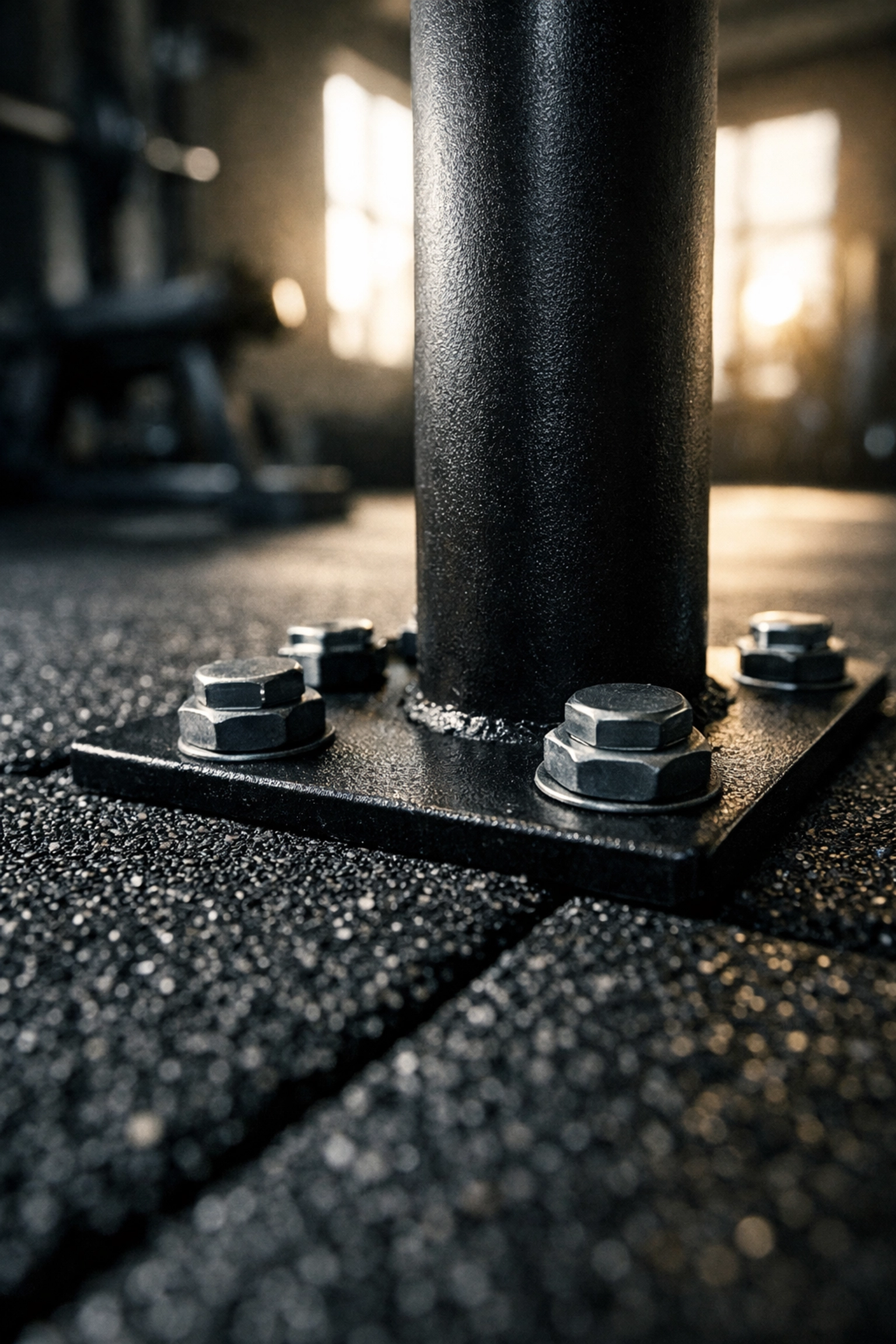
Do not: I repeat, DO NOT: train on bare hardwood or thin carpet. You need high-density rubber mats. We recommend at least 3/4 inch thickness if you plan on dropping weights. For a floor to ceiling gym, the flooring provides the necessary grip for the bottom of the tension mount, ensuring the system stays locked in place during high-intensity movements.
Essential Gear for Your Floor to Ceiling Setup
To achieve a true full body workout at home, you need to curate your attachments. Here’s the Bold Body Fitness checklist:
- The Anchor (The Resistance Rail): This is your spine. Our Resistance Rail is engineered for maximum stability and ease of use. It’s the core of any bodyweight training at home setup.
- Heavy-Duty Resistance Bands: Forget those skinny "booty bands." You need thick, multi-layered latex bands that can provide up to 150 lbs of tension. These are your "plates."
- Gymnastic Rings: The ultimate tool for upper body development. They are easily adjustable on a floor-to-ceiling rail and force you to stabilize through every movement.
- Suspension Trainer: Perfect for unilateral work and core stability.
- Adjustable Bench: If you have the room, a bench expands your floor-to-ceiling capabilities to include incline presses and seated rows.
Why the Resistance Rail?
I founded Bold Body Fitness because I was tired of gear that limited my potential. The Resistance Rail isn't just a piece of metal; it’s a precision tool. Most pull up bar alternatives feel flimsy. They creak. They slide.
The Resistance Rail is built to take a beating. It’s designed for the guy who wants to do weighted pull-ups in his bedroom or the woman who needs a reliable anchor for 100-lb band rows. It’s the ultimate solution for resistance training without the footprint of a commercial gym.

Full Body Strength: The Floor to Ceiling Workout
Ready to put your system to the test? Here is a sample "Bold Strength" circuit you can do using a floor-to-ceiling system and minimal accessories.
1. Vertical Pull (Back & Biceps)
- Movement: Banded Pull-Downs or Pull-Ups.
- The Bold Edge: Adjust the anchor to the very top. If you’re doing pull-ups, use the rail to stabilize your body position. If using bands, focus on the "squeeze" at the bottom of the rep.
2. Horizontal Push (Chest & Triceps)
- Movement: Banded Chest Press.
- The Bold Edge: Set the anchor at shoulder height. Step forward to create pre-tension. This simulates a cable crossover machine but with the progressive resistance of a band.
3. Lower Body Power (Quads & Glutes)
- Movement: Banded Front Squats.
- The Bold Edge: Anchor the band at the floor level. Loop the band over your shoulders. This increases the tension as you stand up: the most difficult part of the lift: forcing your CNS to fire harder.
4. Rotational Core (Obliques)
- Movement: Pallof Press.
- The Bold Edge: Set the anchor at mid-torso. Hold the band handle at your chest, step out to create tension, and press straight out. The rail’s stability ensures the tension stays consistent, unlike doorway anchors that can "give" or wiggle.
Maintenance and Safety
Even the best home gym equipment needs respect. To keep your floor-to-ceiling gym in top shape:
- Check Tension Weekly: Changes in temperature and humidity can slightly affect the pressure of tension-mounted systems. Give it a quick "tug test" before every session.
- Inspect Your Bands: Check for small tears or "dry rot." A band snapping at full extension is a quick way to end your workout (and your ego).
- Floor Check: Ensure no dust or debris has gathered under the base of your rail. You want maximum friction for maximum safety.
The Bottom Line
You don't need a 2,000-square-foot facility to get elite results. You need a system that works with your life, not against it. The floor to ceiling gym is the pinnacle of home fitness evolution. It’s compact, it’s powerful, and: most importantly: it’s bold.
Stop making excuses about your "small apartment" or "renting situation." The technology exists to turn any corner of your home into a powerhouse of strength.
Are you ready to level up? Head over to the Bold Body Fitness Shop and grab your Resistance Rail today. Let's get to work.
About the Author: Brian Kerr is the Founder of Bold Body Fitness. A lifelong athlete and gear junkie, Brian designed the Resistance Rail to solve the problems he faced while training in limited spaces. He believes that strength is a choice, and your equipment should never be the bottleneck.
