
Let's get real for a second. You're serious about your training. Maybe you're grinding through ninja warrior obstacles, perfecting your muscle-ups for calisthenics competitions, or supplementing your CrossFit WODs with home sessions. You NEED a home gym.
But here's the problem: you're renting.
And every piece of home gym equipment you've researched requires you to drill into walls, bolt things to the ceiling, or mount heavy-duty brackets that'll cost you your entire security deposit. That's thousands of dollars down the drain before you even start training.
It doesn't have to be this way.
Building a versatile home gym that supports serious athletic training: without leaving your landlord fuming: is absolutely possible. You just need to be strategic about it.
The Real Problem With Traditional Home Gym Setups
Walk into any garage gym owned by a homeowner and you'll see the dream setup: wall-mounted pull-up bars, ceiling-anchored suspension systems, bolted-down squat racks, and pegboards screwed directly into studs.
Looks incredible. Works incredible. And it's completely off-limits for renters.
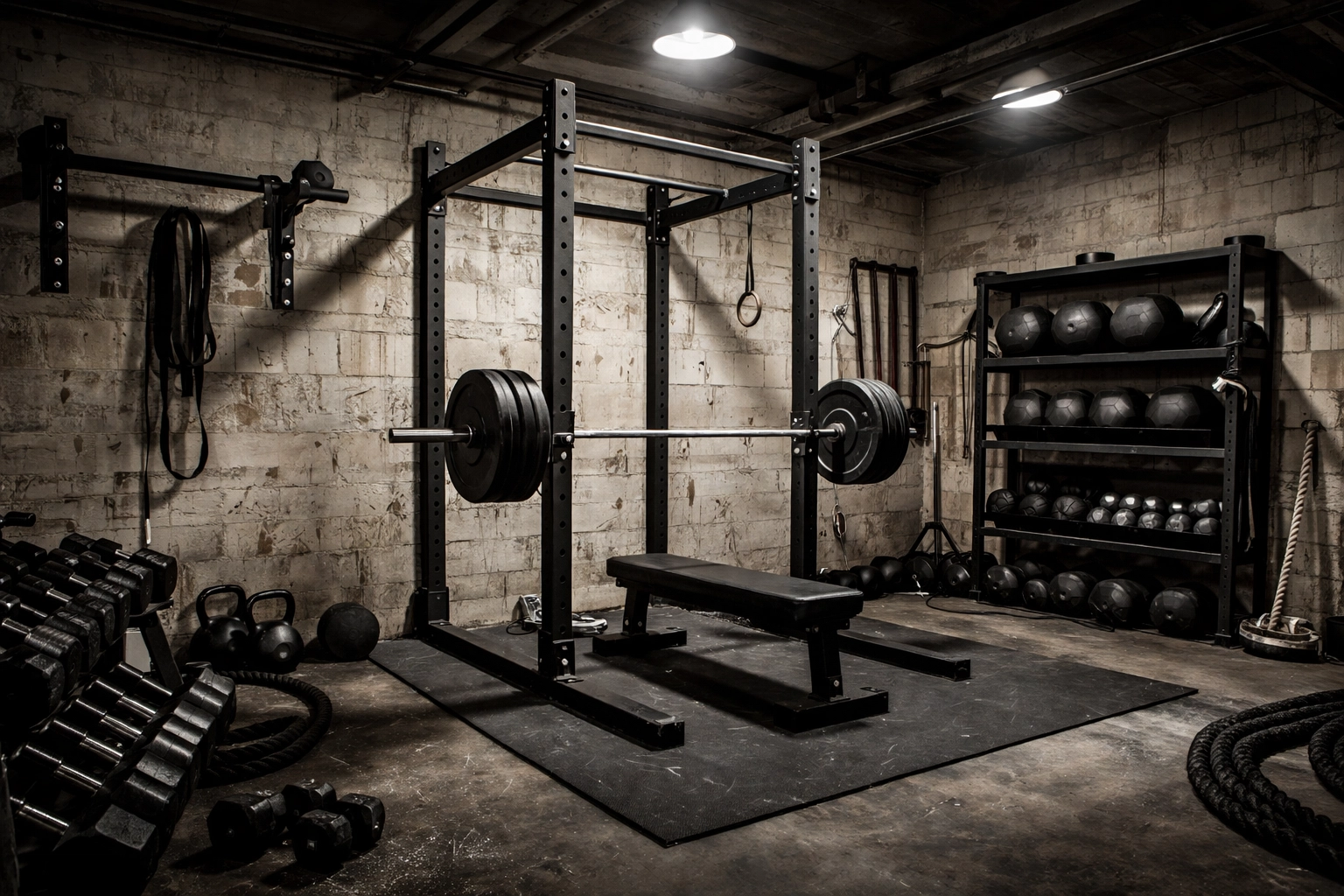
The traditional approach to building a crossfit home gym or calisthenics training space assumes you own the property. Equipment manufacturers design their products with permanent installation in mind because it's easier, sturdier, and frankly: they don't care about your lease agreement.
This leaves renters with two terrible options:
- Settle for inferior equipment that doesn't support real training
- Risk the damage and pray your landlord doesn't notice
Neither option is acceptable when you're training at a competitive level. You need a no wall damage workout system that actually performs.
What Actually Makes a Versatile Home Gym Work
Before we talk solutions, let's define what "versatile" actually means for serious athletes.
A truly versatile home gym needs to support:
- Pull movements (pull-ups, rows, muscle-ups)
- Push movements (dips, push-up variations, handstand work)
- Core training (hanging leg raises, lever progressions, anti-rotation work)
- Resistance training across multiple planes of motion
- Skill work specific to your sport (whether that's grip training for ninja, gymnastics holds, or MMA conditioning)
Most portable equipment fails because it only covers one or two of these categories. Resistance bands are great for some things but terrible for pull-up progressions. Door-frame pull-up bars wobble, damage trim, and have weight limits that make them sketchy for dynamic movements.
You need equipment designed from the ground up to be a pull up bar alternative that doesn't sacrifice performance for portability.
The Floor-to-Ceiling Solution: No Damage, Full Function
Here's where things get interesting.
A floor to ceiling gym setup uses tension compression between your floor and ceiling to create a stable training station. No screws. No bolts. No holes in your walls. Just physics working in your favor.
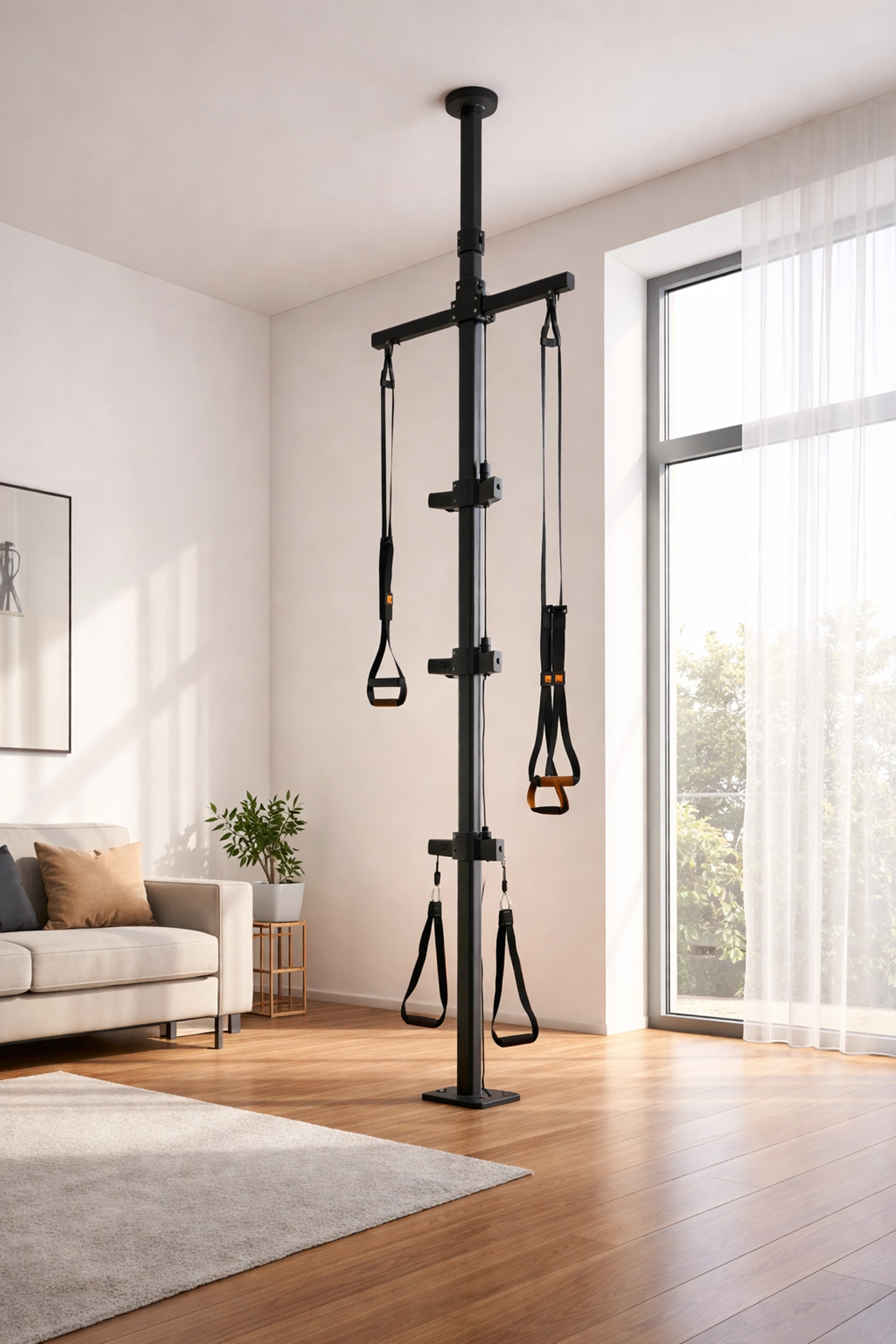
This approach has been used in professional settings for years, but it's only recently become accessible for home athletes. The concept is simple: a vertical rail system that locks between floor and ceiling, providing anchor points for every type of bodyweight training at home you can imagine.
At Bold Body Fitness, we built the Resistance Rail specifically for athletes who refuse to compromise. It's calisthenics equipment for home use that performs like commercial gym hardware: without leaving a trace when you move out.
The Resistance Rail creates a complete training station for:
- Pull-ups and all grip variations
- Resistance band anchoring at any height
- Suspension trainer attachment points
- Dip stations and parallette work
- Hanging core work and leg raises
One piece of equipment. Zero wall damage. Endless exercise options.
Building Your Setup: The Strategic Approach
Let's build out your complete full body workout at home setup, piece by piece, without destroying your rental or your bank account.
The Foundation: Your Vertical Anchor System
Start with equipment that gives you the most exercise variety per dollar spent. A floor-to-ceiling system like the Resistance Rail Deluxe becomes your home gym's backbone. Every other piece of equipment you add will integrate with this central anchor point.
This is the opposite of how most people build home gyms. They start with a treadmill or a set of dumbbells: equipment that serves a single purpose. Smart athletes start with infrastructure that multiplies the value of every future purchase.
Layer Two: Resistance Bands
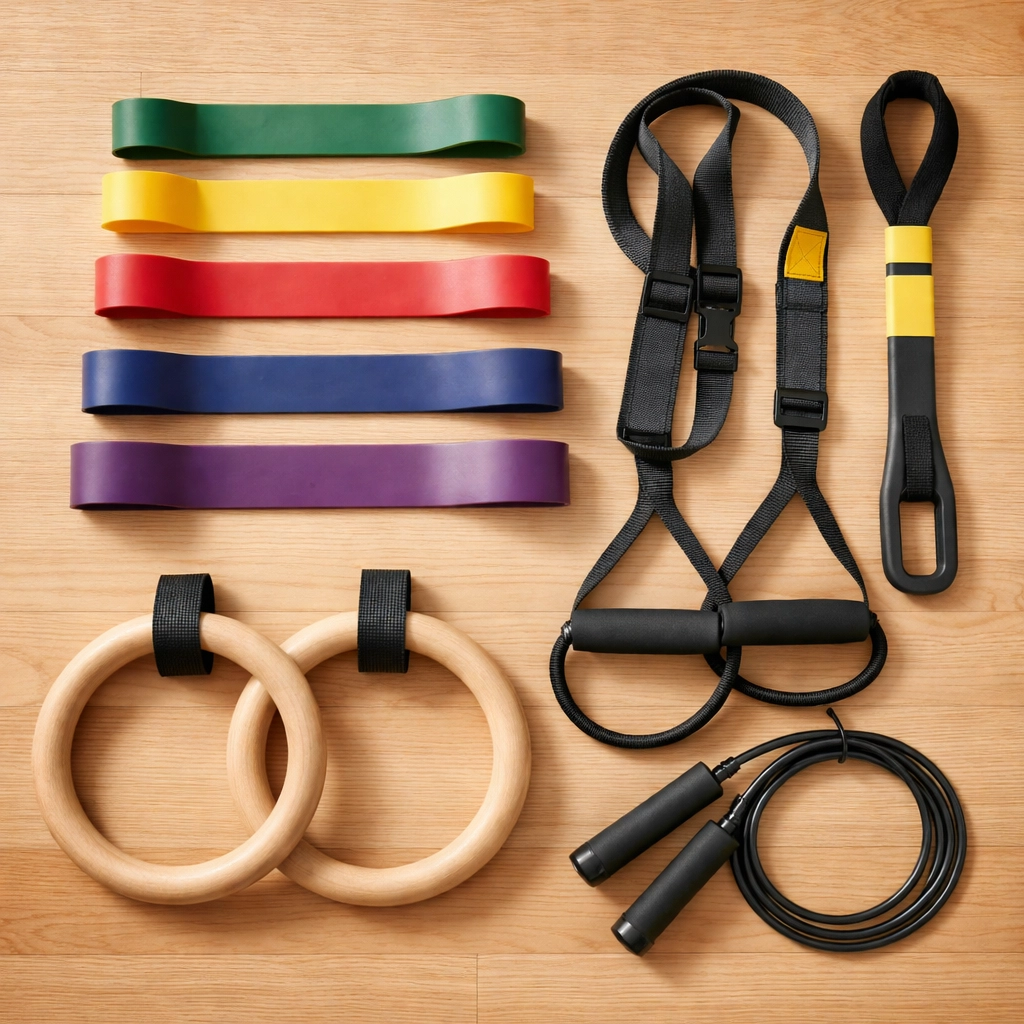
With your anchor system in place, a quality set of resistance bands transforms your training capacity. Unlike using bands alone (which severely limits exercise selection), bands attached to a proper anchor point at various heights unlock:
- Banded pull-up assistance for progression work
- Face pulls and rear delt work
- Rotator cuff prehab
- Banded squats and deadlifts
- Horizontal pressing and rowing
A complete band set runs around $75-100 and multiplies your exercise library by dozens of movements. This is resistance training at its most efficient.
Layer Three: Suspension Training
Adding a suspension trainer to your anchor system creates a complete bodyweight training gymnasium. TRX-style trainers (around $150-230) attached to your Resistance Rail give you:
- Inverted rows at any angle
- Suspended push-ups and flyes
- Single-leg squats with balance assistance
- Core rollouts and pikes
- Hamstring curls
The key difference from typical suspension setups? You're not relying on a flimsy door anchor that damages trim and limits your movement. You've got a rock-solid attachment point that can handle explosive training.
Layer Four: Sport-Specific Add-Ons
Once your foundation is set, add equipment specific to your training focus:
For Ninja Warriors: Grip trainers, portable hangboards, and climbing holds that attach to your rail system
For CrossFit Athletes: A quality jump rope, parallettes, and ab mat
For MMA Fighters: Resistance bands for striking power, battle ropes, and stability balls
For Calisthenics Practitioners: Gymnastics rings, resistance bands for assisted progressions, and a pull-up bar with multiple grip positions
The Budget Reality Check
Let's talk numbers. Here's what a complete, rental-friendly home gym actually costs:
| Equipment | Price Range | Purpose |
|---|---|---|
| Floor-to-ceiling system | $200-400 | Foundation anchor |
| Resistance bands | $75-100 | Resistance training |
| Suspension trainer | $150-230 | Bodyweight training |
| Sport-specific gear | $50-150 | Specialized training |
Total: $475-880
Compare that to a commercial gym membership at $50-150/month. Your entire home gym pays for itself in 6-18 months: and you own it forever.
More importantly, you're not paying for equipment that destroys your rental. No security deposit losses. No repair bills. No awkward conversations with your landlord about the holes in the ceiling.
Why Most "Portable" Equipment Falls Short
You've probably seen the marketing for portable home gym solutions. Foldable squat racks. Door-mounted pull-up bars. Compact cable machines.
Here's the truth: most of this equipment is designed for casual fitness enthusiasts, not serious athletes.
Door-frame pull-up bars have weight limits around 250-300 pounds. That sounds fine until you add 20 pounds of kipping momentum to your muscle-up attempts. Suddenly you're lying on the floor with a metal bar on your chest and damaged door trim.
Portable cable machines promise versatility but deliver compromise. The resistance feels nothing like real weights, the range of motion is restricted, and the anchor points aren't suitable for explosive movements.
When you're training for competition: whether that's ninja warrior obstacles, calisthenics competitions, or combat sports: you need equipment built for athletic performance, not equipment built for Instagram fitness influencers.
Your Move
Building a versatile home gym in a rental isn't just possible: it's practical. The technology exists. The equipment exists. You just need to stop looking at traditional solutions designed for homeowners.
A floor-to-ceiling system changes everything. No wall damage. No landlord drama. No compromising on training quality.
Check out the complete Bold Body Fitness equipment lineup and start building the home gym you actually need. Your training shouldn't suffer because of your living situation.
Time to get after it.
