

Look, we need to talk about the elephant in the room: or rather, the holes in your wall, the dents in your ceiling, and that angry text from your landlord about "structural damage."
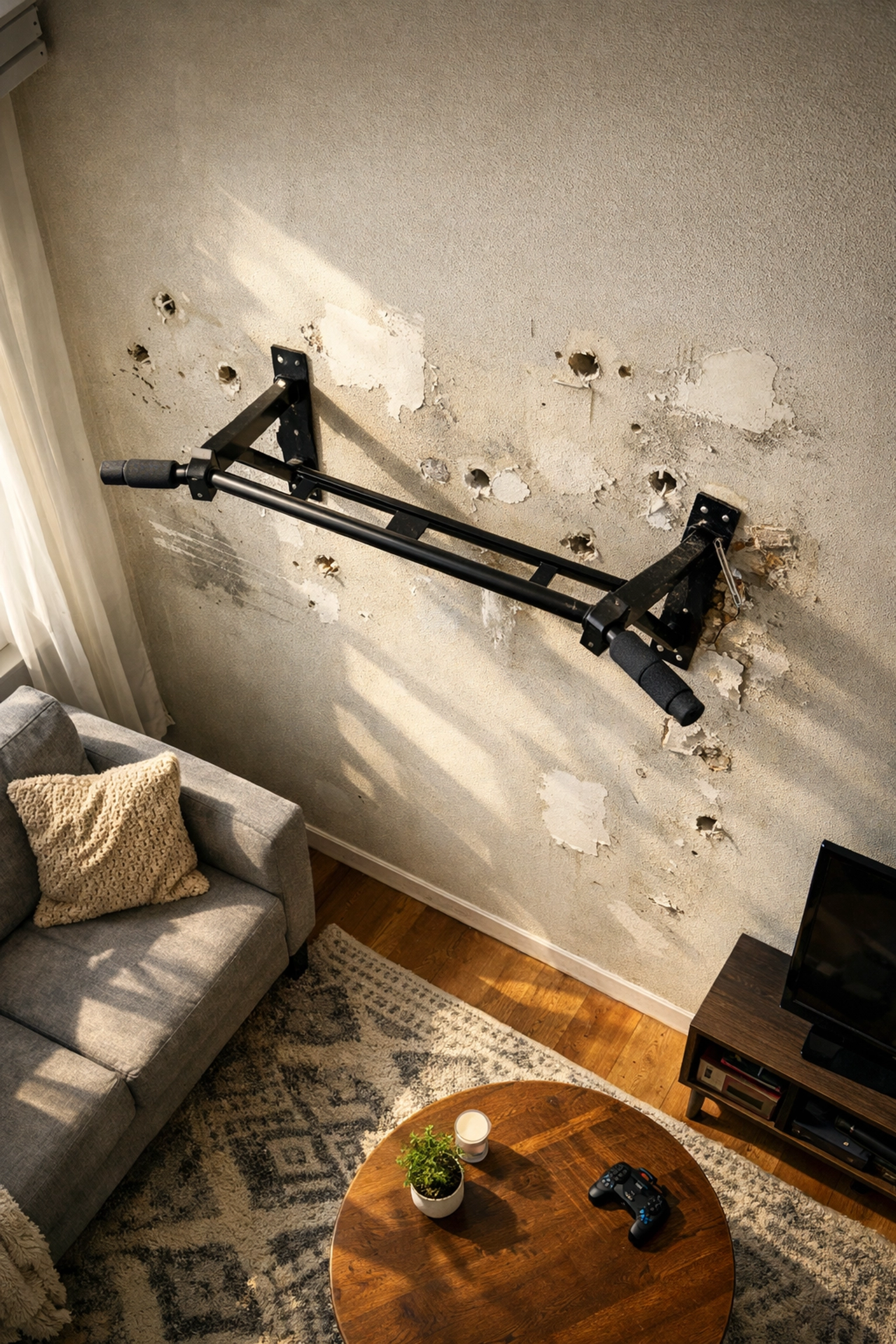
You're a CrossFit athlete. You train hard, you train heavy, and you're not about to let your home gym setup turn into some weak, watered-down version of what you do at the box. But here's the brutal truth: most home gym equipment wasn't designed with your intensity in mind. Wall-mounted pull-up bars leave screw holes the size of quarters. Ceiling-mounted rigs require contractor-level installation. And don't even get me started on the swing damage from kipping pull-ups.
The good news? You can absolutely crush full body workouts at home without turning your space into a construction zone. Let's break down how.
The Wall Damage Problem Nobody Talks About
Traditional home gym setups for CrossFit create a nightmare scenario. You need pull-up capacity, you need versatility for resistance training, and you need equipment that can handle your athlete-level intensity. But conventional solutions require:
- Drilling 4-8 lag bolts into studs (or worse, drywall anchors that fail mid-kip)
- Ceiling joists strong enough to support dynamic loading
- Landlord permission you're never getting
- A security deposit you're never seeing again
And here's the kicker: even if you own your place, those mounting holes kill your resale value and flexibility. Want to rearrange your gym layout? Too bad. Moving to a new house? Start over.
There's a better way to build a crossfit home gym that doesn't require a contractor, a lawyer, and a damage waiver.
What CrossFit Athletes Actually Need at Home
Let's get specific about what makes a home setup work for serious CrossFit training. You're not just doing bicep curls and calling it a day. You need:
Dynamic pulling movements - Pull-ups, chest-to-bar, muscle-ups, toes-to-bar. Your home gym needs to handle explosive pulling without threatening to rip out of the wall mid-rep.
Varied grip positions - Wide grip, narrow grip, neutral grip, rings. Your pulling capacity depends on training multiple grip widths, not just one fixed bar position.
Leg and core integration - Real CrossFit workouts combine upper body pulling with leg work and core conditioning. You need a system that flows between movements without equipment changes eating into your training time.
Scalability for met-cons - Your setup needs to support high-rep conditioning work, not just strength training. That means equipment that stays stable during fast transitions and doesn't shift mid-workout.
The traditional answer is "just join a CrossFit gym." But you already know why that doesn't work. Box memberships run $150-250/month. Class schedules don't match your availability. And sometimes you need to train at 5 AM or 11 PM without leaving your house.
The No-Wall-Damage Solution
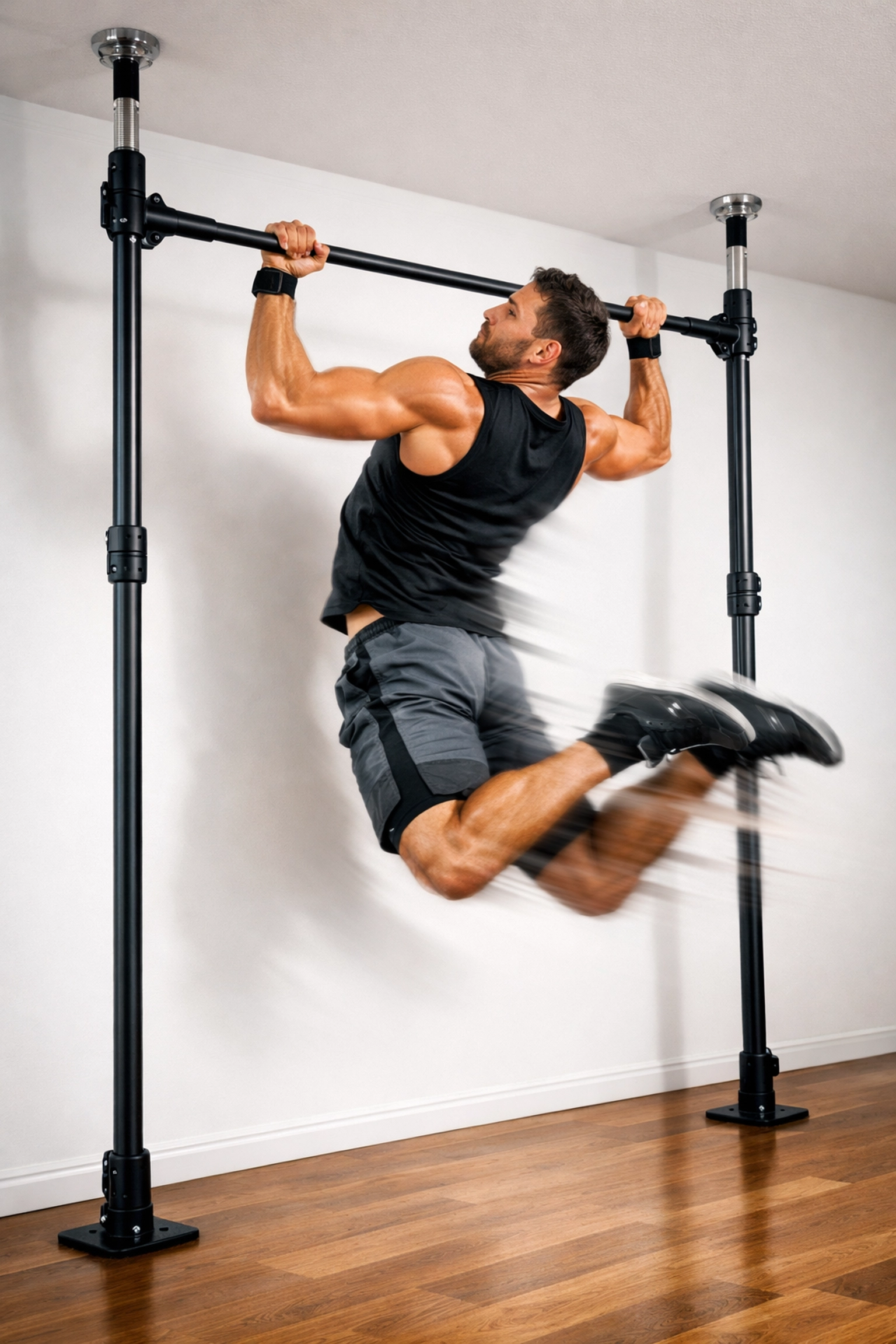
Here's where the game changes: floor-to-ceiling gym systems that use tension instead of wall mounting. Bold Body Fitness developed the Resistance Rail specifically to solve this problem for athletes who train hard but can't destroy their space.
The concept is brilliant in its simplicity: the system wedges between your floor and ceiling using adjustable tension rather than screws, bolts, or permanent mounting. No drilling. No damage. No landlord drama. You get the stability you need for bodyweight training at home without the permanent installation headache.
But here's what separates athlete-grade equipment from the cheap stuff: load capacity and stability during dynamic movements. A pull-up bar that works for casual fitness enthusiasts might wobble or shift when you're doing butterfly pull-ups or kipping toes-to-bar. The Resistance Rail system handles the explosive loading patterns that CrossFit athletes generate without the equipment becoming part of your workout problem.
Programming Full Body Workouts Without Wall Dependencies
Let's talk actual training. You need workouts that hit your entire body, build work capacity, and translate to better box performance: all without requiring wall-mounted equipment.
The 20-Minute Bodyweight Blaster
This is your go-to when you want pure conditioning without any equipment:
- 5 Burpees
- 10 Push-ups (strict, chest to deck)
- 15 Air Squats
Run this as an AMRAP (as many rounds as possible) for 20 minutes. Track your rounds and beat them next time. Simple, brutal, effective. No walls required.
The Single Dumbbell Death March
Grab one heavy dumbbell or kettlebell and run this 20-round circuit:
- 10 Single-arm devil press
- 12 Goblet squats
- 8 Single-arm snatches (alternating)
- 10 Push-ups
Work for 45 seconds, rest for 15. Your legs, shoulders, and lungs will be screaming. Your walls will be fine.
The Pull-Up Progression Circuit
If you've got your versatile home gym setup with a tension-mounted system, this is where you separate yourself from casual athletes:
- Max effort pull-ups (strict)
- Immediately into max effort push-ups
- 20 air squats
- 30-second hollow body hold
Rest 90 seconds, repeat for 5 rounds. The pull-up volume builds capacity while the push-up/squat combo keeps your met-con game sharp.
The Core Destroyer
- 45-second plank
- 15 V-ups
- 10 hanging knee raises (if you have a pull up bar alternative system)
- 20 mountain climbers
- 30-second rest
Repeat for 6 rounds. Your abs will hate you, but your performance will thank you.
Equipment That Earns Its Space
The reality of training at home is that every piece of equipment needs to justify its footprint. You don't have unlimited space, so each tool needs to serve multiple purposes.
Essential elements for a no-damage CrossFit home gym:
A tension-based pull-up system that handles dynamic movements - This is your foundation. Everything else is supplementary.
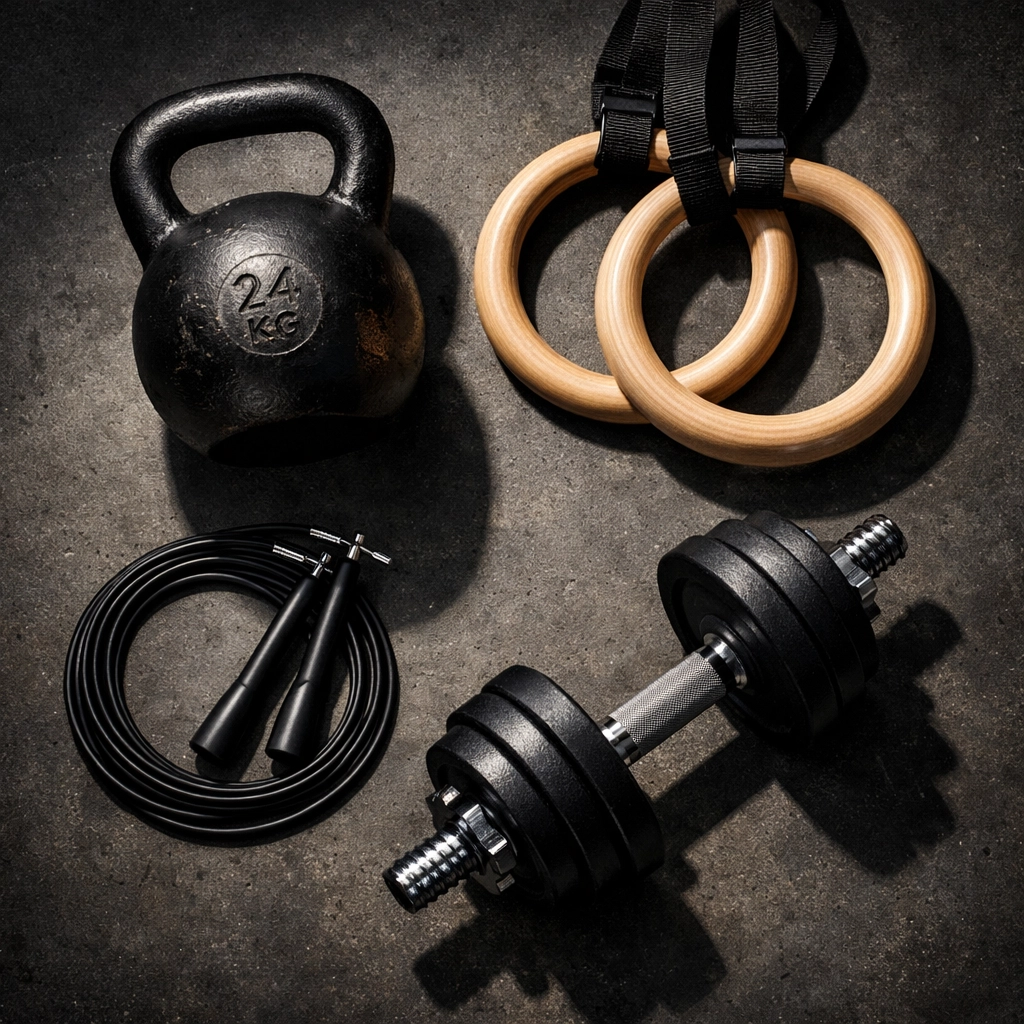
One quality adjustable dumbbell or kettlebell set - Gives you loading options without filling your garage with iron.
A jump rope - Because conditioning doesn't require wall mounting.
Gymnastics rings - These attach to your pull-up system and multiply your exercise options exponentially.
A yoga mat or floor pad - For floor work and protecting your knees during high-rep movements.
That's it. You don't need a $10,000 rig that requires professional installation. You need smart equipment that works hard and doesn't limit your housing options.
The Mental Game of Home Training
Here's something nobody talks about: training at home requires different mental discipline than training at a box. There's no coach yelling at you. No competitive energy from other athletes grinding next to you. No accountability except what you bring yourself.
This is where your CrossFit athlete mentality becomes your advantage. You already know how to push through discomfort. You already understand the difference between "I can't" and "I don't want to." You just need to apply that same intensity to your home training environment.
Set time standards. Track your rounds. Film your form. Treat your home sessions with the same respect you'd give a competition workout. The equipment might be different, but the effort level shouldn't be.
Beyond the Basic Workout
Once you've got your no wall damage workout system dialed in, you can start getting creative with your programming. The beauty of a well-designed home gym is the ability to blend traditional CrossFit elements with movement patterns that work better in a home environment.
Hybrid strength and conditioning:
Combine heavy single-dumbbell work with bodyweight pulling movements. Your strength numbers might not match what you can do with a barbell, but your work capacity and muscular endurance will skyrocket.
Gymnastics skill development:
Use your tension-mounted system for focused skill work on pull-up variations, muscle-up progressions, and hanging leg raises. Without time pressure from class transitions, you can actually nail down technique that's been frustrating you.
Recovery and mobility:
Your home gym also becomes your recovery space. Use your rings for loaded stretching, your mat for mobility work, and your system's stability for balance training that complements your high-intensity work.
The Investment That Pays Back
Let's do the math on this. A typical CrossFit gym membership runs $150-200 per month. Over one year, that's $1,800-2,400. Over two years, you're at $3,600-4,800.
A quality home gym equipment setup that doesn't damage your space costs less than six months of gym membership. And it doesn't have class schedules, commute times, or membership restrictions. You own it. You use it whenever you want. And when you move, it moves with you: no reinstallation required.
Plus, you're not paying for repairs, security deposit deductions, or patching drywall when you eventually move. That's real money saved on top of the membership costs.
Your Next Move
Stop compromising between the workouts you want and the space you have. The days of choosing between serious training and wall damage are over. Modern calisthenics equipment for home has evolved past the limitations of traditional mounting systems.
Your CrossFit performance doesn't have to suffer because you train at home. Your walls don't have to suffer because you train hard. And your bank account doesn't have to suffer because you want both.
Get your foundation right with equipment designed for athletes who actually train. Build your programming around movements that work in your space. And start tracking the gains instead of tracking the damage.
Your home gym is waiting. Your walls will thank you.
