
Let's cut the nonsense. You've probably thrown money at cheap home gym equipment that wobbled, broke, or collected dust faster than you could say "30-day return policy." We get it. The market is flooded with garbage disguised as fitness gear, and separating the real deal from the junk takes serious knowledge.
Whether you're a ninja warrior training for competition, a CrossFit athlete building a crossfit home gym, or a calisthenics beast looking for calisthenics equipment for home, you deserve gear that matches your intensity. Flimsy equipment doesn't just waste your money: it limits your progress and puts you at risk for injury.
Time to upgrade your approach. Here are seven pro-level alternatives that serious athletes actually use.
Why Budget Equipment Fails Serious Athletes
Before we dive into the solutions, let's address the elephant in the room. That $50 doorway pull-up bar? It's designed for casual users who do a few reps twice a week. Same goes for those wobbly squat racks and paper-thin resistance bands that snap after a month.
Bodyweight training at home and resistance training demand equipment that can handle explosive movements, heavy loads, and daily abuse. When you're cranking out muscle-ups, practicing gymnastics progressions, or going hard on MMA conditioning, you need gear built for athletes: not weekend warriors.
The real cost of cheap equipment isn't just the money you waste replacing it. It's the workouts you miss, the progress you lose, and the injuries you risk.
1. Floor-to-Ceiling Gym Systems: The Ultimate Pull Up Bar Alternative
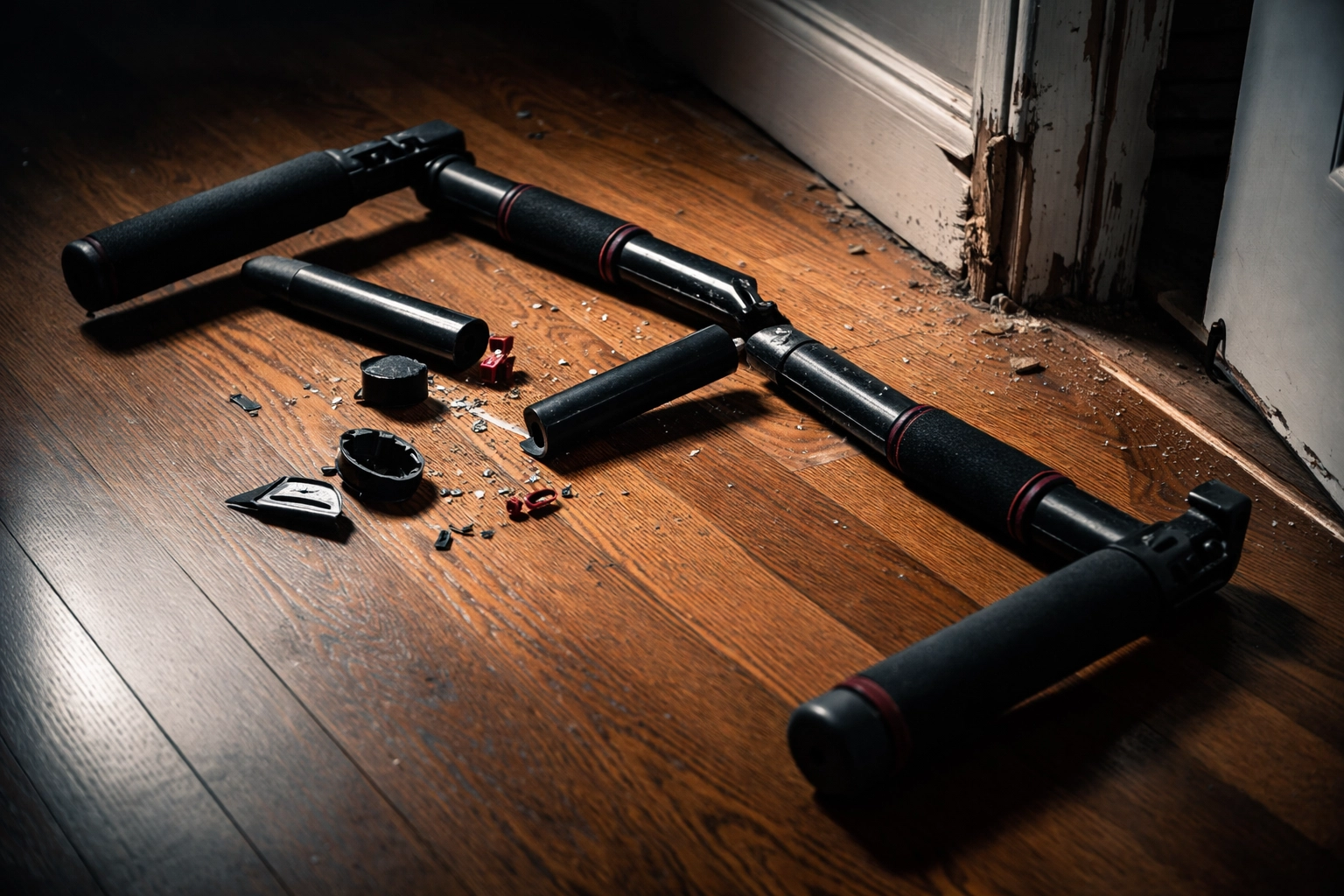
Here's the truth about most pull up bar alternatives: they suck. Door-mounted bars damage frames, wall-mounted options require drilling into studs, and freestanding towers take up half your living room.
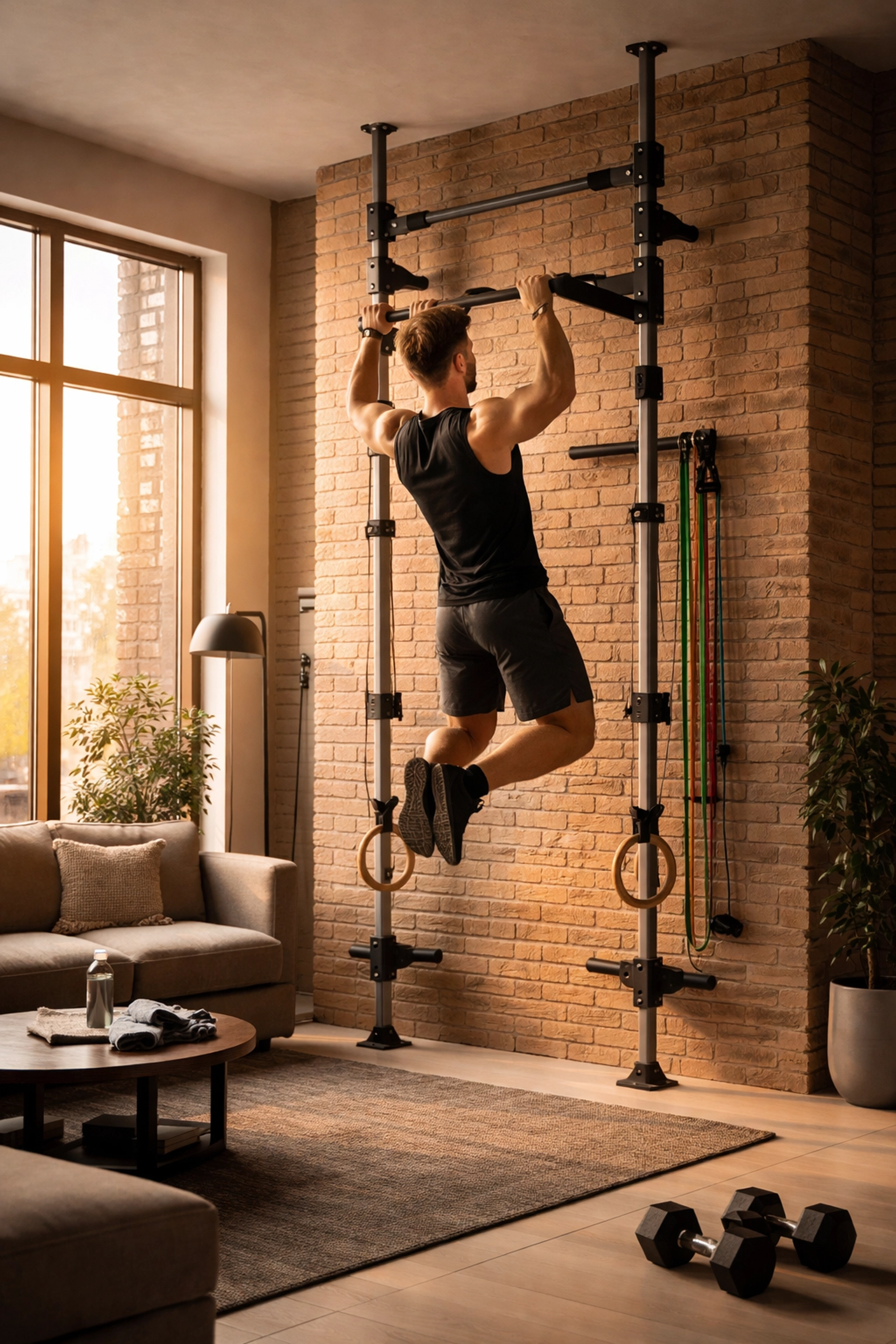
Enter floor-to-ceiling gym systems like the Resistance Rail. This is what a versatile home gym actually looks like. These systems use tension between your floor and ceiling to create a rock-solid training station: with zero wall damage.
The beauty of a floor to ceiling gym setup is the versatility. You're not just getting a pull-up bar. You're getting a complete no wall damage workout system that supports:
- Pull-ups and chin-ups in multiple grip positions
- Resistance band anchoring for cable-style exercises
- Gymnastics ring mounting
- TRX and suspension training
- Isometric holds and static training
For ninja warriors and calisthenics athletes, this changes everything. You get commercial gym functionality without destroying your rental apartment or spending thousands on a power cage.
2. Commercial-Grade Cable Systems
Forget those flimsy cable tower attachments that come with budget home gyms. If you're serious about resistance training, you need cables that can handle real weight without feeling like you're pulling through mud.
The Beyond Power VOLTRA I and Prime Fitness PRODIGY represent what's possible when commercial-grade engineering meets home gym design. These units offer smooth cable action, proper weight stacks, and the durability to survive years of heavy use.
But here's the thing: cable systems work even better when combined with a solid anchor point. The Resistance Rail Deluxe lets you integrate resistance bands and cable-style movements into your training without needing a dedicated cable machine. That's a full body workout at home with a fraction of the footprint.
3. Multi-Functional Benches That Actually Last
Stop buying benches that wobble the moment you load any real weight. The Ironmaster Super Bench Pro V2 and similar commercial-grade options offer what cheap benches can't: stability under load, adjustable positions that actually lock, and attachment compatibility for exercises beyond basic pressing.
A quality bench transforms your home gym equipment setup from limited to limitless. Add a leg curl attachment. Mount a cable tower. Use it for Bulgarian split squats, hip thrusts, and box jumps.
When you pair a solid bench with a floor-to-ceiling training system, you've got the foundation for any workout style: from CrossFit to bodybuilding to sport-specific training.
4. Gymnastic Rings: The Most Underrated Home Gym Tool
For about $50-80, wooden gymnastic rings deliver more training value than equipment costing ten times as much. The catch? You need somewhere to hang them.
Most athletes default to door-mounted solutions or tree branches: both sketchy options that limit what you can actually do. A proper calisthenics equipment for home setup needs a dedicated ring mounting point.
This is where systems like the Resistance Rail shine. Mount your rings at the exact height you need, adjust for different exercises, and train without worrying about your door frame collapsing.
Ring training builds the kind of functional strength that impresses actual athletes:
- Iron crosses and front levers for gymnastics
- Ring muscle-ups for CrossFit competition
- Stabilization work for MMA and grappling
- Progressive calisthenics skills at every level
Check out our calisthenics athlete's guide for more on building a beast-mode home gym without destroying your walls.

5. Quality Barbells and Plates from Specialty Brands
Here's a secret the fitness industry doesn't advertise: the brand name on your barbell matters less than the manufacturer behind it. Companies like FringeSport, American Barbell, and Kabuki Strength produce equipment that matches or exceeds premium brands: often at significantly lower prices.
A quality Olympic barbell should spin smoothly, maintain its whip under heavy loads, and survive being dropped thousands of times. Cheap bars bend, cheap sleeves seize up, and cheap knurling wears smooth within months.
Invest once in quality iron. It's the foundation of any serious crossfit home gym or strength training setup.
6. Modular Rack Systems Built for Expansion
Stop thinking of your home gym as a finished project. The best setups grow with you.
Modular rack systems from companies like Titan Fitness and Rep Fitness use standardized hole patterns and attachment systems. Start with a basic squat stand. Add a pull-up bar. Mount dip attachments. Install a cable pulley system. Each piece integrates with what you already own.
This approach beats buying an all-in-one machine that does nothing well. It also beats the endless cycle of replacing equipment that breaks or no longer meets your needs.
For athletes in apartments or smaller spaces, combining a modular approach with space-efficient solutions like floor-to-ceiling systems maximizes your training options without sacrificing your living space.
7. Resistance Band Systems Done Right
We need to talk about resistance bands. Most are garbage. Thin, poorly made bands snap under tension, lack consistent resistance curves, and feel nothing like the cable movements they claim to replace.
But high-quality bands: especially when integrated into a proper training system: offer legitimate resistance training that travels anywhere. The key is having a solid anchor point.
The Resistance Rail transforms band training from a compromise into a complete workout system. Anchor bands at any height, combine multiple bands for progressive overload, and train angles you can't hit with dumbbells alone.
This is bodyweight training at home evolved. Add band resistance to pull-ups for assisted progressions or banded good mornings for posterior chain work. The combinations are endless.
Building Your Pro-Level Home Gym
Here's the play: stop buying individual pieces that don't work together. Think in systems.
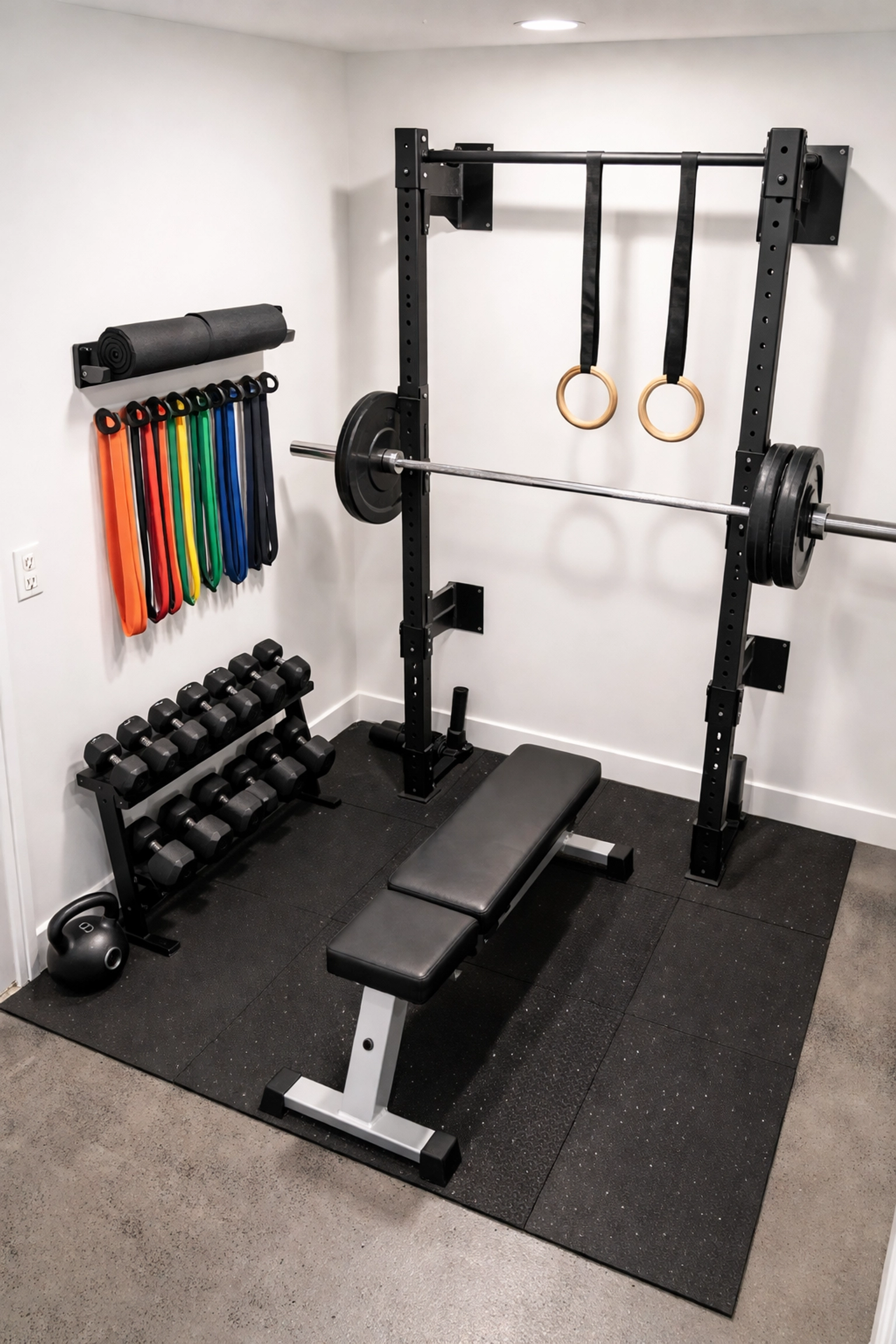
A floor-to-ceiling setup like the Resistance Rail provides your vertical training axis: pull-ups, suspension work, ring training, and band anchoring. A quality bench handles your horizontal pressing and accessory work. Rings and bands fill the gaps for pennies on the dollar.
This approach gives you more training options than most commercial gyms while fitting in a spare bedroom or garage corner.
Visit Bold Body Fitness to explore home gym equipment designed for serious athletes. Check out our shop for the gear that matches your intensity.
Your training deserves better than flimsy equipment. Build your setup right the first time: and never look back.
