
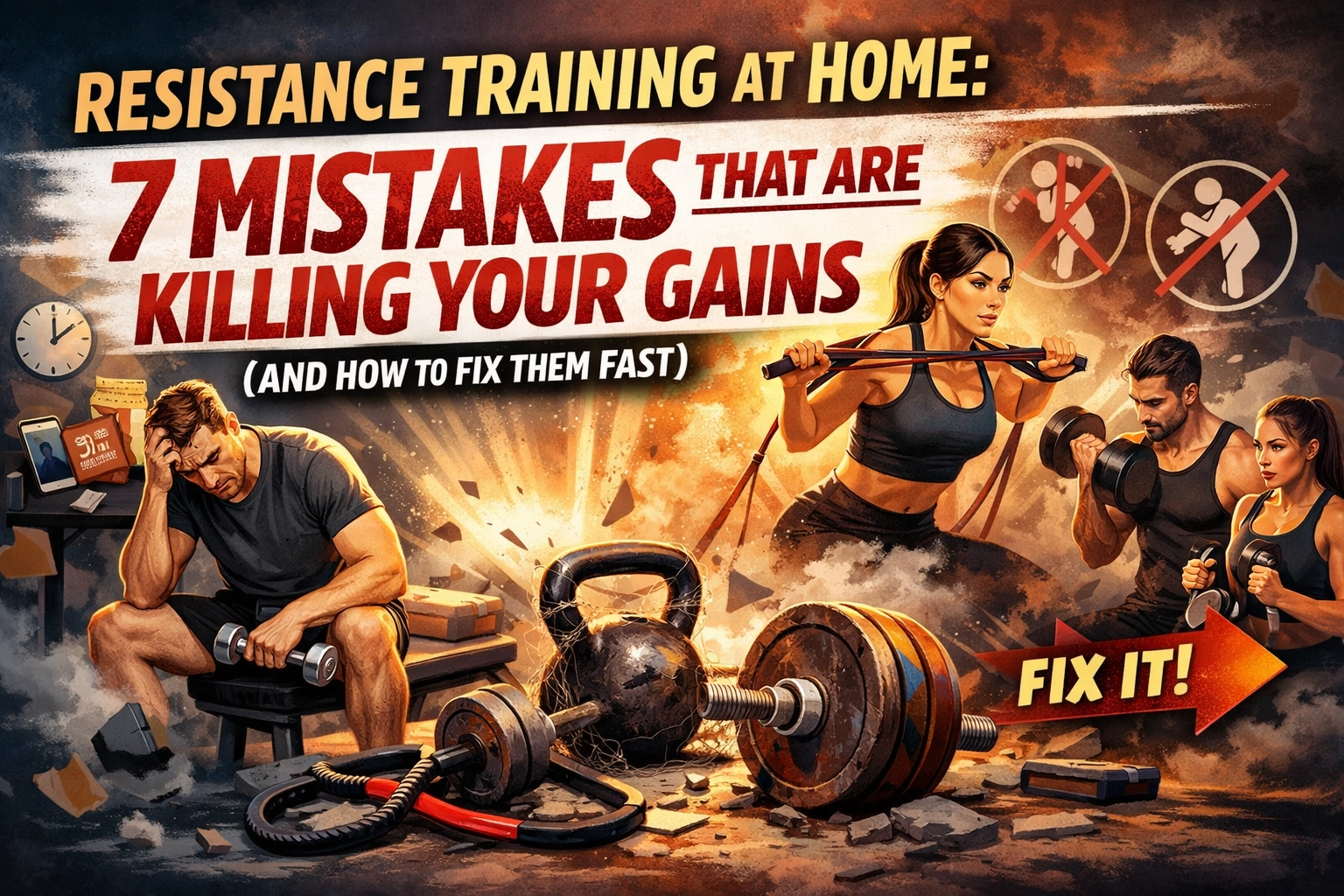
Let's get real for a second. You invested in home gym equipment. You've got the motivation. You're showing up. But if your gains are stalling out or you're feeling beat up after every session, something's off.
Most people training at home make the same mistakes over and over, and it's costing them serious progress. Whether you're a CrossFit athlete grinding through AMRAPs, a calisthenics practitioner perfecting your muscle-up, or an MMA fighter building functional strength, these mistakes will derail your results faster than a bad burrito before sparring.
The good news? Every single one of these problems has a fix. Let's break down the 7 biggest mistakes killing your gains and how to crush them.
Mistake #1: You're Skipping Warm-Ups (And Wondering Why Everything Hurts)
Look, we get it. You've got 45 minutes to train before life happens. The last thing you want to do is waste time on "fluff." But here's the truth bomb: jumping straight into heavy resistance training with cold muscles is like revving a car engine in the dead of winter. Something's going to break.
Why it's killing your gains: Cold muscles have reduced range of motion, meaning you're not moving through full exercise patterns. You're leaving gains on the table with every rep. Plus, you're setting yourself up for strains, pulls, and those nagging injuries that keep you out of the game for weeks.
The fix: Commit to 5-10 minutes of dynamic movement before touching any resistance work. Spider lunges, inchworms, arm circles, and bodyweight squats get blood flowing and joints ready. Think of it as an investment, not a tax on your training time.

Mistake #2: Your Form is Trash (Even If You Think It's Not)
This is the big one. Without mirrors, training partners, or coaches watching every rep, form breaks down fast. You're compensating without realizing it. Your ego's writing checks your rotator cuffs can't cash.
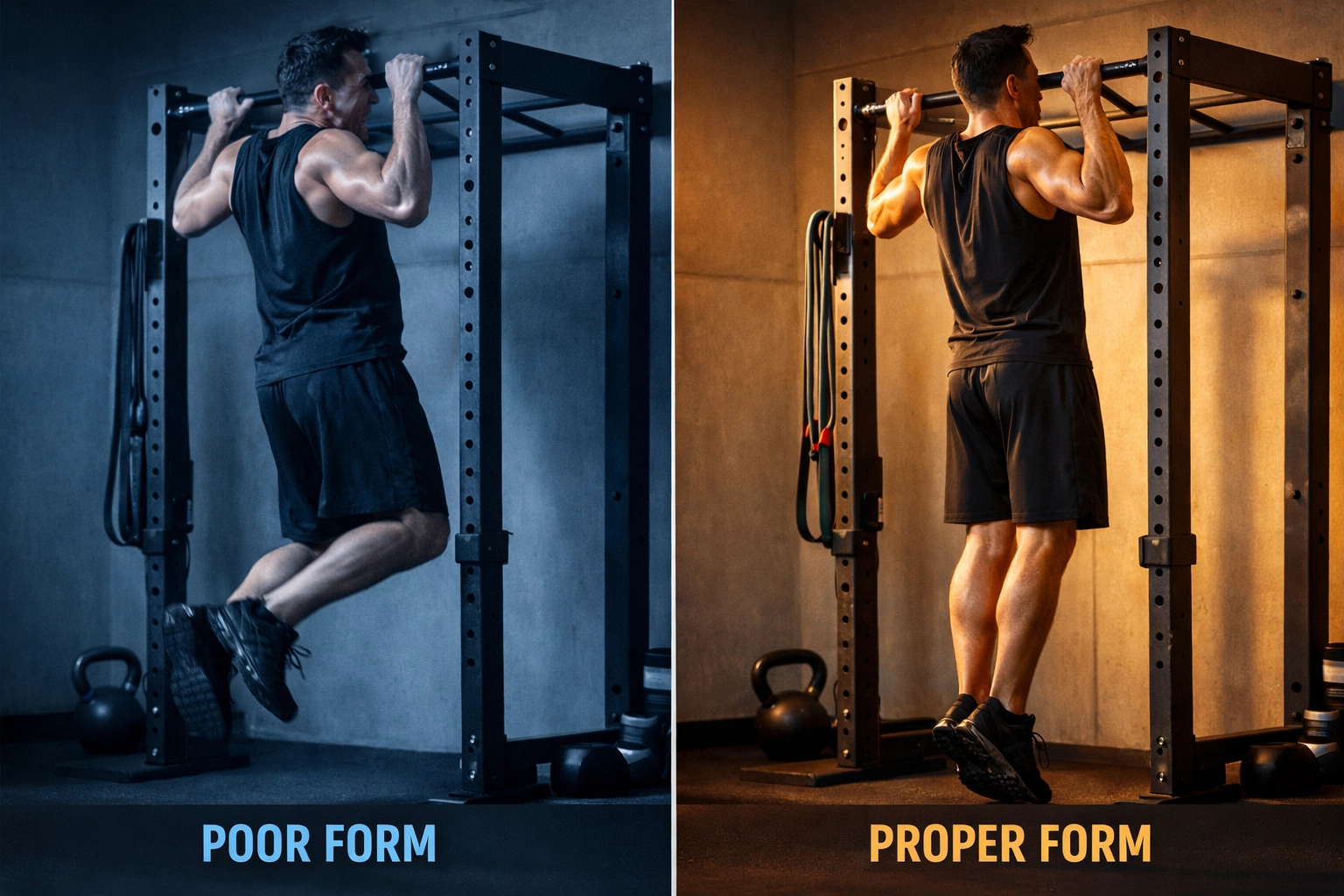
Why it's killing your gains: Poor form means the wrong muscles are doing the work. You might think you're crushing those pull-ups, but if you're swinging like a pendulum, your lats aren't getting the stimulus they need. Worse, you're building injury-prone movement patterns that'll haunt you later.
The fix: Slow. Everything. Down. If you can't control the weight through the full range of motion, you're lifting too heavy (more on that in a sec). Film yourself. Yeah, it feels weird, but watching your own form is a game-changer. Better yet, invest in equipment that naturally promotes proper form: a quality pull up bar alternative like a floor-to-ceiling system forces you to control every inch of movement.
Focus on the squeeze at the top of every rep. That's where the magic happens. Momentum is the enemy of muscle growth.
Mistake #3: Your Weight Selection Strategy is "Vibes Only"
Picking weights based on how you feel that day or what the Instagram fitness influencer is lifting is a recipe for stalled progress. Too heavy and your form falls apart (see above). Too light and you're just going through the motions.
Why it's killing your gains: Your muscles need progressive tension to grow. If the weight doesn't challenge you in the 10-12 rep range, you're essentially doing cardio with extra steps. But if you're grinding through 3 reps with terrible form, you're just practicing how to get injured.
The fix: Use the one-minute test. You should be able to complete 10-12 quality reps within 60 seconds, with the last 2-3 reps feeling genuinely challenging. Start lighter than your ego wants, master the pattern, then add load. For bodyweight training at home, this means manipulating leverage: elevate your feet for push-ups, use a versatile home gym system that allows angle adjustments, or add pauses at the hardest position.
Mistake #4: You're Ignoring Progressive Overload (The King of All Training Principles)
Doing the same workout week after week is like expecting different results from the same Netflix show. Your body adapts fast: within 2-3 weeks, that killer routine becomes maintenance mode.
Why it's killing your gains: Adaptation is your body's superpower and your training's worst enemy. Once you adapt to a stimulus, growth stops. Period. This is especially true for calisthenics equipment for home use: your bodyweight doesn't change much, so you've got to get creative.
The fix: Progressive overload isn't just about adding weight. Manipulate time under tension (slow down your reps), increase volume (more sets or reps), reduce rest periods, or change the exercise angle. A proper floor to ceiling gym setup like the Resistance Rail gives you infinite angle variations to keep progression happening without needing a garage full of plates.
Gymnasts and ninja warriors know this instinctively: they're constantly making movements harder through leverage changes, not just adding resistance. Steal their playbook.
Mistake #5: Your Core is Just Along for the Ride
Every exercise is a core exercise: or at least it should be. But most people treat their abs like passive spectators, only engaging them during dedicated "ab day" torture sessions.
Why it's killing your gains: A weak or disengaged core means energy leaks throughout your kinetic chain. You're unstable during pulling movements, your spine's at risk during loaded carries, and you're leaving pounds on the table during every compound lift. For MMA fighters and CrossFit athletes especially, this is non-negotiable: a strong core is the difference between generating power and getting folded.
The fix: Actively brace your core before every single rep. Think about pulling your belly button toward your spine and maintaining that tension throughout the movement. During full body workout at home sessions, prioritize movements that challenge core stability: hollow body holds, L-sits, and exercises performed on a single limb force your core to work overtime.
Mistake #6: You're Training Like a Chaos Goblin (No Plan, No Progress)
Scrolling through YouTube, picking random workouts, hitting whatever feels good that day: it's not a program, it's a recipe for spinning your wheels. Randomly selecting exercises might feel hardcore, but it's actually the opposite of what elite athletes do.
Why it's killing your gains: Without structure, you can't measure progress. You're not systematically addressing weaknesses. You're probably overtraining some muscle groups while neglecting others. And when results stall, you have no idea what's working and what's not.
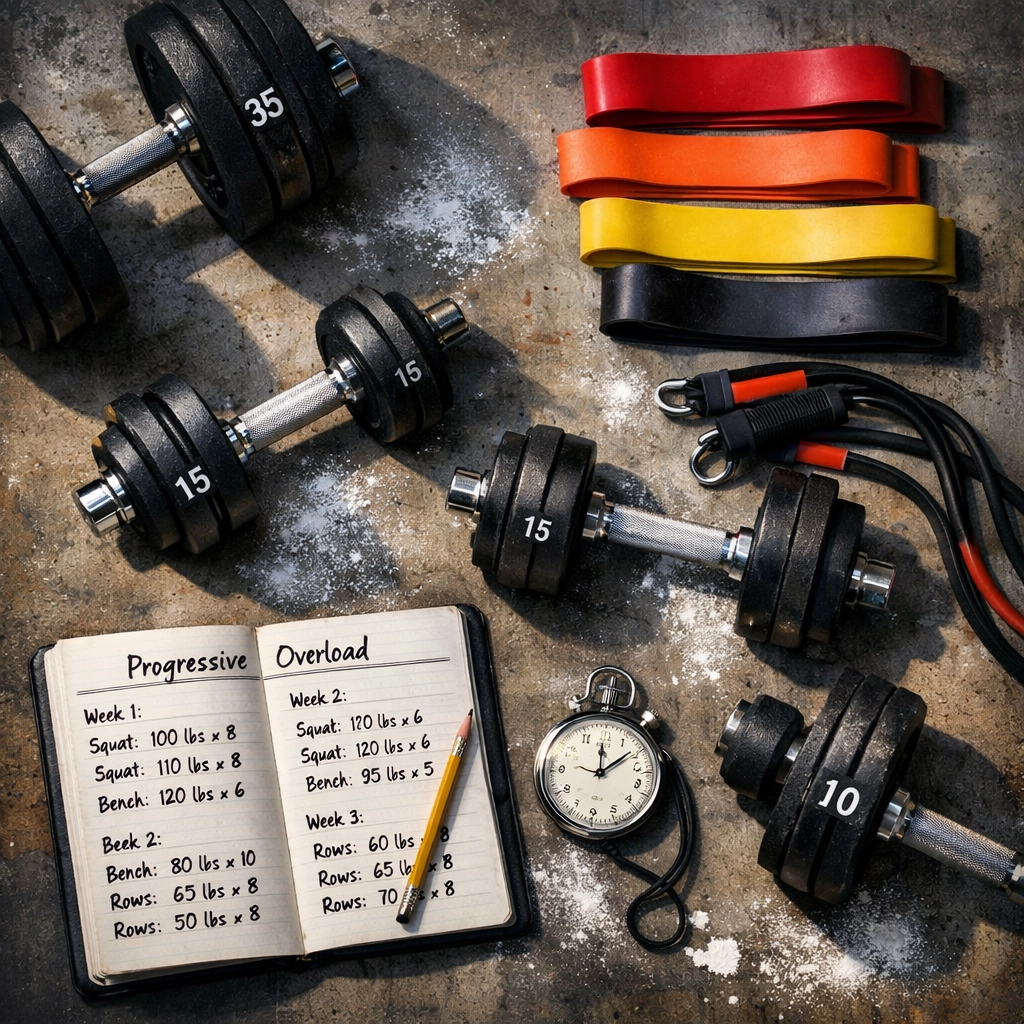
The fix: Create a structured program with planned progressions. Map out 4-8 weeks at a time. Balance pushing and pulling movements. Schedule dedicated skill work if you're training for specific disciplines like calisthenics or gymnastics. A no wall damage workout system like what Bold Body Fitness offers means you can execute that structured program without destroying your rental agreement or limiting exercise selection.
Build from fundamentals first. Master basic movement patterns with perfect form before attempting the flashy stuff your ego wants to try.
Mistake #7: Your Training Environment is a Disaster
Your phone's blowing up with notifications. Kids are asking for snacks. The dog wants attention. Your workout space is cluttered with laundry, and you're tripping over yesterday's shoes during burpees. Sound familiar?
Why it's killing your gains: Distraction fragments your focus and reduces workout quality. You're not hitting the intensity needed for adaptation. You're resting too long between sets because you checked Instagram. You're cutting movements short because the spatial setup sucks. Mental presence matters as much as physical effort.
The fix: Create a dedicated training zone, even if it's just a 6x6 foot section of your living room. Clear it before every session. Phone on airplane mode or in another room. Use a proper CrossFit home gym setup that maximizes vertical space so you're not constantly rearranging furniture. Invest in noise-cancelling headphones if you need to block out ambient chaos.
Treat your training time as sacred. Protect it like you'd protect your sleep or your meals: because it's just as important to your results.
The Bottom Line
Resistance training at home delivers incredible results: if you avoid these seven mistakes. Perfect your form, progressively overload intelligently, engage your core, follow a structured program, and create an environment that supports focused training.
The equipment matters too. A versatile home gym system that grows with you, doesn't require wall mounting, and allows infinite exercise variations removes the limitations that typically hold home training back.
Stop leaving gains on the table. Fix these mistakes, commit to the process, and watch your strength, physique, and performance explode.
Now get after it.
