

Let's cut through the BS: that doorway pull-up bar you bought on Amazon? It's quietly destroying your home. And if you're renting, you might be setting yourself up for a nasty security deposit fight when you move out.
I've seen it hundreds of times. Athletes who are crushing their calisthenics training, building serious strength, only to discover cracked door frames, stripped screws, and drywall damage that costs more to fix than their entire home gym setup.
The truth is, traditional pull-up bars were designed for convenience, not performance. They're the fitness equivalent of fast food, quick, cheap, and they'll cost you more in the long run.
Reason #1: Door Frame Stress Fractures Are Real (And Expensive)
Your door frame wasn't engineered to handle 200+ pounds of dynamic load. Every time you kip, swing, or drop from a doorway bar, you're creating micro-fractures in the wood or metal frame. These start small, barely visible cracks in the paint or finish.
Give it six months of consistent training, and you're looking at structural damage. The frame starts to bow. The door doesn't close properly anymore. And if you're in an apartment or rental property? That's coming out of your security deposit.
Professional gymnasts and CrossFit athletes don't use doorway bars for a reason. They need equipment that can handle explosive movements without compromising the structure of their training space.
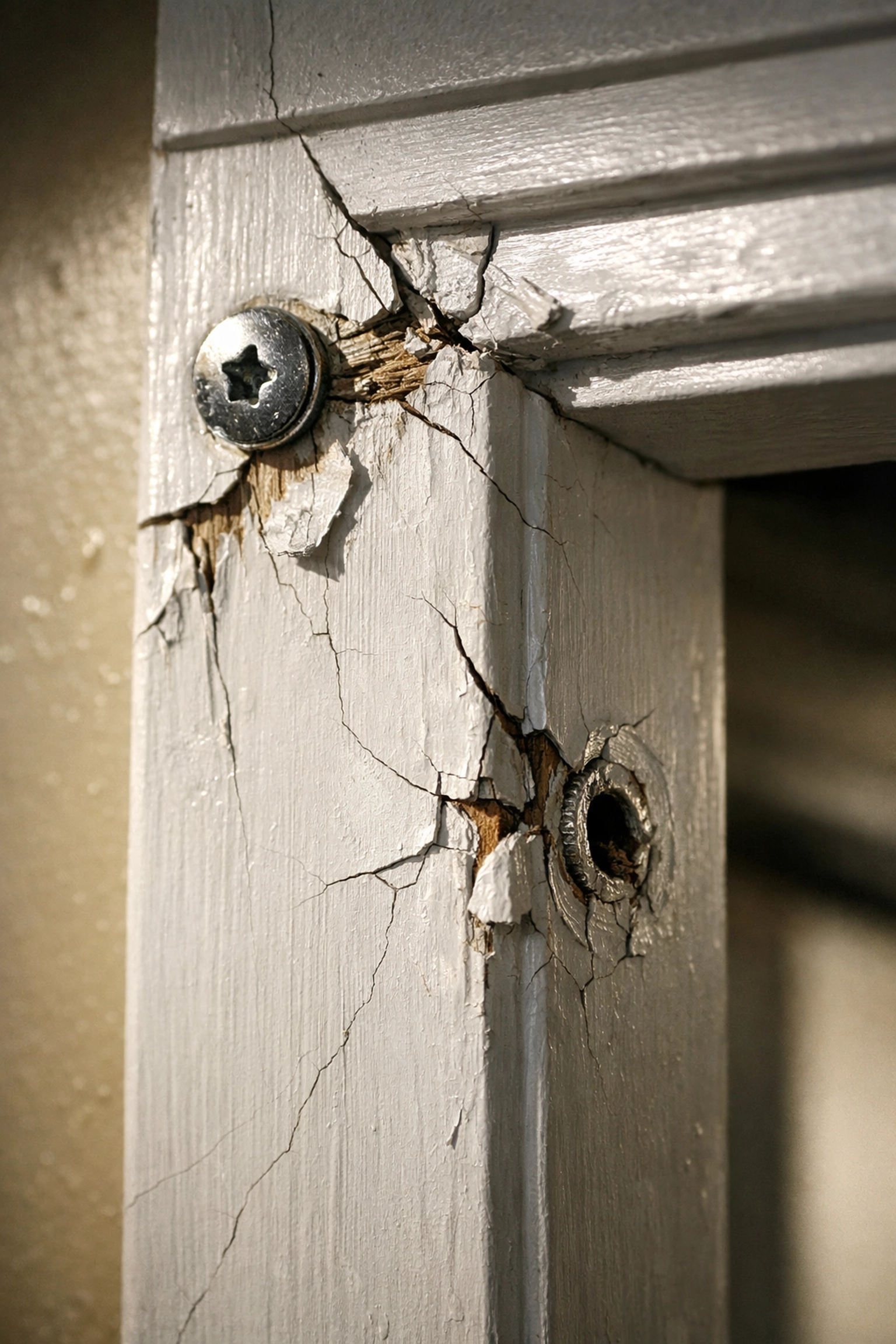
Reason #2: Wall-Mounted Bars Create Permanent Battle Scars
Think wall-mounted pull-up bars are better? Think again. Those heavy-duty screws and anchors you're drilling into your drywall or studs are creating permanent holes that can't be patched with a simple spackle job.
Here's what most people don't realize: when you remove a wall-mounted bar, you're left with holes that are structurally compromised. Even if you fill them, the drywall integrity is shot. For renters, this is a dealbreaker. For homeowners, it limits where you can install your next setup.
MMA fighters and ninja warriors need to train hard and often switch up their equipment configuration. Permanent wall damage isn't an option when you're constantly evolving your training.
Reason #3: Ceiling Installations Void Warranties (Yes, Really)
Ceiling-mounted pull-up bars seem like the ultimate solution: until you read the fine print on your home warranty or lease agreement. Many explicitly prohibit ceiling modifications that compromise structural integrity.
And here's the kicker: ceiling joists aren't always where you think they are. Miss the joist by even an inch, and you're drilling into drywall that can't support your bodyweight. The result? A catastrophic failure that could send you crashing down and leave your ceiling looking like a war zone.
Professional calisthenics practitioners understand that a versatile home gym doesn't require permanent installations that risk structural damage or warranty violations.
Reason #4: Weight Limits Are Lies (Or At Least Misleading)
That "300-pound weight capacity" stamped on your doorway bar? That's assuming perfect installation, zero swing, and static loading. Add kipping pull-ups, muscle-ups, or any dynamic movement, and you're easily doubling or tripling the force on those mounting points.
Physics doesn't care about marketing claims. The impact force from a kipping pull-up can be 2-3x your bodyweight. If you're 200 pounds and training for muscle-ups, you're hitting that bar with 400-600 pounds of force. Do that enough times, and something's going to give: usually your door frame or wall anchors.
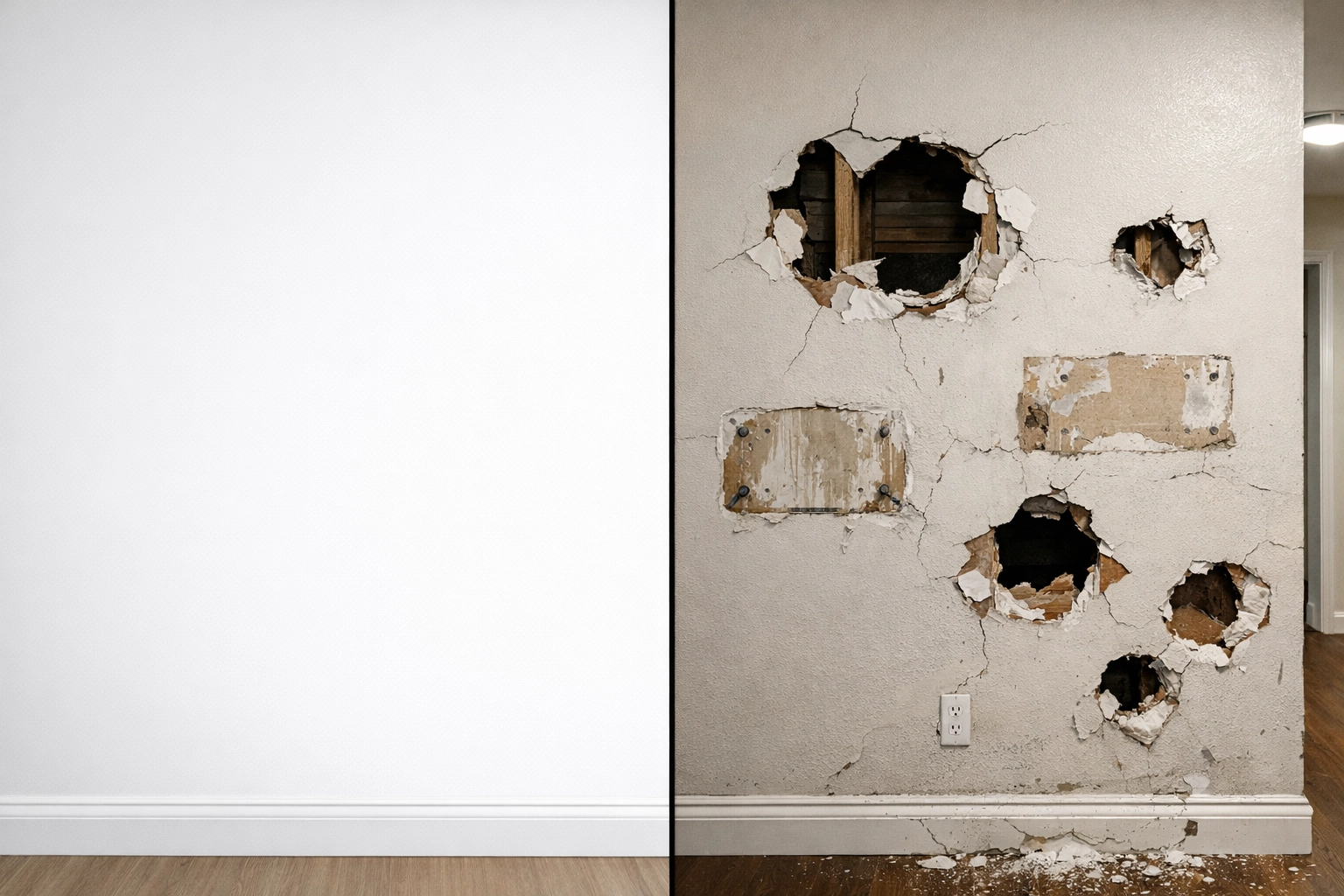
Reason #5: Failed Drywall Anchors Leave Craters
Drywall anchors are a gamble. Even the "heavy-duty" ones rated for 50+ pounds can fail when subjected to dynamic loading. When they do fail, they don't just pull out: they rip out chunks of drywall, leaving crater-sized holes that require professional patching.
I've talked to renters who lost $500+ from their security deposits because of failed anchor points. Landlords don't care that you were "just working out." They see damage, and you pay for repairs.
CrossFit athletes training at home need equipment that distributes load properly, not systems that concentrate all the stress on a few small anchor points.
Reason #6: Swing Marks Destroy Your Walls
Even if your pull-up bar stays securely mounted, your body doesn't stay perfectly still during movements. Kipping pull-ups, muscle-ups, L-sits: these all create swing and momentum. Your feet, knees, and body repeatedly contact the wall, leaving scuff marks, paint damage, and eventually, dents.
This is especially problematic in smaller spaces where clearance is limited. That doorway bar that seemed like a space-saver becomes a wall-destroyer when you're actually training hard.
Reason #7: Installation Mistakes Are Basically Irreversible
Here's the cold truth: most people screw up their first pull-up bar installation. They hit the wrong spot, strip a screw, or drill at the wrong angle. Each mistake means new holes in your wall or door frame.
Unlike a mistake with freestanding equipment that you can simply move, installation errors with mounted bars are permanent. You can't just "undo" a hole in your wall. Each attempt at getting it right compounds the damage.
What Elite Athletes Actually Use: The Zero-Damage Solution
So if traditional pull-up bars are home wreckers, what are professionals actually using? The answer is floor-to-ceiling resistance systems that require zero wall damage, no permanent installation, and no structural modifications.
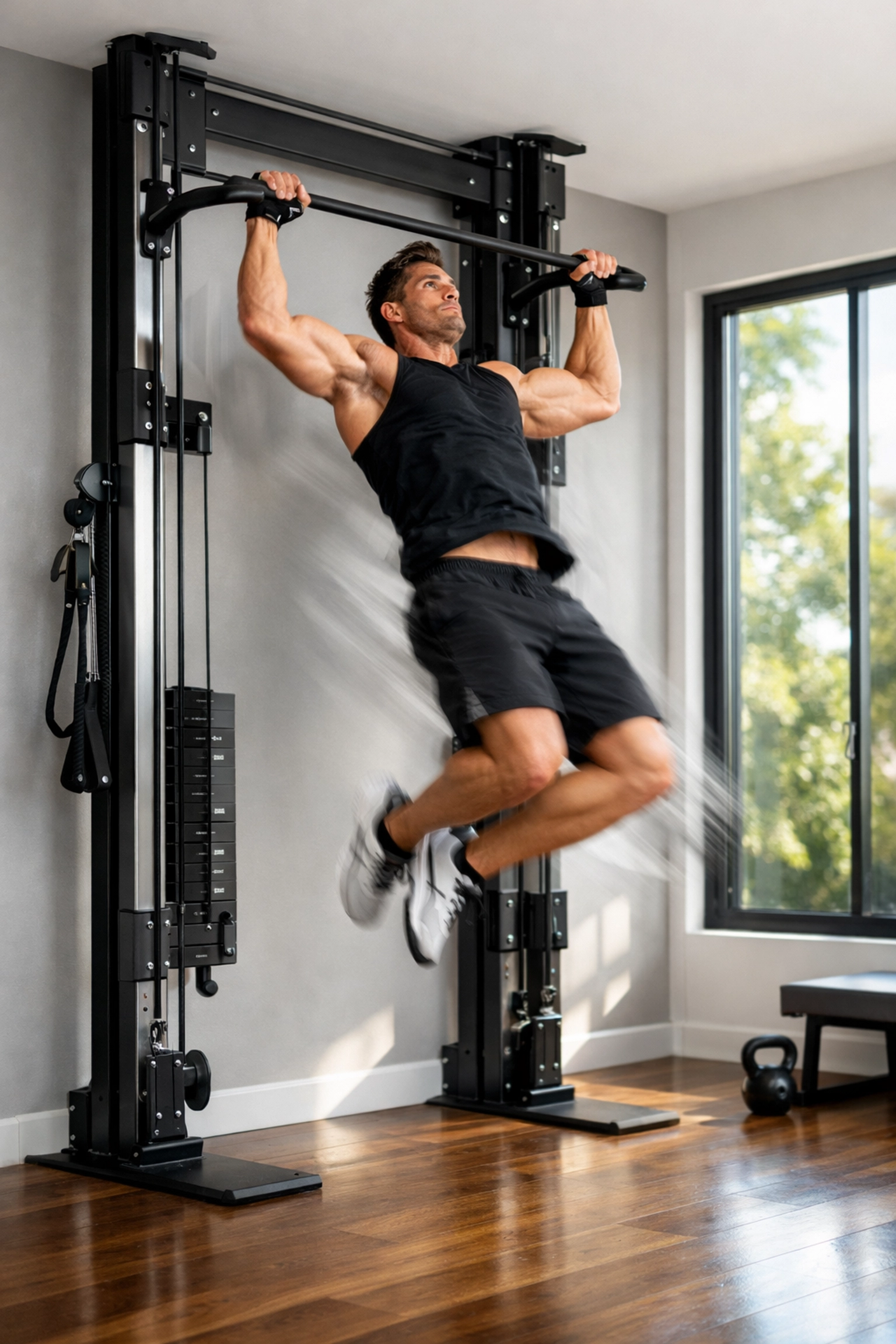
The Resistance Rail represents this new generation of home gym equipment. Instead of destroying your walls and door frames, it uses floor-to-ceiling tension to create a stable, secure training station that handles everything from pull-ups and muscle-ups to resistance band training.
This is the same principle gymnastics centers and professional training facilities use: vertical load distribution that doesn't require drilling, mounting, or permanent modifications.
Better Alternatives for Serious Athletes
If you're serious about bodyweight training at home without destroying your space, here are the proven alternatives:
Floor-to-Ceiling Systems: These use adjustable pressure to secure between your floor and ceiling, eliminating all wall contact. Perfect for renters, frequent movers, or anyone who values their home's integrity. They handle dynamic movements like muscle-ups and kipping pull-ups without creating stress points in your structure.
Freestanding Power Towers: These require floor space but zero installation. The trade-off is worth it: you get pull-up bars, dip stations, and multiple grip positions without a single screw. They're portable, adjustable, and don't leave a trace when you move.
Resistance Band Setups: When combined with a floor-to-ceiling system, resistance bands offer progressive difficulty without the installation headaches of traditional bars. You can loop bands for assisted pull-ups, perform lat pulldowns, and create hundreds of exercise variations.
Inverted Row Stations: Using a low bar or suspension trainer, inverted bodyweight rows work the same muscle groups as pull-ups while reducing ceiling height requirements. They're the perfect precursor to full pull-ups and require minimal setup.
Doorway Alternatives: If you must use a doorway, towel doorway rows let you train pulling movements without hardware installation. Loop a towel around a door handle and you've got an instant training station with zero damage risk.
The key difference? All of these solutions prioritize both training effectiveness AND home preservation. They're designed for athletes who take their training seriously enough to invest in proper equipment, not cheap fixes that cost more in repairs than they save upfront.
The Renter's Reality Check
If you're renting, here's your wake-up call: every hole, every crack, every paint chip is money out of your pocket when you move. Landlords have gotten wise to pull-up bar damage. They know what to look for, and they're not afraid to charge market rate for repairs.
A $30 doorway bar can easily turn into a $500 security deposit loss. Meanwhile, a proper floor-to-ceiling gym system costs less than losing that deposit and moves with you to your next place: no damage, no stress, no argument with your landlord.
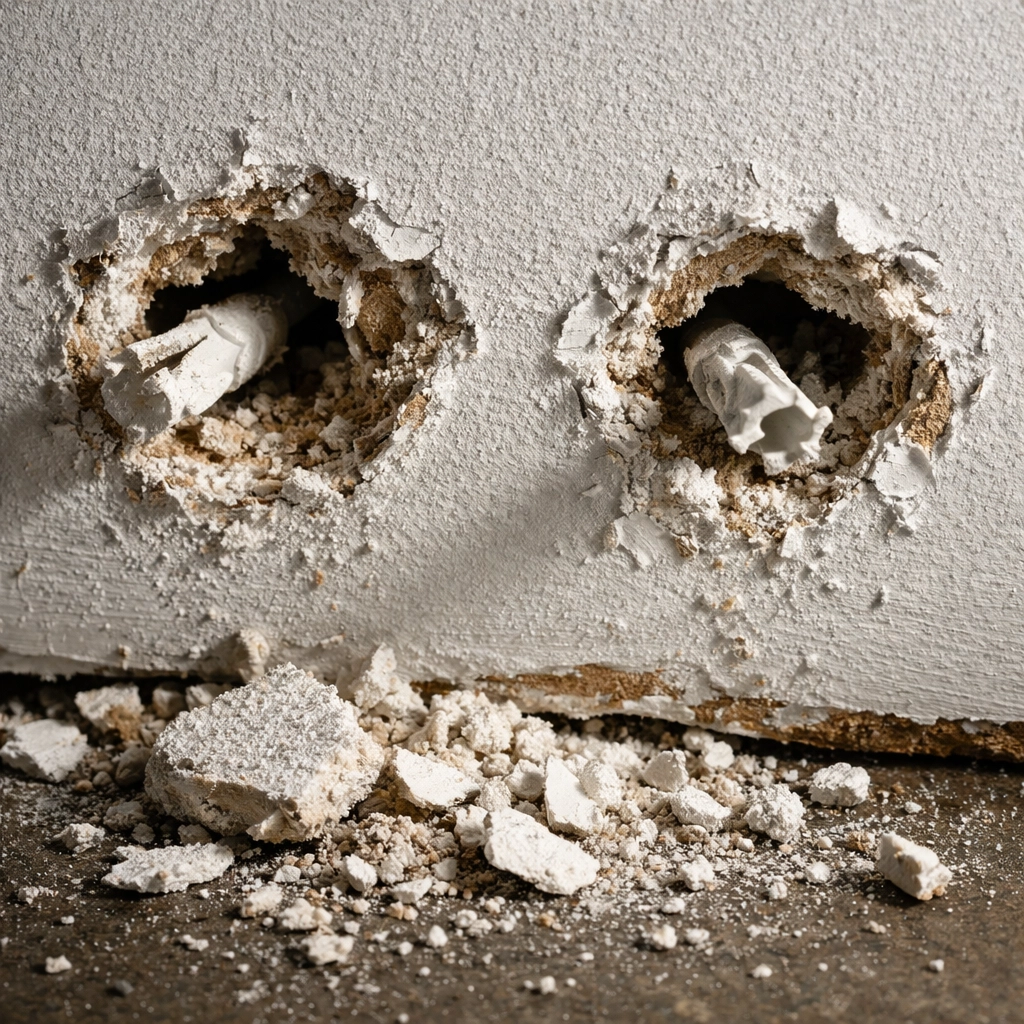
The Professional Standard
Talk to any gymnastics coach, CrossFit gym owner, or professional calisthenics trainer. They'll tell you the same thing: equipment that requires permanent installation is either built into the facility from day one (commercial-grade construction) or avoided entirely in favor of freestanding systems.
The athletes who compete at the highest levels: ninja warriors crushing American Ninja Warrior courses, gymnasts representing their countries, MMA fighters preparing for championship bouts: they're training on equipment that's built for performance without compromise.
They're not drilling holes in walls and hoping for the best. They're using professional-grade systems that handle the intensity of elite training while respecting the spaces they train in.
Making the Switch: What You Need to Know
Transitioning from a traditional pull-up bar to a no-damage alternative doesn't mean compromising your training. In fact, most athletes find they get MORE versatility and training options with modern systems.
Look for equipment that offers:
- Multiple grip positions for varied muscle engagement
- Adjustable height for progressive training
- Compatibility with resistance bands and other accessories
- Stability under dynamic loading (muscle-ups, kipping, etc.)
- Zero permanent installation requirements
The investment pays for itself the first time you avoid a repair bill or security deposit loss. But more importantly, it gives you the freedom to train hard without that nagging worry about damaging your home.
The Bottom Line
Your home deserves better than being a casualty of your fitness journey. Traditional pull-up bars were never designed for serious athletes putting in serious work. They're stopgap solutions that create long-term problems.
The pros have moved on to smarter systems that deliver better results without the collateral damage. Floor-to-ceiling setups, freestanding towers, and properly designed resistance systems give you everything you need for world-class calisthenics training at home: without the home destruction.
Stop treating your training space like it's expendable. Invest in equipment that respects both your performance goals and your property. Your walls, your door frames, and your security deposit will thank you.
Ready to upgrade to a home gym setup that actually respects your home? Check out the Resistance Rail and other no-damage training solutions that serious athletes rely on. Your space deserves it. Your training demands it.
