

Listen, I get it. You’re serious about your gains, but you’re also serious about not losing your security deposit or spending your weekend patching drywall. Most "home gym" solutions are a total disaster for your house. You’ve seen the doorframe pull-up bars that leave black scuff marks and eventually crack the molding. You’ve seen the wall-mounted rigs that require massive lag bolts and a prayer that you hit the center of the stud.
If you’re a Ninja Warrior, a gymnast, or a CrossFit athlete, you need equipment that can handle explosive movements without turning your spare bedroom into a construction zone. You need a no wall damage workout system.
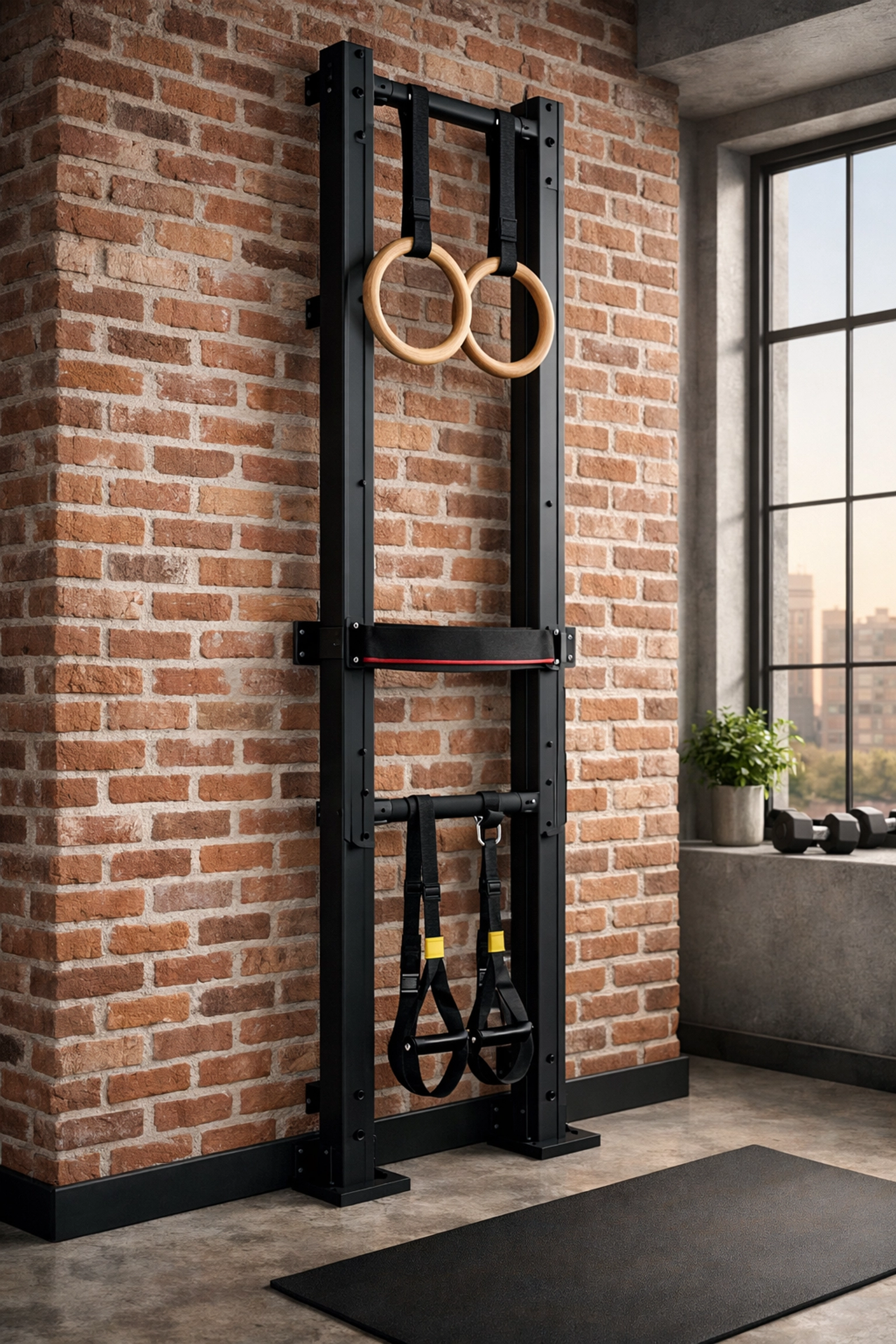
At Bold Body Fitness, we didn't just want to build another piece of equipment; we wanted to revolutionize how high-performance athletes train at home. That’s why we built the Resistance Rail.
If you’re in the market for a home setup that won't wreck your property, here are 10 things you absolutely need to know.
1. Vertical Force is Your Best Friend
Most home gym equipment fails because it relies on lateral (sideways) force. When you bolt a pull-up bar to a wall, every time you kip or pull, you’re putting massive torque on the drywall and the studs. Over time, that leads to cracks, loose bolts, and structural headaches.
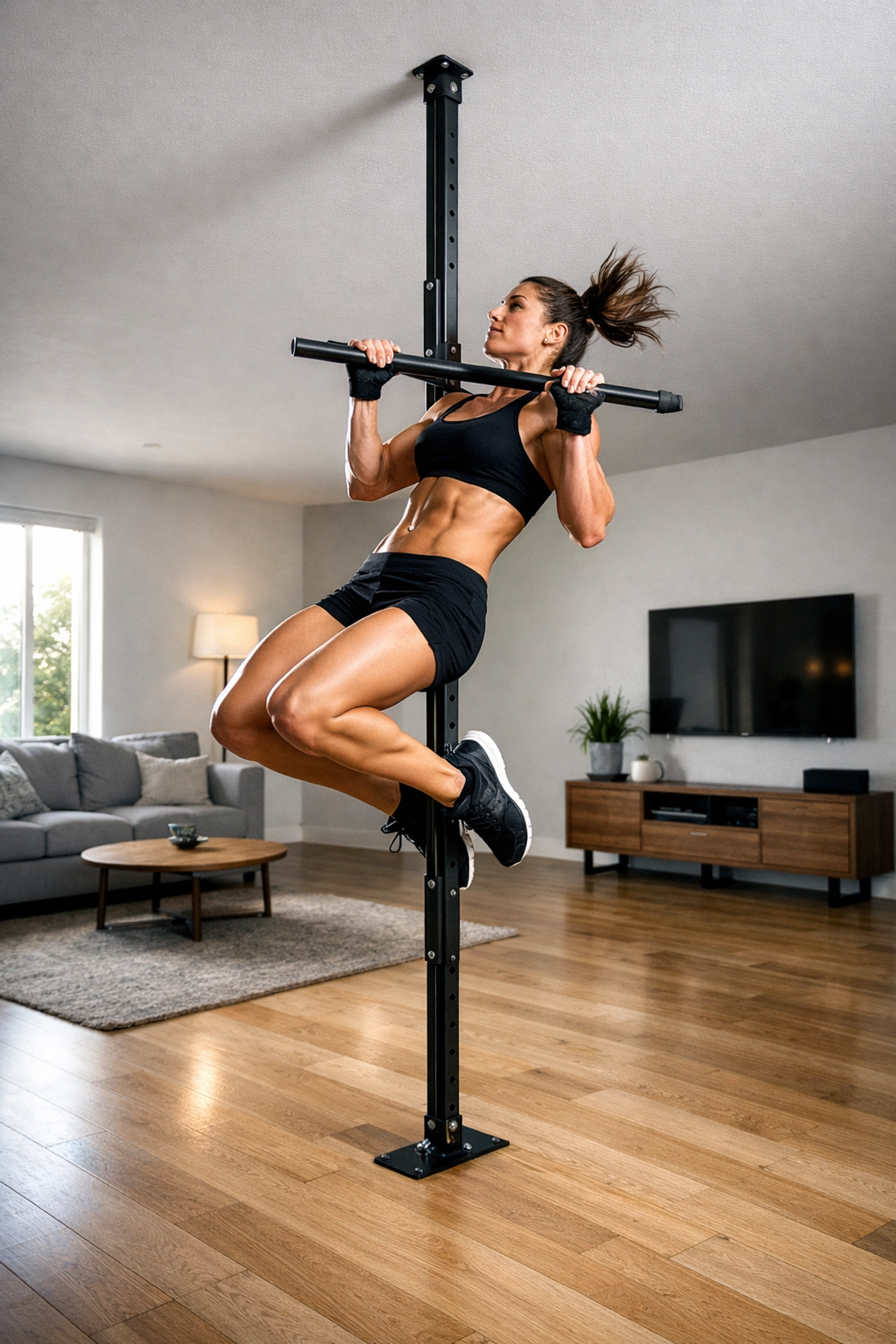
A true floor to ceiling gym utilizes vertical tension. By distributing the load between the floor joists and the ceiling joists, the force is directed where your house is strongest. Our Resistance Rail system uses this exact principle. It’s like a structural pillar that doubles as a world-class training station. No bolts, no drilling, just rock-solid stability.
2. Don’t Settle for a Single-Purpose Tool
A standard pull-up bar is a one-trick pony. If you’re serious about bodyweight training at home, you need versatility. A pull up bar alternative should do more than just let you hang.
The best no-damage systems allow for:
- High-anchor points for tactical pull-ups and muscle-up progressions.
- Mid-anchor points for rows and core work.
- Low-anchor points for heavy resistance training and leg work.
When you’re looking at equipment, ask yourself: Can I perform a full body workout at home with this, or am I just buying a piece of metal that will end up as a clothes rack?
3. Weight Capacity Isn’t Just a Number
If a system says it holds 250 lbs, that might be fine for a slow, controlled pull-up. But what happens when an MMA fighter starts doing explosive band work or a gymnast works on levers? The dynamic load: the force generated during movement: is much higher than your static body weight.
A premium no wall damage workout system should be over-engineered. We designed our gear to handle the rigors of high-intensity training. You shouldn't have to wonder if your equipment is going to snap when you’re mid-set. Check the materials. If it’s flimsy plastic or thin-walled aluminum, keep walking. You want heavy-duty steel that stays put.
4. Renters: This is Your Holy Grail
If you’re renting, the "no damage" aspect isn't a luxury; it’s a requirement. Landlords love to keep security deposits for "excessive wear and tear." Drilling four-inch holes into the studs is a surefire way to lose your cash.
The beauty of a tension-based versatile home gym is that it’s completely non-permanent. You can set it up in twenty minutes, crush your workout for six months, and take it down without leaving a single trace. No spackle, no paint matching, no drama. Check out our shop to see how we’ve made the ultimate renter-friendly powerhouse.
5. Controlled Movement vs. Collateral Damage
Here’s a hard truth: half the damage caused to homes during workouts isn't from the equipment: it’s from the athlete. Wild, swinging movements on a shaky doorframe bar lead to feet hitting walls and equipment slipping.
A floor-to-ceiling system like the Resistance Rail provides the stability needed to master calisthenics equipment for home use. When the equipment is stable, your movements become more controlled. This doesn't just protect your walls; it builds better functional strength. If you’re a Ninja Warrior, you know that control is the difference between clearing an obstacle and falling into the drink.
6. The "Doorframe Trap"
We’ve all seen them: those "as seen on TV" bars that hook over the trim. Here is why you should avoid them if you’re a serious athlete:
- Limited Range of Motion: You’re stuck inside a narrow doorway.
- Trim Damage: They rely on the strength of your decorative molding (which is usually held on by tiny finish nails).
- Safety: They can: and do: slip.
If you want a crossfit home gym experience, you need room to breathe. You need to be able to extend your arms, use resistance bands, and move laterally. A floor-to-ceiling rail gives you 360 degrees of training space, far away from the cramped confines of a closet door.
7. Strategic Padding Matters
Even with a no-bolt system, you want to ensure the contact points are protected. High-quality systems use non-marking rubber or specialized foam at the floor and ceiling interfaces. This prevents scuffs and ensures a grip that won't budge.
When setting up your home gym equipment, don't just think about the walls. Think about the floor. We always recommend pairing your Resistance Rail with a high-density rubber mat. It protects your floors from dropped weights and sweat, and it provides extra grip for your feet during explosive resistance training.
8. Modularity is the Key to Longevity
Your fitness goals will change. Today you might be focused on hypertrophy; next month, it might be MMA-specific conditioning or calisthenics. A "static" workout system is a dead-end investment.
The Resistance Rail Standard is designed to be modular. You can slide your anchor points up and down the rail in seconds. This allows you to transition from a chest-height row to a floor-level bicep curl without stopping your heart rate. If your equipment doesn't grow with you, it’s just taking up space.
9. Space Planning: Don't Just Wing It
Before you buy any no wall damage workout system, measure your ceiling height. These systems are designed to fit specific ranges. Most standard home ceilings are 8 or 9 feet, but if you’re in a basement or a loft, you might have different requirements.
Also, consider your "swing zone." Even if the equipment doesn't touch the walls, you might. High-performance training requires a "clearance zone" of at least 3-4 feet around the equipment. Planning your layout prevents 90% of accidental home damage.
10. True Strength is Built on Trust
At the end of the day, you have to trust your gear. If you’re hesitant to go all-out because you’re afraid the pull-up bar will rip out of the wall, you aren't training: you’re just exercising.
Bold Body Fitness was founded by athletes who were tired of "good enough" home equipment. We wanted gear that felt like the professional rigs we used in the gym but worked in a spare bedroom. Whether you are practicing for a Spartan race or just trying to stay shredded with a full body workout at home, you deserve equipment that is as bold as your goals.

Final Thoughts
Building a home gym shouldn't feel like a compromise. You shouldn't have to choose between a killer workout and a pristine home. By leveraging vertical tension, high-grade materials, and a modular design, you can turn any room into a high-performance training center.
Ready to stop worrying about your walls and start focusing on your PRs? Check out the full line of home gym equipment at Bold Body Fitness. From the Resistance Rail to our specialized attachments, we have everything you need to build ninja-level strength without the construction bill.
Train hard. Stay bold. Leave the walls alone.
For more tips on building the ultimate home setup, check out The Ultimate Guide to Bodyweight Training at Home and explore our product sitemap for all our latest gear.
