
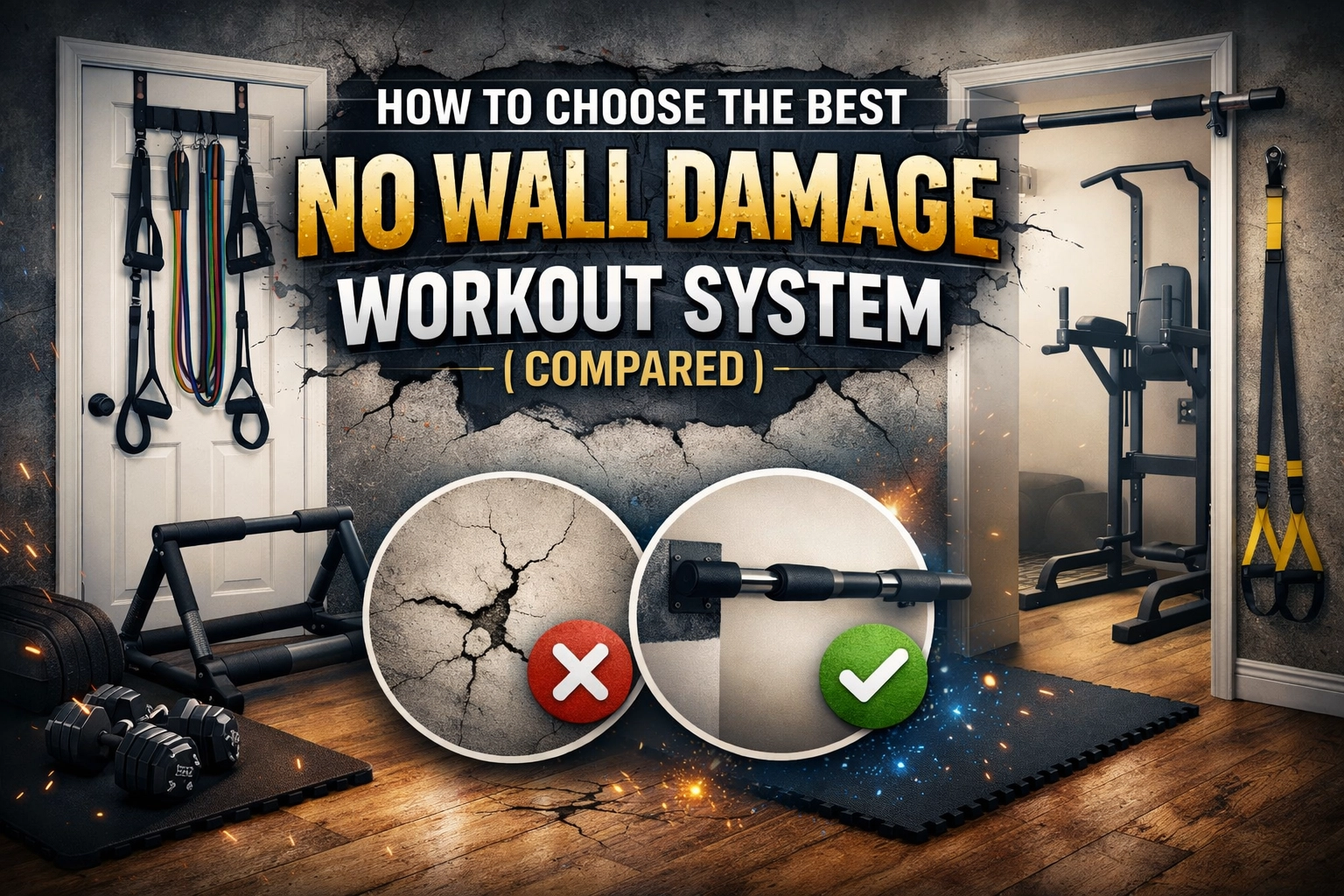
Let’s be real: most home gym equipment is either built for people who just want to "tone up" during a commercial break, or it requires you to drill massive holes into your studs. If you’re a serious athlete: a ninja warrior, a gymnast, a CrossFit beast, or an MMA fighter: you’re stuck in a tough spot. You need a setup that can handle high-intensity resistance training and explosive movements, but you also don't want to lose your security deposit or spend your weekend patching drywall.
The search for the perfect no wall damage workout system is usually a path filled with flimsy doorway bars that slip and "portable gyms" that feel more like toys than tools. But the game has changed. Whether you’re looking for a pull up bar alternative or a versatile home gym that actually grows with your strength, you have options that don’t involve a power drill.
At Bold Body Fitness, we don’t do "average." We build gear for people who push their limits. In this guide, we’re breaking down exactly how to choose a system that stays rock-solid while keeping your walls pristine.
The Home Gym Dilemma: Power vs. Property Damage
For years, the gold standard for a full body workout at home involved mounting a rack to the wall or ceiling. If you’re a calisthenics practitioner, you know that dynamic movements like muscle-ups or front levers require absolute stability. When you start adding weight or increasing intensity, a basic door-frame bar becomes a liability.
But what if you’re renting? Or what if your "gym" is a multi-purpose room that needs to look like a living room by 6:00 PM?
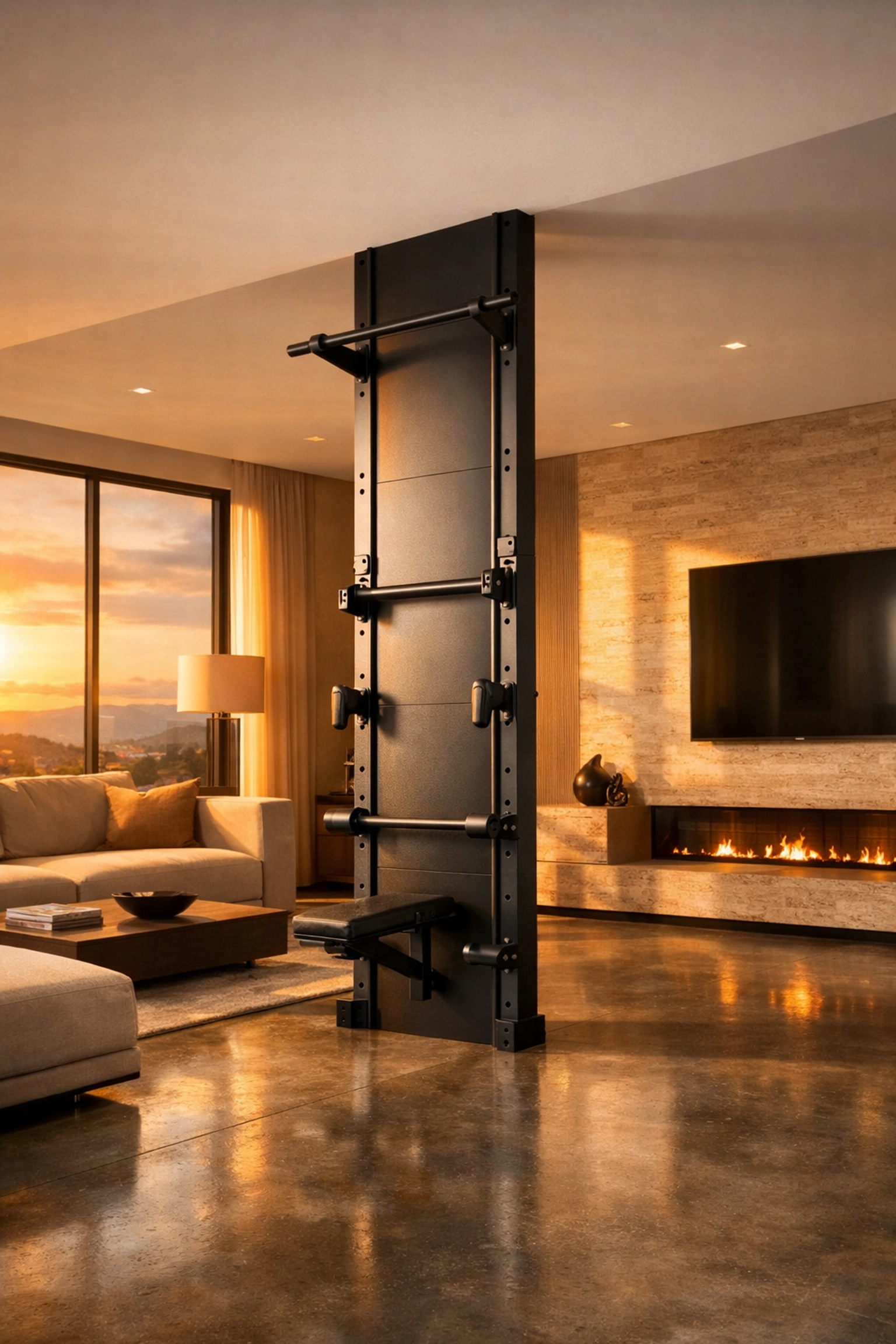
You need a versatile home gym that provides the structural integrity of a commercial rack without the permanent footprint. This is where the floor to ceiling gym concept comes into play. By using tension and clever engineering, you can create a high-performance anchor point that handles hundreds of pounds of resistance without a single screw.
Key Selection Factors for Serious Athletes
When comparing systems like the OYO Personal Gym, Gonex, or our own Resistance Rail, you have to look past the marketing fluff. Here is what actually matters when you're training for peak performance:
1. Resistance Range and Upgradability
Beginner systems like the OYO Personal Gym are great for high-rep, low-load movement, but they cap out at 25 lbs. If you’re training for CrossFit home gym standards or MMA conditioning, 25 lbs is a warm-up.
Look for systems that allow for modularity. The Resistance Rail Standard at Bold Body Fitness is designed to handle heavy-duty bands and high-tension loads. You want a system where you can swap out bands or add attachments as you get stronger. If the system doesn't let you increase the weight, it’s not a gym; it’s a temporary fix.
2. Stability Under Dynamic Load
This is where most "no damage" systems fail. If you’re doing bodyweight training at home, you aren’t just sitting still. You’re pulling, pushing, and rotating. A system that relies on a plastic base on the floor will slide. A system that relies on a door frame might crack the molding.
A true no wall damage workout system should utilize floor-to-ceiling tension. By bracing against the two strongest points in your room: the floor and the ceiling joists: you create a vertical pillar that can withstand lateral force. This is essential for calisthenics equipment for home use, especially for movements like human flags or banded sprints.
3. Footprint and Versatility
You shouldn't have to sacrifice your entire spare bedroom for a power rack. The best systems are those that provide a "rail" or "column" setup. This allows you to perform hundreds of exercises: from squats and presses to rows and face pulls: all within a two-foot radius.
Comparing the Top Contenders
Let’s look at how the common "as seen on TV" kits stack up against pro-level gear like the Resistance Rail.
| Feature | Portable Band Kits (Gonex/INNSTAR) | Cable-Based (OYO) | The Resistance Rail (Bold Body) |
|---|---|---|---|
| Max Resistance | Medium (Up to 150 lbs) | Low (25 lbs) | High (Band Dependent) |
| Stability | Depends on your weight | Handheld | Floor-to-Ceiling Locked |
| Wall Damage | Zero | Zero | Zero |
| Athletic Focus | General Fitness | Beginners/Rehab | Pro Athletes/Ninja/MMA |
| Exercise Variety | High | Medium | Unlimited |
Portable Home Gyms (The "Suitcase" Gyms)
Systems like Gonex or INNSTAR are popular because they fold up into a box. They use a base platform that you stand on to provide the anchor. While these are decent for resistance training, they have a major flaw: the anchor point is always at your feet. This makes it incredibly difficult to do high-to-low movements like lat pulldowns or tricep extensions without a door anchor: and door anchors are notorious for damaging paint and wood.
Handheld Cable Systems
The OYO is a marvel of engineering, but it’s not a full body workout at home solution for a gymnast or a fighter. It’s a supplemental tool. It lacks the "gravity" and stability required to build explosive power.
The Floor-to-Ceiling Solution
This is the category where the Resistance Rail lives. It bridges the gap between a portable kit and a permanent rack. By creating a fixed vertical rail, it allows you to slide your resistance points to any height instantly. This mimics a commercial cable machine but uses high-grade resistance bands for a smoother, more joint-friendly feel.

Why Ninja Warriors and Gymnasts Need a Rail System
If you’re training for fitness competitions, your requirements are higher than the average person. You need to work on grip strength, core stability, and explosive transitions.
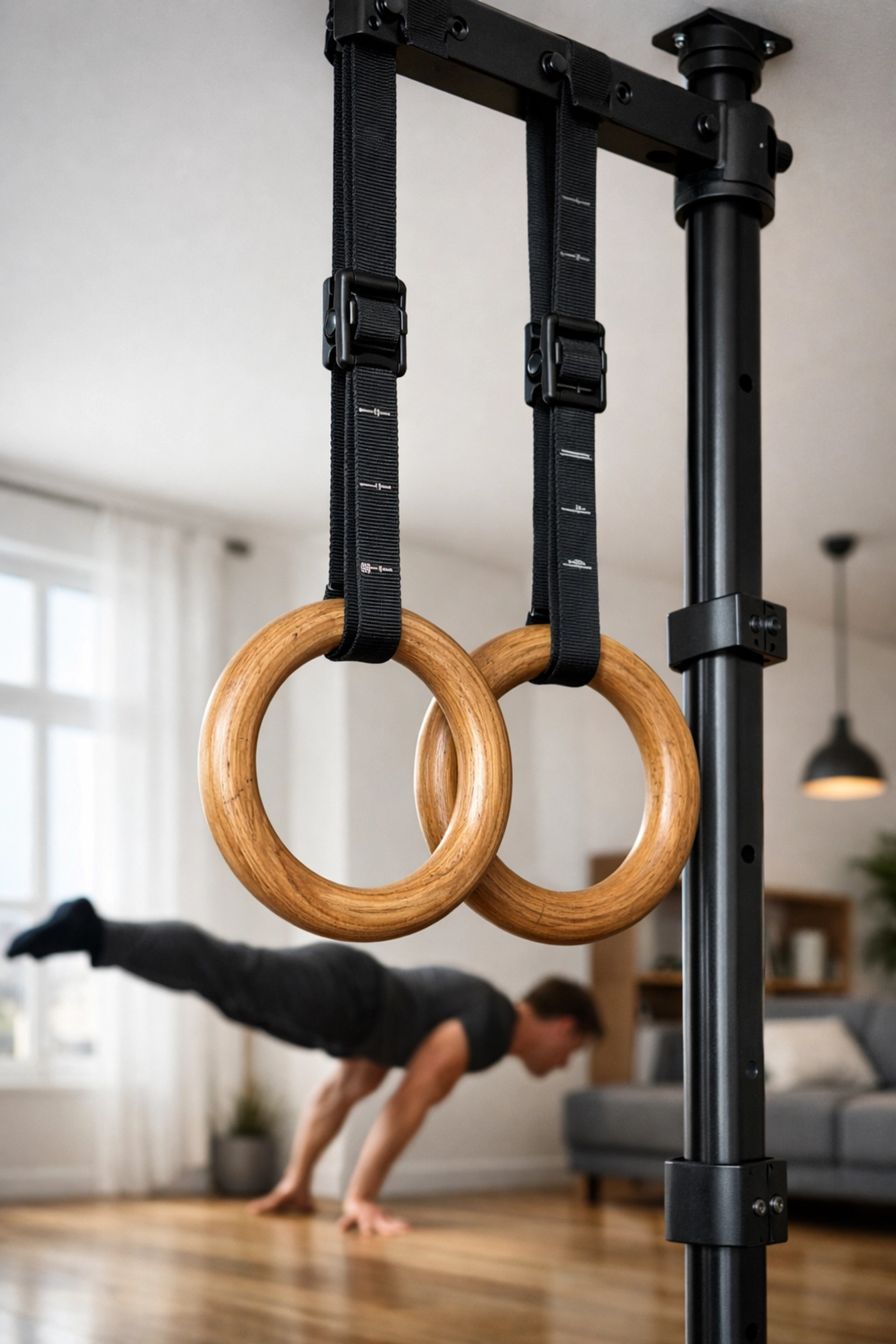
A floor to ceiling gym provides a stable vertical axis. For gymnasts, this means you can anchor rings or bands at various heights to work on muscle-up transitions or planche progressions. For Ninja Warriors, it’s the perfect pull up bar alternative because you can simulate various reaches and pulls without the bar swinging or shifting.
Check out our shop page to see how the Resistance Rail integrates into high-level calisthenics programs.
CrossFit and MMA: High-Intensity Conditioning Without the Cage
For the MMA fighter, home training is usually about metabolic conditioning and functional strength. You need to be able to simulate clinches, takedowns, and striking resistance.
Using a no wall damage workout system like the Resistance Rail, you can attach bands at hip height to practice explosive shots or at shoulder height for resisted punching drills. Because the rail is locked between the floor and ceiling, you can put real weight behind your movements. You aren't going to pull the system over, which is a constant fear with freestanding "towers" or doorway bars.

In a CrossFit home gym context, space is everything. You need room for your burpees and double-unders. A rail system takes up virtually zero floor space compared to a bulky power cage, leaving the rest of your "box" open for movement.
How to Install Without Scuffing Your Space
"No wall damage" shouldn't mean "it falls down if you look at it funny." The key is the pressure distribution. High-quality systems use non-marring rubber pads at the contact points.
When setting up your Resistance Rail Standard, you’re utilizing a heavy-duty tensioning mechanism. It’s like a giant, over-engineered shower curtain rod, but built for 300+ lbs of force.
- Find a Joist: Use a stud finder to ensure the top plate is pressing against a solid ceiling joist.
- Align: Ensure the rail is perfectly vertical.
- Tension: Engage the locking mechanism until the rail is immovable.
No screws. No bolts. Just a rock-solid training station. If you ever move, or want to change rooms, you just de-tension it and go. For more tips on setting up your space, join the conversation in our community forums.
The Calisthenics Advantage: Mastering Bodyweight
Bodyweight training at home is about more than just pushups. To truly master your physique, you need to pull from different angles. One of the biggest hurdles for calisthenics athletes is finding a place for rows and pull-up variations that isn't a park bench or a sketchy tree branch.
The Resistance Rail acts as a vertical anchor for your entire calisthenics equipment for home arsenal. You can attach:
- Gymnastic Rings: For dips and rows.
- Heavy Resistance Bands: To assist with learning the front lever or back lever.
- Suspension Trainers: For core-shredding stability work.
By having a fixed vertical line, you can track your progress accurately. You can mark exactly where your anchor point is, allowing you to measure your strength gains over time.
Is a No-Damage System Right for You?
If you are a beginner looking to lose five pounds, any of the "suitcase gyms" might work for a few months. But if you are someone who views fitness as a lifestyle: someone who wants a versatile home gym that can handle a brutal Sunday morning session: you need to invest in professional-grade gear.
Stop settling for equipment that limits your potential because you're worried about your walls. You can have a full body workout at home that rivals any commercial gym.
Why Choose Bold Body Fitness?
We don't just sell equipment; we live the lifestyle. We know that when you're in the middle of a high-intensity interval or a heavy set of resisted squats, the last thing you want to think about is whether your equipment is going to hold.
The Resistance Rail was born out of a need for a high-performance, no wall damage workout system that didn't compromise on intensity. It’s built for the bold. It’s built for those who refuse to let their environment dictate their progress.
Ready to transform your living space into a high-performance training center? Head over to the Bold Body Fitness homepage to see our full lineup of gear, or check out our upcoming fitness competitions to see what the community is achieving.
The excuses end here. No holes in the wall. No limits on your strength. Get the gear that works as hard as you do.
Shop the Resistance Rail Standard today and start building the home gym you actually deserve.
