
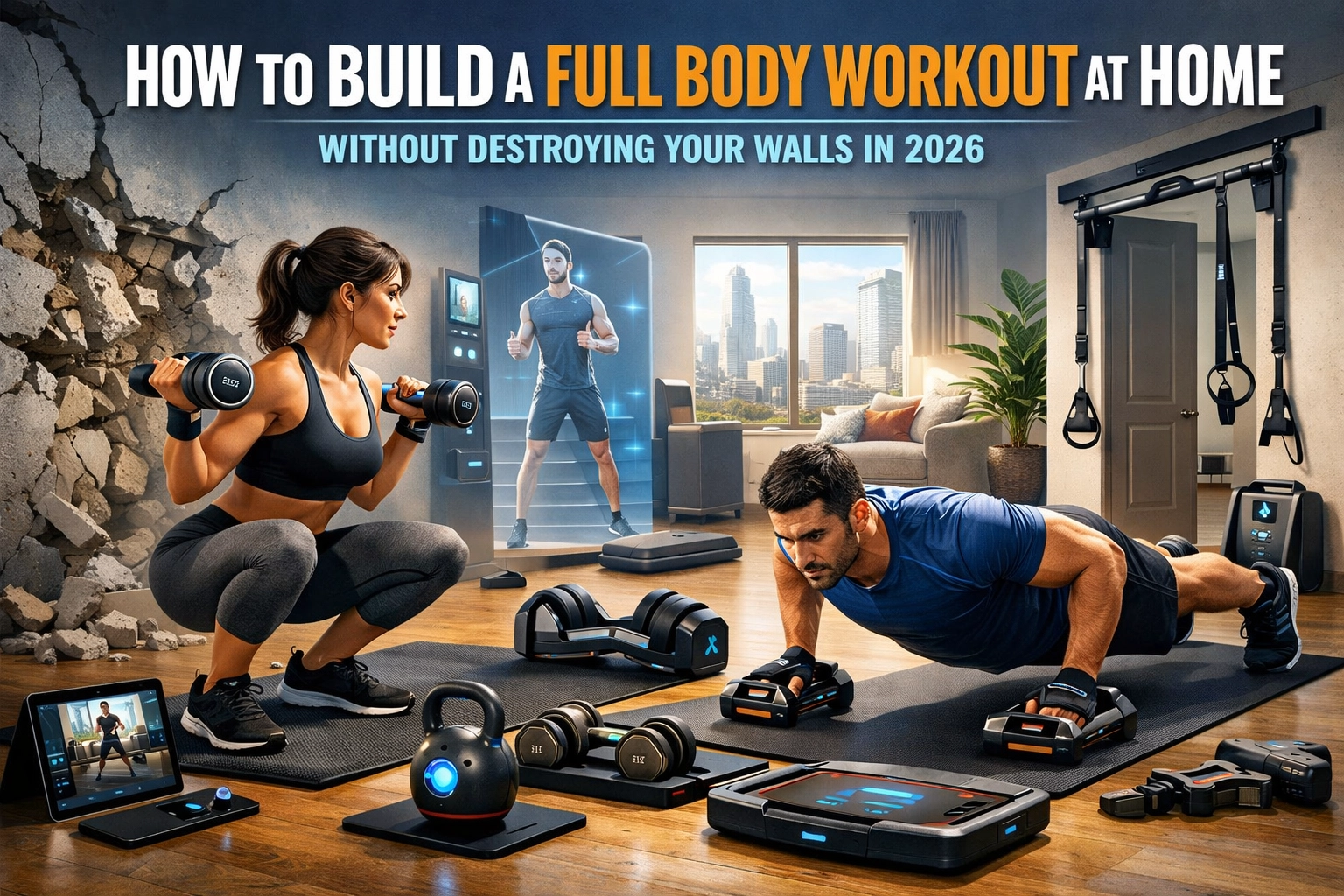
Let's get real for a second. You've probably seen those viral home gym fails: the ones where someone's doing kipping pull-ups and suddenly there's a door frame on the floor. Or maybe you've been that person who left scuff marks all over the rental apartment walls trying to mount a pull-up bar. Either way, we need to talk about how to build an absolutely killer full body workout at home without turning your living space into a demolition zone.
The truth is, you don't need to sacrifice your security deposit or spend thousands on bulky equipment to get championship-level training at home. Whether you're a ninja warrior prepping for your next obstacle course, a CrossFit athlete maintaining gains between box sessions, or an MMA fighter who needs to grind outside the gym, there's a smarter way to train.
Why Most Home Workouts Destroy Your Space (And How to Stop It)
Here's the thing: wall damage doesn't happen because home workouts are inherently destructive. It happens because people use equipment that was never designed for residential spaces or try to replicate gym setups that require commercial infrastructure.
Those cheap doorway pull-up bars? They're essentially leverage devices that put massive pressure on your door frames. Resistance bands anchored to doorknobs? One wrong angle and you're explaining to your landlord why there's a hole in the door. Heavy bags mounted to ceiling joists? Great if you own the place and don't mind shaking the entire floor above you.
The problem isn't your workout intensity: it's the equipment and approach. You need controlled movements and gear that distributes force properly instead of concentrating it on weak points like drywall or door frames.
The Foundation: Bodyweight Training Done Right
Before we dive into equipment, let's talk about the cornerstone of any home gym that won't wreck your space: intelligent bodyweight training. This isn't about going easier on yourself: it's about being strategic.
Start every session with a proper warm-up that prepares your body without requiring you to slam into walls or jump around like you're in a commercial gym. Two rounds of mobility work gets the job done:
- Cat and cow stretches to mobilize your spine
- Dead bugs for core activation without crunching into furniture
- Inchworms to warm up your posterior chain
- Lateral lunges to open up your hips
- Bodyweight squats to prep your legs
This takes maybe 5-7 minutes but prevents injuries and gets you ready to actually work. No equipment needed, no wall contact required.
Building Your Wall-Safe Strength Training Protocol
Now here's where it gets interesting. A proper full body workout at home needs to hit all major movement patterns: push, pull, squat, hinge, and core stability. The trick is doing this without equipment that damages your space.
The Push Movements
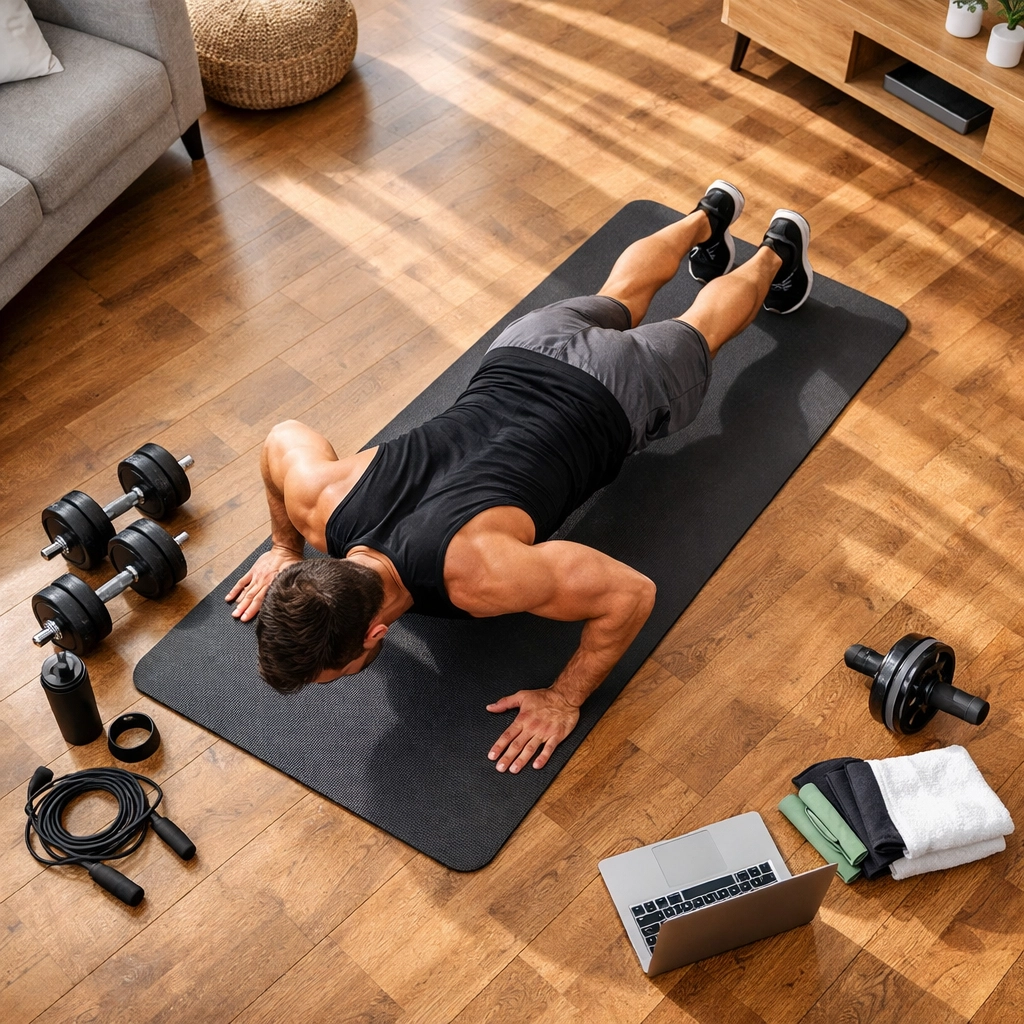
Wall push-ups might sound beginner-level, but they're actually perfect for controlled training that builds serious strength without the risk. Here's the hierarchy:
- Start with wall push-ups if you're rebuilding or focusing on perfect form
- Progress to elevated push-ups using sturdy furniture
- Advance to standard push-ups on a mat, far from walls
- Challenge yourself with decline push-ups or diamond variations
For serious athletes, adding a weight vest transforms basic push-ups into genuine strength builders. No wall mounting required.
The Pull Problem (And How to Actually Solve It)
This is where most people get stuck. Pull movements are crucial for a balanced physique: especially for gymnasts, ninja warriors, and anyone who needs functional upper body strength. But traditional pull-up bars either damage door frames or require permanent installation.
The game-changer? Floor to ceiling gym systems that use tension rather than wall mounting. Bold Body Fitness developed the Resistance Rail specifically to solve this exact problem: a no wall damage workout system that goes from floor to ceiling using compression force instead of drilling holes in your walls or destroying door frames.
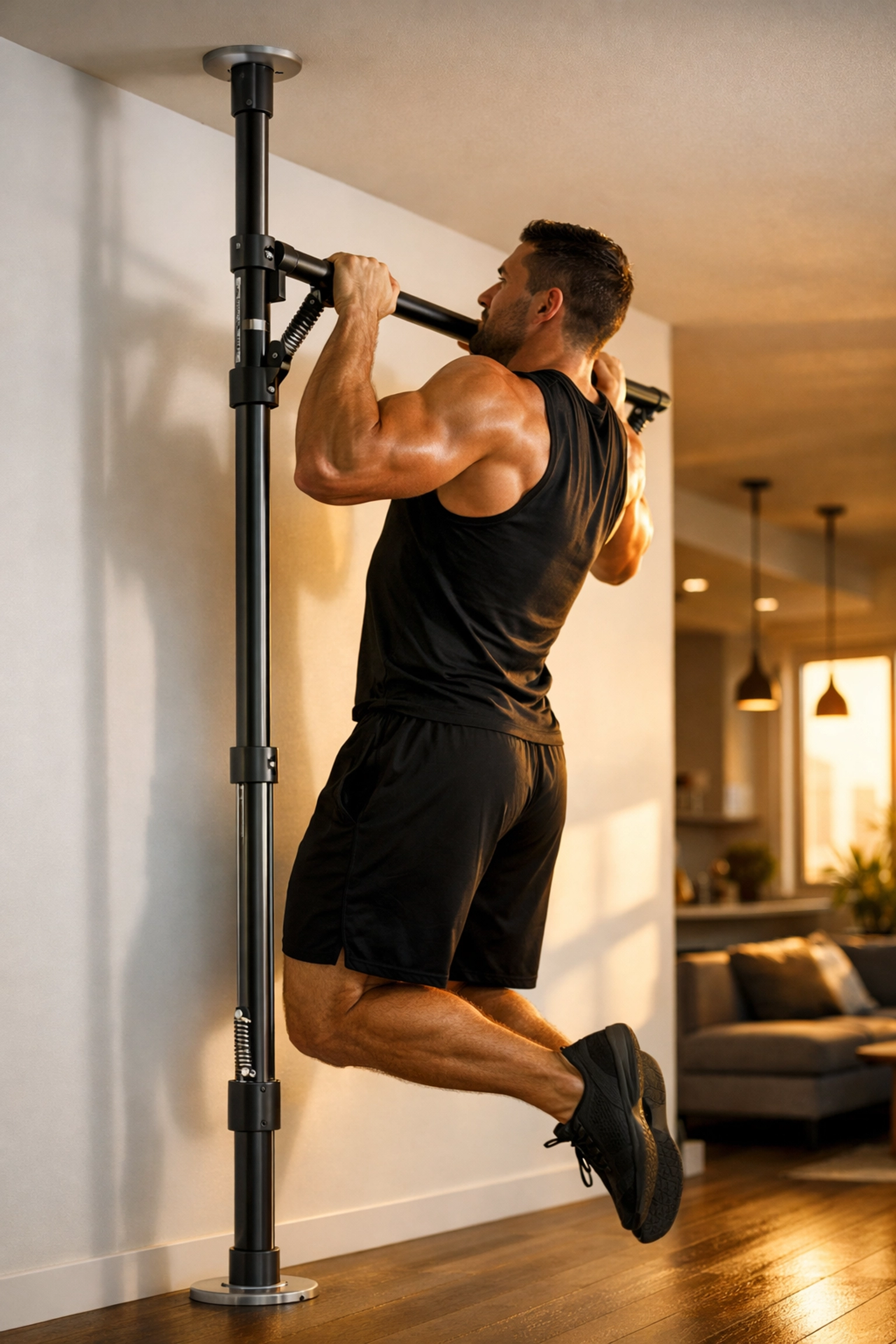
This isn't some flimsy resistance band setup. We're talking about a legitimate pull up bar alternative that handles everything from pull-ups and muscle-ups to rows, face pulls, and even suspension training. The beauty is that it works with standard ceiling heights, installs in minutes without tools, and leaves zero marks when you take it down.
For calisthenics practitioners and CrossFit athletes, this opens up your entire vertical training toolbox: strict pull-ups, kipping variations, L-sits, front levers: all the movements that actually build elite-level strength.
The Complete Wall-Safe Workout Structure
Let's put this into a framework you can use starting today. This 25-30 minute protocol works 1-2 times per week as a full-body session, or you can run it more frequently if you're splitting body parts across different days.
Strength Circuit (3 Rounds)
Lower Body Compound:
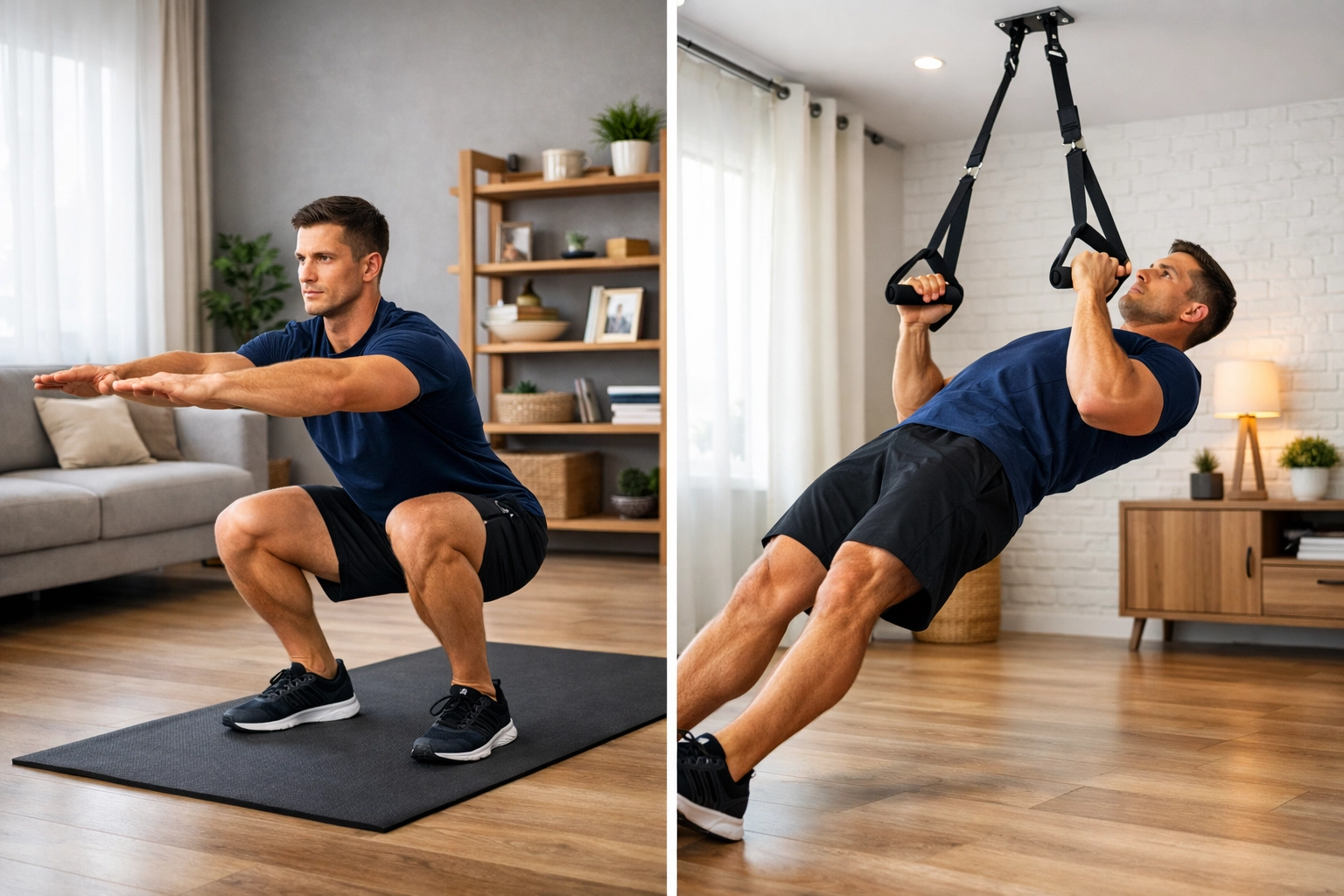
- Bodyweight squats (20 reps) or weighted goblet squats if you have dumbbells
- Romanian deadlifts (12 reps) - use dumbbells or get creative with loaded backpacks
- Walking lunges (10 each leg) - controlled movement away from walls
Upper Body Pull:
- Pull-ups or inverted rows (8-12 reps) - this is where your ceiling-mounted system becomes essential
- One-arm dumbbell rows (12 reps each arm) - lean on stable furniture, not walls
Upper Body Push:
- Push-up variations (12-15 reps) - perfect form on a mat
- Pike push-ups or handstand push-up progressions (8-10 reps) - these build insane shoulder strength
Core Stability:
- Dead bugs (12 reps each side)
- Plank holds (45-60 seconds)
- Standing knee raises (15 each leg) - using your pull-up alternative for stability
Finisher: Controlled Cardio Circuit (2 Rounds)
Keep the heart rate up without bouncing off walls:
- Mountain climbers (30 seconds)
- Stationary high knees (30 seconds)
- Burpees to push-up (10 reps) - controlled, not explosive
- Jump rope or jumping jacks (60 seconds)
Rest 30 seconds between exercises, 90 seconds between rounds. This keeps intensity high while maintaining the control needed for home training.
Equipment That Actually Works (Without Destroying Your Space)
You don't need a garage full of gear, but a few strategic pieces transform your capabilities. Focus on versatile home gym equipment that serves multiple purposes:
Essential Tier:
- A ceiling-mounted resistance training system (like the Resistance Rail) that handles pull movements
- Quality resistance bands for variable resistance and mobility work
- A thick exercise mat to protect your floors and provide cushioning
- Adjustable dumbbells if space and budget allow
Next Level:
- Gymnastics rings that attach to your ceiling system for advanced movements
- A weight vest for progressive overload on bodyweight movements
- Parallettes for handstand training and L-sits
The key principle? Every piece of equipment should either use tension/compression rather than permanent mounting, or be completely free-standing with no wall contact needed.
Training Considerations for Different Athletes
Ninja Warriors and Obstacle Course Athletes
Your focus is grip strength, explosive power, and obstacle-specific movements. The ceiling-mounted system becomes your training lab for hanging progressions, grip endurance work, and dynamic movements. Practice your transitions and obstacle simulations without needing a full backyard course.
CrossFit Athletes
You need the capacity to hit benchmark WODs at home. Combine your crossfit home gym setup with a timer and you can crush everything from Cindy to Murph (modified). The beauty of calisthenics equipment for home that doesn't damage walls means you can train hard without worrying about your landlord's reaction.
MMA Fighters and Combat Athletes
Your conditioning needs are brutal. Use your home setup for supplemental strength work, recovery sessions, and conditioning when you can't make it to the gym. The controlled environment actually helps you focus on technique and movement quality without the distractions of a busy training facility.
Gymnasts
Straight-up bodyweight mastery is your game. A proper ceiling-mounted system with rings opens up your entire strength progression: from basic hangs to iron crosses (eventually). The ability to practice skills daily in your own space accelerates progression dramatically.
The Real Talk: Making It Sustainable
Here's what nobody tells you about bodyweight training at home: consistency beats intensity every single time. You're better off with a 30-minute session four times per week than trying to replicate your entire gym routine at home and burning out after three weeks.
Set up your space once, properly. Invest in equipment that doesn't require constant assembly and disassembly. Make your home training environment somewhere you actually want to be. That might mean good lighting, a decent speaker, or just a clear space that feels dedicated to your training.
Check out the full range of home gym equipment that's designed specifically for serious athletes who train in residential spaces. The difference between random Amazon gear and equipment engineered for actual performance is massive.

Your Next Steps
Start simple. Clear a space that's at least 6 feet by 6 feet. Get your floor protection down. Install a ceiling-mounted system that handles your pull movements without destroying your walls. Then just show up and do the work.
The whole "destroying your walls" thing? That's a problem for people using the wrong equipment or training without control. You're better than that. Build your home gym smart, train with purpose, and watch your performance climb without spending a dime on repairs.
Your walls will thank you. Your landlord will thank you. And your training results? They'll speak for themselves.
