
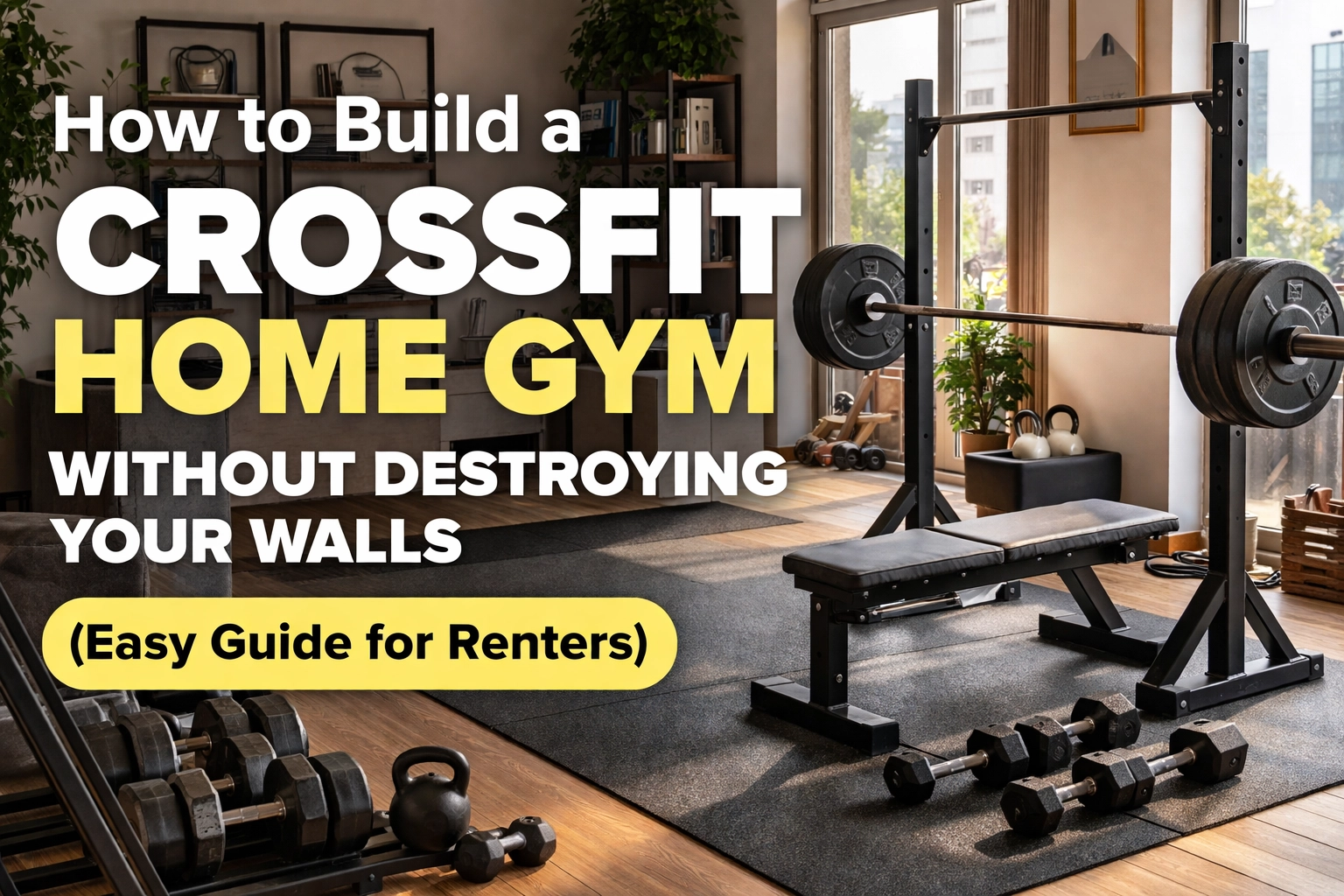
You want to train hard. You want to build a legit CrossFit home gym where you can grind through WODs, bang out muscle-ups, and push your limits without driving to some overcrowded box across town.
But there's a problem. You're renting.
And your landlord? They definitely don't share your enthusiasm for drilling holes in the ceiling or bolting a pull-up rig into the drywall. One wrong move and you can kiss that security deposit goodbye.
Here's the good news: building a serious, fully-functional crossfit home gym as a renter isn't just possible, it's actually easier than you think. You just need to be smart about your equipment choices.
Let's break down exactly how to do it.
The Renter's Dilemma: Why Traditional Home Gym Setups Fall Short
Traditional CrossFit gym setups assume you own your space. They're built around:
- Wall-mounted pull-up bars that require heavy-duty anchors
- Full power racks that need to be bolted to the floor
- Ceiling-mounted rings and rope climb stations
- Permanent rubber flooring installations
All of that screams "permanent modification." And permanent modifications scream "bye-bye, security deposit."
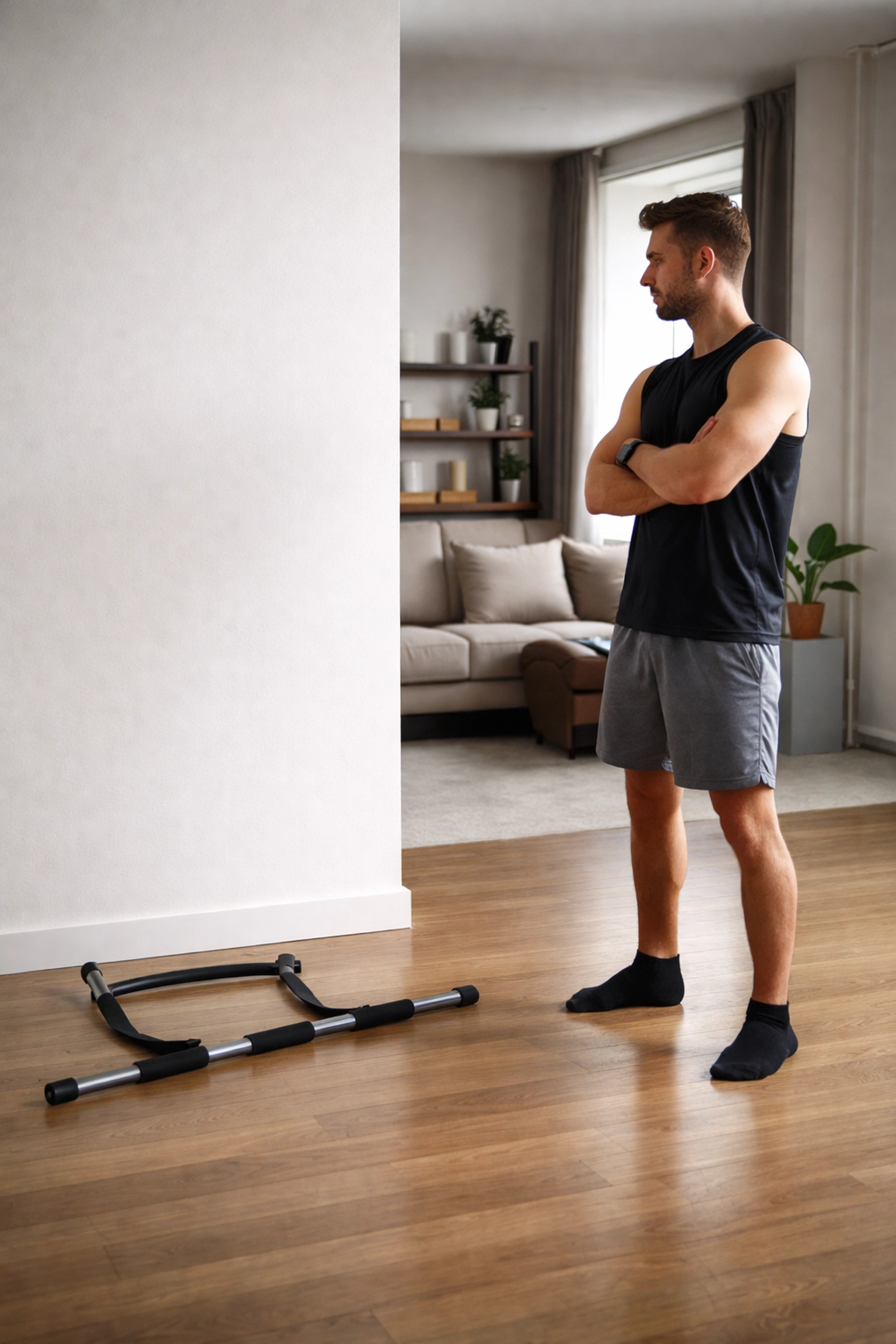
The reality is that most renters avoid building a home gym altogether because they think there's no way to get a real workout without destroying something. They settle for flimsy doorframe pull-up bars that wobble, cheap resistance bands that snap, or just... nothing.
That's weak. And you're not weak.
The truth is you can build a no wall damage workout system that rivals what you'd find at a professional CrossFit box. You just need the right approach and the right home gym equipment.
The Foundation: Freestanding Equipment That Actually Works
Let's start with the basics. Your crossfit home gym needs a few core pieces that deliver maximum versatility without touching a single wall.
Squat Stands Over Full Racks
Forget about massive power racks that need to be anchored. A quality squat stand with a solid base gives you everything you need for squats, bench press, and overhead work. Look for stands with a wide footprint and at least an 800-pound capacity.
The key here is stability through design, not through bolts in your floor.
Bumper Plates and a Quality Barbell
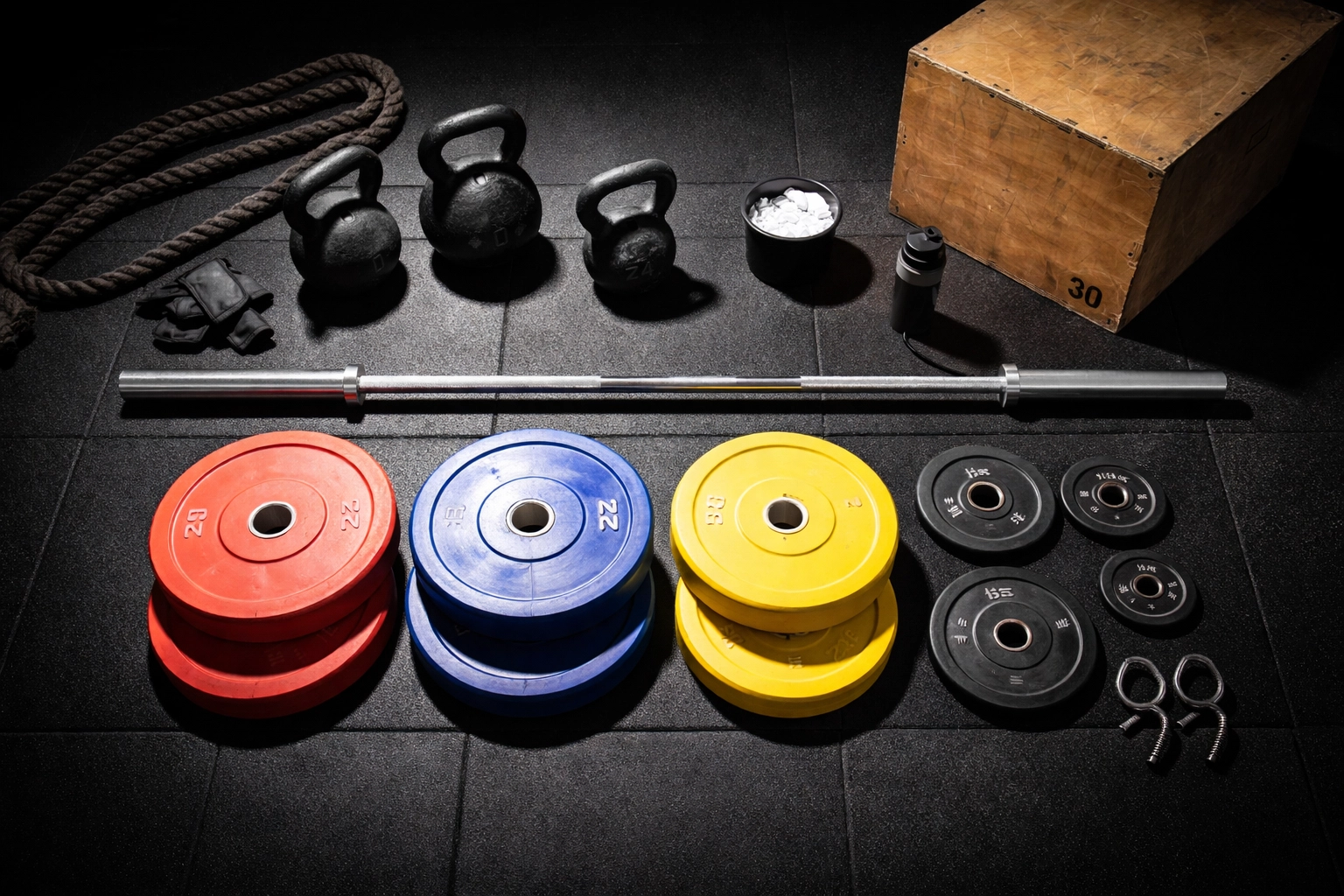
This is non-negotiable. You need a good Olympic barbell and a set of bumper plates for cleans, snatches, deadlifts, and all the fun stuff. Bumper plates are designed to be dropped, which matters when you're training alone and pushing to failure.
Kettlebells and Dumbbells
For conditioning work, Turkish get-ups, goblet squats, and countless other movements, a solid kettlebell collection is essential. Start with a few key weights (35lb, 53lb, and 70lb covers most athletes) and build from there.
Plyo Boxes
A 3-in-1 wood or foam plyo box gives you multiple height options for box jumps, step-ups, and even as an elevated surface for other movements. Completely freestanding, zero installation required.
The Pull-Up Problem (And the Bold Solution)
Here's where most renters hit a wall, literally and figuratively.
Pull-ups, muscle-ups, toes-to-bar, hanging leg raises... these movements are fundamental to CrossFit and calisthenics training. But they all require something to hang from.
Your options as a renter have traditionally been:
-
Doorframe pull-up bars: Cheap, wobbly, limited grip options, and they destroy your door trim over time. Not ideal for serious athletes.
-
Freestanding pull-up stations: Better, but most are designed for casual users. They wobble during kipping movements and can't handle the intensity of advanced bodyweight training at home.
-
Wall-mounted rigs: The best option... if you own your place. Which you don't.
There's a fourth option that changes everything: floor-to-ceiling tension systems.
This is where the Resistance Rail from Bold Body Fitness enters the conversation.
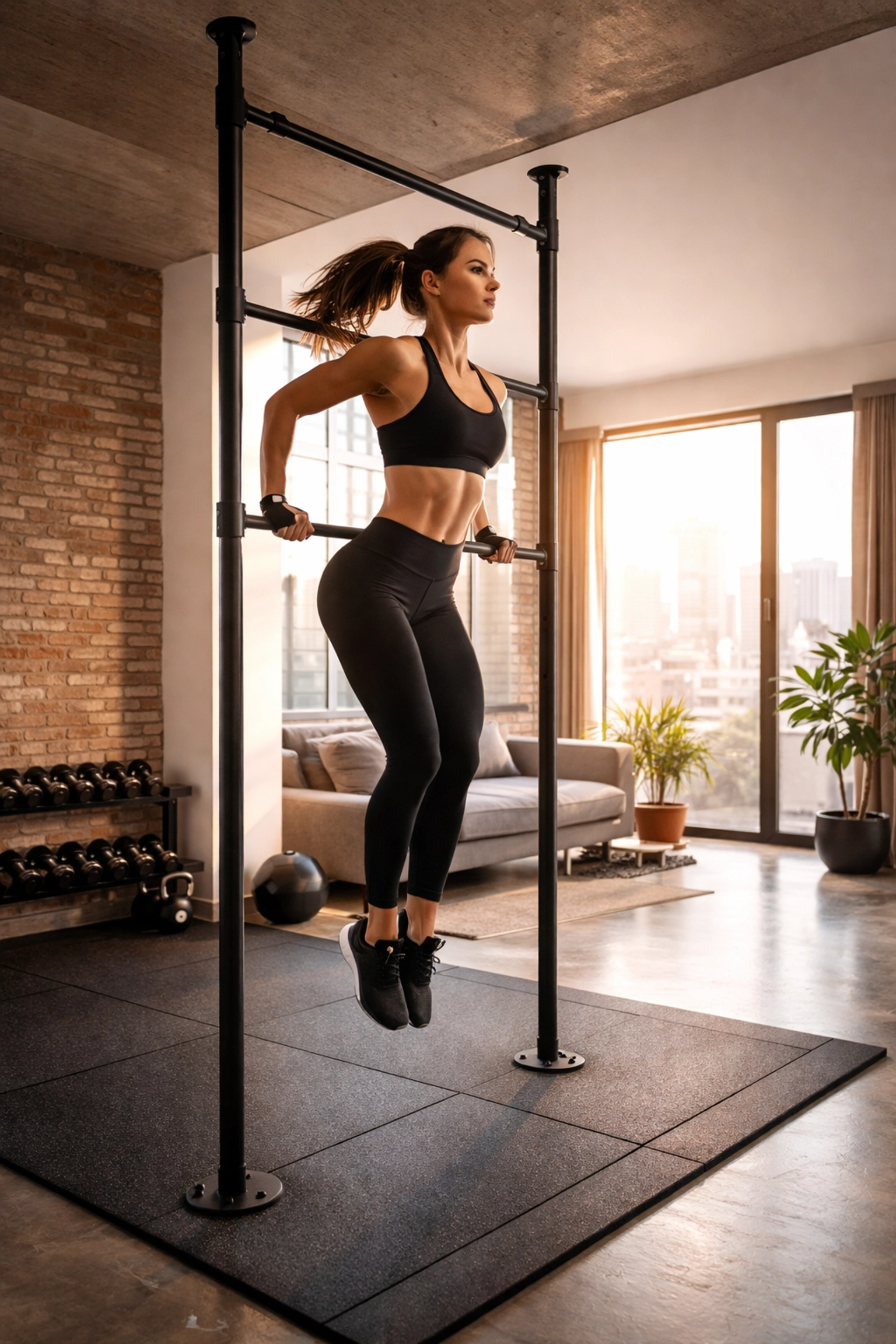
The Resistance Rail is a versatile home gym system that uses tension between your floor and ceiling to create a rock-solid training station. No drilling. No bolts. No damage. Just pure, functional strength training capability.
It's not some flimsy tension rod that's going to collapse when you try a muscle-up. This thing is engineered for serious athletes, ninja warriors, gymnasts, MMA fighters, and CrossFit competitors who demand real performance from their equipment.
You get a legit pull up bar alternative that handles kipping, strict pull-ups, hanging ab work, and resistance band exercises. It's the calisthenics equipment for home that renters have been waiting for.
When you're done training or need to move? It comes down without leaving a trace.
Protect Your Floor (And Your Relationship With Your Landlord)
Your equipment is sorted. Now let's talk about the ground beneath it.
Dropping barbells on hardwood or carpet is a fast track to getting evicted. You need proper flooring protection.
Rubber gym mats are your best friend here. Look for interlocking tiles that are at least 3/4-inch thick. They absorb impact, protect your floor, and provide a stable surface for lifting.
Pro tip: Make sure all your mats are the same thickness. Uneven flooring messes with your stability during lifts and can actually increase injury risk.
The beauty of rubber tiles? They're completely removable. When you move out, roll them up and take them to your next place.
Space Planning: Making Every Square Foot Count
You don't need a garage to build an effective crossfit home gym. Plenty of athletes are crushing full body workouts at home in spare bedrooms, basements, or even large living rooms.
Here's how to maximize your space:
Measure everything first. Know your floor dimensions and ceiling height before buying anything. You need clearance for overhead movements: at minimum, you should be able to fully extend a barbell overhead without hitting the ceiling.
Go vertical. This is where floor to ceiling gym solutions like the Resistance Rail Standard shine. Instead of taking up floor space with bulky equipment, you're utilizing vertical space that would otherwise go unused.
Use multi-purpose equipment. Every piece in your gym should serve multiple functions. Your squat stands can be used for pull-ups if you add a cross-bar. Your plyo box doubles as a bench for certain exercises. Your Resistance Rail handles pull-ups, resistance training, and suspension work.
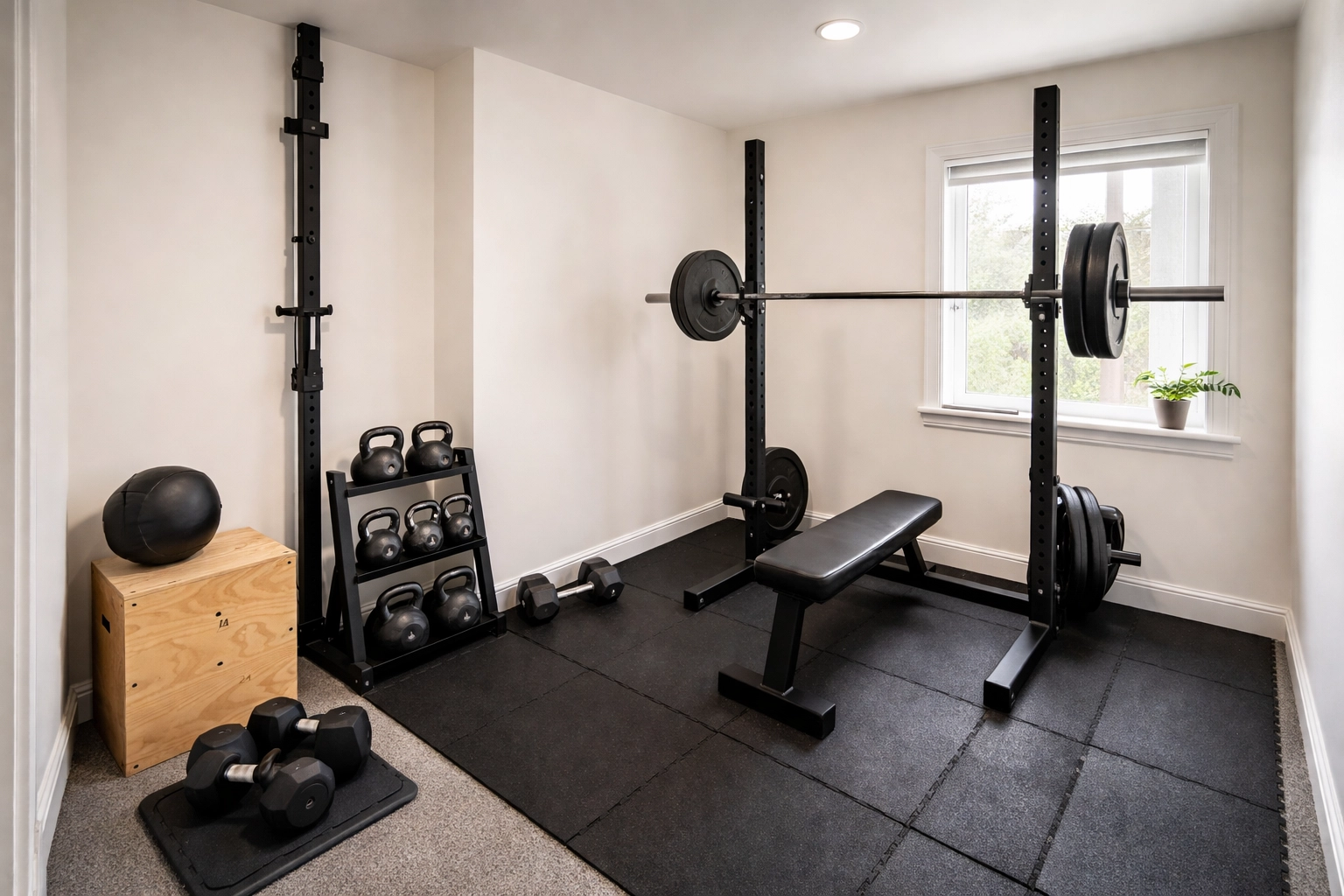
Create zones. Even in a small space, mentally divide your area into lifting, cardio/conditioning, and bodyweight/calisthenics zones. This helps you flow through workouts without constantly rearranging equipment.
Sample Renter-Friendly CrossFit WOD
Let's put this all together. Here's a workout you can crush in your new setup:
"The Deposit Saver"
For Time:
- 21-15-9 Thrusters (95/65 lb)
- 21-15-9 Pull-Ups
- 400m Run (or 50 Double-Unders) after each round
Rest 2 minutes, then:
3 Rounds:
- 12 Kettlebell Swings
- 12 Box Jumps
- 12 Hanging Knee Raises
This hits everything: strength, cardio, gymnastics: and you don't need a single bolt in your wall to do it.
The Bottom Line
Being a renter doesn't mean you have to settle for a subpar training experience. With the right equipment choices, you can build a crossfit home gym that handles everything from heavy Olympic lifts to advanced calisthenics movements.
The key is choosing freestanding, tension-based, and portable solutions designed for serious athletes. Invest in quality flooring protection. Plan your space intelligently.
And when it comes to the pull-up bar situation: the thing that stops most renters cold: check out what Bold Body Fitness has built with the Resistance Rail. It's the no wall damage workout system that finally lets you train like a beast without losing your security deposit.
Your landlord will never know. Your body definitely will.
Now stop reading and start building. That gym isn't going to set itself up.
