
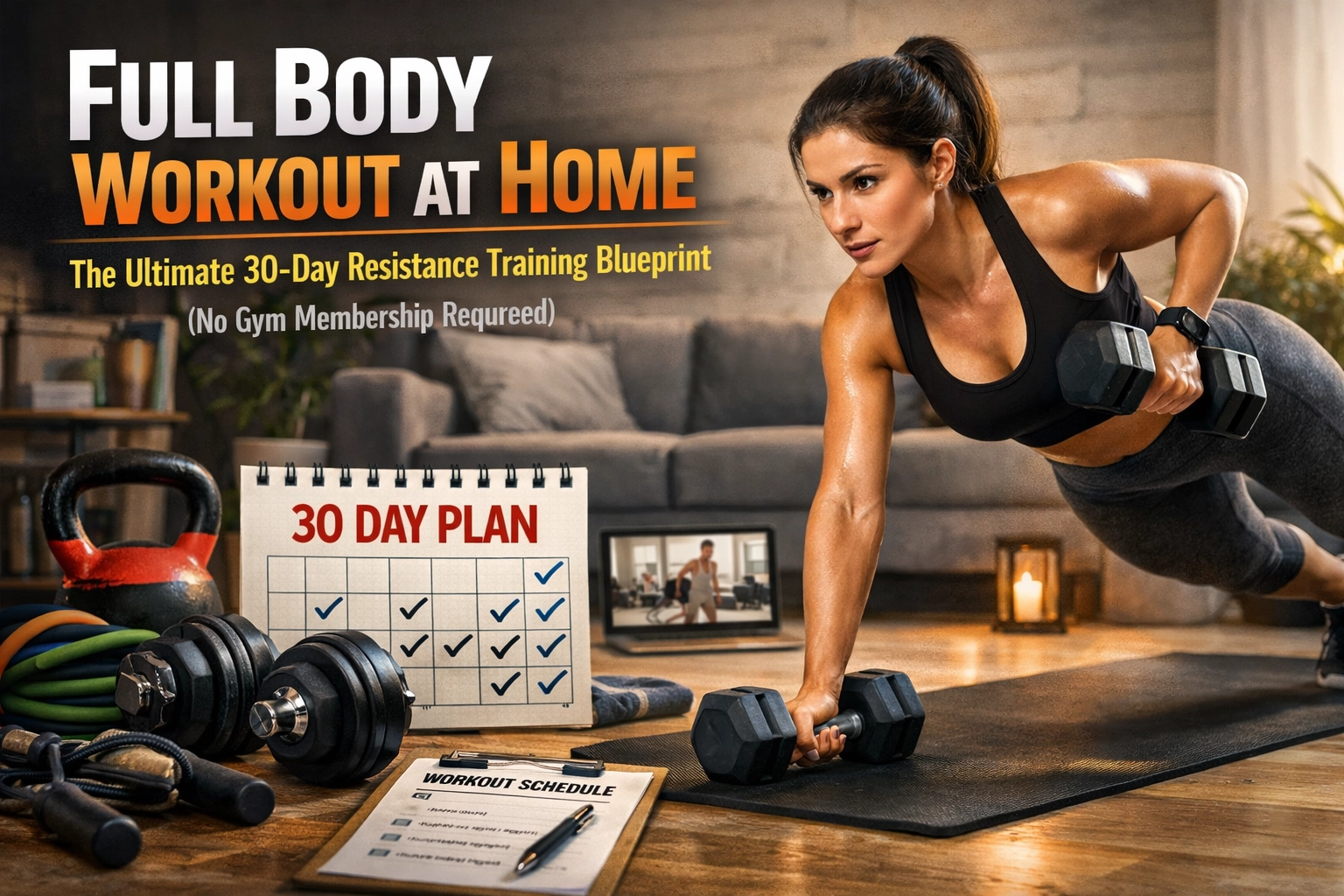
Let's cut through the noise: you don't need a gym membership to build serious strength, pack on muscle, and develop the kind of functional fitness that translates to real-world performance. Whether you're a CrossFit athlete looking to supplement your training, a ninja warrior preparing for competition, or a calisthenics practitioner ready to level up, this 30-day resistance training blueprint will transform your living room into a legitimate training ground.
This isn't some watered-down fitness routine designed for beginners who've never broken a sweat. This is a comprehensive full body workout at home program built for athletes who demand results. No excuses. No membership fees. Just you, minimal equipment, and 30 days of focused effort.
Why 30 Days Is Your Sweet Spot
Thirty days isn't arbitrary: it's strategic. This timeline gives your body enough time to adapt to new movement patterns, build neuromuscular connections, and develop sustainable training habits without burning out. You'll see measurable improvements in strength, muscular endurance, and movement quality within this window.
More importantly, 30 days is long enough to prove to yourself that bodyweight training at home and strategic resistance work can deliver the same results as traditional gym training. Maybe better, since you're training in an environment you control, on your schedule, without waiting for equipment or dealing with crowds.

The Blueprint: Program Structure That Actually Works
Forget random workout videos and Instagram fitness influencers selling you cookie-cutter routines. This blueprint follows proven programming principles used by elite athletes across disciplines.
Your Weekly Framework:
- 3 Full-Body Resistance Training Sessions (Monday, Wednesday, Friday)
- 2 Active Recovery Days (Tuesday, Thursday) - mobility work, light cardio, or skill practice
- 1 Targeted Weakness Day (Saturday) - focus on your specific goals
- 1 Complete Rest Day (Sunday) - your muscles grow during recovery, not during training
Each resistance training session lasts 25-40 minutes, including warm-up and cool-down. If you can't carve out 40 minutes three times per week to transform your body, you're not serious about your fitness. Plain and simple.
Essential Equipment: Minimal Gear, Maximum Results
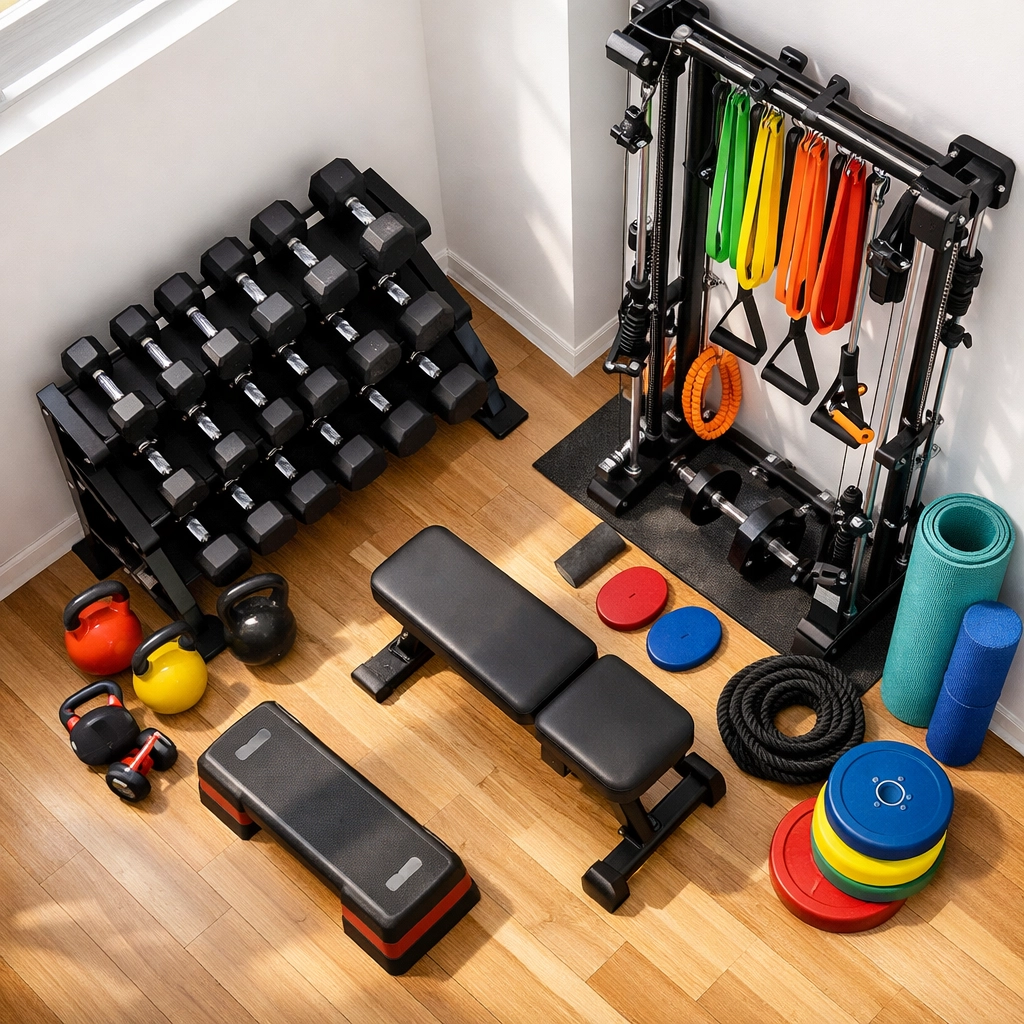
Here's where we separate the serious athletes from the casual fitness tourists. You need some equipment for optimal resistance training at home, but nothing that requires a second mortgage.
The Non-Negotiables:
- Adjustable dumbbells or kettlebells (20-50 lbs range for most athletes)
- Resistance bands (variety of tensions)
- Pull-up capability (doorway bar, ceiling-mounted system, or rings)
The Game-Changer:
This is where Bold Body Fitness comes into play. If you're building a serious versatile home gym without destroying your rental walls or buying a full power rack, you need a legitimate pull up bar alternative that doesn't compromise on functionality.
The Resistance Rail system solves the biggest problem with home training: vertical pulling and dynamic movement capability. It's a floor to ceiling gym solution that gives you pull-ups, muscle-ups, rope climbs, ring work, and suspension training options: everything a gymnast, ninja warrior, or MMA fighter needs for upper-body pulling strength and grip work. No wall damage, fully adjustable, and it transforms any room into a training space.
Check out the Resistance Rail options to see how this calisthenics equipment for home can elevate your training beyond what traditional home gym setups offer.
Week 1: Foundation and Form
The first week focuses on movement quality and establishing baseline strength across fundamental patterns. Don't ego-lift here. Perfect your form, establish your working weights, and dial in your movement patterns.
Session Structure:
Warm-Up (5 minutes):
- Joint rotations (wrists, shoulders, hips, ankles)
- Dynamic stretches (leg swings, arm circles)
- Activation drills (band pull-aparts, glute bridges)
Main Circuit (3 rounds, 40 seconds work / 20 seconds rest):
- Goblet Squats - Hold a dumbbell or kettlebell at chest height, squat deep, maintain upright torso
- Push-Ups - Full range of motion, chest to floor, focus on scapular control
- Bent-Over Rows - Hinge at hips, pull dumbbells to ribcage, squeeze shoulder blades
- Reverse Lunges - Alternating legs, control the descent, drive through front heel
- Plank Hold - Maintain neutral spine, squeeze glutes, breathe steadily
- Overhead Press - Drive dumbbells overhead, full lockout, control the descent
Cool-Down (3-5 minutes):
- Static stretching for major muscle groups
- Controlled breathing
This circuit hits every major movement pattern: squat, hinge, push, pull, lunge, and core stability. Master these six movements, and you've got the foundation for any strength program.
Week 2: Intensity Progression
Week two introduces progressive overload through increased time under tension and reduced rest periods. Your work intervals jump to 45 seconds, rest drops to 15 seconds.
Add exercises that demand more coordination and stability:
- Single-Leg Romanian Deadlifts - Balance challenge with hamstring and glute loading
- Pike Push-Ups - Increased shoulder activation and vertical pressing strength
- Renegade Rows - Anti-rotation core work combined with pulling
- Bulgarian Split Squats - Unilateral leg strength with stability demands
- Dead Bugs - Core control with anti-extension focus
- Face Pulls (with bands) - Rear delt and upper back activation

Week 3: Complexity and Volume
This is where serious athletes start separating themselves. Week three introduces compound movements that require full-body coordination and increase overall training volume to 4 rounds per circuit.
Key Additions:
- Thrusters - Front squat into overhead press, full-body explosive power
- Burpee Pull-Ups - Conditioning meets pulling strength (this is where that Resistance Rail setup pays dividends)
- Pistol Squat Progressions - Unilateral leg strength and mobility
- Archer Push-Ups - Single-arm emphasis for increased strength demands
- Hollow Body Holds - Advanced core control crucial for gymnastics and calisthenics
- Farmer's Carries - Grip strength, core stability, and loaded carries
If you're a CrossFit home gym enthusiast, this week will feel familiar: high-intensity, compound movements with minimal rest. The beauty of training at home is you can modify movements on the fly without waiting for equipment.
Week 4: Peak Performance and Testing
The final week combines everything you've built over the previous three weeks while introducing max-effort testing to measure progress.
Monday: Full testing day - max reps of pull-ups, push-ups, air squats in 60 seconds each. Record these numbers.
Wednesday: High-volume accessory work - target any weak links identified during testing.
Friday: Circuit combining your favorite movements from weeks 1-3, pushing for total rounds completed in 30 minutes.
This week also introduces more advanced calisthenics equipment for home movements if you've mastered the basics:
- Muscle-Up Progressions - The ultimate upper-body power movement
- Handstand Push-Up Negatives - Building towards vertical pressing strength
- L-Sit Progressions - Core and hip flexor strength
- Rope Climbs - Full-body pulling power and grip endurance

The Progressive Overload Blueprint
Results come from progressive overload: consistently increasing training demands over time. Here are your five primary methods for this program:
1. Increase Load: Add 2.5-5 lbs to dumbbell movements when you can complete all prescribed reps with perfect form.
2. Increase Volume: Add sets, reps, or total work time once movements feel manageable.
3. Decrease Rest: Shorten rest intervals while maintaining movement quality.
4. Increase Complexity: Progress to more challenging variations (push-ups to archer push-ups to one-arm push-up progressions).
5. Increase Tempo: Slow down the eccentric (lowering) portion for increased time under tension.
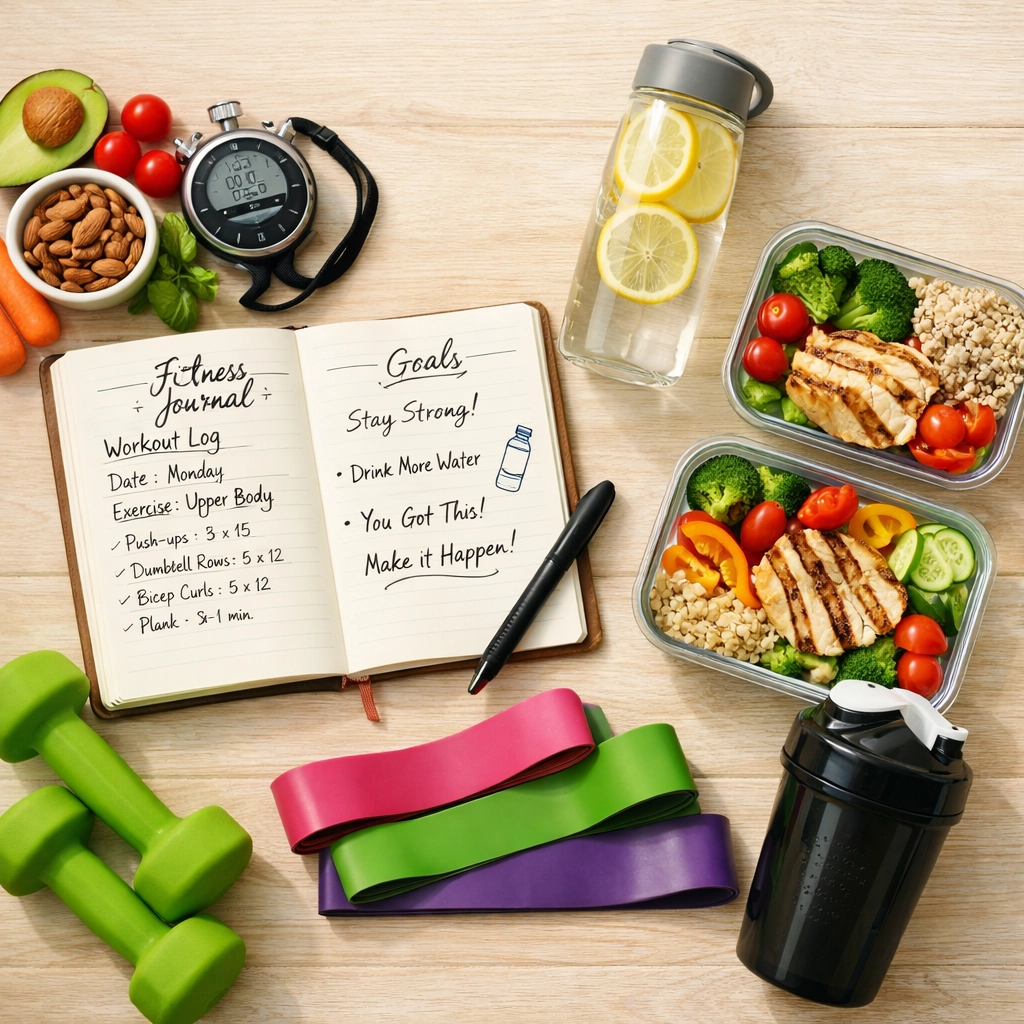
Track every session. Write down weights used, reps completed, and how movements felt. Athletes who track their training progress 3-4x faster than those who wing it.
Real Talk: What to Expect
Let's be honest about what 30 days of consistent full body workout at home training will: and won't: deliver.
What You WILL Experience:
- Noticeable strength improvements in fundamental movement patterns
- Better muscular endurance and work capacity
- Improved movement quality and body awareness
- Increased confidence in your home training setup
- Visible muscle definition (especially with proper nutrition)
- Better recovery between training sessions
What You WON'T Experience:
- Complete physique transformation (that takes 12+ weeks minimum)
- Elite-level strength gains (those require years of consistent training)
- Perfect mastery of advanced calisthenics movements
Thirty days is your launch pad, not your destination. The athletes who see the best results are those who view this blueprint as the beginning of a sustainable home training practice, not a quick-fix challenge.
Nutrition and Recovery: The Missing Pieces
You can't out-train a garbage diet. Period. For this program to work, you need to support your training with proper nutrition:
- Protein: 0.8-1g per pound of bodyweight daily
- Carbohydrates: Timed around training sessions for performance and recovery
- Fats: Don't fear them: they're essential for hormone production
- Hydration: Half your bodyweight in ounces daily, minimum
Recovery protocols matter just as much as the training itself:
- Sleep: 7-9 hours nightly, non-negotiable
- Mobility Work: 10-15 minutes daily on active recovery days
- Stress Management: High cortisol kills gains faster than poor training
- Active Recovery: Light movement, walking, swimming, or yoga
Your Action Plan: Start Tomorrow
Here's your immediate action list:
-
Assess Your Equipment: Identify what you have and what you need. If you're missing pull-up capability, check out the Resistance Rail system for a no wall damage workout system that gives you endless training options.
-
Schedule Your Sessions: Block off training time in your calendar for the next 30 days. Treat these appointments like non-negotiable business meetings.
-
Take Baseline Measurements: Photos, bodyweight, max reps on key movements. You'll want these for comparison.
-
Prepare Your Space: Clear a dedicated training area. You need about 8x8 feet minimum for most movements.
-
Start Monday: Don't wait for perfect conditions. Perfect conditions don't exist.
The difference between athletes who transform their bodies and those who stay stuck isn't talent, genetics, or even time. It's commitment to consistent action. This 30-day blueprint gives you the roadmap. You just need to follow it.
No more excuses about not having gym access. No more complaints about expensive memberships. You've got everything you need to build serious strength, functional muscle, and athletic performance right in your own home. The only question is whether you're ready to prove it to yourself.
Get after it.
