
When you watch American Ninja Warrior competitors fly through obstacle courses with seemingly superhuman strength and agility, you're witnessing the result of a specific training methodology that's fundamentally different from traditional gym workouts. Here's what most people don't realize: these athletes aren't spending hours on bench presses or leg machines. They're building functional strength through resistance training protocols that you can replicate at home: without destroying your walls or spending thousands on equipment.
The training system used by top ANW competitors revolves around grip strength, bodyweight mastery, and pulling power. And the best part? You don't need a massive home gym or obstacle course in your backyard to train like these elite athletes. You just need to understand the principles and have the right setup.
Why American Ninja Warrior Training Works for Everyone
American Ninja Warrior training isn't just for competition athletes. The methodology builds the kind of strength that translates to real-world performance: whether you're into CrossFit, calisthenics, gymnastics, or MMA. Unlike bodybuilding routines that isolate muscles, ANW training develops functional strength patterns that work multiple muscle groups simultaneously.
Elite competitors dedicate 80-90% of their training time to climbing and grip-focused work rather than traditional leg strength exercises. The goal is staying lean while building exceptional upper-body power. Most top competitors weigh between 155-170 pounds: light enough to move efficiently, strong enough to dominate pulling movements.
This approach creates athletes with incredible strength-to-weight ratios, explosive power, and the muscular endurance to sustain high-intensity efforts. These are the same qualities that make great CrossFit athletes, calisthenics practitioners, and fighters.
The Foundation: Grip Strength Training at Home
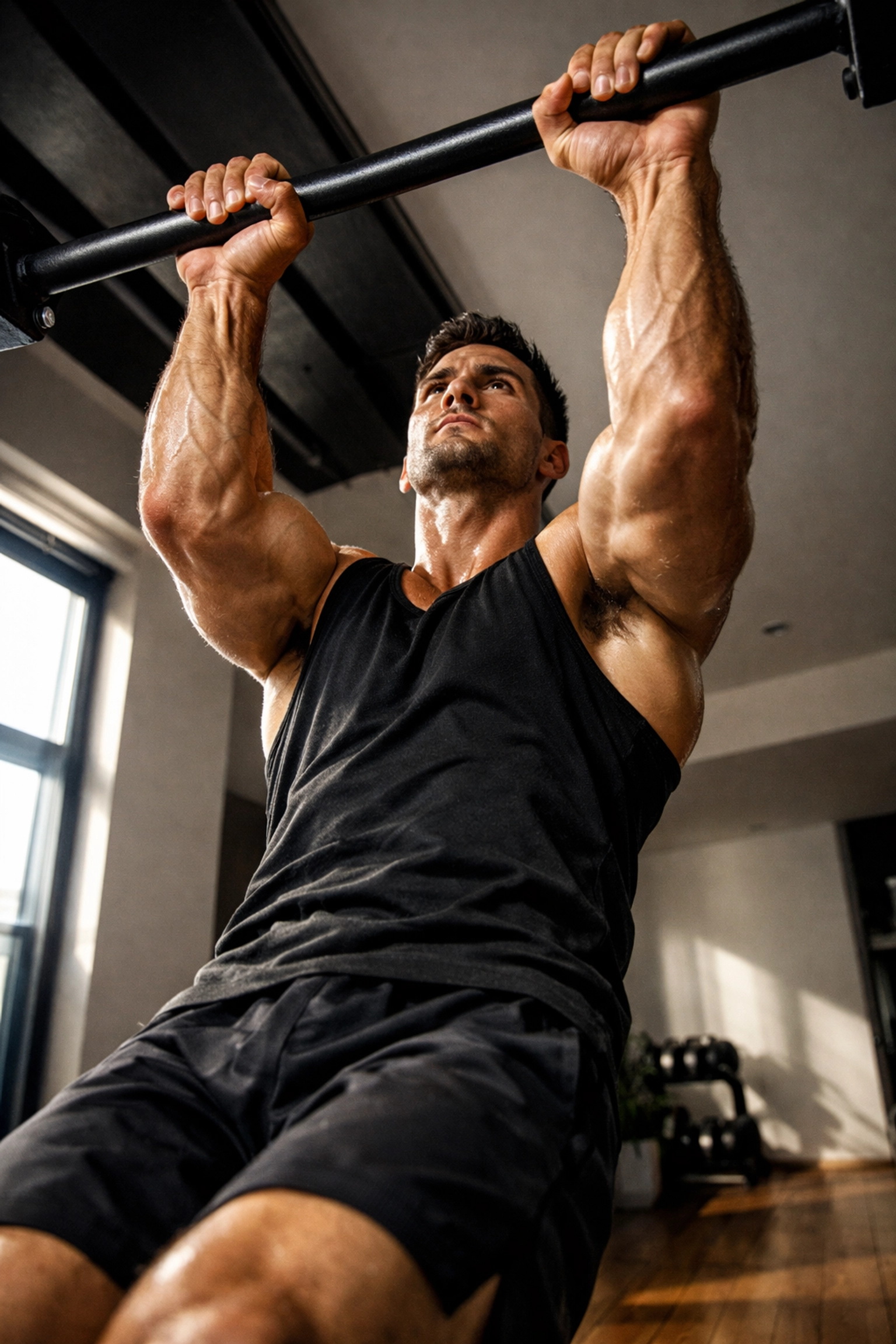
Grip strength is the absolute foundation of Ninja Warrior training. You can have all the upper body strength in the world, but if your grip fails, you're done. Every obstacle on the course demands exceptional grip endurance, from salmon ladders to warped walls.
The "Triple Threat" protocol is a staple among ANW competitors for building grip strength at home:
Week 1-2: Hang from a pull-up bar until failure. Rest one minute. Repeat for three total sets. Perform this 2-3 times per week.
Week 3-4: Increase hanging time by adding weight via a weighted vest or holding a dumbbell between your feet.
Week 5-6: Progress to single-arm hangs, towel hangs, or thick bar hangs.
The key is progressive overload. Your grip strength will adapt rapidly if you consistently challenge it. Dead hangs might seem simple, but they're brutally effective for building the forearm and finger strength that separates good climbers from great ones.
For a full body workout at home that emphasizes grip, rope climbs are gold standard training. If you have ceiling height, a climbing rope attached to a secure anchor point becomes one of your most valuable training tools. Climbing 15-20 feet repeatedly builds grip strength, pulling power, and core stability simultaneously.
Bodyweight Training Protocols: The Pulling Power System
Successful ANW competitors strength train 4-6 days per week using bodyweight workouts that hit every major muscle group. But the emphasis is heavily weighted toward pulling movements: pull-ups, muscle-ups, rope climbs, and their countless variations.
Here's a progressive pull-up protocol used by top competitors:
The Descending Ladder Method:
- Start with your most difficult pull-up variation (weighted, one-arm progressions, or muscle-ups) and perform reps until technical failure
- Immediately step down to an easier variation (standard pull-ups) and continue to failure
- Step down again to an even easier variation (negative pull-ups or band-assisted) and exhaust yourself completely
- Start with this protocol 2-3 times weekly, resting 2-3 minutes between ladder sequences
This approach builds both maximum strength and muscular endurance. You're teaching your body to recruit maximum muscle fibers, then continue working when those primary fibers are fatigued. That's exactly the demand placed on you during a 30-second obstacle course run.

Setting Up Your Home Gym for ANW-Style Training
Here's where things get interesting. Traditional home gym equipment for this style of training requires permanent installations: wall-mounted pull-up bars that leave holes, ceiling-mounted climbing ropes that require structural modifications, or expensive free-standing rigs that dominate entire rooms.
The challenge for most people: you need multiple anchor points at different heights to replicate obstacle course movements. You need to train explosive transitions, dynamic swings, and climbing patterns: not just static pull-ups. And if you're renting or don't want to destroy your walls, traditional solutions don't work.
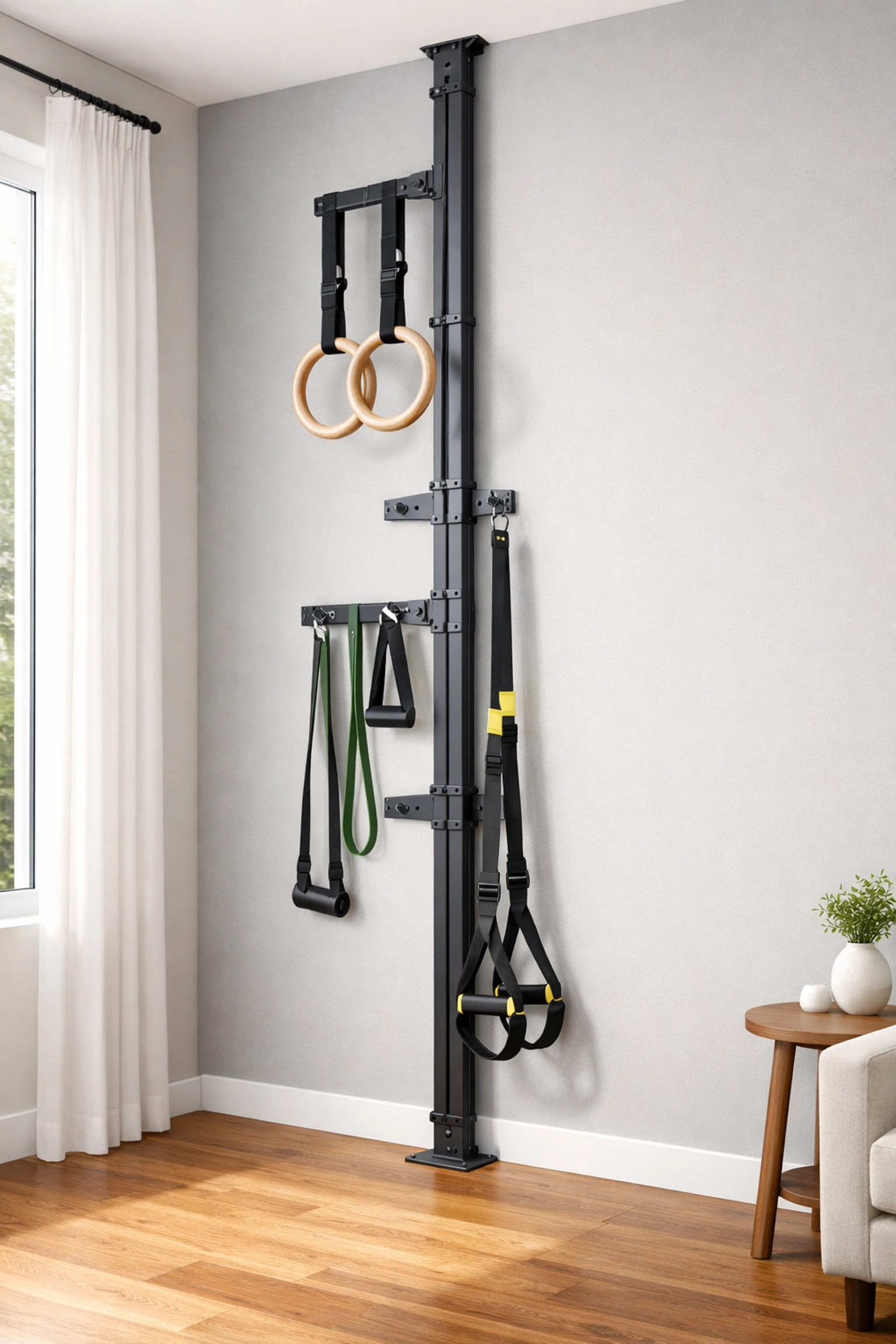
This is where a floor to ceiling gym system changes everything. Rather than drilling into walls or building permanent structures, a pressure-mounted system like the Resistance Rail from Bold Body Fitness provides the versatility you need for ANW-style training without any wall damage.
The concept is simple but powerful: a vertical rail system that pressure-mounts between your floor and ceiling, creating infinite anchor point possibilities for resistance training and bodyweight exercises. You can position straps, rings, or resistance bands at any height, then reposition them seconds later for your next movement. It's the ultimate versatile home gym for functional training.
The Complete ANW Home Workout System
Let's break down a complete training week using this approach. This program hits all the key components ANW athletes prioritize: grip strength, pulling power, core stability, and explosive power.
Monday - Maximum Pulling Strength
- Descending ladder pull-ups: 3 ladders, 3-minute rest between
- Rope climbs: 5 sets of 15-foot climbs
- Dead hangs: Triple Threat protocol
- Archer pull-ups: 3 sets to failure
- Core finisher: Hanging knee raises, 3x15
Tuesday - Plyometric Power and Footwork
- Box jumps: 5x5 at maximum height
- Lateral bounds: 4x10 each direction
- Balance beam work: 20 minutes dynamic movement patterns
- Single-leg hops: 3x20 each leg
- Precision jumps: 15 minutes skill work
Wednesday - Grip Endurance and Climbing
- Towel pull-ups: 5 sets to failure
- Rope climb endurance: Climb 10 feet, descend slowly (hands only), 10 rounds
- Pinch grip holds: 5x30 seconds
- Finger hangs: 4x20 seconds on progressively smaller holds
- Farmer's carries: 4x50 feet with heavy weight
Thursday - Dynamic Movement Patterns
- Muscle-up practice: 15-20 minutes skill work
- Ring swings and transitions: 10 minutes
- Cliffhanger progression: 5 sets of traversing movements
- L-sit practice: 5x maximum hold time
- Explosive pull-ups: 5x5 with maximum speed
Friday - Total Body Strength Circuit
- Pull-ups: 50 total reps (as many sets as needed)
- Push-ups: 100 total reps (various hand positions)
- Air squats: 100 total reps
- Rope climbs: 10 total climbs
- Plank variations: 5 minutes total time under tension
Saturday - Skill Work and Weaknesses
- Focus on your worst obstacles/movements
- Film yourself and analyze technique
- Work on transition speed between movements
- Practice explosive dismounts and landings
- Recovery and mobility work
Sunday - Active Recovery
- Light climbing or easy pull-ups
- Mobility and flexibility work
- Balance practice
- Mental preparation and visualization
Why Traditional Pull-Up Bars Fall Short
A standard doorway pull-up bar is a start, but it's severely limiting for serious calisthenics equipment for home training. You're locked into one height, one grip width, and one plane of movement. ANW training demands dynamic transitions, angled pulls, and the ability to move between different grip positions rapidly.
This is why a pull up bar alternative that offers infinite adjustability makes such a difference. When you can position anchor points at shoulder height, overhead, and anywhere in between, you can train the same dynamic patterns that obstacles demand. You can practice explosive transitions from low to high positions. You can set up traversing movements that build both strength and coordination.
For CrossFit home gym setups, this versatility is equally valuable. Kipping pull-ups, bar muscle-ups, and gymnastic skills all benefit from adjustable anchor points. The same system that supports ANW training protocols works perfectly for CrossFit metcons, gymnastics skill work, and strength progressions.
The Resistance Training Advantage
The term "resistance training" often gets associated with weight machines and barbells, but the most functional resistance training uses your bodyweight and the forces you can create through angles, leverage, and movement patterns. This is exactly how ANW training works.
When you're hanging from a ledge or swinging between obstacles, gravity is your resistance. The challenge isn't adding more weight: it's mastering the leverage disadvantages that make bodyweight movements brutally difficult. A toes-to-bar is dramatically harder than a weighted sit-up. A muscle-up requires more functional strength than a heavy lat pulldown.
A no wall damage workout system that provides infinite anchor point options lets you manipulate these leverage angles to create progressive resistance. Want to make inverted rows easier? Position the anchor point higher. Want to make them harder? Lower the anchor point until you're nearly horizontal. Same exercise, infinitely scalable resistance.
Building Explosive Power at Home
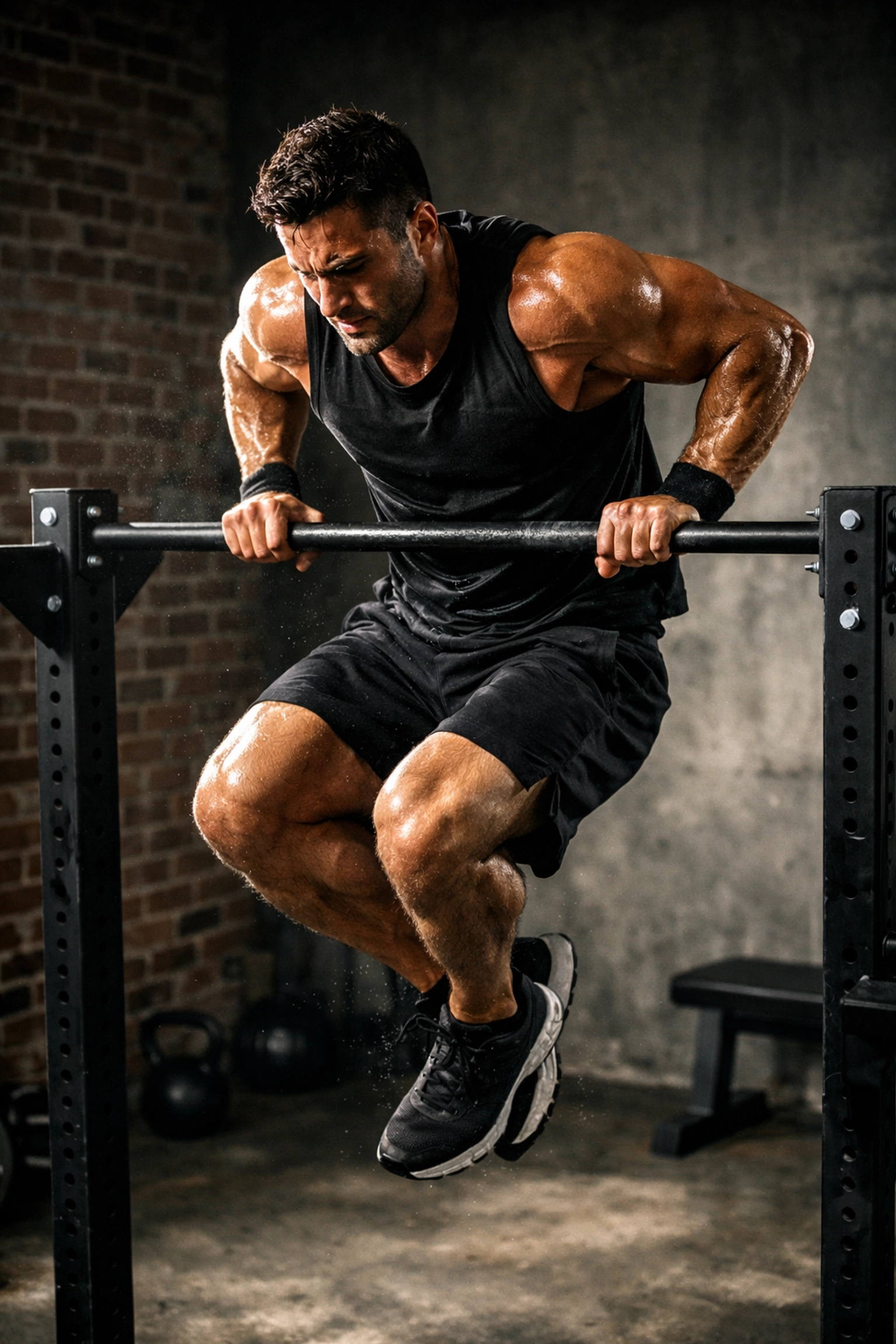
One component that separates great ANW competitors from good ones is explosive power: the ability to generate maximum force rapidly. This is crucial for overcoming dynamic obstacles that require big moves, quick catches, and momentum transfers.
Plyometric training for explosive power at home:
Upper Body Plyometrics:
- Clapping pull-ups: 5x3
- Explosive push-ups: 5x5
- Medicine ball chest passes: 4x10
- Plyo push-ups to elevated surface: 4x6
Lower Body Plyometrics:
- Depth jumps: 5x5
- Broad jumps: 5x3 for maximum distance
- Single-leg bounds: 4x8 each leg
- Reactive box jumps: 5x5
The key with plyometric training is maximum intent and full recovery. You're training your nervous system to recruit maximum muscle fibers as quickly as possible. This isn't conditioning work: it's power development. Rest 2-3 minutes between sets to maintain maximum output.
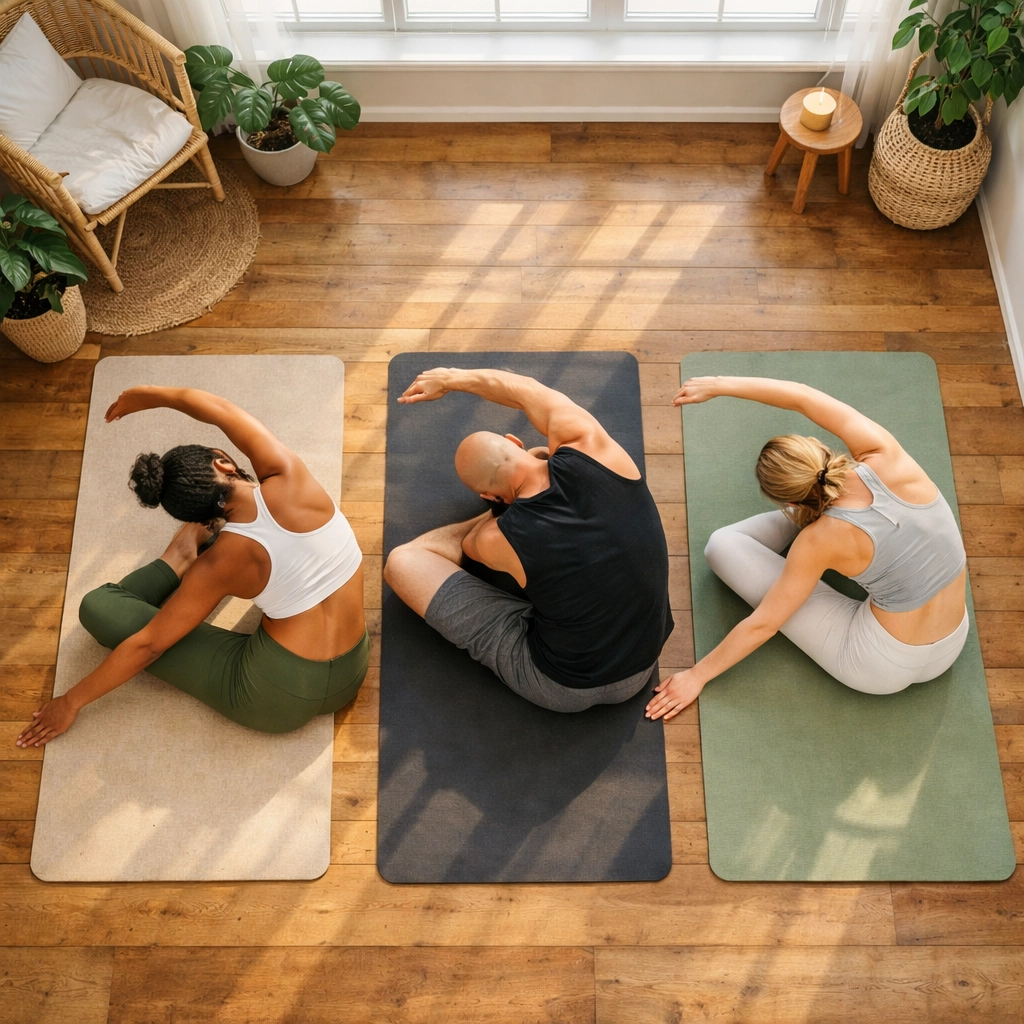
Mobility and Injury Prevention
ANW competitors might look like they're made of rubber, but that flexibility and mobility is developed through consistent practice. The ability to get your body into awkward positions and maintain tension through full ranges of motion is crucial for obstacle success.
Daily mobility work should include:
Shoulder Mobility:
- Dead hangs with gentle swing
- Shoulder dislocations with band or PVC
- Wall slides and scapular work
- Active flexibility through full ROM pull-ups
Hip Mobility:
- Deep squat holds
- Cossack squats
- Hip flexor stretches
- Leg swings in all planes
Wrist and Forearm:
- Wrist circles and stretches
- Forearm extensor work
- Pronation/supination movements
- Grip strength directly improves through mobility
Spend 15-20 minutes daily on mobility work. This isn't optional: it's the foundation that allows you to train hard without injury.
Programming Your ANW-Style Training
Consistency beats intensity when building the strength base for ANW training. Most beginners make the mistake of going too hard, too fast. They try to replicate what elite athletes do without building the foundational strength first.
Beginner Protocol (Months 1-3):
Focus on building base pulling strength and grip endurance. Train 3-4 days weekly, emphasizing perfect form over volume. Master dead hangs, negative pull-ups, and basic bodyweight movements.
Intermediate Protocol (Months 4-9):
Increase training frequency to 5 days weekly. Add more complex movements, dynamic transitions, and plyometric elements. Build work capacity through higher volume sessions.
Advanced Protocol (Months 10+):
Train 6 days weekly with periodized intensity. Incorporate competition-specific skill work, maximum strength days, and endurance sessions. Focus on weak points and sport-specific movements.
The progression isn't linear: you'll have breakthrough weeks and frustrating plateaus. The key is consistent training over months and years. The athletes you see on TV have been training this way for years, not weeks.
Making It Work in Your Space
You don't need a dedicated gym room to train like an ANW competitor. The beauty of bodyweight training at home is that it's space-efficient. A 6x6 foot area is enough if you have the right setup.
The crucial element is vertical space. If you have 8-foot ceilings or higher, you can install a floor-to-ceiling system that provides everything you need for complete ANW training. Check out the shop for space-efficient solutions that don't require permanently modifying your home.
For apartments, rental spaces, or homes where you can't drill into walls, pressure-mounted systems are game-changers. They provide the stability you need for intense training while leaving zero marks when you remove them. That's the difference between having a complete functional training setup and being limited to basic floor exercises.
The Bottom Line
American Ninja Warrior training represents the pinnacle of functional fitness: building strength that transfers to real-world performance in any athletic endeavor. The protocols these athletes use can be replicated at home with the right approach and equipment setup.
You don't need elaborate obstacle courses or expensive gym memberships. You need a systematic approach to grip strength, pulling power, and bodyweight mastery. You need equipment that provides versatility without destroying your space. And you need the consistency to train these patterns week after week.
The resistance training system used by ANW competitors isn't secret or complicated. It's progressive overload applied to functional movement patterns, with heavy emphasis on grip strength and pulling power. Set up your home space correctly, follow proven protocols, and train with intensity. The results will speak for themselves.
Whether you're training for competition, building functional strength for CrossFit, or just want to develop an impressive physique while improving athletic performance, ANW training protocols deliver. Start with the basics, progress methodically, and watch your strength skyrocket.
