
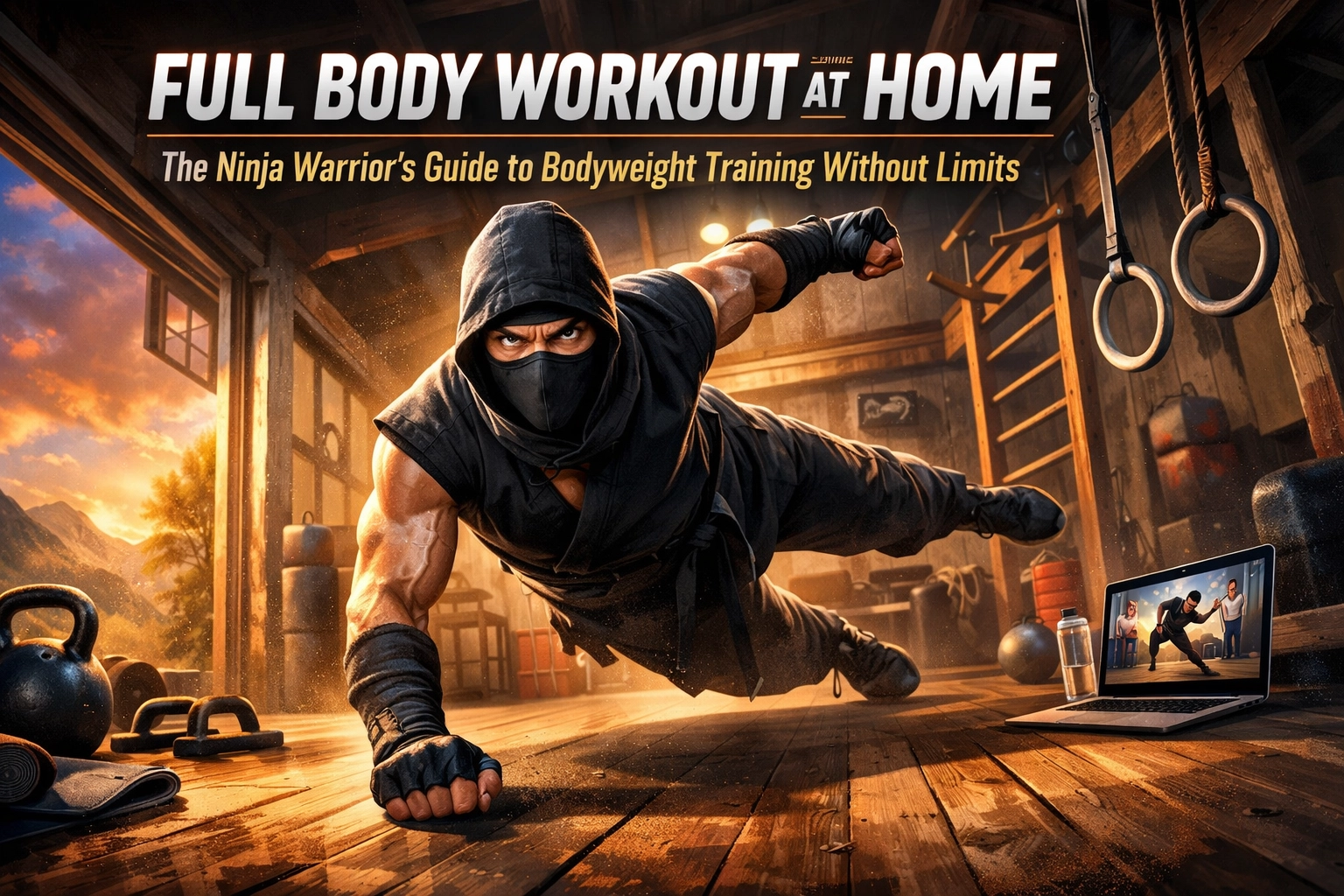
You don't need a specialized Ninja Warrior gym to train like one. The athletes crushing courses on TV aren't just lucky: they're methodical, disciplined, and they know that bodyweight training at home can build the exact strength, endurance, and explosive power needed to conquer any obstacle.
Here's the truth: Your living room can become your training ground. A small space, the right equipment, and a warrior's mindset are all you need to develop the pull-up strength, grip endurance, and body control that separate course finishers from first-obstacle failures.
Why Ninja Warriors Swear By Bodyweight Training
Bodyweight exercises aren't just convenient: they're biomechanically superior for obstacle course training. When you're hanging from a salmon ladder or swinging between rings, you're moving your entire body through space. No machine replicates that.
Full body workout at home programs built around calisthenics develop:
- Relative strength: Your power-to-weight ratio determines whether you clear the warped wall or slide back down
- Functional grip: Holding dumbbells for 30 seconds doesn't prepare you for a 90-second hang on irregular obstacles
- Body awareness: Understanding where your center of gravity is during dynamic movements keeps you on course instead of in the water
- Injury resilience: Bodyweight progressions strengthen tendons and ligaments gradually, unlike ego-lifting in a commercial gym
Elite ninja warriors train their entire bodies as integrated systems. You should too.

The Non-Negotiable Components of Ninja Training
Every legitimate ninja warrior workout at home must address these four pillars:
1. Upper Body Pulling Power
Pull-ups are your foundation. Not just regular pull-ups: you need variations that challenge every grip angle and pulling pattern. Wide-grip pull-ups build lat width for reaching distant holds. Close-grip variations strengthen the biceps and forearms for rope climbs.
One-arm negatives develop unilateral strength for asymmetric obstacles. Explosive pull-ups: clapping pull-ups, chest-to-bar pull-ups, high pull-ups: create the power output needed for dynamic movements like the salmon ladder.
Aim for 3-5 sets per session, rotating through different variations. If you can't do strict pull-ups yet, start with dead hangs, then negatives, then band-assisted reps. No shortcuts.
2. Grip Strength That Won't Quit
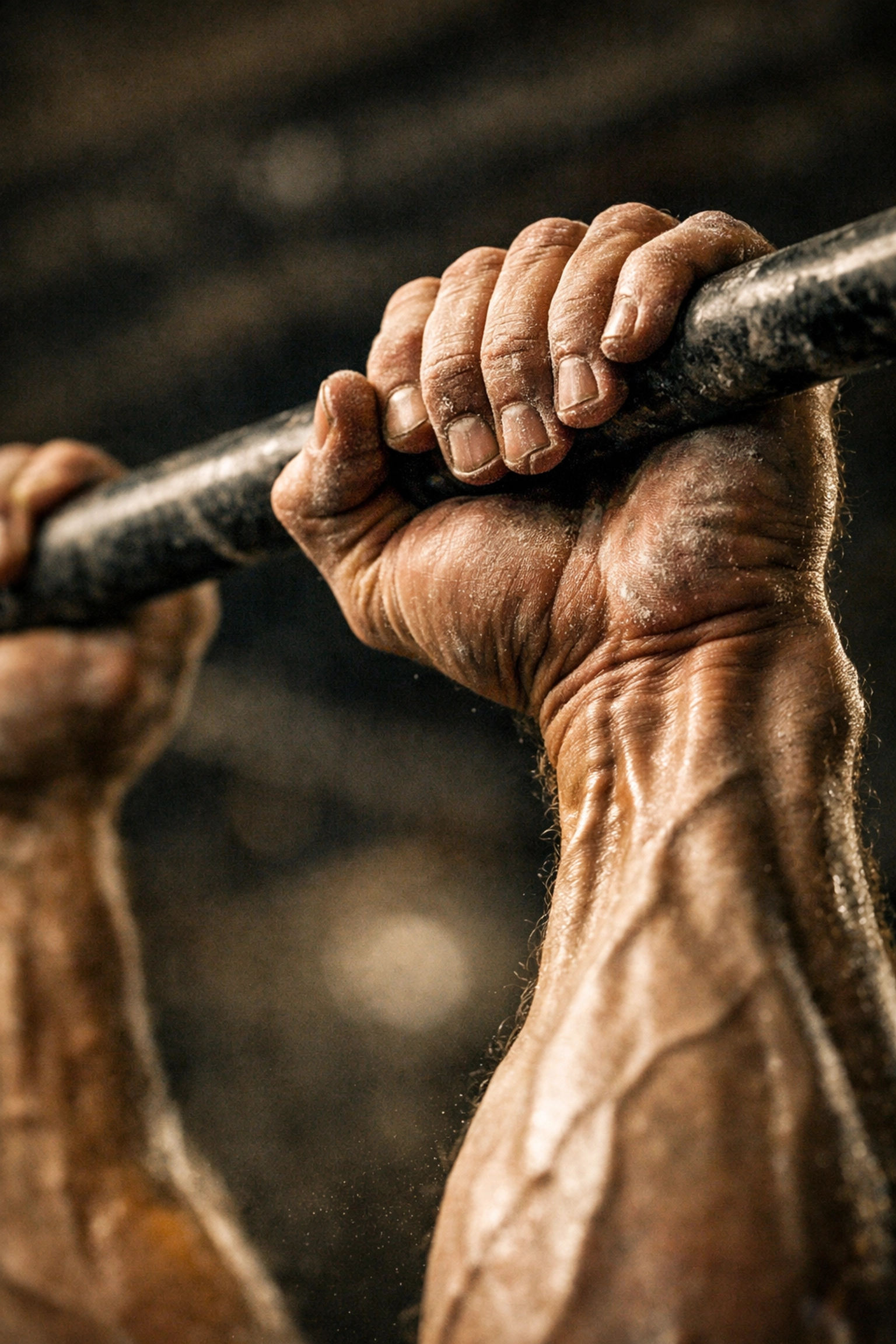
Your grip fails before your muscles do. That's the brutal reality of obstacle courses.
Hangboard training 3 times per week builds tendon strength methodically. Start with dead hangs on good holds, progress to smaller edges, then add weight. Your tendons adapt slower than muscles: rushing this process guarantees finger injuries.
Between hangboard sessions, incorporate:
- Alternating-grip dead hangs: 60+ seconds, switching hands every 5 seconds
- Towel pull-ups: Drape towels over your bar for an unstable, thick grip
- One-arm dead hangs: 20+ seconds per side builds asymmetric strength
3. Explosive Lower Body Power
The warped wall doesn't care about your squat max. It cares about explosive triple extension: ankles, knees, hips firing simultaneously to propel you upward.
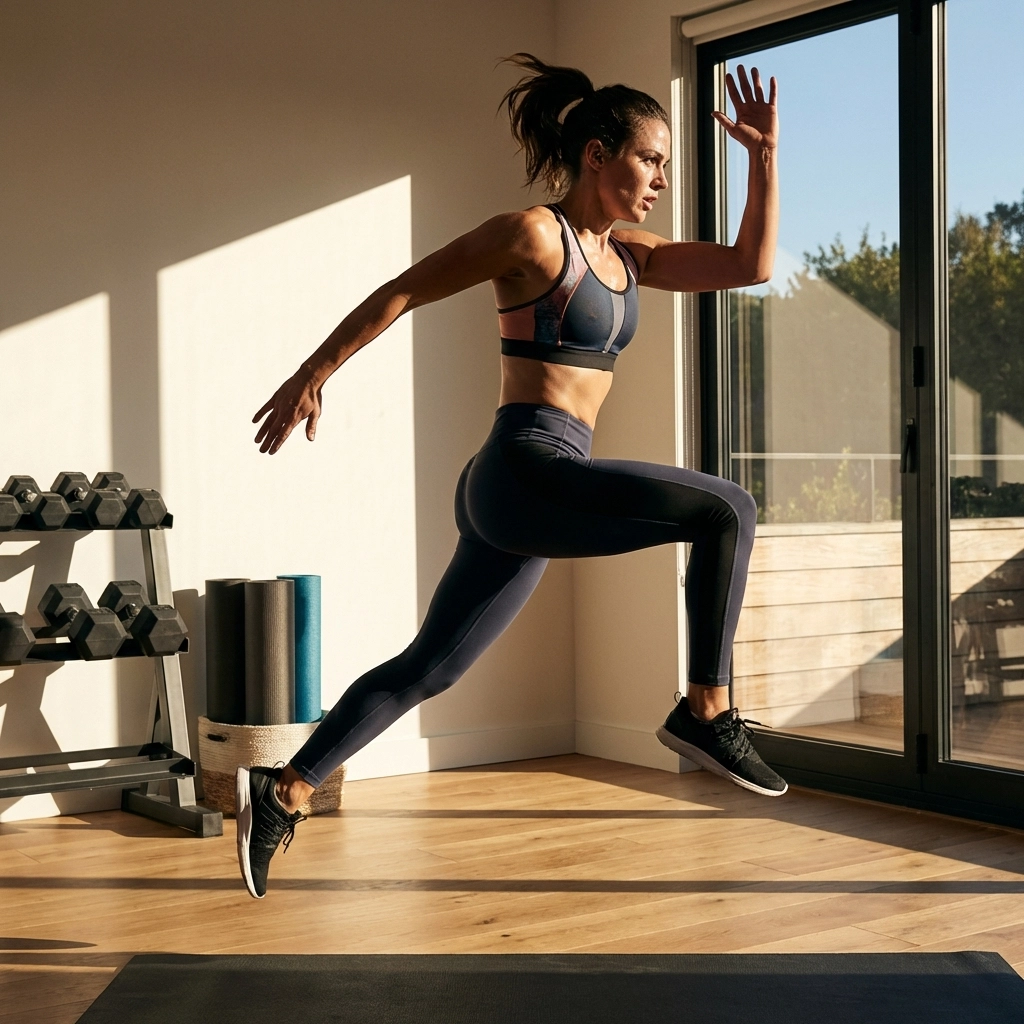
Alternating jumping lunges develop this perfectly. Descend into a deep lunge, then explode up, switching legs mid-air, and stick the landing in a controlled lunge position. Three sets of 12-15 reps (per leg) builds the reactive strength needed for dynamic obstacles.
Candlestick rolls combine core strength, leg power, and coordination. From lying flat, roll backward with straight legs overhead, then explosively roll forward and jump to standing without using your hands. If you can't stand without hand assistance, you need more core work.
Add box jumps or broad jumps for pure power development. Land softly: your joints will thank you after 1,000 reps.
4. Core Stability Under Fatigue
A weak core turns every obstacle into a struggle. When your legs are swinging wildly during a traverse wall, your core keeps you stable enough to reach the next hold.
Hanging leg raises build core strength while training grip endurance: two benefits simultaneously. Start with bent knees, progress to straight legs, then advance to toes-to-bar. Aim for 3 sets of 10-15 controlled reps.
Hanging L-sits with straight arms develop the static core strength needed for salmon ladder catches and ring holds. Work up to 30-60 second holds.
Hollow body holds on the floor teach you to maintain tension through your entire posterior chain: essential for maintaining form during long obstacles.
Setting Up Your Home Training Space
You don't need a warehouse. You need smart calisthenics equipment for home that maximizes versatility without destroying your walls or requiring permanent installation.
Traditional pull-up bars have limitations. Doorway bars restrict your movement patterns. Wall-mounted rigs require drilling holes your landlord won't appreciate. Free-standing power towers take up massive floor space.
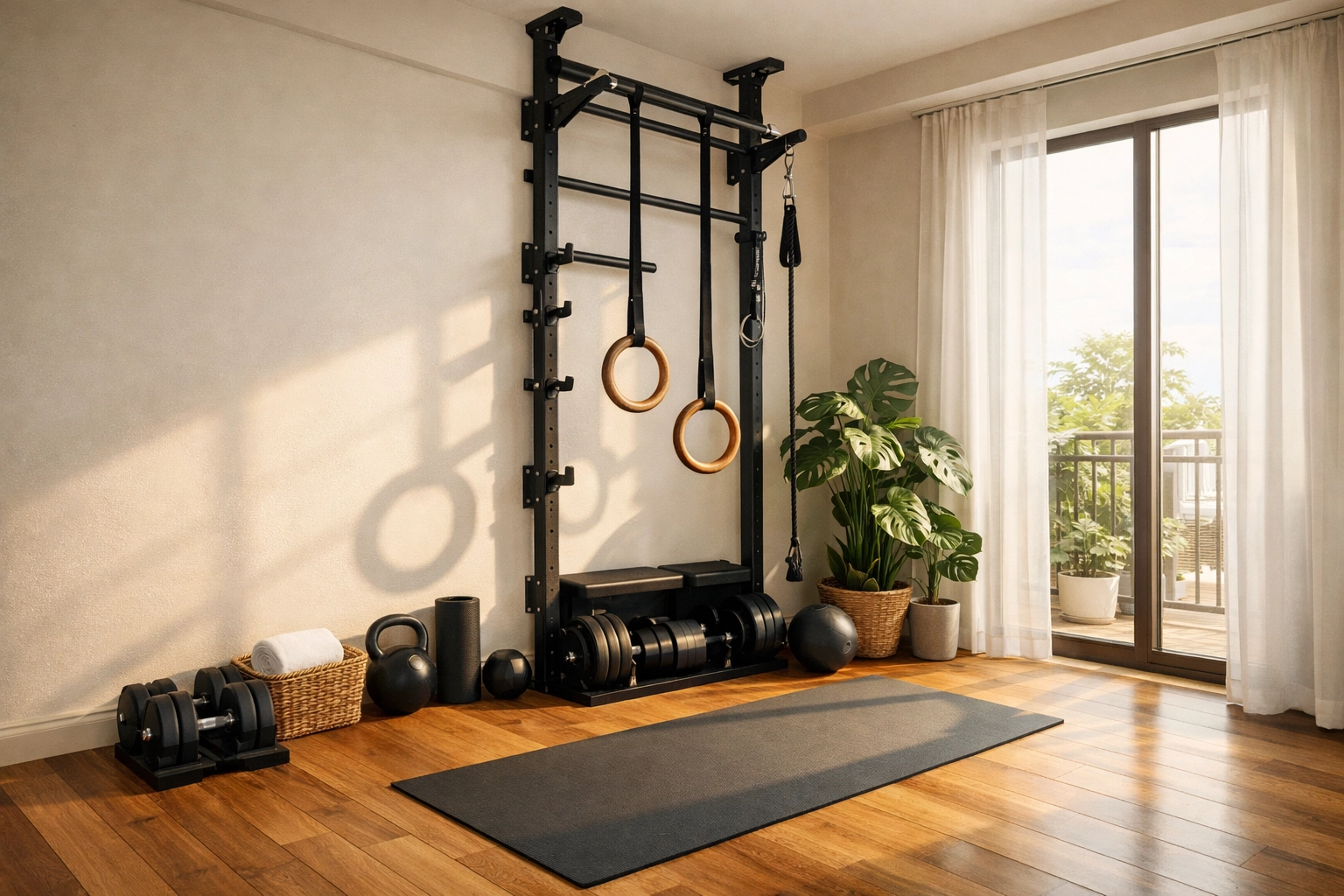
This is where floor-to-ceiling systems change the game. The Resistance Rail from Bold Body Fitness represents a pull up bar alternative that actually expands your training options. The tension-mounted design means no wall damage workout system installation: you can set it up in minutes and remove it just as quickly.
More importantly, it's a genuinely versatile home gym that supports:
- Multiple pull-up grip positions
- Gymnastic rings at any height
- Resistance band training
- Suspension training attachments
- Battle rope anchors
One piece of equipment, unlimited workout variations. That's efficiency.
The Complete Weekly Training Split
Train 4-6 times per week with this structure:
Monday: Upper Body Pull Focus
- Pull-up variations: 5 sets to near-failure
- Front lever progressions: 3 sets
- Hanging L-sits: 3x30-60 seconds
- Dead hangs: 3x60+ seconds
Tuesday: Lower Body Power + Core
- Alternating jumping lunges: 3x12 per leg
- Candlestick rolls: 3x10
- Box jumps: 4x8
- Hollow body holds: 3x45 seconds
Wednesday: Active Recovery
- Light stretching and mobility work
- Easy cardio if desired
Thursday: Upper Body Push + Grip
- Handstand push-up progressions: 4 sets
- Diamond push-ups: 3x15
- Spiderman push-ups: 3x10 per side
- Hangboard protocol: 3-5 sets with full rest
Friday: Full Body Circuit
- Burpees with tuck jumps: 3x10
- Pull-ups: 3x8
- Jumping lunges: 3x10 per leg
- Hanging leg raises: 3x12
- Minimal rest between exercises
Saturday: Skill Work + HIIT
- Practice obstacle-specific movements
- 10-15 minutes HIIT cardio
- Grip endurance challenges
Sunday: Rest
Adjust volume based on recovery. If your tendons are screaming, back off the grip work. If you're not progressing, you might need more calories or sleep: not more volume.
Progression Strategies That Actually Work
Progressive overload in bodyweight training looks different than adding plates to a barbell. Apply these principles:
- Increase reps: 8 pull-ups becomes 10, then 12
- Decrease rest: 90 seconds between sets becomes 60 seconds
- Add complexity: Regular pull-ups become archer pull-ups
- Increase range of motion: Pull to chest instead of chin
- Add pauses: 2-second pause at the top of each rep
- Increase tempo: 5-second negatives instead of 3
Track every workout. Write down sets, reps, rest periods, and how you felt. If you're not tracking, you're guessing.
Common Mistakes Destroying Your Progress
Training to failure every set: Your nervous system fries before your muscles grow. Leave 1-2 reps in the tank on most sets.
Ignoring grip recovery: Tendons need 48+ hours between intense grip sessions. Train through tendonitis and you'll be sidelined for months.
Skipping warm-ups: Cold tendons tear. Spend 5-10 minutes on dynamic stretches, band pull-aparts, and light dead hangs before intense work.
Neglecting mobility: Tight shoulders limit your overhead reach. Tight hips reduce your jumping power. Spend 10-15 minutes daily on targeted mobility work.
Copying workouts without understanding progression: That elite athlete's workout will destroy you if you don't have their base. Build your foundation first.
Your Equipment Investment Strategy
Start minimal. You can build serious ninja warrior strength with just:
- A quality pull-up system: Whether it's a floor-to-ceiling setup or traditional bar, this is non-negotiable
- Gymnastic rings: Infinite exercise variations for under $50
- A hangboard: For dedicated grip training
- A timer: For tracking work/rest intervals
That's it. Everything else is optional. Once you're consistently training 5-6 days per week and progressing, add equipment that addresses specific weaknesses.
Don't let gear shopping replace actual training. The athletes crushing courses aren't obsessing about equipment: they're putting in reps.
The Bottom Line
Bodyweight training at home isn't a compromise: it's the most specific training possible for obstacle course performance. Your body is the implement. Every obstacle requires you to move your body through space efficiently.
Build your pulling strength until 20 strict pull-ups feels easy. Develop grip endurance until 90-second dead hangs are routine. Train explosive power until you're clearing box jumps that used to intimidate you.
The course doesn't care about your excuses. It cares about your strength-to-weight ratio, your grip endurance, and your ability to stay calm under fatigue.
Set up your space. Start training. Track your progress. Stay consistent.
The warped wall is waiting.
