
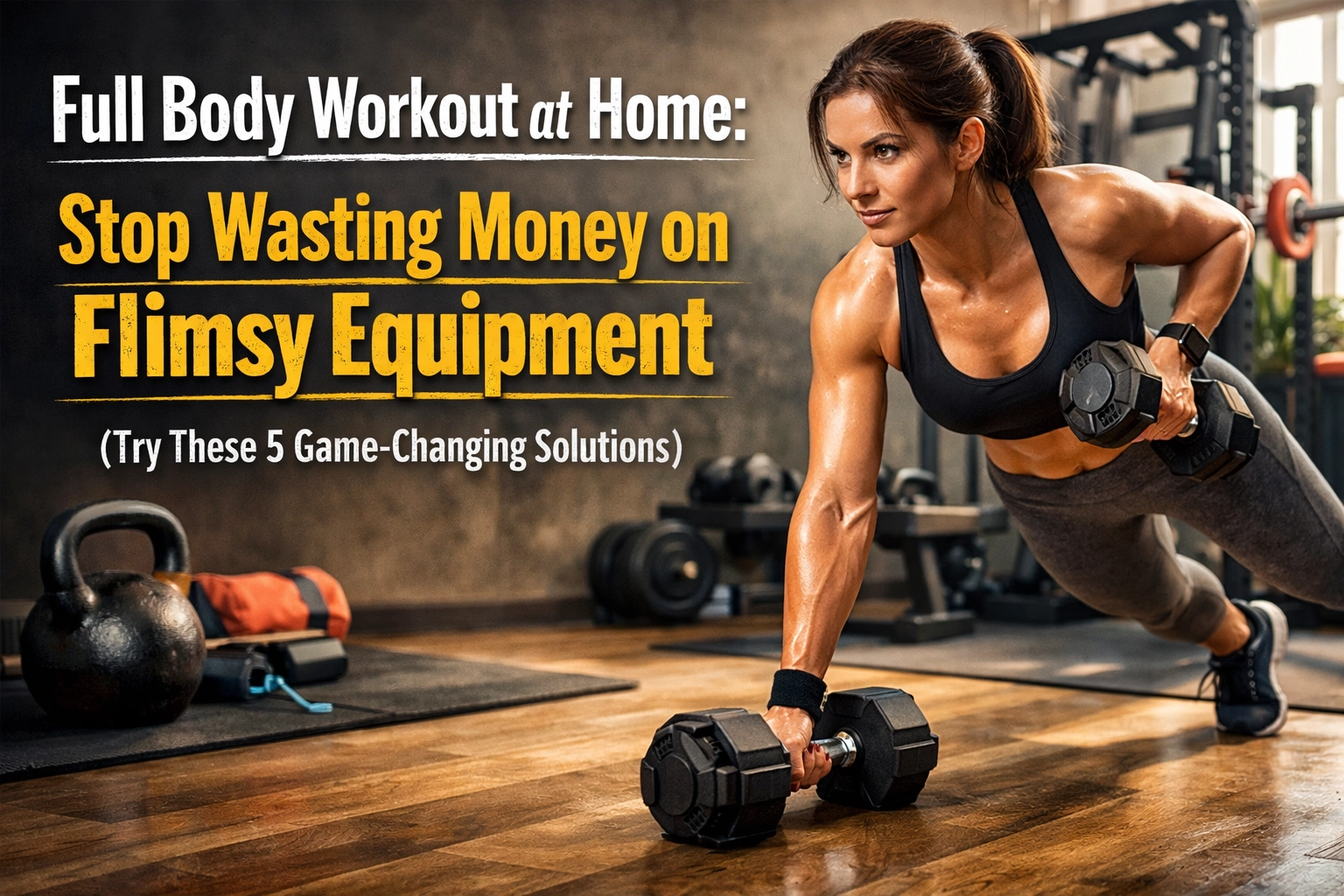
Let's cut through the BS: You've probably already wasted money on home gym equipment that wobbles, breaks, or ends up collecting dust in your garage. That rickety pull-up bar that feels like it's about to rip out of your doorframe? The resistance bands that snapped mid-rep? The bulky squat rack that doesn't fit your ceiling height?
Yeah, we've all been there.
The problem isn't that you can't get a killer full body workout at home. The problem is that most home gym equipment is designed for casual fitness folks who do three burpees and call it a day. But if you're serious about bodyweight training at home: whether you're a CrossFit athlete, MMA fighter, gymnast, ninja warrior, or calisthenics practitioner: you need gear that can actually handle your intensity.
Here's the truth: Building a legitimate home gym doesn't mean buying every piece of equipment at your local sporting goods store. It means investing in five strategic, high-quality solutions that work together to give you endless workout possibilities without destroying your walls or your bank account.
Why Most Home Gym Equipment Is Garbage
Before we dive into solutions, let's talk about why you keep getting burned.
Most home gym equipment falls into one of these categories:
The Doorframe Destroyers: Pull-up bars and suspension trainers that claim "no installation required" but leave dents, scratches, and structural damage. Some can't even handle dynamic movements without the constant fear of your ceiling caving in.
The One-Trick Ponies: Equipment designed for exactly one exercise. Great for bicep curls, useless for everything else. They take up space and limit your workout variety: the exact opposite of what serious athletes need.
The Flimsy Fakes: Resistance bands that snap during explosive movements. Adjustable dumbbells with loose mechanisms. Pull-up bars rated for 250 lbs that shake when you're only 180. This junk isn't just ineffective: it's dangerous.
The Space Hogs: Massive power racks and cable machines that require a dedicated room. Sure, they work great if you have a 500-square-foot garage gym. Not so much if you're working with a spare bedroom or apartment.
For athletes training for real performance: not just "getting in shape": this equipment doesn't cut it. You need versatile home gym solutions that allow for progressive overload, dynamic movements, and the kind of intensity that builds actual strength and skill.
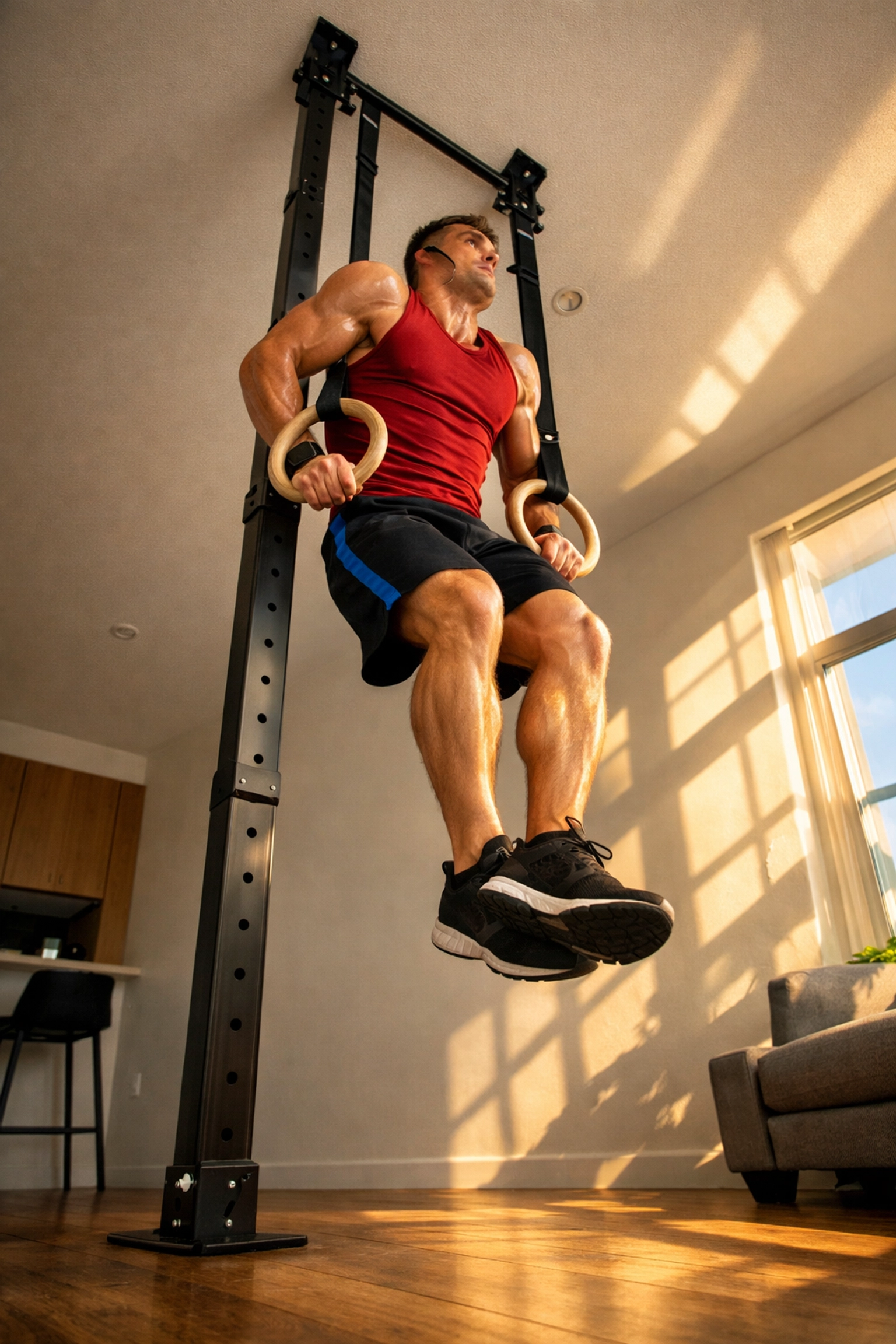
Solution #1: Floor-to-Ceiling Training Systems (The Ultimate Pull-Up Bar Alternative)
Here's where most home gyms get it wrong: They try to anchor equipment to walls or doorframes, which limits both placement and exercise variety. A floor to ceiling gym system changes the game entirely.
These systems use tension between your floor and ceiling: no drilling, no wall damage, no permanent installation. For serious athletes, this is the foundation of a truly versatile home gym.
Why this matters for your training:
Unlimited Exercise Variety: Pull-ups, muscle-ups, toes-to-bar, hanging leg raises, rope climbs, ring work, and literally hundreds of calisthenics equipment for home exercises. Unlike a doorframe pull-up bar that limits your grip positions and movement patterns, floor-to-ceiling systems give you 360 degrees of training freedom.
Real Progressive Overload: You can add weight vests, resistance bands, or training rings without worrying about your equipment failing. This is critical for athletes who need to continuously increase training intensity.
CrossFit and MMA-Ready: Dynamic movements like kipping pull-ups, butterfly pull-ups, and explosive muscle-ups require stable equipment that won't shift or wobble. Floor-to-ceiling systems handle the intensity that CrossFit home gym training demands.
The Resistance Rail from Bold Body Fitness exemplifies this approach: it's a no wall damage workout system that serious athletes actually use for high-level training. No compromises, no limitations.
Solution #2: Adjustable Resistance Training Tools That Don't Snap
Resistance bands get a bad rap because most of them are trash. But quality resistance training tools? Game-changers for building strength at home.
The key is choosing resistance training equipment designed for athletes, not beginners doing chair yoga.
Look for:
Military-Grade Materials: Bands and resistance systems that can handle hundreds of pounds of tension without degradation. If it's sold at a big-box store for $19.99, it's not going to survive your training intensity.
Attachment Versatility: The ability to anchor resistance from multiple angles and heights. This allows you to simulate cable machine exercises, add variable resistance to bodyweight movements, and create unique training stimuli.
Progressive Resistance Options: Multiple resistance levels that you can combine or use individually. This matters because strength progressions require increasing load over time: something that bodyweight alone can't always provide.
Combined with a solid anchor point (like a floor-to-ceiling system), quality resistance tools turn your home gym into a complete training facility. You can do chest presses, rows, anti-rotation core work, speed training, and sport-specific resistance drills.
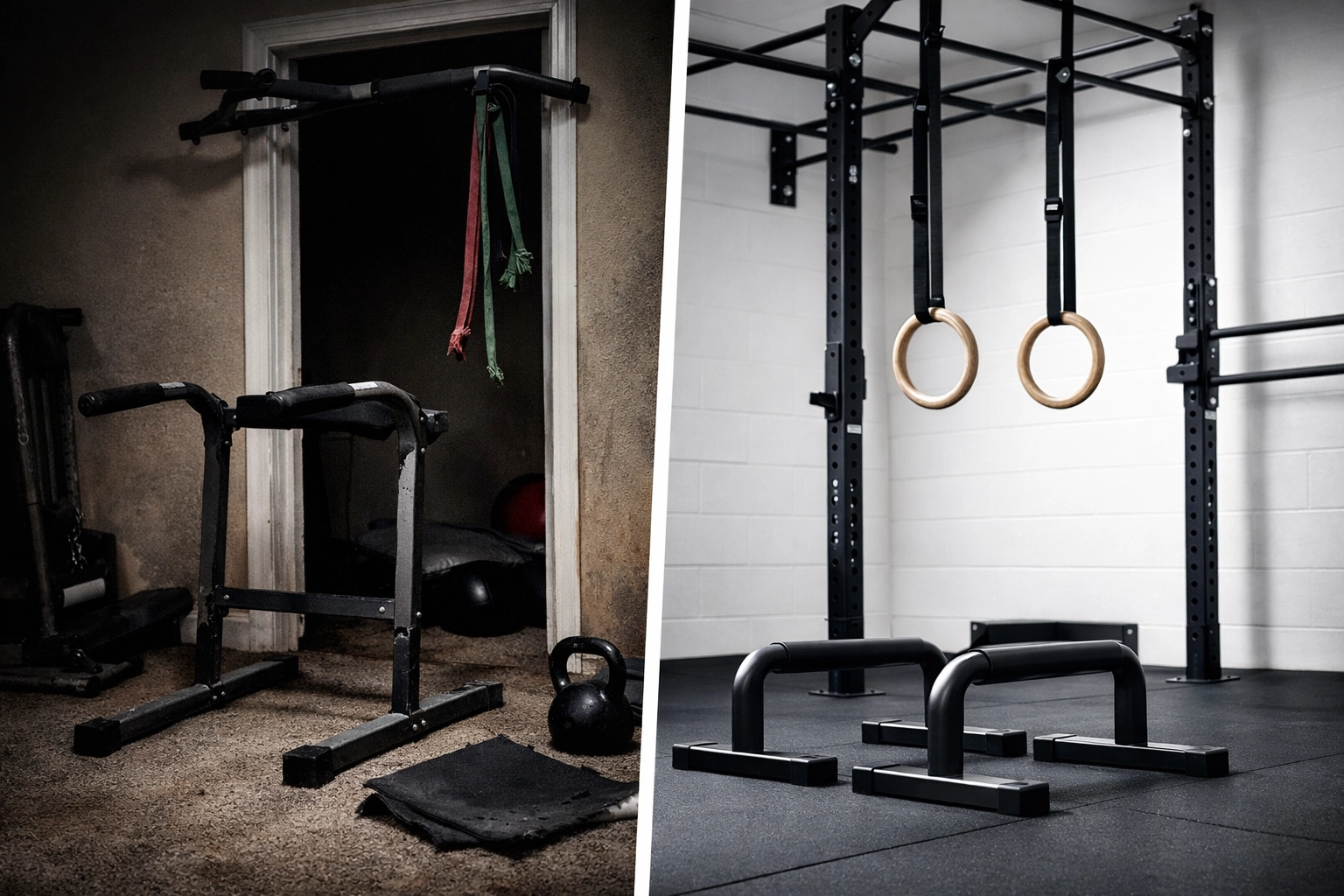
Solution #3: Modular Bodyweight Stations for Skill Work
If you're into gymnastics, ninja warrior training, or advanced calisthenics, you need equipment that supports skill development: not just strength building.
This is where modular systems shine. Instead of buying separate equipment for dips, push-ups, handstands, and L-sits, invest in calisthenics equipment for home that adapts to multiple movements.
Parallettes and Dip Bars: Essential for developing straight-arm strength, L-sits, planche progressions, and handstand work. Quality parallettes should be stable enough for dynamic movements and tall enough for full dip depth.
Adjustable-Height Platforms: For step-ups, box jumps, decline push-ups, and elevated pike push-ups. Bonus if they're sturdy enough to support handstand training.
Ring Training Systems: Gymnastics rings offer unmatched versatility for upper body and core work. When anchored to a floor-to-ceiling system, they enable muscle-ups, ring dips, front levers, and countless rowing variations.
The beauty of modular equipment is that it doesn't take up much space, but it exponentially increases your exercise options. One set of rings can replace dozens of machines.
Solution #4: Smart Progressive Overload Without Massive Weight Sets
Here's a dirty secret about bodyweight training at home: Eventually, regular bodyweight exercises become too easy. You can do 50 push-ups? Great. But that's building endurance, not maximum strength.
Progressive overload is non-negotiable for serious athletes. But you don't need a full set of Olympic plates taking up half your living room.
Smart solutions include:
Weight Vests with Modular Loading: Start with 10 lbs, progress to 50+ lbs as you get stronger. These work for pull-ups, dips, push-ups, pistol squats, and plyometric training.
Leverage and Angle Variations: Changing your body position increases resistance without adding weight. Decline push-ups are harder than regular push-ups. Archer pull-ups are harder than standard pull-ups. One-arm variations? Even harder. This costs nothing but requires the right anchor points.
Tempo Training and Isometrics: Slowing down movements and adding pauses creates massive strength gains. A 10-second negative pull-up is brutal: and requires zero additional equipment.
Strategic Resistance Integration: Adding bands to bodyweight movements creates variable resistance that challenges you through the entire range of motion. This is a staple in CrossFit home gym programming.
The combination of these approaches gives you infinite progression without needing a warehouse full of weights.
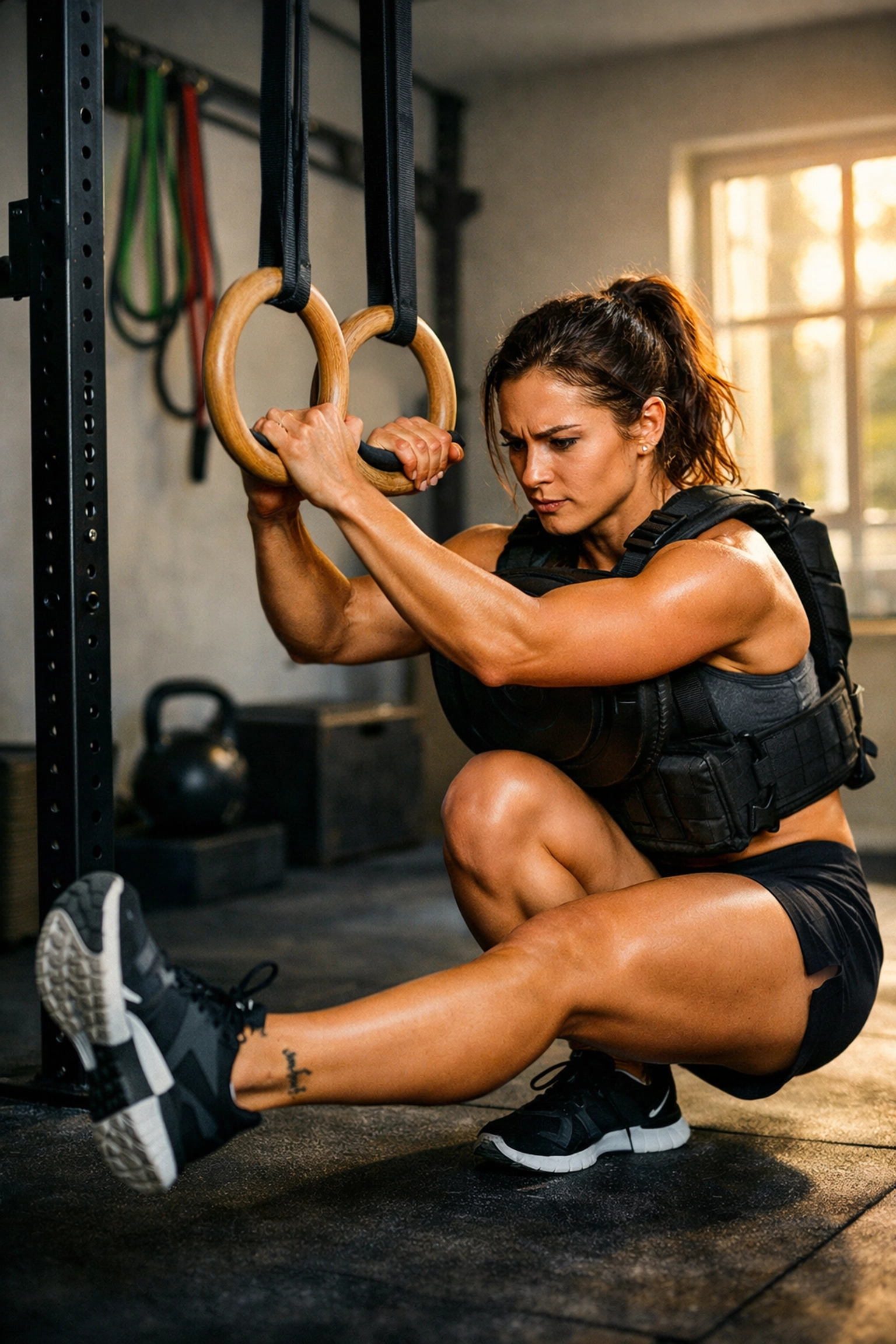
Solution #5: The Anchor Point That Changes Everything
Here's what ties all these solutions together: You need a rock-solid anchor point that doesn't damage your space.
This is why serious home gym builders are moving away from wall-mounted equipment and embracing no wall damage workout system solutions.
A quality floor-to-ceiling anchor system becomes the hub of your entire training setup:
- Attach resistance bands for horizontal pulling and pressing movements
- Hang gymnastics rings for advanced upper body work
- Secure suspension trainers for unstable surface training
- Anchor battle ropes for conditioning work
- Set up climbing holds for grip and upper body strength
Without drilling holes, without permanent installation, and without landlord headaches.
The Resistance Rail demonstrates this principle perfectly: it's engineered to handle serious training loads while remaining completely portable and damage-free. You can take it with you when you move, adjust the height for different exercises, and reconfigure your entire gym setup in minutes.
For athletes who travel frequently, train in rental spaces, or just want flexibility in their training environment, this type of system is non-negotiable.
Building Your Complete Home Training System
Here's how these five solutions work together to create a complete full body workout at home setup:
Monday - Upper Body Strength: Weighted pull-ups on your floor-to-ceiling system, ring dips, resistance band chest presses, and pike push-ups on parallettes.
Wednesday - Lower Body and Core: Pistol squats with a weight vest, resistance band leg curls, L-sit holds on rings, and hollow body progressions.
Friday - Full-Body Power and Conditioning: Muscle-ups, burpees with pull-ups, resistance band speed work, and plyometric training using your bodyweight station.
Every workout hits multiple muscle groups, incorporates progressive overload, and requires minimal space. No commute to the gym, no waiting for equipment, no compromises on training quality.
The total investment? Less than six months of gym membership fees. But unlike a gym membership, this equipment is yours forever and goes wherever you go.
Stop Settling for Mediocre Equipment
Look, you can keep buying cheap equipment that breaks, takes up space, and limits your training. Or you can invest in solutions that actually support your athletic goals.
The difference between casual fitness enthusiasts and serious athletes isn't just training intensity: it's equipment quality. When you're pushing your limits on muscle-ups, practicing front lever progressions, or doing weighted pistol squats, you can't afford equipment failure.
Your home gym should enable your training, not limit it. It should grow with you as you get stronger, not become obsolete after three months. And it definitely shouldn't destroy your walls or cost a fortune.
Check out the complete range of professional-grade training solutions at Bold Body Fitness. Because your training deserves better than flimsy equipment that was never built for athletes like you.
Time to stop wasting money and start building real strength.
