
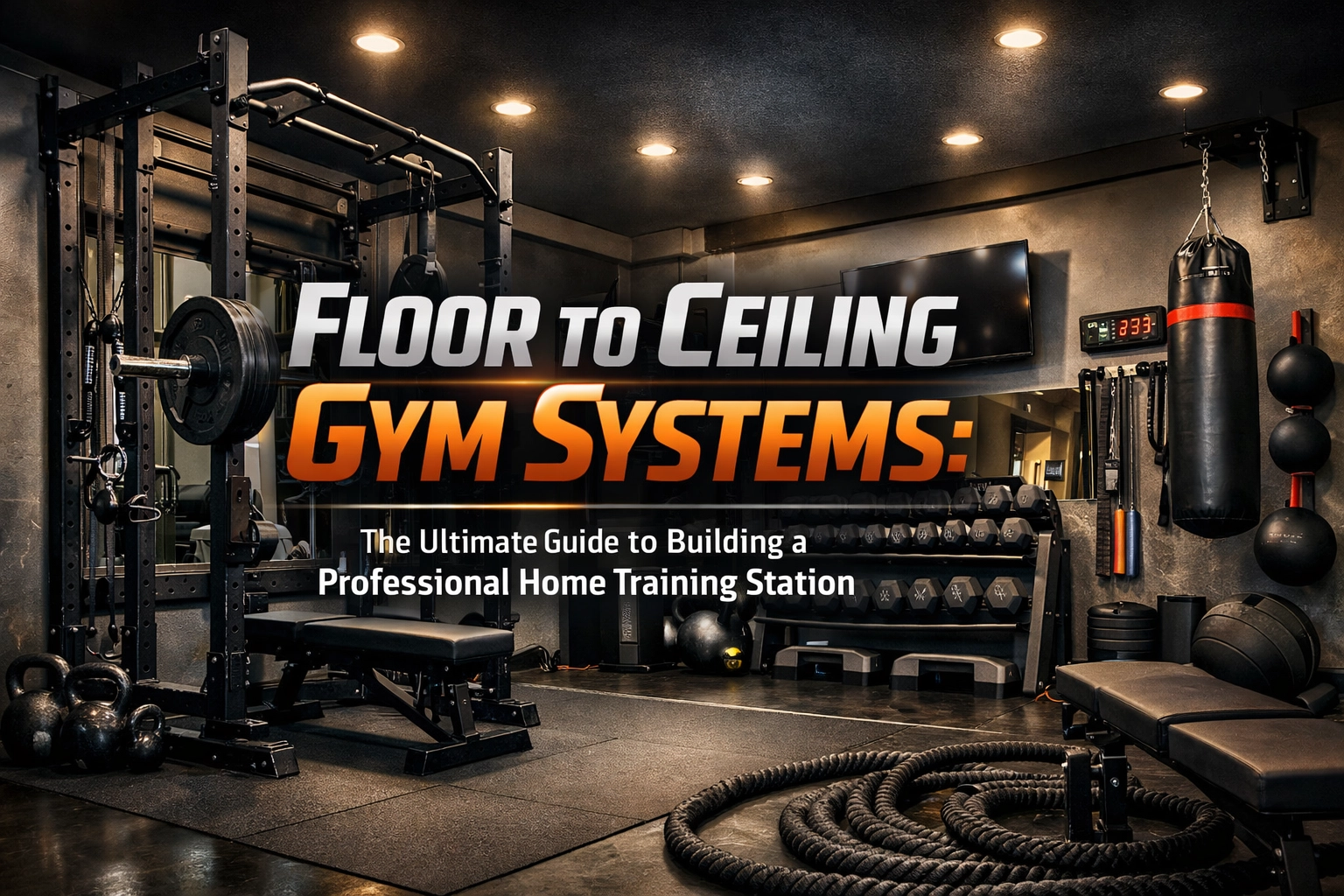
Look, if you're serious about training at home, you've probably realized that scattered dumbbells and a yoga mat aren't going to cut it. You need a real training station: something that transforms your space into a legitimate gym where you can build strength, power, and skills that actually matter.
That's where floor to ceiling gym systems come in. These setups maximize your vertical space, giving you everything from pull-up capabilities to resistance training without eating up your entire floor. Whether you're a CrossFit athlete looking to bring the box home, a ninja warrior in training, or an MMA fighter who needs versatile equipment, understanding how to build a proper floor-to-ceiling system is game-changing.
Let's cut through the noise and build you something worth training on.
What Exactly Is a Floor to Ceiling Gym System?
A floor to ceiling gym system is exactly what it sounds like: equipment that utilizes the full vertical height of your training space. Instead of relying on wall-mounted gear or floor-based equipment alone, these systems anchor between your floor and ceiling to create a stable, versatile training platform.
The beauty of this approach? You're using space that's otherwise wasted. Most home gyms focus on horizontal real estate, but your ceiling height is prime training territory. Floor-to-ceiling systems let you do pull-ups, muscle-ups, rope climbs, suspension training, resistance work, and countless bodyweight exercises: all without drilling into walls or creating permanent damage to your home.
For serious athletes who need a versatile home gym that doesn't compromise on training options, this setup is non-negotiable.
Why Floor to Ceiling Systems Beat Traditional Home Gym Setups
Here's the thing about most home gym equipment: it's designed for casual users who want to "stay in shape." That's fine if you're just maintaining, but if you're actually trying to build something, you need equipment that keeps up with your goals.
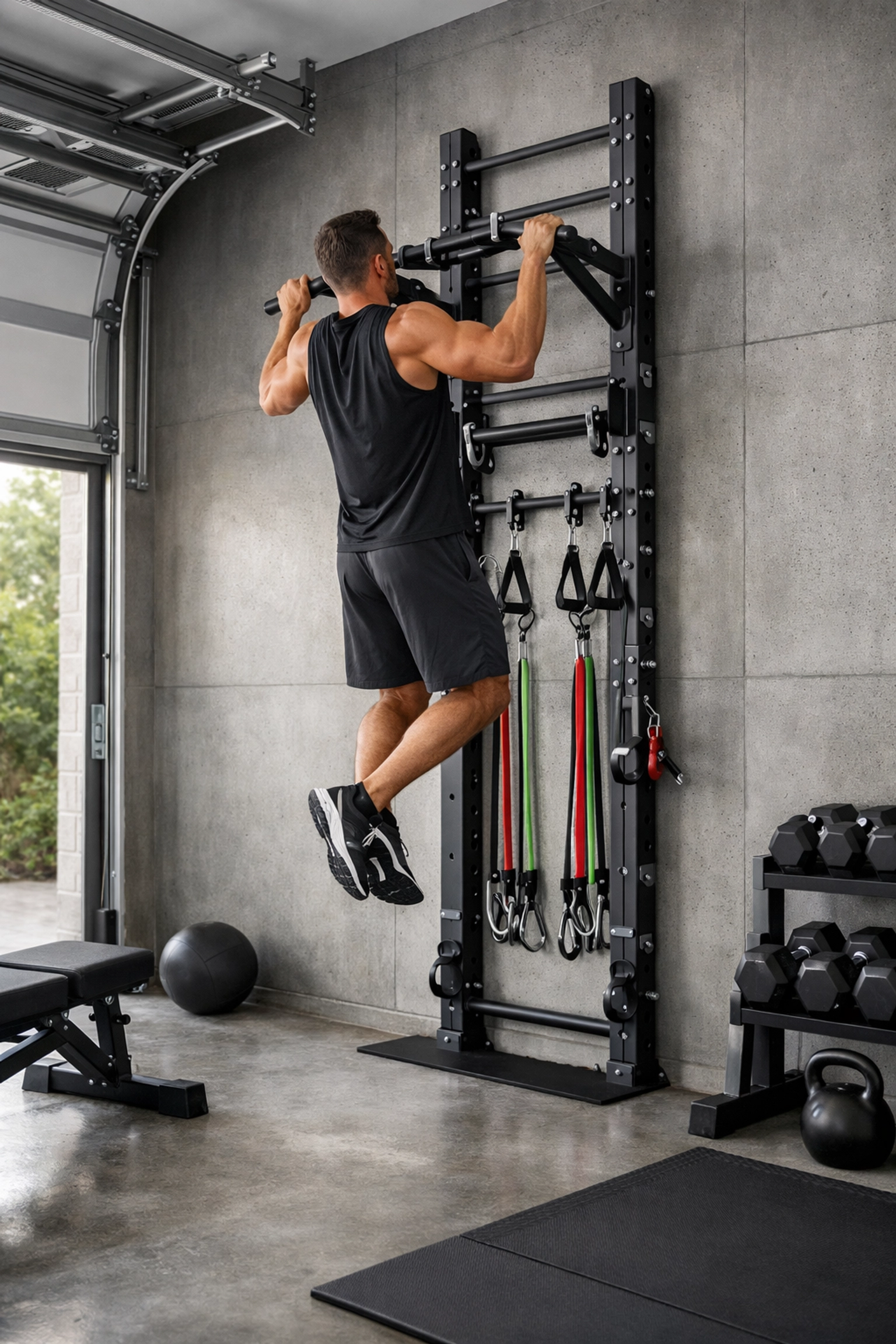
No wall damage is the obvious advantage. Traditional pull-up bars either mount to doorframes (limiting your grip options) or require you to drill into studs. Floor-to-ceiling systems apply pressure vertically, distributing force between the floor and ceiling without needing screws, bolts, or permanent modifications. For renters or anyone who doesn't want to destroy their walls, this is huge.
Full-body workout capability is where these systems really shine. You're not locked into one movement pattern or exercise type. With the right floor-to-ceiling setup, you can flow from pull-ups to hanging leg raises to resistance band work to suspension training: all on the same piece of equipment. That's the kind of efficiency that elite athletes need.
Space optimization might be the biggest game-changer. Instead of a power rack eating up 6+ feet of floor space, a properly designed floor-to-ceiling system occupies minimal floor real estate while still giving you overhead training options. Your garage, spare room, or basement suddenly has room for other equipment: kettlebells, bumper plates, or even space to actually move.
Planning Your Space: Ceiling Height and Measurements That Matter
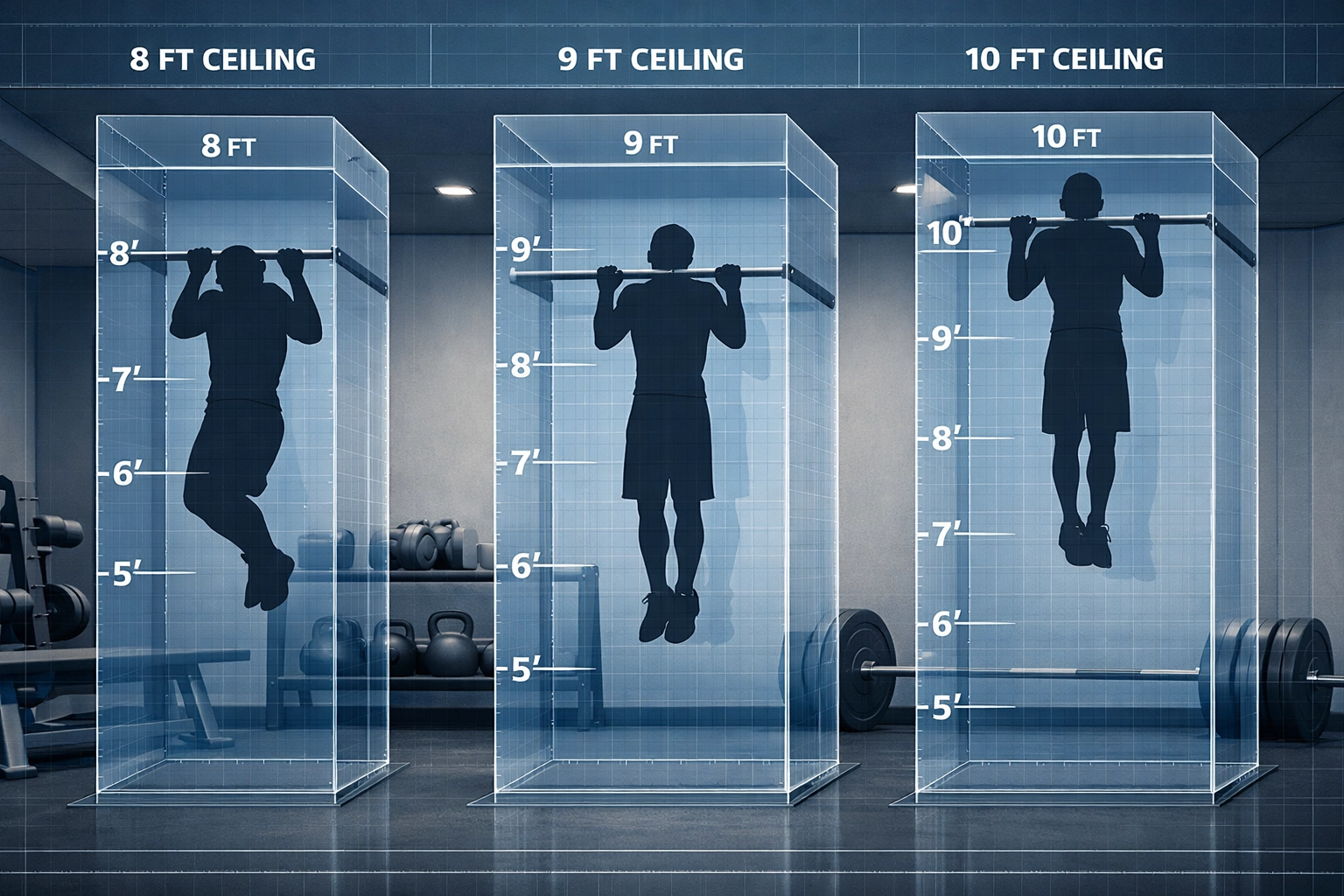
Before you buy anything, you need to understand your space. Not all ceilings are created equal, and the difference between an 8-foot ceiling and a 10-foot ceiling drastically changes your training options.
The minimum you can work with is 8 feet, but let's be honest: that's tight. At 8 feet, you're limited in overhead movements, and taller athletes will struggle. Most people need to keep their arms slightly bent at the top of pull-ups, which isn't ideal for full range of motion.
9 feet is where things start to feel right. You've got clearance for full pull-up extensions, enough room for muscle-up progressions, and space for gymnastic rings without your feet dragging. This is the sweet spot for most home gyms.
10+ feet is the dream. Now you're talking about rope climbs, extensive ring work, and the kind of vertical training space that mirrors commercial gyms. If you've got this kind of ceiling height, you can build a legitimate training station that rivals anything you'd find at a CrossFit box.
Measure twice, order once. Grab a tape measure and check your actual ceiling height in the space where you'll train. Don't assume: basements often have ductwork or beams that reduce usable height, and garage ceilings can vary significantly.
Equipment Options for Your Floor-to-Ceiling System
Now for the fun part: what are you actually putting in this system?
Traditional Power Racks
Full-height power racks typically range from 90 to 108 inches tall, which means you need at least 100-110 inches of clearance when you account for the barbell during overhead movements. These are bombproof for heavy compound lifts: squats, bench press, overhead press: but they're overkill if your primary goal is calisthenics equipment for home or bodyweight training.
Shorter racks (around 73-90 inches) fit tighter spaces and still handle 700+ pounds. They work, but you're sacrificing pull-up clearance and overhead training options.
Suspension Training Systems
TRX-style systems mounted from ceiling anchors give you incredible versatility for bodyweight training. The challenge? Installation typically requires drilling into ceiling joists or using mounted anchor points: exactly what we're trying to avoid with a proper floor-to-ceiling system.
The Resistance Rail Solution
Here's where Bold Body Fitness comes in with a better approach. The Resistance Rail is purpose-built as a no wall damage workout system that actually delivers on the promise of floor-to-ceiling training without compromise.
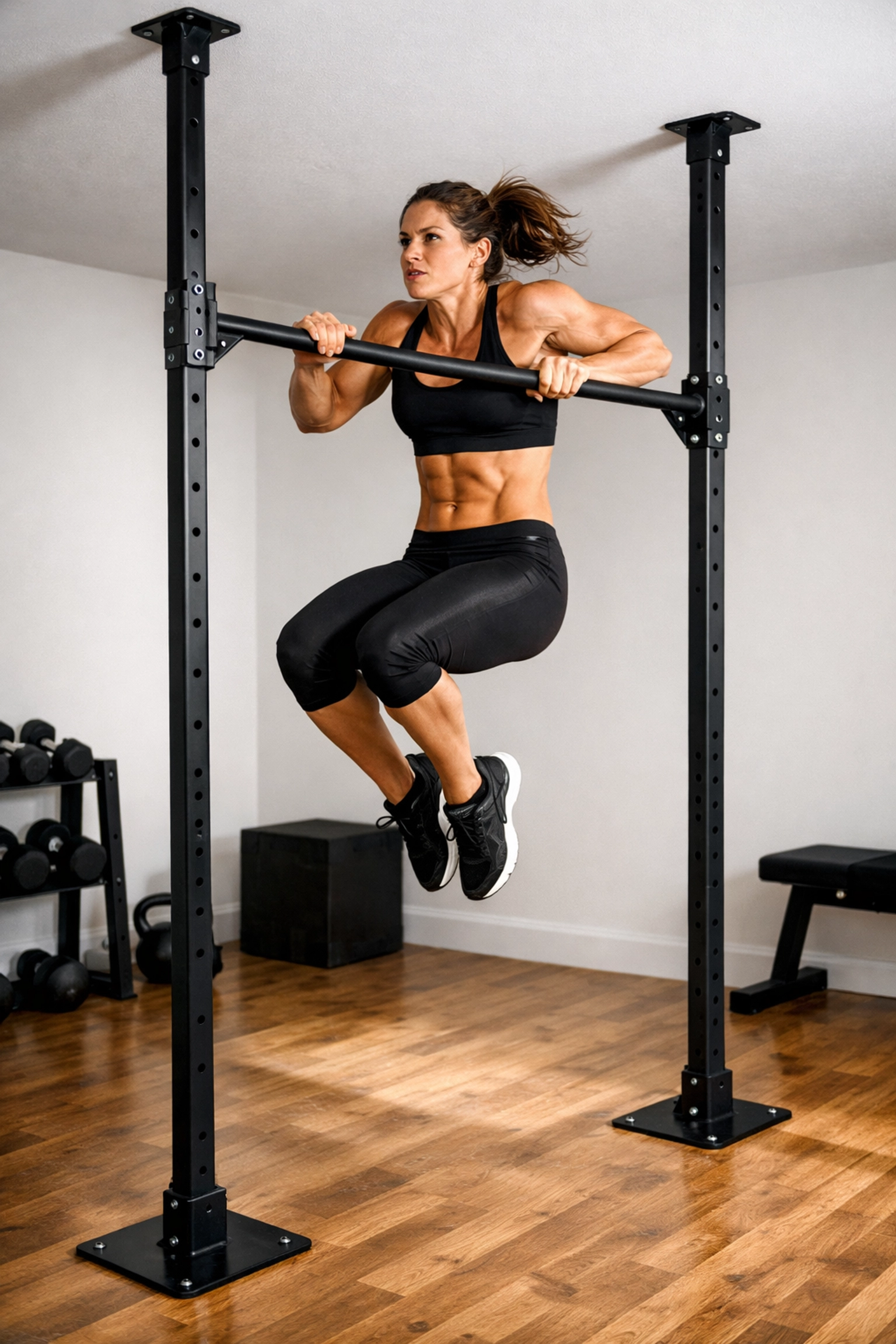
Unlike traditional equipment, the Resistance Rail uses tension-based mounting: it literally presses between your floor and ceiling with adjustable, padded contact points. No drilling. No permanent installation. No damage to your rental property.
But here's what makes it actually useful: it's a pull up bar alternative that doesn't limit your training. Multiple grip positions, attachments for resistance bands, rings, and suspension trainers, plus enough stability for muscle-ups, front levers, and advanced movements. This is the kind of equipment that ninja warriors, gymnasts, and serious CrossFit athletes can actually use for progression.
The standard Resistance Rail adjusts to fit ceiling heights from 7 to 10 feet, making it adaptable to most home gym spaces. You're looking at a single piece of equipment that handles pull-ups, chin-ups, hanging core work, resistance training, and serves as an anchor point for rings or bands, basically everything you need for full body workout at home without dedicating your entire room to bulky equipment.
Building Your Complete Floor to Ceiling Training Station
Equipment selection is just the start. Let's talk about building a complete system that actually functions like a professional training station.
Start with your primary vertical equipment. Whether it's a power rack or a Resistance Rail, this is your anchor. Position it where you have the best ceiling height and enough floor space to move. For most people, that's the center of a garage or along the longest wall in a spare room.
Add complementary equipment strategically. Wall-mounted plate storage keeps weight off the floor. A quality bench (at least 50 inches long) gives you pressing options. Gymnastic rings, resistance bands, and a jump rope are relatively inexpensive additions that multiply your exercise options.
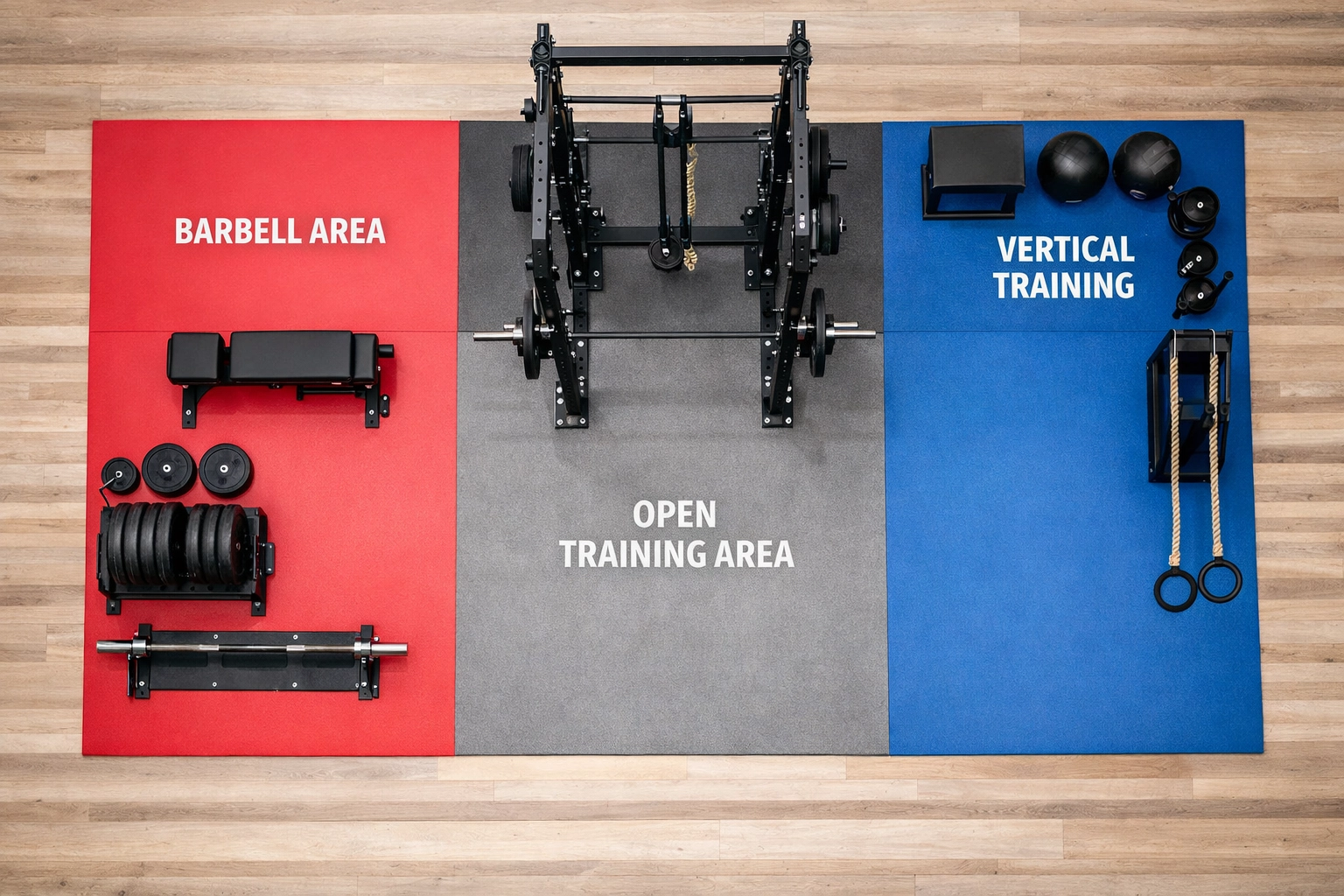
Create training zones. Even in a small space, you can designate areas for different work. Vertical training at your floor-to-ceiling system, barbell work in one zone, and open floor space for plyometrics or movement practice. This mental organization makes your training more efficient.
Plan for progression. Your needs will change as you get stronger. Make sure your system can handle additional weight, resistance, or complexity. A piece like the Resistance Rail excels here because you can keep adding attachments and training tools as your skills develop: rings for gymnastics work, different band resistances for strength training, or rope attachments for grip work.
Training Applications for Different Athletes
Let's get specific about how different athletes actually use floor-to-ceiling systems.
CrossFit athletes need variety and intensity. Your floor-to-ceiling setup should handle EMOMs that flow from pull-ups to wall balls to burpees. The key is minimizing transition time between movements. A well-designed system lets you go from strict pull-ups to kipping pull-ups to chest-to-bar variations without adjusting anything. Add resistance bands for scaling or progression work, and you've got a legitimate CrossFit home gym that doesn't compromise on the movements that matter.
Ninja warriors and obstacle course athletes live in the vertical plane. Your system needs to handle dynamic movements: swinging, laches, grip transitions. The Resistance Rail's multiple grip positions make it ideal for training different obstacle types. Add fat grips or towels for rope simulation, and you're building real-world obstacle strength.
Gymnasts and calisthenics practitioners need precision and stability for skill work. Front levers, back levers, muscle-ups, and ring work all demand equipment that doesn't wobble or shift. Floor-to-ceiling mounting provides superior stability compared to doorframe pull-up bars or wall-mounted options, giving you the confidence to attempt advanced progressions.
MMA fighters and combat athletes benefit from the pull-up and core work, but the real value is in resistance band training for striking power and explosive movements. Anchor bands at different heights on your floor-to-ceiling system to simulate punching angles, takedown resistance, or explosive hip movements.
Installation and Safety Considerations
Setting up floor-to-ceiling equipment isn't complicated, but there are critical safety factors.
Check your ceiling structure. Drywall alone won't support dynamic loading: you need to mount into ceiling joists or use a tension-based system that distributes force properly. The Resistance Rail's design spreads pressure across large padded plates on both the ceiling and floor, making it safe for most residential construction.
Test your floor. Concrete floors are ideal. Wooden floors work fine for most applications but avoid positioning heavy equipment over unsupported spans. If your floor flexes noticeably when you walk on it, reinforce the area or choose a different location.
Start conservative with dynamic movements. Even if your equipment is rated for high loads, introduce kipping pull-ups, muscle-ups, and explosive movements gradually. Let the system settle and verify everything remains stable under dynamic loading.
Maintain proper clearance. Keep at least 2-3 feet of open space around your training area. You need room to bail safely from movements and avoid hitting walls or other equipment during dynamic exercises.
Making the Investment Worth It
Here's the reality: building a proper floor-to-ceiling system isn't the cheapest option. A quality Resistance Rail setup from Bold Body Fitness costs more than a doorframe pull-up bar. But if you're actually serious about resistance training and building real strength and skills, cheap equipment will limit your progress.
Calculate what you'd spend on a commercial gym membership over a year: easily $600-1200+ depending on your location. A one-time equipment investment that gives you 24/7 access to professional-level training pays for itself in months, not years.
More importantly, you actually train more consistently when your gym is at home. No commute, no crowds, no waiting for equipment. Roll out of bed and hit a workout. Squeeze in skill practice between work calls. Train at 10 PM when the motivation strikes. That consistency is what builds results.

The Bottom Line
Floor to ceiling gym systems aren't just about maximizing space: they're about maximizing your training potential. Whether you choose a traditional power rack, a suspension system, or a versatile solution like the Resistance Rail, you're building a foundation for serious athletic development.
The key is choosing equipment that matches your goals, fits your space, and doesn't compromise on quality. For most athletes training at home: especially those focused on bodyweight training at home, calisthenics, or CrossFit-style varied training: a proper floor-to-ceiling system eliminates the limitations of typical home gym equipment.
You're not building a home gym to maintain fitness. You're building it to get better. To progress. To develop skills and strength that actually matter.
Build it right, and you'll never need to compromise your training again.
