
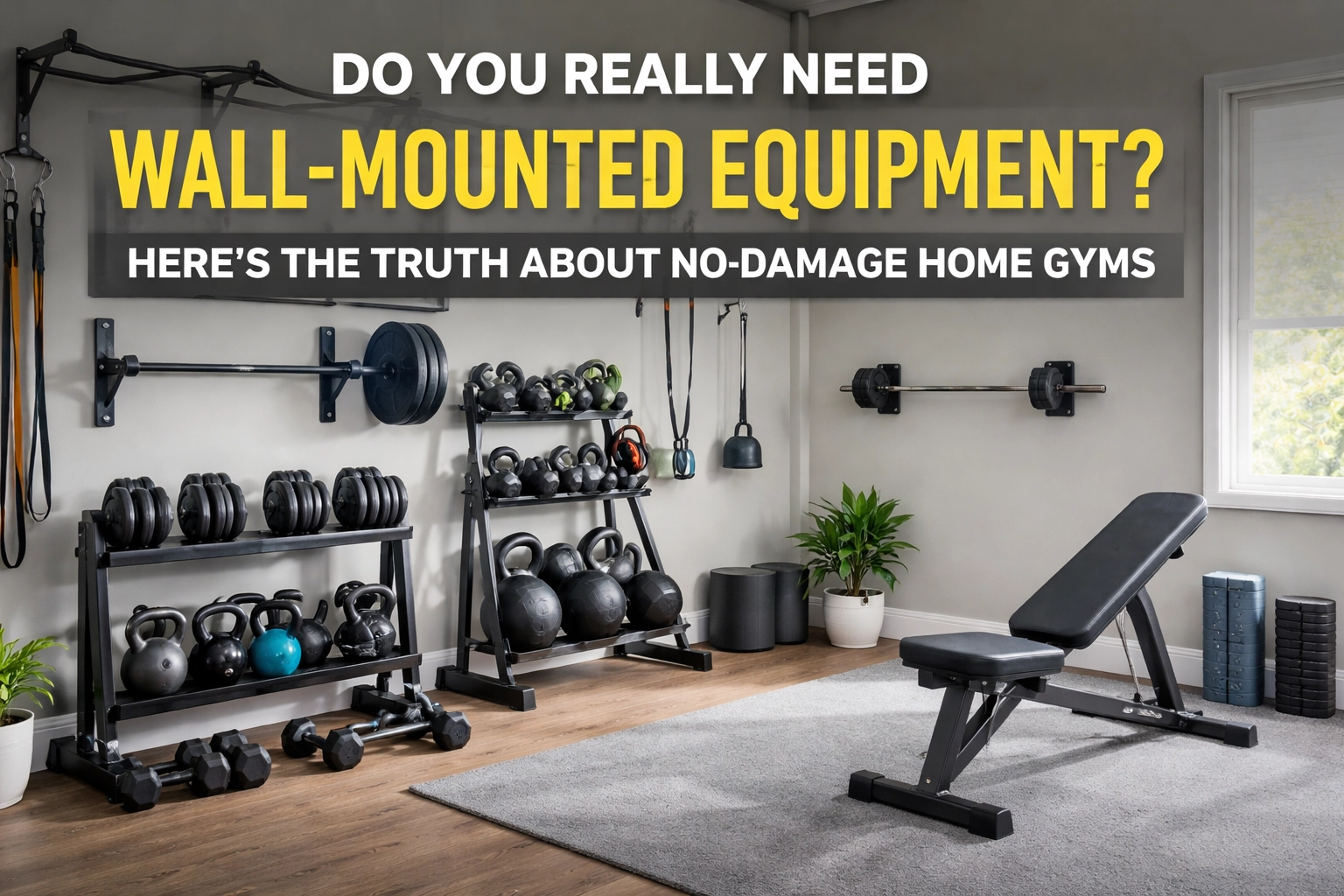
Let's cut straight to it. You've been eyeing that sleek wall-mounted pull-up bar. Maybe a full wall rig that looks like it belongs in a CrossFit box. The Instagram algorithm keeps feeding you garage gym setups with racks bolted to every available surface.
But here's the question nobody's asking loud enough: Do you actually need to drill holes in your walls to build a legitimate home gym?
The short answer? No. Not even close.
The long answer is what we're about to dive into, and it might completely change how you think about your home gym equipment setup.
The Wall-Mounted Equipment Trap
Walk into any fitness equipment store or scroll through Amazon, and you'll notice a pattern. The "serious" home gym gear almost always requires permanent installation. Pull-up bars that need lag bolts. Cable systems demanding structural support. Racks that turn your garage into a construction zone.
The fitness industry has conditioned us to believe that real training requires real commitment, and that commitment means holes in your walls.
Here's what they don't tell you:
- Renters get left behind entirely
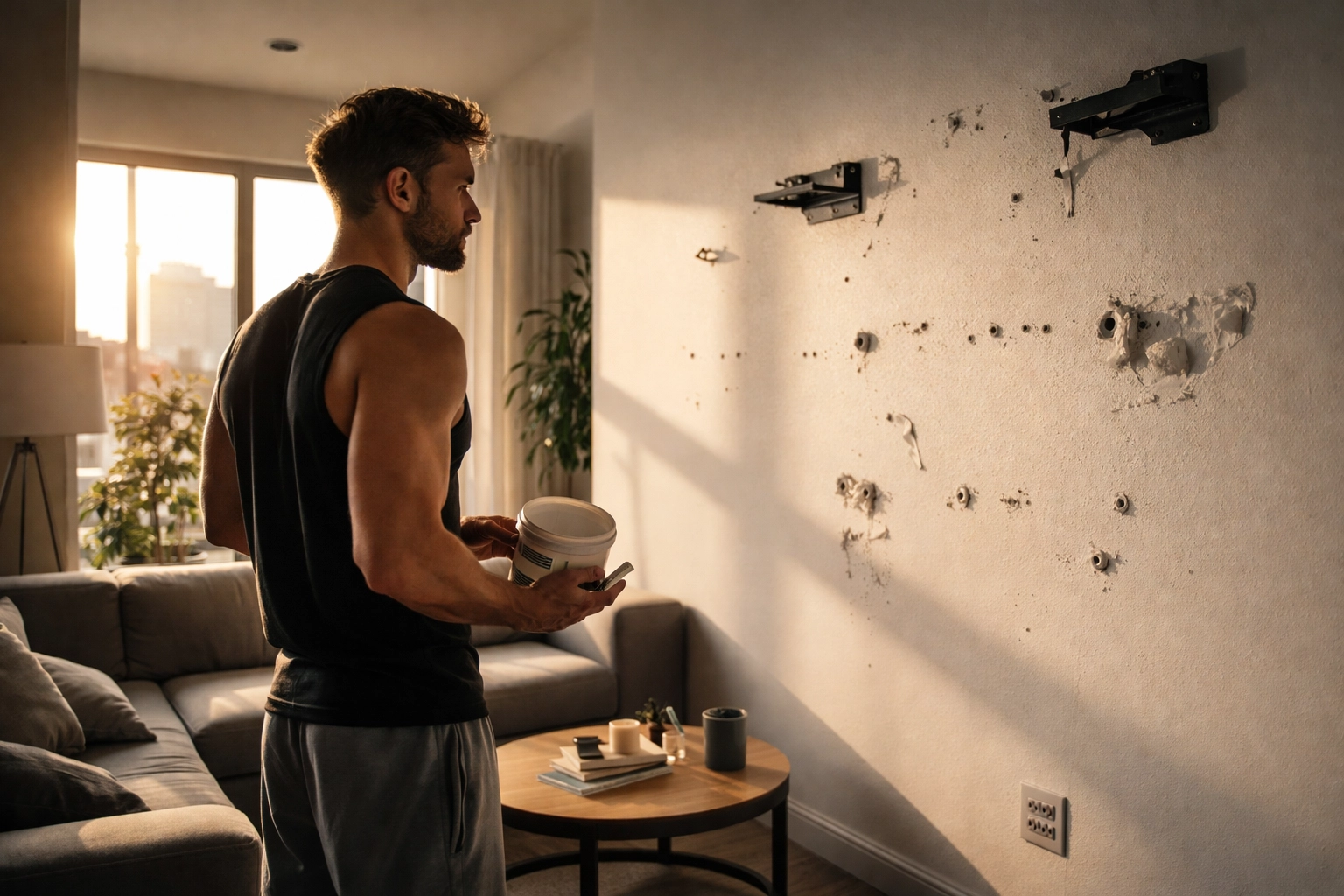
- Homeowners face expensive repairs when they move or want to reconfigure
- Improper installation can damage studs, drywall, and even structural integrity
- Many apartments and HOAs explicitly prohibit wall modifications
For athletes serious about bodyweight training at home, ninja warriors, gymnasts, calisthenics practitioners, MMA fighters, the wall-mounted approach creates an unnecessary barrier to entry.
The Hidden Costs Nobody Talks About
Let's break down what wall-mounted equipment actually costs you beyond the sticker price.
Installation Complexity: Unless you're handy with a stud finder and confident about load-bearing walls, you're hiring someone. That's $100-300 on top of your equipment cost.
Damage Deposits: Renters, you know the drill. That security deposit you're hoping to get back? Kiss it goodbye when your landlord sees the holes from your pull-up station.
Resale Nightmares: Planning to move in a few years? Those bolt holes and mounting brackets don't exactly scream "move-in ready" to potential buyers.
Limited Flexibility: Bolted your rack in the wrong spot? Realized your workout flow needs a different configuration? Too bad. You're either living with it or patching drywall.
The math doesn't add up for most people building a versatile home gym. Especially when superior alternatives exist.
Who Actually Benefits from Wall-Mounted Systems?
Let's be fair. Wall-mounted equipment isn't useless. It makes sense for specific situations:
- Permanent gym facilities where equipment placement is final
- Commercial CrossFit boxes with industrial spaces
- Homeowners with dedicated gym rooms they'll never repurpose
- Garage gyms in properties you own forever
Notice a pattern? These are all permanent scenarios with zero flexibility requirements.
If that's not you, if you're renting, might move, share space, or simply want options, wall-mounted gear becomes a liability rather than an asset.

The No-Damage Revolution in Home Fitness
Here's where things get interesting. The fitness industry is finally catching up to what athletes actually need: high-performance equipment that doesn't destroy your living space.
The no wall damage workout system category has exploded, and for good reason. Modern engineering has made it possible to achieve the same training intensity, sometimes more, without a single drill hole.
We're not talking about flimsy doorframe pull-up bars that wobble when you breathe. We're talking about robust, professional-grade systems designed for serious athletes.
Floor-to-ceiling gym setups, in particular, have emerged as the gold standard for no-damage training. These systems use tension-based mounting between your floor and ceiling, creating rock-solid stability without any permanent installation.
Why Floor-to-Ceiling Systems Dominate
The physics are simple but brilliant. Instead of transferring force into wall studs (which can fail), floor-to-ceiling systems distribute load vertically through compression. Your floor and ceiling are already designed to handle massive loads, it's literally their job.
This approach offers several advantages for serious resistance training:
Superior Stability: Properly tensioned floor-to-ceiling systems don't budge. No wobble during muscle-ups. No flex during front levers. Just solid, dependable performance.
360-Degree Access: Unlike wall-mounted equipment that limits you to front-facing movements, freestanding systems let you work from any angle. That's huge for calisthenics equipment for home setups where movement variety matters.
Instant Reconfiguration: Want to move your training station to catch better light? Takes minutes, not hours of patching and re-drilling.
Zero Damage Guarantee: When you move out or reconfigure, there's literally nothing to repair.
At Bold Body Fitness, we've built our entire product line around this philosophy. The Resistance Rail exemplifies what's possible when you engineer for performance AND practicality.

What Serious Athletes Need from No-Damage Equipment
Not all no-damage systems are created equal. If you're training for competition, whether that's ninja warrior courses, gymnastics skills, CrossFit home gym WODs, or MMA conditioning, you need equipment that performs at your level.
Here's what to demand:
Weight Capacity: Minimum 300 pounds for static holds. More for dynamic movements like muscle-ups and kipping pull-ups where force multiplication happens.
Grip Variety: Multiple grip positions aren't luxury features, they're essential for balanced development and injury prevention.
Attachment Versatility: The best systems accept resistance bands, gymnastic rings, suspension trainers, and other accessories that expand your full body workout at home options.
Material Quality: Steel construction, quality welds, premium coatings. Your equipment should outlast your fitness journey.
Quick Setup: Life's too short for equipment that takes an hour to assemble. Look for systems you can install in minutes.
The Resistance Rail Deluxe checks every box for athletes who refuse to compromise on training quality OR their living space.
Building Your Complete No-Damage Training Zone
Ready to build a pull up bar alternative setup that rivals any bolted-down home gym? Here's the blueprint:
Foundation: Start with a quality floor-to-ceiling system as your anchor point. This handles pull-ups, hanging leg raises, muscle-ups, and becomes the mounting point for accessories.
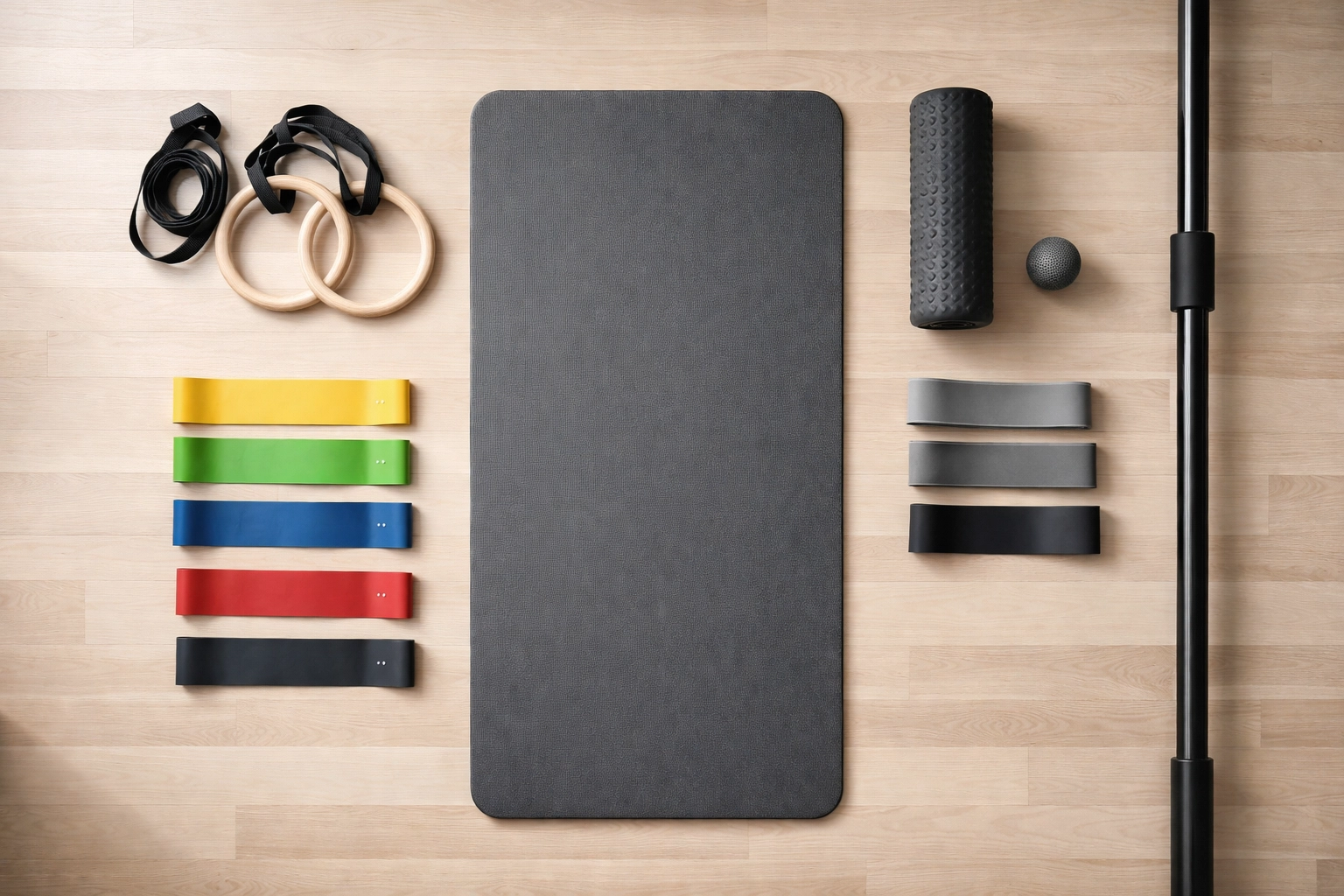
Resistance Options: Add quality resistance bands for assisted movements and progressive overload without traditional weights.
Suspension Training: Gymnastic rings or a TRX-style system multiplies your exercise options exponentially.
Floor Work: A quality mat for mobility work, handstands, and ground-based movements.
Recovery Tools: Foam roller, lacrosse ball, maybe a massage gun if you're feeling fancy.
Total investment? Often less than a single wall-mounted rack system. Total wall damage? Zero.
The Verdict: Freedom Beats Bolts
Here's the truth about no-damage home gyms: they're not a compromise. They're an evolution.
The athletes crushing it in bodyweight training at home aren't limited by their equipment choices. They're liberated by them. No landlord negotiations. No repair bills. No commitment anxiety about drilling into walls you might regret.
Modern home gym equipment has reached a point where you can build a professional-grade training environment that:
- Travels with you when you move
- Adapts as your training evolves
- Leaves your space exactly as you found it
- Performs at the level serious athletes demand
Do you really need wall-mounted equipment? The evidence says no. What you need is equipment that works as hard as you do: without the unnecessary baggage.
Ready to build a home gym that respects both your training goals and your walls? Check out the full lineup at the Bold Body Fitness shop and see what's possible when engineering meets common sense.
Your landlord will thank you. Your training won't skip a beat.
