
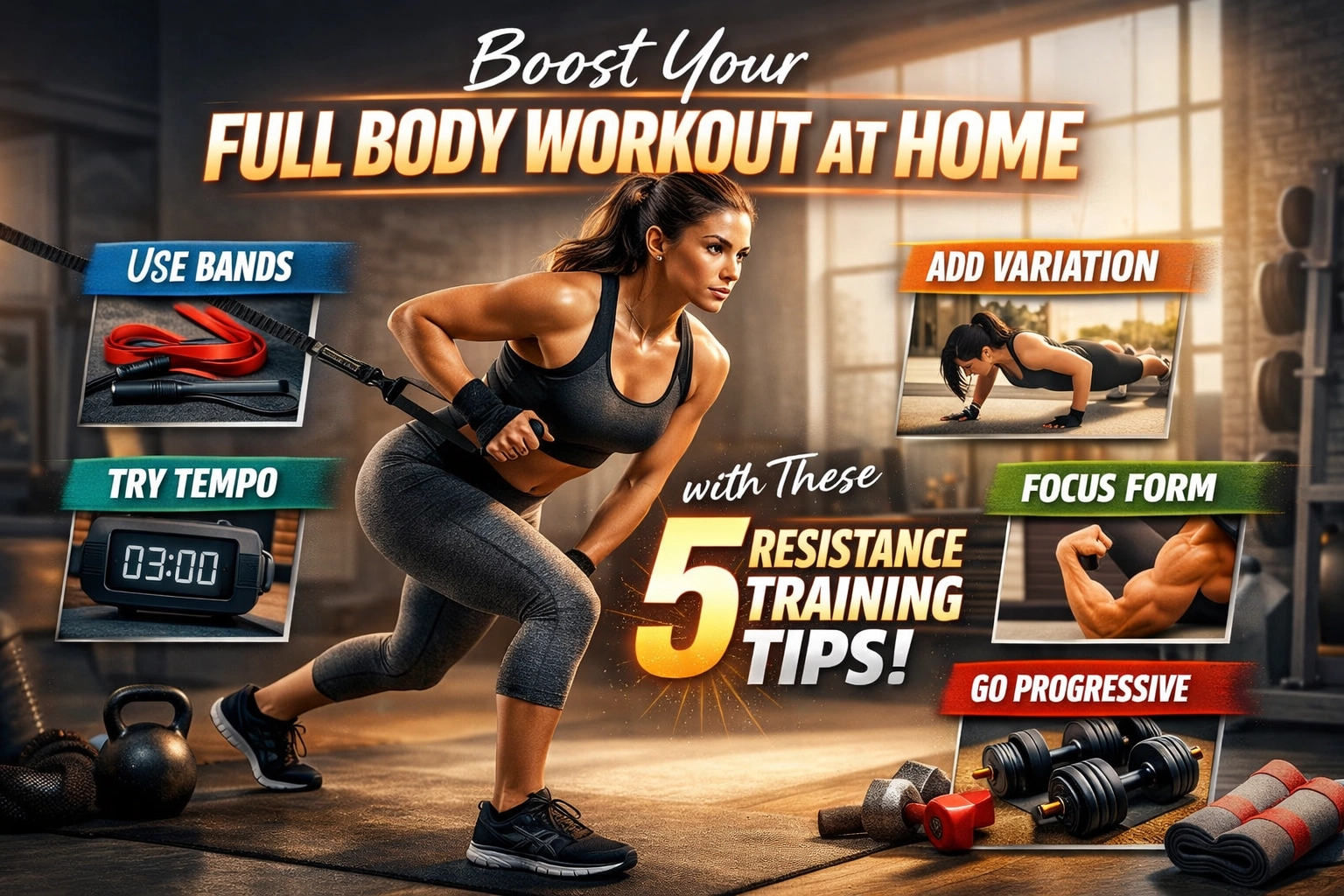
Let's cut through the noise. You want results, not excuses. Building a powerful physique at home isn't just possible: it's becoming the preferred choice for serious athletes who refuse to let crowded gyms, limited hours, or weather conditions dictate their training schedule.
Whether you're a ninja warrior preparing for competition, a CrossFit athlete maintaining peak performance, or a calisthenics practitioner perfecting your craft, resistance training at home delivers the intensity and results you demand. But there's a massive difference between just "working out" and strategically building functional strength that translates to real-world performance.
Here are five game-changing resistance training tips that will transform your full body workout at home from mediocre to extraordinary.
1. Master Progressive Overload Without Traditional Weights
The biggest myth in home fitness? You need a garage full of dumbbells and barbells to build serious muscle. Wrong.
Progressive overload: the foundation of all strength gains: doesn't require conventional weights. It requires creative resistance and intelligent programming. While research shows that medium-to-heavy dumbbells (8-20 lbs for beginners, much heavier for advanced athletes) provide excellent resistance, your body position, leverage angles, and movement tempo can dramatically increase difficulty without adding a single pound.
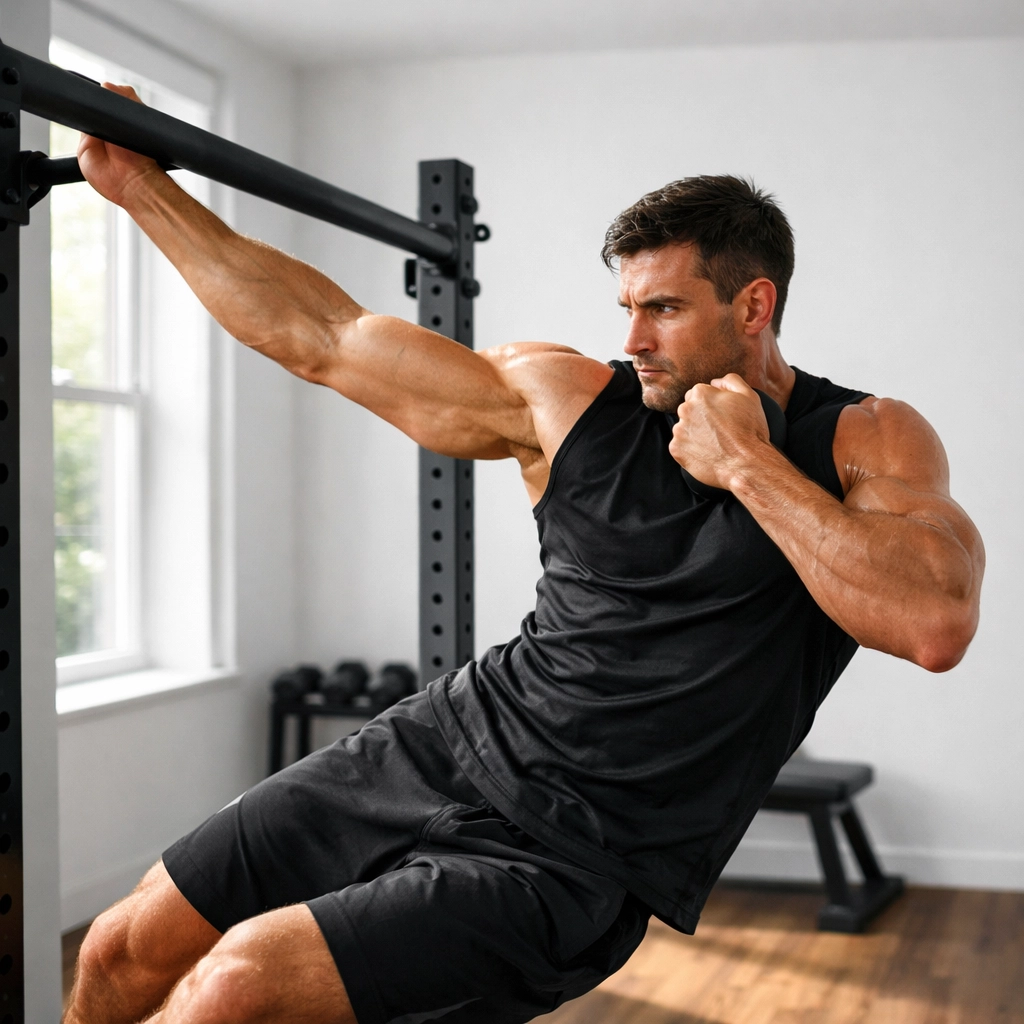
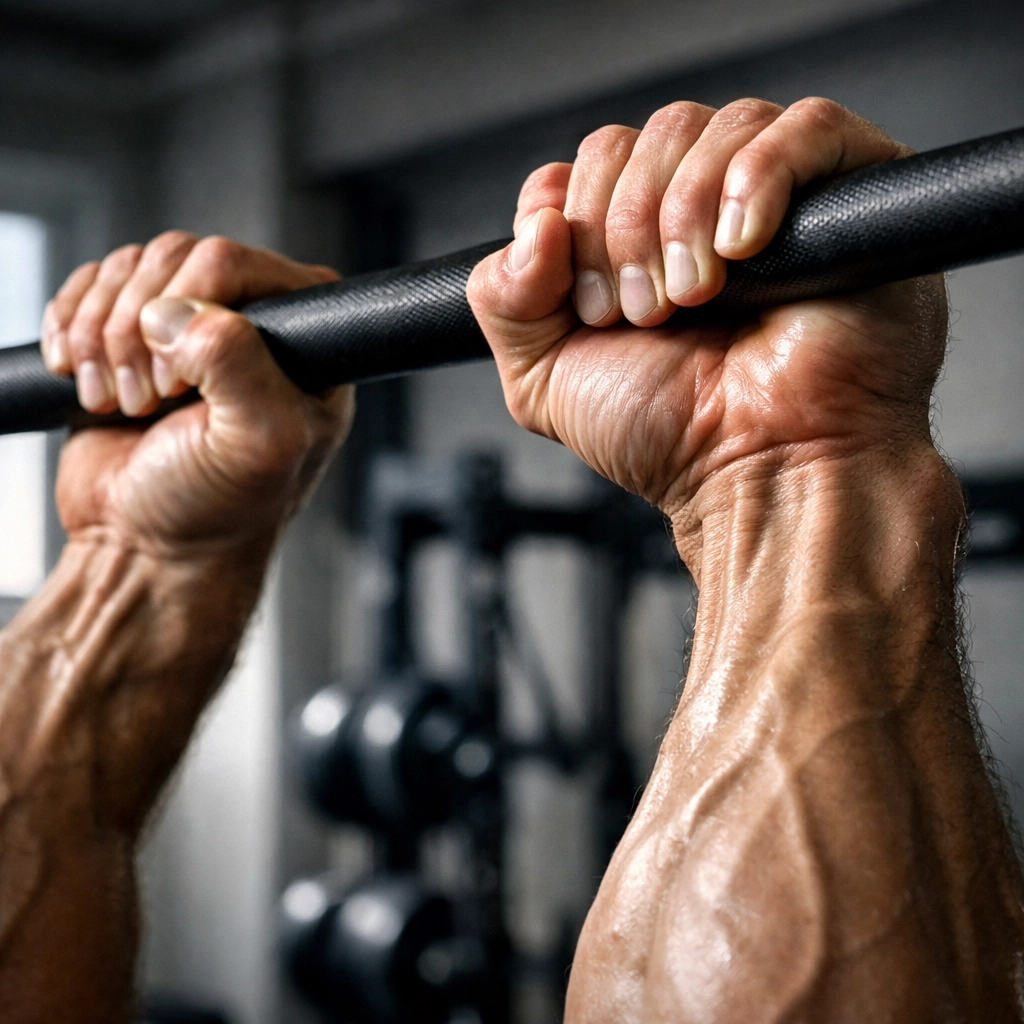
Think about this: A standard pull-up becomes exponentially harder when you slow down the eccentric (lowering) phase to five seconds. An archer pull-up demands far more strength than a regular pull-up. Single-arm variations push your limits even further.
The secret is having versatile home gym equipment that adapts to your progression. A proper resistance training system for home should allow you to adjust difficulty through multiple variables: grip positions, attachment points, and body angles. This is where the Resistance Rail system changes the game for serious athletes. Unlike fixed pull-up bars or limited door frame systems, a floor to ceiling gym setup gives you infinite adjustment possibilities.
Practical Application:
- Week 1-2: Standard pull-ups, 3 sets to failure
- Week 3-4: Add 3-second eccentric phase
- Week 5-6: Transition to archer pull-ups
- Week 7-8: Work toward single-arm progressions
This progression doesn't require buying heavier weights. It requires smarter training.
2. Build Your Workouts Around Compound Movement Circuits
Single-muscle isolation exercises have their place, but they're not where you build functional, athletic strength. Your body doesn't operate in isolation: your nervous system coordinates complex movement patterns involving multiple muscle groups simultaneously.
Circuit training that combines upper-body, lower-body, full-body, and core exercises in strategic sequences delivers superior results for athletes focused on performance, not just aesthetics. This approach mirrors how you actually move in competition or combat situations.
The Elite Home Workout Circuit Structure:
Round 1 - Upper Body Push/Pull Superset:
- Dips (chest and triceps): 40 seconds
- Rest: 20 seconds
- Pull-ups (back and biceps): 40 seconds
- Rest: 20 seconds
Round 2 - Lower Body Power:
- Pistol squats or Bulgarian split squats: 40 seconds each leg
- Rest: 20 seconds
- Jump squats: 40 seconds
- Rest: 20 seconds
Round 3 - Full Body Integration:
- Muscle-ups or explosive pull-to-chest: 40 seconds
- Rest: 20 seconds
- Hanging leg raises: 40 seconds
- Rest: 30 seconds before repeating circuit
This work-to-rest ratio (40 seconds work, 20 seconds rest) maximizes strength development while maintaining intensity throughout your session. The short rest periods keep your heart rate elevated, building cardiovascular conditioning alongside muscular strength.
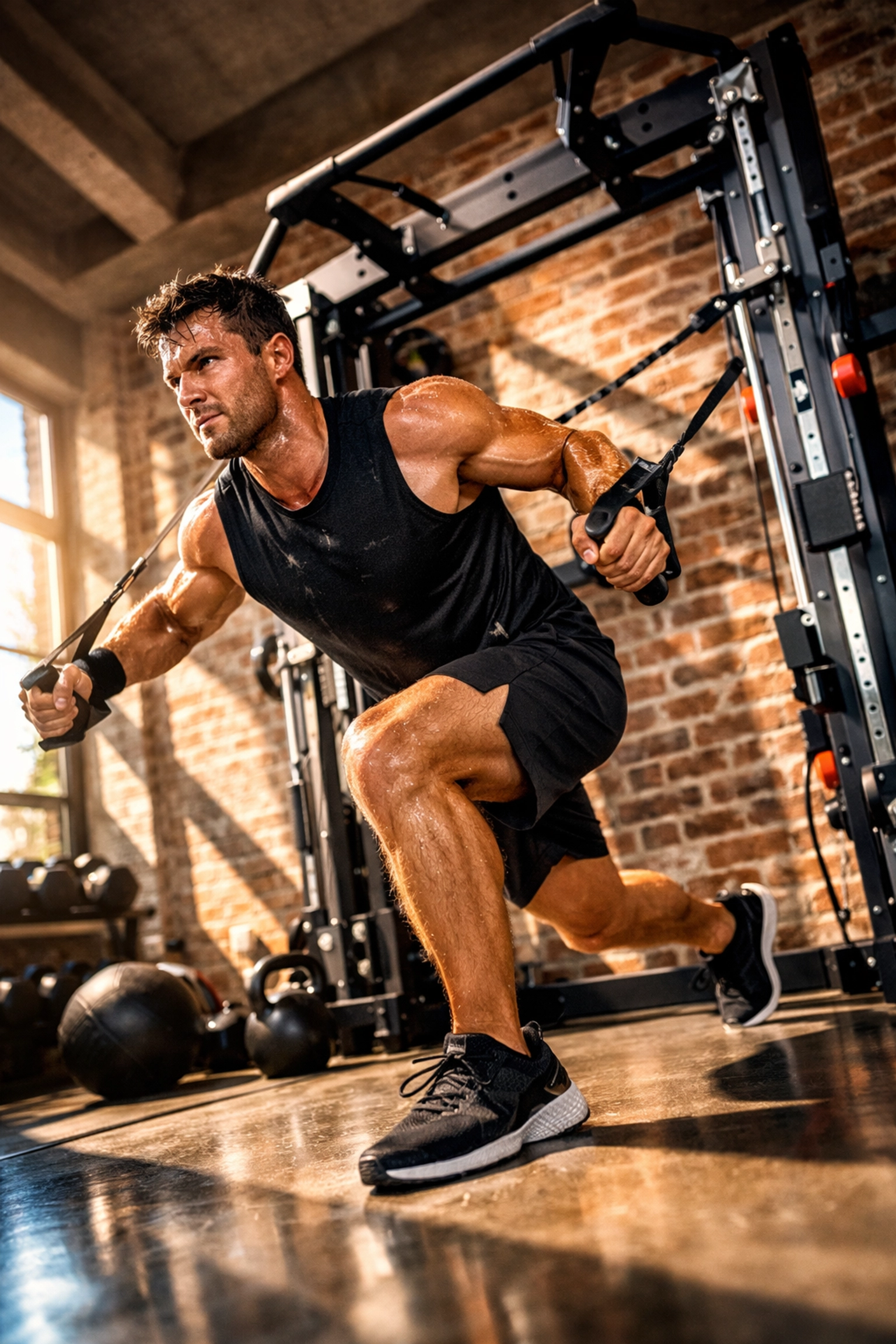
For CrossFit athletes training at home, this circuit methodology translates directly to WOD performance. For MMA fighters, it builds the explosive power and muscular endurance essential for combat. For calisthenics practitioners, it develops the foundational strength required for advanced skills.
The key advantage of calisthenics equipment for home like a comprehensive resistance training system is the ability to seamlessly transition between exercises. No adjusting weight plates. No switching machines. Just pure, efficient training that keeps your central nervous system firing on all cylinders.
3. Leverage Your Body Position for Maximum Resistance
Here's where bodyweight training at home becomes a true art form. The angle of your body relative to gravity and your attachment point determines resistance level more than you might realize.
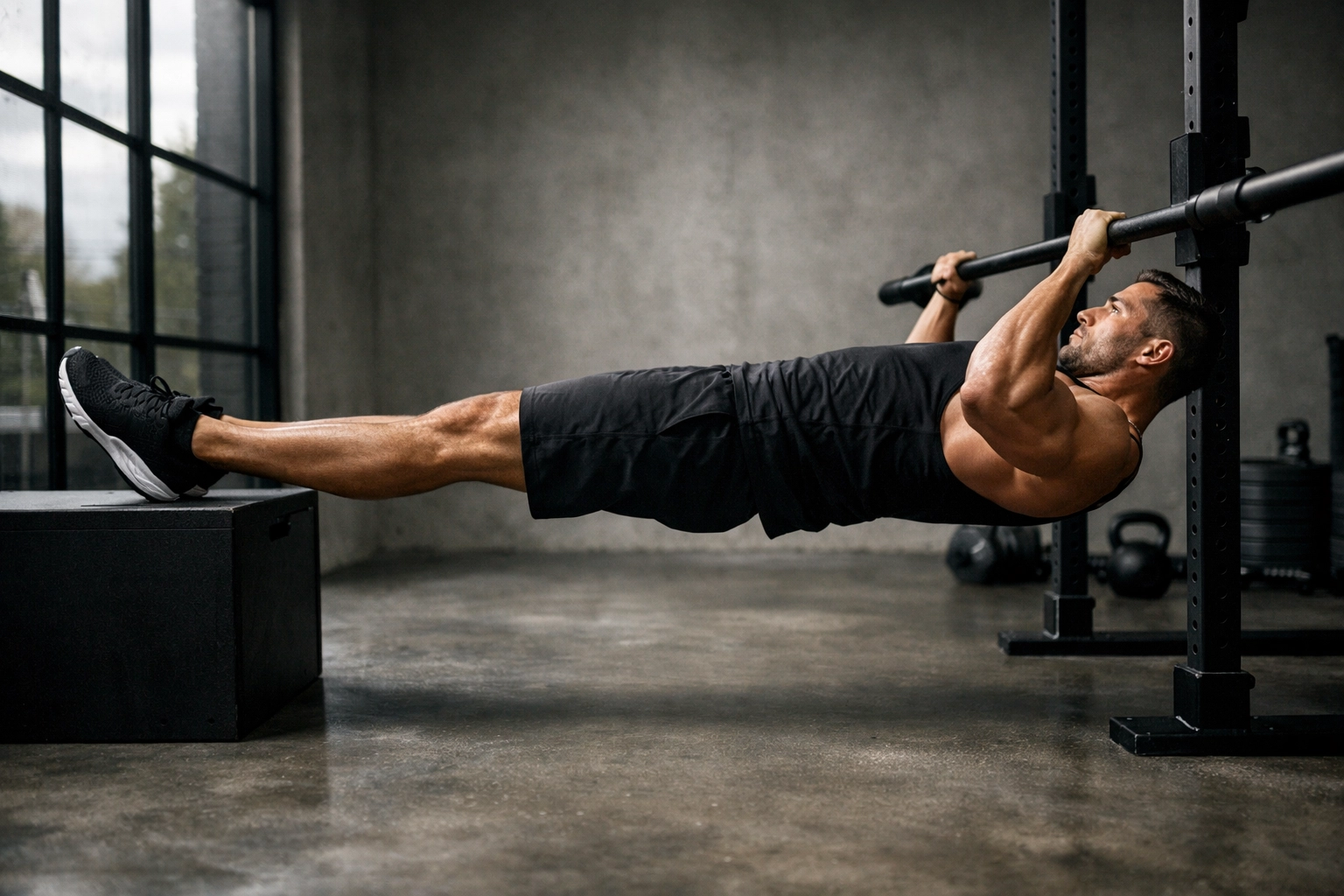
Consider the humble row. A horizontal body position creates maximum resistance. Elevate your feet, and you've just increased difficulty by 20-30%. Lower your attachment point, and the movement becomes more challenging. Shift to a single-arm variation, and you've doubled the load on your working side while engaging your core for rotational stability.
Body Position Variables for Progressive Difficulty:
For Rows and Horizontal Pulls:
- Beginner: Feet on ground, body at 45-degree angle
- Intermediate: Feet on ground, body nearly horizontal
- Advanced: Feet elevated on box or chair
- Elite: Single-arm with feet elevated
For Push-Ups and Dips:
- Beginner: Incline push-ups (hands elevated)
- Intermediate: Standard push-ups or supported dips
- Advanced: Decline push-ups or full dips
- Elite: Pseudo planche push-ups or ring dips
For Pull-Ups and Vertical Pulls:
- Beginner: Assisted pull-ups or negative-only reps
- Intermediate: Standard pull-ups
- Advanced: Weighted pull-ups or L-sit pull-ups
- Elite: One-arm progressions or muscle-ups
Traditional gym equipment locks you into fixed positions. A genuine no wall damage workout system that offers floor-to-ceiling mounting gives you the freedom to adjust your training angle for any exercise. This is precisely why Bold Body Fitness designed the Resistance Rail to mount between floor and ceiling: it provides stability and adjustment range impossible with wall-mounted systems or doorway bars.
4. Prioritize Perfect Form Over Ego Reps
This isn't a participation trophy statement. This is performance science.
Poor form doesn't just increase injury risk: it robs you of gains. When you kip excessively on pull-ups, you're recruiting momentum instead of muscle fibers. When you bounce out of the bottom of dips, you're bypassing the most growth-stimulating portion of the movement. When you rush through exercises, you're building speed without strength.
Non-Negotiable Form Checkpoints:
Pull-Ups:
- Dead hang at bottom (no half reps)
- Chest touches bar at top
- Controlled 2-second eccentric
- Scapulae fully depressed at start
- No excessive swinging or kipping (unless training for competition-specific movements)
Dips:
- Shoulders descend below elbows at bottom
- Lean forward for chest emphasis or stay upright for triceps
- Full lockout at top
- Shoulder blades retracted throughout
- Controlled tempo, no bouncing
Rows:
- Arms stay close to body
- Shoulder blades pinch together at peak contraction
- Chest touches attachment point
- 1-second squeeze at top
- Straight line from head to heels
Core Work (Leg Raises, L-Sits):
- Zero swinging or momentum
- Lower back maintains neutral or slightly rounded position
- Controlled eccentric as important as concentric
- Full range of motion
Perfect form requires both proper technique awareness AND equipment that supports optimal positioning. Shaky door frame pull-up bars that wobble with every rep? They compromise form. Equipment that damages walls and limits exercise variety? It restricts your ability to progress properly.
When you invest in quality home gym equipment designed specifically for serious athletes, you're investing in long-term performance and injury prevention. The stability of a proper floor-to-ceiling resistance training system allows you to focus entirely on movement quality instead of wondering if your equipment will hold.
5. Implement Smart Progression and Strategic Deloading
The athletes who plateau are the ones who either progress too aggressively or never progress at all. Finding the sweet spot requires understanding your body's adaptation signals.
The 2-for-2 Rule for Bodyweight Progression:
When you can perform two additional reps beyond your target for two consecutive workouts, increase difficulty. This might mean:
- Adding a pause at peak contraction
- Slowing down tempo
- Progressing to a harder variation
- Adding resistance through weighted vests or resistance bands
Example Progression for Pull-Ups:
- Week 1: 3 sets of 8 reps, standard tempo
- Week 2: 3 sets of 9 reps, standard tempo
- Week 3: 3 sets of 10 reps, standard tempo
- Week 4: 3 sets of 8 reps, 3-second eccentric
- Week 5: 3 sets of 9 reps, 3-second eccentric
- Repeat pattern with increasing difficulty
But here's what most home athletes miss: strategic deloading. Every 4-6 weeks, program a deload week where you reduce volume by 40-50% while maintaining intensity. This allows your central nervous system to recover and supercompensate, leading to breakthrough gains in the following training block.
For CrossFit home gym setups, this might mean maintaining your usual workout structure but reducing rounds. For gymnasts and ninja warriors, it means focusing on technique refinement with submaximal efforts. For MMA fighters incorporating resistance training, it aligns with your fight camp periodization.
The beauty of a versatile home gym system is the ability to easily modify difficulty without needing different equipment. Adjust your body angle, change your grip width, or shift your attachment point: instant progression or regression as your program demands.
Building Your Complete Home Resistance Training Setup
These five tips deliver results, but only if you have the right foundation. Your home gym doesn't need to be elaborate, but it absolutely needs to be effective.
The essential components for serious full body workout at home training:
- A stable, adjustable vertical pulling system - Your foundation for pull-ups, rows, and vertical pulling variations
- Parallel dipping attachments - For chest, tricep, and shoulder development
- Adjustable anchor points - For varied exercises and progressive difficulty
- No permanent wall damage - Because rental apartments and home resale value matter
- Space efficiency - Most home athletes don't have 500 square feet for a dedicated gym
This is exactly why the Resistance Rail system has become the pull up bar alternative of choice for serious home athletes. It combines all these elements in one elegant, adjustable system that works in any room with 7-10 foot ceilings.
Whether you're building a complete crossfit home gym or simply want the most effective resistance training equipment for your space, the principle remains: invest in versatile, high-quality gear that grows with your abilities.
Take Action Now
Reading about resistance training tips doesn't build muscle. Implementing them does.
Start with these five principles this week. Record your baseline performance. Track your progression. Adjust variables every 2-4 weeks. Deload when necessary. Focus relentlessly on form.
And if your current home gym setup limits your exercise selection, restricts your progression, or simply doesn't provide the stability serious training demands, it's time to upgrade. Check out the complete Bold Body Fitness product line designed specifically for athletes who refuse to compromise on their training.
Your genetics might be average, but your dedication doesn't have to be. Build the body you demand, on your schedule, in your space. No excuses. No limitations. Just results.
Now stop reading and start training.
