
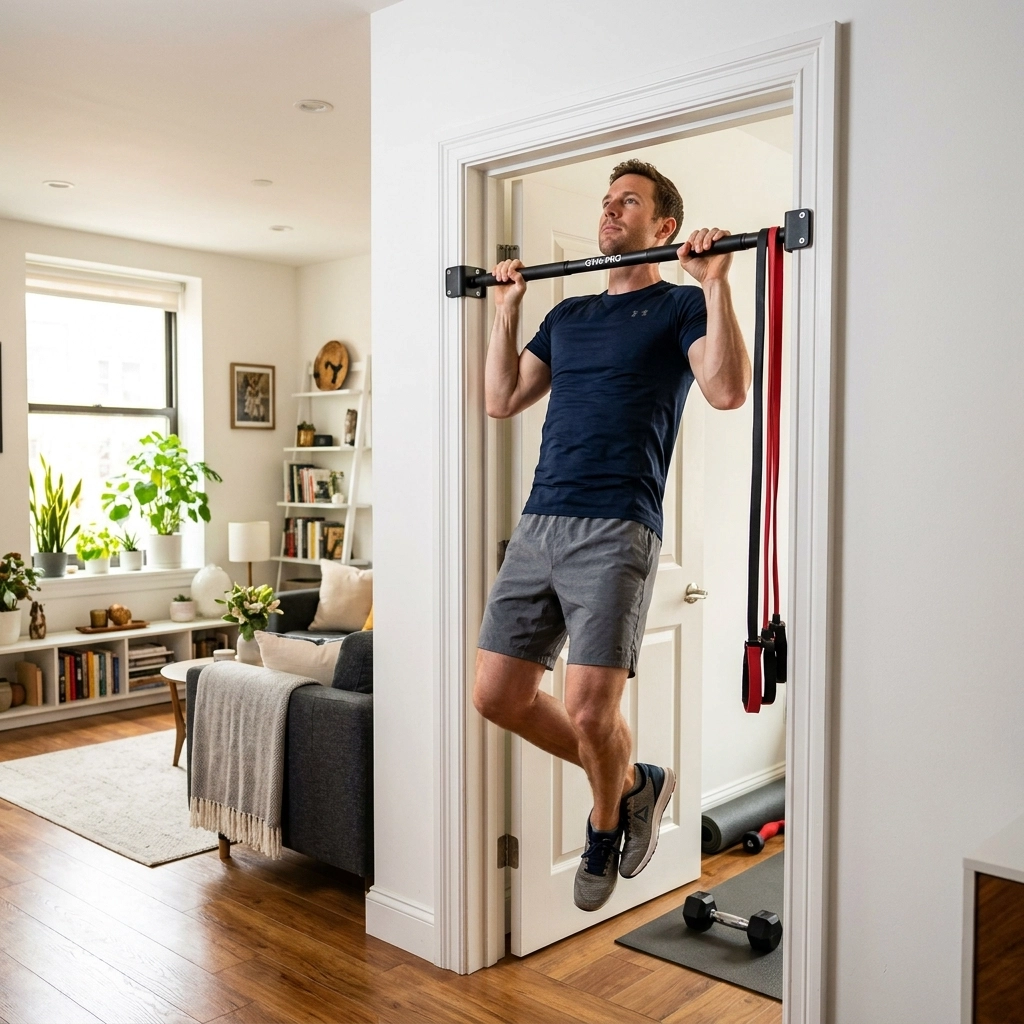
You’re a savage. You’re an athlete. You’re a Ninja Warrior in training, a CrossFit addict, or a calisthenics beast who refuses to let a lease agreement dictate the quality of your gains. But there’s a problem: your landlord is a hawk, and your security deposit is currently held hostage by a 12-page rental agreement that says "no modifications."
The dream is a high-performance home gym equipment setup that lets you push your limits. The reality? Most people end up wrecking their drywall, cracking their floor tiles, or denting their doorframes with cheap, poorly designed gear. They think they’re being "no-drill," but they’re actually just being destructive.
At Bold Body Fitness, we don’t believe in compromising your training just because you don’t own the building. You deserve a versatile home gym that stands up to elite-level intensity without leaving a trace when you move out.
If you’re serious about bodyweight training at home or building a legitimate crossfit home gym in a rental, stop what you’re doing. You are likely making at least three of these seven cardinal sins. Here is how to stop the carnage and start training like a pro.
1. Relying on "Pressure-Fit" Doorway Pull-Up Bars
This is the biggest mistake in the book. We’ve all seen them: the telescopic bars that "wedge" into the doorframe. You think you’re being smart, but you’re actually destroying the structural integrity of your trim.
For a gymnast or an MMA fighter, these bars are a joke. They can’t handle dynamic movements. The moment you try an explosive muscle-up or a weighted pull-up, that pressure-fit bar is going to do one of two things: slide down and take a chunk of paint with it, or crush the wood molding until it cracks.
The Fix: You need a legitimate pull up bar alternative. If you want to train pull-ups without the property damage, look toward a floor to ceiling gym system. A tension-based system like the Resistance Rail uses vertical force distributed across the floor and ceiling joists: not the fragile trim of a door. This allows for high-intensity calisthenics equipment for home use without the fear of falling mid-set.

2. Neglecting the "Impact Zone" (Flooring Failure)
You bought the weights, but you forgot the foundation. Dropping a 50lb dumbbell on a hardwood floor is a one-way ticket to losing $2,000 of your deposit. Even if you aren't "dropping" them, the constant vibration and micro-movements of heavy resistance training will scuff and dull the finish of your floor.
Many athletes think a thin yoga mat is enough. It isn’t. If you’re building a crossfit home gym, you need high-density rubber.
The Fix: Invest in 3/4 inch horse stall mats or high-quality interlocking gym tiles. Cover the entire footprint of your workout area, plus a two-foot buffer zone. This protects the floor and muffles the sound, which keeps your neighbors from calling the cops during your 6:00 AM HIIT session. Check out our Squats Are For Everyone gallery to see how pros set up their floor space.
3. Buying "One-Trick Pony" Equipment
When you have limited space and can’t drill into walls, every square inch counts. Most people clutter their apartments with five different machines that each only do one thing. A dedicated leg extension machine in a 1-bedroom apartment is a crime against fitness.
A versatile home gym isn't about having more stuff; it’s about having smarter stuff. If your gear doesn't allow you to switch from a chest press to a row to a squat in under 30 seconds, it’s taking up too much room.
The Fix: Focus on multi-functional tools. The Resistance Rail Standard is the ultimate example of a no wall damage workout system. It provides a vertical anchor point for bands, TRX, and bars, allowing for hundreds of exercises in a footprint smaller than a dinner plate. Visit the Bold Body Fitness Shop to see how a single rail can replace an entire rack of machines.
4. The "Shaky Stand" Syndrome (Lack of Stability)
If you’re a calisthenics practitioner, stability is everything. Using a lightweight, "portable" power tower often leads to the "shaky stand" syndrome. These stands are often too light; when you perform leg raises or dips, the whole unit wobbles. This isn't just annoying: it's dangerous. To compensate for the wobble, users often push the stand against a wall for support, which leads to massive scuff marks and drywall dents.
The Fix: You need weight or tension. If you use a freestanding rack, sandbag the base. Better yet, use a floor-to-ceiling tension system. Because the tension is locked between the floor and ceiling, it doesn’t move. It gives you the rock-solid feel of a bolted-down commercial rig without a single screw. It’s the gold standard for bodyweight training at home.

5. Overlooking Resistance Training Variety
People often think "no-drill" means "bodyweight only." This is a massive mistake that leads to plateaus. You can only do so many air squats before your gains stall. Serious athletes: especially MMA fighters and CrossFitters: need variable resistance.
The mistake is thinking you need a massive cable crossover machine to get that resistance. Those machines are heavy, expensive, and definitely not renter-friendly.
The Fix: Combine your home gym equipment with heavy-duty resistance bands and a solid anchoring system. By using the Resistance Rail, you can simulate high-low cable pulleys. This allows you to perform shoulder presses and lat pulldowns with elite levels of tension. Resistance bands are the secret weapon of the "stealth" home gym.
6. The "Scuff and Run" (Ignoring Wall Clearance)
Even if you aren't drilling into the wall, you're probably hitting it. Whether it's the end of a barbell during a clean and press or your feet hitting the wall during handstand pushups, "no-drill" doesn't mean "no-contact."
Drywall is soft. Your equipment is hard. In a battle between your kettlebell and the wall, the wall loses every time.
The Fix: Maintain a "Dead Zone." No equipment should be placed closer than 12 inches to a wall unless it is specifically designed for zero-clearance. If you are doing calisthenics like wall walks, hang a temporary moving blanket or a sheet of plexiglass over the area to protect the paint. For a better way to train those muscle groups, check out our Workout Category for alternative exercises that don't involve kicking your walls.
7. Using Cheap, Unsafe Anchors
We see it all the time: people trying to "hack" a home gym by looping bands around furniture or radiators. This is how you end up in the emergency room with a snapped band or a broken rib. Furniture is designed for downward pressure, not the lateral force of a 100lb resistance band pull.
The Fix: If you want to train like a Gymnast, you need gear engineered for the load. A floor to ceiling gym system is designed specifically to handle those lateral forces. It’s a professional-grade solution that respects your home’s architecture while respecting your need to move heavy weight.

The Solution: The Resistance Rail by Bold Body Fitness
If you’re tired of playing "floor is lava" with your security deposit, it’s time to upgrade to the Resistance Rail. We built this for the athletes who refuse to be sidelined.
It is the premier no wall damage workout system on the market. It installs in minutes using a high-tension compression mechanism that locks between your floor and ceiling. No drills. No screws. No permanent marks. Just a rock-solid vertical rail that can handle everything from high-tension band work to heavy-duty suspension training.
Why It’s the Ultimate "No-Drill" Weapon:
- Zero Wall Contact: It stands away from the wall, protecting your paint.
- Elite Stability: Unlike "portable" towers, the tension design provides a solid anchor point for full body workouts at home.
- Versatility: It’s the perfect pull up bar alternative and the heart of any calisthenics equipment for home setup.
- Portability: Moving? Take it down in 5 minutes and set it up in your new spot. Your landlord will never even know it was there.
Ready to stop wrecking your apartment and start crushing your goals? Visit Bold Body Fitness and see how we’re changing the game for home athletes everywhere.

Stop Making Excuses, Start Making Gains
Your living situation shouldn't be a bottleneck for your physical potential. Whether you're training for the next Spartan Race, prep-ing for an MMA bout, or just trying to get perfect abs, you need a setup that works as hard as you do.
Don't be the person who loses their deposit over a $50 doorway bar. Be the person with the most badass, damage-free home gym on the block. Invest in quality home gym equipment, respect the space you're in, and push your limits.
The era of the "janky" home gym is over. Welcome to the era of Bold Body Fitness.
Ready to level up?
- Browse the Full Collection: Shop Now
- See the Rail in Action: Resistance Rail Standard
- Join the Community: Bold Body Fitness Forums
Stop drilling. Start training. Stay BOLD.
