
Look, we need to talk about the elephant in the room: or more accurately, the holes in your wall and the cracked ceiling in your spare bedroom.
You've watched American Ninja Warrior religiously. You know you've got the strength, the grit, and the determination to tackle those obstacles. But there's one massive problem standing between you and your training goals: your landlord's strict "no modifications" policy. Or maybe it's your spouse's very reasonable request to not turn the house into a construction zone.
Traditional ninja warrior training setups are notorious home destroyers. Wall-mounted pull-up bars that rip out drywall. Ceiling-mounted hanging obstacles that crack joists. Permanent installations that leave your rental deposit in ruins and your home looking like a demolition site.
But here's the thing: you don't need to choose between serious training and keeping your security deposit.
The most elite ninja warriors, gymnasts, CrossFit athletes, and calisthenics practitioners have figured out how to create killer home training setups that deliver professional-level results without a single screw, bolt, or permanent modification. This isn't about compromising your training. It's about training smarter.
Why Traditional Home Gym Setups Fail the Damage Test
Let's get brutally honest about why most home gym equipment is a landlord's nightmare and a homeowner's regret.
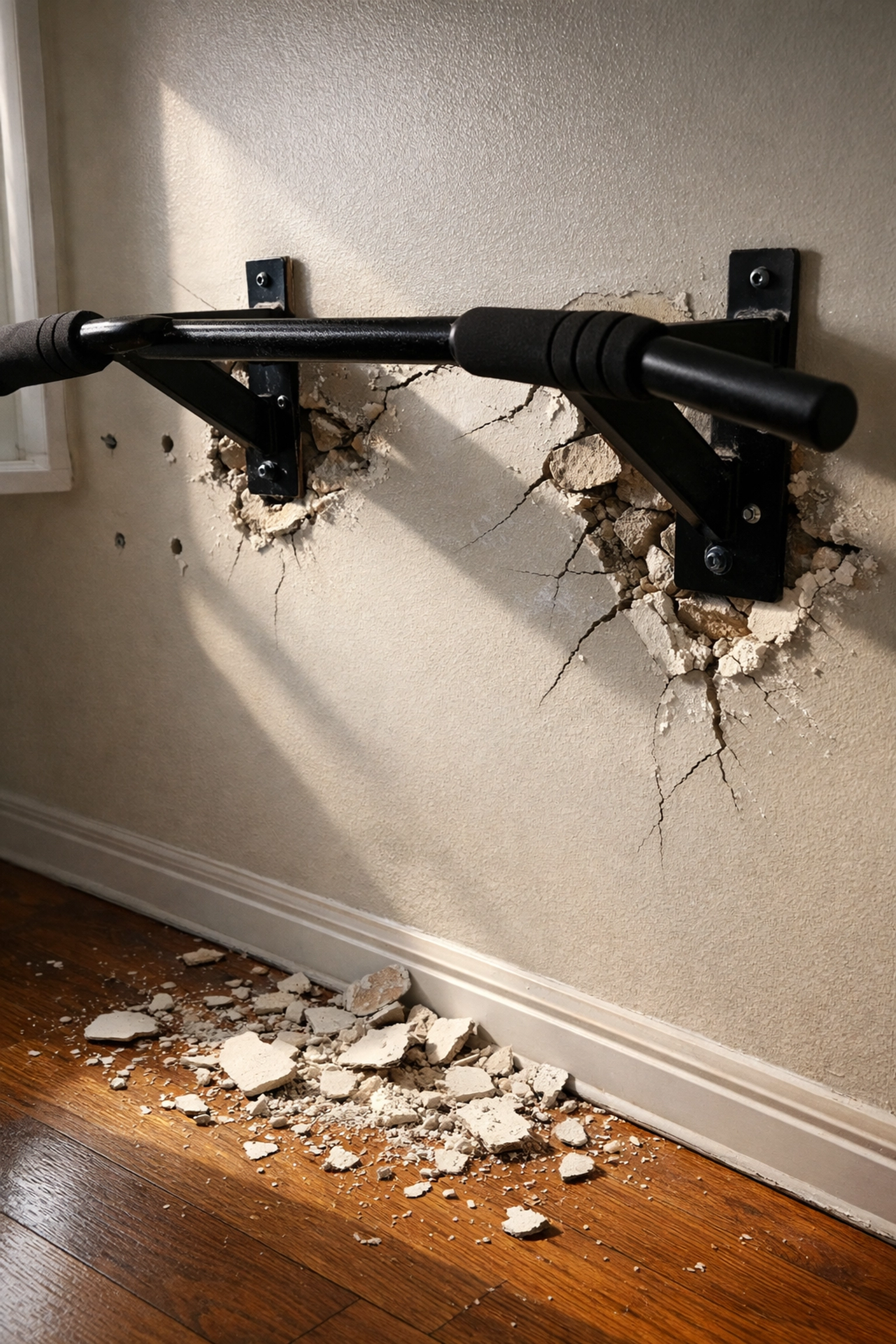
Standard wall-mounted pull-up bars transfer massive amounts of force directly into your drywall or studs. Every rep creates micro-cracks. Every kip swing amplifies the stress. Within months, you're looking at sagging drywall, loose bolts, and structural damage that'll cost you hundreds: sometimes thousands: to repair.
Ceiling-mounted equipment is even worse. Those salmon ladder setups and hanging rings might look incredible on Instagram, but they're applying dynamic loads to ceiling joists that were never designed for that kind of stress. Most residential ceilings can't handle the shock loading from explosive movements. The result? Cracked plaster, compromised structural integrity, and repairs that require actual contractors.
Doorway pull-up bars seem like the safe option, but they're leaving paint chips, dents in your door frame, and pressure marks that scream "amateur gym" to anyone who looks closely. Plus, they're severely limited in functionality: you can't do half the movements that actual ninja warrior training demands.
The real kicker? Most ninja warriors rent. Most serious athletes don't own their training space. And even if you do own your home, permanent modifications tank your resale value and limit your flexibility if you ever want to reconfigure your space.
Enter the Floor-to-Ceiling Revolution
Here's where things get interesting.
The game-changer in no wall damage workout systems isn't about avoiding hard training: it's about leveraging tension-based systems that turn your floor and ceiling into anchor points without a single modification.
Floor-to-ceiling gym equipment works on a brilliantly simple principle: controlled pressure between two stable surfaces. No drilling. No screws. No permanent damage. Just pure physics doing the heavy lifting.
The Bold Body Fitness approach revolutionizes this concept with the Resistance Rail system: a versatile home gym solution that creates a vertical training column using nothing but adjustable tension. It's the same principle that holds your shower caddy in place, but engineered to handle dynamic loads of 500+ pounds.
Think about what this means for your training. You can mount resistance bands, suspension trainers, climbing holds, and pull-up attachments at any height along the rail. You can adjust, reconfigure, and completely transform your setup in minutes. And when you move apartments, change training phases, or need to clear the room for guests? Pop it down in 60 seconds flat.
No holes. No damage. No compromises.
Training Like a Ninja Warrior: The Damage-Free Blueprint
Let's break down how elite athletes are actually using these systems to train at competition level.
Grip Strength and Hanging Endurance
Ninja warrior courses are 90% grip-dependent. Your ability to hang, transition, and maintain control while your muscles are screaming determines whether you conquer the course or fall into the water.
With a floor-to-ceiling setup, you're attaching multiple grip training tools at varying heights. Start with dead hangs from a pull-up bar alternative mounted mid-rail. Progress to finger holds and pinch grips at different positions. Add towel hangs and fat grips to destroy your forearm endurance.
The beauty of adjustable height? You can set up traverse challenges where you're moving between grips horizontally: simulating those brutal sideways movements that wreck competitors on actual courses.
Upper Body Pulling Power
Traditional pull-up bars are one-dimensional. You pull up, you pull down, you're done.
A properly configured resistance training system lets you attack pulling movements from every angle. Mount your pull-up attachment high for standard work. Drop it to chest height for inverted rows. Add resistance bands to the bottom for accommodating resistance that makes the top of the movement harder: exactly where ninja obstacles get brutal.
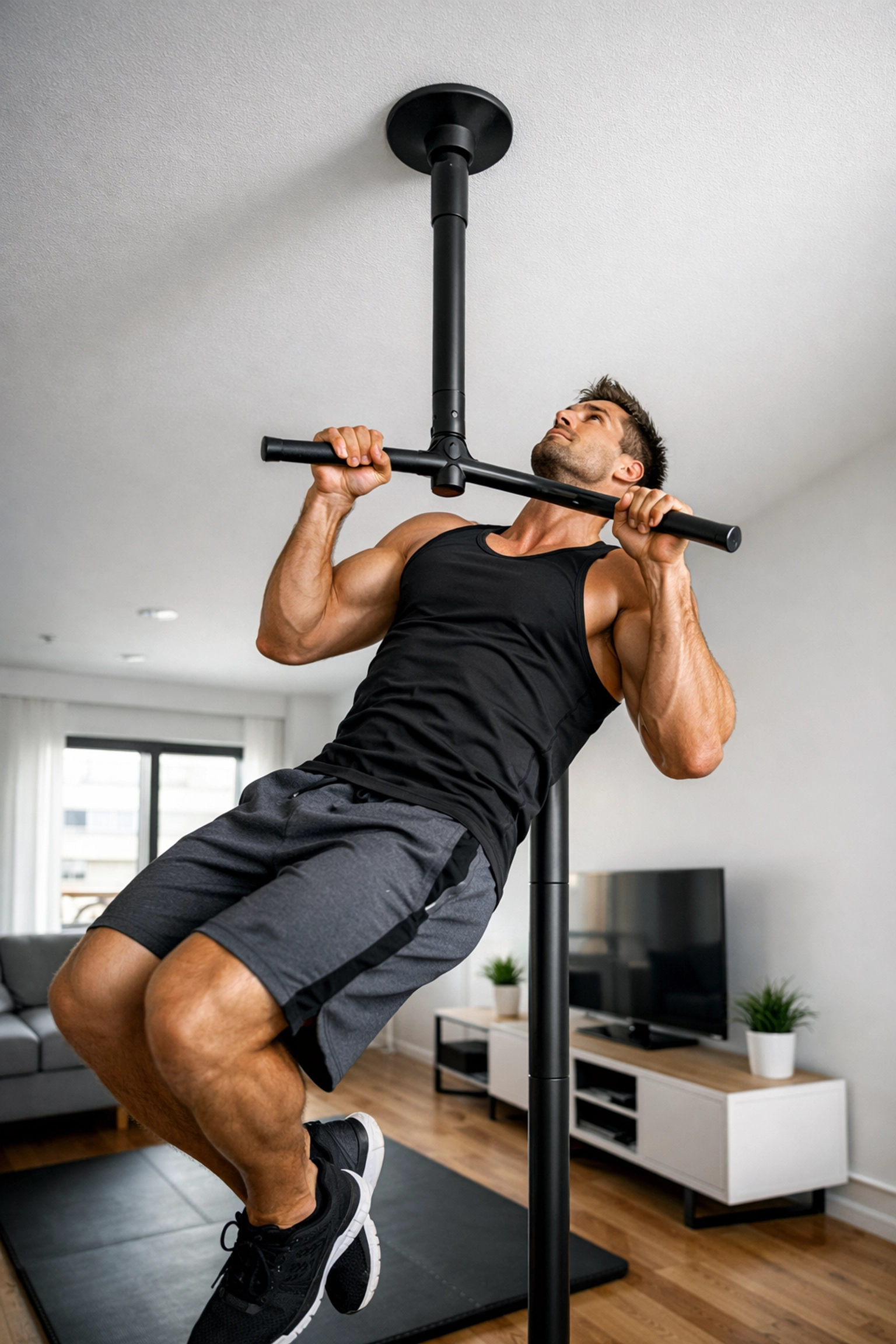
Kipping pull-ups, muscle-ups, and explosive pull variations become possible without the death-wobble of doorway bars or the structural stress of wall mounts. The floor-to-ceiling tension absorbs the dynamic forces without transferring them into your walls.
Core and Compression Strength
Every ninja warrior knows the truth: your core determines your success more than your arms ever will.
Set up hanging knee raises, L-sits, and dragon flags using suspension trainer attachments on your vertical rail. The instability challenges your stabilizers while the adjustable height lets you scale difficulty precisely. Start with supported movements at lower heights. Progress to full hangs as you build strength.
Add resistance bands anchored at floor level for standing core work: rotational movements, anti-rotation holds, and Pallof presses that build the trunk stability you need for obstacle transitions.
Lower Body Power and Plyometrics
Here's where people usually give up on bodyweight training at home. How do you build explosive lower body power without massive equipment or destroying your floors?
Resistance bands change everything. Anchor them low on your floor-to-ceiling system and you've got accommodating resistance for squats, lunges, and split squats that rivals heavy barbell work. The bands create peak tension exactly where you need it most: at full extension where power is generated.
Box jumps onto stable platforms (that don't require mounting). Lateral bounds. Single-leg work. All programmed around your damage-free anchor point.
Essential Equipment for Your Damage-Free Arsenal
Let's get tactical about what you actually need for elite-level training.
The Foundation: Your Vertical Training System
The Resistance Rail from Bold Body Fitness serves as your central hub. This isn't a cute apartment hack: it's engineered equipment that handles serious load. Mount it once, adjust the tension, and you've got a rock-solid training platform.
Suspension Trainers
TRX-style systems clip onto your rail at any height. They're perfect for inverted rows, push-up variations, split squats, and about 300 other movements. The instability forces recruitment of stabilizer muscles that fixed equipment misses entirely.
Resistance Bands (Multiple Strengths)
Bands are the secret weapon of calisthenics equipment for home. Light bands for mobility and activation. Heavy bands for serious loading. Loop them through your rail attachments and you've got variable resistance for every movement pattern.
Mini-bands for glute activation and lower body work. Long-loop bands for pull-up assistance and heavy loading. Figure-8 bands for grip work.
Pull-Up and Grip Attachments
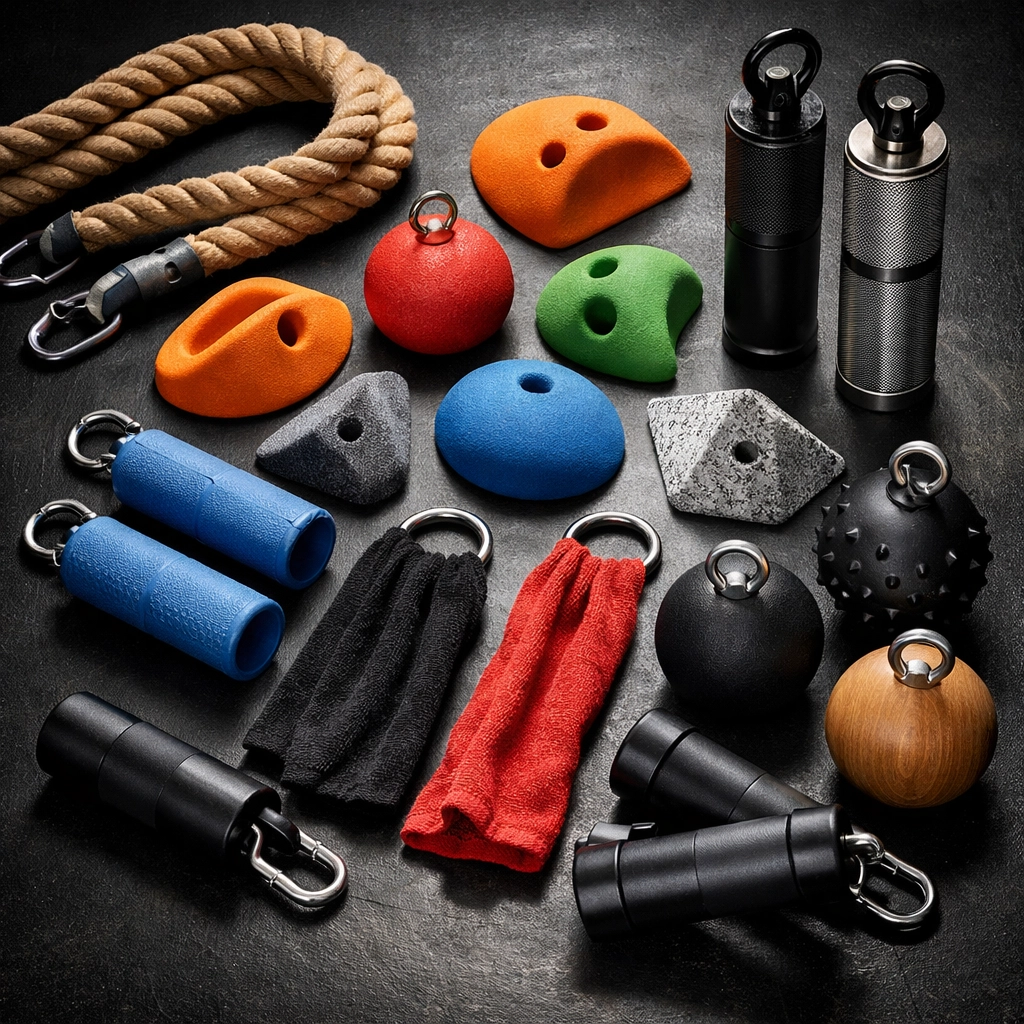
Multiple grip options matter. Neutral grips, wide grips, rotating handles. Each variation targets different muscle groups and movement patterns. Your floor-to-ceiling system should accommodate quick swaps between all of them.
Add a towel or two for towel pull-ups: the ultimate grip destroyer that translates directly to rope climbs and hanging obstacles.
Gymnastic Rings
Rings are non-negotiable for serious athletes. They force stability, build coordination, and enable progressions impossible with fixed bars. Mount them at any height on your rail system. Drop them low for push-ups and rows. Hang them high for pull-ups and dips.
The adjustability means you can do ring supports at chest height (easier) or overhead (brutal). Scale difficulty by the inch, not by buying new equipment.
Ab Wheel and Core Tools
Sometimes simple wins. An ab wheel, sliders, and maybe a plyo box give you floor-based core work that complements your hanging movements. No mounting required: just clear floor space and determination.
Programming Your No-Damage Training
Elite training isn't about random workouts: it's about intelligent programming that builds systematically.
Week 1-4: Foundation Phase
Focus on building base strength and movement quality. High-volume pulling work, core stability, and grip endurance. Use resistance bands to reduce load on pull-ups if needed. Accumulate time under tension with dead hangs, L-sit progressions, and controlled movements.
Three to four training sessions per week. Full-body focus. Movement quality over intensity.
Week 5-8: Strength Phase
Add load with heavier resistance bands. Progress pull-up variations toward more challenging grips and angles. Introduce explosive movements: kipping pull-ups, jumping pull-ups, band-resisted box jumps.
Four to five sessions per week. Push/pull splits or upper/lower splits. Increase intensity while managing volume.
Week 9-12: Power and Skill Phase
This is where ninja warrior-specific training dominates. Obstacle simulation circuits. Combination movements that force transitions. Grip challenge workouts that mimic course scenarios.
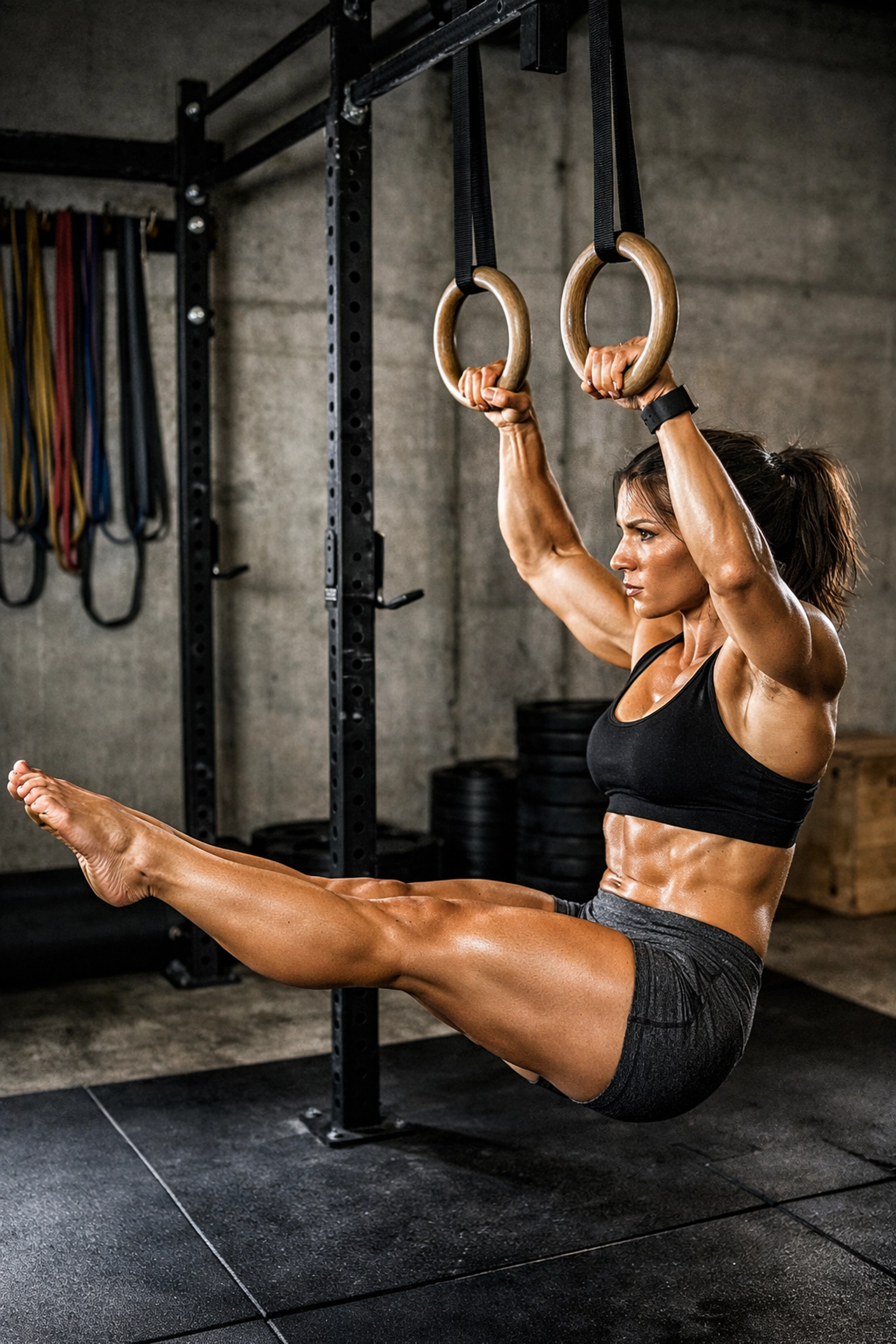
Set up stations around your training space. Move between hanging challenges, explosive movements, and metabolic conditioning. Time yourself. Track performance. Treat every session like a competition prep.
Setting Up Your Space (Without Ruining It)
Location matters even when you're not drilling holes.
Ceiling Height Requirements
You need at least 8 feet of vertical clearance for a floor-to-ceiling system to function properly. Most residential spaces qualify. Basements work if they're finished. Garages are perfect. Even bedrooms can work if you're willing to make it your dedicated training space.
Measure twice. Most systems adjust from 8 to 10 feet, but confirm your specific ceiling height before purchasing.
Floor Protection
Put down rubber gym flooring or thick exercise mats under your training zone. This protects your floors from dropped equipment, absorbs impact from plyometric work, and reduces noise transmission to neighbors below.
Interlocking foam tiles work for light training. Heavy-duty rubber is better for serious work. Consider it a non-negotiable investment.
Space Requirements
You need enough clearance to move safely. Minimum 6x6 feet for basic training. Ideal is 8x10 feet or more. Clear the space of furniture, eliminate trip hazards, and give yourself room to swing without hitting walls.
Remember: this is your training laboratory. Treat the space with respect and it'll serve you for years.
Storage Solutions
When you're not training, your equipment should disappear. Get a storage bin for bands, grips, and small tools. Wall hooks (the removable Command-style strips) can hold suspension trainers and rings. Keep your space clean and your equipment organized.
The Resistance Rail breaks down in minutes if you need to completely clear the room. That flexibility is part of the appeal.
The CrossFit and MMA Connection
Here's something ninja warrior athletes often miss: CrossFit home gym principles and MMA conditioning transfer directly to obstacle course performance.
CrossFit athletes need the same pulling strength, core stability, and explosive power. MMA fighters require grip strength, mental toughness, and the ability to perform under fatigue. A properly designed floor-to-ceiling training system serves all three disciplines.
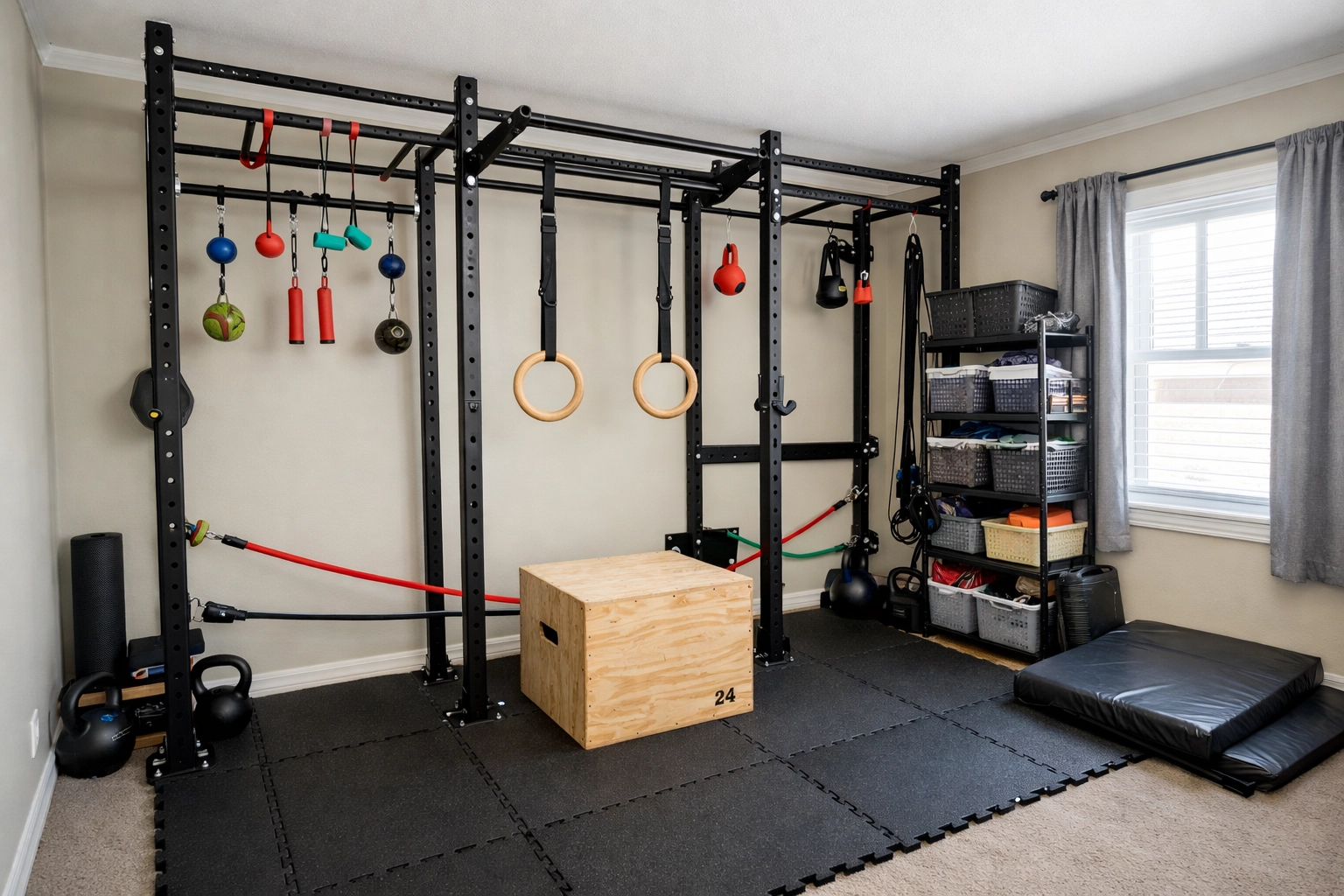
Set up EMOM (every minute on the minute) workouts with pull-ups, burpees, and kettlebell swings. Program Tabata intervals with hanging knee raises and band resistance. Build metcons that wreck your lungs and test your mental fortitude.
The equipment requirements overlap 90%. The training principles are identical. You're building an athlete-first system that adapts to whatever discipline excites you most.
Making the Move
Here's the reality: you can keep making excuses about not having the "right" setup, or you can start training seriously with what actually works.
Professional ninja warriors aren't training in purpose-built gyms with unlimited equipment budgets. They're in garages, spare bedrooms, and small apartments: using intelligent equipment choices and focused programming to build elite-level fitness.
The full body workout at home that you need doesn't require destroying your rental or investing in permanent modifications you'll regret. It requires one decision: commit to training smart instead of just training hard.
Check out the complete Bold Body Fitness shop to see how a properly designed floor-to-ceiling system transforms any space into a legitimate training facility. No excuses. No damage. Just results.
Your ceiling will thank you. Your landlord will thank you. And most importantly, your performance on whatever challenge you're chasing will prove that smart equipment choices beat brute-force installations every single time.
Now stop reading and start training.
