
You built a CrossFit home gym to train like a beast without the commute, the crowds, or the monthly membership drain. Smart move.
But here's the brutal truth: most home gyms become expensive coat racks within six months. Not because the athletes lack dedication: but because they made critical setup mistakes from day one.
Whether you're a seasoned CrossFit athlete, an MMA fighter looking to sharpen your conditioning, or a calisthenics practitioner building functional strength, your home gym setup can make or break your progress.
Let's rip the band-aid off. Here are the seven costly mistakes sabotaging your CrossFit home gym: and exactly how to fix them before they cost you gains, money, or worse, an injury.
Mistake #1: Treating Your Space Like a Storage Unit
Walk into most garage gyms and you'll see the same disaster: barbells leaning against walls, kettlebells scattered like landmines, and about three square feet of actual workout space.
Here's the problem: CrossFit demands explosive, dynamic movements. Burpees. Box jumps. Muscle-ups. Wall balls. You can't execute a proper full body workout at home when you're dodging equipment with every rep.
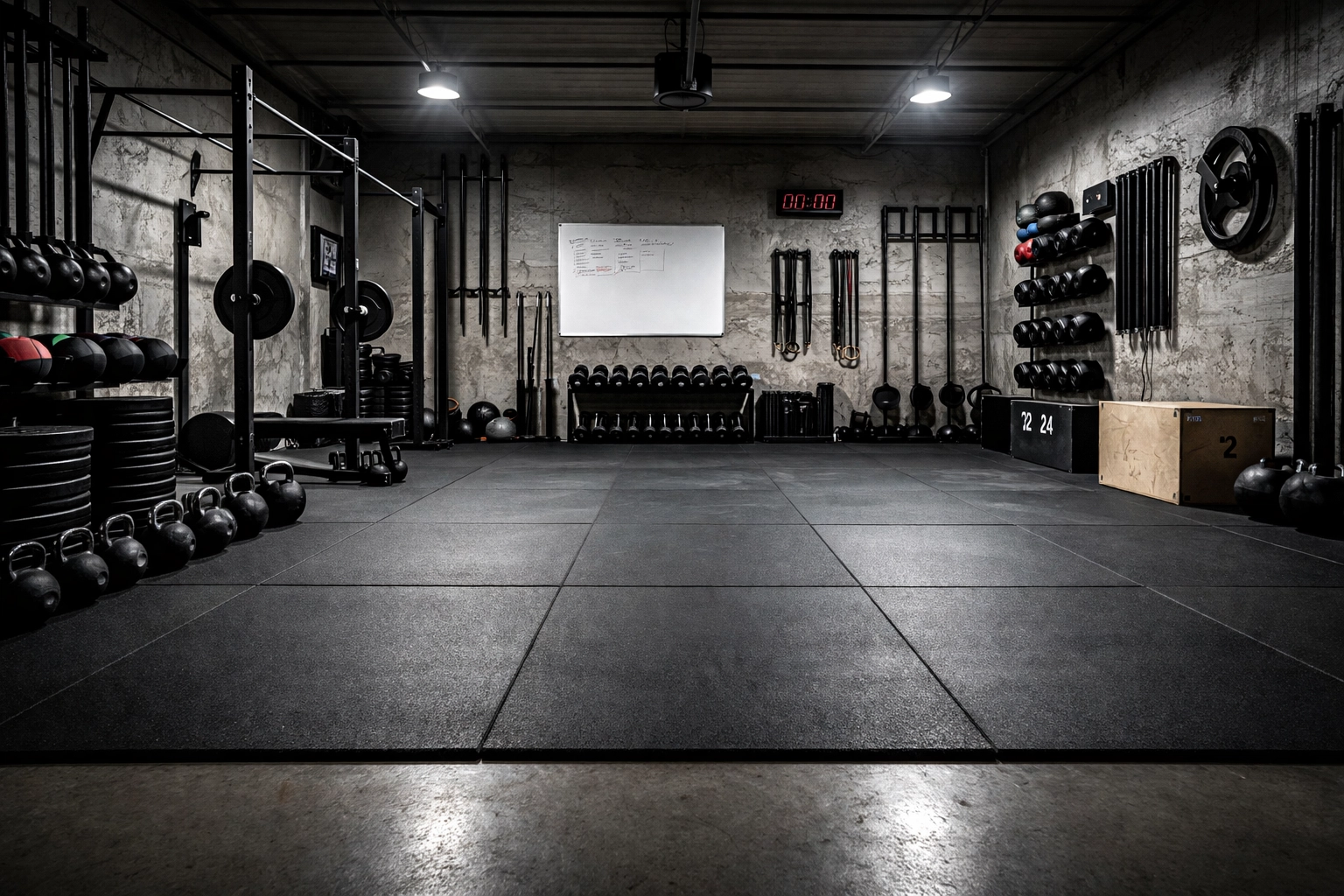
The fix: Load your equipment around the perimeter and protect your center floor space like it's sacred ground. Before you buy another piece of gear, measure your dedicated gym area. If adding that new rack means sacrificing movement space, it's not worth it.
Think vertical, not horizontal. Wall-mounted solutions and floor-to-ceiling systems let you maximize your training options without eating up precious square footage.
Mistake #2: Buying Cheap Equipment That Falls Apart
We get it. Building a home gym is expensive. That $49 pull-up bar on Amazon looks tempting when the quality version costs three times more.
But here's what actually happens: cheap equipment wobbles. It bends. It breaks mid-workout. And suddenly you're back to square one: minus the money you already spent.
Worse? Subpar home gym equipment is genuinely dangerous. A bar that can't handle dynamic kipping pull-ups isn't just annoying: it's a trip to the emergency room waiting to happen.
The fix: Invest in quality from the start. Look for equipment built specifically for athletes who train hard: CrossFitters, ninja warriors, gymnasts, and calisthenics practitioners who put real stress on their gear.
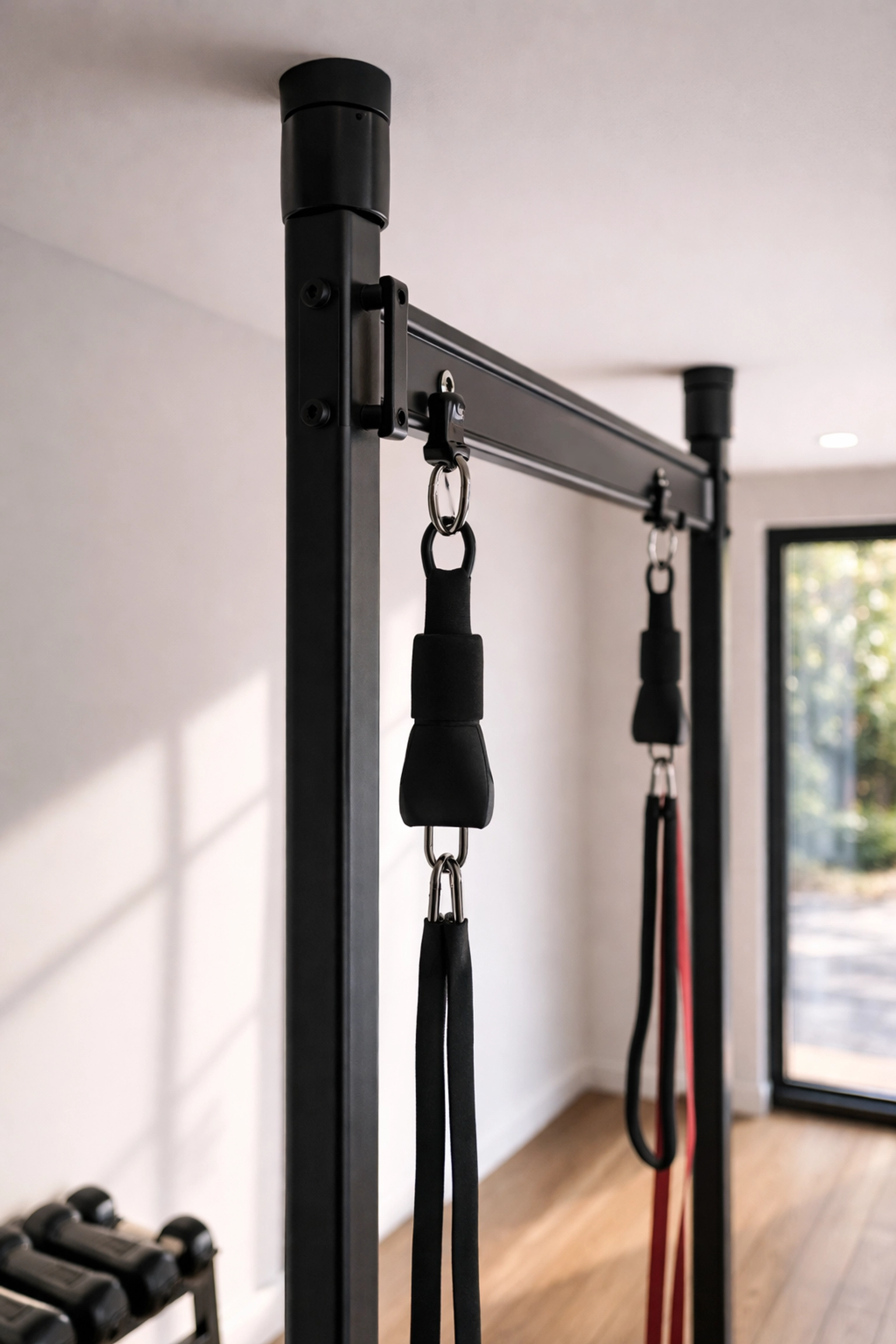
At Bold Body Fitness, every piece of equipment is engineered for serious athletes. The Resistance Rail handles explosive movements, heavy resistance bands, and bodyweight exercises without flinching.
Mistake #3: Drilling Holes Everywhere (And Destroying Your Walls)
Traditional pull-up bars, wall-mounted rigs, and suspension systems all share one ugly requirement: permanent installation.
That means drilling into studs, anchoring into concrete, or worse: discovering mid-installation that your wall can't actually support the load. Now you've got holes in your drywall and a pull-up bar that's about as stable as a wet noodle.
If you're renting? Forget about it. Most landlords won't tolerate the damage, and you'll eat the cost when you move.
The fix: Look for no wall damage workout systems that provide rock-solid stability without permanent installation.
The Resistance Rail Deluxe is a game-changer here. It's a pull up bar alternative that spans floor to ceiling, giving you a versatile home gym anchor point for pull-ups, resistance bands, suspension trainers, and more: without a single hole in your wall.
Mistake #4: Skipping Your Warmup Because "You're Already Warmed Up"
You walked from your kitchen to your garage. You feel fine. Why waste ten minutes on mobility when you could be crushing a WOD?
This mentality destroys home gym athletes faster than any equipment failure.
CrossFit Games champion Jason Khalipa emphasizes this constantly: skipping warmups leaves your nervous system unprepared and dramatically increases injury risk. The problem is amplified at home because there's no coach watching, no class structure forcing you through the prep work.
The fix: Build a non-negotiable 5-10 minute warmup into every session. Foam rolling, dynamic stretching, and lower-intensity movements prime your body for what's coming.
No excuses. Your garage gym doesn't get to skip the rules that apply at every elite CrossFit box on the planet.
Mistake #5: Training Blind Without Form Feedback
At a CrossFit box, coaches correct your positioning in real-time. At home? You're flying blind.
Bad form compounds over hundreds of reps. That slight knee cave on your squats becomes a chronic issue. That rounded back during deadlifts? It's only a matter of time before something gives.
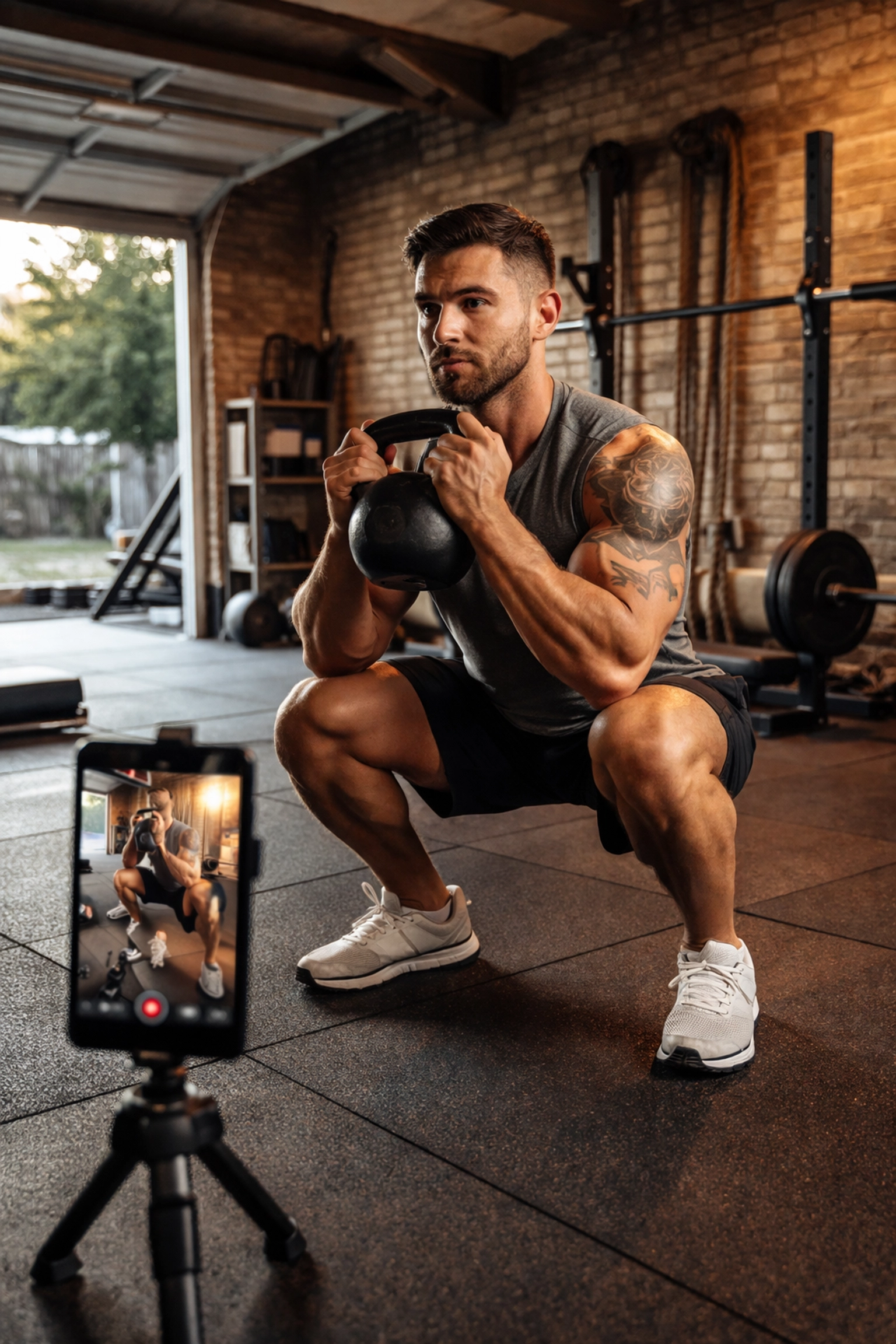
The fix: Film yourself. Every serious home gym athlete should have a simple phone mount or tripod to record their lifts. Compare your movement patterns to expert demonstrations.
Start lighter than your ego wants. Bodyweight training at home and resistance training with bands allow you to perfect movement patterns before loading up the barbell. The goal is mastery, not maximum weight on day one.
Mistake #6: Going Too Hard, Too Fast
The home gym curse: no one's watching, so you go beast mode from the jump.
Max effort deadlifts on Monday. PR attempt on Tuesday. Heavy met-con Wednesday. By Thursday, you're nursing tweaked shoulders and wondering why progress stalled.
This isn't dedication: it's self-sabotage.
The fix: Progressive overload isn't just a concept for beginners. Start with calisthenics equipment for home workouts that build foundational strength. Layer in resistance bands before heavy barbells. Earn your intensity.
The athletes who build lasting home gyms understand this: consistency beats intensity every single time. Train smart enough to train again tomorrow.
Mistake #7: Working Out Without Structure or Timing
Home gyms come with built-in distractions. The laundry needs folding. Your phone keeps buzzing. Before you know it, your "intense training session" became 45 minutes of wandering between half-completed sets.
Without external accountability, it's shockingly easy to coast through workouts or abandon them entirely.
The fix: Get a dedicated gym timer. Structure your sessions with AMRAPs, EMOMs, or timed intervals that force focused effort. When the clock is running, there's no time for distractions.
Train with a plan. Write your workout down before you start. Know exactly what you're doing, how long it should take, and what intensity you're targeting.

Build a Home Gym That Actually Works
Your CrossFit home gym should be a weapon: not a collection of dust-covered equipment you step over on the way to your car.
Fix these seven mistakes, and you'll build a training environment that rivals any box:
- Protect your floor space for dynamic movements
- Invest in quality equipment built for real athletes
- Choose no-damage solutions like the Resistance Rail for wall-free versatility
- Never skip warmups: even when no one's watching
- Film your form and start lighter than your ego demands
- Progress gradually instead of burning out
- Use a timer and train with structure
The difference between a home gym that transforms your fitness and one that collects dust? It's not motivation. It's setup.
Ready to build a versatile home gym that handles everything from pull-ups to resistance training to full gymnastics progressions: without destroying your walls or wasting your space?
Check out the full lineup at the Bold Body Fitness shop and see why serious athletes choose equipment engineered for the way they actually train.
Your home gym deserves better. You deserve better. Let's build it right.
