
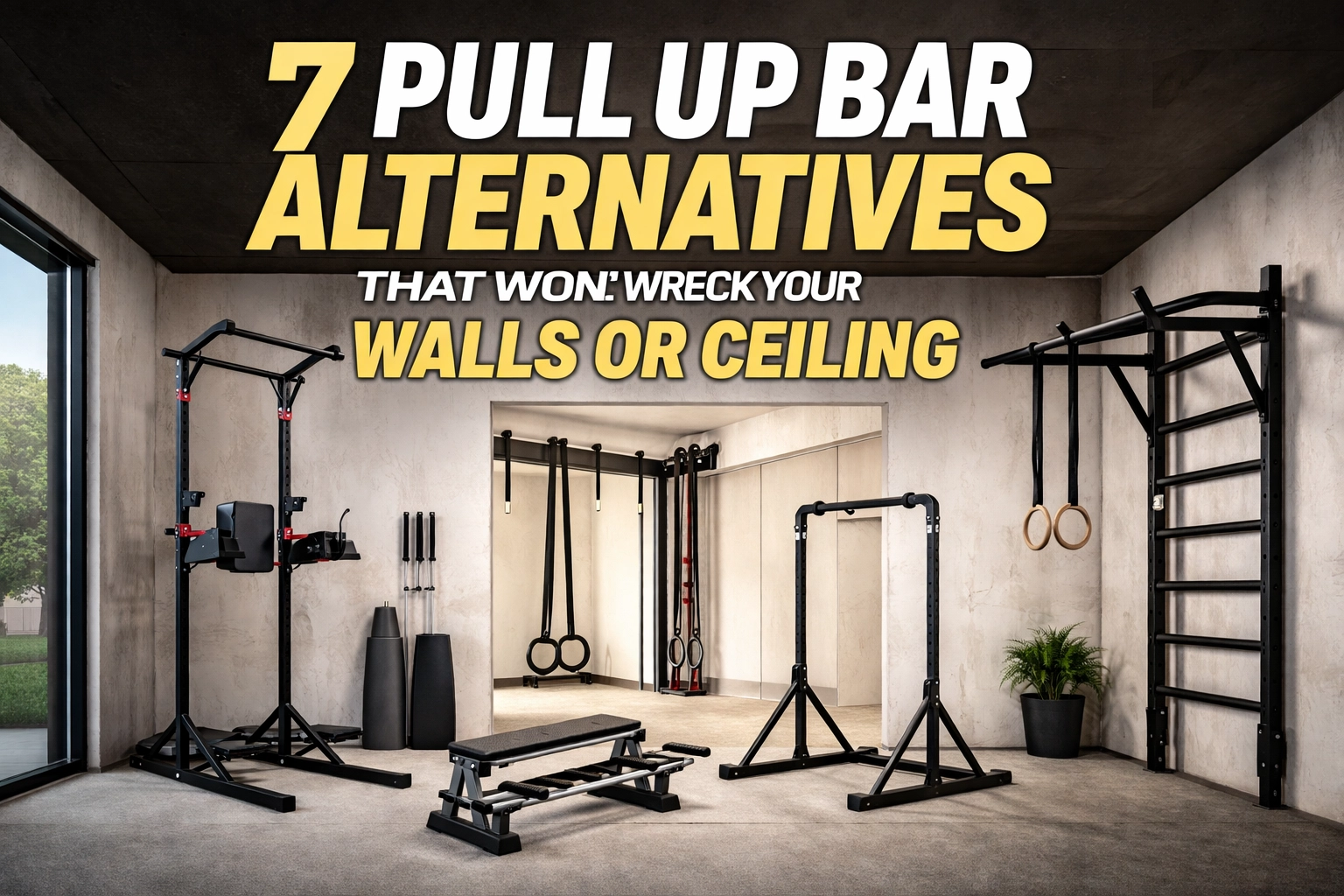
Let's get real for a second.
You want to train hard. You want to build serious upper body strength, nail those muscle-ups, and develop the kind of functional fitness that makes you dangerous in competition, whether that's on the ninja warrior course, the CrossFit box, or the mats.
But here's the problem: traditional pull-up bars are a nightmare for anyone who doesn't own their home outright or simply doesn't want to drill massive holes into their walls and ceiling.
Landlords don't care about your gains. Security deposits don't grow back like muscle tissue. And let's be honest, watching chunks of drywall crumble every time you kip is not the vibe.
The good news? You don't need to sacrifice your walls to build a beast-mode home gym equipment setup. There are legit pull up bar alternatives that deliver serious results without turning your living space into a construction zone.
Here are seven options that'll keep your training on point and your walls intact.
1. Floor-to-Ceiling Tension Systems
This is the gold standard for anyone serious about bodyweight training at home without permanent installation.
Floor-to-ceiling systems use tension between your floor and ceiling to create a stable, rock-solid training station. No drilling. No wall anchors. No damage. Just pure functionality.
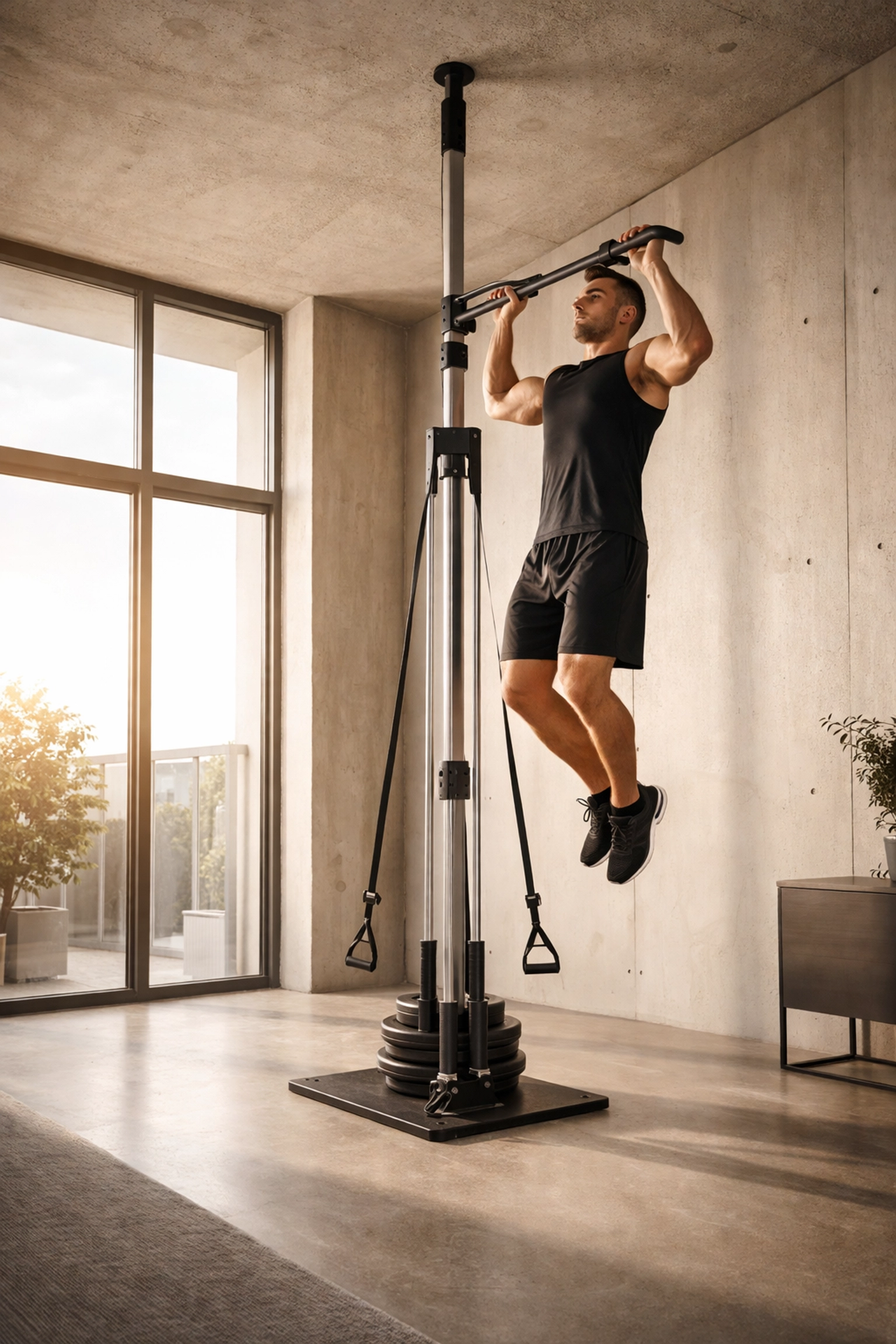
The Resistance Rail from Bold Body Fitness is a perfect example of this category done right. It's a versatile home gym solution that supports pull-ups, resistance band work, stretching, and a massive variety of exercises, all without touching your walls.
What makes tension-based systems superior for serious athletes:
- Zero installation damage – Take it down, move it, reinstall. Your walls stay pristine.
- Incredible versatility – Attach bands, loops, and accessories for full body workout at home programming.
- Compact footprint – Perfect for apartments, condos, or dedicated training rooms.
- Serious load capacity – Quality systems handle heavy use from MMA fighters, gymnasts, and CrossFit athletes.
If you're building a crossfit home gym or need calisthenics equipment for home that travels with you through life, this is the move.
2. Freestanding Pull-Up Stations
Freestanding pull-up bars are exactly what they sound like, self-supporting structures that sit on your floor without any attachment to walls or ceilings.
The best freestanding stations feature:
- Wide, stable bases (often with sandbag or weight plate holders for extra stability)
- Multiple grip positions for varied training
- Dip bars and push-up handles integrated into the frame
- Weight capacities of 400-660+ pounds
The downside? They take up significant floor space. We're talking a 4x4 foot footprint minimum for anything sturdy enough to handle dynamic movements like kipping pull-ups or muscle-up progressions.
For garage gyms with room to spare, freestanding stations are solid. For apartment dwellers? The footprint becomes a real problem, which is why floor to ceiling gym solutions often make more sense.
3. Doorway Pull-Up Bars (The Right Ones)
Before you roll your eyes, hear me out.
Yes, cheap doorway bars are garbage. They slip, they damage door frames, and they make you nervous every time you load them up.
But premium doorway bars with proper engineering are a different story entirely.
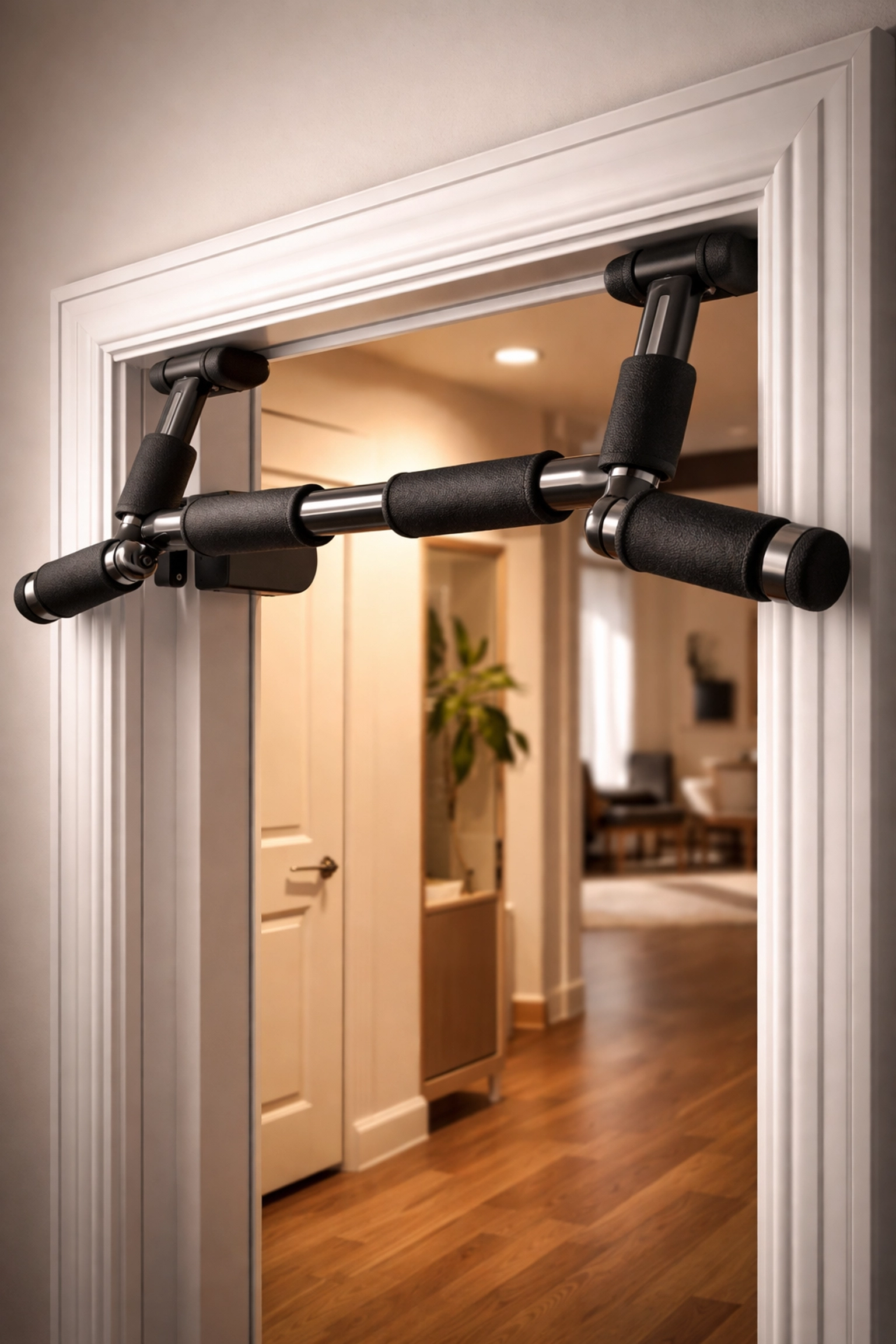
Look for models with:
- Extended leverage arms that distribute weight across the frame
- Padded contact points that protect your door trim
- Hook-style mounting rather than pressure-only designs
- Weight ratings of 300+ pounds from reputable manufacturers
The catch: doorway bars limit your exercise variety. You can't do wide-grip pulls effectively, kipping is sketchy at best, and forget about attaching resistance bands for resistance training progressions.
They work as a supplemental tool. But if you're serious about building a no wall damage workout system for comprehensive training, you'll outgrow them fast.
4. Power Towers
Power towers combine pull-up bars, dip stations, and vertical knee raise pads into one freestanding unit. They're a staple of commercial gyms: and increasingly popular for home setups.
Pros:
- Multiple exercise stations in one piece of equipment
- No installation required
- Great for foundational bodyweight training at home
Cons:
- Massive footprint (easily 4x3 feet or more)
- Often wobbly under dynamic movement
- Limited height adjustment
- Can't accommodate advanced calisthenics progressions
Power towers work well for beginners and intermediate athletes focused on strict movement patterns. For ninja warriors, gymnasts, and CrossFit competitors who need to train explosive movements? The instability becomes a liability.
5. Gymnastics Rings with Ceiling Hooks or Tree Straps
Gymnastics rings are arguably the most versatile upper body training tool ever created. And here's the thing: you don't necessarily need a permanent mounting point to use them.
Indoor option: Some ceilings have exposed beams or existing structural points where you can loop ring straps without drilling.
Outdoor option: Tree branches, playground structures, or sturdy overhead bars at local parks.

Rings develop insane grip strength, shoulder stability, and core control. They're essential calisthenics equipment for home training: but they require a reliable anchor point.
If your living situation doesn't offer natural anchor points, pairing rings with a tension-based system like the Resistance Rail Deluxe gives you the best of both worlds: a stable anchor that doesn't damage your space.
6. Outdoor Pull-Up Bars and Calisthenics Parks
Sometimes the best pull up bar alternative isn't inside your home at all.
Calisthenics parks have exploded in popularity over the past decade. Most major cities now have multiple outdoor workout stations with:
- Pull-up bars at various heights
- Parallel bars for dips
- Monkey bars and climbing structures
- Open space for mobility and skill work
The benefits are obvious: free access, zero home damage, community atmosphere, and fresh air.
The drawbacks are equally clear: weather dependence, travel time, limited availability in some areas, and zero control over equipment quality.
Outdoor training is a fantastic supplement to your home gym equipment setup. But relying on it exclusively? That's a recipe for inconsistent training when life gets busy or weather turns ugly.
7. Resistance Band Door Anchors
This is the most budget-friendly option on the list: and surprisingly effective for resistance training when you can't do traditional pull-ups.
Quality door anchor systems let you attach resistance bands to a closed door, creating pulling resistance that mimics lat pulldowns and assisted pull-up movements.
What they're good for:
- Rehabilitation and prehab work
- Beginners building foundational strength
- Travel training when you're away from your main setup
- Supplemental volume on recovery days
What they're NOT good for:
- Replacing actual pull-up training for advanced athletes
- Building the neurological patterns needed for competition
- High-intensity full body workout at home programming
Think of door anchor systems as a tool in your toolbox: not the foundation of your training.
Building Your Damage-Free Home Gym
Here's the bottom line: you don't have to choose between serious training and protecting your living space.
The athletes who win: ninja warriors, CrossFit competitors, MMA fighters, gymnasts: they find solutions. They build training environments that support their goals without creating unnecessary obstacles.
If you're ready to build a legitimate versatile home gym without the installation headaches, start with equipment designed specifically for the no wall damage workout system approach.
At Bold Body Fitness, we built the Resistance Rail specifically for athletes who refuse to compromise. It's the foundation of a complete calisthenics equipment for home setup that grows with you: from your first pull-up to your hundredth muscle-up.
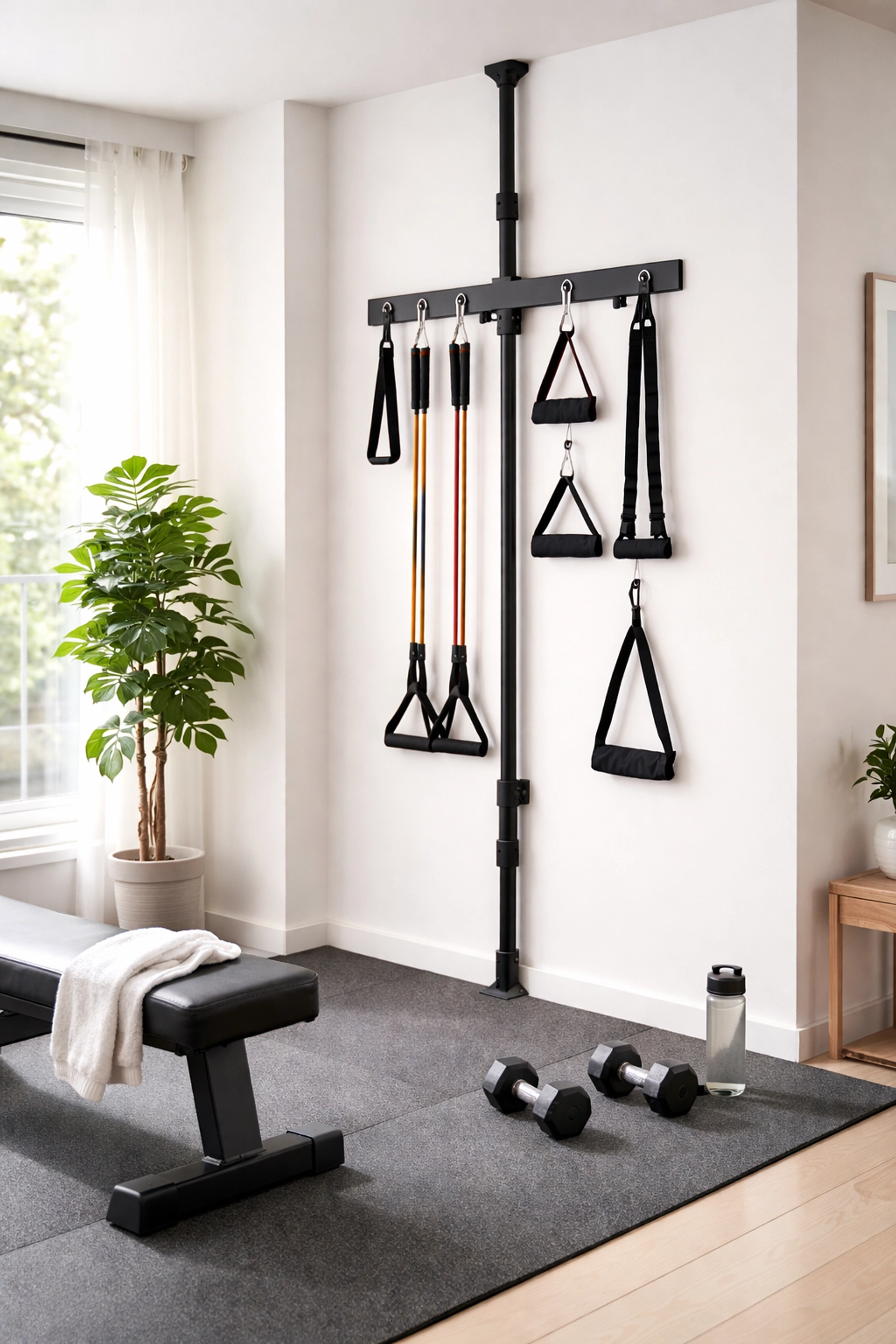
Check out the full lineup in our shop and see why serious athletes are making the switch.
Your walls will thank you. Your gains won't suffer.
The Takeaway
Traditional pull-up bars served their purpose. But for modern athletes living in apartments, rentals, or homes where permanent installation isn't an option, it's time to evolve.
Whether you choose a floor to ceiling gym solution, a freestanding station, or a combination approach: prioritize equipment that matches your training intensity without matching your security deposit to your landlord's pocket.
Train hard. Train smart. Keep your walls intact.
