
You invested in a home gym. You cleared out the garage, the spare bedroom, or that corner of your basement. You had visions of crushing full body workouts at home, building serious strength, and training like an athlete without ever stepping foot in a crowded commercial gym.
And yet... something's not clicking.
Maybe your equipment is collecting dust. Maybe you're not seeing the gains you expected. Or maybe your landlord is about to lose their mind over the holes you drilled into the walls.
Here's the truth: most people sabotage their home gym setup before they even break a sweat. Whether you're into calisthenics, CrossFit, MMA, or you're training for American Ninja Warrior, these mistakes will hold you back.
Let's fix that. Here are the 7 biggest mistakes you're making with your home gym equipment: and how to turn things around fast.
Mistake #1: Buying Cheap Equipment That Falls Apart
We get it. Building a home gym can feel expensive. So you hunt for deals. You buy that $30 pull-up bar from a no-name brand. You grab the budget kettlebells that looked fine in the photos.
Then reality hits.
That cheap pull-up bar wobbles. The kettlebell handle tears up your hands. Worse, you start questioning whether your squat rack can actually handle the weight you're loading on it.
Here's the problem: Low-quality home gym equipment isn't just frustrating: it's dangerous. A failing piece of equipment during a heavy lift or explosive movement can sideline you for months.
The fix: Stop buying disposable gear. Invest in durable, well-built equipment from reputable companies that understand what serious athletes need. You don't need to buy the most expensive option on the market, but you should absolutely prioritize quality over the cheapest price tag. Your body (and your training) will thank you.
Mistake #2: Not Measuring Your Space Before You Buy
This one hurts because it's so preventable.
You order a massive power rack, and when it arrives, you realize your ceiling is 6 inches too low. Or you buy a cable machine only to discover there's no room to actually use it without smacking into a wall.
Basement gyms are notorious for height restrictions. And if you're adding floor mats (which you should), that's almost another inch of clearance gone.
The fix: Before you buy anything, measure everything. Length. Width. Ceiling height. Then factor in the space you'll need around the equipment for movement, ventilation, and safety. A tape measure costs five bucks. A piece of equipment that doesn't fit costs a lot more.
Mistake #3: Filling Your Gym with Single-Use Equipment
Treadmills. Stair-steppers. That one machine that only works your inner thighs.
Single-use equipment eats up space and limits your training options. If you're serious about bodyweight training at home, resistance training, or building a legit CrossFit home gym, you need versatility: not a room full of one-trick ponies.
The fix: Prioritize multi-functional equipment. Think adjustable dumbbells, resistance bands, kettlebells, and systems that let you hit multiple muscle groups and movement patterns without cluttering your space.
This is exactly why we designed the Resistance Rail at Bold Body Fitness. It's a versatile home gym solution built for athletes who refuse to compromise. Whether you're working on pull-ups, rows, core work, or full-body calisthenics movements, one piece of equipment handles it all. That's the definition of smart training.
Mistake #4: Skipping Proper Flooring
You wouldn't train barefoot on broken glass. So why are you doing heavy squats on carpet or grinding out sit-ups on bare concrete?
Neglecting gym flooring is one of the most common oversights: and one of the easiest to fix. Without proper flooring, you risk damaging your subfloor, ruining your equipment, and making every ground-based exercise uncomfortable (or unsafe).
The fix: Install quality gym flooring. Rubber mats or interlocking tiles protect your floors, dampen noise, and give you a stable, professional surface for every movement. It's a small investment that transforms your entire training experience.
Mistake #5: Destroying Your Walls with Mounted Equipment
Here's a scenario we see all the time:
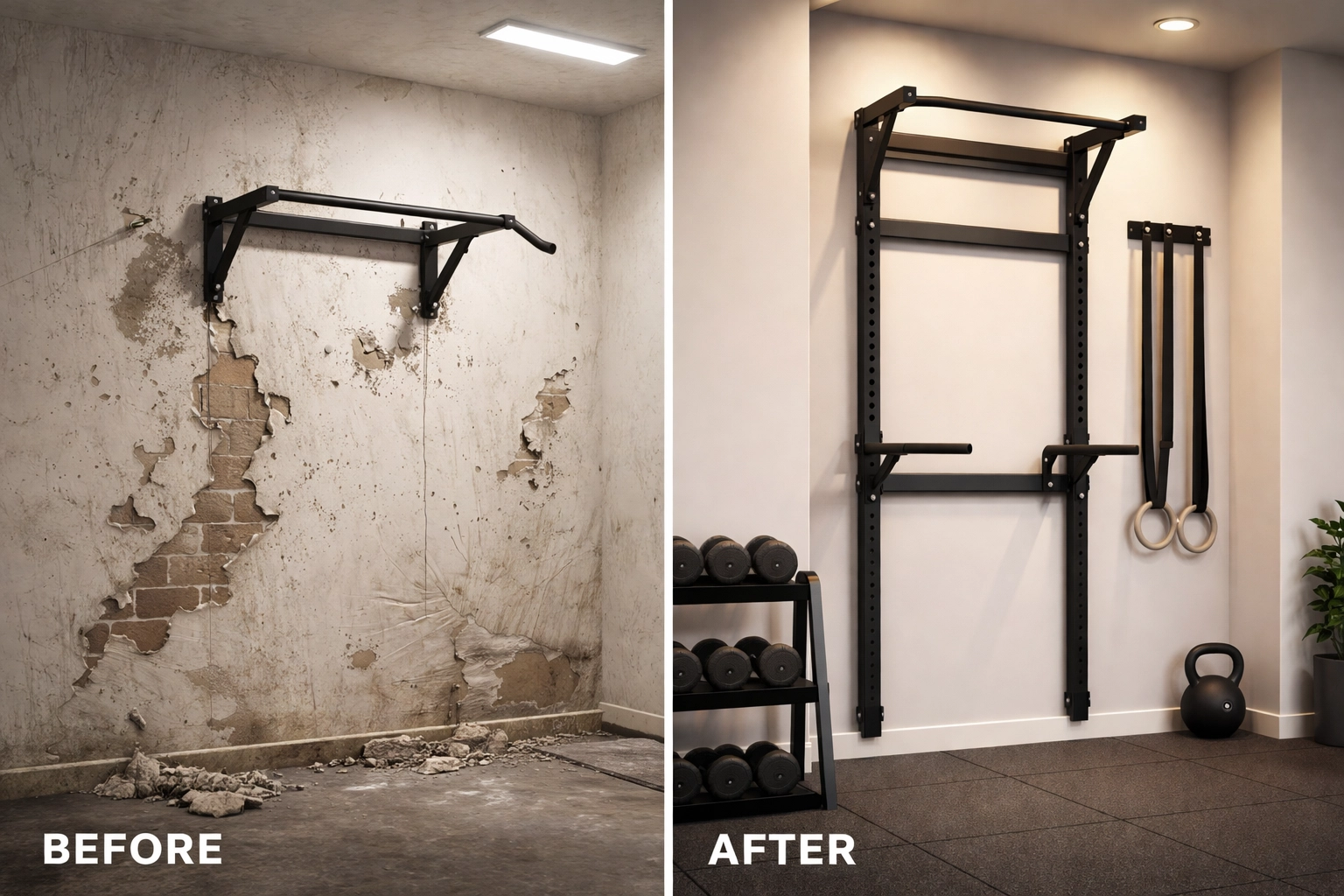
You want a pull-up bar. You drill into the doorframe or wall. Fast forward six months, and you've got holes everywhere, damaged drywall, and a landlord threatening your security deposit.
Or maybe you own your home but you're tired of the permanent damage every time you want to add or move equipment.
Traditional mounted gear: pull-up bars, wall-mounted racks, anchor systems: requires drilling, bolting, and commitment. That's a problem if you rent, if you move frequently, or if you just want flexibility in your setup.
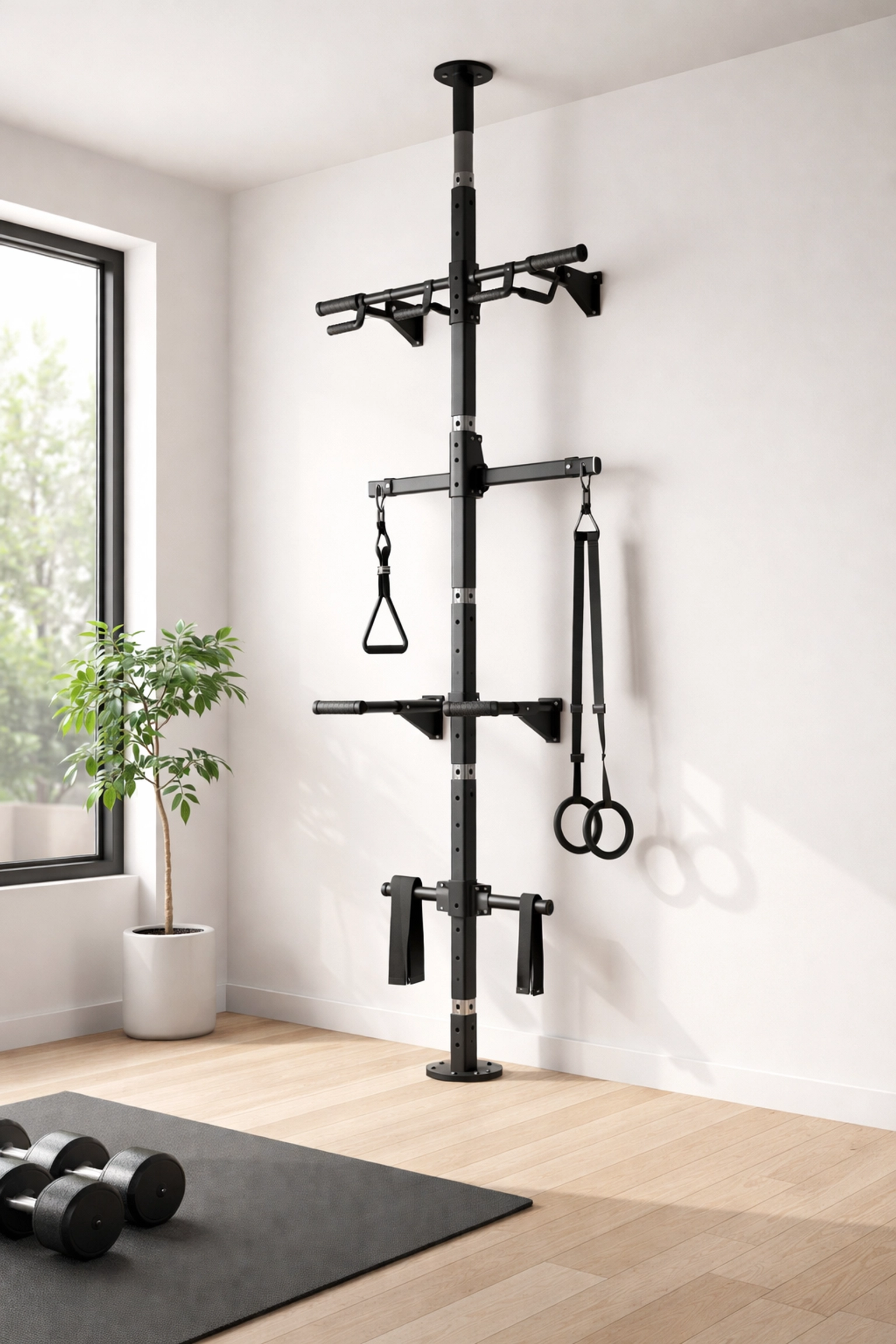
The fix: Look for a no wall damage workout system that gives you the functionality you need without the destruction. The Resistance Rail is a floor to ceiling gym that installs without drilling a single hole. It's a legit pull up bar alternative that delivers serious training capability for gymnasts, ninja warriors, MMA fighters, and anyone who wants calisthenics equipment for home without the construction project.
No holes. No damage. No compromises.
Mistake #6: Letting Your Gym Become a Cluttered Disaster
You bought great equipment. But now it's scattered everywhere. Dumbbells on the floor. Bands tangled in a corner. Kettlebells blocking the path to your rack.
A disorganized gym kills motivation. If you have to spend 10 minutes clearing space before every workout, you're going to skip sessions. Period.
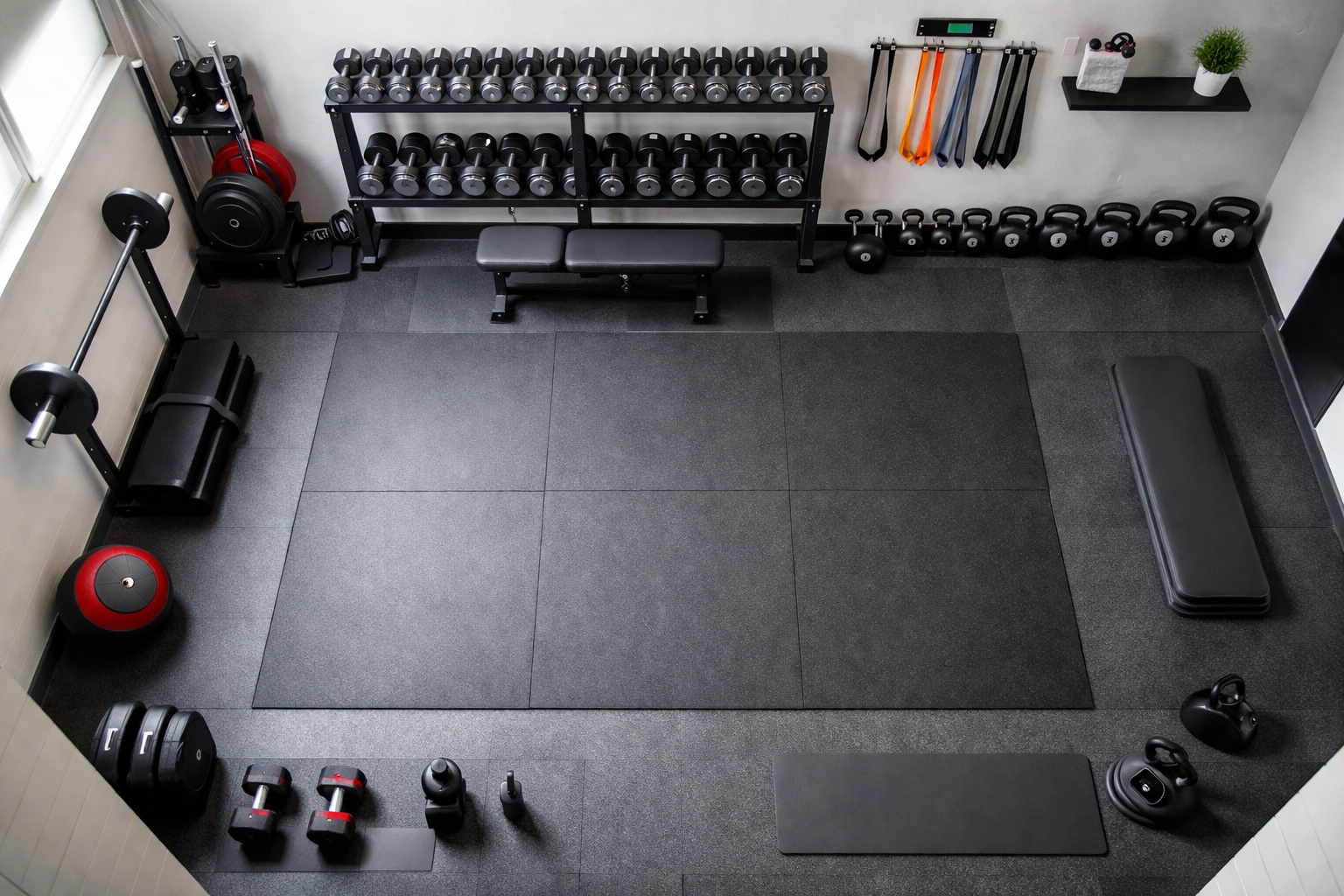
The fix: Get intentional about organization. Keep the center of your gym open for floor work and dynamic movements. Line the perimeter with your equipment: weights, bands, and accessories should have designated spots. Invest in simple storage solutions like wall hooks, shelving, or weight trees.
A clean, organized space makes you want to train. Chaos makes you want to close the door and binge Netflix instead.
Mistake #7: Skipping Warm-Ups and Ignoring Form
This isn't technically an equipment mistake: but it's the mistake that gets people hurt the most.
You're fired up. You want to hit your working sets. So you skip the warm-up and jump straight into heavy lifts or explosive movements.
Bad idea.
Cold muscles and joints aren't ready for intensity. And when you combine that with sloppy form: too much weight, too fast: you're setting yourself up for strains, pulls, and worse.
The fix: Spend 5-10 minutes warming up before every session. Dynamic stretches. Light movement. Get the blood flowing.
Then, check your ego. Film yourself performing lifts and compare your form to expert demonstrations. Go lighter than you think you need to while you dial in your technique. Build gradually. Your one-rep max will still be there when your body is actually ready for it.
Build a Home Gym That Actually Works
Your home gym should be a place where you get stronger, faster, and more athletic: not a frustrating reminder of bad purchases and half-finished workouts.
Avoid these seven mistakes, and you'll set yourself up for success:
- Invest in quality over cheap junk
- Measure your space before you buy
- Choose versatile equipment that maximizes your options
- Install proper flooring for safety and performance
- Skip the wall damage with smarter gear choices
- Stay organized so you actually want to train
- Warm up and focus on form to stay injury-free
At Bold Body Fitness, we build equipment for athletes who train hard and demand more from their gear. The Resistance Rail was designed specifically for serious practitioners: gymnasts, CrossFit athletes, MMA fighters, ninja warriors, and calisthenics enthusiasts who need a versatile home gym without the hassle.
Ready to level up your setup? Check out our shop and build the home gym you actually deserve.
Now stop making excuses. Start making gains.
