
You’re serious about your training. You aren't just looking for a place to do a few casual bicep curls before hitting the shower. You’re a ninja warrior, a gymnast, a CrossFit beast, or an MMA fighter. You need a space that can handle the violence of a high-intensity workout and the precision of calisthenics.
But let’s be honest: most home gyms are a mess. They are either cluttered with "as-seen-on-TV" junk or filled with heavy iron that only serves one purpose. Building a high-performance home gym equipment setup is an art, and most people are painting with a muddy brush.
If you want a full body workout at home that actually delivers results, you need to stop making these seven common mistakes. At Bold Body Fitness, we’ve seen it all. Here is how you fix your space, save your money, and finally build the elite training ground you deserve.
1. Eyeballing Your Space Instead of Measuring It
The biggest mistake happens before you even click "buy." You see a massive power rack or a floor to ceiling gym system online, and you think, "Yeah, that'll fit in the spare room." Then it arrives, and you realize your ceiling is two inches too low for muscle-ups, or you can't actually extend your arms for overhead presses without hitting a fan.
When you are training for serious mobility or gymnastic strength, clearance is everything. A versatile home gym requires 3D planning. You aren't just measuring the floor; you’re measuring the "air space."
The Fix:
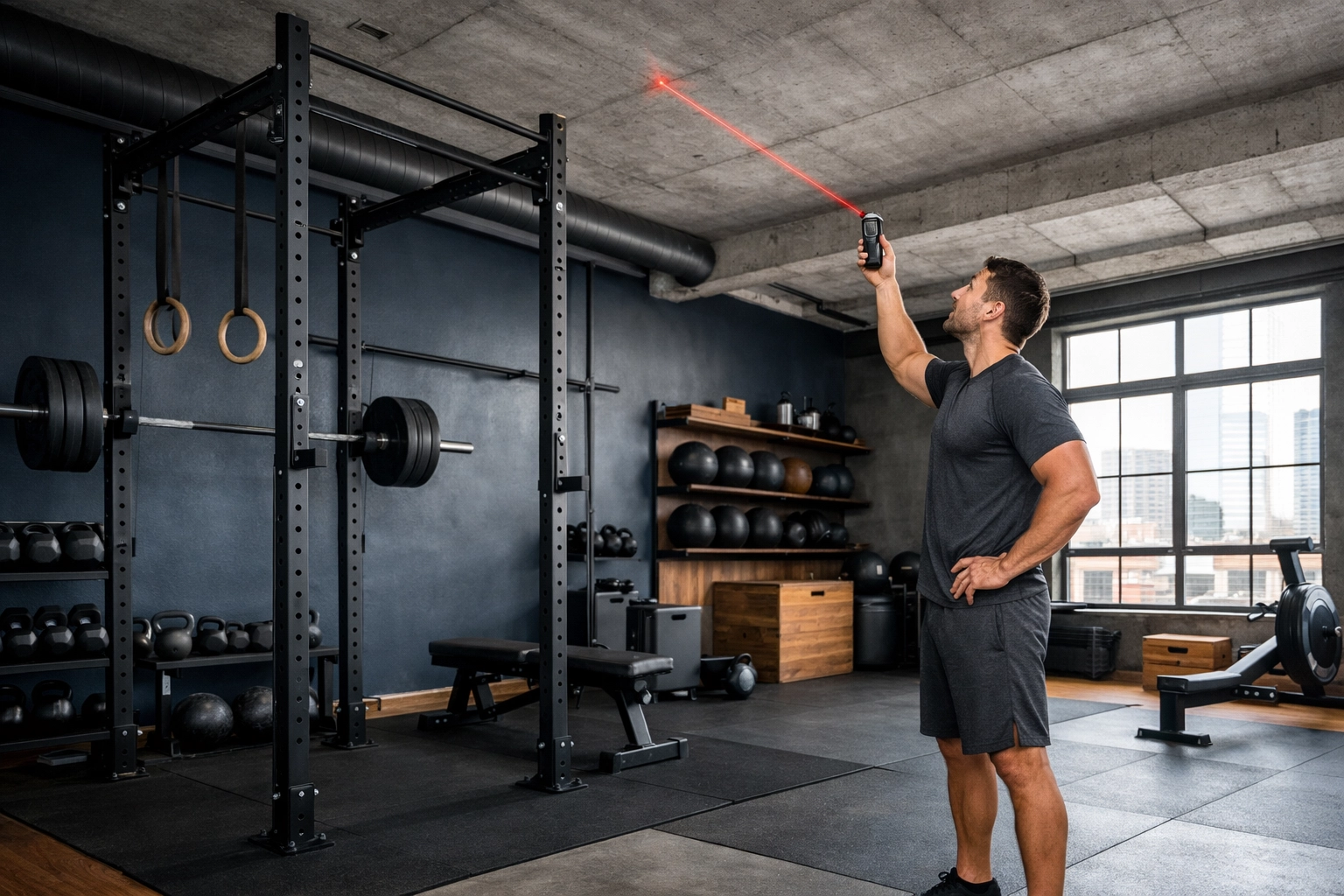
Get a laser measure or a tape and document everything. Length, width, and: most importantly: ceiling height. If you are planning on doing bodyweight training at home, you need enough clearance above your head to pull your chest over a bar.
Consider the "swing zone." If you are using rings or the Resistance Rail, you need to account for the lateral movement of your body. Don’t forget to account for your flooring. A 3/4-inch rubber mat might not seem like much, but it can be the difference between a successful pull-up and a concussion.
2. Chasing the Cheapest Price Tag
We get it. High-end gear is an investment. But if you are a CrossFit athlete or a calisthenics practitioner, "cheap" is another word for "dangerous."
Buying budget home gym equipment from a big-box retailer usually results in wobbly frames, stripped bolts, and equipment that feels like it’s going to collapse during a heavy set. If you’re hanging upside down or performing explosive movements, you cannot afford a mechanical failure. Cheap bars bend. Cheap racks tip.
The Fix:
Invest in "anchor pieces." These are the items that keep you safe and provide the foundation of your training. If you’re looking for a pull up bar alternative or a mounting system, look for industrial-grade materials.
At Bold Body Fitness, we designed the Resistance Rail to be a heavy-duty, high-performance solution that doesn't compromise on stability. It’s better to have three pieces of elite equipment than a room full of low-grade junk that you’re afraid to use at 100% intensity. Check out our high-performance gear in our shop.
3. Building Without Clear Goals
Are you training for a Spartan Race? Are you trying to master the iron cross? Or are you just trying to look better naked? Your equipment should reflect your mission.
Too many people build a "general" gym that is mediocre for everything and great for nothing. They buy a treadmill when they hate running, or a massive weight stack when they actually prefer calisthenics equipment for home use.
The Fix:
Define your discipline first.
- CrossFit Home Gym: You need floor space, a solid bar, and bumper plates.
- Gymnasts/Calisthenics: You need verticality, rings, and a pull up bar alternative that allows for adjustable heights.
- MMA/Combat: You need space for shadowboxing and heavy bags, plus resistance training tools that build explosive power.
Once you know your goal, audit your space. If a piece of equipment doesn't directly contribute to your "North Star" goal, it doesn't belong in your gym.

4. Filling Your Gym with Single-Use Machines
The "Global Gym" mentality has infected the home gym world. People think they need a different machine for every muscle group. This is the fastest way to turn your garage into a storage unit.
Single-use machines: like leg extension stations or dedicated ab benches: are space killers. For a full body workout at home, you need tools that offer multi-planar movement.
The Fix:
Go for versatility. A versatile home gym is built on multi-functional tools. This is where the Resistance Rail shines. Instead of five different machines, you have one rail system that allows for hundreds of movements, from heavy resistance band work to bodyweight rows and pull-ups.
Focus on "The Big Three" of home equipment:
- The Anchor: A stable point for pulling/hanging (like a floor to ceiling gym system).
- The Resistance: Bands, kettlebells, or adjustable dumbbells.
- The Space: A clear floor area for dynamic movement.
By prioritizing versatile tools, you keep your gym open and inviting, rather than cramped and cluttered. See how others have optimized their space in our gallery.
5. Forgetting or Skipping Flooring
This is the most "un-sexy" part of a home gym, but it’s the most critical. If you are doing bodyweight training at home or dropping weights, your floor is taking a beating. Concrete cracks. Wood splinters. Carpet gets disgusting.
Furthermore, training on an unstable or hard surface is hell on your joints. If you are a ninja warrior practicing landings or an MMA fighter doing sprawls, you need impact absorption.
The Fix:
Don't settle for the cheap foam puzzle mats from the toy aisle. Those things slide around the moment you apply lateral force.
Invest in high-density rubber stall mats (typically 3/4 inch). They are heavy, they stay in place, and they provide the "grip" you need for resistance training. Proper flooring also deadens sound, which will keep your neighbors (and your spouse) from hating your 6:00 AM workouts.

6. Not Planning Your Layout (and Damaging Your Walls)
One of the biggest hurdles for people living in apartments or rentals is the fear of damage. Traditional pull-up bars ruin door frames. Power racks need to be bolted into the floor. This leads people to buy "standalone" equipment that is often flimsy and takes up twice the space.
Poor layout planning leads to a gym that is frustrating to use. If you have to move three things just to get to your jump rope, you’re going to stop working out.
The Fix:
You need a no wall damage workout system. This is a game-changer for serious athletes who don't want to lose their security deposit.
The Resistance Rail was designed specifically to solve this. By using a floor-to-ceiling tension or specialized mounting system, you get the stability of a bolted-in rack without the permanent damage.
When planning your layout:
- Keep the center open: This allows for dynamic movements, jumping, and stretching.
- Utilize vertical space: Get your gear off the floor and onto the walls or rails.
- Zone your gym: Have a "Strength Zone," a "Movement Zone," and a "Recovery Zone."
7. Using Equipment with Terrible Form
Even the most expensive crossfit home gym gear won't save you from a herniated disc. In a home gym environment, you don't have a coach watching your back. It’s easy to let your form slip when you’re chasing a PR alone in your garage.
This is especially true with bodyweight training at home. People think because they aren't lifting 400 lbs, they can't get hurt. Tell that to the guy who tore his rotator cuff doing "ego" muscle-ups with a kipping motion he couldn't control.
The Fix:
Master the progressions. If you can't do 15 perfect pull-ups, you have no business trying a muscle-up. Use resistance training bands to assist you in difficult movements until your tendons and ligaments are as strong as your muscles.
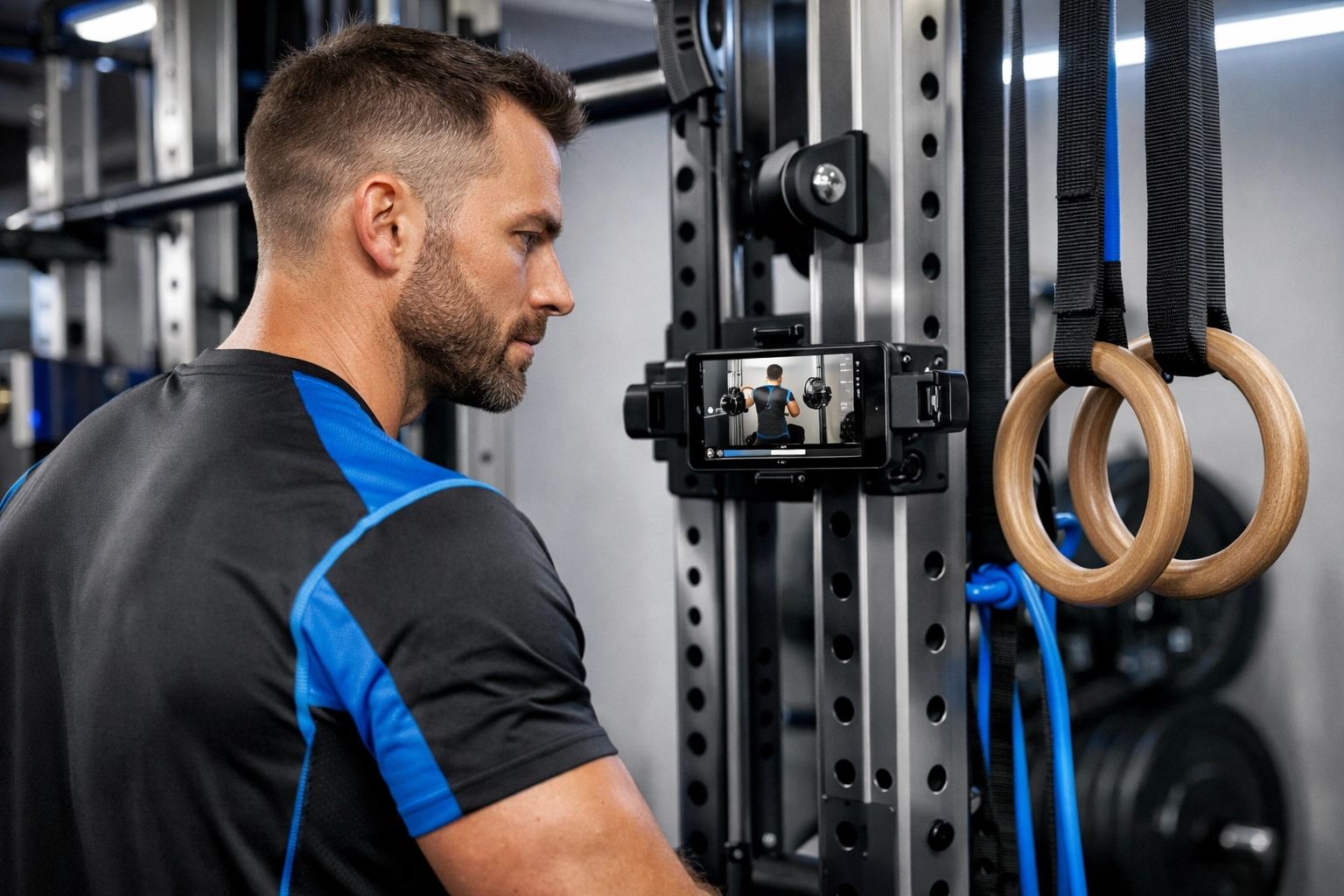
- Film yourself: Set up your phone and record your sets. Compare your form to professional athletes.
- Slow down: Focus on the eccentric (lowering) phase of your movements.
- Use the right tools: Use a pull up bar alternative that allows you to adjust the height so you can practice movements at a lower, more controlled level.
Build a Gym That Works for You
Your home gym should be a sanctuary of high performance, not a graveyard of unused equipment. By avoiding these seven mistakes, you’re not just building a place to sweat: you’re building an elite training facility.
Whether you are looking for a floor to ceiling gym solution or the ultimate no wall damage workout system, Bold Body Fitness has you covered. Stop making excuses and start building a space that matches your ambition.
Ready to level up?
Explore the Bold Body Fitness shop and discover why the Resistance Rail is the gold standard for serious home athletes. Don't forget to join our community of elite movers at Bold Body Fitness Members for training tips and exclusive content.
Your goals don't care about your excuses. Your equipment shouldn't either. Get bold, get strong, and build a gym that actually delivers.
