
Listen, I get it. The dream of rolling out of bed, walking twenty feet, and hitting a PR in your own garage is why we all start building a crossfit home gym. No commute, no waiting for the squat rack, and your music: no matter how aggressive: is the only thing on the speakers.
But here’s the cold, hard truth: most home gyms are absolute trash.
I’ve seen it a thousand times at Bold Body Fitness. Enthusiastic athletes spend thousands on high-end plates and barbells, only to realize they’ve turned their sanctuary into a cluttered obstacle course where they can’t even perform a proper burpee without hitting a wall. If you’re a serious athlete: whether you’re training for a Spartan Race, perfecting your ninja warrior transitions, or you're an MMA fighter needing explosive power: you cannot afford a mediocre setup.
If your home box feels more like a storage unit than a high-performance training center, you’re making one (or all) of these seven mistakes. Here is how you fix them and finally build a versatile home gym that actually works.
1. You’re Cramping Your Style (Literally)
The biggest mistake I see? Trying to fit a commercial-sized CrossFit box into a 10x10 spare room. CrossFit requires explosive, multi-planar movement. You’re swinging kettlebells, dropping barbells, and throwing wall balls. If you’re constantly looking over your shoulder to make sure you don't smash a window or trip over a bench, your intensity: and your results: will plummet.
The Fix: Go Vertical with a Floor to Ceiling Gym
Stop thinking about floor space and start thinking about volume. Most of your high-value home gym equipment should live on the walls or in the corners. This is exactly why we developed the Resistance Rail. By utilizing a floor to ceiling gym mindset, you keep the center of your room open for the work that matters: the Olympic lifts, the double-unders, and the sprawl-to-sprints.
When you clear the clutter, you create an environment for a true full body workout at home. You need room to breathe, room to move, and room to fail safely.
2. Buying "Budget" Gear That Breaks Under Pressure
We’ve all been tempted by those "complete home gym" sets on sale at big-box retailers. Let me be clear: if it’s made of plastic and thin-gauge steel, it isn't meant for a CrossFit athlete. CrossFit is high-impact. You are going to drop things. You are going to pull with maximum force.
Buying cheap gear is the fastest way to get injured or end up buying everything twice.
The Fix: Invest in Professional-Grade Resistance Training Tools
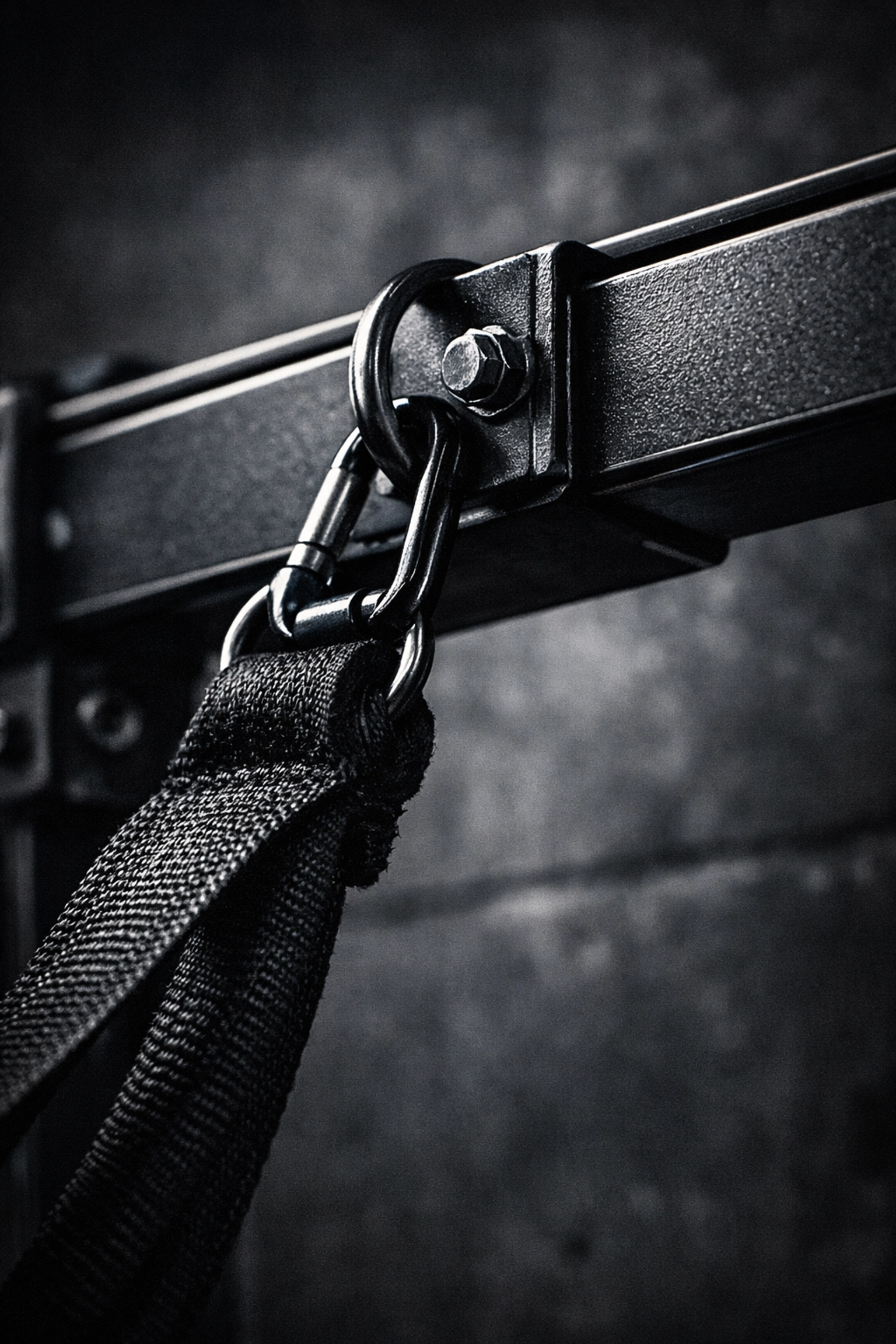
For serious resistance training, you need gear that can take a beating. At Bold Body Fitness, we don't do "entry-level." We do "elite-level for home use." Whether it’s high-tensile strength bands or a solid mounting system, quality is your best insurance policy. Check out our shop to see what real durability looks like. Don’t settle for equipment that wobbles when you’re mid-set.
3. The "Pull-Up Bar" Problem (and Wall Damage)
If you’re a gymnast or a calisthenics practitioner, you know that pulling movements are the foundation of strength. But let’s be real: most door-frame pull-up bars are dangerous, and drilling massive lag bolts into your studs isn’t always an option: especially if you’re renting or don’t want to ruin your finished walls.
Many athletes skip out on vertical pulling or "rig" work because they’re afraid of the structural damage.
The Fix: The No Wall Damage Workout System
You don't need to destroy your home to get a world-class workout. A no wall damage workout system is a game-changer for the modern athlete. The Resistance Rail is designed to be sturdy enough for intense calisthenics equipment for home use without requiring you to tear apart your drywall. It’s the ultimate pull up bar alternative because it allows for multiple attachment points at various heights, giving you the ability to do everything from high-angle rows to low-anchor mobility work without leaving a mark on the property.
4. Neglecting Your Calisthenics Foundation
CrossFit isn't just about how much you can deadlift; it’s about how well you can move your own body through space. I see too many home gym owners buy a 300lb bumper plate set but zero tools for bodyweight training at home. If you can’t do strict pull-ups, dips, and muscle-ups, you’re missing half the sport.
The Fix: Integrate Calisthenics Equipment for Home
Your home gym needs to facilitate gymnastics-style movements. This means having adjustable heights for your suspension trainers and resistance bands. By incorporating calisthenics equipment for home, you develop the "functional" part of functional fitness. This is vital for MMA fighters who need that clinch strength and ninja warriors who need grip endurance.
If you're looking for tips on how to integrate these movements, jump over to our community forums where athletes are sharing their specific setups for calisthenics mastery.
5. Thinking One Tool Can Do It All
The "all-in-one" machine is usually the "nothing-in-particular" machine. CrossFit athletes need variety. You need to be able to switch from a heavy strength movement to a high-heart-rate metabolic conditioning (MetCon) piece in seconds. If you have to spend five minutes reconfiguring your equipment, your heart rate drops, and the stimulus of the workout is lost.
The Fix: Build a Versatile Home Gym
A versatile home gym is one where the equipment is "modular." You want tools that serve multiple purposes. The Resistance Rail isn't just a place to hook a band; it’s an anchor for your entire workout. It allows you to transition from high-resistance squats to low-angle face pulls in seconds.
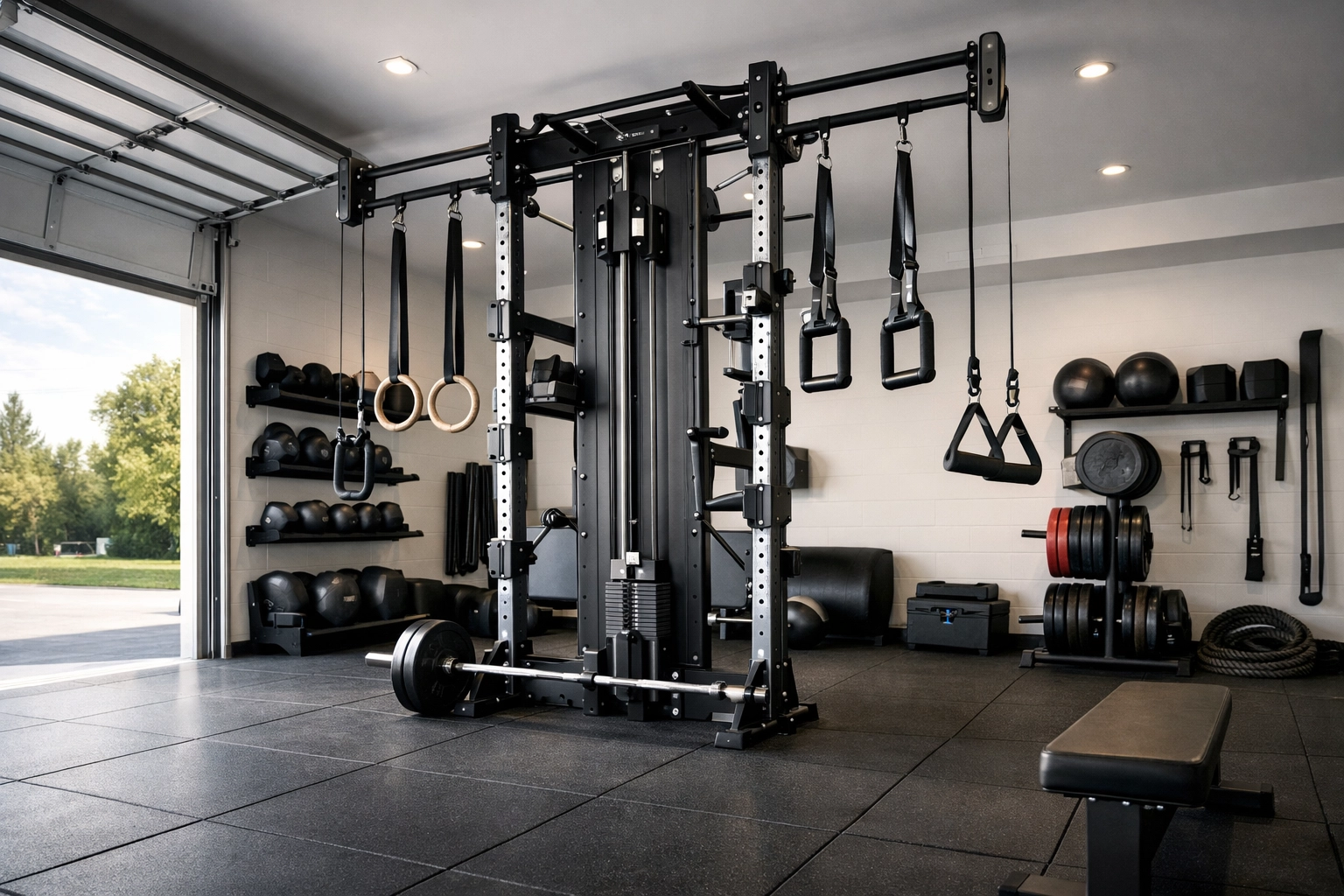
When you have a system that supports a full body workout at home, you stop being limited by your equipment and start being limited only by your own grit. For inspiration on how to layout a high-performance space, check out our gallery.
6. Skipping the Warm-Up and Proper Mobility
Training at home often means training alone. And when you’re alone, it’s easy to cut corners. "I’ll just do a few air squats and jump into the heavy sets," you tell yourself.
Wrong.
The internet research is clear: skipping warm-ups significantly increases injury risk. In a home gym environment, where you don’t have a coach watching your back, your warm-up is your only defense against a blown-out shoulder or a tweaked lower back.
The Fix: Dedicated Mobility and Tempo Work
Every session should start with 5-10 minutes of active recovery or mobility. Use your resistance training bands to "floss" your joints. If you’re using our rail system, utilize the various heights to perform lunges with overhead reaches or band-distracted hip stretches.
Furthermore, don't just chase the clock. Focus on tempo. Controlling the eccentric (lowering) phase of a movement is where the real muscle fiber recruitment happens. If you’re just bouncing at the bottom of a squat, you’re using momentum, not muscle.
7. Zero Planning and Poor Flooring
I’ve seen guys put a $2,000 treadmill on top of plush carpet. I’ve seen athletes try to do Olympic lifts on bare concrete. Both are recipes for disaster. Carpet is unstable, which can lead to rolled ankles during heavy lifts, and bare concrete will eventually crack under the pressure of dropped weights (and destroy your bars in the process).
The Fix: Plan Your Grid
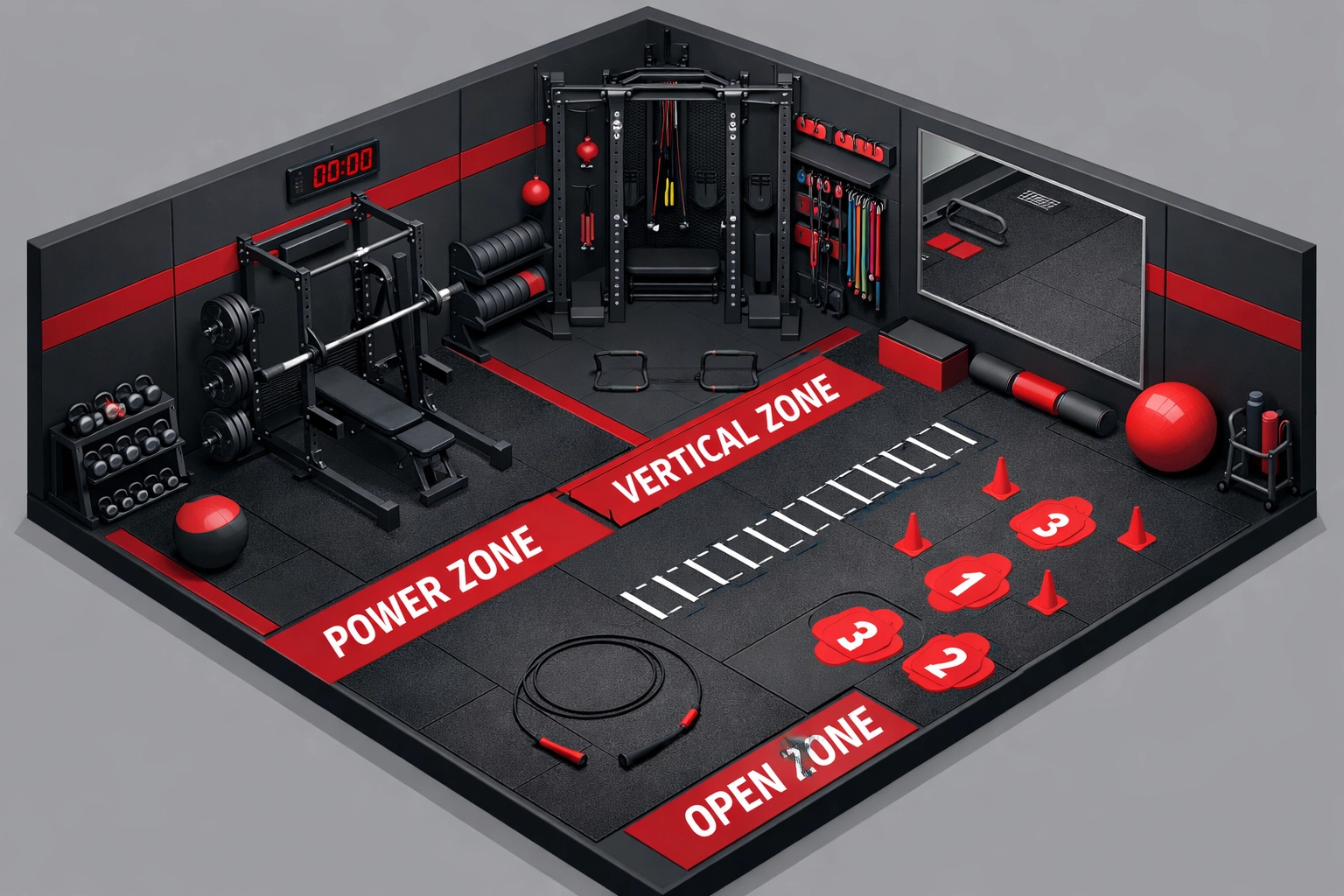
Before you buy a single piece of home gym equipment, measure your space. Then, invest in high-density rubber flooring. It protects your house, it protects your gear, and most importantly, it protects your joints.
Once your flooring is down, map out your "zones."
- The Power Zone: Where the heavy lifting happens.
- The Rail Zone: For your Resistance Rail, bands, and calisthenics work.
- The Open Zone: For jump rope, burpees, and mobility.
Why the Resistance Rail is the Centerpiece of the Modern Home Box
If you’re serious about CrossFit, you know that the "rig" is the heart of the box. It’s where you hang your rings, where you do your pull-ups, and where you anchor your bands. But most home owners can't install a 12-foot steel rig in their living room.
The Resistance Rail was born out of this exact frustration. We wanted a floor to ceiling gym experience that provided the stability of a professional rig with the footprint of a coat rack.
- For the Ninja Warrior: It’s the perfect anchor for grip trainers and high-angle pulls.
- For the Gymnast: It provides the consistent, solid anchor points needed for ring work and static holds.
- For the CrossFit Athlete: It allows for lightning-fast transitions between movements, ensuring your MetCons stay intense.
- For the MMA Fighter: It offers a variety of resistance angles to simulate the push-pull of a grapple or the explosive rotation of a strike.
It is, quite simply, the most versatile home gym component on the market today.
Join the Bold Body Community
Building a home gym shouldn't be a solo mission. At Bold Body Fitness, we believe in the power of the tribe. Whether you're looking for a buddy travel group to stay active while on the road or you want to discuss the finer points of placerat diam (okay, maybe just workout programming), our forums are the place to be.
Check out our members area to connect with other high-level athletes who have ditched the commercial gym and built their own high-performance sanctuaries.
Final Thoughts: Stop Making Excuses
Your home gym is a reflection of your commitment. If it’s messy, cheap, and poorly planned, your results will reflect that. But if you invest in a no wall damage workout system, prioritize quality home gym equipment, and focus on a floor to ceiling gym layout, you’ll have a world-class training facility right under your own roof.
Stop settling for "good enough." Be Bold. Build a gym that actually challenges you.
Ready to transform your space? Start with the Resistance Rail and see what happens when you remove the limits from your training.

Key Takeaways for Your CrossFit Home Gym:
- Maximize Volume: Use vertical space to keep the floor clear.
- Quality Over Cost: Don't risk injury on cheap gear.
- Protect Your Home: Use systems that don't require structural damage.
- Stay Versatile: Ensure your setup supports everything from calisthenics to heavy resistance.
- Warm Up: No excuses: use your bands to prep your joints every single time.
Now, get out there and get to work. Your next PR is waiting in the next room.
