

You've committed to bodyweight training at home. You've cleared out the garage, the spare room, or that corner of your living room. You're ready to build serious strength, nail that muscle-up, and forge a physique that turns heads.
But here's the brutal truth: most people sabotage their calisthenics home gym before they even start seeing real results.
Whether you're a ninja warrior prepping for competition, a CrossFit athlete supplementing your box sessions, or a calisthenics practitioner chasing that first front lever: these mistakes are holding you back. Let's fix them.
Mistake #1: Buying Equipment That Destroys Your Space
Here's the scenario: You get hyped about building a CrossFit home gym, so you drill holes everywhere. Pull-up bar mounted to the door frame? Cracked trim. Wall-anchored rings? Drywall damage. Ceiling-mounted system? Now your landlord wants a word.
The damage adds up fast. And if you're renting? Good luck getting that security deposit back.
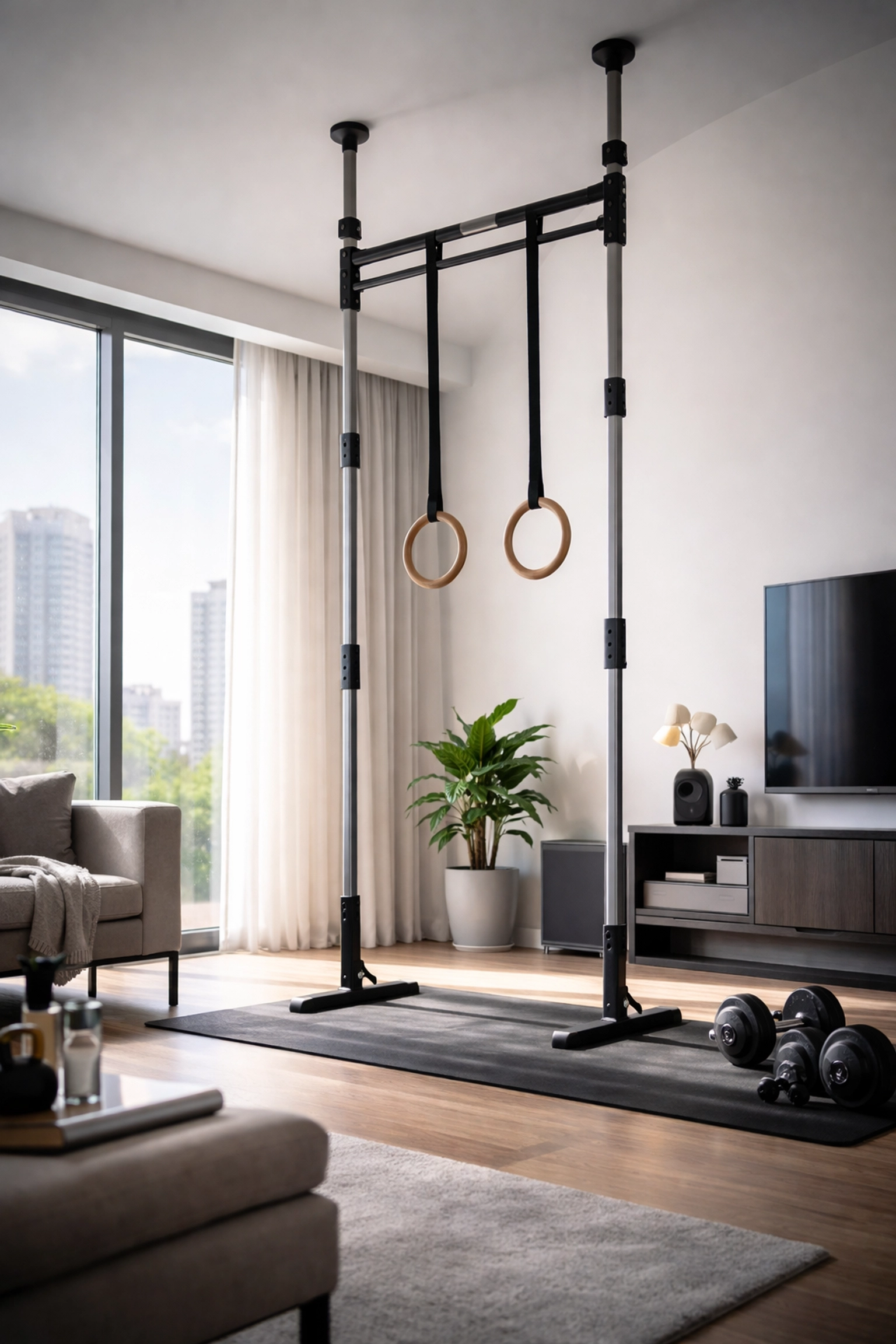
The Fix: Invest in a no wall damage workout system that delivers serious training capability without turning your home into a construction zone.
This is exactly why we built the Resistance Rail at Bold Body Fitness. It's a floor to ceiling gym that uses tension-based installation: no screws, no bolts, no holes. You get a rock-solid anchor point for pull-ups, muscle-ups, ring work, and resistance training without leaving a mark on your walls or ceiling.
Your space stays intact. Your training doesn't compromise.
Mistake #2: Choosing the Wrong Equipment for Your Training Style
Not all home gym equipment is created equal. A standard doorway pull-up bar might work for basic chin-ups, but try attaching gymnastics rings or performing explosive movements on it. You'll either rip it out of the frame or limit yourself to the most basic exercises.
If you're serious about calisthenics, ninja training, or MMA conditioning, you need equipment that matches your intensity.
The Fix: Look for versatile home gym solutions that support multiple training modalities. Your setup should handle:
- Pull-ups and muscle-ups
- Ring work (dips, rows, false grip training)
- Resistance band anchoring for assisted movements or added load
- Suspension training
- Heavy bag work (for you fighters out there)
The Resistance Rail functions as a pull up bar alternative that doesn't limit you to one movement pattern. It's built for athletes who demand more from their training space.
Mistake #3: Skipping the Warm-Up (And Paying For It Later)
You're fired up. You want to get after it. So you walk into your home gym and immediately start cranking out pull-ups.
Bad move.
Jumping into resistance training without preparing your muscles and joints is a fast track to strains, tweaks, and nagging injuries that sideline your progress for weeks.
The Fix: Spend 5-10 minutes on dynamic warm-up movements before every session:
- Arm circles and shoulder dislocates
- Cat-cow stretches for spinal mobility
- Jumping jacks or light jogging to elevate heart rate
- Wrist circles and prep (crucial for handstand and ring work)
- Leg swings and hip circles
Your warm-up doesn't need to be complicated. It just needs to happen. Every. Single. Time.
Mistake #4: Chasing Reps Instead of Mastering Form
Here's where ego kills gains.
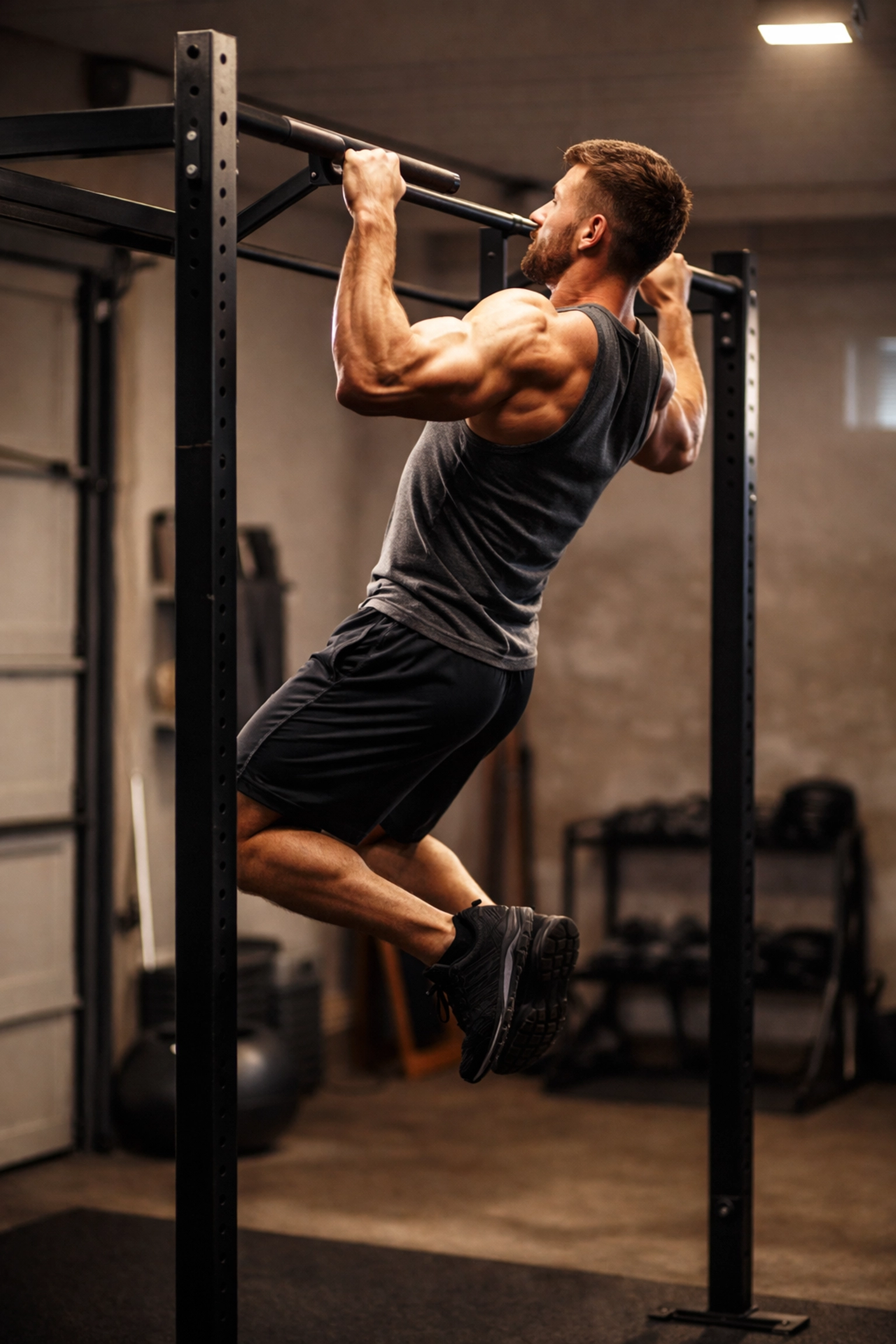
You're counting reps like they're currency. "I did 20 push-ups!" But those push-ups looked like a fish flopping on dry land. Half range of motion. Elbows flaring. Lower back sagging.
Quantity without quality is a recipe for plateau city: and potentially serious injury.
The Fix: Slow down. Film yourself. Use a mirror if you have one in your training space. Focus on:
- Full range of motion on every rep
- Controlled tempo (try 3 seconds down, 1 second pause, 2 seconds up)
- Proper joint alignment throughout the movement
Master the basics before you chase advanced skills. A perfect pull-up beats a sloppy muscle-up every time. Your full body workout at home should prioritize execution over numbers.
Mistake #5: Training Without a Structured Program
"I'll just do what feels right today."
Famous last words of someone who'll look exactly the same in six months.
Random workouts produce random results. Without a structured plan that manages volume, intensity, and progression, you're essentially spinning your wheels.
The Fix: Follow a proven program or build one with clear progression markers. Your calisthenics equipment for home is only as effective as the program you run on it.
A solid beginner structure might look like:
| Day | Focus | Example Movements |
|---|---|---|
| Monday | Push + Core | Push-up progressions, dips, hollow holds |
| Wednesday | Pull + Grip | Pull-ups, rows, dead hangs |
| Friday | Legs + Full Body | Squats, lunges, burpees |
Commit to a program for at least 8-12 weeks before making major changes. Small tweaks are fine. Complete overhauls every two weeks will get you nowhere.

Mistake #6: Ignoring Recovery Like It Doesn't Matter
Here's something most people miss: You don't get stronger during your workout. You get stronger during recovery.
Training creates the stimulus. Sleep, nutrition, and rest allow your body to adapt and rebuild stronger than before.
Grinding seven days a week doesn't make you hardcore. It makes you overtrained, burned out, and injured.
The Fix: Build recovery into your program like it's a mandatory appointment:
- Sleep: Aim for 7-9 hours. This is non-negotiable for serious athletes.
- Active recovery: Light walking, stretching, or foam rolling on off days.
- Deload weeks: Every 4-6 weeks, reduce volume by 40-50% to let your body catch up.
Your bodyweight training at home schedule should include at least 2-3 rest days per week, especially if you're a beginner.
Mistake #7: Neglecting Mobility and Core Training
You want the front lever. You want the human flag. You want to flow through muscle-ups like water.
But your shoulders are tight as guitar strings, and your core stability is basically non-existent.
Poor mobility limits your range of motion and forces compensatory movement patterns. A weak core means you can't maintain the body tension required for advanced calisthenics skills.
The Fix: Dedicate specific time to both:
For Mobility:
- Daily stretching (even 10 minutes makes a difference)
- Shoulder dislocates with a band or stick
- Deep squat holds
- Thoracic spine rotations
For Core:
- Hollow body holds (the foundation of everything in calisthenics)
- Hanging leg raises
- L-sits
- Plank variations
These aren't optional accessories. They're the foundation that makes advanced skills possible.
Build Your Home Gym the Right Way
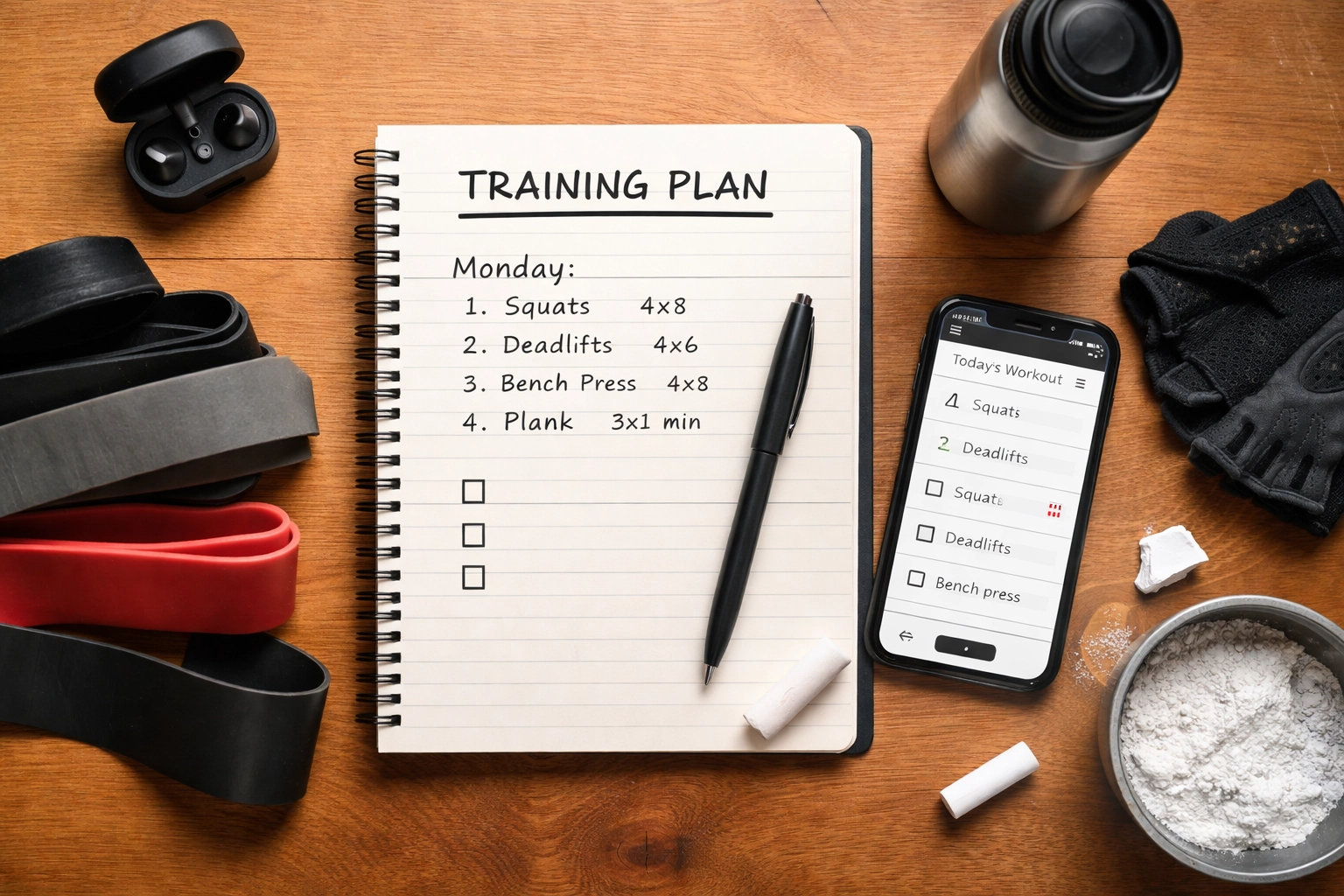
Look: building a serious calisthenics home gym isn't about having the most equipment or the biggest space. It's about making smart choices that support real training progress.
Avoid these seven mistakes, and you'll be ahead of 90% of people training at home.
And when you're ready to upgrade your setup with calisthenics equipment for home that won't wreck your walls or limit your training options, check out the Resistance Rail. It's the pull up bar alternative built for athletes who refuse to compromise.
Browse our full collection at the Bold Body Fitness shop and start training like you mean it.
Now get after it.
