
Let’s be real: most home gyms are a joke. You’ve got a dusty yoga mat in the corner, a couple of mismatched dumbbells, and maybe one of those door-frame pull-up bars that feels like it’s about to rip the trim off every time you go for a rep. You’re trying to stay sharp, maybe you’re training for a Spartan race, keeping your BJJ game tight, or you're a calisthenics beast, but your home setup is holding you back.
Resistance training at home should be the ultimate hack for your performance. No commute, no waiting for the squat rack, and no "fitness influencers" filming themselves in the mirror while you’re trying to work. But if you’re not seeing the gains you expect, it’s not because home workouts don’t work. It’s because you’re likely making the same seven mistakes that kill progress for 90% of people.
At Bold Body Fitness, we don’t do "good enough." We build gear for people who demand more. Whether you’re a ninja warrior or a CrossFit athlete, it’s time to stop training like an amateur and start dominating your living room.
Here are the 7 deadly sins of home resistance training and exactly how to fix them with the right mindset and a versatile home gym setup.
1. The "Cold Start" Sabotage: Skipping Your Warm-Up
I get it. You have 45 minutes between Zoom calls or before the kids wake up. You want to get straight to the heavy stuff. But jumping into a high-intensity full body workout at home without priming your central nervous system (CNS) is like redlining a cold engine. You’re asking for a snap, a pop, or at the very least, a subpar performance.
Static stretching isn't the answer either. Holding a hamstring stretch for 30 seconds actually reduces your power output. For serious athletes, gymnasts, MMA fighters, and powerlifters, this is a momentum killer.
The Fix: Dynamic Movement Preparation
You need to wake up your stabilizers. Spend 8 minutes on dynamic movements:
- Arm Circles and Band Pull-Aparts: Engage the scapula.
- Hip Hinges and Leg Swings: Get the posterior chain firing.
- Pogo Hops: Wake up the CNS for explosive power.
If you’re using the Resistance Rail, you can quickly set your fitness straps at chest height for some low-tension face pulls. This preps your shoulders for the real work ahead without wasting time.

2. The Repetition Trap: Zero Periodization
If your "workout" is just doing the same three circuits you found on YouTube three years ago, you aren't training; you're just exercising. There's a difference. Training has a goal. Training has a trajectory.
Your body is a master of adaptation. If you do the same 12-rep sets of push-ups and lunges every Tuesday, your muscles eventually say, "Cool, I know how to do this," and they stop growing. This is where plateaus come to die.
The Fix: Rotate Your Training Phases
To see real results, you need to vary your stimulus. Use your home gym equipment to rotate through these three phases:
- Strength Phase: Low reps (3-6), high tension, long rest. Think heavy resistance band presses or weighted pull-ups.
- Hypertrophy Phase: Moderate reps (8-12), controlled tempo, shorter rest. This is where you build the muscle.
- Power/Speed Phase: Explosive movements. Think plyometric push-ups or high-velocity rows using the Resistance Rail Standard.
3. Anchor Anarchy: Using Flimsy Support Points
This is the biggest mistake home athletes make. You’re trying to do a high-tension row or a chest fly, but you’re anchored to a door handle or a shaky table leg. Not only is this dangerous, but it also creates a psychological ceiling. You won't pull with 100% intensity if you’re subconsciously worried the door is going to fly open and smack you in the face.
For serious calisthenics equipment for home, you need a rock-solid foundation. You can’t reach elite levels of strength if your equipment is moving more than you are.
The Fix: The Resistance Rail System
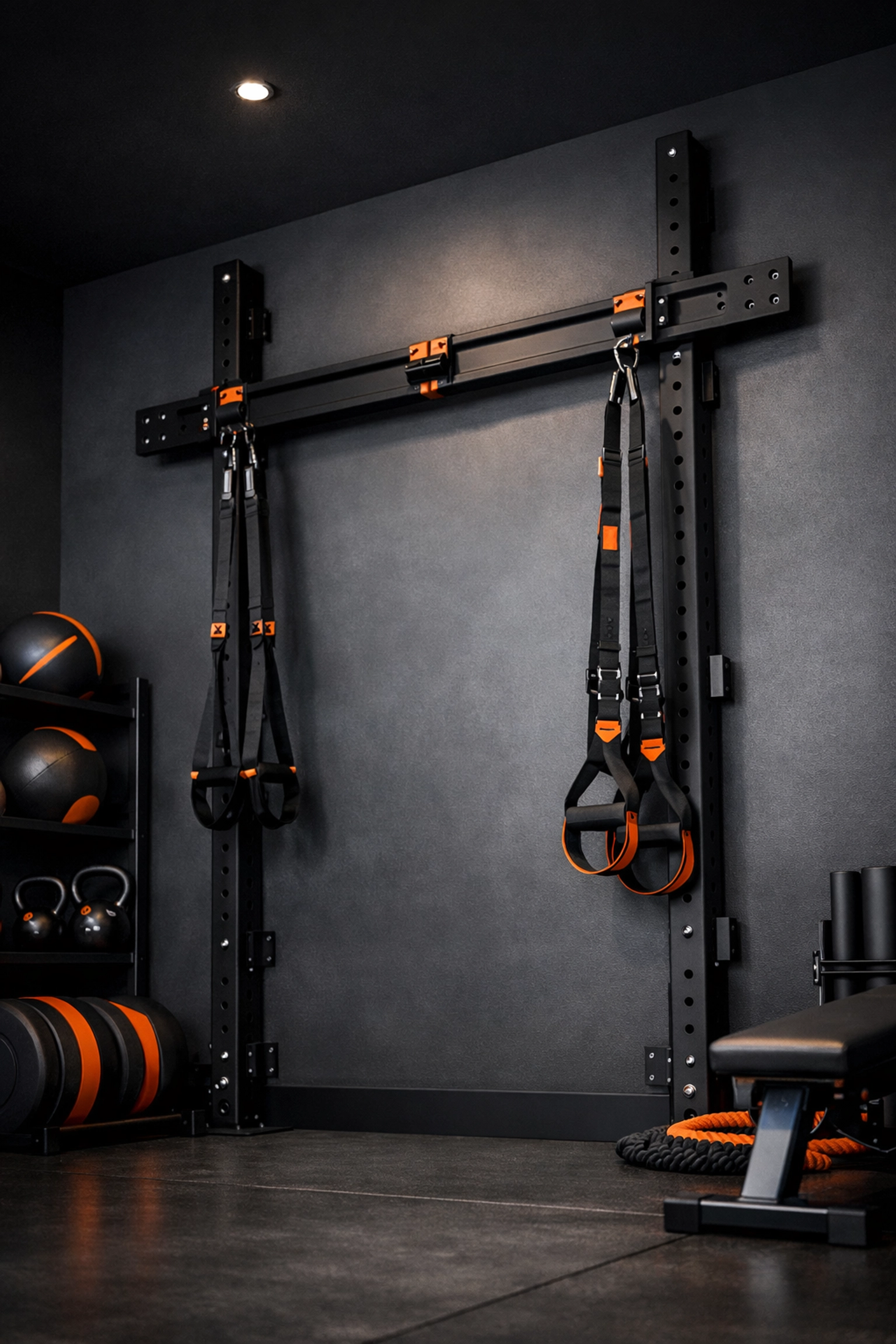
Stop trusting your furniture with your fitness. The Resistance Rail Deluxe is a floor to ceiling gym solution that provides a permanent, professional-grade anchor point.
Because it’s a no wall damage workout system, you can install it in an apartment or a finished basement without losing your security deposit. It gives you the stability of a commercial power rack with the footprint of a coat rack. When your anchor point is fixed and reliable, you can finally put 100% of your effort into the movement.
4. The "Ghost" Form: Training Without Visual Feedback
In a commercial gym, you have mirrors everywhere. While that can be annoying, it serves a purpose: biofeedback. At home, you’re often training in a vacuum. You think your back is flat during that row, but in reality, your shoulders are hunched, and your lower back is doing all the work.
Over time, these micro-compensations lead to "mystery" injuries that sideline your progress.
The Fix: Record and Review
If you don't have mirrors, you have a smartphone. Set it up and record one set of every exercise from the side. Compare your form to high-level tutorials.
- Look for: Spinal alignment, range of motion, and symmetry.
- The Advantage of a Rail: Using a system like the Resistance Rail allows for consistent lines of tension. Unlike loose bands that can snap or roll, the rail keeps the resistance vector constant, making it easier to maintain perfect form throughout the entire rep.
Check out our community forums to discuss form tips with other athletes who are crushing their home goals.
5. The "Light Band" Delusion: Lack of Progressive Overload
Most people think resistance bands are just for physical therapy or "toning." They buy the cheapest set of bands on Amazon and wonder why they aren't getting stronger. If you can do 30 reps of an exercise without breaking a sweat, you aren't building strength; you're just moving.
To get the results of a CrossFit home gym, you need to respect the law of progressive overload. You must constantly increase the demand on your muscles.
The Fix: High-Tension Loading
You need gear that scales with you. Instead of just adding "more reps," add more tension.
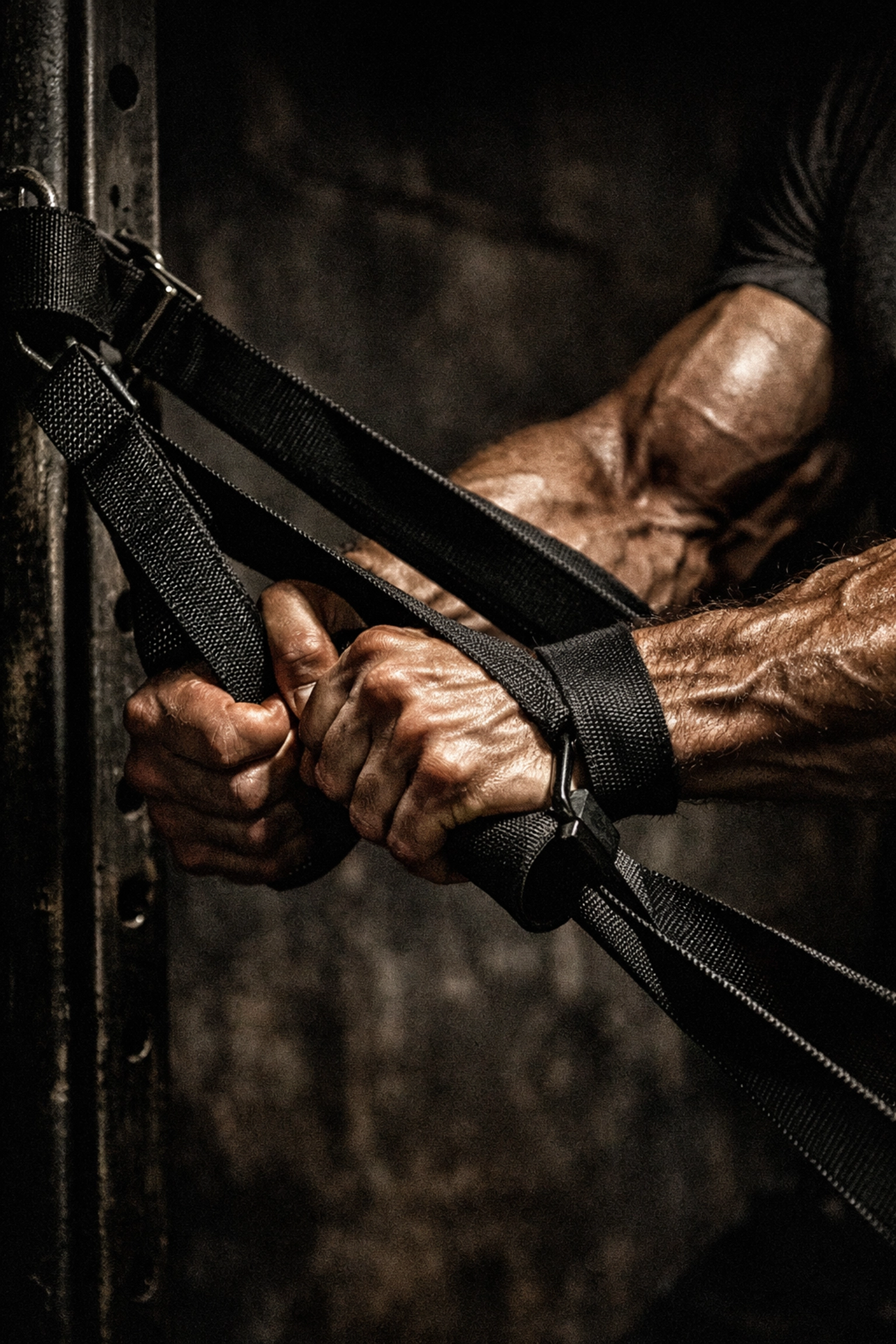
- Shorten the Band: Use the sliding anchors on your Resistance Rail to take the slack out of the band before you even start the movement.
- Combine Modalities: Mix bodyweight training with resistance. Try wearing a weighted vest while doing gymnastic rings dips anchored to your rail.
- Slow Down: Increase "Time Under Tension" by taking 4 seconds to lower the weight (eccentric phase).
6. The "All-Gas, No-Brakes" Mentality: Overtraining
Serious athletes have a hard time sitting still. You feel like if you aren't dripping sweat 7 days a week, you're losing ground. But muscle isn't built in the gym (or the living room); it's built in bed while you sleep.
Overtraining leads to elevated cortisol, tanked testosterone, and a plateau that feels like hitting a brick wall. If your grip strength is failing or you’re feeling uncharacteristically moody, you’re likely overdoing it.
The Fix: Strategic Deloading
Every 4 to 6 weeks, implement a "Deload Week."
- Reduce Volume: Cut your sets in half.
- Reduce Intensity: Use lighter bands or bodyweight-only movements.
- Focus on Mobility: Use this time to work on joint health using cannonballs for grip training or battle ropes for low-impact conditioning.
Remember, a deload isn't a week off; it's a week of active recovery that primes you to smash new PRs the following Monday.
7. The Push-Dominant Physique: Ignoring the Posterior Chain
Most home workouts are heavily biased toward "push" movements: push-ups, dips, and squats. Why? Because pulling movements are hard to do at home without the right equipment. You can do a push-up anywhere, but a heavy row or a pull-up requires a solid anchor.
Ignoring your "pull" muscles (back, rear delts, hamstrings) leads to the "caveman posture": rounded shoulders and a forward-leaning neck. For MMA fighters and gymnasts, this imbalance is a recipe for rotator cuff tears.
The Fix: Become a Pulling Machine
You need a pull up bar alternative that actually works.
- Face Pulls: Essential for shoulder health.
- High-to-Low Rows: Mimics the mechanics of a pull-up without needing 8 feet of ceiling clearance.
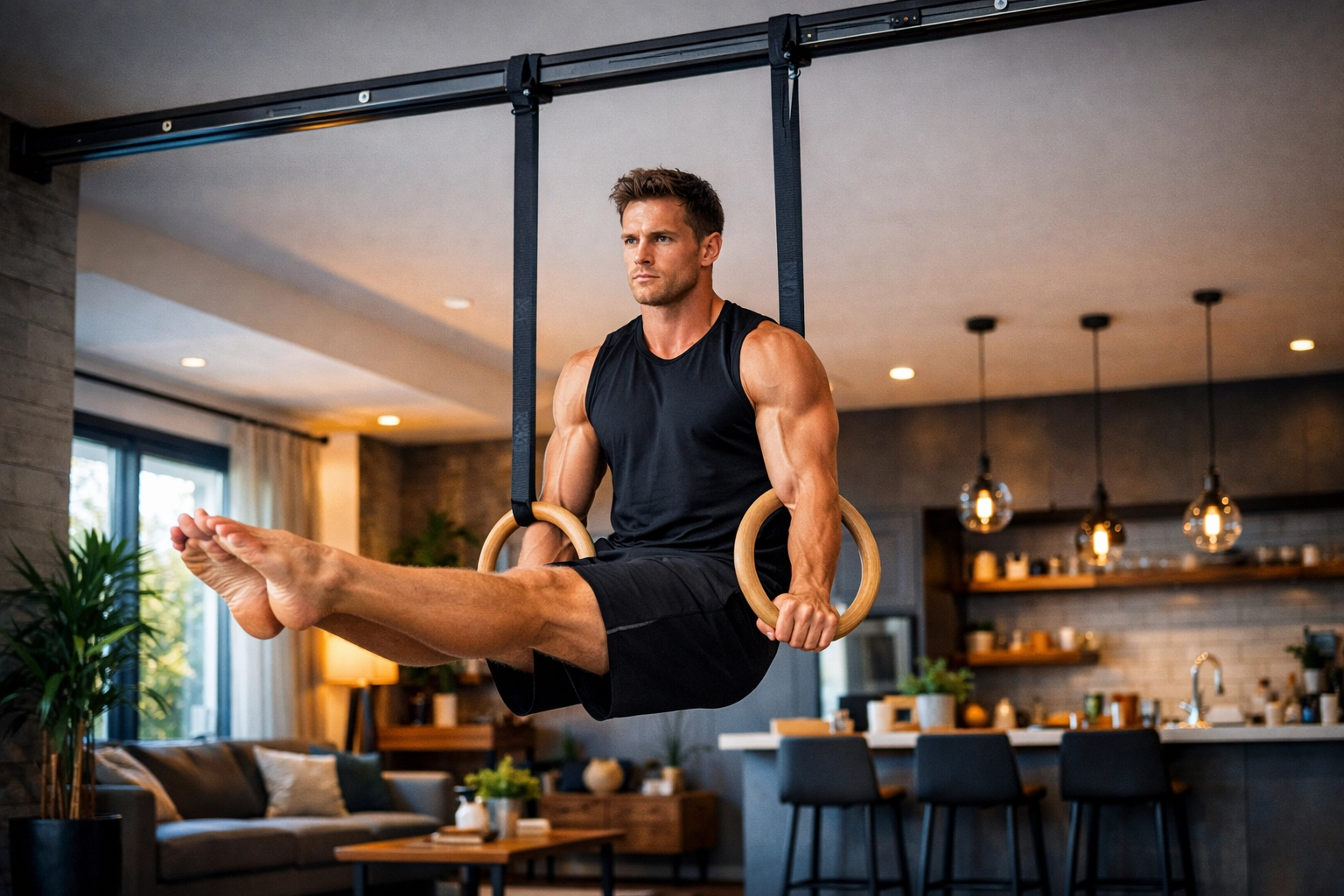
- Ring Rows: Attach gymnastic rings to your Resistance Rail for the ultimate back-building exercise.
By balancing your push and pull volume (aim for a 1:1 or even 2:1 pull-to-push ratio), you’ll build a resilient, injury-proof body that looks as good as it performs.

Why the Resistance Rail is the Game Changer for Home Athletes
If you’re serious about bodyweight training at home, you eventually realize that your environment is your biggest limitation. You need a setup that is as "Bold" as your goals.
The Bold Body Fitness Resistance Rail was designed to solve every single one of these common mistakes.
- Versatility: It transforms any room into a high-performance training center.
- Reliability: No more sliding door anchors or shaky equipment.
- Space-Saving: It stays out of the way, making it the perfect versatile home gym for those who don't have a dedicated 500-square-foot garage to work with.
Specialized Training for Elite Disciplines
- Ninja Warriors: Use the rail to mount different grip attachments and practice vertical transitions.
- Gymnasts: Perfect your iron cross or ring dips with stable, adjustable anchor points.
- CrossFitters: Get your metcons in with high-intensity band work that mimics cable machines and pull-up stations.
- MMA Fighters: Work on explosive rotational power and clinch strength by anchoring heavy-duty bands at varying heights.
Stop Making Excuses, Start Making Gains
The current date is April 2026. If you’re still using the same excuses about why your home workouts aren't "clicking," it’s time for a change. You don't need a $10,000 commercial setup to get elite results. You need the right strategy and the right gear.
Fix your warm-up, vary your routine, secure your anchors, and for the love of gains, stop skipping your pull days.
Ready to transform your space? Visit the Bold Body Fitness Shop and check out the Resistance Rail Deluxe. It’s time to stop training like a guest in your own home and start owning your fitness.
Go to the homepage to see our full lineup of professional-grade gear, or join our members area to connect with a community of athletes who refuse to settle for average.
Stay Bold. Train Hard. No Excuses.
Brian Kerr
Founder, Bold Body Fitness
