
Let’s be real: most home gyms are where fitness dreams go to die. They start with a burst of motivation, a couple of expensive dumbbells, and maybe a doorway pull-up bar that eventually turns into a very expensive coat rack. If you’re a serious athlete: a ninja warrior, a gymnast, a CrossFit fanatic, or an MMA fighter: you know that “working out” isn’t enough. You need to train.
At Bold Body Fitness, we don’t do average. We don’t do "good enough." We build equipment for people who want to push the boundaries of what their bodies can do without turning their living room into a construction zone. But even with the best home gym equipment, you can still fail if your approach is soft.
Resistance training is the foundation of human performance. Whether you’re chasing a faster sprawl, a cleaner muscle-up, or just a physique that looks like it was carved out of granite, you need to avoid the pitfalls that trap 90% of home trainees.
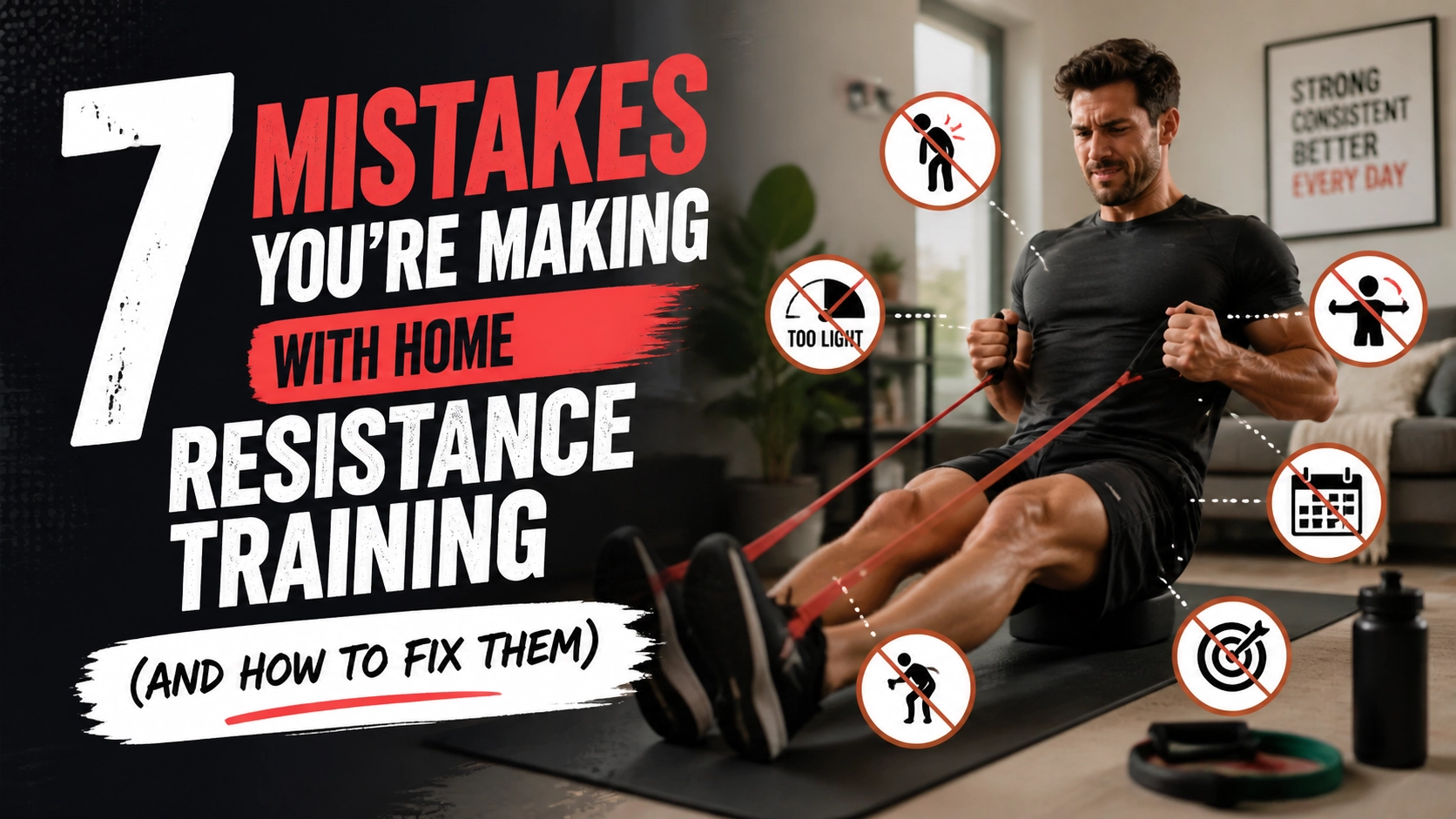
Here are the 7 mistakes you’re making with home resistance training and exactly how to fix them so you can start seeing the gains you actually deserve.
1. Skipping the Warm-Up (The "Cold Start" Sin)
You walk into your garage or spare room, see your floor to ceiling gym setup, and immediately try to hit a personal best. Bad move. Going from zero to sixty: from sitting on a Zoom call to performing explosive bodyweight training at home: is a recipe for a torn rotator cuff or a nagging hamstring strain.
The Problem:
Cold muscles are brittle. Stiff joints have limited range of motion. When you skip the warm-up, you’re not just risking injury; you’re leaving performance on the table. You can’t recruit maximum muscle fibers when your nervous system is still asleep. For ninja warriors and gymnasts, shoulder health is everything. Skipping the prep is professional suicide.
The Fix:
Dedicate 10 minutes to what we call "Active Readiness."
- General Movement (3 min): Get the blood flowing. Jump rope, do some shadow boxing, or high knees.
- Dynamic Mobility (5 min): Focus on the joints you’re about to abuse. Arm circles, hip hinges, and cat-cow stretches.
- Specific Prep (2 min): Use light bands or a low-tension setting on your Resistance Rail to mimic the movements you're about to do.
If you don't have time to warm up, you don't have time to train. Period.

2. Ego Lifting and Trash Form
We see it all the time in the Bold Body Fitness forums: someone posting a video of a "heavy" row that looks more like a full-body seizure. At home, you don't have a coach breathing down your neck. It’s easy to let your ego take the wheel, especially when you’re trying to level up your calisthenics equipment for home workouts.
The Problem:
In the world of resistance training, quality beats quantity every single time. If you’re using momentum to swing a weight or "kipping" your way through a rep that should be strict, you aren’t actually getting stronger: you’re just getting better at cheating. This is especially dangerous for MMA fighters who need functional strength, not just "vanity" reps.
The Fix:
- Own the Eccentric: Spend 3 seconds on the lowering phase of every rep. If you can’t control the weight on the way down, it’s too heavy.
- Full Range of Motion (ROM): Don’t do half-reps. Go all the way down and all the way up.
- Film Your Sets: Use your phone to record your form from the side. Compare it to professional demos. Check out our gymnastic shots section to see what peak form actually looks like.
3. Using the Wrong Resistance (The Plateau Trap)
This is the most common mistake with a versatile home gym. Either you’re using bands that are so light you could do 100 reps, or you’re trying to use a tension level that breaks your form on rep one.
The Problem:
To grow muscle (hypertrophy) and build real-world strength, you need to stay in the "effective rep" zone. If you’re doing full body workouts at home and you aren't struggling by the end of your set, you’re just doing cardio. On the flip side, if you're grinding through reps with zero control, you're just begging for an injury.
The Fix:
You need a system that allows for micro-adjustments. This is why we engineered the Resistance Rail. It’s a no wall damage workout system that gives you the ability to slide your anchor points and change resistance levels instantly.
- For Strength: Aim for a resistance where you fail at 4–6 reps.
- For Hypertrophy: Aim for 8–12 reps where the last two are absolute grinders.
- The "Two-Rep" Rule: If you can do two more reps than your target with perfect form, it’s time to increase the resistance.

4. Doing the Same Boring Routine Forever
Human beings are creatures of habit. You find a routine that works, and you stick to it for six months. Suddenly, you realize you haven’t gained a pound of muscle or added a single pound of tension in eight weeks.
The Problem:
The body is an adaptive machine. Once it gets "good" at an exercise, it stops changing. If you want a crossfit home gym experience that actually produces results, you need to introduce variety. Not "muscle confusion" nonsense, but strategic variation.
The Fix:
Rotate your movements every 4–6 weeks. If you’ve been doing standard push-ups, switch to gymnastic rings for added instability. If you’re used to horizontal rows, switch to a vertical pull.
The Resistance Rail Deluxe is the ultimate pull up bar alternative because it allows for 360-degree movement. You can go from a chest press to a woodchopper to a high-to-low row without changing equipment. Keep your body guessing, and it will keep growing.
5. Neglecting Core Engagement (The "Wet Noodle" Syndrome)
Whether you’re a gymnast holding a planche or an MMA fighter throwing a hook, your power comes from your core. Yet, most home trainees treat core work as an afterthought: something they do for two minutes at the end of a session.
The Problem:
If your core isn’t locked in during your main lifts, you’re "leaking" power. An unstable spine leads to shoulder issues, lower back pain, and a massive drop in force production. You can have the best home gym equipment in the world, but if your midsection is soft, your performance will be too.
The Fix:
- Brace Like You’re About to Get Hit: Before every set, inhale into your belly and tighten your abs, obliques, and lower back.
- Incorporate Anti-Rotation: Movements like the Pallof press (easily done on a Resistance Rail Standard) teach your core to resist movement, which is the secret to elite-level stability.
- Check the Forums: We have specific threads on flexible muscle stretches and core stability that can help you bridge the gap.

6. No Tracking or Progression Plan
If you don’t measure it, you can’t improve it. "Winging it" is for amateurs. If you’re serious about resistance training, you need to know exactly what you did last Tuesday so you can beat it today.
The Problem:
Most people walk into their home gym and do "whatever feels right." This usually results in doing the exercises you’re already good at and avoiding the ones that actually make you better. Without a log, you have no way of knowing if you're actually applying progressive overload.
The Fix:
- The Logbook: Whether it’s a physical notebook or an app, track your sets, reps, and the specific tension level on your gear.
- Set Micro-Goals: "Today I will do one more rep than last week," or "Today I will slow down the eccentric by one second."
- Join the Community: Share your progress in our group forums. Having others hold you accountable is the fastest way to stay on track with your full body workout at home.
7. Ignoring Recovery and Life Stress
You don’t get stronger in the gym. You get stronger while you sleep. The "no days off" mentality is great for Instagram captions, but it’s terrible for actual athletic progression.
The Problem:
If you’re training like a beast but sleeping four hours a night and eating like a toddler, you’re going to burn out. High intensity bodyweight training at home places a massive load on your central nervous system (CNS). If you don't respect the recovery process, your performance will tank, and your cortisol levels will skyrocket.
The Fix:
- The 8-Hour Rule: Aim for 7–9 hours of quality sleep. This is when your body repairs tissue and releases growth hormones.
- Protein is King: Aim for 1 gram of protein per pound of body weight to support muscle repair.
- The Deload Week: Every 4–6 weeks, cut your volume (sets and reps) by 50%. Let your joints and CNS catch up. You’ll come back the following week stronger than ever.
- Manage Stress: If you had a brutal day at work, maybe don't go for a 1-rep max. Adjust your intensity to match your "life-load."
Why Your Gear Matters
Mistakes in technique are one thing, but being limited by your equipment is another. Most people think they need a massive rack of dumbbells or a wall-mounted cage to get a real workout. They’re wrong.
The Resistance Rail was born out of the need for a no wall damage workout system that actually performs like a commercial gym. We wanted a floor to ceiling gym that could withstand the power of a CrossFit athlete and the precision of a gymnast.
Traditional resistance bands snap or slide around. Doorway pull-up bars ruin your trim and limit your movement. Our system gives you a rock-solid, versatile home gym that scales with you. As you get stronger, you simply adjust the tension or the angle. It’s the ultimate pull up bar alternative and calisthenics equipment for home combined into one sleek, bold package.
Summary of the Bold Fixes
| Mistake | The Bold Fix |
|---|---|
| Skipping Warm-up | 10 mins of Active Readiness; get the blood moving. |
| Ego Lifting | 3-second eccentrics; film your form for a reality check. |
| Wrong Resistance | Use the Resistance Rail to find the 8-12 rep "grind" zone. |
| Same Routine | Swap movements every 4 weeks; introduce rings or new angles. |
| Weak Core | Brace your belly like you're taking a punch; every lift is a core lift. |
| No Tracking | Log every set and rep; stop guessing, start measuring. |
| Poor Recovery | 8 hours of sleep and a deload week every month. |
Stop Making Excuses, Start Making Gains
Home resistance training isn't just about convenience; it's about taking control of your environment. You don't need a 5,000-square-foot facility to become an elite athlete. You need the right mindset, a solid plan, and gear that doesn't hold you back.
If you’re tired of plateauing and you’re ready to take your bodyweight training at home to a professional level, it’s time to audit your training. Are you making these seven mistakes? If so, fix them today. Don't wait until Monday. Don't wait until "next month."
Check out our full range of home gym equipment at the Bold Body Fitness Shop and find the system that fits your goals. Whether you need the Resistance Rail Deluxe for a complete overhaul or just some high-quality fitness straps to add variety, we’ve got you covered.
Stay bold. Train hard. No excuses.

Ready to dive deeper?
Join the conversation on our topics page or find a training partner in the buddy travel group. Whether you're looking for the best cardio exercise or tips on abdominal training, our community of serious athletes is here to help you crush your goals.
