
Let’s be real for a second. You didn’t build a home gym to play around. Whether you're a Ninja Warrior training for the next obstacle, a gymnast perfecting your iron cross, or an MMA fighter looking for that explosive edge, you’re in this to win. You want power, you want mobility, and you want a body that looks like it was carved out of granite.
But here’s the cold, hard truth: most of you are sabotaging your gains before you even break a sweat.
I’m Brian Kerr, founder of Bold Body Fitness, and I’ve seen it all. I’ve seen guys with $10,000 setups who can’t do a proper pull-up, and I’ve seen calisthenics pros plateauting because they refuse to evolve their gear. Home resistance training is the ultimate test of discipline, but if you’re making these seven mistakes, you’re just spinning your wheels in your garage.
It’s time to stop training soft. It’s time to get bold. Here are the seven mistakes killing your progress and exactly how we’re going to fix them.
1. Skipping the Warm-Up (The "Injury Fast-Track")
I get it. You have 45 minutes between work calls and you want to jump straight into heavy rows or explosive muscle-ups. You think your body is a machine that just flips a switch.
It’s not.
When you skip a warm-up, you aren't just "saving time." You are fast-tracking injuries like torn labrums, blown-out knees, and chronic tendonitis. For the high-level calisthenics practitioner or gymnast, your tendons often lag behind your muscle strength. If you load them cold, something is going to snap.
The Mistake: Jumping straight into high-intensity movements without preparing your central nervous system (CNS) and joints.
The Fix: You need 5-8 minutes of dynamic movement preparation. Forget static stretching: holding a pose for 30 seconds actually cools your muscles down and reduces power output. Instead, use your home gym equipment to get blood flowing.
Think arm circles, hip hinges, leg swings, and pogo hops. If you’re using a floor to ceiling gym setup like our Resistance Rail, use light-tension bands to perform high-rep face pulls and overhead reaches. Get those stabilizers awake and screaming before you ask them to carry your body weight.

2. Repetitive Routines Without Variation
If I see one more "3 sets of 10 push-ups" routine, I’m going to lose it.
The human body is an incredible machine of adaptation. If you do the same thing every Tuesday for three months, your body stops seeing a reason to grow. It has already mastered that challenge. Routine is the enemy of growth. It leads to overuse injuries because you’re hitting the same joints at the exact same angles every single time.
The Mistake: Doing the same "bodyweight training at home" routine until you’re bored and broken.
The Fix: Periodize your training. You need to rotate through different phases: Strength, Hypertrophy, and Power/Speed.
- Strength Days: Focus on high tension, low reps, and long rest periods.
- Hypertrophy Days: Aim for the 8-12 rep range with controlled eccentric (lowering) phases.
- Power Days: This is where our CrossFit home gym enthusiasts thrive. Explosive movements, plyometrics, and high-velocity pulls.
Change your angles. If you always do horizontal rows, switch to a high-to-low diagonal pull using the Resistance Rail. By varying the vector of resistance, you force your stabilizing muscles to adapt to new stresses. That’s how you build real-world, functional power.
3. Using Equipment That Limits Your Potential
Look, those doorway pull-up bars are great for college dorm rooms. But you aren't in a dorm anymore. If you’re a serious athlete, you cannot rely on gear that makes you feel "shaky." If you don’t trust your equipment, you will subconsciously hold back. You won’t pull with 100% intensity because, deep down, you’re afraid the bar is going to rip out of the trim.
The Mistake: Settling for subpar gear because of space concerns or "no wall damage" fears.
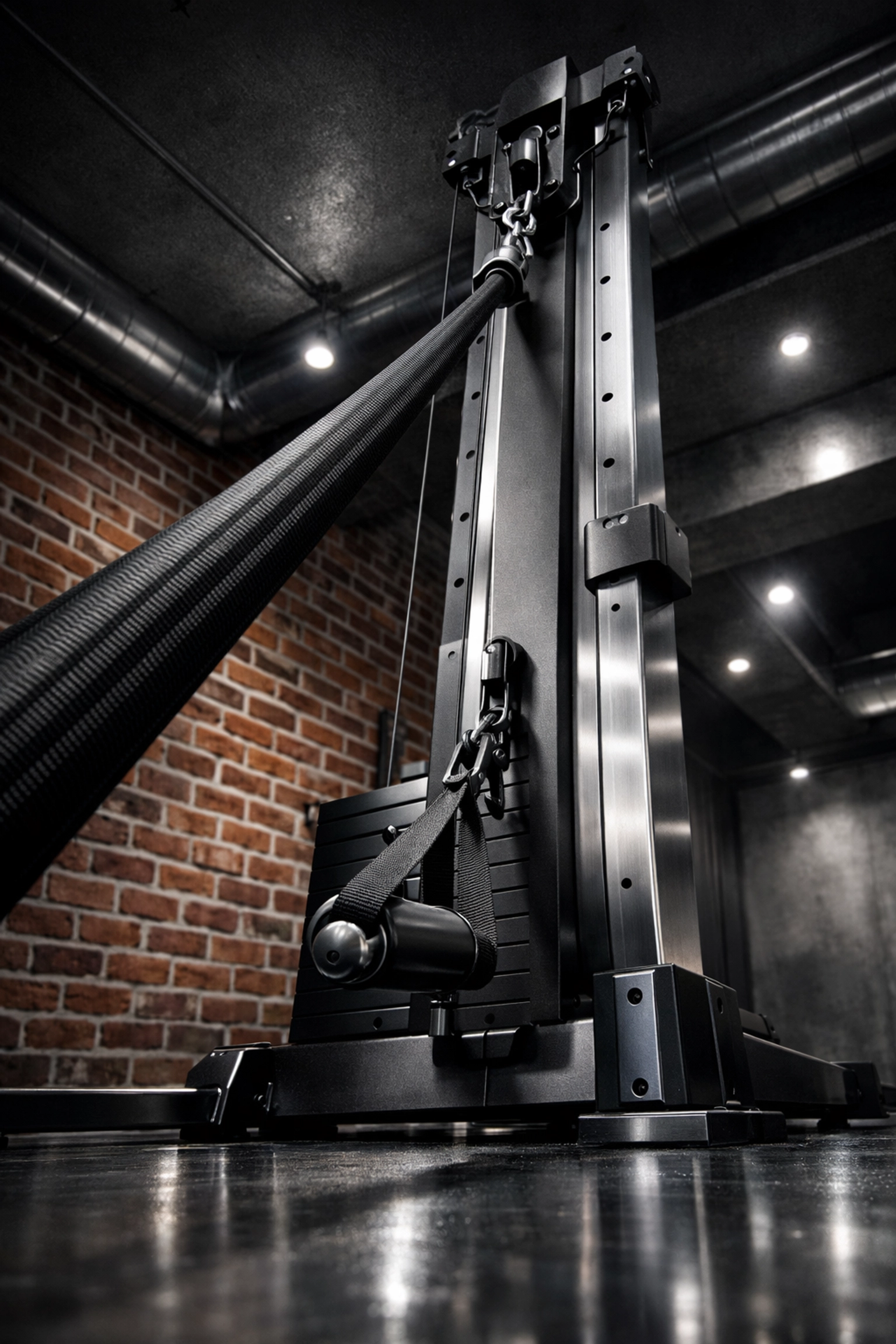
The Fix: Invest in a versatile home gym system that actually supports elite-level movement. This is exactly why we built the Resistance Rail at Bold Body Fitness. It’s a no wall damage workout system that uses a floor-to-ceiling tension design.
It’s the ultimate pull up bar alternative for people who actually want to train. You can perform explosive calisthenics, heavy resistance band work, and gymnastic ring movements without ever worrying about stability. If you want to train like a pro, you need professional-grade calisthenics equipment for home. Stop training in fear.
4. Poor Form and Compensation Patterns
In a commercial gym, you have mirrors and maybe a trainer watching your back. At home, it’s just you and the wall. Without professional feedback, you will inevitably develop compensation patterns. Your dominant side takes over, your lower back arches to compensate for weak lats, and suddenly your "full body workout at home" is actually just a "how to hurt your lower back" session.
The Mistake: Training with "ego form" or lack of visual feedback.
The Fix: Record yourself. I don't care if you think it looks narcissistic. Use your phone to film your sets from the front and the side. Compare your footage to high-quality tutorials.
Furthermore, use equipment with stable anchor points. When you use flimsy door anchors for resistance bands, the angle is never consistent. The anchor slides, the tension shifts, and your form breaks. A fixed, vertical rail system allows for consistent force vectors, ensuring that when you’re doing a chest press or a row, the resistance is exactly where it’s supposed to be.
5. Not Tracking Your Progress
If you can’t measure it, you can’t improve it.
I see guys who have been doing "bodyweight training" for years, yet they still struggle with the same number of reps. Why? Because they have no idea what they did last week. They just "wing it." This is a recipe for a plateau that will last a lifetime.
The Mistake: Training based on "feel" instead of data.
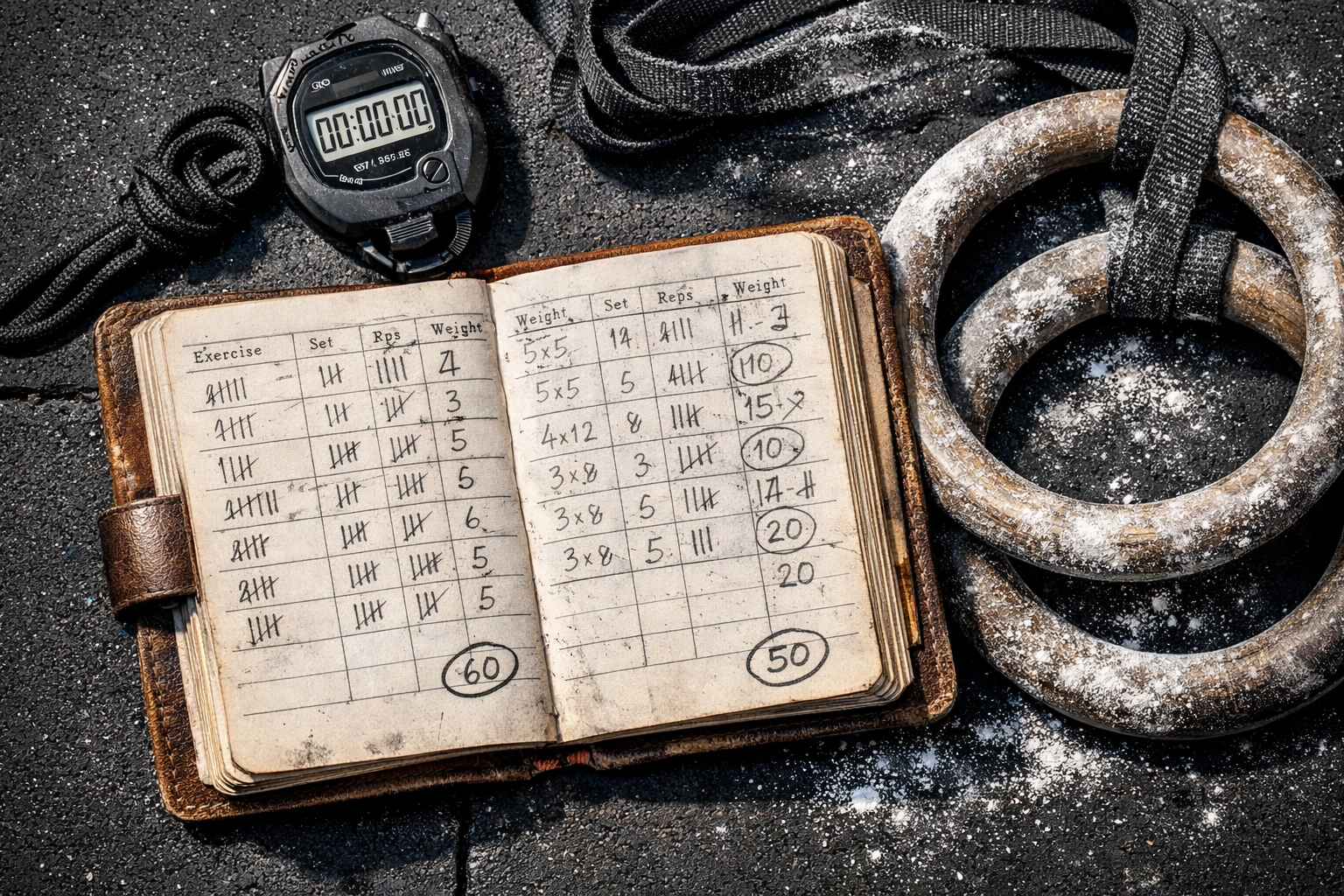
The Fix: Keep a dedicated training log. Whether it’s an app or an old-school notebook, track every set, every rep, and every second of your isometric holds.
If you’re a gymnast working on a front lever, track the seconds held and the angle of your legs. If you’re using home gym equipment like the Resistance Rail, track the specific band tension and the height setting of your rail carriage. Aim for a 1-5% improvement every single week. That might mean one extra rep, five more pounds of tension, or five seconds less rest. Small wins lead to massive transformations.
6. Using "Dead" Resistance Levels
This is the biggest issue with home resistance training. People think that because they have a set of bands or can do 50 push-ups, they are "strong."
Let me be clear: if you can do more than 15 reps of an exercise with perfect form, you are no longer building significant strength: you’re building endurance. To build the kind of explosive power required for MMA or CrossFit, you need Progressive Overload.
The Mistake: Using the same worn-out bands or movements that are too easy.
The Fix: Increase the challenge. You have to find ways to make the movement harder.
- Change the Angle: On the Resistance Rail, moving the anchor point higher or lower changes the lever arm and the difficulty.
- Increase Band Tension: Stop using the "light" band for everything. If it doesn't feel hard by rep 6, it's too light.
- Add Resistance to Bodyweight: Wear a weighted vest or use a band to add resistance to your pull-ups and dips.
Resistance training is about tension. If you aren't creating enough tension to force a muscular adaptation, you’re just doing cardio with extra steps.
7. Inadequate Recovery and Programming
The "No Days Off" mentality is for amateurs. Pros know that you don't grow in the gym; you grow in your sleep.
Serious fitness enthusiasts: especially those doing high-impact training like Ninja Warrior or MMA: often burn out because they treat every single session like a maximum effort competition. Your central nervous system can only take so much "redlining" before it shuts you down.
The Mistake: Training at 100% intensity every day without recovery protocols.
The Fix: Program your deloads. Every 4-6 weeks, you need a "deload week." This doesn't mean sitting on the couch eating pizza. It means reducing your intensity and volume by 30-50%.
Prioritize your recovery just as much as your training:
- Sleep: 7-9 hours. No excuses.
- Protein: 0.8g to 1g per pound of body weight.
- Active Recovery: On off days, use your versatile home gym for light mobility work and stretching to keep the joints lubricated.

Stop Making Excuses, Start Building Results
Your home is your sanctuary, but it should also be your laboratory for performance. If you want to excel in calisthenics, CrossFit, or any elite discipline, you have to treat your home training with the same respect you’d give a professional facility.
Stop skipping the warm-up. Stop using gear that belongs in a toy store. Stop guessing your progress.
At Bold Body Fitness, we don’t believe in "good enough." We believe in equipment that works as hard as you do. Our Resistance Rail system was designed to solve these exact problems: giving you a stable, professional-grade platform for a full body workout at home without destroying your walls or limiting your potential.
Are you ready to fix these mistakes and take your training to the next level?
Check out the full Bold Body Fitness lineup and get the gear that matches your ambition:
- Explore the Shop: https://boldbodyfitness.com/shop/
- The Ultimate Resistance Rail: https://www.boldbodyfitness.com/product/resistance-rail-standard
- Join the Conversation: https://www.boldbodyfitness.com/forum-sitemap.xml
Don't just train. Train Bold.
: Brian Kerr
Founder, Bold Body Fitness
