
Listen, I’m not here to sugarcoat it. Most home gyms are a joke. They’re cluttered with dusty treadmills and "as-seen-on-TV" contraptions that have more in common with a coat rack than a squat rack. If you’re serious about bodyweight training at home, you know that your equipment is the bridge between you and elite-level performance.
But here’s the reality: most people setting up a calisthenics equipment for home space are making rookie mistakes that stall their progress, wreck their joints, or: worse: damage their homes. Whether you’re a Ninja Warrior in training, a CrossFit athlete, or an MMA fighter, you need a setup that matches your intensity. At Bold Body Fitness, we don't do "average." We do "uncompromising."
Here are the 7 biggest mistakes you’re making with your home setup and exactly how to fix them so you can start training like a pro.
1. Ignoring the Vertical "Kill Zone"
The biggest mistake I see? People measure their floor space but forget to look up. If you’re planning on doing muscle-ups, explosive pull-ups, or handstand work, a standard doorway bar isn't going to cut it. You need vertical clearance.
Most people install a bar and realize too late that they’re one explosive rep away from a concussion via ceiling fan. You need at least 12 to 18 inches of head clearance above your bar for advanced calisthenics. Without it, you develop a psychological barrier: you stop pulling hard because your brain is scared of the ceiling. That’s a gain-killer.
The Fix: You need a floor to ceiling gym system. Instead of a fixed-height bar that leaves you cramped, look for a solution that maximizes your vertical potential. A tension-based system like the Resistance Rail allows you to position your anchor points exactly where you need them, giving you the freedom to move without hitting the roof.

2. Prioritizing Budget Over Your Own Safety
I get it. Everyone wants a deal. But when you’re hanging your entire body weight: and the force of an explosive movement: on a piece of equipment, "cheap" is a dangerous word.
Cheap home gym equipment usually features thin-walled tubing, questionable welds, and foam grips that turn into a slippery mess the moment you start sweating. If the equipment feels flimsy, you won’t trust it. If you don’t trust it, you won’t go all out.
The Fix: Invest in commercial-grade steel and professional powder-coating. Look for equipment designed for high-intensity resistance training. At Bold Body Fitness, we build gear that can handle the abuse of a professional athlete. Your home gym shouldn't be a collection of "budget" compromises; it should be an arena where you feel invincible. Check out our galleries of gymnastic-level setups to see what real quality looks like.
3. The "Thin Yoga Mat" Fallacy
Most people think a 5mm yoga mat over bare concrete is enough protection. It’s not. Calisthenics involves high-impact landings, heavy pressure during handstands, and significant friction during floor work. Inadequate flooring is a direct path to tendonitis, wrist pain, and chronic joint issues.
If you’re serious about a crossfit home gym vibe, you need to respect the floor as much as the bar. Your joints are your most valuable asset; don’t sacrifice them to save fifty bucks on rubber.
The Fix: Invest in high-density rubber flooring: at least 1/2 inch to 3/4 inch thick. This provides the stability needed for heavy full body workout at home sessions while offering the shock absorption required for plyometrics. A solid base allows you to commit to every movement without the fear of a hard landing.
4. Filling Your Space with Single-Use "Graveyard" Gear
We’ve all seen it: the guy who has a dedicated dip station, a separate pull-up tower, a bulky bench, and a forest of resistance band stands. Suddenly, your "gym" is just a cluttered warehouse where you can’t even find space to do a burpee.
Single-use equipment kills the "flow" of a workout. Calisthenics is about movement and versatility. If your gear doesn't adapt to you, it’s just in the way.
The Fix: Switch to a versatile home gym system. The Resistance Rail is the ultimate pull up bar alternative because it’s not just a bar: it’s a modular ecosystem. It allows you to transition from pull-ups to rows, to dips, to weighted resistance work in seconds, all within a tiny footprint. Stop buying individual pieces of metal and start investing in a system that grows with your strength.
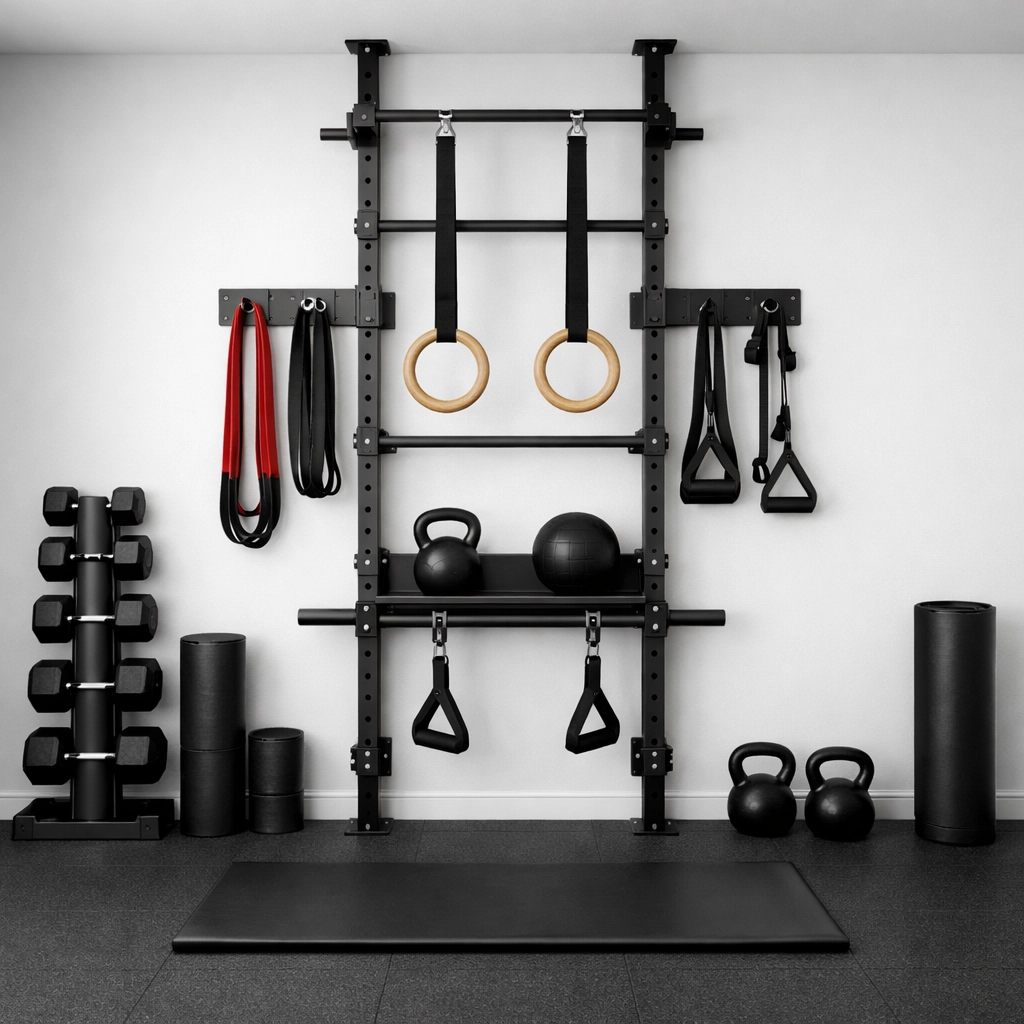
5. Ignoring Your Specific "War Zone" Goals
Are you training for the Octagon? Are you trying to master the Iron Cross? Or are you just trying to get shredded for summer? Your equipment needs to reflect your goals.
Too many people buy gear that doesn't actually help them reach their specific objectives. If you’re a gymnast, you need rings and high-clearance anchors. If you’re an MMA fighter, you need high-intensity resistance points for explosive power.
The Fix: Audit your goals before you spend a dime. Map out your "Action Zone." You need space behind you for rows, space above for vertical pulls, and space in front for band work. If you’re looking for inspiration on how to target specific areas, check out our Perfect Abs guide. Build your gym around the movements you actually want to master, not just what’s on sale.
6. The "Security Deposit" Killer: Wall Damage
This is the classic renter's nightmare. You buy a doorway pull-up bar, and within three weeks, the trim is cracked, the paint is chipped, and your security deposit is gone. Or worse, you try to bolt a rack into the wall and hit a water line or electrical wire.
Traditional wall-mounted racks are great, but they aren't an option for everyone. And let’s be honest: even if you own the place, do you really want to drill 16 holes into your studs just to get a workout in?
The Fix: Opt for a no wall damage workout system. The beauty of a floor-to-ceiling tension system is that it provides the rock-solid stability of a permanent fixture without a single screw in the wall. It’s the perfect solution for anyone who needs professional-grade stability but wants to keep their walls pristine. You can see our range of "renter-friendly" high-performance gear in the Bold Body Fitness shop.
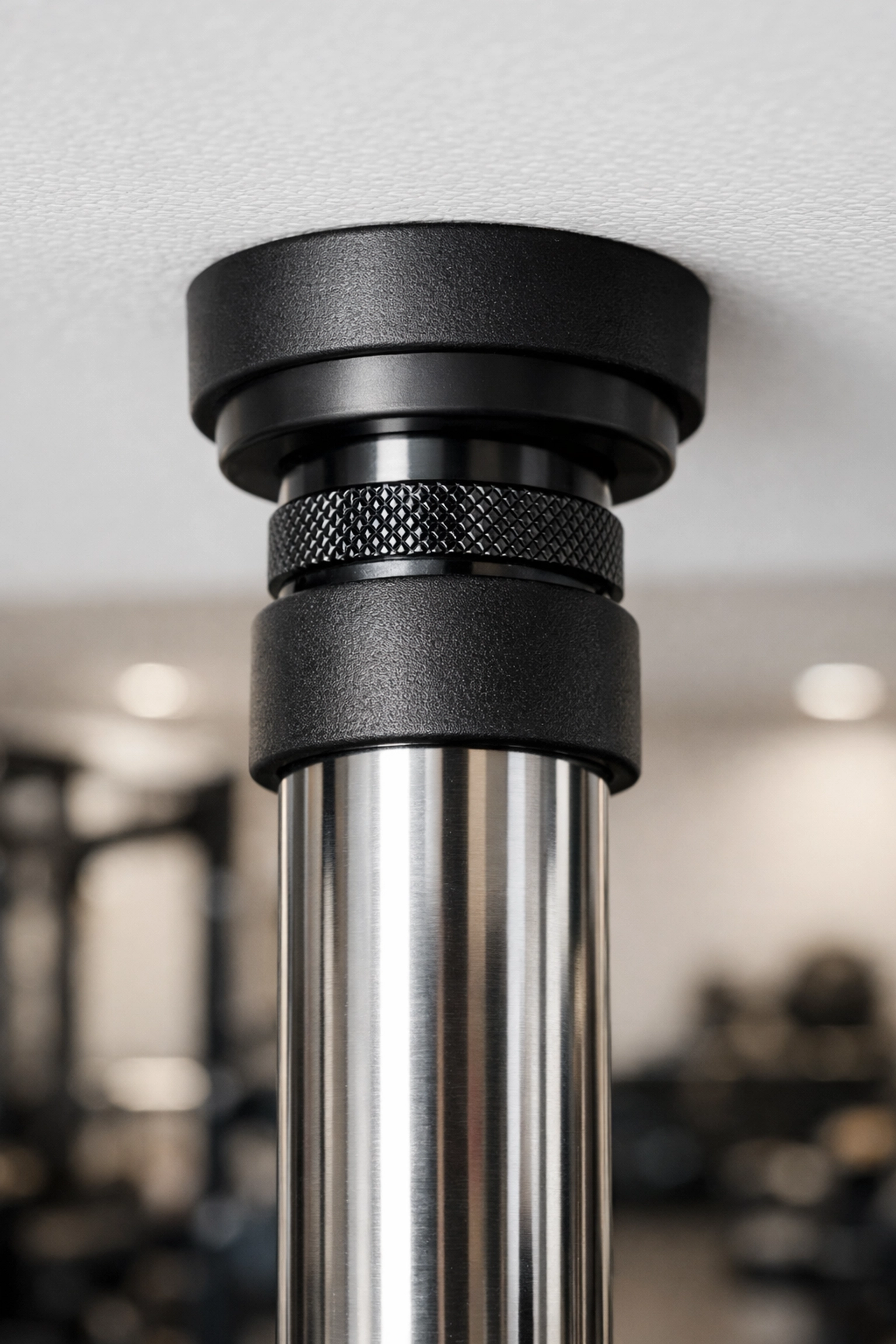
7. Over-Complexity and "Setup Friction"
If your workout requires 20 minutes of assembly and adjusting every time you want to switch exercises, you’re going to quit. Consistency is the only thing that matters in fitness. "Setup friction": the mental and physical hurdle of getting your gear ready: is a silent progress killer.
If you have to drag your equipment out from under the bed and bolt it together every Monday, you’ll find an excuse to skip Tuesday.
The Fix: Keep it permanent and keep it simple. A modular system like the Resistance Rail stays in place but stays out of the way. It’s always ready. You walk up, you grab the bar, and you work. No friction, no excuses. Measure your space once, set up your rail, and then focus 100% of your energy on the reps.
The Bold Bottom Line
Setting up a home gym shouldn't be about making compromises. It should be about creating an environment where you can push your limits without restriction. Whether you’re looking for a pull up bar alternative or a complete floor to ceiling gym, the goal remains the same: total domination of your physical potential.
Stop making these seven mistakes. Stop buying junk. Stop destroying your walls. And most importantly, stop settling for "good enough."
Ready to level up? Check out the full line of Bold Body Fitness gear and transform your home into a world-class training facility.
Check out these resources to get started:
Success isn't owned; it’s leased. And rent is due every single day. Make sure you have the right tools to pay the bill. Stay Bold.
