Look, I get it. You ditched the overpriced commercial gym membership to crush your goals in the comfort of your own living room. You’re a weekend warrior, a calisthenics enthusiast, or maybe a CrossFit athlete who’s tired of the commute. You think bodyweight training at home is the ultimate freedom. And it is: if you do it right.
But here’s the cold, hard truth: most people training at home are spinning their wheels. They’re plateauing, getting injured, or looking exactly the same as they did six months ago.
At Bold Body Fitness, we don’t do "average." We build athletes. Whether you’re training for Ninja Warrior obstacles or just trying to get shredded without destroying your rental’s walls, you need to stop making these amateur mistakes.
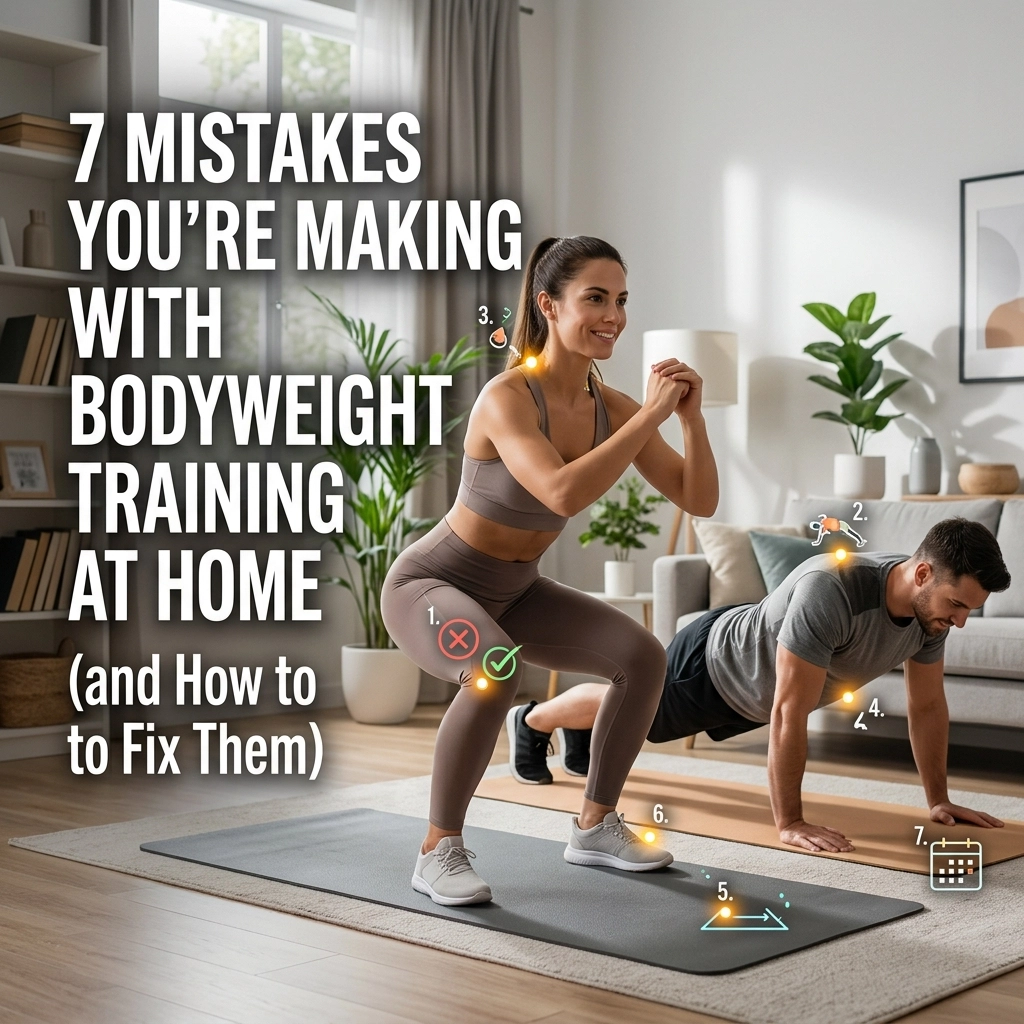
Here are the 7 biggest blunders I see in home-based resistance training and exactly how to fix them so you can build a physique that actually performs.
1. You’re Treating Your Warm-Up Like an Option
Most guys walk into their "home gym" (which is usually just a yoga mat and a prayer), drop down, and start banging out max-effort pushups. This is a recipe for disaster. Your central nervous system is cold, your joints are dry, and your connective tissue is stiff.
When you jump straight into high-intensity bodyweight training at home, you aren't just being "efficient": you’re being reckless. Cold muscles are brittle. Stiff joints are fragile. If you want to end up with chronic tendonitis or a shoulder impingement that keeps you off the pull-up bar for three months, keep skipping the warm-up.
The Fix: Dynamic Priming
You need 5–8 minutes of dynamic movement. We’re talking about moving your joints through their full range of motion.
- Cat-Cows and Thoracic Bridges: Essential for spinal mobility.
- Scapular Shrugs: Prime those shoulders for the heavy lifting ahead.
- Leg Swings and Cossack Squats: Open up the hips so your squats actually hit depth.
Stop thinking of the warm-up as a "chore" and start seeing it as "priming the engine." You wouldn't redline a cold Ferrari; don't do it to your body.

2. Letting Your Form Rot in the Dark
The biggest disadvantage of training alone at home is the lack of feedback. Without a coach or a mirror, your form will naturally deteriorate. You start "cheating" to hit that extra rep. Your hips sag during planks. Your elbows flare out during pushups. Your "pull-ups" turn into half-rep chin-overs.
Bad form builds bad muscle memory. For MMA fighters or gymnasts, this is lethal. If you’re compensating with your lower back because your core is weak, you aren't getting stronger: you’re just teaching your body how to get injured more efficiently.
The Fix: The "Third Eye" Strategy
If you want to take your resistance training seriously, you need feedback.
- Filming: Set up your phone and record your sets. Compare them to pro-level movements.
- Visual Aids: Check out our community gallery to see what high-level execution looks like.
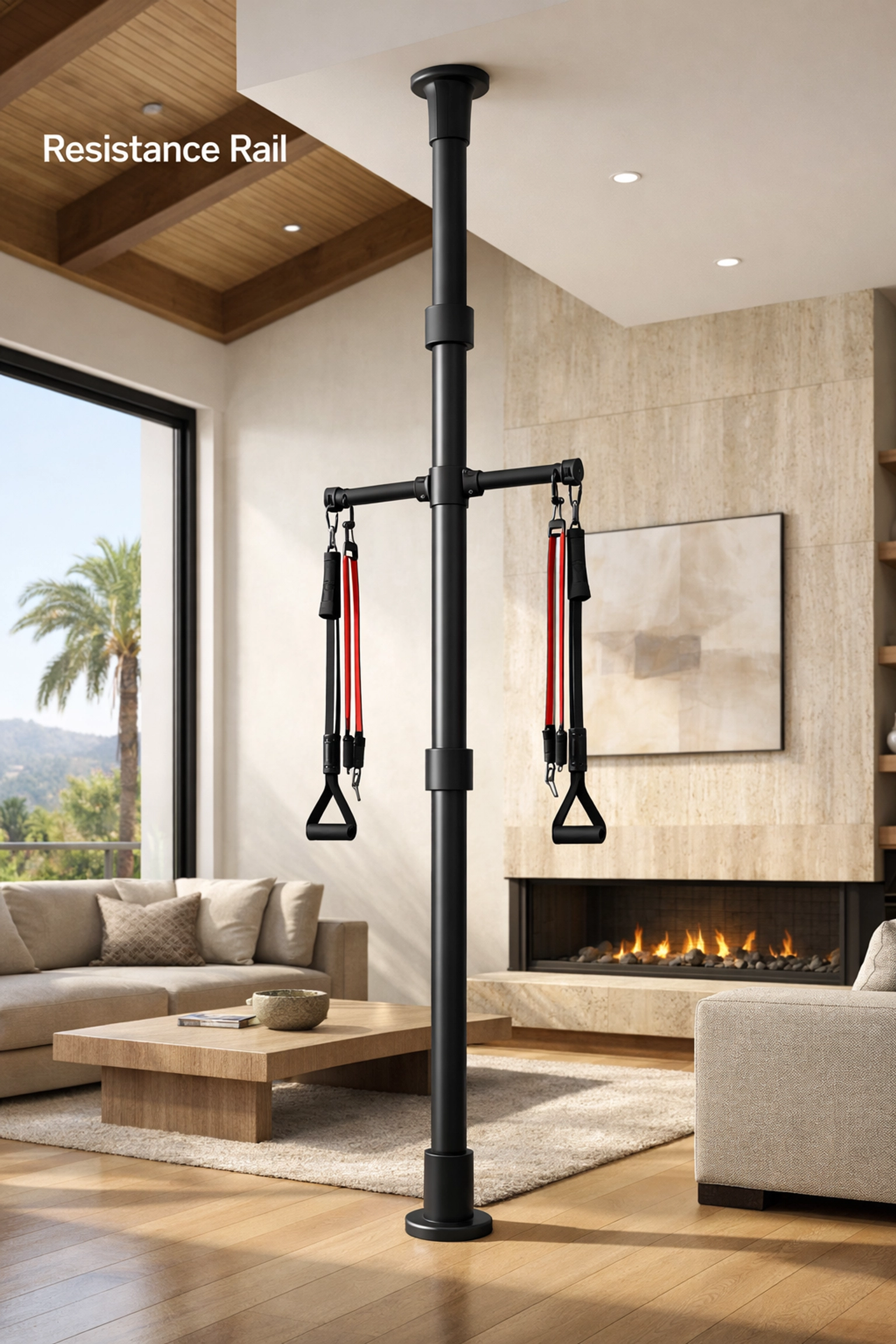
- The Resistance Rail: If you're using the Resistance Rail, use the fixed vertical movement as a guide. It forces you into a specific track, making it much harder to "cheat" your way through a rep.
3. The "Same Old, Same Old" Plateau
Your body is a master of adaptation. If you do 3 sets of 15 pushups every Monday, Wednesday, and Friday, your body will eventually figure out the most efficient way to do those 45 reps. Once it becomes efficient, it stops growing.
The biggest mistake in home workouts is the lack of progressive overload. People think that because they aren't adding plates to a barbell, they can't progress. Wrong.
The Fix: Manipulate the Variables
To keep growing in a versatile home gym environment, you have to make things harder. You have three main levers to pull:
- Leverage: Change your body angle. Elevate your feet for pushups. Move from a standard squat to a pistol squat.
- Tempo: Stop bouncing. Try a 4-second eccentric (lowering) phase. Add a 2-second pause at the bottom of a rep. This increases "Time Under Tension," which is the holy grail of hypertrophy.
- Volume/Density: Shorten your rest periods or add more total sets.
If your workout feels "comfortable," you’re failing.
4. Ignoring the Posterior Chain (The "Caveman" Posture)
This is the "Calisthenics Curse." Because it’s easy to push against the floor but hard to find something to pull, most home trainees overdevelop their chest, front delts, and quads while their back and hamstrings wither away.
The result? Rounded shoulders, chronic neck pain, and a physique that looks like a question mark. If you’re a serious athlete: especially a CrossFit athlete or a Ninja Warrior: your "pulling" strength is your lifeblood. You cannot neglect your back.
The Fix: Finding a Real Pull Up Bar Alternative
You need to pull at least as much as you push. If you can’t bolt a heavy-duty rack into your wall because you're worried about damage, you need a no wall damage workout system.
The Resistance Rail is the ultimate pull up bar alternative because it allows for high-tension pulling movements: like inverted rows and face pulls: without needing to drill holes in your studs. It’s a floor to ceiling gym that gives you the versatility of a full commercial rack in a footprint that fits in the corner of your bedroom.
Don't be the guy with the "caveman" posture. Balance your training. Check out our forums for back-focused workout splits that utilize our equipment.

5. The Intensity Extremes: "The Lounge Act" vs. "The Kamikaze"
Training at home usually leads to one of two extremes.
The Lounge Act: You do a set, check your phone, scroll through Instagram for five minutes, pet the dog, and then do another set. You never get your heart rate up, and you never hit the level of intensity required for muscle growth.
The Kamikaze: You go to absolute failure on every single set. You’re doing high-rep burpees and "cardio-calisthenics" until you’re pilling on the floor. While this feels "hard," it fries your central nervous system (CNS) and leads to burnout within weeks.
The Fix: Rate of Perceived Exertion (RPE)
Professional athletes use RPE to gauge their effort. On a scale of 1-10:
- Strength work: Should feel like an 8 or 9. You should have 1-2 reps "in the tank."
- Hypertrophy (Muscle Building): Should be around a 7-8.
- Recovery: Should be a 4-5.
Stop training like a maniac and start training like a professional. Use a timer for your rest periods. If you're looking for structured advice on how to balance this, join the conversation on our Group Forums.
6. Over-Relying on "Flashy" HIIT
Social media has lied to you. It has convinced the world that bodyweight training at home is just a never-ending cycle of burpees, mountain climbers, and jumping jacks.
HIIT (High-Intensity Interval Training) is great for your heart, but it is not a substitute for resistance training. If your goal is to build a powerful, athletic frame, you need to focus on tension and load. Doing 100 sloppy burpees will make you good at being tired. It won't make you good at a handstand pushup or a muscle-up.
The Fix: Strength First, Conditioning Second
Build your workout around "Big" movements:
- Upper Body Push: Handstand pushups, dips, or weighted pushups.
- Upper Body Pull: Pull-ups, chin-ups, or rows.
- Lower Body: Pistol squats, Bulgarian split squats, or Nordic curls.
Save the "flashy" HIIT for the last 10 minutes of your session. Think of strength as the cake and HIIT as the frosting. You can’t have a cake made entirely of frosting; it’ll collapse.

7. The "Purist" Trap: Refusing to Use the Right Tools
There’s a weird subculture in the calisthenics world that thinks using any equipment is "cheating." They think if you can’t do it on a flat floor, it’s not real bodyweight training.
This is total nonsense.
The human body is limited in how it can move against gravity on a flat surface. You can’t effectively hit your lats or your posterior deltoids without something to pull against. You can’t safely scale a movement like a muscle-up without assistance.
The Fix: Invest in a Versatile Home Gym
To unlock your full potential as a gymnast, MMA fighter, or serious fitness enthusiast, you need the right calisthenics equipment for home.
This doesn't mean you need to turn your garage into a cluttered mess. It means you need one high-quality, versatile home gym system.
The Bold Body Fitness Resistance Rail was designed specifically for this. It’s a floor to ceiling gym that requires zero drilling, making it the perfect no wall damage workout system for apartments and modern homes. It allows you to attach resistance bands at any height, giving you the ability to do:
- Assisted pull-ups (to master your first rep).
- High-tension rows (for a thick back).
- Rotational core work (essential for MMA and rotational power).
- Overhead pressing movements.
By using the right tools, you aren't "cheating": you’re removing the ceiling on your progress.
Why "Good Enough" Isn't Good Enough
At Bold Body Fitness, we believe that your home should be your sanctuary and your training ground. But if you’re making these seven mistakes, you’re just wasting your time.
Bodyweight training is a discipline. It requires the same focus, intensity, and equipment quality as any other sport. If you’re serious about your full body workout at home, you need to audit your routine today.
Are you warming up?
Is your form perfect?
Are you actually getting stronger, or just getting sweatier?
If you're ready to stop playing around and start building a body that performs as good as it looks, it's time to upgrade your environment. A crossfit home gym shouldn't take up half your house, and it shouldn't cost you your security deposit.
Check out the Resistance Rail Standard and see how a floor to ceiling gym can transform your results. No more excuses. No more "lounge act" workouts. Just bold results.
If you want to see how other athletes are setting up their space, dive into our Gallery or ask questions in our community forums.
Stop training average. Start training Bold.