
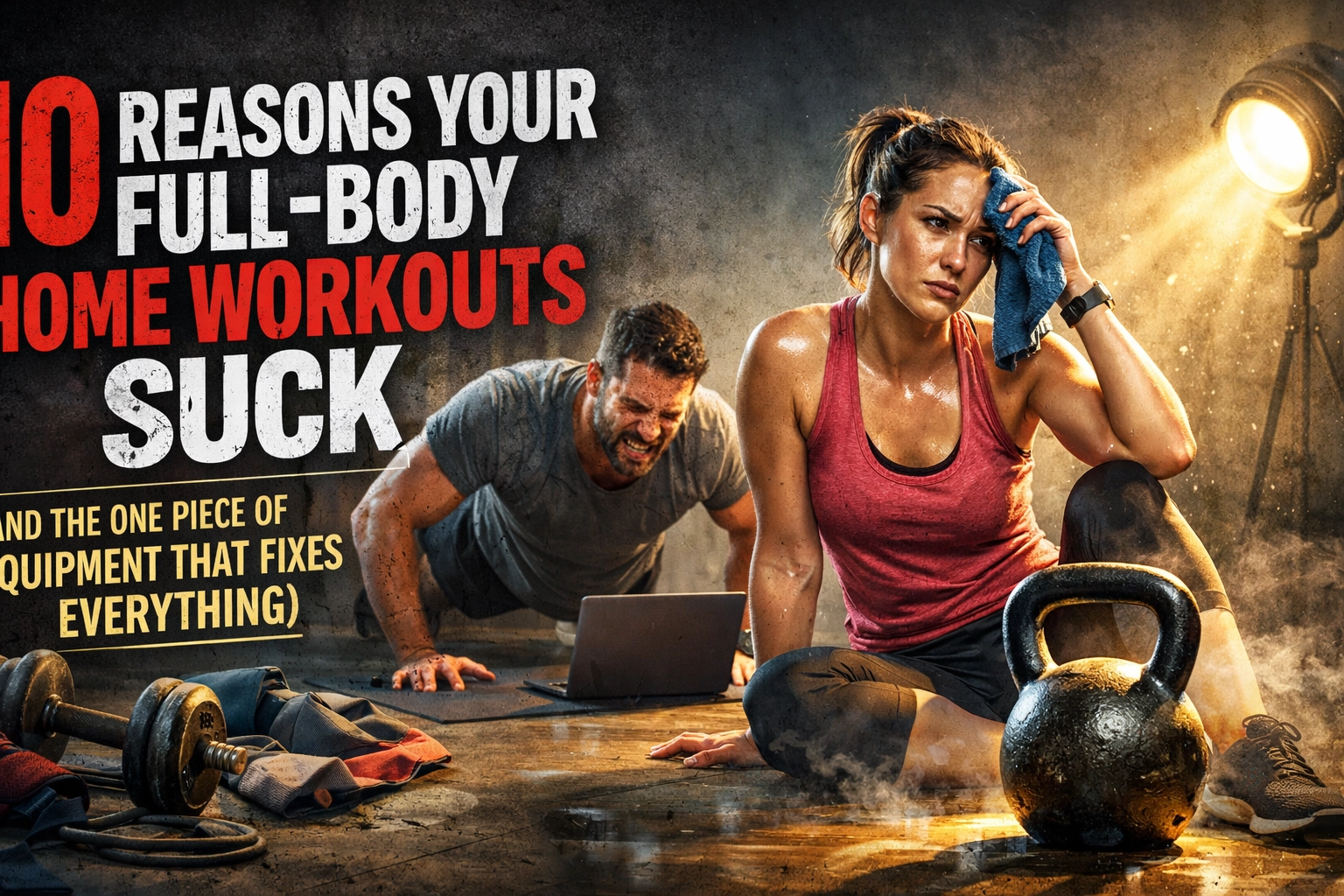
Let's cut through the BS: Your full-body workout at home probably isn't working.
You've seen the Instagram posts. The YouTube videos promising shredded abs from 20-minute living room sessions. The bodyweight training gurus claiming you need nothing but a yoga mat and determination.
But here you are, months into your home gym journey, and your progress has flatlined harder than your motivation on leg day.
The truth? Most home workouts are fundamentally broken. Not because you're lazy or uncommitted, but because the traditional approach to full body workout at home setups has serious limitations that nobody wants to talk about.
I'm about to break down exactly why your current routine sucks. Then I'll show you the one piece of versatile home gym equipment that actually solves these problems without turning your apartment into a commercial gym or drilling holes in every wall.
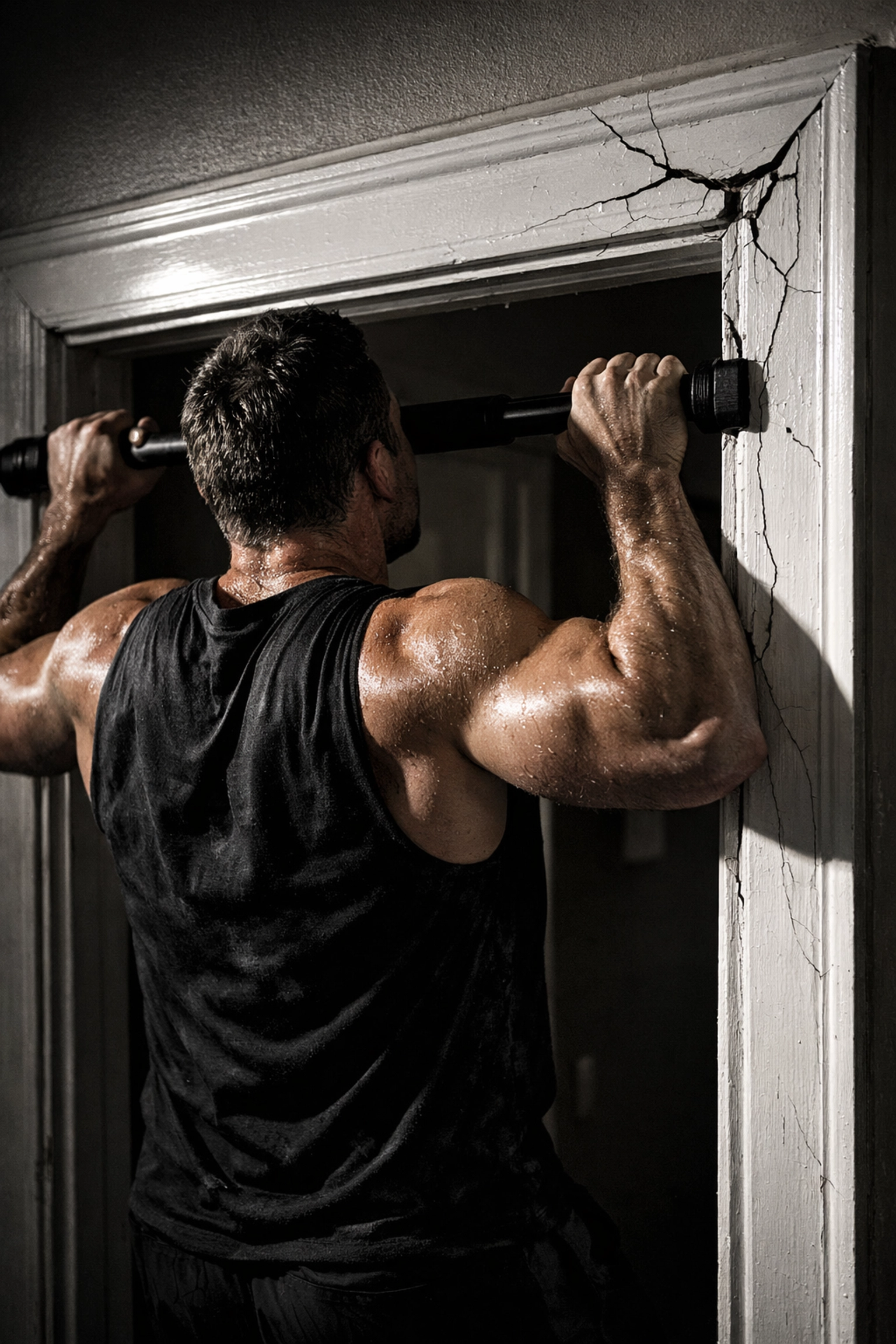
Reason #1: You're Destroying Your Doorframe (Or Afraid To)
Pull-up bars are supposed to be the cornerstone of bodyweight training at home. Except most doorway pull-up bars are either wrecking your trim, limiting your movement to a narrow grip, or sitting in your closet because you're terrified your landlord will lose it when they see what you've done.
The conventional pull-up bar gives you maybe 2-3 grip variations if you're lucky. Want to do muscle-ups? Archer pull-ups? Wide-grip horizontal rows? Forget it. You're stuck with basic pull-ups in a cramped doorway, praying the whole thing doesn't come crashing down mid-rep.
And if you're renting? Good luck explaining those screw holes when you move out.
Reason #2: Your "Progressive Overload" Is a Joke
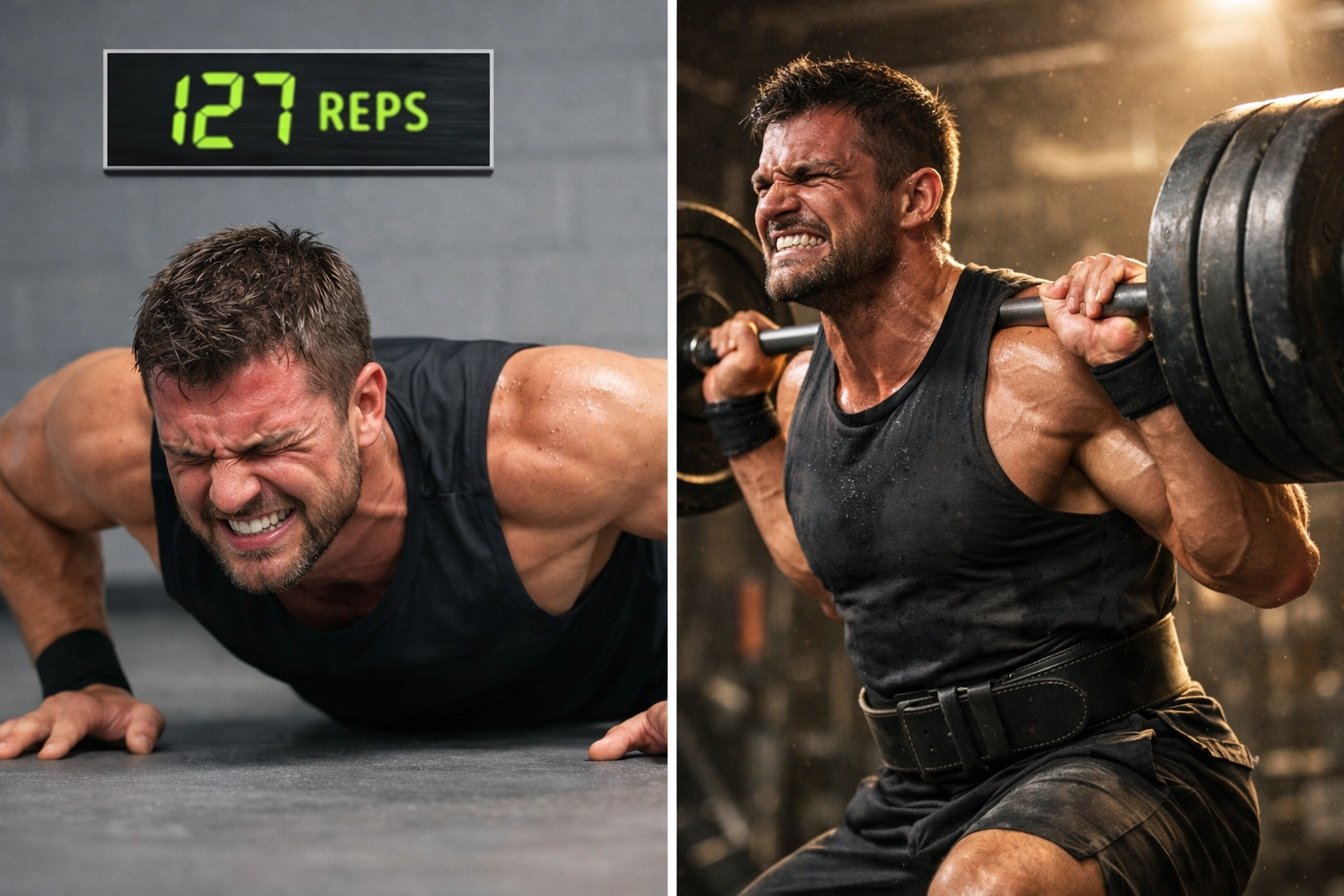
Here's a hard truth: adding another rep to your 50th pushup isn't progressive overload, it's just doing more cardio with your chest on the ground.
Real resistance training requires consistent, measurable increases in resistance. But with pure bodyweight work, you're either stuck doing endless reps (which builds endurance, not strength) or attempting gymnastics-level progressions that take years to master.
Most home gym setups lack the adjustability needed for genuine progressive overload. You can't magically add 5 pounds to a pull-up or subtract weight from a pistol squat. You're stuck in this weird middle ground where exercises are either too easy or impossibly hard.
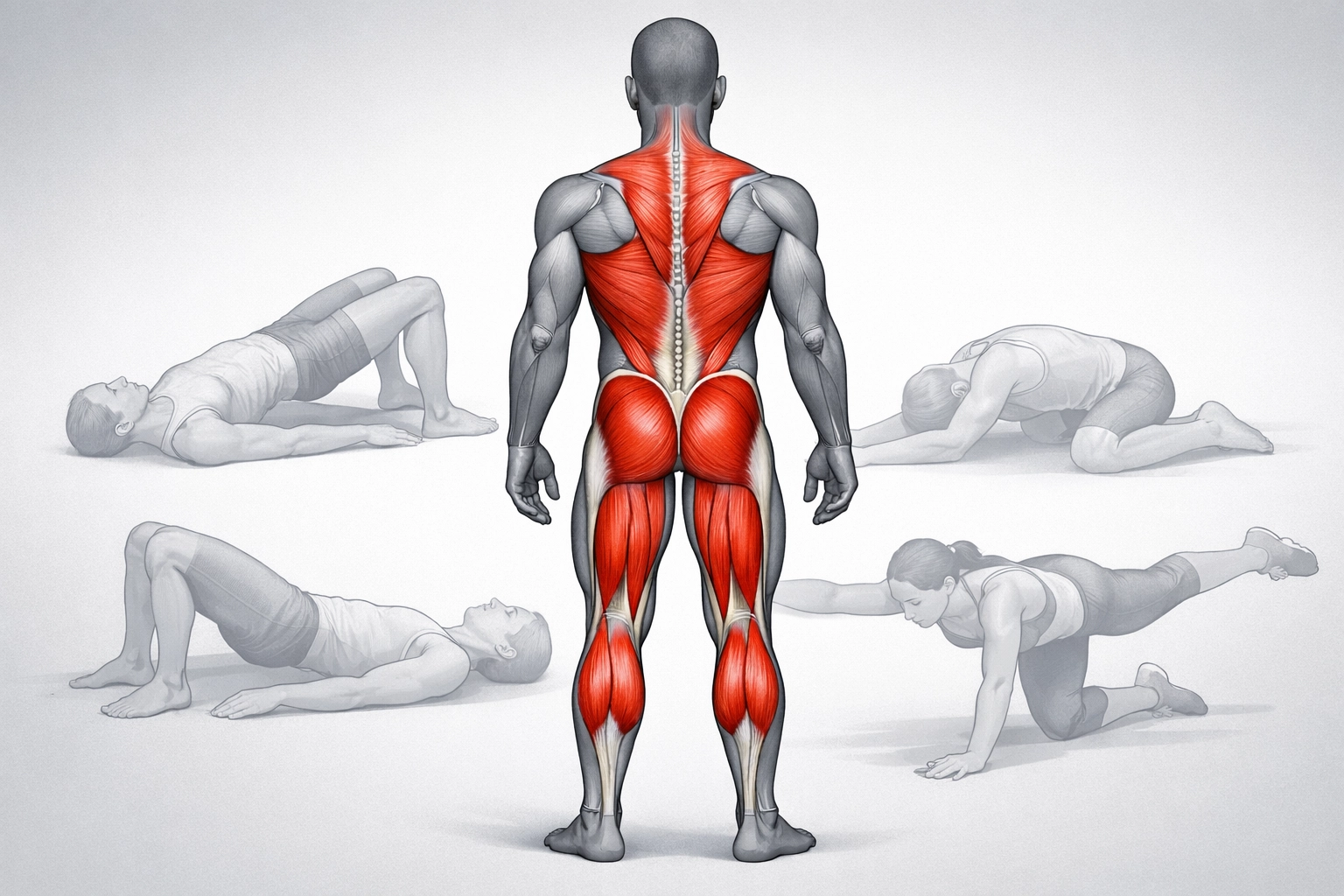
Reason #3: You Can't Train Your Posterior Chain Properly
Quick, name five effective posterior chain exercises you can do at home without equipment.
Struggling? That's because bodyweight training at home is notoriously weak for hamstrings, glutes, and lower back development. Sure, you can do glute bridges until your living room floor has a permanent dent. But try building actual strength and power in your posterior chain without resistance.
MMA fighters, CrossFit athletes, and ninja warriors need explosive posterior power. Good luck developing that with basic floor exercises. Your hamstrings are crying for help while you're on your 100th bodyweight squat that primarily hits your quads.
Reason #4: Recovery Is Impossible When You're Hitting Everything Constantly
Full-body workouts sound efficient in theory. Train everything, three times a week, done. Except your shoulders are sore from Monday when Wednesday rolls around. Your lats haven't recovered from pull-ups. Your chest is screaming at you to take a day off.
The overlapping soreness from training the same muscle groups multiple times per week isn't just uncomfortable, it's actively sabotaging your gains. Your muscles grow during recovery, not during workouts. When you're constantly training everything, you're constantly breaking down tissue without giving it time to rebuild stronger.
This is especially brutal in a home setting where exercise variety is limited. You end up hammering the same movement patterns over and over because, well, what else can you do with just your bodyweight and maybe some resistance bands?
Reason #5: Your Exercise Selection Is Embarrassingly Limited
Let's inventory your current full body workout at home repertoire: push-ups, pull-ups (maybe), squats, lunges, planks. Congratulations, you've got about 8-10 exercises you're rotating through in various combinations.
Meanwhile, proper calisthenics equipment for home should enable hundreds of movement patterns. Front levers, back levers, skin-the-cats, horizontal rows at multiple angles, leg raises with infinite progressions, archer movements, typewriter pull-ups, and on and on.
But you can't do most of those because your equipment limits your angles, your grip positions, and your ability to adjust resistance on the fly.
Reason #6: There's Zero Accommodation for Your Actual Skill Level
Here's a scenario: You can barely do 3 strict pull-ups, but you can crank out 50 push-ups no problem. Your chest and triceps are way ahead of your back development.
With traditional home setups, you're stuck. Pull-ups are brutally hard. Push-ups are laughably easy. There's no middle ground, no way to scale movements to match your current strength level across different muscle groups.
Beginners get frustrated because everything is too hard. Advanced athletes get bored because nothing provides enough resistance. It's the worst of both worlds, and it's why most people quit their home training within three months.
Reason #7: You're Neglecting Crucial Muscle Groups
When was the last time you effectively trained your rear delts at home? Your lateral delts? How about your forearms and grip strength beyond just hanging?
Bodyweight training tends to hammer the same prime movers while completely ignoring smaller stabilizer muscles and specific muscle heads that need targeted attention. Your lateral and rear delts don't get much love from push-ups and pull-ups alone. Your calves might as well not exist.
For gymnasts and calisthenics practitioners, these "minor" muscles aren't minor at all, they're essential for preventing injuries and progressing to advanced movements. But most home gym equipment doesn't give you the angles and positions needed to isolate and strengthen them properly.
Reason #8: You're Comparing Your Home Setup to a Commercial Gym (And Losing)
The psychological game is real. You know what's possible in a fully-equipped gym. You've seen the cable machines, the rig attachments, the variety. Then you look at your living room and feel like you're training with stone-age tools.
This isn't just about ego, it's about genuine limitations. A proper crossfit home gym should offer similar functionality to what you'd find in a box, just in a more compact form. But most home setups are so limited that you're essentially doing a watered-down version of "real" training.
The mental barrier this creates is massive. You're less motivated because you know you're not getting an optimal workout. So you skip sessions, phone in the effort, and eventually stop altogether.
Reason #9: Your "Versatile" Equipment Isn't Actually Versatile
Those resistance bands? Great for like three exercises before they become annoying. That suspension trainer? Cool, but it's basically fancy straps for doing push-ups and rows. That dumbbbell set? Takes up your entire spare room and still doesn't hit the right angles for most movements.
True versatility means one system that enables pulling, pushing, squatting, hinging, rotating, stabilizing, and skill work, all with adjustable resistance and infinite progression potential. Most home gym equipment checks maybe two of those boxes.
You end up with a closet full of half-used fitness gadgets, each solving one tiny problem while creating three new ones.
Reason #10: You're Sacrificing Your Space (And Your Sanity)

Nothing kills workout motivation faster than having to move your coffee table, put away your kid's toys, and create a 6-foot clearing just to exercise. Then you have to reverse the entire process when you're done, sweaty and exhausted.
Or worse, you've dedicated entire rooms to home gym equipment that sits there gathering dust because it's such a production to actually use it. That squat rack looks impressive, but it's permanently blocking your storage closet, and you resent it a little more each day.
The dream of a no wall damage workout system that doesn't dominate your living space isn't just convenient, it's essential for long-term adherence. If your fitness equipment is a constant source of friction and inconvenience, you simply won't use it consistently.
The One Piece of Equipment That Actually Fixes Everything
So what's the answer? Another gimmick? Another piece of equipment that promises the world and delivers disappointment?
Actually, no.
The solution is surprisingly simple: a floor to ceiling gym system that gives you legitimate, gym-quality training options without the space requirements, installation headaches, or limited functionality of traditional home gym equipment.
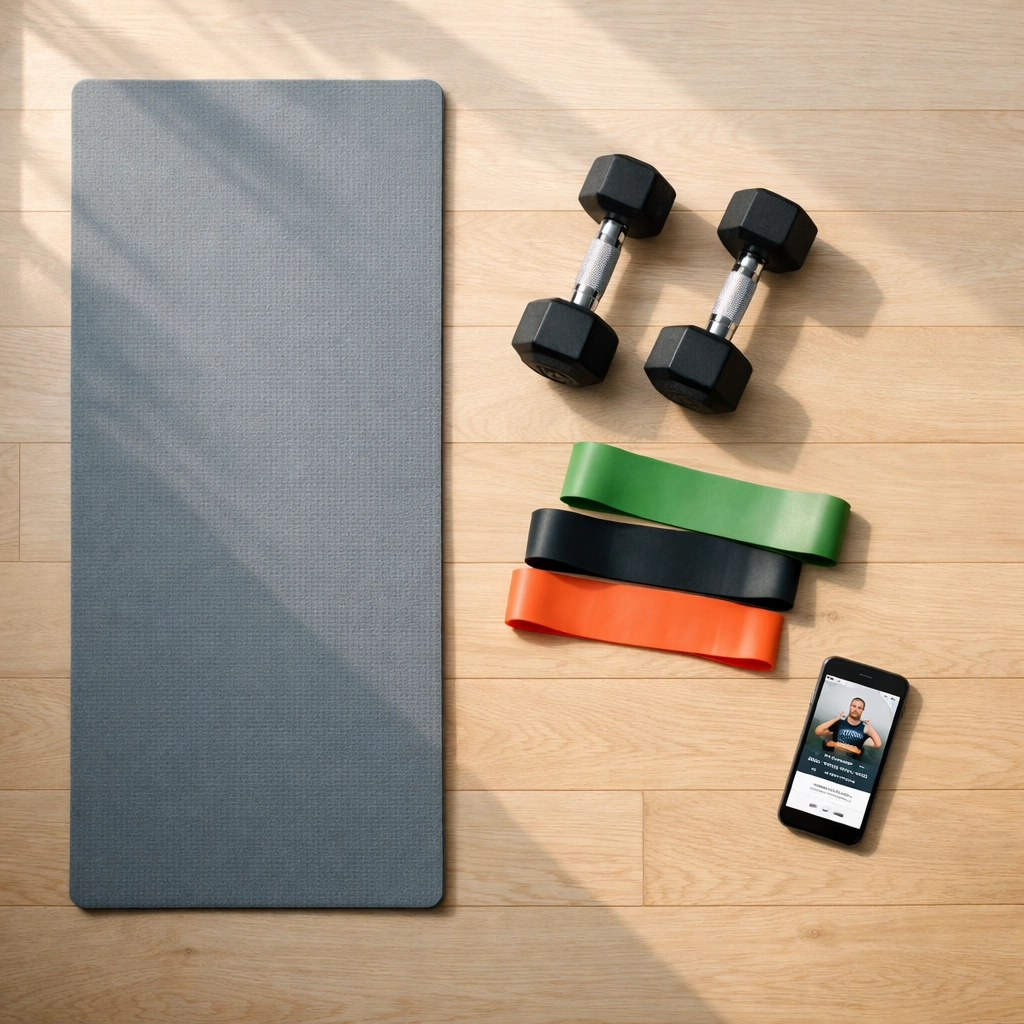
The Resistance Rail from Bold Body Fitness isn't just another pull-up bar alternative: it's a complete training system that addresses every single problem we just covered.
For the doorframe issue: It installs between your floor and ceiling with zero drilling, no wall damage, and can be moved or removed whenever needed. Your landlord stays happy. Your security deposit stays intact.
For progressive overload: Infinite adjustment points mean you can modify leverage and resistance for every single exercise, creating perfect progressions from beginner to elite athlete level.
For posterior chain development: The system enables proper hamstring curls, Nordic curls, glute-ham raises, and resistance-based hip hinge movements that are impossible with basic bodyweight work.
For recovery management: Because you can adjust resistance so precisely, you can train movements at varying intensities. Heavy pull work one day, lighter skill work the next: all on the same piece of equipment.
For exercise variety: We're talking 300+ exercises. Every pull variation imaginable. Push work at multiple angles. Core work that goes way beyond planks. Leg training that actually builds strength. Skill progressions for levers, flags, and advanced calisthenics.
For skill level accommodation: Total beginners can scale movements to appropriate difficulty. Elite athletes can add resistance and leverage to make exercises brutally challenging. Same equipment, infinite range.
For muscle group coverage: Rear delt flies? Check. Lateral raises? Check. Forearm and grip work? Check. Face pulls? Check. All the stuff you're currently neglecting becomes accessible.
For the mental game: When your home gym setup rivals what's available at commercial facilities, your motivation stays high. You're not compromising: you're optimizing.
For true versatility: One system. Pull-ups, dips, rows, leg work, core training, stretching, skill progressions: everything from your warm-up to your cool-down happens in one place.
For space efficiency: It fits in any room with standard 8-foot ceilings. Takes up less floor space than a yoga mat. Install it, train, remove it if needed. Your space stays functional for actual living.
The Bottom Line
Your home workouts don't suck because you lack discipline or genetics. They suck because you're working with inadequate tools that were never designed for serious training.
You can keep grinding away with your limited setup, getting minimal results and maximum frustration. Or you can invest in equipment that's actually built for the results you want.
The choice is yours. But if you're serious about training: if you're a ninja warrior in the making, a CrossFit athlete stuck at home, an MMA fighter who needs a legitimate home training option, or a calisthenics practitioner ready to level up: stop settling for equipment that holds you back.
Your workouts should challenge you, not your patience with inadequate gear.
Time to fix what's broken and start training like you mean it.
