
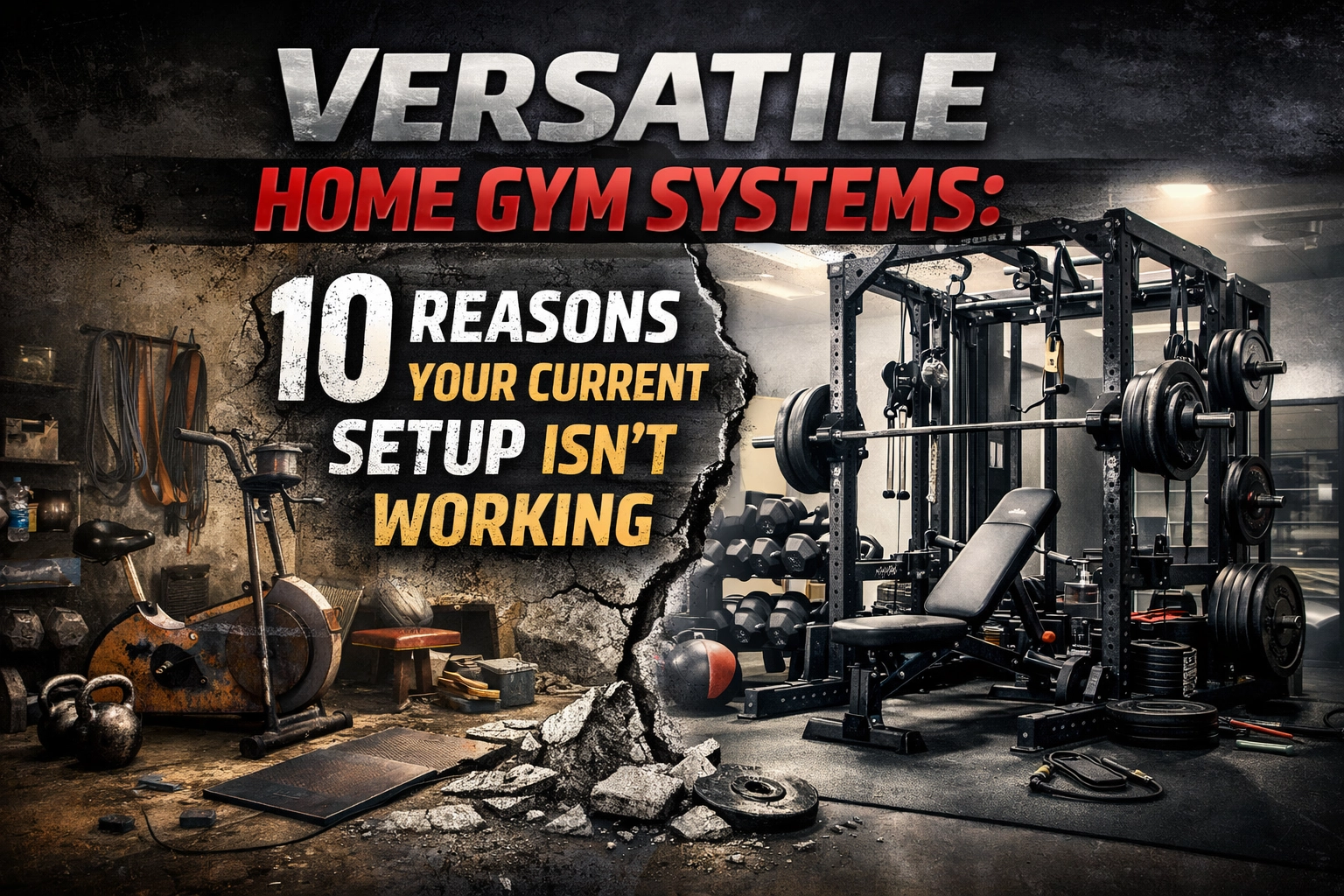
Let's be real: most home gyms are glorified coat racks by month three. You dropped serious cash on equipment that promised transformation, but here you are, scrolling for answers because something isn't clicking. Maybe you're not seeing gains. Maybe your garage looks like a fitness equipment graveyard. Or maybe you're just bored out of your mind doing the same three exercises on repeat.
The truth? Your current setup probably isn't working because it was never designed for serious athletes in the first place. It's time to diagnose what's broken so you can fix it.
1. You're Still Doing Single-Muscle Isolation (When You Need Full-Body Power)
That chest press machine gathering dust in the corner? It does exactly one thing: chest presses. Your adjustable dumbbells? Great for bicep curls, useless for dynamic movement training. If your home gym equipment forces you to think in terms of "chest day" and "leg day" like it's 1985, you're training like a bodybuilder when you should be training like an athlete.
Real-world strength: the kind that translates to the cage, the rock wall, or the ninja course: comes from compound movements that engage multiple muscle groups simultaneously. Pull-ups, muscle-ups, levers, planches, and dynamic bodyweight transitions build the kind of power that actually matters.
If your current setup doesn't allow for full body workout at home sessions that challenge your entire kinetic chain, you're leaving gains on the table.
2. Your Equipment Takes Up Half Your Living Room
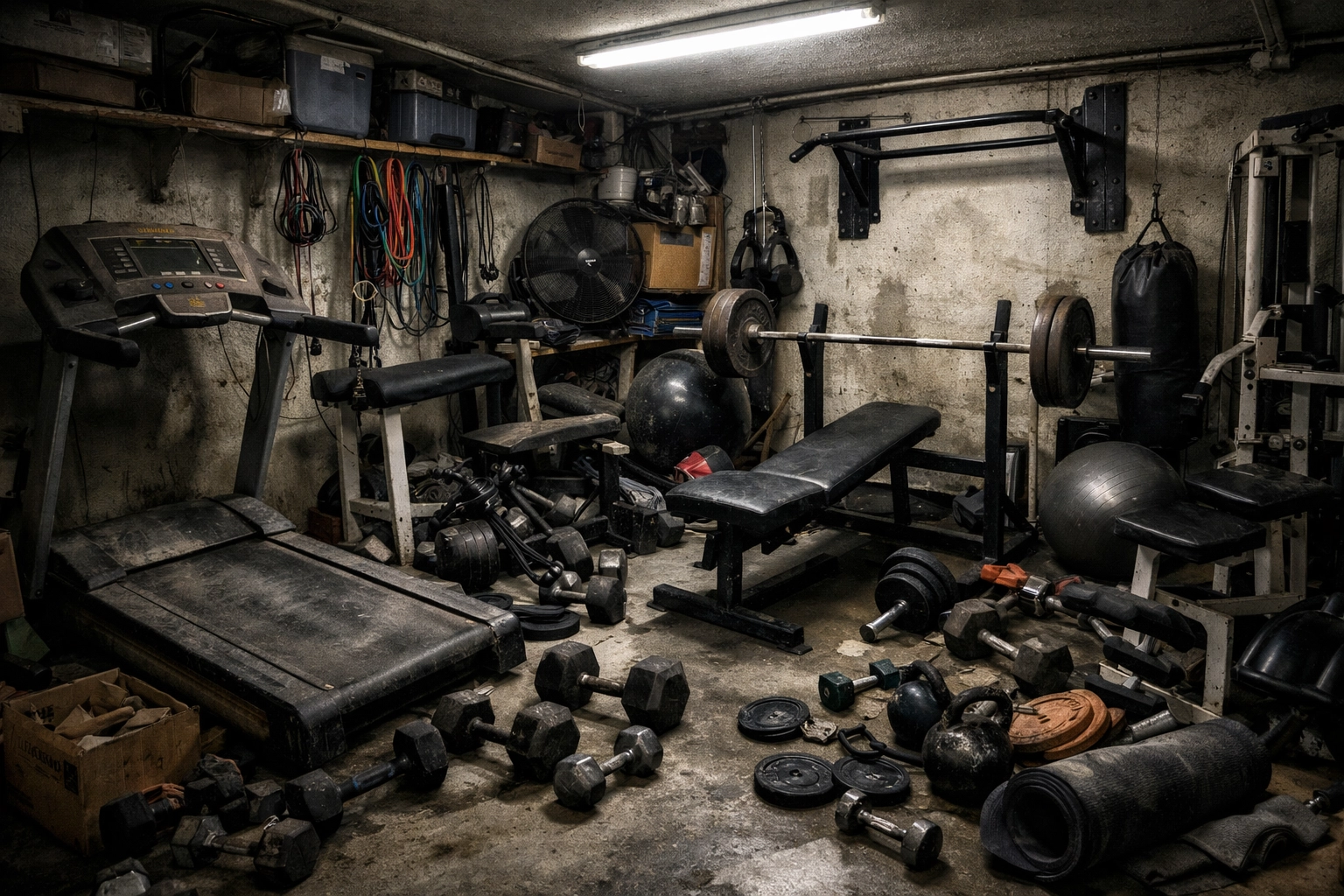
Walk into most home gyms and you'll see a chaotic collection of single-purpose machines: a squat rack, a bench press, a lat pulldown machine, a cable tower, maybe some kettlebells scattered around. Each piece demands its own footprint, and suddenly your "gym" requires 300+ square feet of dedicated space.
Here's the problem: most people don't have 300 square feet to spare. So you compromise. You buy less equipment. You skip essential movements. You tell yourself you'll "make it work" with what you have: and then you don't.
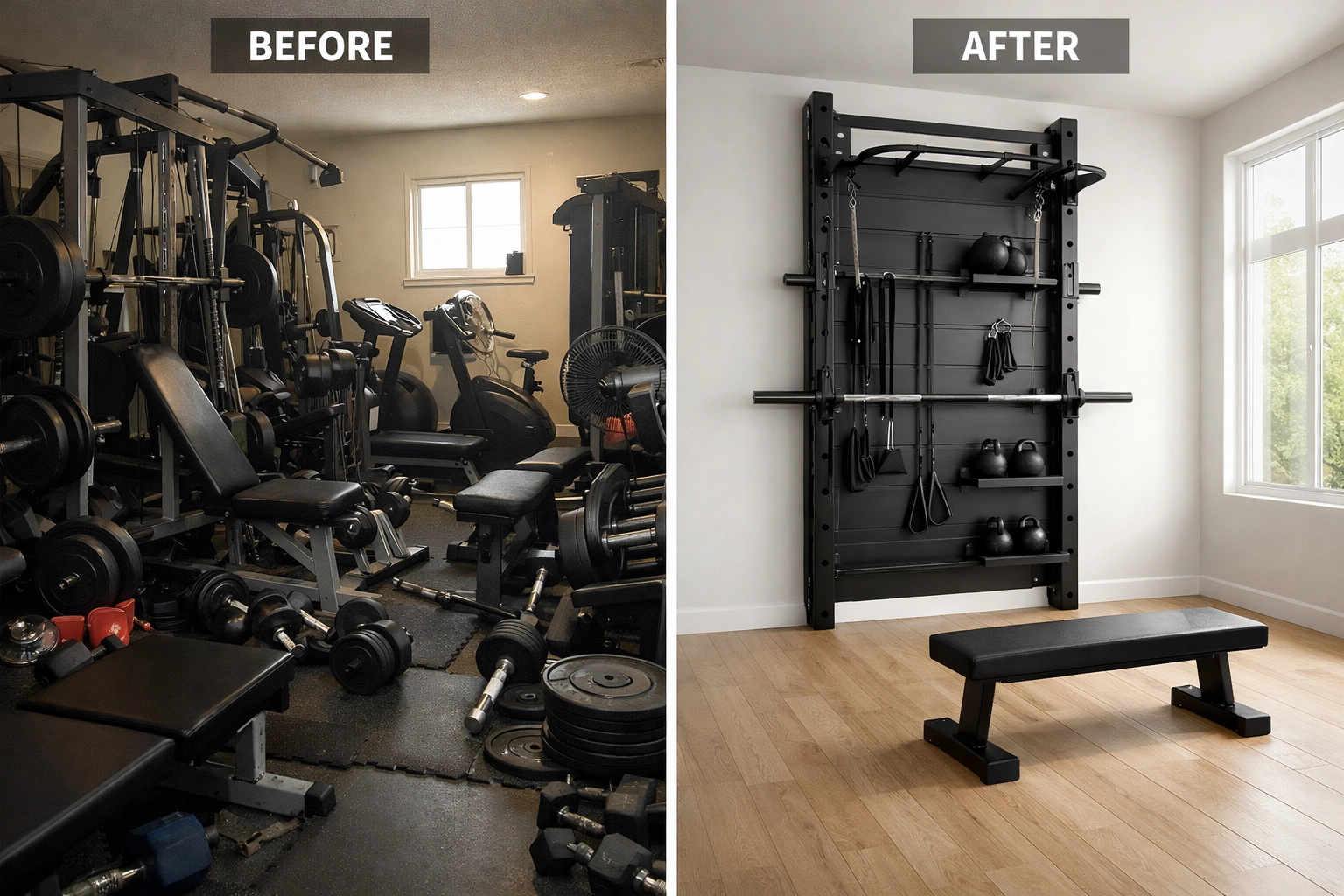
A versatile home gym system should maximize training options while minimizing floor space. Think vertical, not horizontal. A floor-to-ceiling system can deliver dozens of exercises in the footprint of a single door frame. That's not compromise: that's smart design.
3. You Can't Scale Your Workouts Without Buying More Gear
You started as a beginner, but now you're stronger. You've progressed. Your five-set max used to feel impossible, and now it's your warm-up. So what do you do? Buy heavier dumbbells? Add another weight plate to the rack? Purchase a whole new resistance band set?
This is the trap of non-scalable equipment. Every time you level up, you need to spend more money just to keep challenging yourself. Meanwhile, bodyweight training scales infinitely with leverage, position, and progression: if you have the right system.
Resistance training shouldn't require a constantly expanding budget. A properly designed setup grows with you through exercise progressions, not equipment additions. From assisted pull-ups to weighted pull-ups to one-arm variations, the movement evolves while the gear stays the same.
4. Your "Home Gym" is Just Fancy Cardio Equipment
Treadmill? Check. Stationary bike? Check. Elliptical? Check. Row machine if you're fancy? Double check.
Now tell me: where's the equipment for building explosive power, grip strength, and upper body pulling capacity? Cardio equipment is fine for conditioning, but if that's 80% of your home gym, you're training like someone preparing for a charity 5K, not someone preparing to dominate their sport.
MMA fighters need to develop pulling power for grappling. Rock climbers need dynamic grip strength and core stability. CrossFit athletes need to master gymnastic movements. Ninja warriors need explosive compound movements. None of that comes from a treadmill.
If your gym is cardio-heavy and strength-light, you're missing the foundation of athletic performance.
5. You're Locked Into One Training Style
You bought a powerlifting rack because you were into strength training. Then you discovered calisthenics. Now you want to add gymnastic ring work. But your equipment doesn't adapt: it just takes up space while you try to MacGyver a solution with carabiners and yoga straps.
The best athletes cross-train. They blend strength work with mobility training, calisthenics with resistance movements, power development with skill work. Your equipment should support that versatility, not force you into a single methodology.
A truly versatile home gym accommodates powerlifting-style progressive overload, gymnastic skill progressions, functional movement patterns, and sport-specific training: all without requiring you to rebuild your entire setup every time your focus shifts.
6. Your Setup Doesn't Challenge Advanced Movement Patterns
Beginners can make gains on almost anything. Push-ups on the floor? Great. Bodyweight squats? Awesome. Basic dumbbell work? Solid foundation.
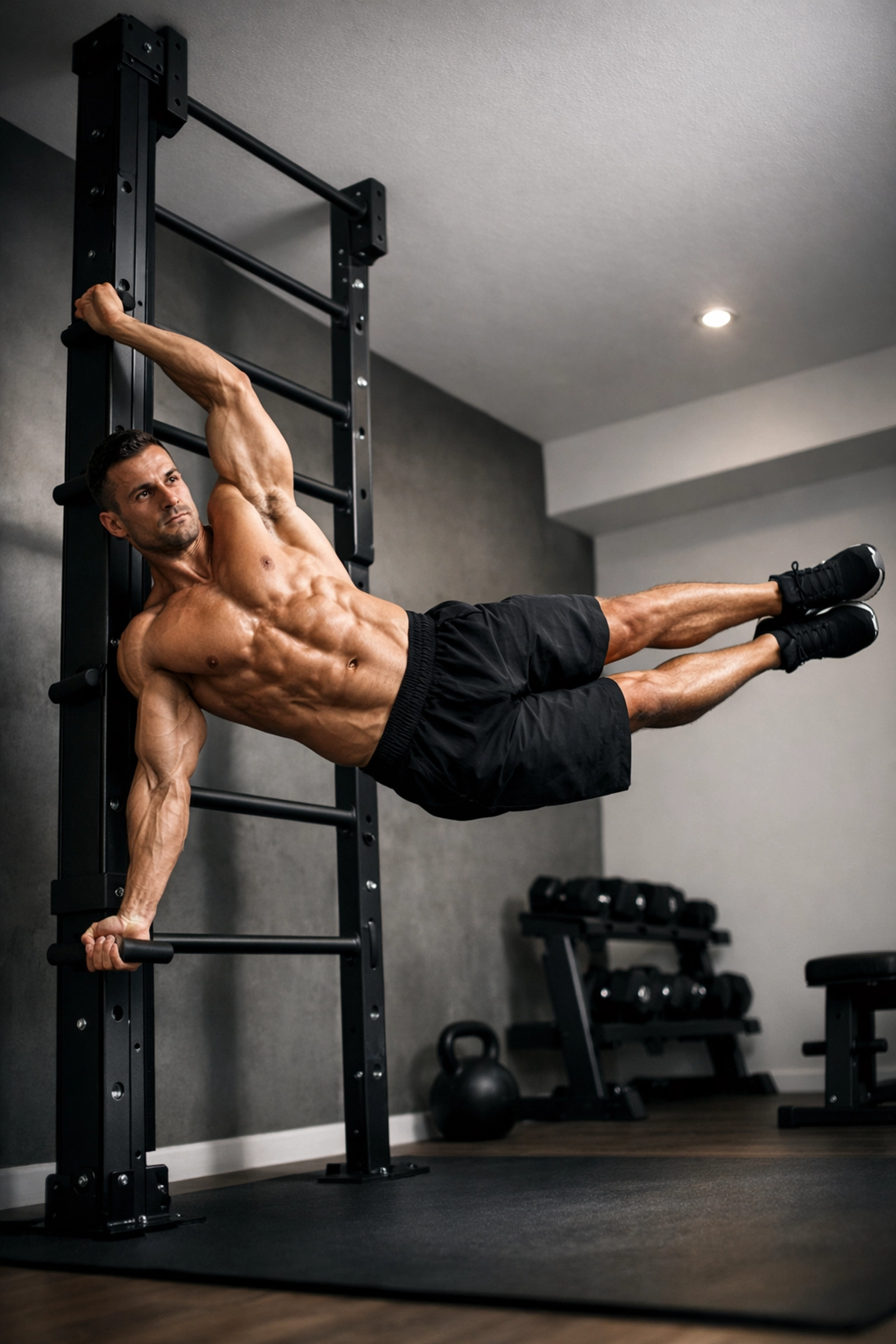
But once you've mastered the fundamentals, your body craves complexity. Front levers. Human flags. Muscle-ups. Pistol squats. These aren't just party tricks: they're legitimate strength markers that require a setup capable of supporting advanced progressions.
If your current gym can't facilitate these movements, you're capped. And athletes hate caps.
Bold Body Fitness designed systems specifically for this problem. When you can mount a bar system that supports everything from dead hangs to advanced lever progressions without drilling holes in your walls or ceiling, you unlock training potential that traditional equipment simply can't match.
7. You're Paying for Equipment You Never Use
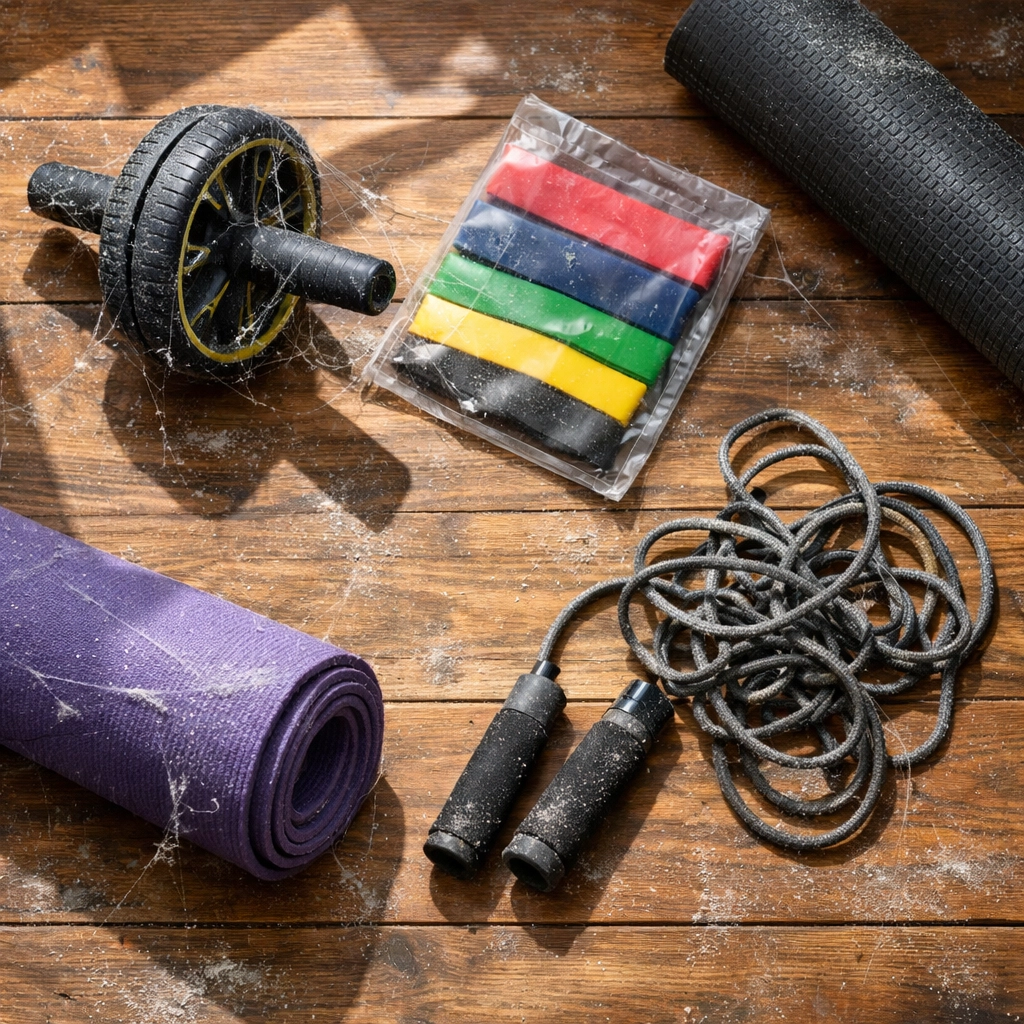
Be honest: how many pieces of equipment in your home gym see regular action? If you're like most people, you've got a few favorites and a lot of expensive dust collectors.
That ab roller you bought during a late-night infomercial binge? Unused. The resistance bands that came in a set of twelve? You use two. The adjustable bench that requires five minutes of adjustment between exercises? Frustrating enough that you skip those movements entirely.
Every unused piece of equipment represents wasted money and wasted space. The solution isn't to buy more equipment: it's to buy smarter equipment. Calisthenics equipment for home use should be simple, intuitive, and support multiple movement patterns. If you're constantly adjusting, assembling, or avoiding certain tools, your system is working against you.
8. Your Walls Look Like a Gym Equipment Storage Unit
Wall-mounted pull-up bars. Rings hanging from exposed beams. Resistance bands looped over door frames. TRX straps bolted to the wall. Your home gym works, technically, but it looks like a hardware store exploded.
Plus, if you're renting, you're either risking your security deposit or avoiding wall-mounted solutions entirely: which severely limits your training options.
This is where a no wall damage workout system becomes essential. Modern floor-to-ceiling systems use tension mounting rather than drilling, which means full functionality without permanent installation. You get the stability and capacity of a permanent rig with the flexibility of a portable setup.
Check out the Resistance Rail options if you're tired of choosing between effective training and keeping your landlord happy.
9. You Can't Train Like Your Sport Demands
If you're a rock climber, you need to train dynamic pulling movements, grip endurance, and core tension under load. If you're an MMA fighter, you need pulling power for grappling and explosive pushing for strikes. If you're a gymnast, you need stable apparatus for skill work and strength development.
Generic home gym equipment doesn't accommodate sport-specific training needs. A basic pull-up bar is fine for beginners, but it won't support the variety of grips, angles, and progressions that advanced athletes require. A standard cable machine is solid for hypertrophy work but useless for learning muscle-ups or front levers.
Your training should mirror your sport. If it doesn't, you're building general fitness instead of specific performance capacity: and there's a massive difference between the two.
10. Your Setup Wasn't Built for Progressive Overload
Progressive overload is the foundation of every training adaptation. You need to consistently increase the demands on your body to force it to adapt. With traditional weight training, this means adding plates. But with bodyweight training at home, progressive overload comes from manipulating leverage, tempo, range of motion, and movement complexity.
Here's the problem: most home gym setups don't facilitate this progression. Your basic pull-up bar is great until you master standard pull-ups: then what? You're stuck doing higher reps or buying a weight vest, neither of which teaches you advanced progressions like archer pull-ups, typewriter pull-ups, or one-arm work.
A properly designed system anticipates your progression. It allows you to adjust positions, grip widths, and leverage angles to continuously challenge your body as you develop. Without this built-in progression pathway, you hit plateaus fast: and plateaus kill motivation.
The Fix: Versatility Over Volume
The common thread through all these issues? Lack of versatility. You bought equipment designed for one purpose, and now you're trying to force it to do things it was never intended to handle.
The solution isn't more equipment: it's smarter equipment. A floor to ceiling gym system that supports dozens of exercises, scales with your progression, requires minimal space, and doesn't require wall damage to install solves most of these problems in one shot.
Think about what you actually need from your home gym:
- Full-body compound movements
- Scalable resistance through leverage and position
- Support for advanced progressions
- Minimal space requirements
- No permanent installation
- Compatibility with multiple training styles
If your current setup doesn't check all those boxes, it's not working: and it's time to upgrade.
Built for Real Athletes
The Resistance Rail system was designed specifically to address these gaps. Instead of cluttering your space with single-purpose machines, you get a compact, tension-mounted system that supports pull-ups, dips, muscle-ups, levers, rows, leg raises, and dozens of other movements: all from one piece of equipment.
It mounts in minutes without damaging walls or ceilings. It adjusts to accommodate different heights, grips, and movement patterns. And it scales from beginner-friendly assisted progressions to advanced gymnastic skills that would normally require a full gym setup.
Whether you're training for competition, building functional strength for your sport, or just tired of your current gym setup gathering dust, the solution is the same: prioritize versatility over volume. Get equipment that adapts to your training, not training that adapts to your equipment.

Your Move
Your home gym should be a launching pad for progress, not a storage space for expensive mistakes. If you're dealing with any of the ten issues above, you already know your current setup isn't cutting it. The question is whether you're going to keep pretending it's fine or actually do something about it.
Serious training demands serious equipment. Not complicated equipment. Not expensive equipment. Just intelligently designed systems that support the movements that matter.
Ready to stop compromising? Check out the full Resistance Rail lineup and see what a truly versatile home gym system can do for your training.
Because you didn't get into fitness to half-ass it with equipment that doesn't work. You got into it to push limits: and it's time your gym setup actually helped you do that.
