
Listen, I’m going to be real with you. Most home gyms suck.
You’ve seen them, the flimsy door-frame pull-up bars that leave black scuff marks on your trim (or worse, rip the molding right off), the bulky power racks that eat up half your living room, and the cheap resistance bands that feel like they’re going to snap and take an eye out. If you’re a serious athlete, a Ninja Warrior, a CrossFit addict, an MMA fighter, or a calisthenics pro, you’re tired of compromising. You need gear that matches your intensity but doesn’t require a structural engineering degree or a security deposit sacrifice to install.
At Bold Body Fitness, we’re done with "good enough." We’re about performance that scales. We’re talking about a full body workout at home that actually makes you stronger, faster, and more explosive without turning your house into a construction zone.
Welcome to the ultimate guide to building a no wall damage workout system that grows with you.
The Problem with Traditional Home Gym Equipment
If you’ve ever tried to set up a crossfit home gym in an apartment or a finished basement, you know the struggle. You want to do pull-ups, muscle-ups, and heavy resistance work, but you’re staring at drywall that feels like it’s made of crackers.
Standard home gym equipment usually falls into two categories:
- The "Too Light" Category: Equipment that doesn't provide enough resistance for elite athletes.
- The "Too Heavy" Category: Equipment that requires bolting into studs, damaging walls, and taking up a permanent footprint.
For the modern athlete, this isn't acceptable. You need a versatile home gym that offers the stability of a commercial rack with the footprint of a coat rack. That’s why we developed the floor to ceiling gym concept. It’s the ultimate pull up bar alternative and more.
Why Bodyweight Training is the Foundation (And Why It Fails Most People)
Bodyweight training at home is the purest form of strength. If you can’t move your own frame with precision and power, what are you even doing? Gymnasts and MMA fighters know this better than anyone. It builds functional strength, mobility, and core stability that a bench press just can’t touch.
However, most people fail at calisthenics because they hit a plateau. Once you can do 20 push-ups, what’s next? If you don’t have a way to scale the movement, by changing angles, adding resistance, or increasing the complexity, you’re just maintaining, not gaining.
To truly scale, you need a system that allows for:
- Infinite Angle Adjustment: Targeting muscles from positions you can’t reach on flat ground.
- Progressive Resistance: Seamlessly transitioning from pure bodyweight to resistance training.
- Stability: A platform that doesn't wobble when you're mid-set.
The Secret Weapon: The Resistance Rail
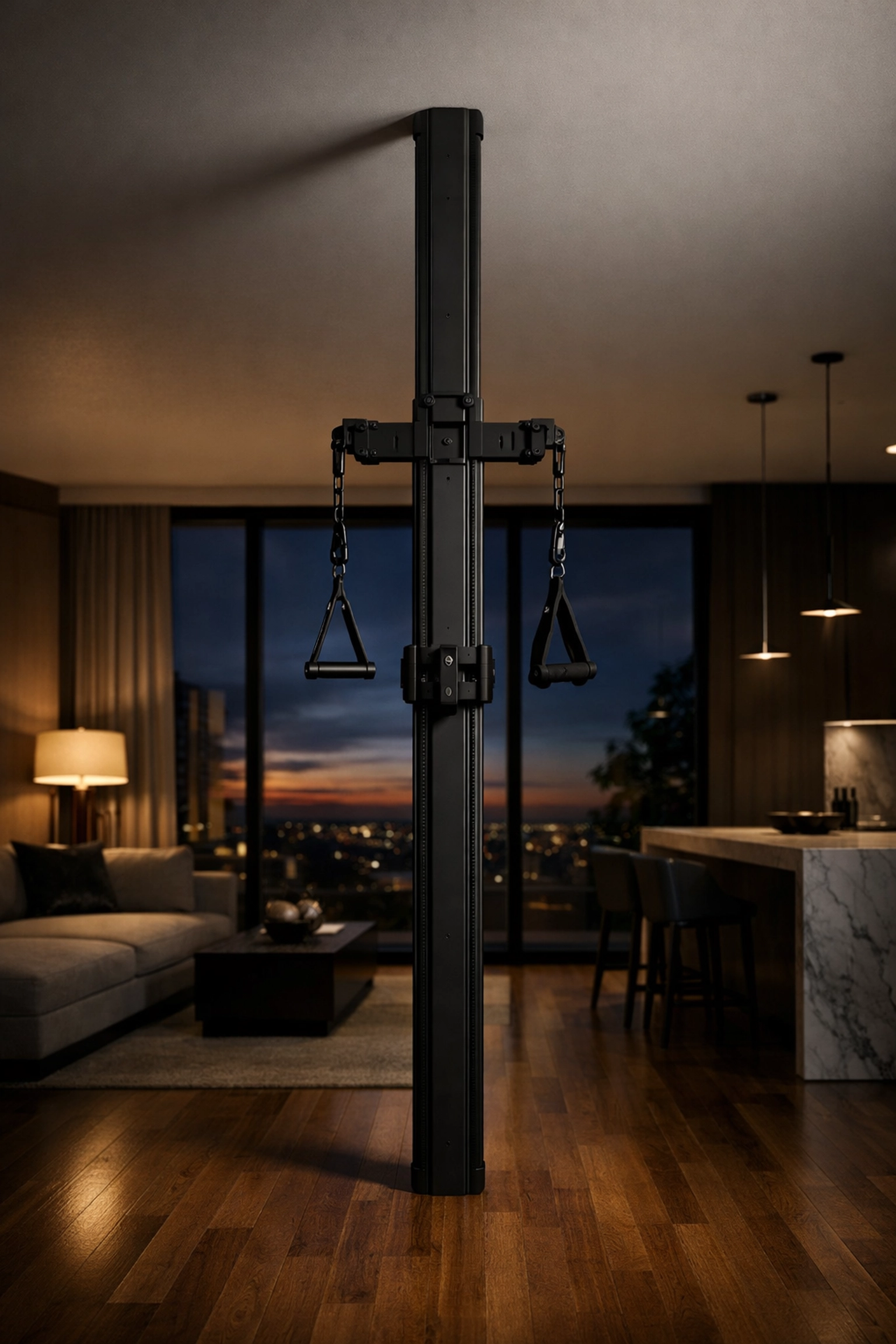
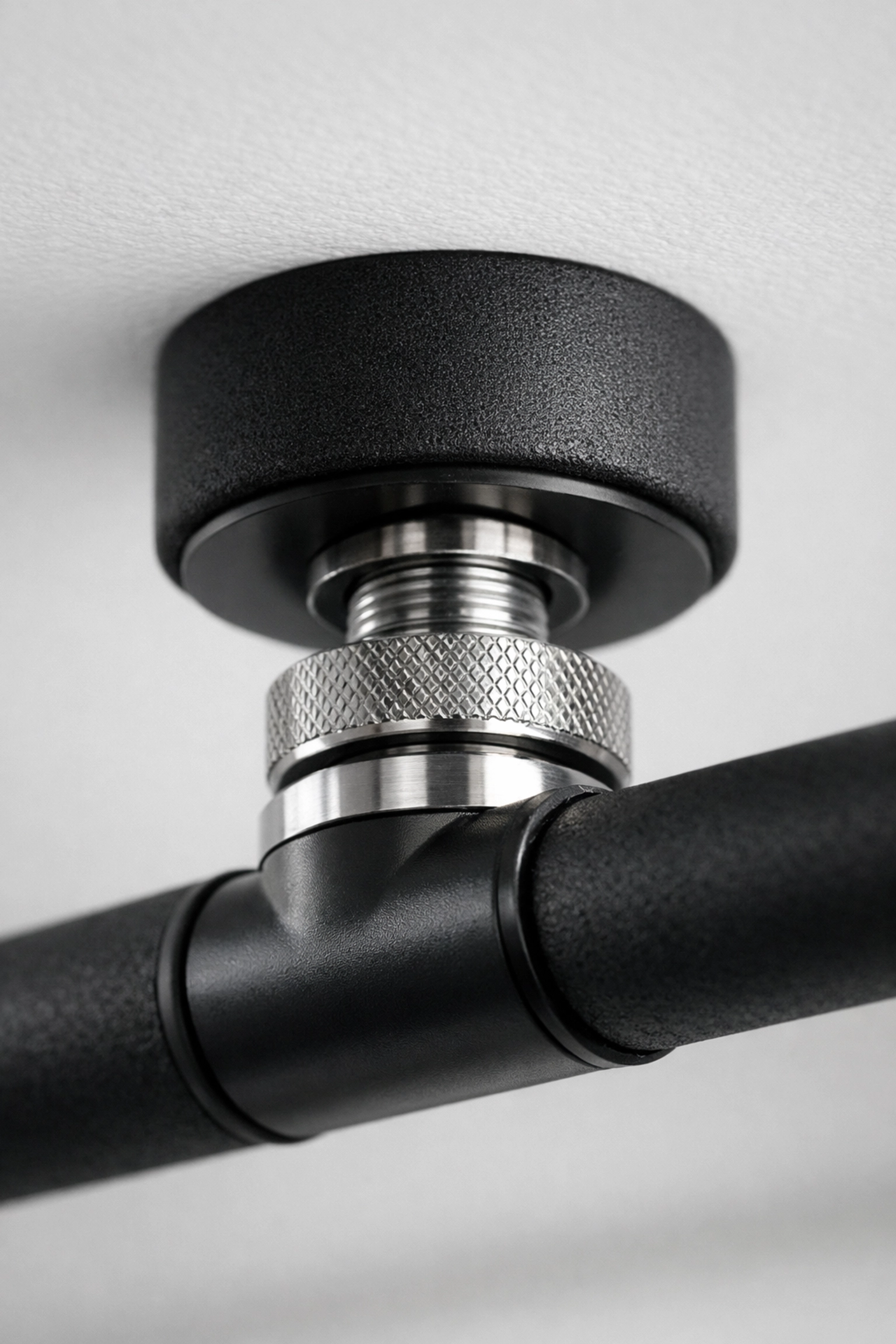
The centerpiece of a modern, elite home setup is the Resistance Rail. Imagine a heavy-duty, vertical rail that spans from your floor to your ceiling. It uses tension to stay locked in place, meaning zero screws, zero bolts, and zero wall damage.
This isn't just a piece of calisthenics equipment for home; it’s a structural revolution. With the Resistance Rail, you get a rock-solid anchor point for pull-ups, suspension trainers, and bands. It’s the ultimate no wall damage workout system that actually handles the torque of a 200lb athlete doing explosive movements.
Check out our shop to see how the Resistance Rail stacks up against your old gear.
Phase 1: The Foundation (Leveling Up Your Bodyweight Games)
Before we add the bells and whistles, you have to master the basics. But we’re doing them the Bold way.
1. The Vertical Push/Pull
Most people think of push-ups and rows. We think bigger. Using a floor to ceiling gym setup, you can adjust your pull-up height to practice "Australian Pull-ups" (inverted rows) at varying degrees. This is essential for Ninja Warriors building that grip and lat endurance.
- The Scaling Secret: Lower the rail attachment point as you get stronger. The more horizontal your body, the harder the rep.
2. The Explosive Lower Body
Squats are great, but for MMA and CrossFit, you need unilateral power. Use the Resistance Rail as a stability anchor for Bulgarian Split Squats or Pistol Squats.
- The Scaling Secret: Hold onto the rail for balance as you master the depth, then transition to using resistance bands attached to the rail to add load to your jump squats.
3. Core Geometry
Planks are boring. We use the rail for "Human Flag" regressions and vertical knee raises. Because the system is secured floor-to-ceiling, you can put lateral pressure on it without the fear of it tipping over like a standard power tower.

Phase 2: Integrating Resistance Training
Pure bodyweight is great, but adding resistance training is how you turn a workout into a transformation. The beauty of a versatile home gym is the ability to combine gravity with tension.
By attaching high-tension bands to your Resistance Rail, you can simulate cable machines found in commercial gyms.
- For the MMA Fighter: Practice resisted strikes and sprawls.
- For the Gymnast: Add band assistance to master that first muscle-up, then flip the script and use the bands for resisted dips.
Our gallery shows exactly how these setups look in real-world, high-intensity environments.
The "No-Excuses" Full-Body Circuit
Ready to sweat? Here is a high-intensity circuit designed for our no wall damage workout system. Perform each move for 45 seconds, rest for 15, and repeat the circuit 4 times.
- Rail-Assisted Archer Pull-ups: (Focus on pulling to one side to build unilateral back strength).
- Resisted Power Lunges: (Attach a band to the bottom of the Resistance Rail and loop it over your shoulders).
- Inverted Rows (Narrow Grip): (Targeting the mid-back and biceps).
- Band-Resisted Push-ups: (Wrap a band across your back and anchor it to the rail for peak tension at the top of the movement).
- Vertical Core Tucks: (Hanging from the rail, pull your knees to your chest with a slow, controlled eccentric).

Scaling for the Pros: Ninja & Calisthenics Specifics
If you’re training for a competition, your home gym equipment needs to be as tough as you are.
For Ninja Warriors: Grip strength is everything. The Resistance Rail allows you to hang various grip implements (balls, cones, pipes) at different heights. Because it’s a floor to ceiling gym, you can practice vertical transitions that a standard wall-mounted bar simply won't allow.
For Calisthenics Practitioners: The quest for the Perfect Form is never-ending. Use the rail to anchor your resistance bands for "front lever" and "planche" progressions. The stability of the rail means you can focus 100% on your mind-muscle connection rather than worrying if your equipment is going to slide across the floor.
Why "No Wall Damage" Matters (Beyond the Security Deposit)
We talk a lot about the no wall damage workout system, and yeah, it’s great for renters. But even if you own your home, do you really want to drill 16 holes into your wall studs? Do you want to be limited to training in the one spot where the studs are actually spaced correctly?
A tension-based versatile home gym gives you the freedom to train anywhere. Move it from the bedroom to the living room. Take it with you when you move. It’s professional-grade gear that respects your space.
Building Your Bold Home Gym
Stop settling for equipment that holds you back. Whether you’re looking for a pull up bar alternative or a complete crossfit home gym solution, the path forward is clear. You need tools that are as bold as your goals.
- Assess your space: You only need a few square feet for a Resistance Rail.
- Choose your resistance: Pick up a set of high-quality bands to complement your bodyweight work.
- Commit to the grind: Bodyweight training isn't the "easy" option: it’s the elite option.
Ready to dominate your home workouts? Explore our full range of home gym equipment and join a community of athletes who refuse to let walls stand in their way.
Bold Body Fitness: No Walls. No Limits. Just Results.
Want to see the Resistance Rail in action? Browse our gallery or join our exclusive members area for specialized training programs designed for our floor-to-ceiling systems.
