
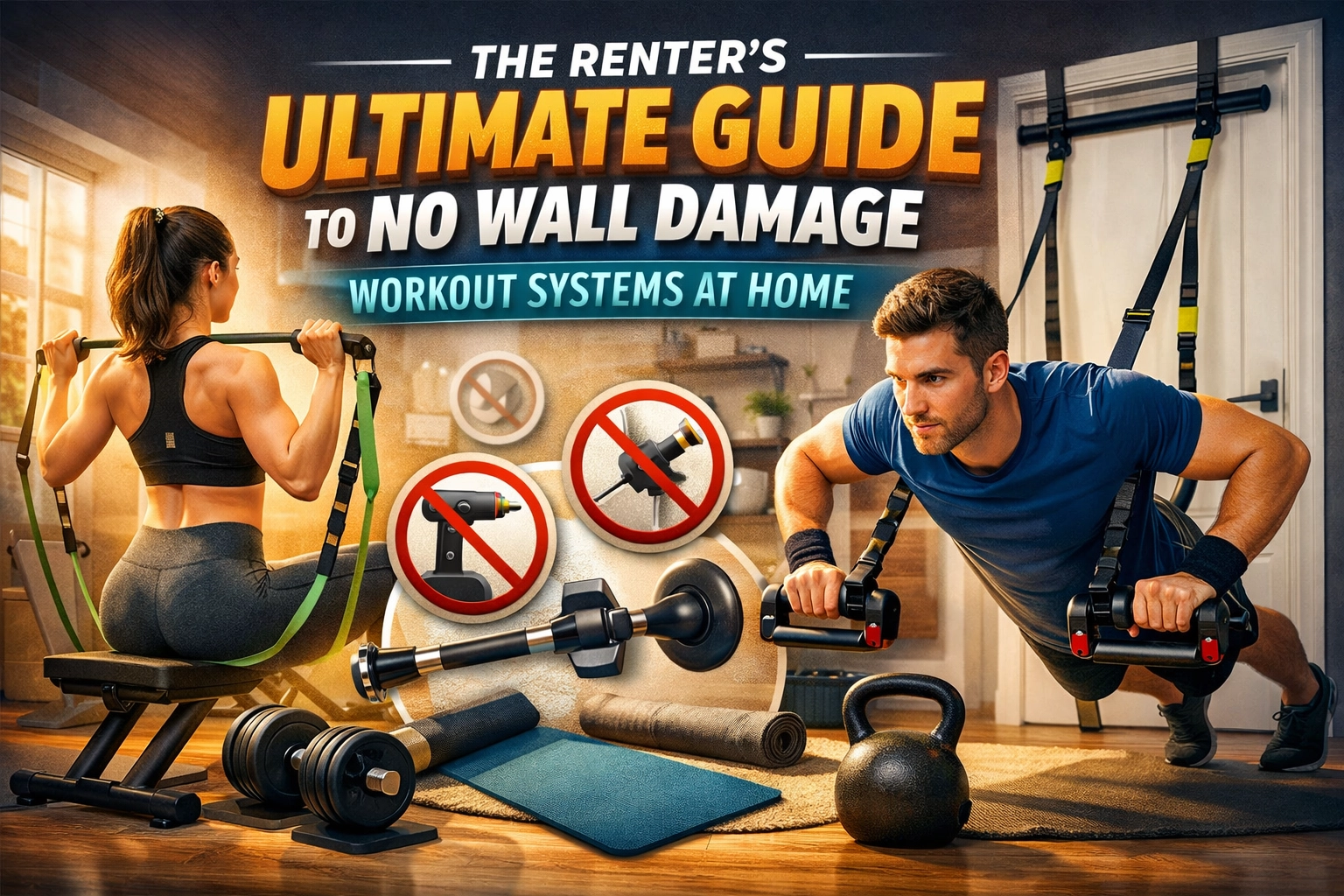
Let's cut through the noise: being a renter shouldn't mean sacrificing your fitness goals. You shouldn't have to choose between building serious strength and getting your security deposit back. Yet thousands of athletes, CrossFit enthusiasts, and calisthenics practitioners face this exact dilemma every time they sign a lease.
The traditional home gym setup demands drilling, bolting, and permanently mounting equipment to walls and ceilings. That's a non-starter when you're renting. But here's the truth that gym equipment companies don't always advertise: you can build a world-class training space without touching a single wall.
This guide breaks down the proven systems that deliver professional-grade training while keeping your rental pristine. Whether you're training for ninja warrior competitions, perfecting your muscle-ups, or building CrossFit-level conditioning, these solutions have you covered.
Why Traditional Home Gyms Fail Renters
Standard home gym setups involve wall-mounted pull-up bars, ceiling-hung rings, bolted squat racks, and permanent installations that landlords hate. These modifications require:
- Drilling into studs
- Permanent holes and structural damage
- Professional installation costs
- Complete removal and wall repair when moving
- Potential lease violations and lost deposits
For serious athletes who move frequently: military personnel, students, young professionals: this approach makes zero sense. You need training solutions that move with you, set up quickly, and leave no trace behind.
The good news? Modern no wall damage workout systems have evolved far beyond cheap resistance bands and basic bodyweight exercises. Today's equipment delivers the same intensity as commercial gyms without requiring a mortgage.
Floor-to-Ceiling Tension Systems: The Foundation
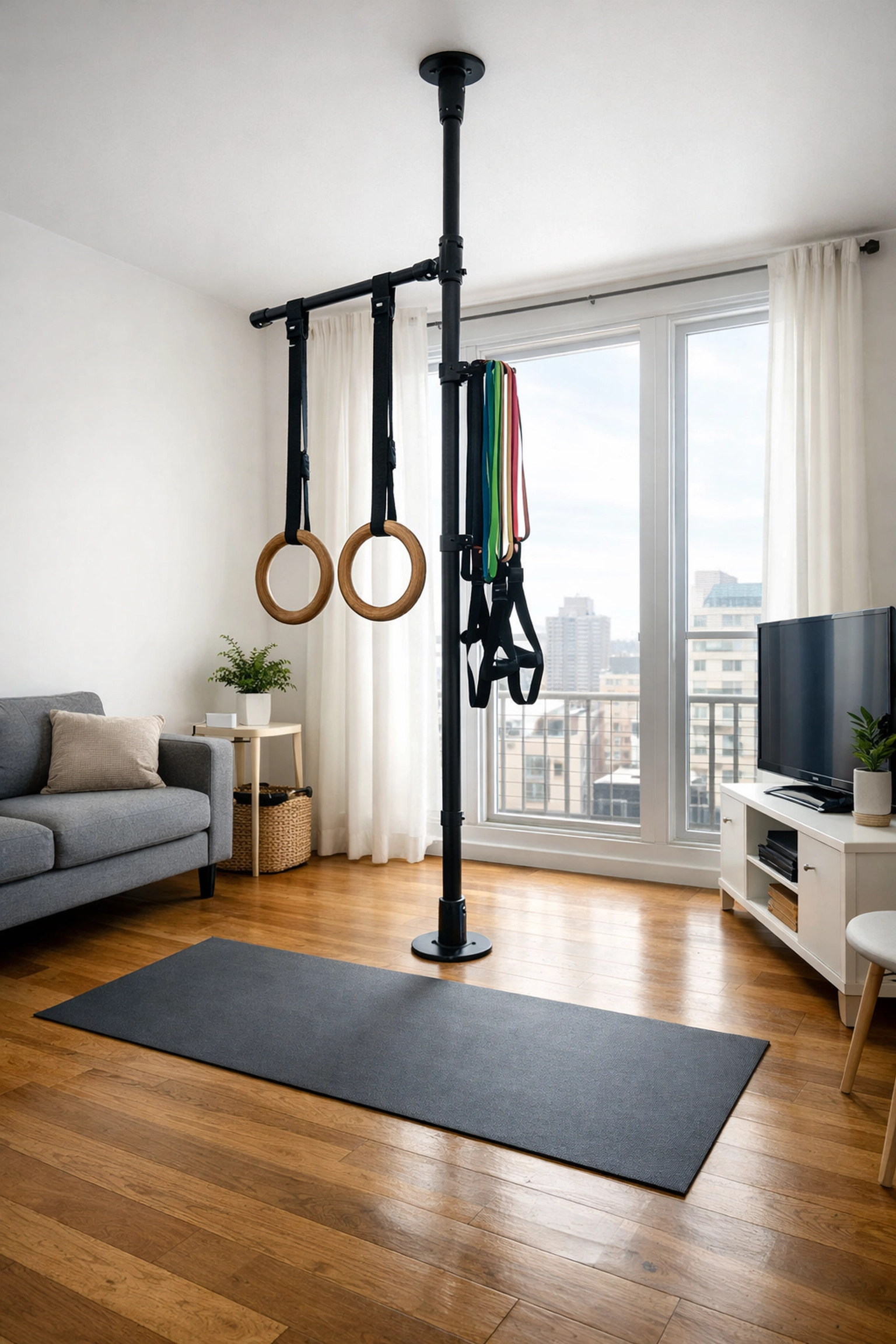
The absolute best solution for serious home training without wall damage is the floor-to-ceiling tension system. These genius designs use adjustable pressure poles that lock securely between your floor and ceiling, creating a rock-solid vertical structure with zero wall contact.
The Resistance Rail from Bold Body Fitness represents the gold standard in this category. This system installs in minutes, requires no tools, and creates an incredibly versatile training station that handles everything from pull-ups and muscle-ups to ring work and heavy resistance training.
What makes tension systems superior to other options:
Load Capacity: Quality systems handle 300-500+ pounds of dynamic force. You're not limited to light resistance or beginner exercises. These systems support advanced gymnastic movements, weighted pull-ups, and explosive training.
Versatility: Attach rings, TRX straps, resistance bands, pull-up bars, climbing ropes, and battle ropes to the same anchor point. One system replaces five separate pieces of equipment.
Zero Footprint: Unlike power racks or squat stands that consume 16+ square feet, tension poles occupy less than one square foot of floor space. Perfect for apartments and small spaces.
Complete Portability: Moving to a new place? Unclip your attachments, release the tension, and pack it up. Total breakdown time: under five minutes.
Full Body Training: These systems enable genuine full body workout at home programming. Upper body pulling, core stability, lower body suspension work, and everything between.
The Resistance Rail specifically shines for athletes transitioning from commercial gym training. The attachment point sits high enough for strict pull-ups without tucking your legs. The stability matches bolted equipment. And the system accommodates rings for false grip training, archer pull-ups, and advanced gymnastics progressions.
Strategic Equipment Choices for Rental Living
Beyond the core tension system, smart equipment selection transforms a basic setup into a comprehensive training facility. Focus on these proven categories:
Doorway Pull-Up Bars
Modern doorway bars use leverage mechanics and protective padding to create bomber installations without scratching door frames. Look for extended grip bars that provide wide-grip, neutral, and close-grip options within one unit.
Quality bars hold 300+ pounds and include foam padding that distributes pressure across the frame rather than concentrating force on single points. These complement tension systems perfectly: use the doorway bar for straight pull-up volume and the tension system for ring work and muscle-up progressions.
Freestanding Power Towers
For athletes who want dip bars, push-up stations, and pull-up capability in one package, freestanding power towers deliver without requiring anchors or bolts. Premium models handle 400+ pounds and include adjustable height settings for different exercises.
The key specification: base width. Wider bases (40+ inches) provide stability during explosive movements and kipping pull-ups. Narrow bases (under 36 inches) wobble during dynamic training.
Adjustable Dumbbells and Weight Systems
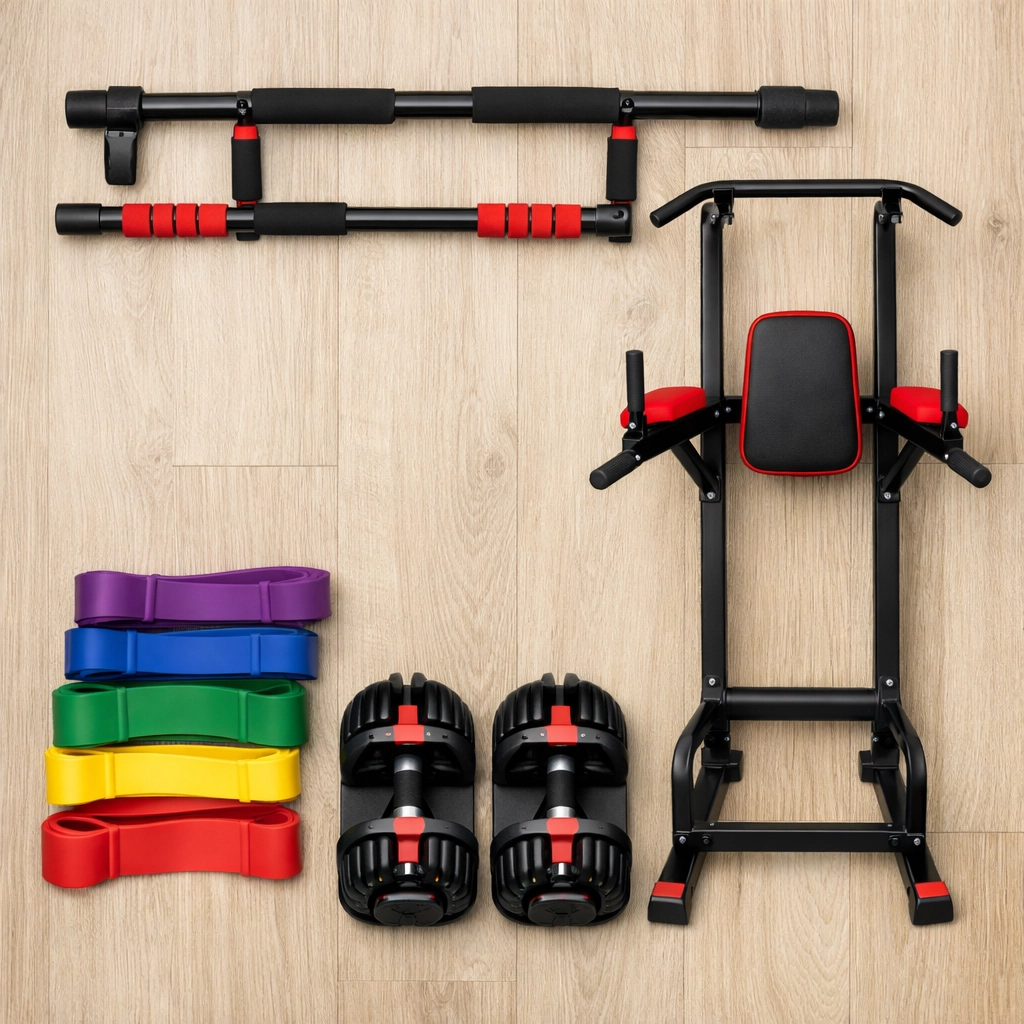
Smart resistance machines have revolutionized strength training in tight spaces. Systems like the Speediance Gym Monster fold flat, mount to compact stands, and deliver up to 220 pounds of digital resistance without wall mounting or extensive footprints.
For traditional iron, adjustable dumbbell sets replace entire dumbbell racks. Quality sets adjust from 5-50+ pounds per hand, enabling progressive overload for pressing, rowing, and accessory work.
Heavy Resistance Band Packages
Don't confuse heavy resistance bands with the flimsy tubes sold at big box stores. Competition-grade resistance bands from Rogue, EliteFTS, and similar companies deliver 50-100+ pounds of resistance per band. Stack three together and you're training with 200+ pounds of resistance for squats, deadlifts, and pressing movements.
Bands excel for:
- Banded pull-ups and chin-ups for progression work
- Speed squats and accommodating resistance
- Horizontal pressing variations
- Shoulder stability and prehab exercises
- Travel training when you can't access your main setup
Building Your Renter-Friendly Home Gym
Start with the foundation and expand based on your training style. Here's the proven approach:
Phase 1: Essential Setup ($300-500)
- Floor-to-ceiling tension system (Resistance Rail)
- Gymnastic rings
- Heavy resistance band set
- Quality exercise mat (8-10cm thickness)
This bare-bones setup enables pull-ups, dips, rows, push-ups, ring work, band resistance exercises, and complete bodyweight training protocols. Sufficient for maintaining elite-level conditioning.
Phase 2: Expansion ($500-800 additional)
- Doorway pull-up bar
- Adjustable dumbbells (5-50 pounds)
- Suspension trainer (TRX or similar)
- Foam roller and mobility tools
- Jump rope
Now you've got redundant pull-up options, free weight pressing and rowing, and enhanced recovery tools. This setup rivals most commercial gym capabilities for everything except heavy barbell work.
Phase 3: Advanced Training ($800-1200 additional)
- Freestanding power tower or dip station
- Additional resistance bands (heavy duty)
- Climbing rope attachment
- Parallettes or push-up bars
- Heavy bag stand (freestanding)
This complete system addresses every training modality: calisthenics equipment for home, resistance training, conditioning work, and skill development. You're operating a legitimate versatile home gym that moves when you move.
Training Strategies for No-Mount Systems
Equipment is half the equation. Smart programming extracts maximum value from minimal gear. These approaches work brilliantly with renter-friendly setups:
Progressive Calisthenics
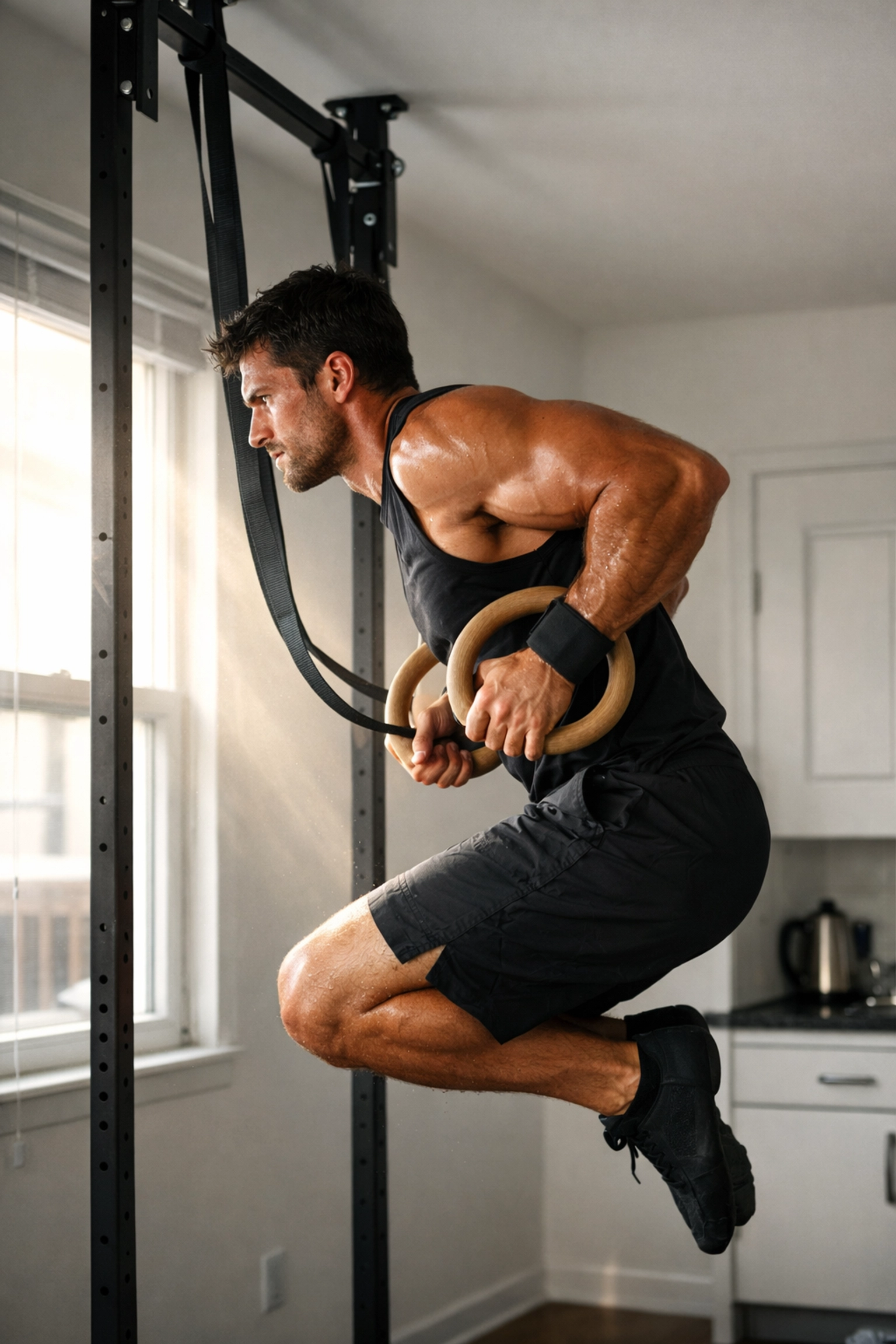
Bodyweight training at home reaches its peak with systematic progressions. Use your tension system for:
- Pull-up progressions (band-assisted → strict → weighted → one-arm eccentrics)
- Dip progressions (parallel bars → rings → weighted → ring muscle-ups)
- Core progressions (hanging knee raises → toes to bar → L-sits → front levers)
- Push progressions (standard → decline → pseudo planche → handstand variations)
The Resistance Rail's high anchor point enables full range of motion on all these movements without ceiling clearance issues.
Hybrid Training Protocols
Combine bodyweight and resistance band work for brutal conditioning sessions:
- Pull-ups supersetted with band rows
- Ring dips paired with band presses
- Hanging core work combined with band anti-rotation exercises
- Suspension trainer pistol squats followed by band squats
This hybrid approach builds strength, power, and endurance simultaneously: perfect for CrossFit home gym training when you can't access a full box.
Skill Development Focus
Use your training time to develop movement skills that require minimal equipment but massive payoff:
- Handstand progressions (wall-supported → freestanding → walking)
- Muscle-up technique (false grip strength → transition drills → strict reps)
- Ring stability (support holds → dips → ring push-ups → inverted work)
- Flexibility and mobility (active stretching → loaded stretching → advanced positions)
These skills transfer directly to competitive performance in gymnastics, ninja warrior, and martial arts training.
Protecting Your Space and Deposit
Even with no-mount systems, smart athletes take extra precautions:
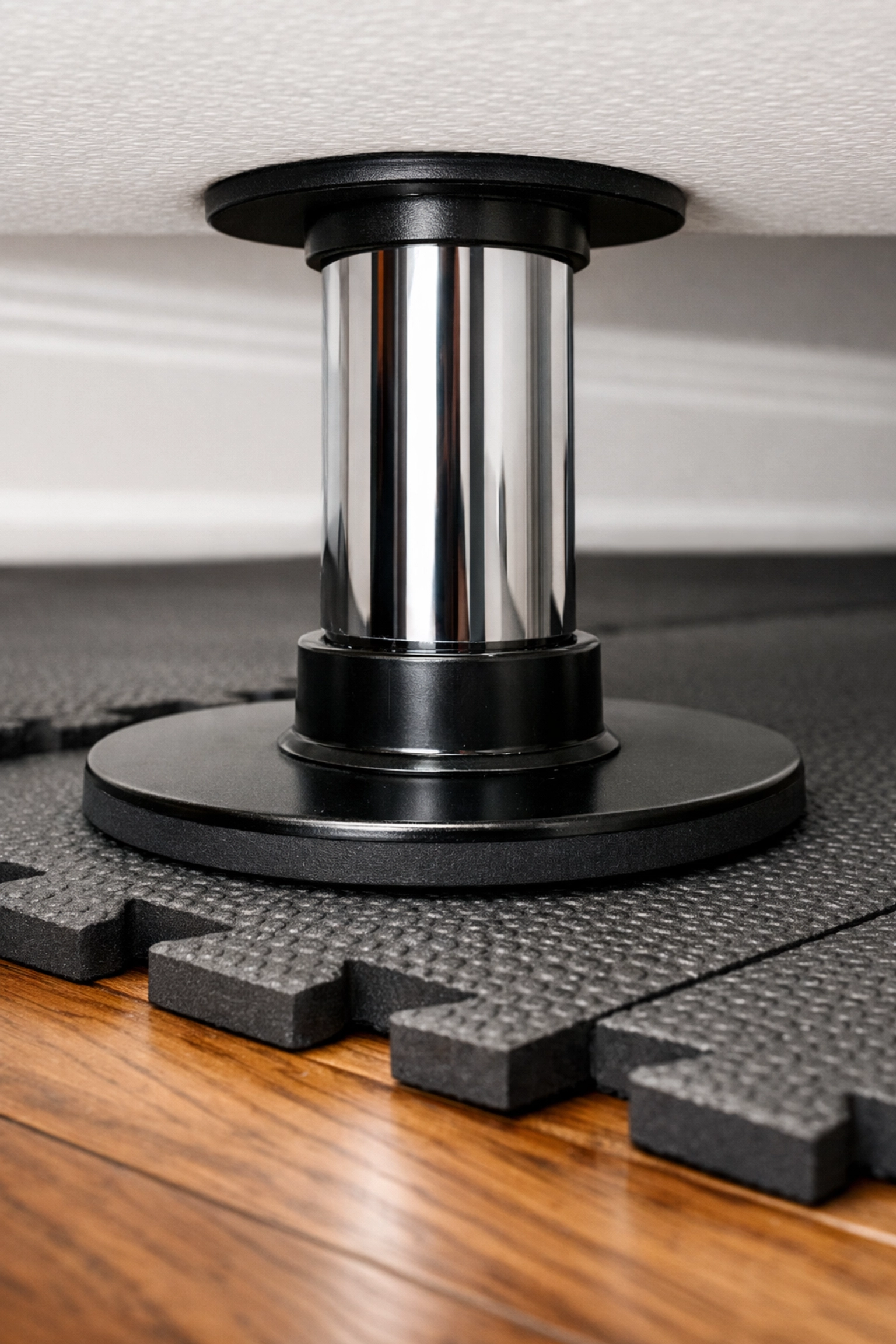
Floor Protection: Use thick gym mats under all equipment, especially under tension pole bases. This prevents pressure marks on carpet and protects hardwood from weight impacts.
Ceiling Protection: Place a thin rubber pad between tension pole tops and ceilings. This distributes pressure and prevents marks on textured ceilings.
Door Frame Care: If using doorway bars, check mounting points weekly for paint wear or frame stress. Remove bars when not in use to minimize long-term pressure.
Wall Clearance: Keep swinging movements (ring work, heavy bag training) at least 18 inches from walls. Accidental contact damages both walls and equipment.
Documentation: Photograph your space before equipment installation. Document existing damage, floor condition, and wall status. This protects you during move-out inspections.
The Bold Body Fitness Advantage
At Bold Body Fitness, we designed our equipment specifically for athletes who refuse to compromise: on training quality or living situations. The Resistance Rail emerged from this exact challenge: how do serious athletes train seriously in temporary spaces?
The answer: engineer a system that's bomber enough for advanced training but smart enough to leave no trace. We've seen military personnel move the Resistance Rail through six duty stations. College athletes who train at elite levels in dorm rooms. MMA fighters who build complete striking and grappling conditioning programs in studio apartments.
Your rental doesn't dictate your potential. Your equipment choices do.
Beyond the Equipment
The mental game matters as much as the hardware. Training at home demands discipline that commercial gyms don't require. You're eliminating commute time, membership fees, and equipment wait times: but you're also removing external accountability.
Successful home training requires:
Dedicated Training Space: Even in small apartments, define a specific area as your gym. This psychological boundary helps you switch into training mode.
Consistent Schedule: Without a commute to the gym, it's easy to skip sessions. Block training time on your calendar like any other appointment.
Progressive Programming: Random workouts produce random results. Follow structured progressions that build toward specific goals.
Community Connection: Join online training communities, post workout videos, find accountability partners. Training alone doesn't mean training isolated.
Check out our full range of resistance training equipment and accessories designed specifically for space-conscious athletes who demand results.
Your Move
You've got the knowledge. You understand the systems. You know that serious training and rental living aren't mutually exclusive.
The question now: what's stopping you?
Every day you delay setting up your pull up bar alternative or complete no wall damage workout system is a day of missed training, wasted gym commute time, or compromised programming because the commercial gym lacks equipment.
Start with the foundation: a quality floor-to-ceiling tension system that transforms any space into a legitimate training facility. Add equipment as budget allows. Progress systematically. Train with purpose.
Your landlord won't know you've been training like a warrior in their property. But your performance will show it.
That's the ultimate rental fitness power move: leaving the space exactly as you found it while leaving your competition wondering how you got so much stronger.
Build your setup. Protect your deposit. Demolish your goals.
