
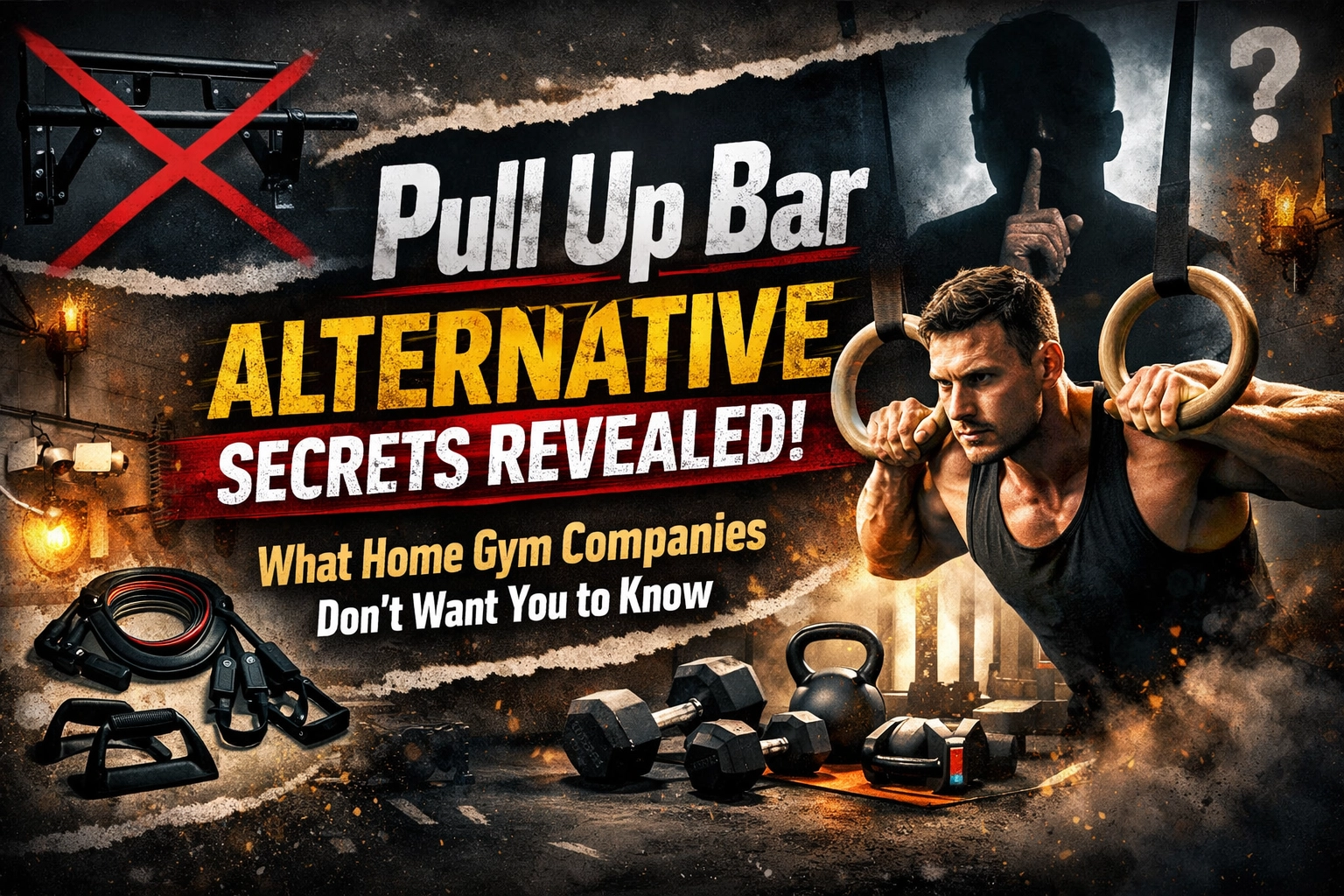
Let's cut through the BS: The home gym industry has been selling you the same tired equipment for decades, and they're making a killing doing it. Traditional pull-up bars? They're limiting your potential, damaging your walls, and forcing you into fixed movement patterns that don't translate to real-world strength. But here's what gets me fired up: there are proven pull-up bar alternatives that deliver superior results, and most equipment companies won't tell you about them because they can't monetize simple solutions.
I'm about to blow the lid off the industry's best-kept secrets and show you how serious athletes: ninja warriors, gymnasts, CrossFit competitors, and MMA fighters: are getting stronger without the limitations of traditional bars.
The Dirty Truth About Traditional Pull-Up Bars
Before we dive into the alternatives, let's talk about why the fitness equipment industry loves selling you standard pull-up bars. They're cheap to manufacture, easy to ship, and create a recurring revenue stream when they inevitably damage your door frames or fall apart.
But here's what they won't tell you: fixed pull-up bars lock you into unnatural movement patterns. Your body doesn't move in straight lines: it rotates, shifts, and adapts. Elite athletes know this. That's why gymnasts train on rings, ninja warriors use dynamic obstacles, and MMA fighters work with variable resistance.
The real kicker? Most people can't even do a proper pull-up when they start. So companies sell you a piece of equipment you can't use, then upsell you on bands, step stools, and assisted pull-up machines. It's a brilliant business model: for them.
The Doorway Row: Your Gateway to Pulling Power
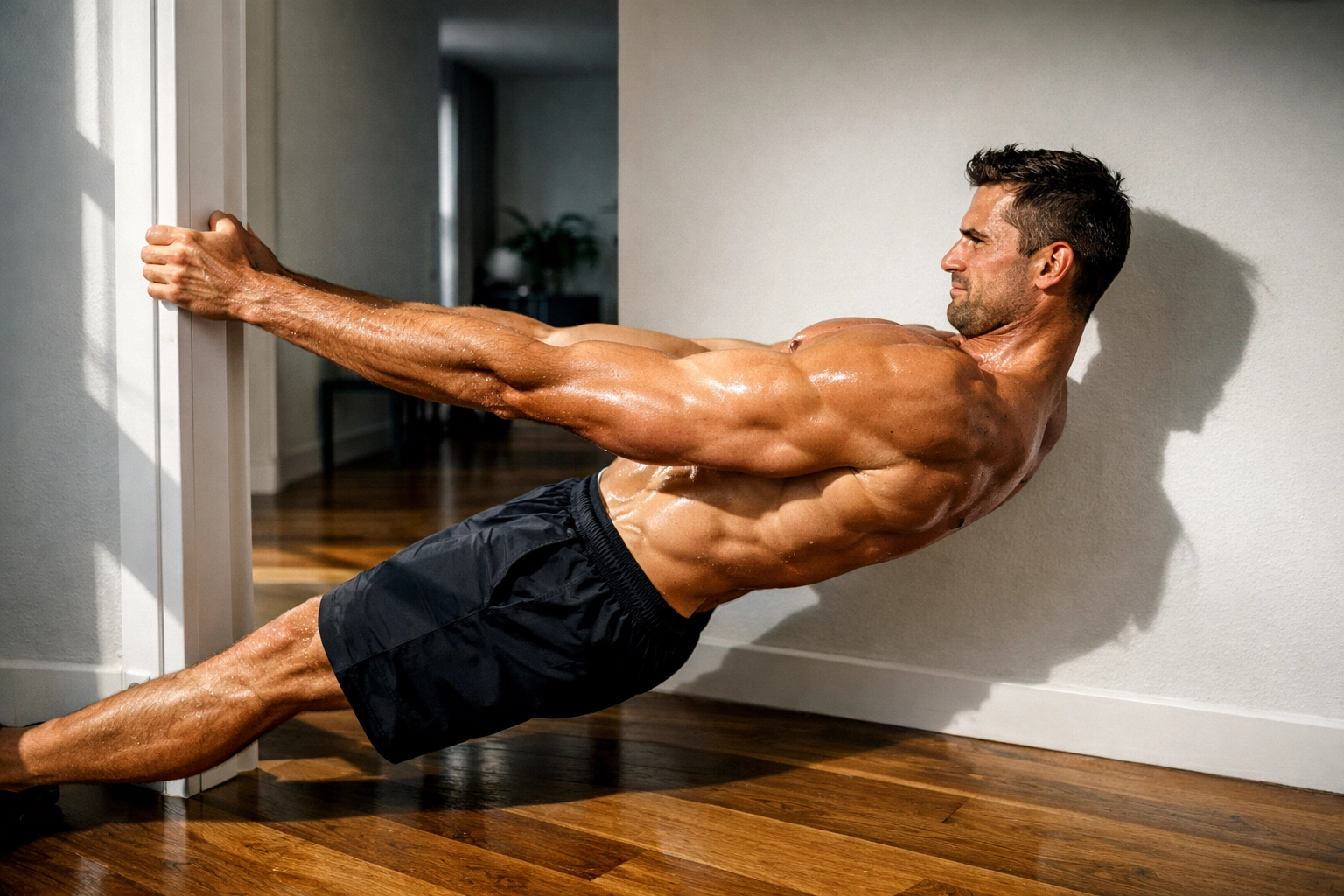
Let's start with the most accessible alternative that requires zero equipment. The doorway row is brutally effective and completely free. Here's why it works:
Stand in an open doorway, grip both sides of the frame, and walk your feet forward until you're leaning back at an angle. Now pull yourself toward the doorway. Congratulations: you're doing a horizontal pulling motion that builds the exact muscle groups needed for pull-ups without the intimidation factor.
The genius of doorway rows is their scalability. Beginners can keep their feet far from the door, maintaining an almost upright position. As you get stronger, walk your feet closer to create a more horizontal body angle. Before you know it, you're pulling serious bodyweight with nothing but a doorway.
Pro tip for ninja warriors and calisthenics athletes: Add explosive power by pushing away from the doorway and catching yourself. This plyometric variation builds the reactive strength you need for dynamic movements.
Towel Training: The Old-School Secret Weapon
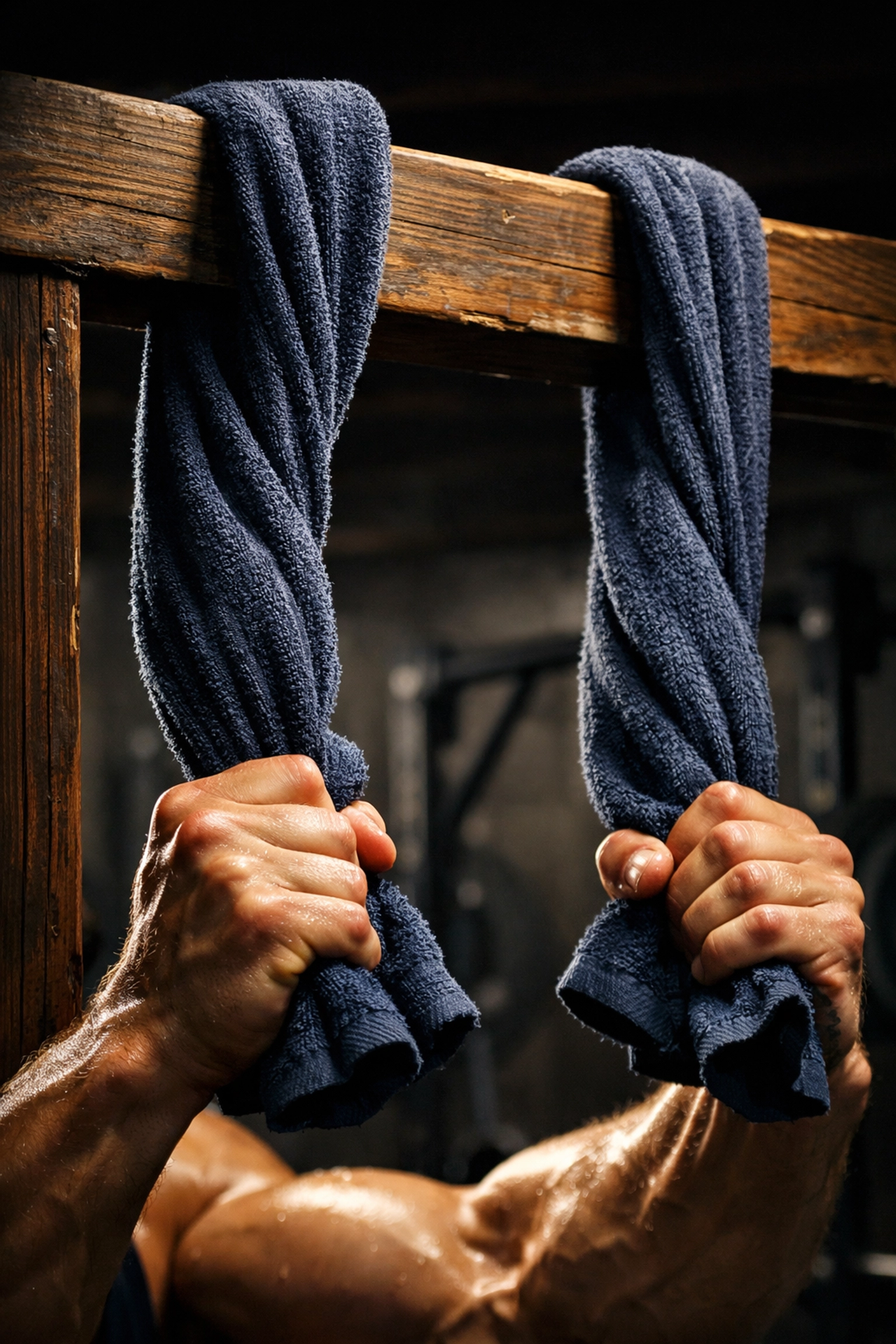
Here's something MMA fighters and rock climbers have known for years: towel training builds grip strength that transfers to everything. Loop a thick towel over any sturdy overhead fixture: a door, a beam, even a tree branch: and you've got yourself a versatile pulling station.
Towel doorway rows take the basic doorway row to the next level. The unstable grip forces your forearms, fingers, and stabilizer muscles to work overtime. This is resistance training at home that builds functional strength, not just mirror muscles.
But it gets better. Use two towels hung at different heights to create uneven pulling angles. This asymmetric loading forces your core to stabilize while your back and arms pull. It's the kind of real-world strength training that translates directly to grappling, climbing, and obstacle course racing.
The Inverted Row Setup: Adjustable Difficulty Without the Price Tag
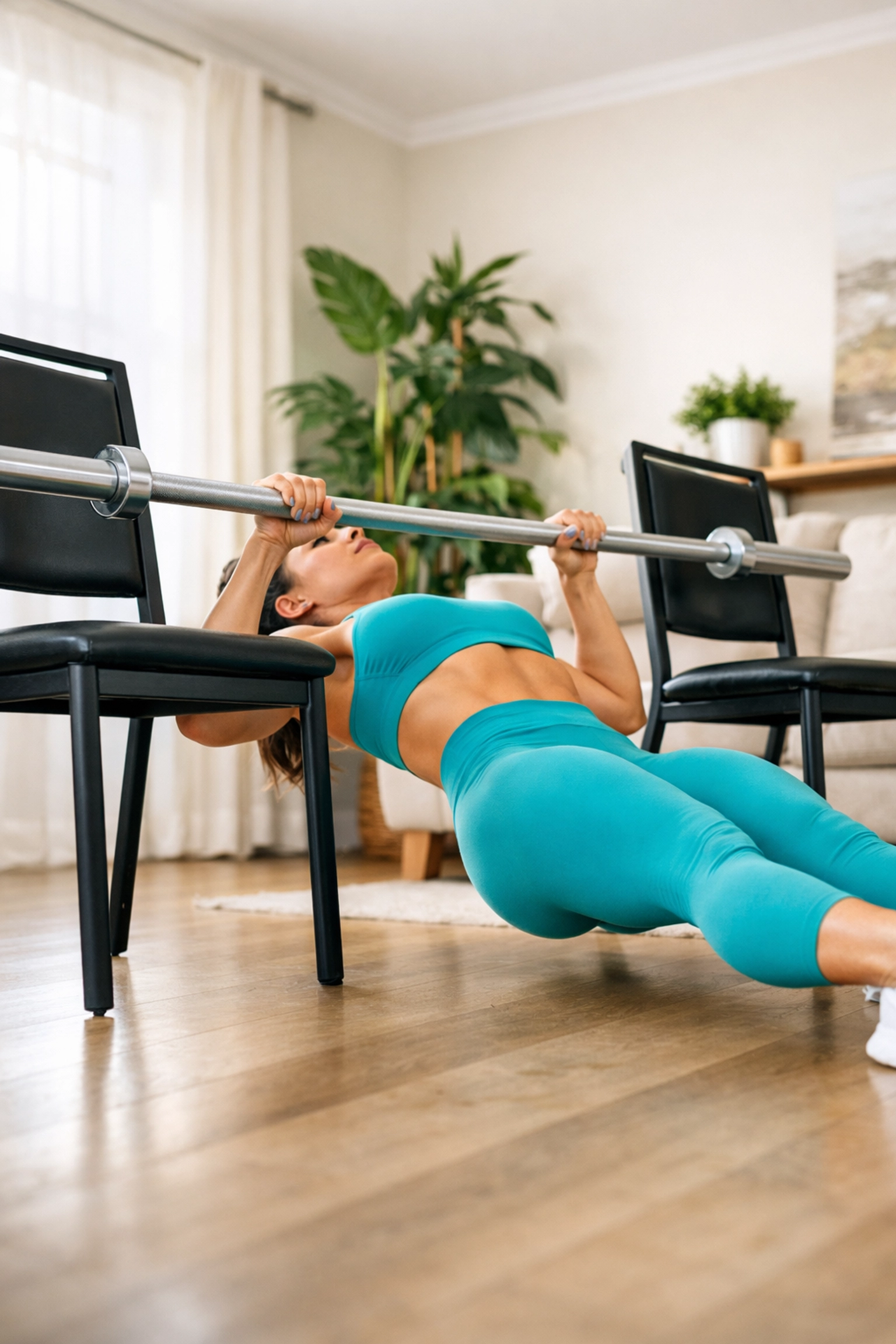
Take two sturdy chairs, place a broomstick or PVC pipe across them, and slide underneath. You've just created an adjustable pulling station that rivals equipment costing hundreds of dollars.
The inverted row is the perfect bodyweight training at home exercise because you can precisely control the difficulty. Raise the bar higher? Easier. Lower it? Significantly harder. Elevate your feet on a box? Now you're approaching pull-up level difficulty.
CrossFit athletes love this setup because it mimics the horizontal pulling patterns in ring rows while allowing for progressive overload. Start with your bar high and gradually lower it over weeks and months. Track your progress by how horizontal you can go: it's measurable, scalable, and effective.
Advanced variation: Place your feet on a stability ball instead of the floor. Now you're fighting to stabilize while pulling, hitting your core, glutes, and back simultaneously. This is the kind of full body workout at home that elite athletes use to maximize training efficiency.
Resistance Bands: The Variable Tension Game-Changer
The fitness industry sells resistance bands as a "beginner" tool, but that's garbage marketing. Elite athletes use bands because they provide variable resistance: something traditional weights and bars can't deliver.
Loop a heavy resistance band around any anchor point at head height or above. Grab both ends and perform pull-downs, rows, or face pulls. The band's increasing tension as you stretch it means maximum muscle activation at peak contraction. That's where growth happens.
For those working toward their first pull-up, bands offer assisted progressions without the need for expensive assisted pull-up machines. Loop a band around an overhead anchor and place your knee or foot in it while performing pull-ups. As you get stronger, use lighter bands until you're pulling your full bodyweight.
Gymnast secret: Use bands for weighted pull-up progressions in reverse. Instead of hanging weight from a belt, have a partner hold a band attached to your waist, pulling down as you perform pull-ups. The variable resistance creates a unique strength curve that builds explosive power.
The Floor to Ceiling Revolution: Why Fixed Equipment Is Obsolete
Here's where we get to the uncomfortable truth that makes traditional equipment companies nervous: floor to ceiling gym setups are replacing fixed bars, racks, and machines because they're simply superior.
At Bold Body Fitness, we developed the Resistance Rail specifically because we saw athletes being held back by limited equipment. Traditional pull-up bars give you one movement at one fixed height. That's not training: that's imprisonment.
A proper floor-to-ceiling system lets you attach pulling implements at any height, any angle, and switch between them instantly. Want to do high pulls? Low rows? Archer pull-ups? Face pulls? All possible on the same system without moving equipment or drilling new holes in your walls.
The no wall damage workout system approach isn't just about protecting your security deposit: it's about workout flexibility. Tension-mounted systems can be installed and removed in minutes, making them perfect for renters, people with small spaces, or anyone who values versatility.
Suspension Training: The Ultimate Pull-Up Bar Alternative
TRX straps and gymnastics rings represent the pinnacle of calisthenics equipment for home because they force stabilization while allowing natural movement patterns. Unlike a fixed bar that supports you, suspension trainers make you control the instability.
Set up rings or straps at any height and perform inverted rows, pull-ups, muscle-ups, or archer rows. The constant micro-adjustments required to stabilize the moving handles recruit more muscle fibers and build functional strength that transfers to real-world movements.
Ninja warrior application: Rings are essentially training wheels for dynamic obstacles. The instability mimics swinging bars, floating steps, and moving grips. If you're training for obstacle course racing, suspension training isn't optional: it's essential.
For CrossFit athletes building toward bar muscle-ups, ring training provides the false grip strength and shoulder stability needed for that critical transition. Plus, rings can be set up anywhere with an overhead anchor, making them the ultimate portable home gym equipment.
Y-T-I Raises: The Zero-Equipment Back Builder
Sometimes the best solutions require absolutely nothing. Y-T-I raises are proof that you don't need equipment to build a strong, functional back.
Lie face-down on the floor. For Y raises, extend your arms overhead at a 45-degree angle and lift them while squeezing your shoulder blades together. For T raises, extend your arms straight out to your sides. For I raises, extend them directly overhead.
This floor-based sequence hits every back muscle from your lats to your rear delts to your lower traps. It's the kind of foundational strength work that prevents injuries and builds the structural integrity needed for heavy pulling movements.
MMA fighter tip: Add these as a warm-up before grappling sessions. The scapular control and upper back activation translates directly to maintaining posture during takedown defense and ground work.
Why Companies Hide These Alternatives
Let's get real about why you haven't heard about most of these alternatives from major fitness equipment brands: there's no money in telling you that a towel and a doorway can replace their $200 pull-up bar.
The fitness industry thrives on creating dependency. They want you to believe you need specific equipment, specific brands, and specific products to achieve your goals. But athletes have been getting strong for thousands of years with minimal equipment because the principles of progressive overload, consistent training, and movement variation don't require expensive gear.
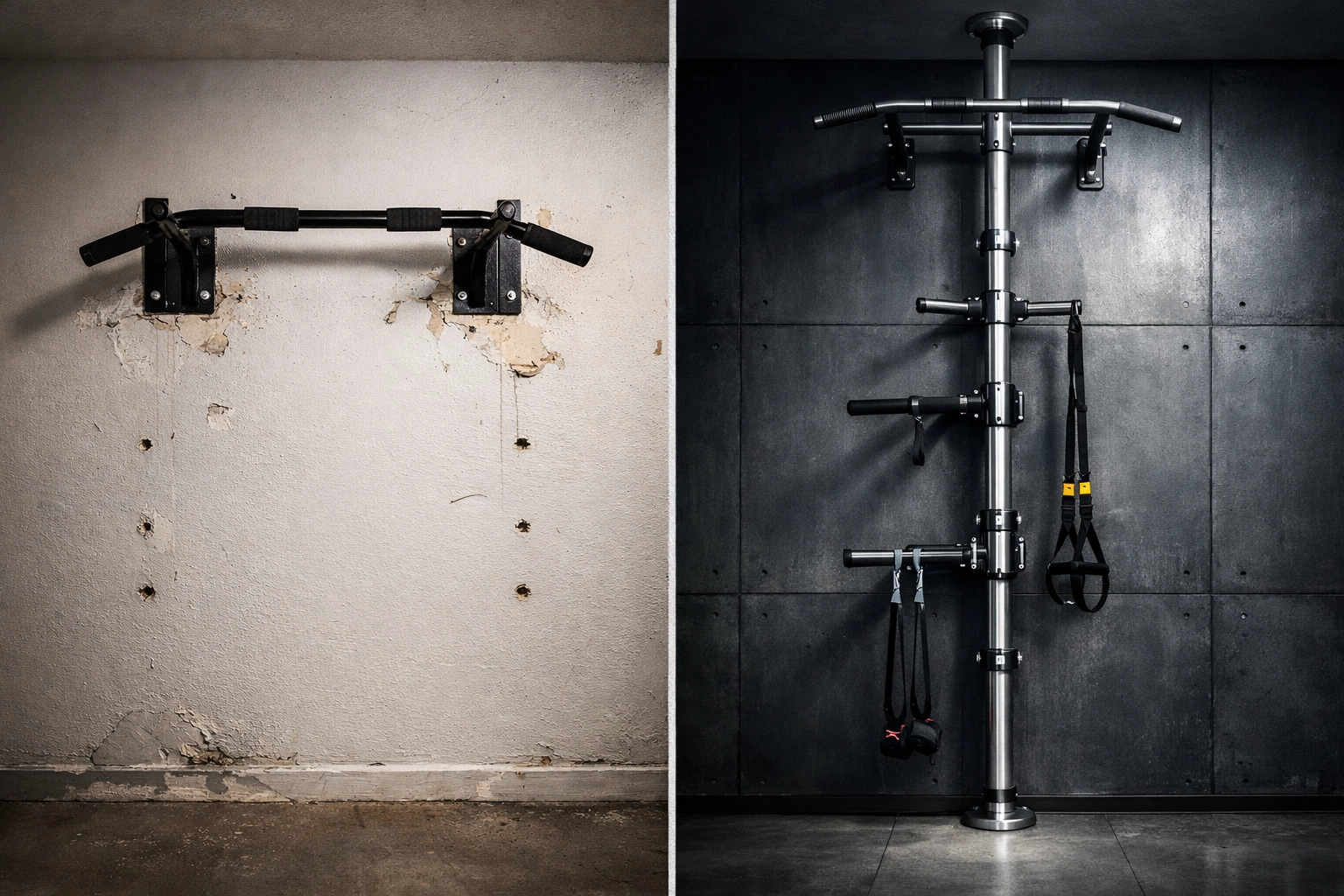
The versatile home gym approach threatens traditional equipment sales because it empowers you to get creative with simple tools. A broomstick becomes a pull-up bar. A towel becomes a grip trainer. Your body becomes the machine.
That said, when you're ready to invest in equipment that actually makes a difference, choose systems that enhance versatility rather than limit it. The Resistance Rail was designed by athletes who were tired of being locked into fixed equipment that didn't serve their varied training needs.
Programming Pull-Up Alternatives for Maximum Results
Having alternatives means nothing without a plan. Here's how serious athletes structure their training when working with pull-up bar alternatives:
Beginners: Start with doorway rows 3-4 times per week. Focus on form and gradually increase your lean angle. Add resistance band pull-downs for 3 sets of 8-12 reps after your rows. Finish with Y-T-I raises for shoulder health. Within 4-6 weeks, you should be ready for inverted rows.
Intermediate: Use inverted rows as your primary pulling movement, progressively lowering the bar height. Add towel rows once per week for grip strength. Include suspension trainer rows for stabilization. This phase builds the strength foundation for actual pull-ups or more advanced movements.
Advanced: Rotate through multiple alternatives in the same workout to hit different strength curves and movement patterns. Combine inverted rows with feet elevated, towel pull-ups, and weighted resistance band variations. For crossfit home gym training, integrate these alternatives into EMOM workouts or AMRAPs.
Elite (Ninja Warriors, Gymnasts, MMA Fighters): Use alternatives to break through plateaus in your primary training. If you're stuck at a certain number of pull-ups, replace one pull-up session per week with high-volume inverted rows or explosive towel rows. The varied stimulus often breaks stubborn plateaus.
The Alternative That Actually Replaces Everything
After covering all these options, here's the uncomfortable truth: most people will dabble with alternatives for a few weeks before either giving up or finally buying proper equipment. The question is whether you buy single-purpose equipment that locks you into limited movements or invest in a system that adapts to your goals.

A properly designed resistance training system should let you perform every alternative mentioned in this article plus traditional exercises. It should mount without wall damage, adjust instantly, and accommodate beginner to elite movements. Most importantly, it should get out of your way and let you train.
Check out the full range of versatile training solutions at the Bold Body Fitness shop that are actually designed by athletes for athletes, not by marketing teams for profit margins.
Your Move
The secrets are out. You now know more about pull-up bar alternatives than 95% of people buying home gym equipment. You understand why companies push fixed equipment and how to build serious pulling strength with minimal investment.
The question is: what are you going to do with this information?
Start with doorway rows tomorrow morning. Set up an inverted row station this weekend. Order resistance bands and start training. Build the pulling strength that transforms your performance, whether you're conquering obstacles, dominating on the mats, or just trying to do your first damn pull-up.
The fitness industry wants you to believe that progress requires their products. But the truth is simpler and more empowering: progress requires consistency, intelligent programming, and the willingness to get creative with what you have.
Now stop reading and go train.
