

Let's cut through the BS. That door-frame pull-up bar you bought on Amazon? It's slowly destroying your walls, your door frames, and possibly your security deposit. And if you've asked your CrossFit coach about it, they probably gave you some vague answer about "just dealing with it" or "building character through adversity."
Here's what they're not telling you: there are legitimate pull up bar alternatives that won't turn your rental into a demolition zone, and some of them will actually elevate your training beyond what a basic door bar could ever offer.
The Door Frame Disaster Nobody Talks About
Door-frame pull-up bars work on a simple principle: pressure. They wedge themselves into your doorway and rely on friction and leverage to hold your bodyweight. Sounds fine in theory, right?
Wrong.
Door frames weren't engineered to handle repeated downward forces from a 150-200+ pound human doing explosive pull-ups, muscle-ups, or kipping movements. Every rep you crank out transfers stress directly into the wood or drywall. Over weeks and months, this creates:
- Paint chipping and surface scratches
- Deep indentations in the door frame
- Permanent dents where the bar contacts the frame
- Structural weakening of the door frame itself
- That awkward conversation with your landlord about "normal wear and tear"
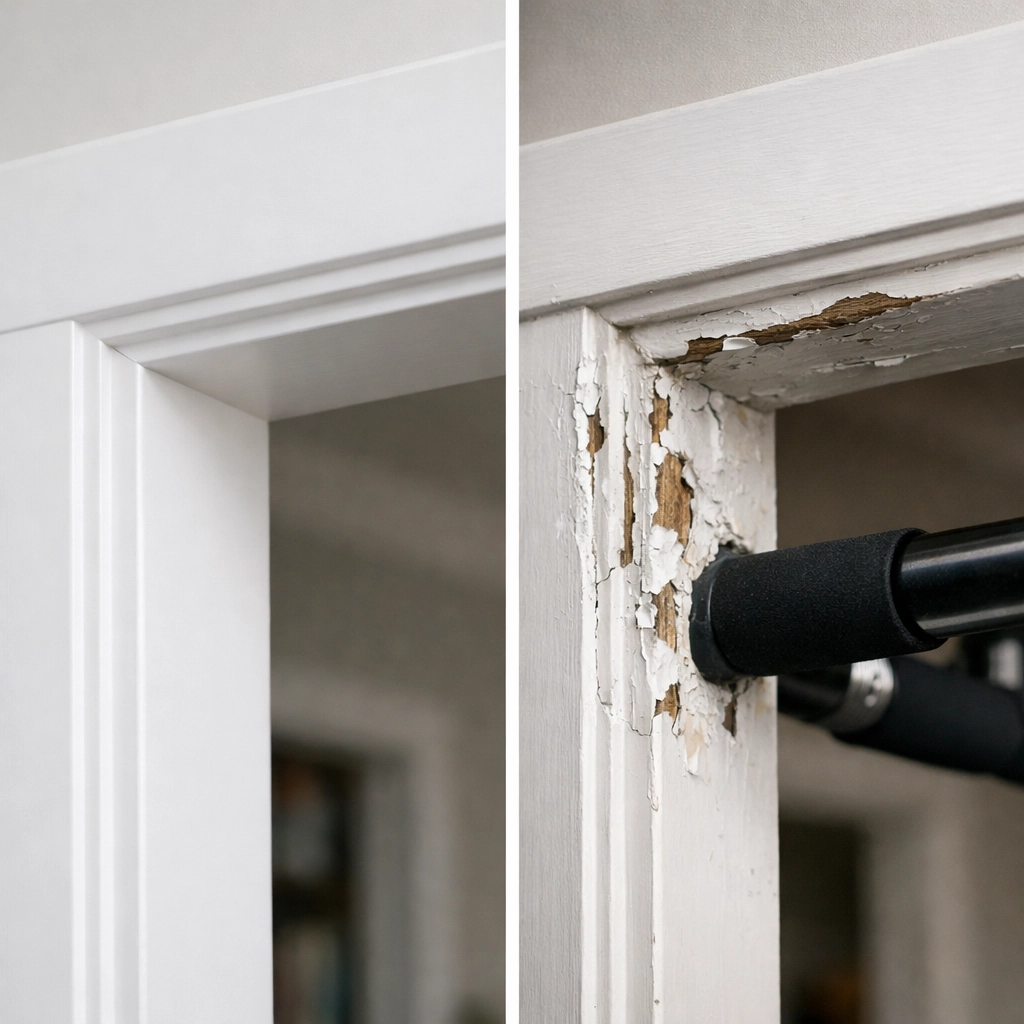
The worst part? Most people don't notice the damage until they go to move out. Then suddenly those "minor scuff marks" turn into a $300+ deduction from your security deposit.
Why Your CrossFit Coach Isn't Warning You
Here's the uncomfortable truth: many CrossFit boxes and training facilities don't deal with this problem because they own their buildings. They've got industrial spaces with concrete walls and ceiling-mounted rigs that could support a small car.
When you ask them about home gym equipment solutions, they're answering from a completely different reality. They don't think about rentals, landlords, or the fact that most people's home gym is squeezed into a spare bedroom or garage.
Plus, let's be honest, there's an unspoken mentality in some fitness circles that if you're not willing to destroy property for gains, you're not serious enough. That's garbage. You can be a dedicated athlete without trashing your living space.
The Wall-Mounted Trap
"Just get a wall-mounted bar," they say. "It's way more stable," they promise.
They're not wrong about the stability part. A properly installed wall-mounted pull-up bar can handle serious weight and provides excellent grip positions for various calisthenics equipment for home training.
But here's what they conveniently forget to mention:
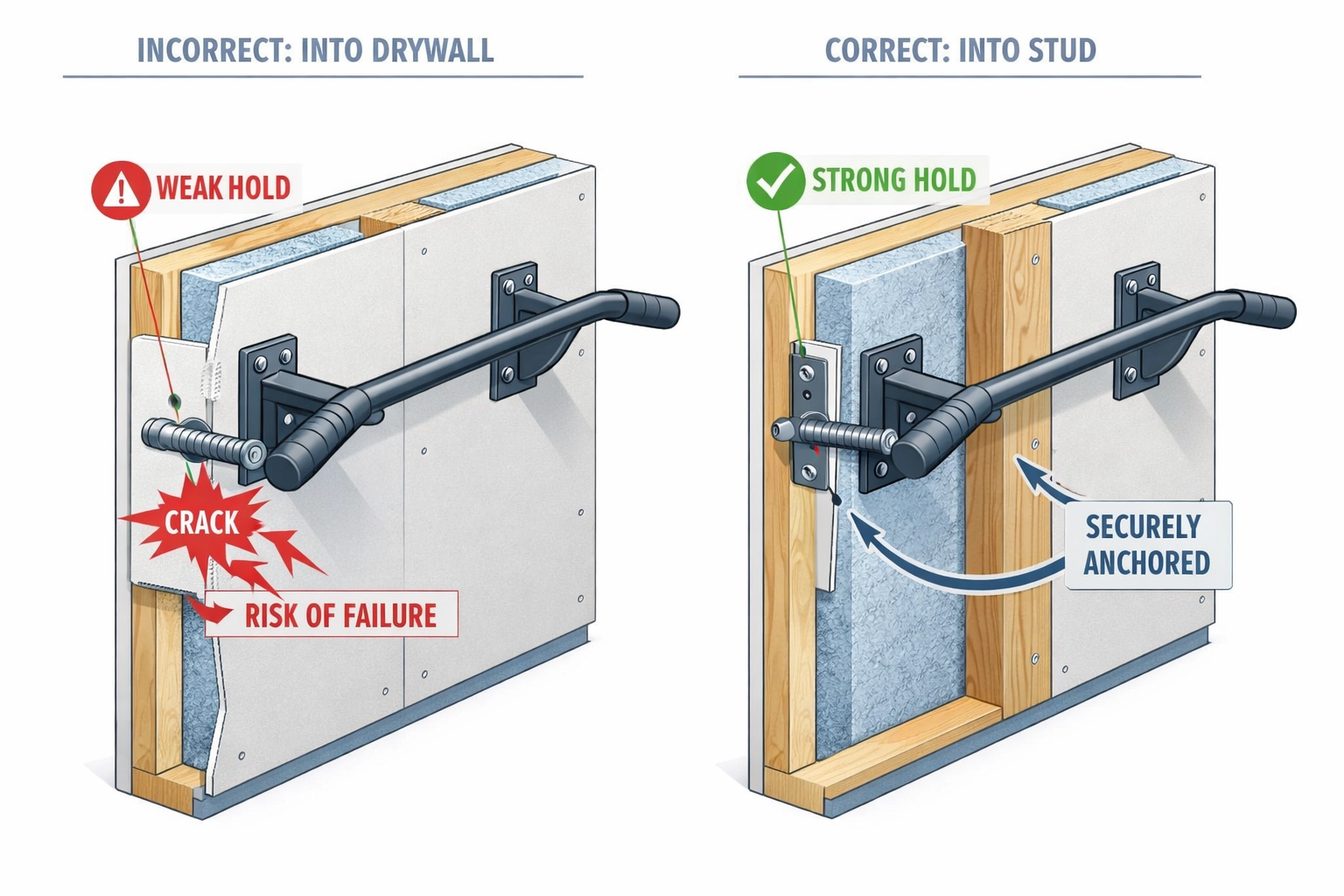
Installation is permanent and destructive. You're drilling multiple holes into your wall, ideally into studs. If you're in a rental, this is probably a dealbreaker. If you own your place, you better be 100% sure about placement because once those holes are there, they're there.
Wall studs aren't always where you need them. Standard stud spacing is 16-24 inches, which might not align with your ideal bar width or placement.
Not all walls can handle the load. Drywall alone won't cut it. You need solid wood studs or concrete/brick. Many apartment walls are hollow or have metal studs that can't safely support dynamic pulling movements.
Resale value takes a hit. Future buyers don't always appreciate your fitness-forward thinking. Those mounting holes read as "damage" to most people.

The Ceiling-Mounted Compromise
Ceiling-mounted setups solve some problems but create others. They're excellent for crossfit home gym builds because they free up floor and wall space while providing bomber stability.
The downsides?
- Even more complex installation than wall mounts
- Ceiling joists might not run where you need them
- Height limitations in many homes
- Your downstairs neighbors won't appreciate the vibration
- Same permanence issues as wall mounts
The Floor-to-Ceiling Solution Nobody's Talking About
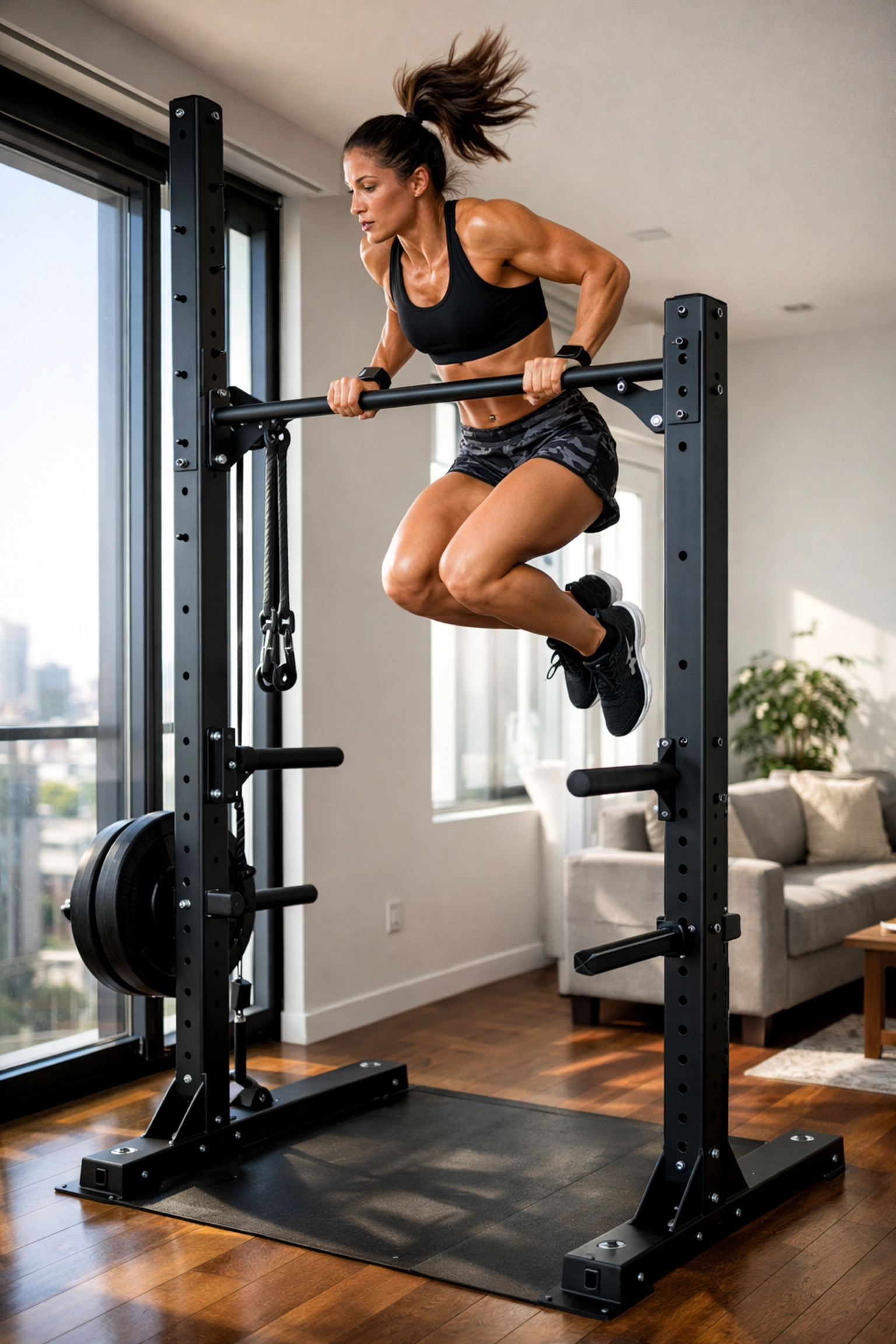
This is where things get interesting. There's a category of versatile home gym equipment that serious athletes are discovering: floor-to-ceiling resistance systems that require zero wall mounting, zero drilling, and zero permanent installation.
Think of it as the evolution beyond traditional pull-up bars. Instead of fighting with door frames or drilling into walls, you're using vertical pressure, floor to ceiling tension, to create a stable anchor point for resistance training and bodyweight training at home.
The Bold Body Fitness Resistance Rail is the prime example of this category. It's a floor-to-ceiling system that:
- Installs in minutes without tools
- Leaves absolutely zero wall damage
- Adjusts to ceiling heights from 7' to 10'
- Supports the full range of pull-ups, muscle-ups, dips, and resistance band work
- Stays put during explosive movements
- Moves between rooms or apartments without hassle
This isn't just about avoiding damage, it's about versatility. A door-frame bar gives you pull-ups and maybe some hanging leg raises. A proper no wall damage workout system opens up your entire training arsenal.
What Makes a True Pull-Up Bar Alternative
Not all solutions are created equal. If you're serious about your training, your pull up bar alternative needs to check these boxes:
1. Structural Integrity Under Load
Can it handle not just your bodyweight, but dynamic movements? What about weighted pull-ups? Kipping? Muscle-ups? If the system wobbles or flexes during explosive movements, it's not a real alternative, it's a liability.
2. Zero Installation Damage
This should be obvious, but apparently it's not. The whole point of finding an alternative is to avoid destroying your space. If your "solution" still requires drilling holes, it's missing the point.
3. Full Range of Motion
A true alternative doesn't compromise your training. You should be able to achieve full scapular depression at the top of your pull-up and full arm extension at the bottom. Cramped door frames that force you to bend your knees? That's a compromise, not a solution.
4. Multiple Grip Options
Overhand, underhand, neutral, wide, narrow: your pull-up bar alternative should accommodate various grip widths and positions to hit different muscle groups and prevent overuse injuries.
5. Additional Training Functionality
Why limit yourself to just pull-ups? The best systems integrate with resistance bands, allow for dips, support TRX-style suspension training, and create a complete full body workout at home station.
The Rental-Friendly Revolution
For renters, athletes who travel, or anyone who values flexibility, the old model of permanent installations is outdated. You shouldn't have to choose between serious training and your security deposit.
Floor-to-ceiling systems represent a fundamental shift in how we approach home gym equipment. Instead of working around the limitations of traditional mounting systems, they're purpose-built for the modern reality of how people actually live and train.
The Resistance Rail Deluxe takes this concept further with adjustable height bands, multiple attachment points, and a design that works equally well for gymnastics conditioning, MMA fighters doing pull-up circuits, or ninja warriors building grip strength.
Comparing Your Options: The Real Numbers
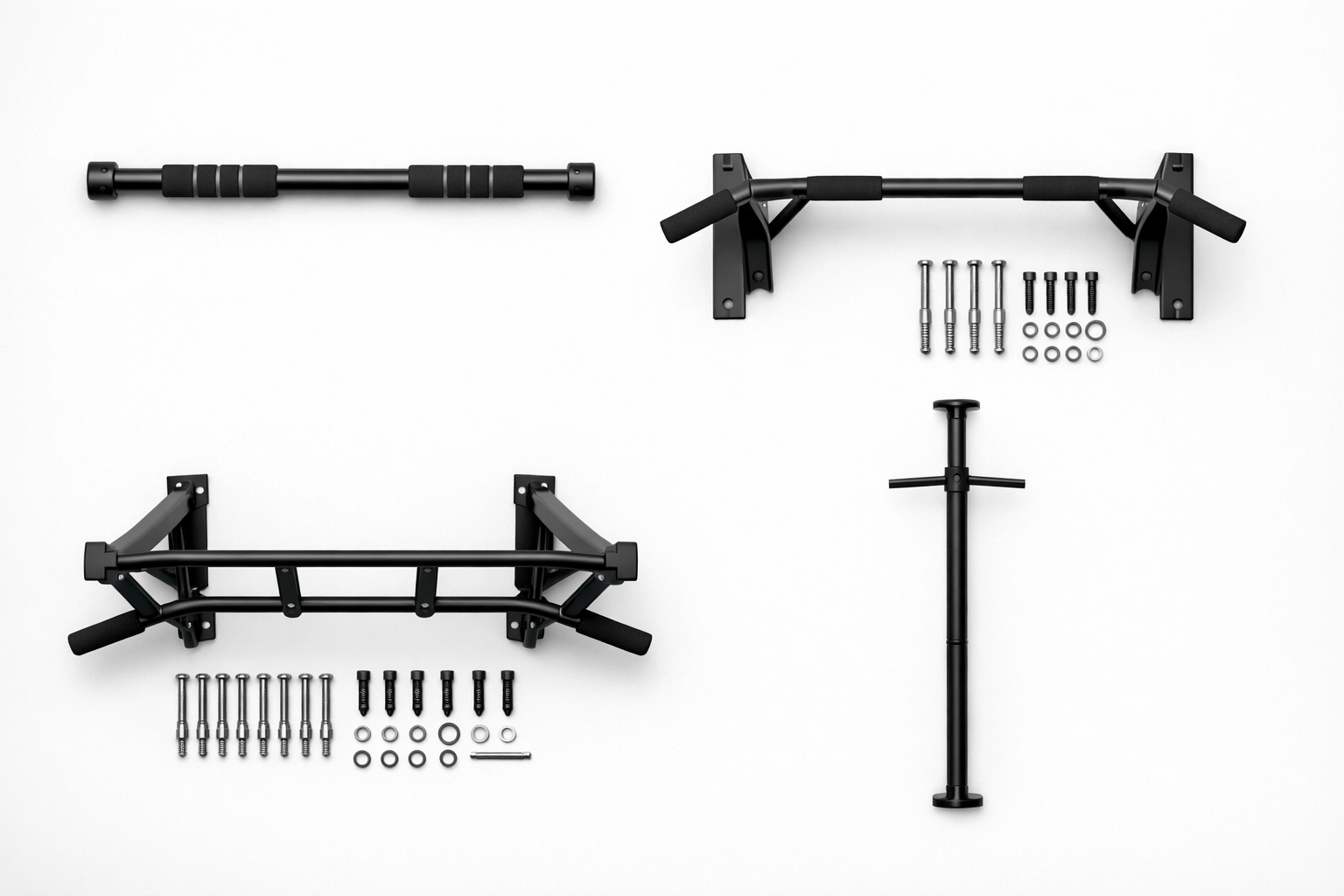
Let's break down what you're actually dealing with across different pull up bar alternative solutions:
Door-Frame Bars: $20-60, guaranteed wall damage, limited functionality, stability issues, maximum convenience for quick install
Wall-Mounted Bars: $40-150 for the bar, $0-200 for professional installation, permanent holes, excellent stability, limited to one location
Ceiling-Mounted Systems: $80-300+, complex installation, permanent modification, excellent stability, height limitations
Floor-to-Ceiling Systems: $200-400, zero installation damage, completely portable, excellent stability when quality-built, multi-functional training options
The math isn't just about upfront cost. Factor in:
- Security deposit deductions (typically $200-500 for door frame damage)
- Professional repair costs if you patch and paint before moving
- Flexibility to reconfigure your space
- Resale/move-out ease
Suddenly that "expensive" floor-to-ceiling system looks like the budget-friendly option.
Installation That Actually Makes Sense
One of the biggest advantages of modern no wall damage workout system designs is installation simplicity. No measuring stud spacing. No hoping your drill bit doesn't hit electrical wiring. No wondering if your anchors can handle the load.
Quality floor-to-ceiling systems use simple physics: vertical pressure between floor and ceiling creates a stable anchor point. You extend the system to height, lock it in place, and start training. When you move or want to reconfigure, you compress it down and relocate it.
This matters more than you might think. How many times have you put off setting up equipment because the installation process was intimidating? How many people buy wall-mounted bars that sit in the box for months because they keep procrastinating on drilling those holes?
Easy installation means you actually use the equipment. And equipment you use is equipment that was worth buying.
The CrossFit Box Advantage at Home
Here's what makes a proper crossfit home gym setup different from a basic pull-up bar: programming flexibility.
CrossFit programming constantly varies movements, intensities, and modalities. Your equipment needs to support that variation without requiring you to own 47 different pieces of gear.
A floor-to-ceiling system with integrated resistance band anchors, multiple pull-up grip options, and dip station capability suddenly makes those WODs actually doable at home. You're not trying to MacGyver a workout around limited equipment: you've got the tools to train properly.
Check out the full range of training equipment and accessories that complement a complete home setup.
Making the Switch: What to Know
If you're ready to ditch the door-frame bar for something that won't cost you your security deposit, here's what to consider:
Ceiling Height Matters: Most quality floor-to-ceiling systems adjust from 7' to 10'. Measure your space. If you've got cathedral ceilings or unusually low ceilings, verify compatibility.
Ceiling Type Affects Stability: Flat, solid ceilings work best. Popcorn texture and drop ceilings can still work but may require additional top plates for pressure distribution.
Floor Surface: Concrete, hardwood, and solid laminate all work great. Thick carpet might require a base plate to prevent sinking.
Your Training Style: If you're exclusively doing strict pull-ups, almost any stable system works. If you're doing explosive movements, kipping, or muscle-ups, you need something engineered for dynamic loads.
The Bottom Line
Your door-frame pull-up bar is a compromise that's costing you more than you realize: in wall damage, training limitations, and flexibility. CrossFit coaches aren't telling you about better alternatives because they're thinking from their fully-equipped box, not your rental apartment reality.
The evolution in home gym equipment has made it possible to train at a high level without destroying your space or committing to permanent installations. Floor-to-ceiling systems, properly designed resistance training setups, and multi-functional stations give you the capability without the collateral damage.
You don't have to choose between serious training and keeping your landlord happy. You don't have to live with paint chips and dents. And you definitely don't have to accept "that's just how it is" from coaches who've never dealt with apartment living.
The alternative exists. The technology is proven. The only question is whether you're ready to stop compromising and start training the way you deserve: damage-free, versatile, and absolutely uncompromising in quality.
Ready to make the switch to a no wall damage workout system that actually performs? Explore your options and build the home gym you've been putting off because you were afraid of destroying your walls. Your training: and your security deposit( will thank you.)
