
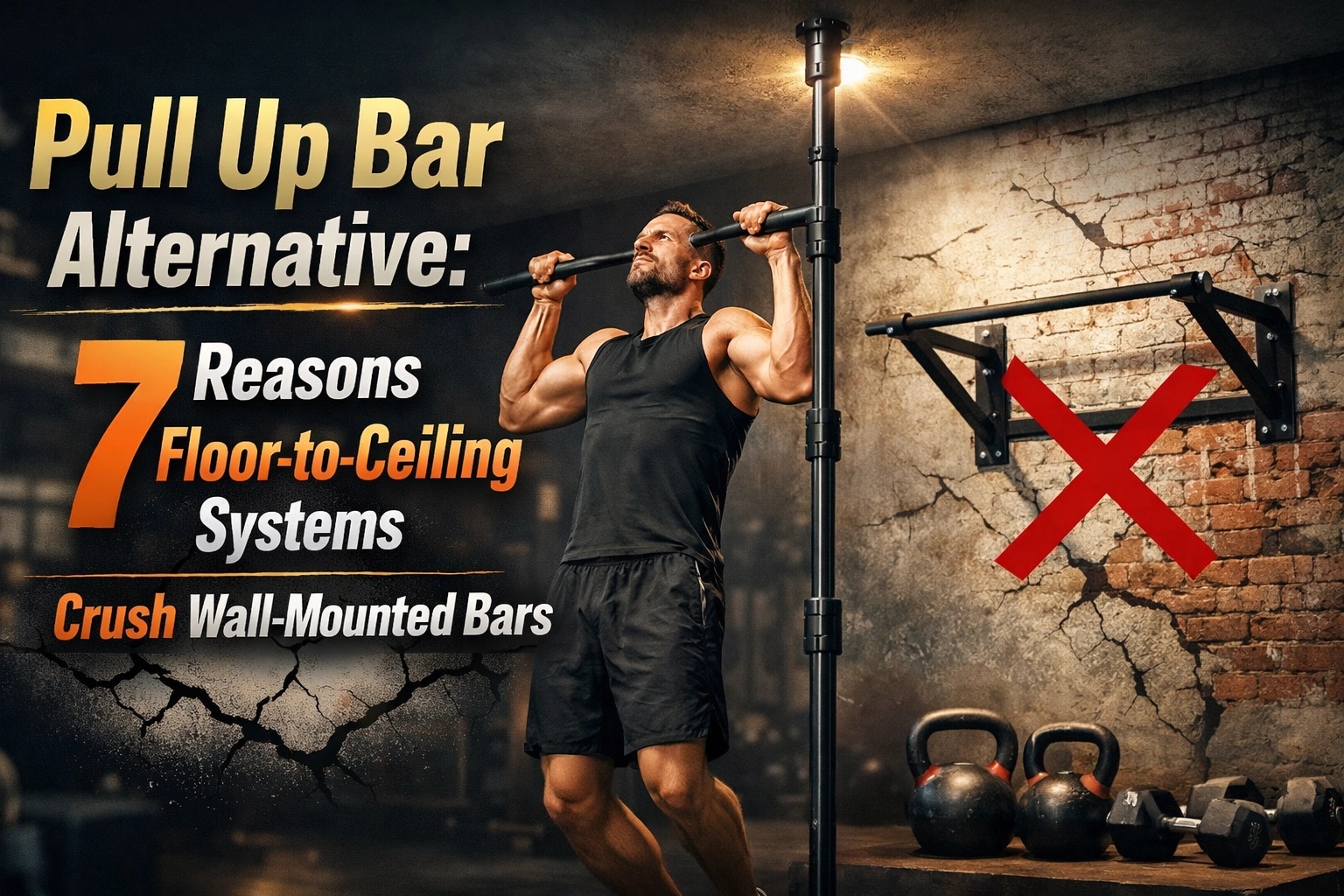
You've been eyeing that wall-mounted pull-up bar for weeks. Maybe you've even convinced yourself that drilling holes in your rental's drywall is "totally reversible." Or maybe you're already dealing with the aftermath: a sagging bar, cracked walls, and a security deposit kiss goodbye.
Here's the truth: wall-mounted bars are yesterday's technology. They're limiting your training, hogging your wall space, and forcing you to work around their constraints instead of pushing your limits.
Floor-to-ceiling systems are flipping the script on home gym equipment. They're the pull up bar alternative that ninja warriors, CrossFit athletes, and calisthenics practitioners have been quietly adopting: and for damn good reason.
Let's break down exactly why floor-to-ceiling systems are crushing traditional wall-mounted bars in every way that matters.
1. Zero Wall Damage (Your Landlord Will Thank You)
Let's start with the most obvious advantage: you don't have to destroy your walls.
Wall-mounted pull-up bars require serious hardware. We're talking lag bolts drilled deep into studs, multiple anchor points, and enough torque to hold your bodyweight plus momentum. Miss a stud? You've got a crumbling drywall disaster on your hands.
Floor-to-ceiling systems like the Resistance Rail use tension-based mounting. They press firmly between your floor and ceiling: no drilling, no bolts, no permanent damage. Install it in minutes, take it down whenever you want, and move it to a different room without leaving a trace.
This isn't just convenient. It's freedom. You can train in rentals, apartments, dorms, or even temporary housing without worrying about security deposits or angry landlords. You're not locked into one spot for the life of your equipment.
For military members who move frequently, traveling professionals, or anyone who values flexibility, this is a game-changer. Your training doesn't have to stop because you can't drill holes.
2. Maximize Your Floor Space for Real Training
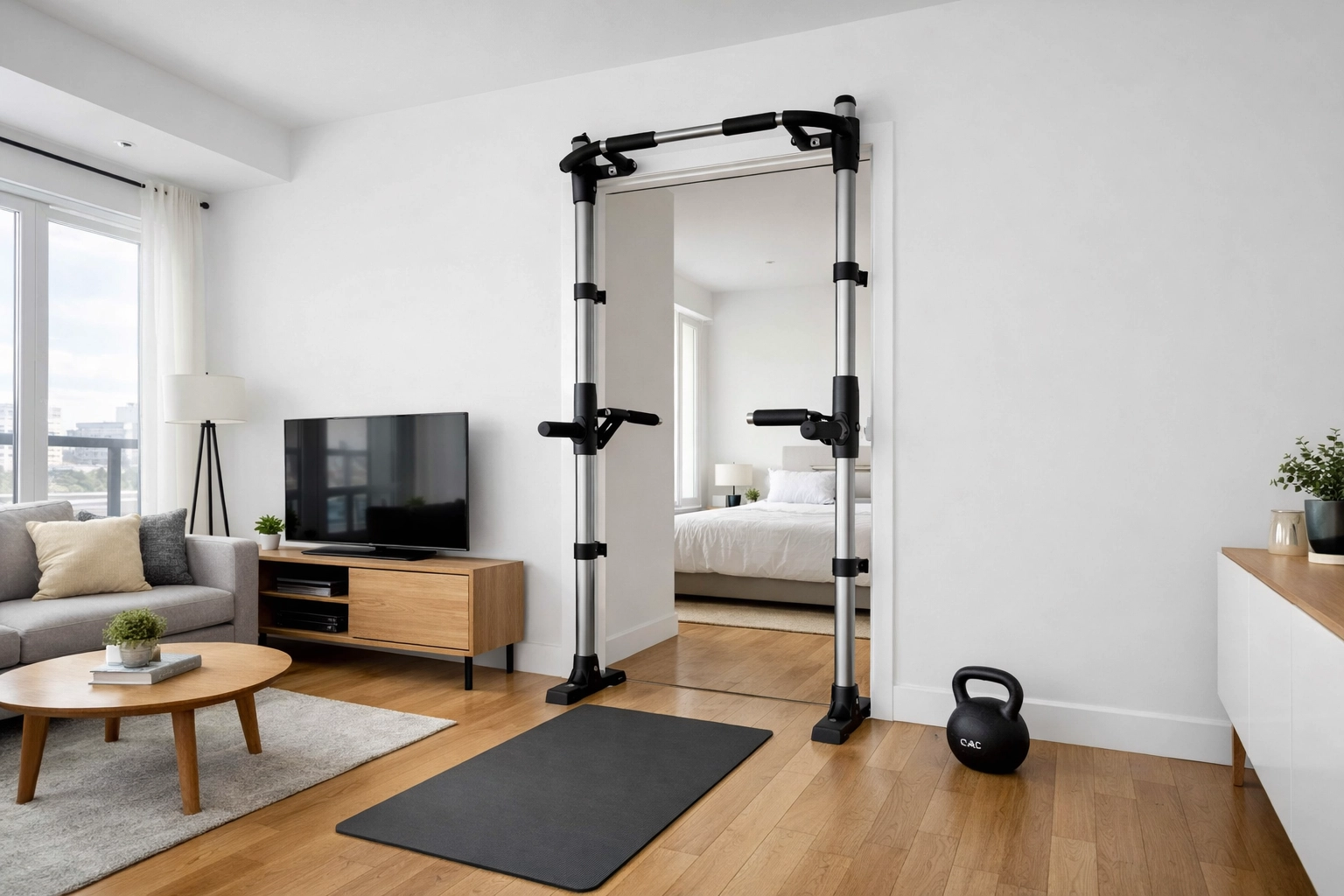
Wall-mounted bars eat up prime wall real estate. That's space you could use for resistance band storage, a climbing peg board, battle ropes, or even just keeping your floor clear for bodyweight training circuits.
Floor-to-ceiling systems occupy vertical space instead of horizontal. They live in doorways, corners, or open areas without blocking walls. This means you can still mount storage racks, mirrors, or other equipment at eye level where it's actually useful.
Think about your typical training session. You're not just doing pull-ups. You're running through burpees, box jumps, kettlebell swings, and floor work. A wall-mounted bar forces you to navigate around it constantly. A floor-to-ceiling system keeps your training area open and fluid.
The difference is especially massive in smaller home gyms where every square foot matters. When you're trying to build a versatile home gym in a garage or spare bedroom, space efficiency isn't a luxury: it's essential.
3. True 360-Degree Training Freedom
Here's where floor-to-ceiling systems blow wall-mounted bars out of the water: movement freedom.
With a wall-mounted bar, you're always working with the wall at your back or front. This limits your range of motion and restricts dynamic movements. Try doing wide-berth kipping pull-ups on a wall-mounted bar and watch your feet slam into drywall within seconds.
Floor-to-ceiling systems position in the center of your space, away from walls. You get full clearance on all sides. That means:
- Kipping pull-ups without worrying about your feet hitting walls
- L-sit pull-ups with full leg extension
- Muscle-ups with proper swing space for the transition
- Toes-to-bar movements without spatial constraints
- Dynamic movements that require unobstructed clearance
For CrossFit athletes and ninja warriors, this freedom is non-negotiable. Your training requires explosive movements and complex transitions. A wall-mounted bar literally boxes you in.
4. Unlock Advanced Calisthenics and Gymnastics Movements
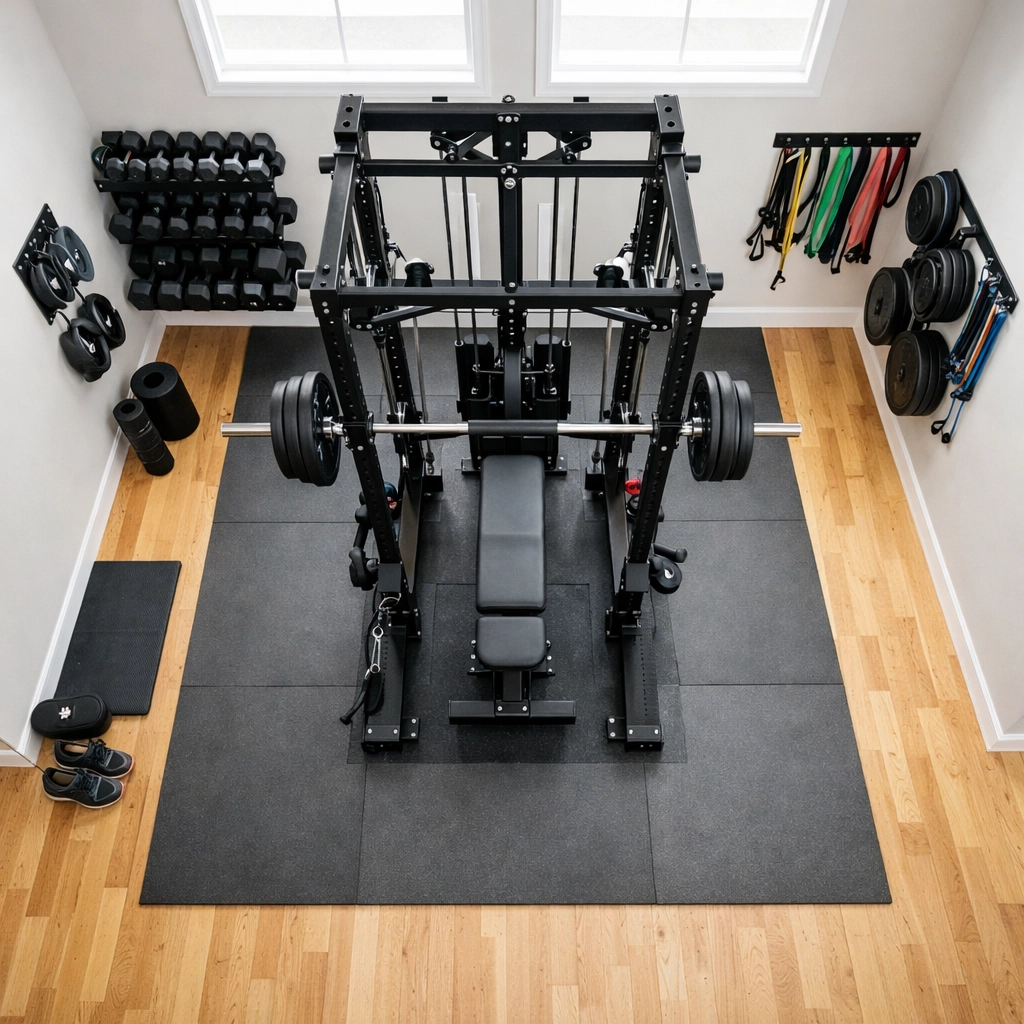
If you're serious about calisthenics equipment for home training, you need equipment that grows with your skill level. Wall-mounted bars cap out fast.
Floor-to-ceiling systems support the full spectrum of advanced movements:
Front Levers: Requires unobstructed space below and behind you. Wall-mounted bars make this nearly impossible.
Back Levers: Same story. You need clearance to extend fully without hitting a wall.
Skin-the-Cat: This foundational gymnastics movement demands room to rotate your body completely around the bar. Good luck doing that pressed against a wall.
Human Flags: While these typically use vertical poles, some floor-to-ceiling systems provide the geometry and stability needed for progression work.
Handstand Training: The open space around a floor-to-ceiling bar gives you options for handstand push-ups, holds, and transitions that integrate with your pull-up work.
These aren't just party tricks. They're legitimate strength builders that develop pulling power, core stability, and body control. If your equipment can't support them, you're leaving gains on the table.
The Bold Body Fitness approach to resistance training recognizes that serious athletes need equipment that matches their ambitions, not limits them.
5. Support for Rings, Straps, and Suspension Training
One of the most underrated advantages of floor-to-ceiling systems is their compatibility with accessories. We're talking gymnastic rings, TRX straps, suspension trainers, and resistance bands.
Wall-mounted bars typically offer one mounting point: the bar itself. You can hang rings from it, but you're still working with limited clearance and wall proximity.
Floor-to-ceiling systems position accessories in open space where they belong. Hang rings and you get full range of motion for dips, rows, push-ups, and transitions. The difference in training quality is massive.
Ring Training Benefits with Floor-to-Ceiling Systems:
- Unrestricted swing space for ring muscle-ups
- Proper clearance for ring dips without fear of hitting walls
- Space for dynamic ring rows and L-sits
- Room for complex transitions and flow work
For MMA fighters and grapplers, suspension training offers functional strength that translates directly to the mat. You need equipment that lets you move naturally, not equipment that forces you into rigid, predetermined movement patterns.
6. Better Posture, Spine Decompression, and Joint Health
Here's something most people overlook when comparing pull up bar alternatives: biomechanics.
Wall-mounted bars often position you too close to the wall, restricting your natural pulling pattern. You compensate by adjusting your body position, which creates unnatural torque on your shoulders and spine.
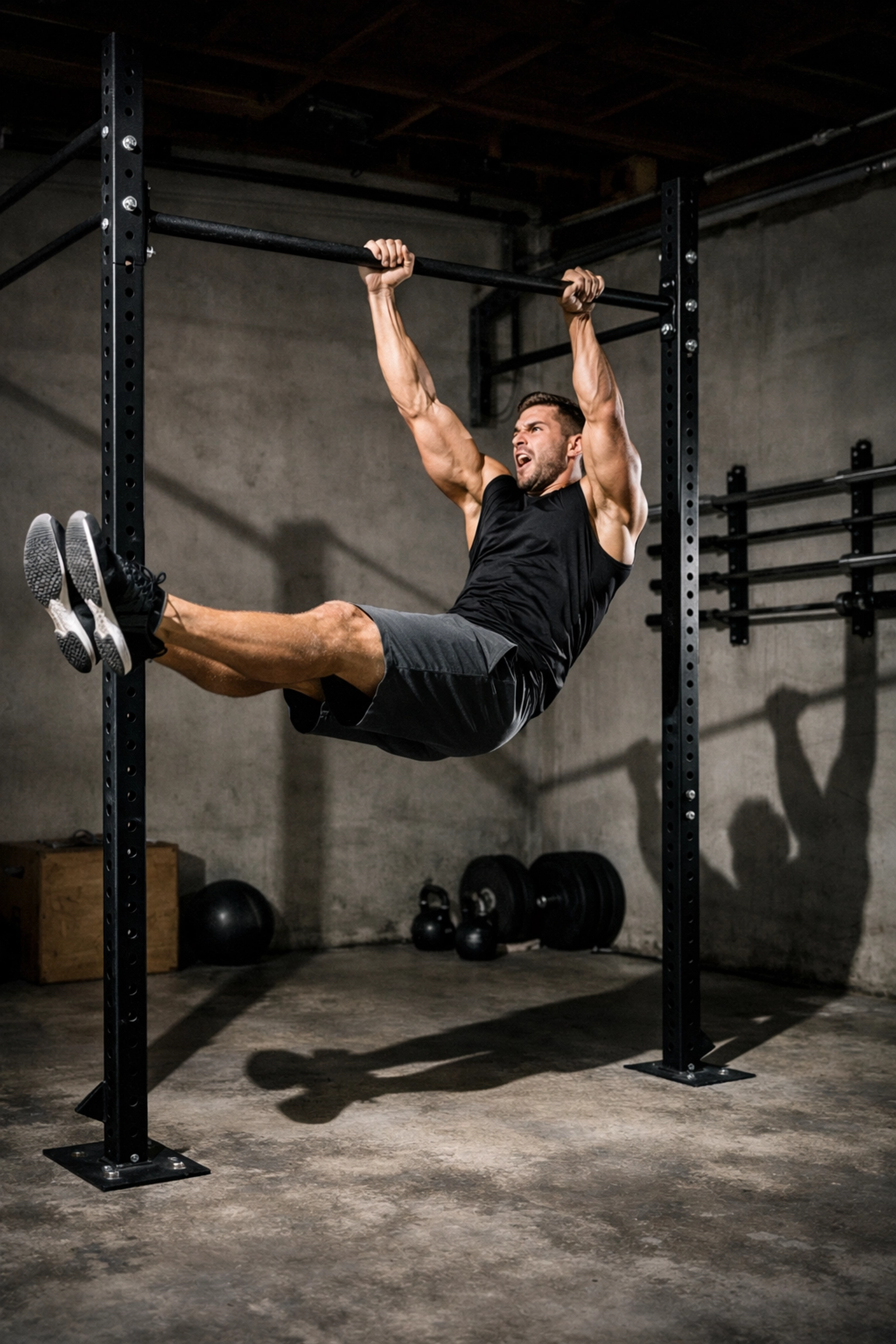
Floor-to-ceiling systems in open space let you pull straight down with perfect vertical alignment. Your body hangs naturally without spatial restrictions influencing your form.
Spine Decompression: Dead hangs are one of the best exercises for spinal health. They counteract the compression from sitting, standing, and gravity. But to get maximum benefit, you need enough clearance to hang completely relaxed without touching anything. Floor-to-ceiling systems provide that space.
Shoulder Health: Proper pull-up form requires full scapular retraction and depression. When you're cramped against a wall, you can't achieve optimal shoulder positioning. Over time, this leads to impingement issues and rotator cuff problems.
For athletes logging serious training volume, proper positioning isn't optional. It's injury prevention. The difference between training pain-free for decades versus dealing with chronic shoulder issues often comes down to equipment choices you make today.
7. Installation Flexibility and Adaptability
Life changes. You move apartments. You renovate your garage. You decide to convert that spare bedroom into a dedicated training space.
Wall-mounted bars are permanent installations. Once they're up, they're up. Want to move them? Break out the drill, patch the holes, repaint, and start over.
Floor-to-ceiling systems adapt to your life. Install them anywhere in minutes:
- Doorways for space-efficient training
- Open rooms for maximum clearance
- Corners for compact setups
- Garages that pull double-duty as gyms
Adjust the height for different exercises or users. Reconfigure your training space whenever your routine changes. Take it down when guests visit. Set it back up when it's training time.
This adaptability extends to ceiling height variations too. Most floor-to-ceiling systems adjust to accommodate different spaces, making them viable for basements with lower ceilings or rooms with vaulted ceilings.
For athletes building a full body workout at home setup, this flexibility means your equipment grows with your space and training needs instead of limiting them.

The Resistance Rail Advantage
The Resistance Rail Standard embodies everything we've covered here. It's the no wall damage workout system that delivers professional-grade training without the permanent installation headaches.
What makes it different:
- Tension-mount system that holds rock-solid without drilling
- Multiple grip positions for varied pull-up angles and muscle engagement
- Integrated resistance band anchors at multiple heights
- Heavy-duty construction that supports dynamic movements
- Quick setup and teardown for space flexibility
Whether you're a ninja warrior perfecting your grip strength, a CrossFit athlete working on kipping efficiency, or a calisthenics practitioner building toward advanced progressions, the Resistance Rail meets you where you are and supports where you're going.
It's not just a pull-up bar. It's a complete calisthenics home gym system that happens to fit in a doorway.
Making the Switch
If you're currently using a wall-mounted bar, you probably don't realize how much it's limiting your training. The restrictions become invisible because you work around them automatically.
Try a floor-to-ceiling system and the difference hits immediately. The movement freedom feels expansive. The exercise variety opens up. The installation simplicity makes you wonder why you ever grabbed a drill in the first place.
For serious athletes who train at home, equipment choices define training quality. Wall-mounted bars were a stepping stone. Floor-to-ceiling systems are the destination.
Your training deserves equipment that matches your commitment. Check out the complete range of bodyweight training solutions designed for athletes who refuse to compromise.
The walls stay intact. The training gets serious. That's the floor-to-ceiling advantage.
