
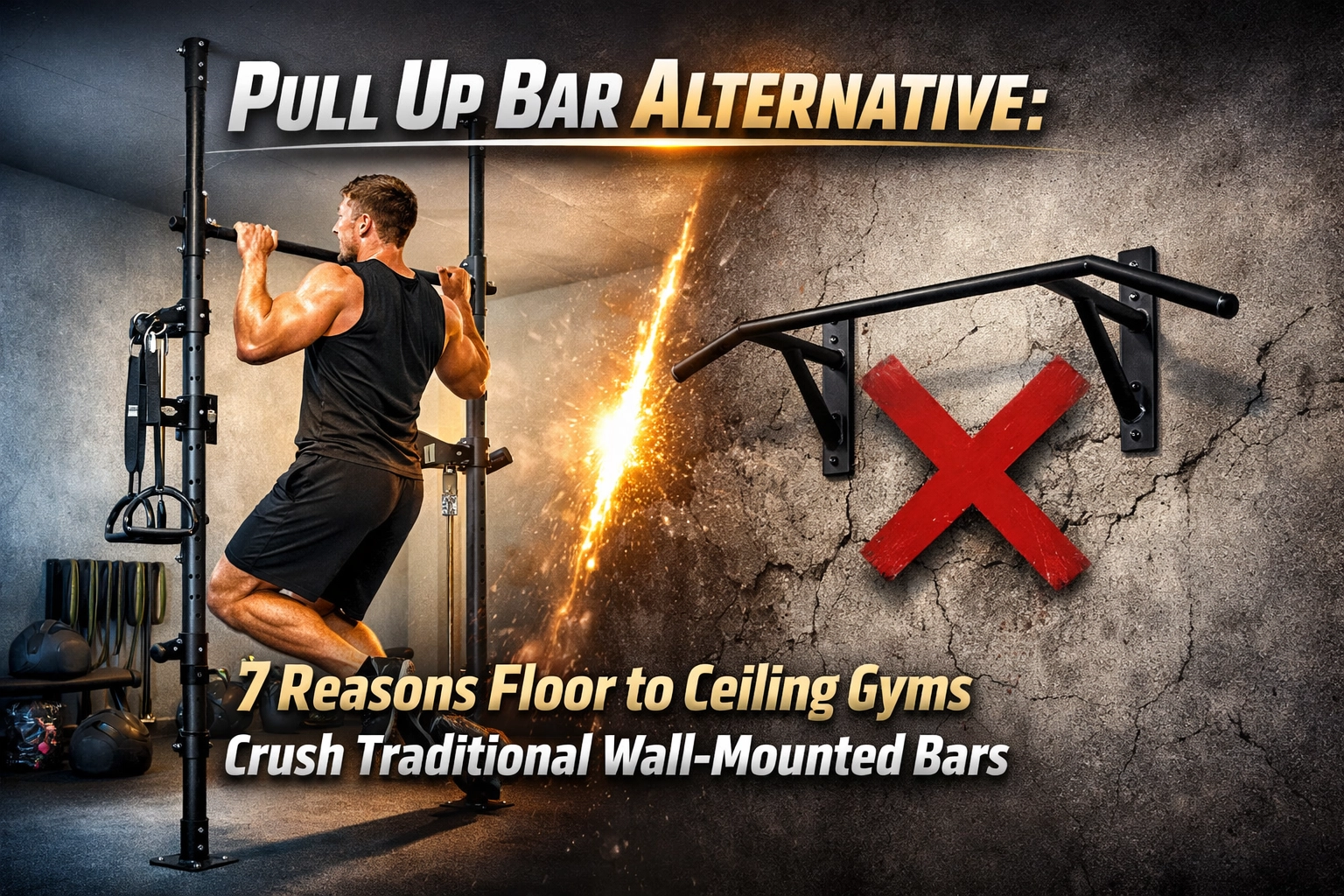
You've drilled holes in your wall. Anchored that pull-up bar with the confidence of someone who watches too many YouTube installation videos. And now you're stuck doing basic pull-ups with your knees bent, your face inches from drywall, wondering why your "home gym" feels more like a prison workout.
Here's the truth: wall-mounted pull-up bars are the participation trophy of home gym equipment. They work, sure. But they're limiting your potential, damaging your property, and keeping you from the kind of training that separates weekend warriors from actual athletes.
Floor-to-ceiling gym systems: like the Resistance Rail from Bold Body Fitness: are changing the game for serious fitness enthusiasts. Whether you're a ninja warrior grinding skills between competitions, a CrossFit athlete building your garage box, or a calisthenics practitioner chasing that elusive muscle-up, here's why floor-to-ceiling systems destroy traditional wall-mounted bars.
1. Zero Wall Damage, Maximum Freedom
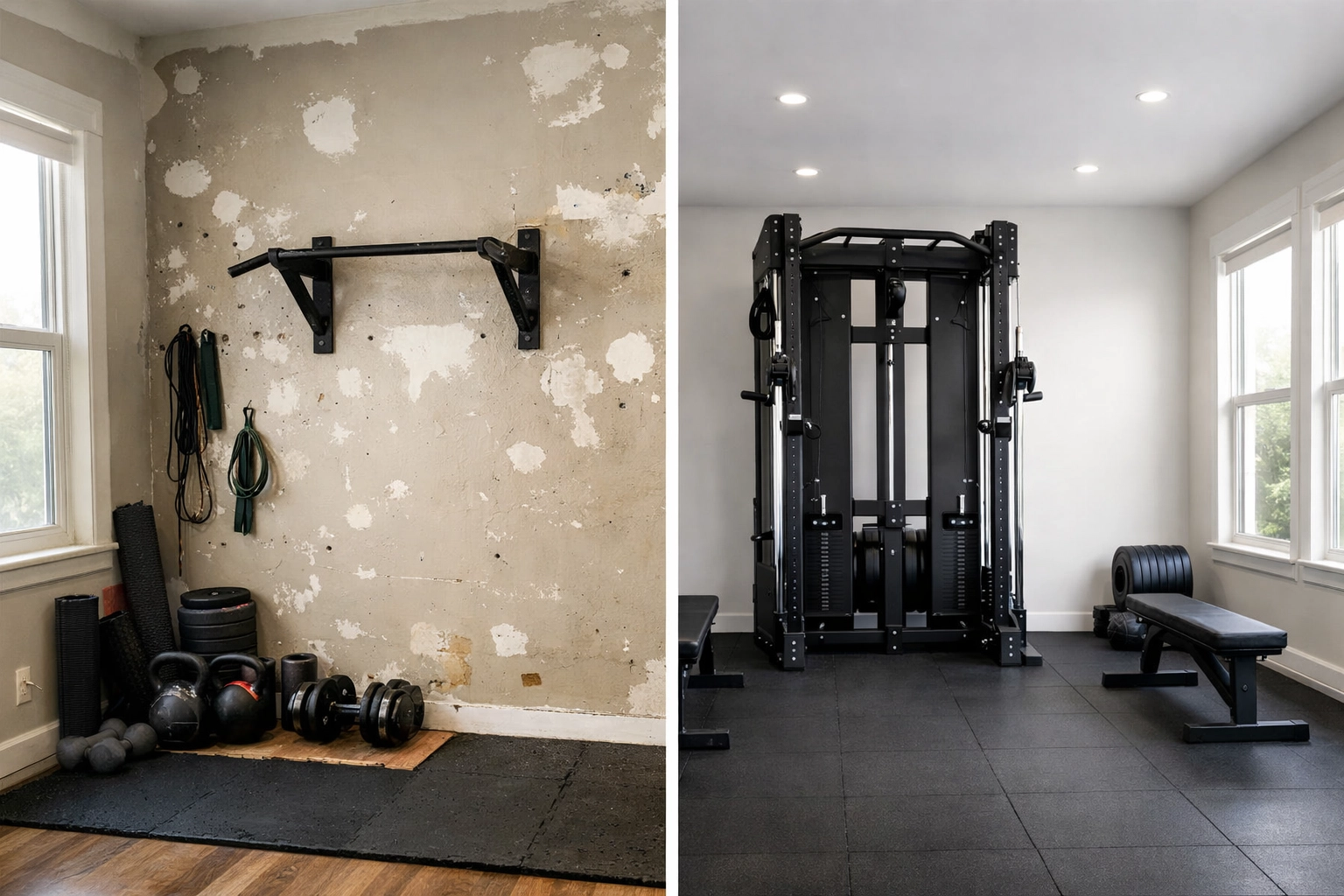
Let's start with the obvious: wall-mounted bars require you to permanently alter your space. Drilling into studs, dealing with drywall anchors, praying you don't hit electrical wiring: it's a commitment that makes renters cry and homeowners cringe.
Floor-to-ceiling systems use tension-based mounting that requires zero drilling, zero wall damage, and zero permission from your landlord. You're leveraging the structural integrity of your ceiling and floor: the strongest points in any room: without leaving a single mark.
This isn't just about avoiding security deposit deductions. It's about installation flexibility. Want to move your setup from the garage to the basement? Done in 20 minutes. Need to pack it up when you move? No patching, painting, or explaining mysterious holes to the next tenant.
2. Leg Room That Actually Matters
Here's where wall-mounted bars reveal their fatal flaw: they force you to train like you're in a phone booth.
Every kipping pull-up becomes a negotiation with the wall behind you. L-sits turn into an awkward knee tuck to avoid smashing your feet into drywall. Muscle-ups? Forget it: unless you enjoy the sensation of scraping your shins on textured paint.
Floor-to-ceiling gyms position you in the center of your training space with clearance in every direction. Front levers, back levers, skin-the-cat progressions, and dynamic movements become possible: not theoretical exercises you see on Instagram and can't replicate.
For gymnasts and ninja warriors especially, this freedom of movement isn't a luxury. It's the difference between training your sport and mimicking it. You need space to generate momentum, space to bail safely, and space to train the way competition demands.
3. Load Capacity for Real Training
Most wall-mounted pull-up bars max out around 120-130 kg (265-285 lbs). That sounds like plenty until you start adding weight vests, resistance bands, or: if you're training for anything serious: actual weighted pull-ups.
Floor-to-ceiling systems distribute load across ceiling joists and floor structure, supporting 200+ kg (440+ lbs) consistently. This isn't just about supporting heavier athletes. It's about supporting serious training.
When you're doing explosive pull-ups, dynamic muscle-ups, or weighted calisthenics, the forces on your equipment multiply. A 180-lb athlete doing a kipping muscle-up generates significantly more force than their static body weight. Cheap wall-mounted bars start to creak, shift, and: eventually: fail.
The Resistance Rail system is engineered for athletes who train hard, not casual fitness enthusiasts doing three pull-ups before their morning coffee.
4. Exercise Variety That Matches Your Ambition
Wall-mounted bars lock you into one plane of movement: up and down, directly in front of the wall. Floor-to-ceiling systems turn your space into a three-dimensional training environment.
Gymnastics rings? Mount them at any height, adjust them mid-workout, and actually have room to perform ring dips without your elbows kissing drywall.
Suspension trainers? Use them properly: with the full range of motion they're designed for.
Resistance bands? Attach them at multiple anchor points for variable resistance training that actually challenges different angles.
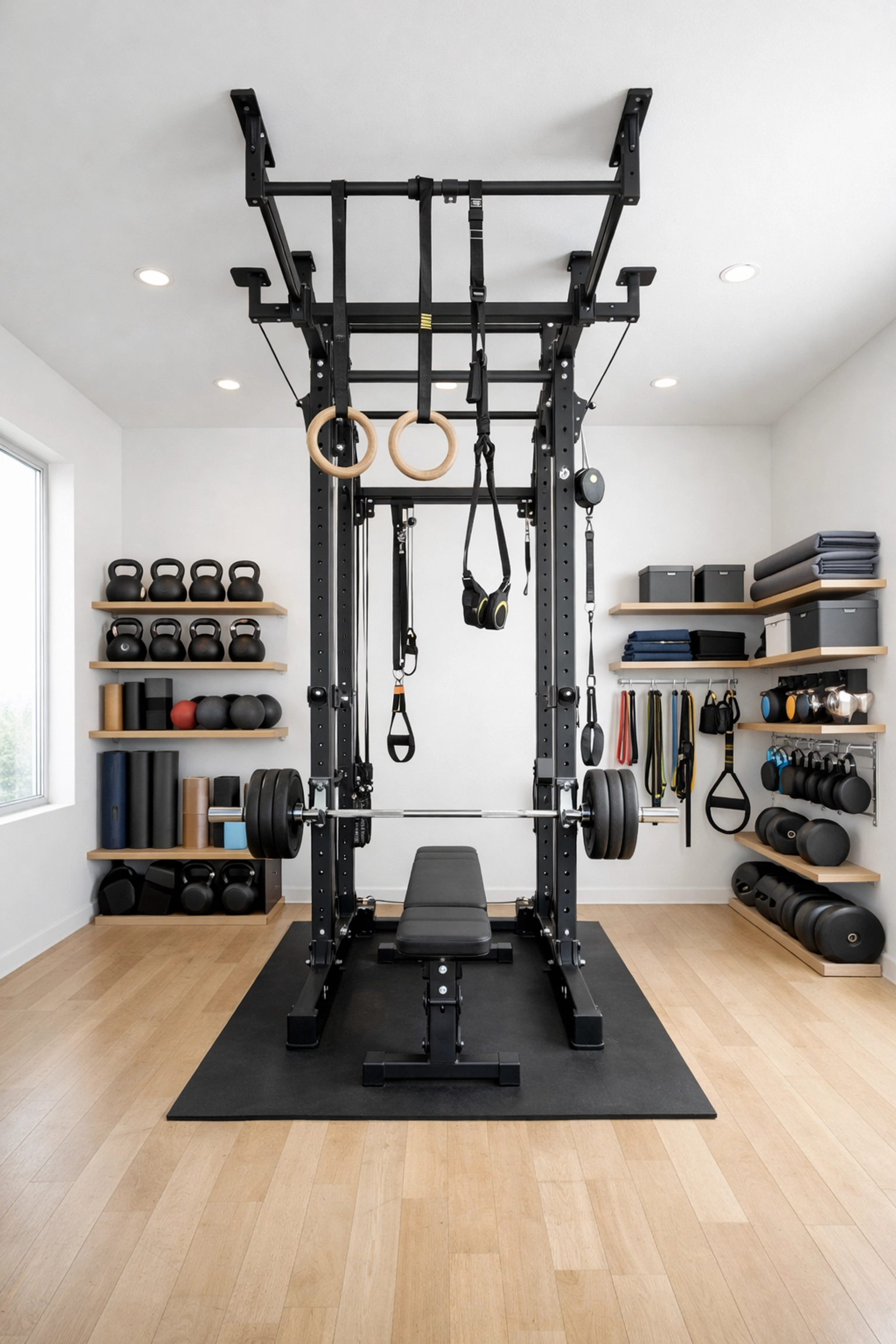
Battle ropes, climbing ropes, TRX systems, parallettes: floor-to-ceiling gyms transform from "pull-up bar alternative" to complete bodyweight training at home system. You're not just replacing one piece of equipment. You're building a versatile home gym that adapts to whatever training phase you're in.

5. Height Adjustability for Progressive Training
Here's a training principle wall-mounted bars can't accommodate: regression and progression require different heights.
Learning muscle-ups? You need the bar lower to practice the transition. Mastering archer pull-ups? A higher bar changes the leverage and difficulty. Training explosive movements? Bar height affects your landing dynamics.
Floor-to-ceiling systems offer adjustable height settings that let you modify difficulty, accommodate different exercises, and: critically: train different athletes in the same household. Your 5'4" gymnast daughter and your 6'2" CrossFit-obsessed spouse can both train optimally on the same equipment.
Wall-mounted bars give you one height: the height you picked on installation day. Good luck growing or shrinking to match it.
6. Space Efficiency for Small Spaces
Counterintuitive, right? How does a floor-to-ceiling system save space compared to something mounted flat against a wall?
Here's the reality: walls are premium real estate in home gyms. That's where you hang your foam roller, store your kettlebells, mount your shelving, and display your PR board (don't pretend you don't have one).
Ceiling space? Completely unused in 99% of homes. Floor-to-ceiling systems utilize vertical space that was doing nothing, leaving your walls free for everything else.
Plus, when you're done training, many floor-to-ceiling systems can be lowered, collapsed, or moved aside. Your living room transforms from training facility back to living room in minutes. Try that with a wall-mounted bar sticking out like a permanent eyesore.
For anyone living in apartments, condos, or homes where every square foot matters, this is the difference between a calisthenics equipment for home setup that integrates into your life and one that dominates your entire space.
7. Training Stability for Advanced Movements
The physics are simple: ceiling-mounted and floor-to-ceiling systems distribute force across two contact points (floor and ceiling) instead of one (wall). This creates inherently greater stability.
For MMA fighters doing explosive pull-ups to build fight-ending power, for CrossFit athletes chaining together high-rep sets, for calisthenics practitioners working on advanced static holds: stability matters.
Wall-mounted bars flex. They shift slightly with each rep. They introduce micro-movements that force your stabilizer muscles to compensate, burning energy that should be directed into the actual exercise.
Floor-to-ceiling systems are rock-solid. Every ounce of force you generate goes into the movement, not into stabilizing wobbly equipment. This translates to better technique, higher training volume, and faster progress.
The Bottom Line: Stop Settling for Less
Traditional wall-mounted pull-up bars were fine when home gym equipment meant a rusty barbell in your basement and "functional fitness" wasn't in anyone's vocabulary. But we're past that.
Today's athletes demand equipment that matches their ambition. Equipment that doesn't damage their space. Equipment that grows with their abilities instead of limiting them.
Floor-to-ceiling gym systems aren't just a pull-up bar alternative: they're a complete rethinking of what home gym equipment can be. They're for athletes who take training seriously enough to invest in tools that actually work.
The Resistance Rail isn't trying to be the cheapest option. It's trying to be the last option you'll need. No more upgrading, no more compromising, no more training around your equipment's limitations.
Your wall-mounted bar got you started. That's great. But if you're serious about full body workout at home that actually challenges you, it's time to upgrade.
Check out the full range of products at Bold Body Fitness and stop training like you're still figuring out what a pull-up is. You're better than that.
