
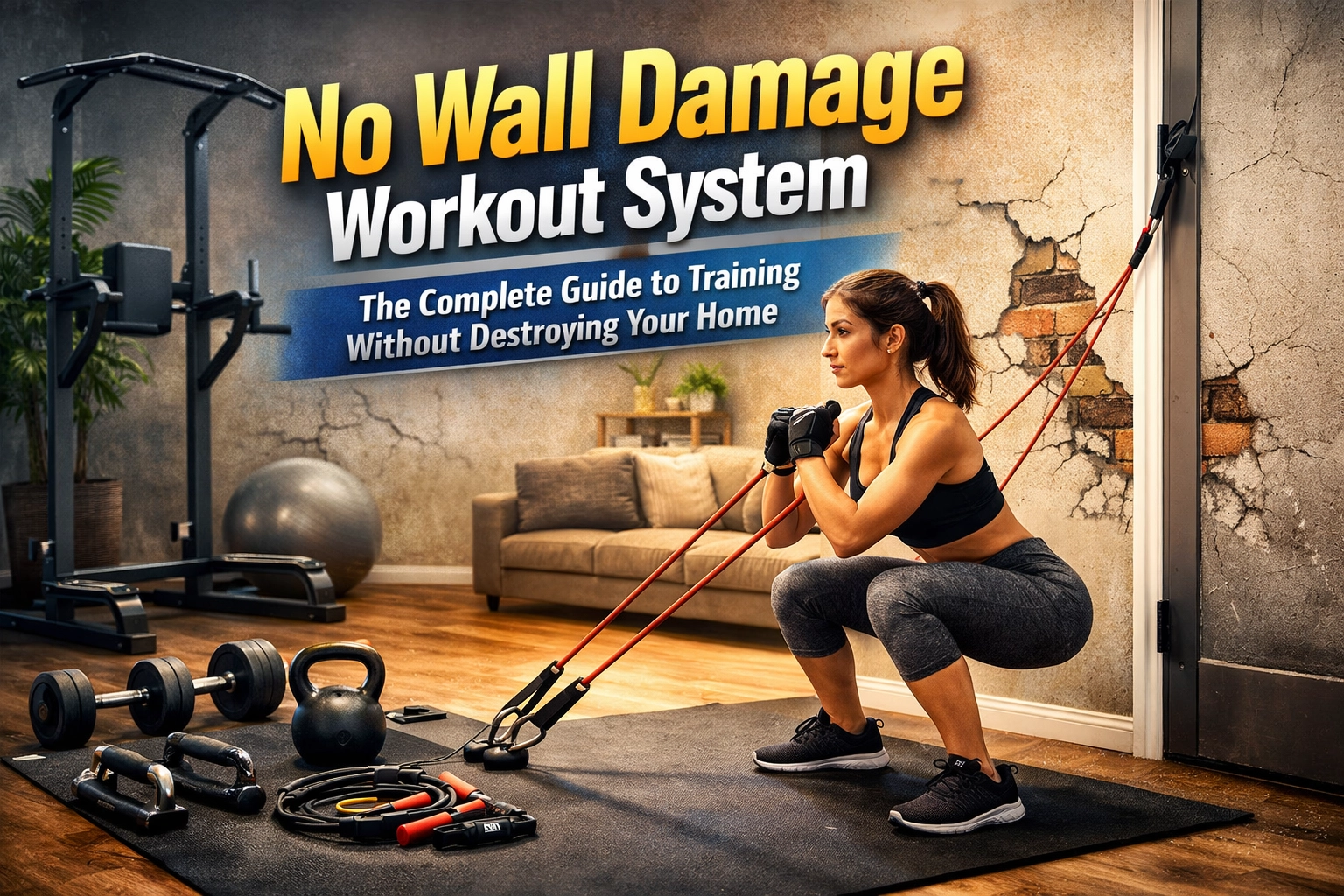
Let's get real for a second: you're serious about your training, but your landlord is serious about that security deposit. Maybe you're crushing it with calisthenics, preparing for your next ninja warrior competition, or just tired of driving to an overcrowded gym. Whatever your situation, the last thing you need is a home workout setup that leaves your walls looking like Swiss cheese.
Here's the good news: you don't need to destroy your rental or permanently modify your home to build a legitimate training space. The right no wall damage workout system delivers professional-grade training without a single drill hole, screw, or angry landlord text.
This guide breaks down exactly how to build a serious home gym that respects your walls while disrespecting your comfort zone.
Why Traditional Home Gym Setups Destroy More Than Just Walls
Most people think building a home gym means bolting heavy equipment to studs, mounting pull-up bars with lag bolts, and basically committing to never moving. That approach works if you own your place and plan to stay forever. But for everyone else? It's a nightmare.
The hidden costs of permanent installations include:
- Lost security deposits ranging from hundreds to thousands of dollars
- Repair expenses when you move out (patching, painting, professional repairs)
- Limited flexibility when you want to change your training style or rearrange your space
- Stress about whether your mounting job is actually safe under heavy loads
Plus, what happens when you want to upgrade your equipment or move to a new place? You're starting from scratch, eating those costs all over again.
The smarter move? Build a versatile home gym that delivers the same training capacity without any permanent modifications.
The Foundation: Floor-to-Ceiling Tension Systems
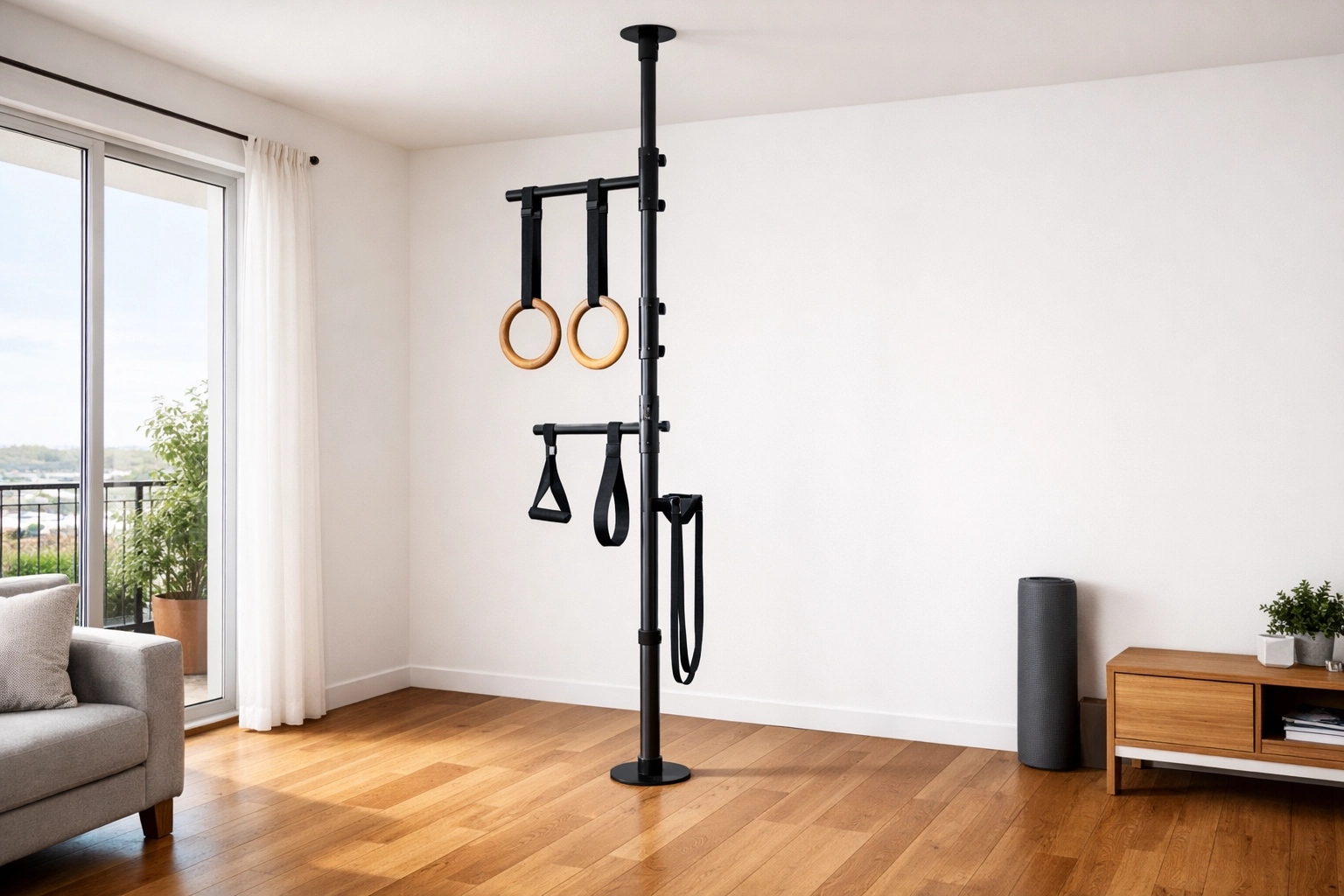
If you're building a serious no wall damage workout system, start here. Floor-to-ceiling tension systems are the absolute foundation for rental-friendly training spaces. These setups use adjustable pressure poles that create rock-solid vertical structures between your floor and ceiling: zero wall contact required.
The Bold Body Fitness Resistance Rail takes this concept and absolutely runs with it. This floor to ceiling gym system provides multiple attachment points for rings, resistance bands, TRX straps, and more. It's the kind of equipment that makes trainers, ninja warriors, and calisthenics athletes actually jealous.
Why Floor-to-Ceiling Systems Dominate
Maximum Versatility: Attach rings for gymnastic movements, hang resistance bands for strength work, add TRX straps for suspension training, or set up pull-up bars at multiple heights. One system, unlimited training options.
Zero Wall Damage: The entire structure uses tension between your floor and ceiling. No drilling, no anchors, no patching holes when you move out.
Professional-Grade Stability: Quality systems handle serious loads. We're talking muscle-ups, heavy band resistance, explosive movements: the stuff that actually builds elite-level fitness.
Modular Design: As your training evolves, your equipment evolves with you. Add new attachments, change configurations, adapt to different training styles without buying entirely new equipment.
Space Efficiency: When not in use, many components can be removed or adjusted to reclaim your living space. Try doing that with a welded power rack bolted to your garage.
For serious athletes training at home, this isn't just equipment: it's infrastructure. Check out the full range of options at Bold Body Fitness to see how a proper tension system transforms any room into a complete training facility.
Pull-Up Bar Alternatives That Actually Work
Let's talk pull-ups. They're essential for upper body development, grip strength, and building that elite-level back development. But most pull-up bar solutions are either flimsy door frame units that feel sketchy under load or permanent wall-mounted bars that require serious installation.
Modern Doorway Pull-Up Bars have evolved significantly. The best models use leverage and strategic rubber padding to create completely secure mounting without scratching door frames or damaging trim. Look for bars rated to 300+ pounds with extended grips for wide-grip variations and neutral grip options that protect shoulder health during high-volume training.
But here's where floor-to-ceiling systems really shine as a pull up bar alternative: you can position attachment points at exactly the height you need, adjust for different exercises, and get the same training stimulus without compromising on stability or range of motion.
Building Your Complete Bodyweight Training Arsenal
Elite bodyweight training at home requires more than just a pull-up bar. Here's how to build a complete system that rivals any commercial gym:
Gymnastic Rings
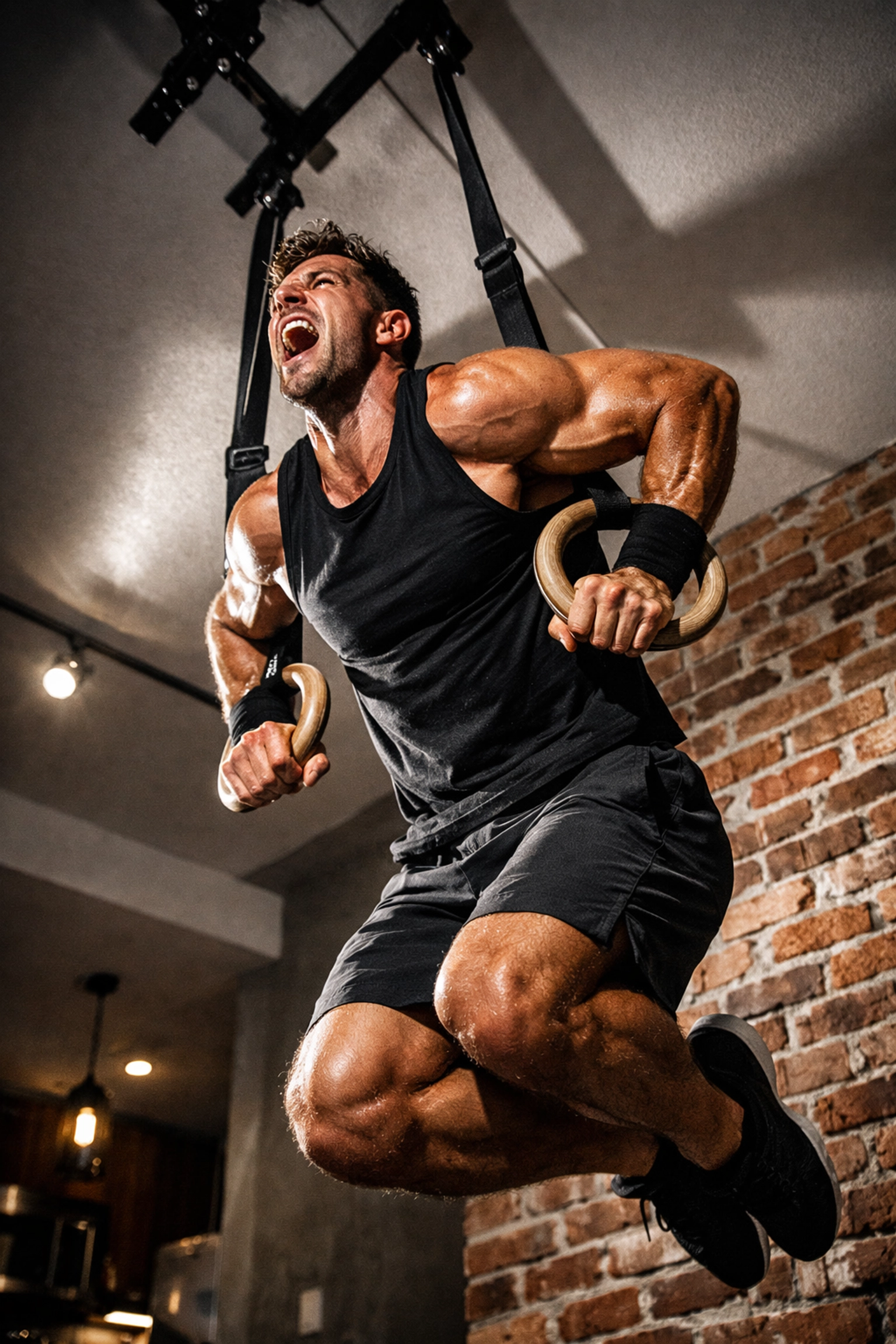
Rings are non-negotiable for serious calisthenics equipment for home setups. They provide unstable surfaces that force stabilizer activation, increase time under tension, and develop functional strength that transfers to everything else you do. Hang them from your floor-to-ceiling system and unlock hundreds of progressions from basic rows to full iron crosses.
Suspension Trainers
TRX-style systems with door anchors provide incredible training variety without any wall mounting. Thread the anchor over any solid door and you've got instant access to hundreds of full-body exercises. Perfect for circuit training, metabolic conditioning, or active recovery days.
Parallettes and Portable Dip Stations
Freestanding dip bars and parallettes deliver stable platforms for tricep work, chest development, and handstand training. Modern designs are low-profile enough for small spaces but robust enough for weighted dips and explosive movements. Many double as handstand training tools for gymnasts and ninja warriors developing their press handstand progressions.
Heavy Resistance Bands
Don't sleep on bands. Elite resistance band packages from quality manufacturers offer 200+ pounds of stackable resistance when combined. CrossFit athletes use them for speed work and accommodating resistance. MMA fighters incorporate them for explosive power development. Rehab specialists depend on them for joint-friendly loading.
The key advantage? Band resistance scales perfectly with your strength curve, providing maximum tension exactly where your muscles need it most.
CrossFit Home Gym Solutions Without Permanent Modifications
CrossFit athletes have specific needs: barbells, bumper plates, space for Olympic lifts, areas for metcon work, and equipment for gymnastic skills. Building a CrossFit home gym in a rental seems impossible: until you understand the modular approach.
Freestanding Squat Racks: Modern portable squat stands handle heavy Olympic lifts without bolting to floors or walls. They're stable under load, adjust for different lift heights, and move when you need space for other training.
Lifting Platforms: Build or buy portable lifting platforms that protect floors during deadlifts and cleans. They're modular, move easily, and prevent the floor damage that ends security deposits.
Battle Rope Anchor Systems: Use freestanding anchors with kettlebell weights or sandbags for stability. These work indoors or outdoors and provide serious conditioning without any mounting hardware.
Plyometric Boxes: Stackable, movable, and essential for box jumps, step-ups, and depth training. No mounting required: just stable construction and adequate floor protection.
Combine these elements with a floor-to-ceiling system for pull-ups, toes-to-bar, and ring work, and you've got a complete CrossFit training space that leaves zero damage when you move out.
Strategic Space Planning for Maximum Training Options
The best no wall damage workout system isn't about cramming equipment into every corner: it's about strategic design that maximizes training options while maintaining living functionality.
Zone Your Training Space: Create dedicated areas for different training modalities. One zone for strength work, another for metabolic conditioning, a third for skill work. This organization prevents equipment conflicts and improves training flow.
Use Vertical Space: Floor-to-ceiling systems capitalize on unused vertical real estate. Your ceiling is structural infrastructure you're already paying for: might as well use it.
Prioritize Multi-Function Equipment: Every piece should serve multiple purposes. Parallettes work for dips, L-sits, and handstand training. Rings handle pull-ups, rows, and advanced gymnastic progressions. Resistance bands scale for strength work, speed training, and mobility.
Protect Your Floors: Heavy-duty exercise mats (8-12cm thick) create safe landing zones for handstands, plyometric work, and floor exercises. They protect both your body and rental floors while connecting together for custom-sized training areas.
Keep It Modular: The ability to reconfigure, adjust, and adapt your setup is crucial for rental situations. Permanent installations are the enemy of flexibility.
Installation Principles That Preserve Security Deposits
The difference between rental-friendly equipment and deposit-destroying disasters comes down to understanding a few key principles:
Pressure-Based Mounting Over Anchor-Based: Systems using tension between structural elements (floor-to-ceiling) or leverage (doorway bars) distribute force across large surfaces rather than concentrating stress on single points.
Door-Based Anchors: When using door anchors, choose systems that distribute weight across the entire door frame. The door itself becomes the anchor point: no drilling required.
Protective Padding: Quality equipment includes padding that contacts surfaces. This prevents scratches, dings, and the microscopic damage that adds up over time.
Weight Distribution: Freestanding equipment should have stable bases that distribute weight over large surface areas. This prevents floor indentations that can cost hundreds in repairs.
Regular Inspection: Check tension systems, door mounts, and freestanding equipment regularly. Tighten what needs tightening, adjust what needs adjusting, prevent small issues from becoming security deposit problems.

The Complete Equipment Progression Strategy
Building your versatile home gym doesn't require dropping thousands of dollars on day one. Here's a smart progression strategy that builds capability over time:
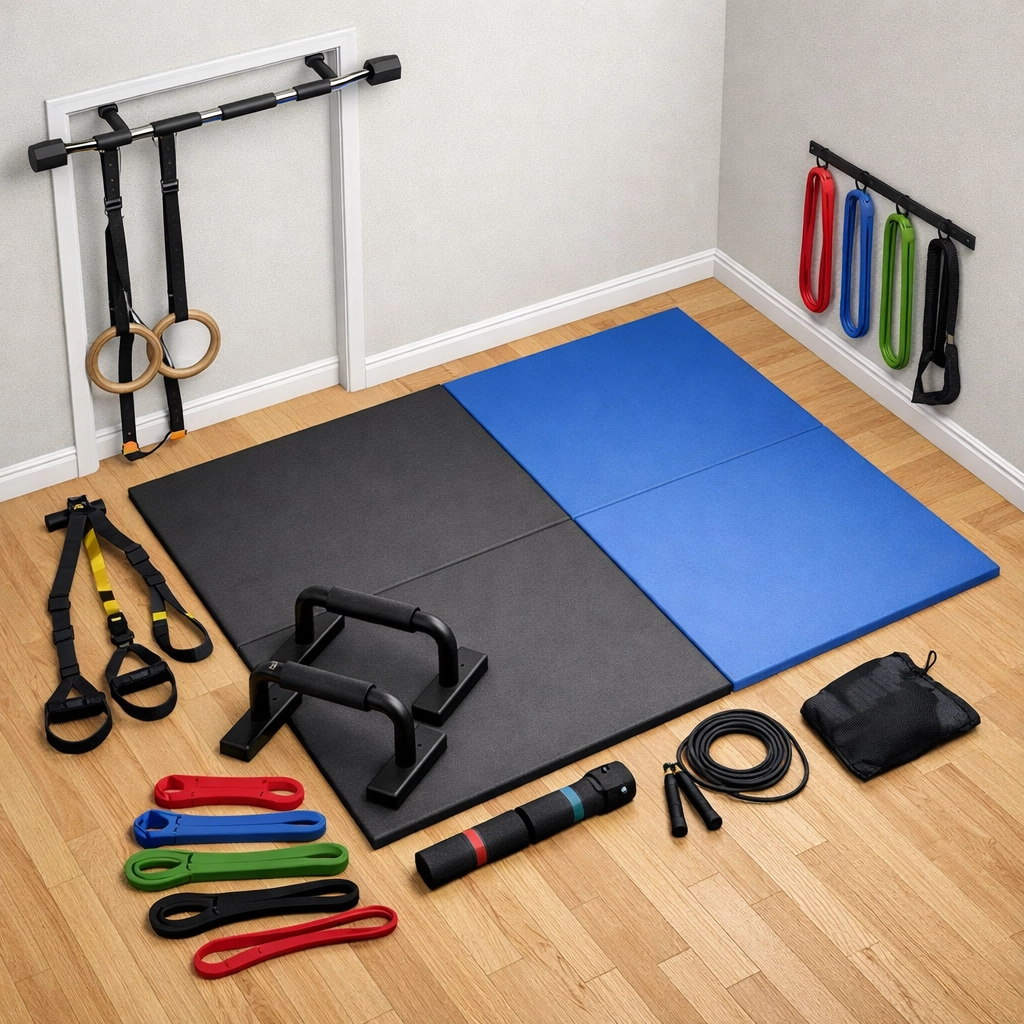
Phase 1 - Foundation ($300-600): Start with a floor-to-ceiling tension system or quality doorway pull-up bar, gymnastic rings, resistance band set, and basic exercise mat. This covers pulling, pushing, and lower body work.
Phase 2 - Expansion ($400-800): Add portable parallettes or dip station, suspension trainer, heavier resistance bands, and additional mats for expanded training area. Now you've got serious calisthenics capacity.
Phase 3 - Specialization ($500-1000+): Invest based on your specific training style. CrossFit athletes add barbells and bumper plates. Ninja warriors add specific grip trainers and obstacle course elements. MMA fighters add heavy bags on freestanding stands.
The beauty of this approach? Each phase delivers immediately usable training capacity while building toward a comprehensive system. You're never waiting to "complete" your gym before you can actually train hard.
Visit the Bold Body Fitness shop to explore equipment options that fit each phase of your build-out.
Training Programs That Maximize Rental-Friendly Equipment
Having the right equipment means nothing if you're not using it effectively. Here's how serious athletes maximize full body workout at home potential with no wall damage systems:
Calisthenics Athletes: Focus on progressive overload with rings, parallettes, and floor-to-ceiling systems. Work toward advanced skills like muscle-ups, front levers, and planche progressions. Use bands for assistance and resistance as needed.
Ninja Warriors: Develop grip strength with varied hanging positions, bar transitions, and tension holds. Use floor-to-ceiling systems for lache training and dynamic movements. Add balance training with portable slacklines.
CrossFit Athletes: Program Olympic lifts with portable squat stands, metcon work with battle ropes and resistance bands, and gymnastic skills with rings. Rotate through different training focuses daily to maximize equipment use.
MMA Fighters: Combine resistance band explosive work, suspension trainer conditioning, rings for upper body strength, and metabolic circuits that develop fight-specific endurance.
General Fitness: Use circuit training approaches that cycle through all available equipment, keeping intensity high and rest periods strategic. The variety prevents boredom while building comprehensive fitness.
The Real Investment: Freedom and Flexibility
Here's what rental-friendly equipment really buys you: freedom. Freedom to train on your schedule without driving to overcrowded gyms. Freedom to move apartments, cities, or homes without losing your entire training setup. Freedom to adapt your equipment as your goals evolve.
That security deposit you're protecting? It's probably $1,000-2,000. But the actual value extends far beyond that immediate financial concern. It's about building sustainable training infrastructure that serves you for years, regardless of where you live or how your situation changes.
The no wall damage workout system approach isn't a compromise: it's a strategic advantage. You get professional training capacity, complete flexibility, zero installation headaches, and peace of mind knowing your landlord won't be calling about hole repairs.
Ready to build your rental-friendly training space? Start with the foundation that serious athletes trust, and build from there. Your walls (and your security deposit) will thank you.
