

You know that sinking feeling when you're checking out a new apartment and spot those massive holes in the wall from the previous tenant's "home gym"? Or worse, you've been that tenant who lost their security deposit because your pull-up bar ripped out a chunk of drywall.
Let's cut through the BS: most home gym equipment treats your walls like they're indestructible. Spoiler alert: they're not.
If you're serious about building a full body workout at home setup that doesn't turn your living space into a demolition zone, you need to understand the massive difference between traditional wall-mounted systems and modern floor-to-ceiling options. This isn't just about avoiding your landlord's wrath, it's about creating a versatile home gym that actually works for serious training.
The Wall-Mounted Equipment Problem Nobody Talks About
Walk into any big-box fitness store and they'll sell you the dream: mount a pull-up bar, slap some resistance bands on door anchors, bolt a few hooks into studs, and boom, instant home gym.
Here's what they don't tell you:
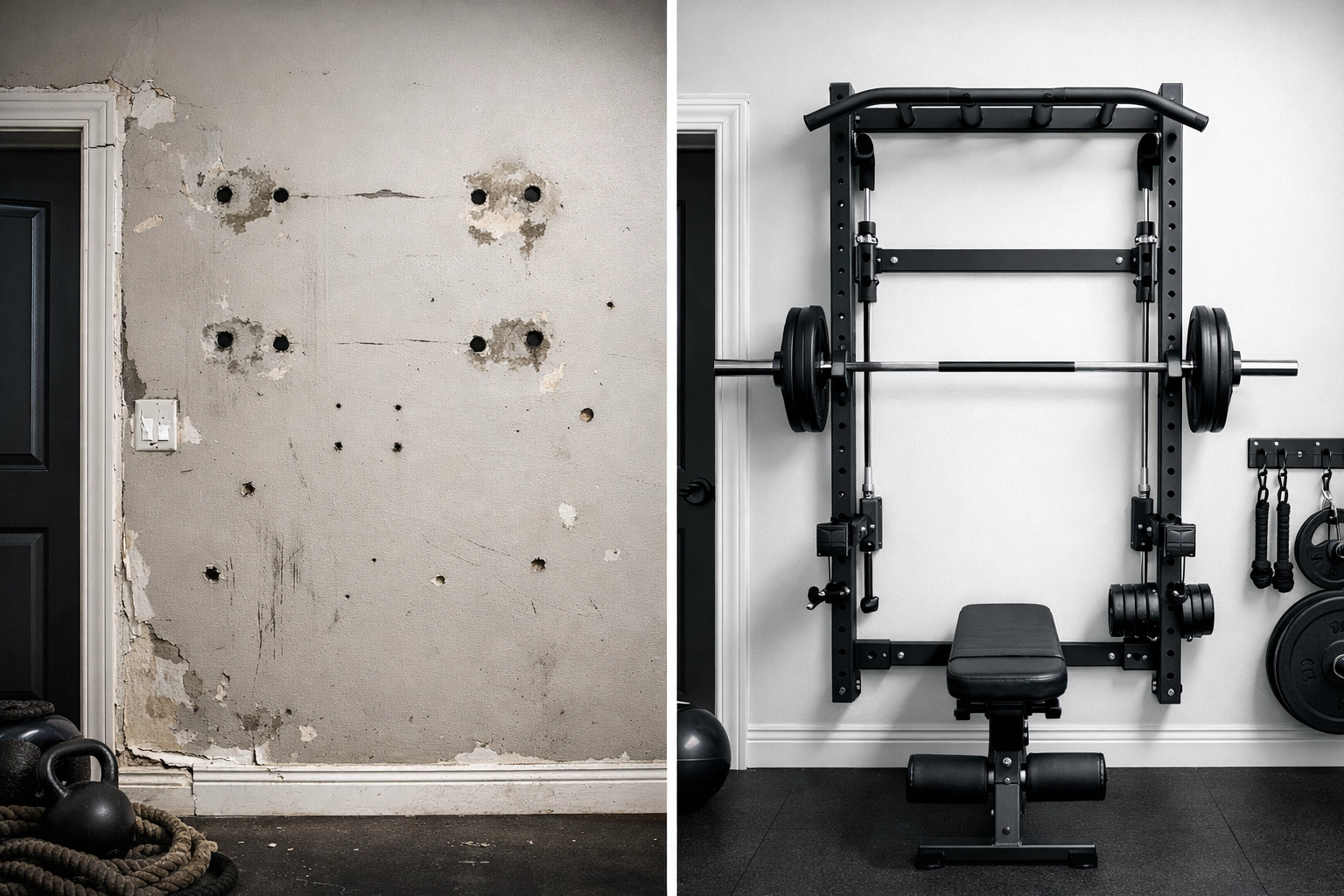
Traditional wall-mounted pull-up bars require drilling into studs, creating permanent holes that weaken your wall structure. Every rep you crank out puts stress on those mounting points. Dynamic movements like muscle-ups, kipping pull-ups, or explosive training? That's even worse. The constant loading and unloading creates micro-fractures around the bolts. Over time, you're not just looking at cosmetic damage, you're compromising structural integrity.
Door frame pull-up bars might seem like the "no-damage" solution, but ask any gymnast or CrossFit athlete who's pushed real weight on one. They bend frames, scratch paint, and create pressure points that crack molding. Plus, they severely limit your movement range and exercise variety.
Why Renters and Homeowners Are Making the Switch
The fitness industry has been stuck in the same mindset for decades: if you want serious strength training at home, you need to drill holes. Period.
That's outdated thinking.
Floor-to-ceiling systems represent a complete paradigm shift in how we approach home gym equipment. Instead of relying on wall studs or door frames, these systems use vertical compression, they press firmly between your floor and ceiling using adjustable tension. Zero drilling. Zero holes. Zero permanent damage.
For renters, this is game-changing. Set it up in one apartment, take it down when you move, reinstall it in the next place. Your security deposit stays intact, and your training doesn't skip a beat.
For homeowners, it means flexibility. Want to convert your guest room into a training space? Do it. Need to clear the room for a party? Break it down in minutes. Moving equipment between rooms or reconfiguring your layout becomes effortless.
The Engineering Behind No-Damage Workout Systems
Floor-to-ceiling gym systems aren't just tension rods with wishful thinking attached. The engineering matters, a lot.
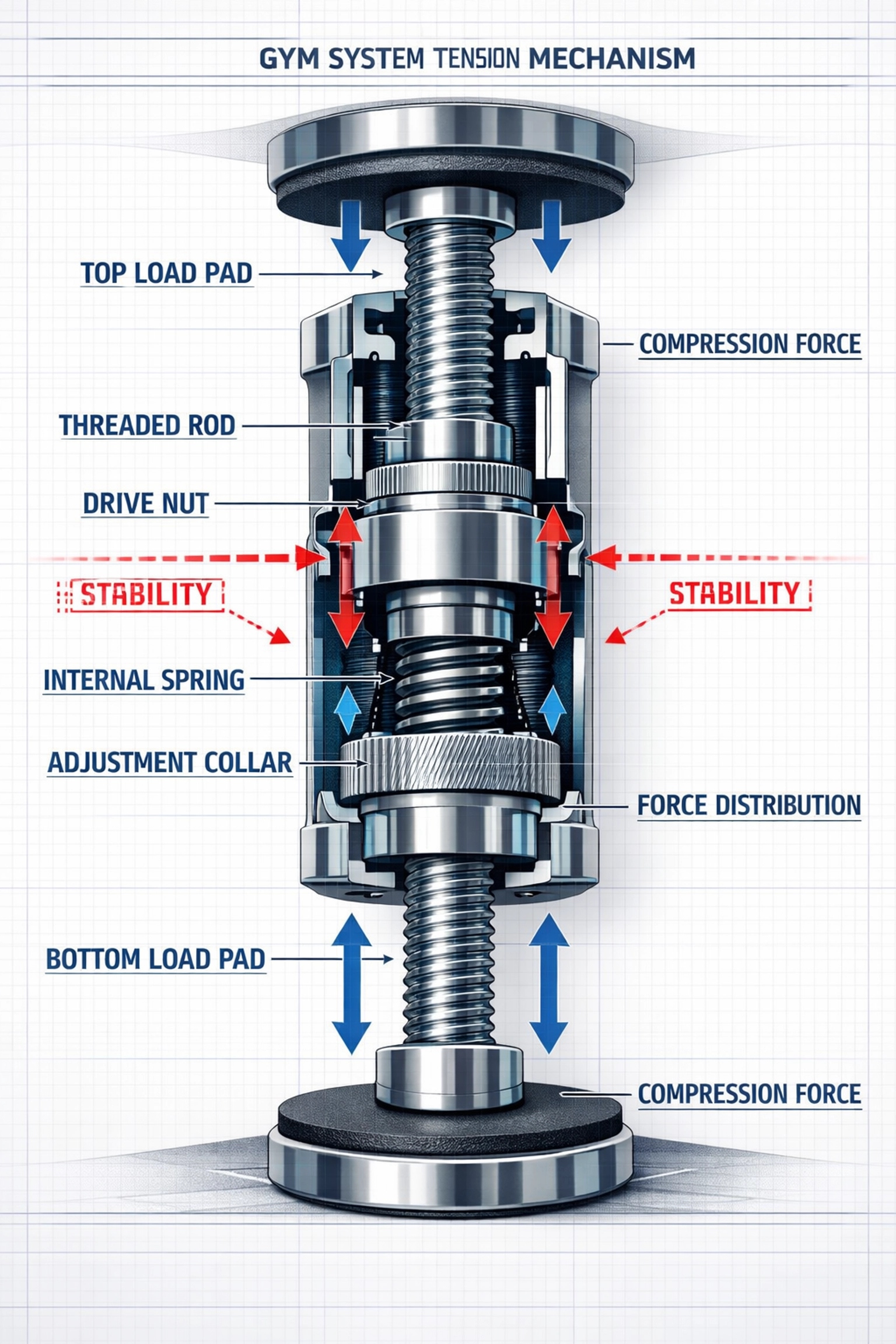
Quality systems like the Resistance Rail use commercial-grade materials and precision tension mechanisms that distribute force evenly across ceiling and floor contact points. This isn't about avoiding damage through luck, it's about intelligent design that makes wall mounting obsolete.
Here's the technical breakdown:
The vertical compression creates a stable anchor point that can handle significant dynamic loads. When you're doing explosive pull-ups, muscle-ups, or suspended training, the force distributes through the entire system rather than concentrating on a few bolt points. This actually makes floor-to-ceiling systems MORE stable for certain movements than traditional wall mounts.
The best systems include protective padding at contact points, adjustable height mechanisms for different ceiling heights (usually 7-10 feet), and modular attachment points that let you configure equipment exactly how you need it.
Full Body Training Without Compromise
The real question: can a no wall damage workout system actually deliver the same training intensity as permanently mounted equipment?
Short answer: Yes: and then some.
Let's break down what serious athletes actually need for comprehensive bodyweight training at home:
Upper Body Pull Variations
- Standard pull-ups (wide, narrow, neutral grip)
- Muscle-ups
- Front lever progressions
- Back lever work
- Rope climbs
- Towel pull-ups for grip strength
Upper Body Push Movements
- Dips (straight bar and rings)
- Push-up variations with suspension
- Handstand push-up progressions
- Planche training
- Elevated and decline variations
Core and Midline Stability
- Hanging leg raises
- Toes-to-bar
- L-sits and V-sits
- Dragon flags
- Suspended planks and rollouts
Lower Body Integration
- Pistol squats with suspension assistance
- Single-leg deadlift variations
- Jump training with overhead reach
- Plyometric progressions
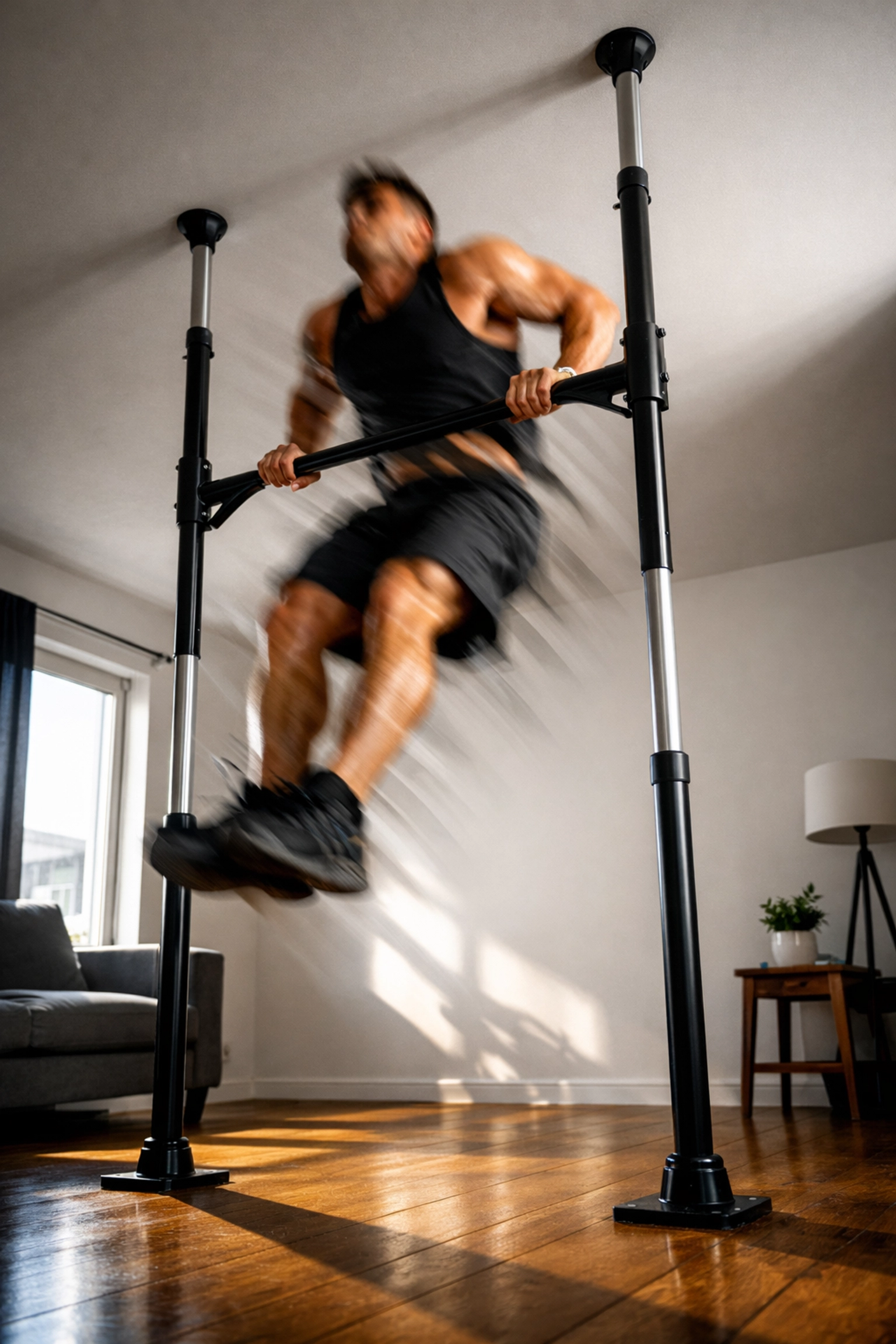
A properly configured floor-to-ceiling gym handles all of this. The key is modularity: being able to attach rings, bars, resistance bands, suspension trainers, and calisthenics equipment for home use at multiple heights and configurations.
Who Actually Benefits From Floor-to-Ceiling Systems?
This isn't equipment for casual fitness. If you're content with a jog around the block and some light stretching, stick with YouTube videos.
Floor-to-ceiling systems shine for athletes who train seriously at home:
Ninja Warriors: Your sport literally requires pulling, swinging, and dynamic grip transitions. A floor-to-ceiling setup lets you practice salmon ladders, peg boards, and transitional movements without permanently modifying your space. Set up different grips and obstacles, drill your weaknesses, then reconfigure for the next training block.
Gymnasts: Rings work, bar skills, flexibility training: you need equipment that moves with you. Floor-to-ceiling systems with gymnastics rings give you the freedom to adjust height instantly for different skills. Working giants? Raise the bar. Practicing skin the cats? Lower it. No tools required.
CrossFit Athletes: You already know the value of a pull up bar alternative that doesn't limit your kipping or butterfly technique. But add in the ability to hang rings for ring dips, rig resistance bands for banded pull-throughs, and configure bars for different grip widths? That's a legitimate crossfit home gym that rivals what you're paying monthly membership fees for.
MMA Fighters: Grip strength, pulling power, core stability, and explosive movements matter in the cage. Floor-to-ceiling setups let you train gi pull-ups, rope climbs, and suspension-based striking drills. The ability to move the system or add bags and striking equipment creates a complete combat training environment.
Calisthenics Practitioners: This is your bread and butter. Skills training requires stable equipment that doesn't shift or wobble during lever work or planche progressions. Quality calisthenics equipment for home needs to handle static holds AND explosive dynamics. Floor-to-ceiling systems deliver both.
Traditional Wall-Mount vs. Floor-to-Ceiling: The Honest Comparison
Let's drop the marketing fluff and compare these systems head-to-head:
Installation:
- Wall-mount: 1-2 hours, drilling required, need to find studs, permanent modifications
- Floor-to-ceiling: 15-30 minutes, no tools beyond what's included, completely reversible
Stability During Training:
- Wall-mount: Excellent IF properly installed in studs with appropriate hardware
- Floor-to-ceiling: Excellent when properly tensioned; some systems rival or exceed wall-mount stability
Exercise Variety:
- Wall-mount: Fixed position limits configuration options
- Floor-to-ceiling: Modular attachments at multiple heights maximize versatility
Cost Over Time:
- Wall-mount: Initial purchase + installation + wall repair when moving = $$
- Floor-to-ceiling: Initial purchase = $$ (no additional costs)
Rental-Friendly:
- Wall-mount: Absolutely not
- Floor-to-ceiling: 100% yes
Load Capacity:
- Wall-mount: 300-500+ lbs IF mounted correctly
- Floor-to-ceiling: Quality systems handle 300-400+ lbs safely
The numbers don't lie. For anyone who values flexibility, renters who refuse to sacrifice training quality, or homeowners who don't want permanent modifications, floor-to-ceiling systems are the obvious choice.
What Makes a Floor-to-Ceiling System Actually Good?
Not all no-damage workout systems are created equal. The market's flooded with flimsy tension rods that can barely handle a resistance band, let alone serious resistance training.
Here's what separates legitimate equipment from trash:
Build Quality: Look for powder-coated steel construction, not cheap aluminum or plastic components. The system needs to handle dynamic loading, not just static hanging.
Tension Mechanism: Quality systems use screw-drive or ratcheting tension with large load-distributing pads. Cheap systems use spring-loaded tension that loses force over time.
Modularity: Can you attach different equipment at multiple heights? Can you add accessories without buying a completely new system? The best floor to ceiling gym setups grow with your training.
Weight Capacity: Be realistic about what you need. A 200-lb athlete doing muscle-ups creates significantly more force than their body weight. Look for systems rated 300+ lbs minimum.
Adjustability: Ceiling heights vary. Your system needs to accommodate 7-10 foot ceilings at minimum, with easy adjustment mechanisms.
At Bold Body Fitness, we built the Resistance Rail specifically because we were tired of seeing athletes compromise their training or damage their homes. It's designed by athletes who actually understand what serious training requires: not by marketing departments who've never done a muscle-up in their lives.
Real-World Setup: Getting the Most From Your System
You've got your floor-to-ceiling system installed. Now what?
Maximize your training space with these configurations:
Position 1: Primary Pull Station
Set your main bar at pull-up height (just high enough that your feet don't touch the ground at full extension). This becomes your go-to spot for all pull variations, hanging core work, and grip training.
Position 2: Dip and Push Station
If your system allows multiple bars, position a lower bar for dips, modified push-ups, and horizontal pull variations like Australian pull-ups. This immediately doubles your exercise options.
Position 3: Suspension and Rings
Add gymnastics rings or suspension trainers at adjustable heights. This transforms static bars into dynamic training tools. Work ring dips, then drop the rings for inverted rows. Raise them for L-sit work or lower for push-up variations.
Position 4: Resistance Band Integration
Attach resistance bands at different anchor points for banded pull-ups, assisted movements, or variable resistance work. This is HUGE for progressive overload without adding weight plates.
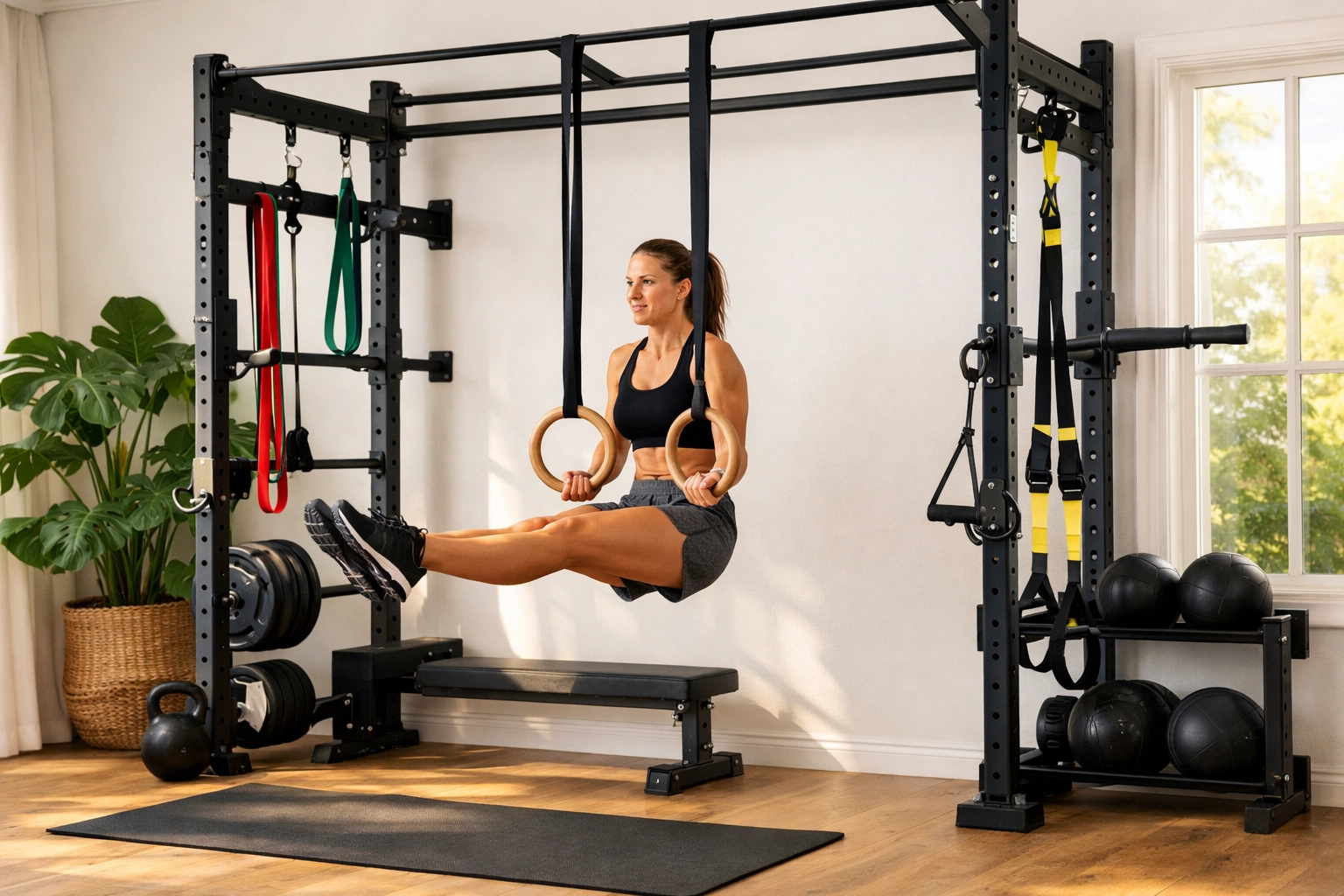
The beauty of quality systems is reconfiguration. Your Monday upper body session looks completely different from your Wednesday skill work, and you can change the setup in under five minutes.
The Investment Math That Actually Matters
Let's talk money: because "affordable home gym" means different things to different people.
A basic wall-mounted pull-up bar runs $30-100. Add installation hardware, maybe patch some walls after a year, factor in the awkwardness of telling your landlord... you're looking at hidden costs.
A legitimate floor-to-ceiling system runs $200-600 depending on features and capacity. That's upfront. That's it.
But here's the real calculation:
Gym memberships average $50-150/month. If you're training seriously, you're probably in a specialty facility (CrossFit box, gymnastics gym, climbing gym) at $100-200/month. That's $1,200-2,400 annually.
A quality home gym equipment investment pays for itself in 3-6 months. After that? Pure savings while maintaining or improving your training consistency.
Plus, there's the time factor. Commute to the gym, wait for equipment, adapt your workout to whatever's available, commute home: you're losing 60-90 minutes per session just to logistics. Train at home? Roll out of bed, warm up, train, shower, get on with your day.
The Future of Home Training Is Here
The fitness industry is finally catching up to what athletes have known for years: you don't need a warehouse full of equipment to train at elite levels. You need smart equipment that maximizes versatility while minimizing compromise.
Floor-to-ceiling systems represent the evolution of home gym equipment: they're not a replacement for traditional setups, they're an upgrade. They deliver everything serious athletes need for full body workout at home programming without the permanent modifications, space requirements, or installation headaches.
Whether you're a ninja warrior drilling grip transitions, a gymnast working ring strength, a CrossFit athlete maintaining conditioning between classes, an MMA fighter building pulling power, or a calisthenics practitioner progressing toward advanced skills: the right system opens up training possibilities that weren't feasible in home environments before.
Ready to stop compromising your training or your living space? Check out the complete shop at Bold Body Fitness and see what serious home training actually looks like.
Your walls will thank you. Your training won't miss a beat. And your landlord? They'll never know you turned your apartment into a performance training facility.
That's the truth about floor-to-ceiling systems: no damage, no compromise, no excuses.
