
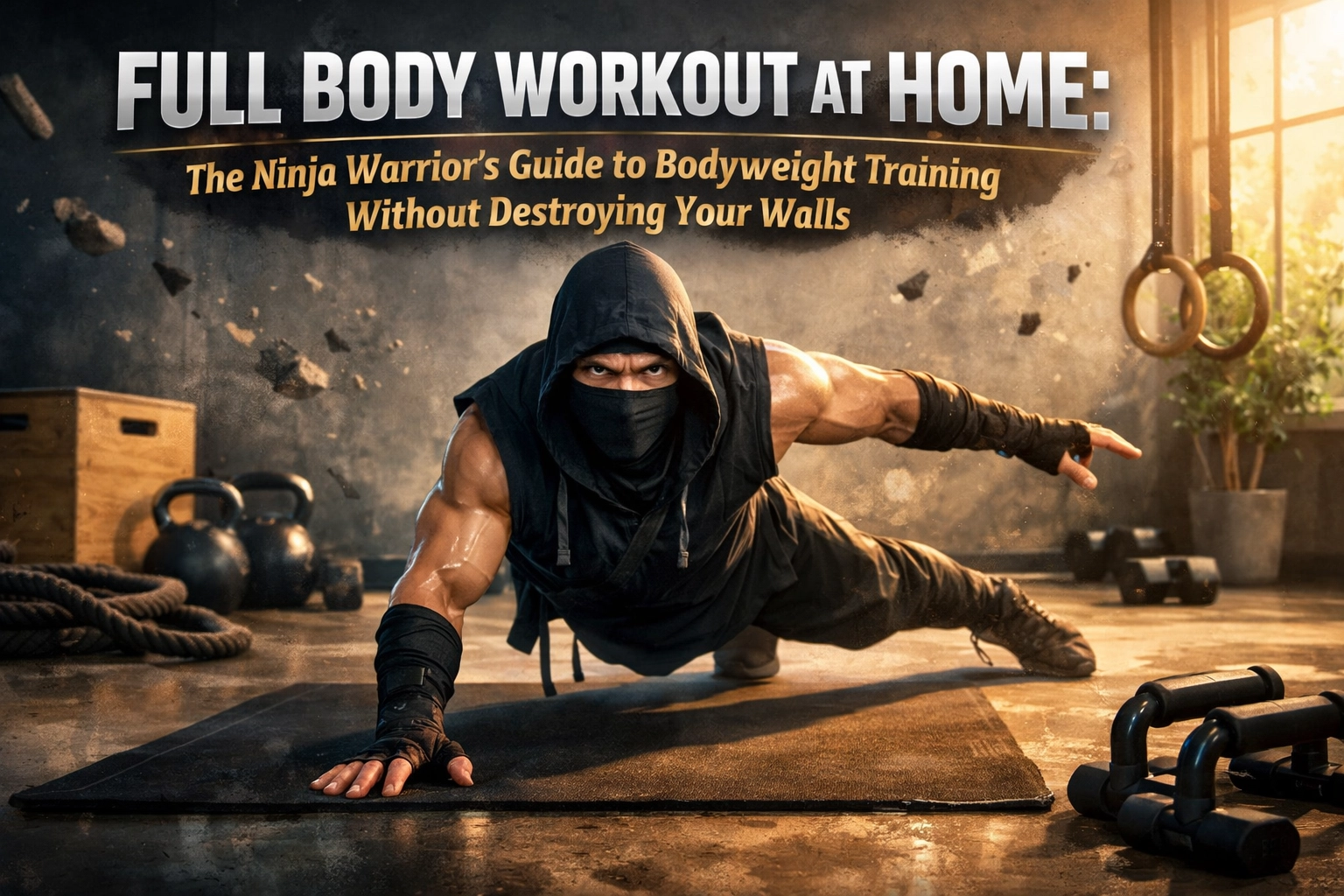
You've watched enough American Ninja Warrior to know what real functional strength looks like. Those athletes aren't just strong: they're explosive, coordinated, and built for movement. The problem? Most of them train in specialized gyms with expensive rigs, salmon ladders, and warped walls that would turn your apartment into a landlord's nightmare.
Here's the truth: You don't need to drill holes in your walls or invest in a $10,000 obstacle course to train like a ninja warrior. With the right approach to bodyweight training at home, you can build the grip strength, core stability, and explosive power that separates weekend warriors from real athletes.
Why Your Walls (and Your Deposit) Matter
Traditional home gym setups come with a destructive tax. Wall-mounted pull-up bars? Drill holes. Heavy bags? Ceiling brackets. Climbing holds? Say goodbye to your security deposit. For renters and homeowners who actually care about their property value, this creates a paradox: you want to train hard, but you don't want to demolish your living space in the process.
This is where intelligent equipment choices matter. A no wall damage workout system isn't about compromising your training: it's about training smarter. Floor-to-ceiling tension systems, freestanding frames, and strategic bodyweight progressions let you build a legitimate training environment without a single power tool.

The Foundation: Bodyweight Basics That Actually Build Athletes
Before you start dreaming about ring muscle-ups and one-arm pull-ups, you need to master the fundamentals. Ninja warrior training isn't about random exercises: it's about building a movement foundation that translates to real-world performance.
The Core Four for Beginners
If you're starting from scratch, this circuit will establish your baseline fitness:
High Knees (30 seconds): Drive your knees toward your chest with power. This isn't a casual jog: it's explosive conditioning that builds hip flexor strength and cardiovascular capacity.
Burpees (5 reps): The movement everyone loves to hate, but for good reason. Full-body conditioning, explosive power, and metabolic stress in one package. Keep your core tight and explode from the bottom position.
Single-Leg Balance (30 seconds per leg): Stand on one leg on an unstable surface: a pillow, a folded towel, or even just close your eyes. Ninja warriors need proprioception and ankle stability. This builds both.
Dead Hang (1 minute): If you have access to any kind of bar, hang from it with straight arms. This isn't about pulling: it's about grip endurance and shoulder stability. Your forearms will burn, and that's the point.
Run through this circuit three times, resting 60-90 seconds between rounds. If this feels easy, you're either lying to yourself or ready for the next level.
Advanced Full Body Workout at Home: The Real Ninja Protocol
Once you've built your foundation, it's time to train like you mean it. This full body workout at home routine targets every major movement pattern ninja warriors need: pulling strength, core control, explosive power, and balance.
Upper Body Pull Work
Pull-Up Variations (3 sets of 10+ reps): Wide grip, narrow grip, and eventually one-arm negatives. If you don't have a permanent pull-up bar, consider a tension-based system that uses floor-to-ceiling pressure instead of wall mounts. The Resistance Rail from Bold Body Fitness uses this exact principle: maximum stability, zero drilling.
Hanging L-Sit Hold (3 sets of 5+ second holds): Hang from your bar with straight arms, then raise both legs parallel to the floor. This torches your core, hip flexors, and grip simultaneously. It's the kind of exercise that looks simple until you try it.
Toes to Bar (3 sets of 10+ reps): From a dead hang, bring your toes all the way up to touch the bar. No kipping, no momentum: just pure core and hip flexor power.

Core and Balance Integration
Spiderman Push-Ups (3 sets of 12 reps): Start in a push-up position. As you descend, bring one knee toward your elbow on the same side. This adds rotational stability and oblique engagement to a standard push-up.
Handstand Push-Ups (3 sets of 8+ reps): If you're not ready for freestanding handstands, use a wall for support. Face away from the wall, kick up, and perform strict push-ups with your head traveling toward the floor. This builds shoulder strength that translates directly to climbing and obstacle work.
Candlestick Rolls (3 sets of 15 reps): Lie on your back, roll backward bringing your hips over your head, then explosively roll forward and stand up without using your hands. This builds momentum control, core strength, and functional power.
Lower Body Explosiveness
Alternating Jumping Lunges (3 sets of 20 per leg): Drop into a lunge, then explode upward and switch legs mid-air. Land softly and immediately descend into the next rep. This builds the explosive power you need for dynamic obstacles.
Pistol Squats (3 sets of 8 per leg): Single-leg squats all the way to the bottom. These require mobility, balance, and serious leg strength. If you can't complete a full pistol yet, use a box or bench to gradually increase your range of motion.

Programming Your Ninja Warrior Training
Here's what separates people who train from people who actually improve: intelligent programming. You can't just randomly hammer your body with workouts and expect ninja-level results.
Frequency: Train 4-6 days per week. Your body needs stimulus to adapt, but it also needs recovery. A solid split might look like: Monday (upper body focus), Tuesday (lower body and core), Wednesday (active recovery or skill work), Thursday (full body), Friday (pulling emphasis), Saturday (explosive work), Sunday (rest).
Progression: Add reps before you add sets. Add sets before you add complexity. Master the fundamentals before you chase Instagram-worthy skills. A perfect push-up beats a sloppy handstand push-up every single time.
Rest Intervals: Keep rest periods between 30-60 seconds for metabolic conditioning, or 90-120 seconds for strength-focused work. Ninja warrior courses don't give you three-minute breaks between obstacles: your training shouldn't either.
Building Your Home Gym Without the Destruction
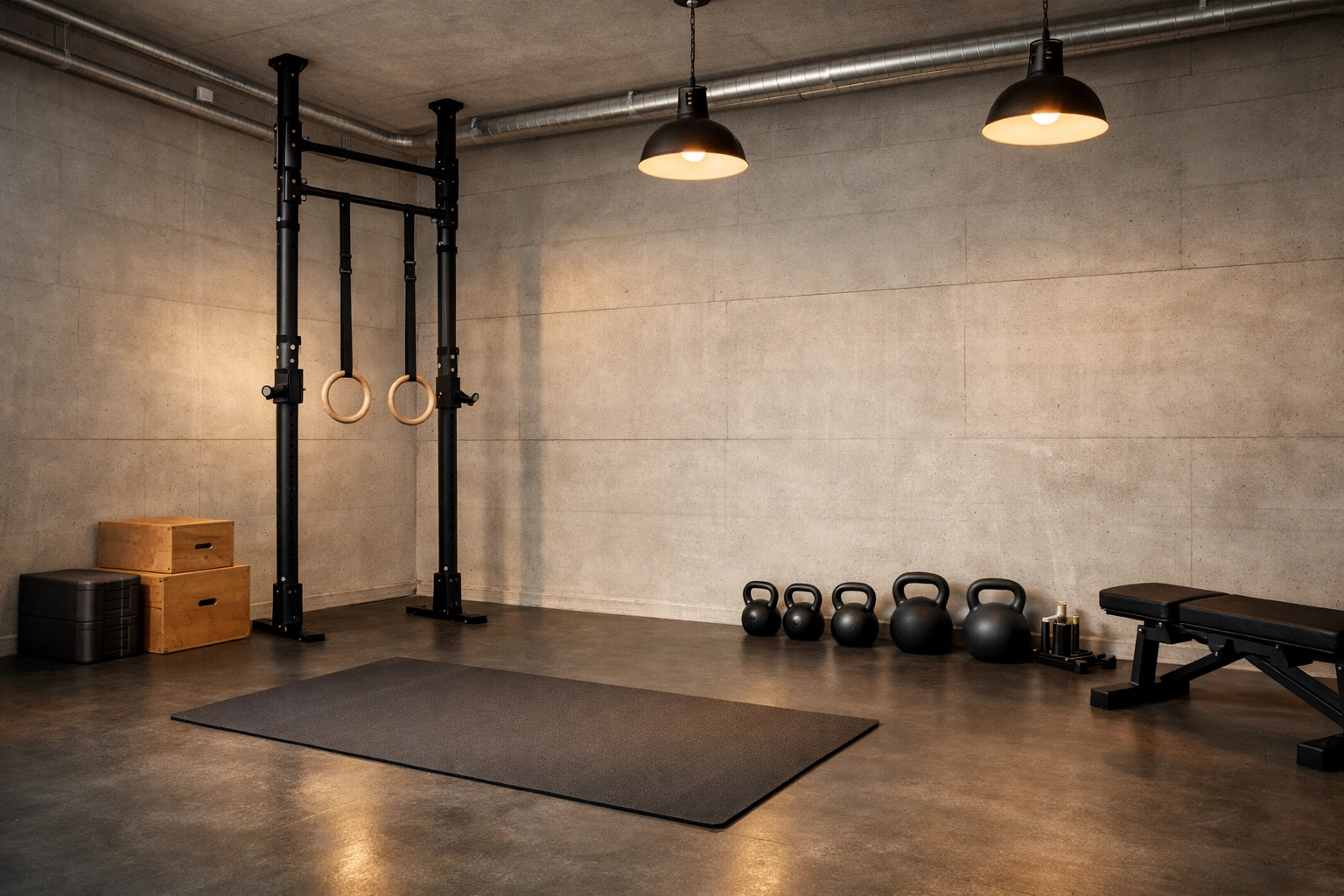
The smartest approach to calisthenics equipment for home is investing in versatile, non-destructive systems. You don't need twenty different pieces of equipment cluttering your space. You need a few high-quality tools that enable dozens of exercises.
Floor-to-ceiling tension systems are the nuclear option for bodyweight athletes who rent. They provide rock-solid stability for pull-ups, hanging work, and suspension training without requiring any wall anchors. Bold Body Fitness designed their equipment specifically for this problem: legitimate training capacity without the permanent installation.
Gymnastic rings are another essential. They cost less than a month of gym membership and enable hundreds of exercises: ring rows, dips, muscle-ups, planks, and endless core variations. Hang them from your tension system and you've got a legitimate upper body training station.
For lower body work, you don't need anything except floor space. Bodyweight squats, lunges, and plyometric variations will build more functional leg strength than any machine at a commercial gym.
The Mental Game: Training Like a Competitor
Physical preparation is only half the battle. Ninja warriors succeed because they've trained their minds as much as their bodies. When you're hanging from an obstacle with failing grip strength, your mental fortitude determines whether you push through or drop off.
Build this into your training. When your forearms are burning during dead hangs, stay on the bar five more seconds. When you think you can't complete another burpee, do two more. This isn't about being reckless: it's about expanding your threshold for discomfort.
Every training session is an opportunity to either reinforce your limitations or prove they're negotiable. Choose wisely.
Your Next Move
Full body workout at home routines work when you actually commit to them. Three sessions and then giving up isn't a program: it's a false start. Build your foundation, progress intelligently, and give your body time to adapt.
Start with the beginner circuit if you're new. Run it three times per session, three sessions per week for two weeks. Then graduate to the advanced protocol, adding exercises as you build capacity. Within 8-12 weeks of consistent training, you'll have transformed your movement capacity.
Need equipment that won't destroy your walls? Check out the Bold Body Fitness shop for solutions that actually respect your living space while delivering professional-grade training capacity.
Stop making excuses about not having access to a ninja gym. Your living room, garage, or backyard can become a legitimate training environment with the right approach. Now get to work.
